
- Controlling Ourselves.
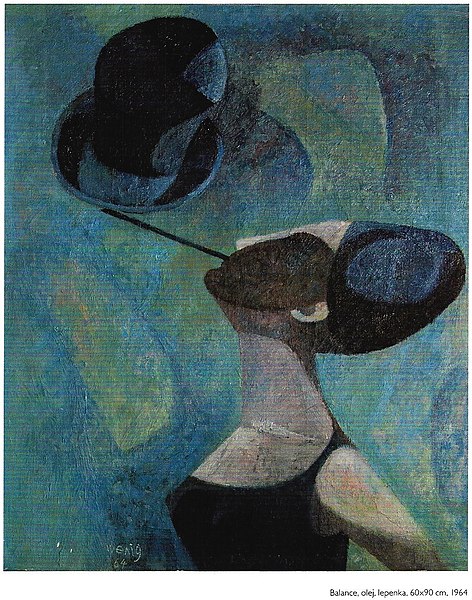 Jan Wenig – Balance. Wikimedia Commons.
“Ultimately, the only power to which man should aspire is that which he exercises over himself.”
Elie Wiesel
Why is it such a big mistake to be a ‘control freak’ and to try to control everyone and everything?
Life is highly unpredictable, and learning to accept this incontrovertible fact is difficult. As a result, we may develop control-related tactics to try and ward off such uncertainty, like attempting to make the world, and other people, comply with our wishes.
Of course, this will not make the slightest difference to the ever-changing nature and unpredictability of life. The only aspects of our lives we can really control, and then only to some extent, are ourselves and the feelings and thoughts inside us.
What does ‘control’ mean in this context?
The issue becomes a complex one, for if we rigidly restrict awareness or expression of our inner feelings, no matter how difficult they might feel, they will be unavailable to us to work on, either by ourselves or in therapy.
Then we will be out of touch with such difficult feelings, and they can emerge to disturb us both physically and mentally.
A flexible mechanism of regulation is required, not a strict suppression of such feelings, which, in itself, would indicate fear and uneasiness at the prospect of becoming ‘out of control.’ What we need to aim for is a sense of balance, so that we neither block off ‘messy’ feelings with rigid internal defences, nor act them out destructively.
The aim here is, therefore, not to act too impulsively on the one hand, and to not be too inflexible on the other. Such control means gaining mastery over feelings such as, for example, rage, or an urge to be violent, through exploration and understanding.
Often, people who act out these feelings in an uncontrolled way have not recognised or worked through past trauma, and are unable to prevent themselves from unconsciously repeating scenarios in the present that originated in childhood.
If a lack of personal control is recurrent and affecting our own and others’ lives, then we may need psychotherapy. In time, and with such help, we will hopefully be able to have enough self-control not to career around like a wild and riderless horse, destroying everything in its wake.
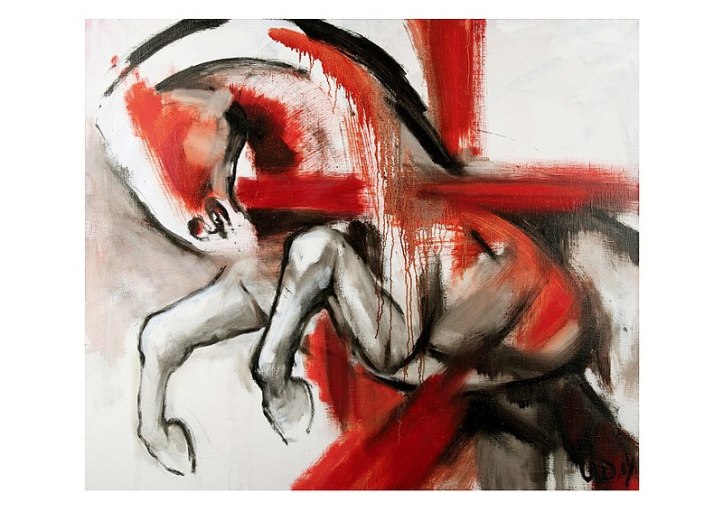 Wildes Pferd drobychevskaja (Wild Horse.)Elena Drobychevskaja. Wikimedia Commons.
“Emotions were like wild horses and it required wisdom to be able to control them.”
Paulo Coelho
Some people try to deal with their inner chaos by creating order around them, outside of themselves. They may be attempting to render everything spotlessly tidy, washing and cleaning obsessively, having little conscious awareness of feeling messy, disturbed or ‘bad’ inside.
The energy for facing such inner turmoil is thus re-routed into frantic external activity. Their surroundings will be immaculate and orderly, but the internal world, lodged firmly in the unconscious, will still remain untouched, disorderly, chaotic.
They are living unconsciously, unaware of the internal chaos that drives them in their fruitless and distressing quest to ‘tidy’ themselves inside by scrupulously organising their outer world.
 Order and Disorder – Jasper Johns. Wikioo.
“People will do anything, no matter how absurd, in order to avoid facing their own souls. One does not become enlightened by imagining figures of light, but by making the darkness conscious.”
Carl Jung
Sometimes, in order to avoid their ‘darkness,’ people channel painful feelings into addictions or into living life at breakneck speed.
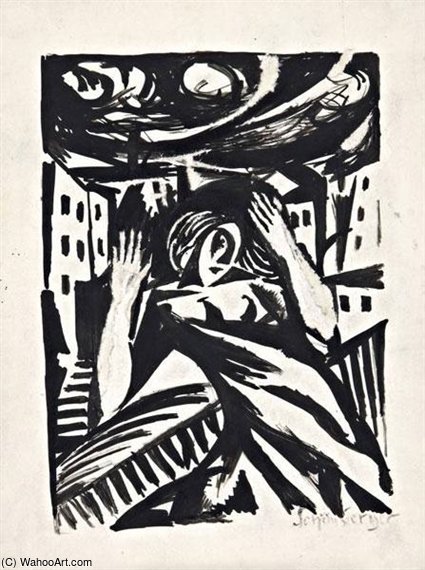
Rush Out Of Everydays – Armand Schonberger. Wikioo.
“Caught is a frenzied spiral of new addiction, people are chasing money, power, success and a wilder, faster pace of life. Just like any addiction, people are out of control in their behaviours, feeling and thinking, yet they believe they are normal.”
Dr Stephanie Brown.
Constantly maintaining such a pace can be detrimental to our mental and physical health. Stress-related illnesses and disorders, such as heart problems, anxiety, weight-related issues, depression, addictions and attention deficit disorder are on the increase.
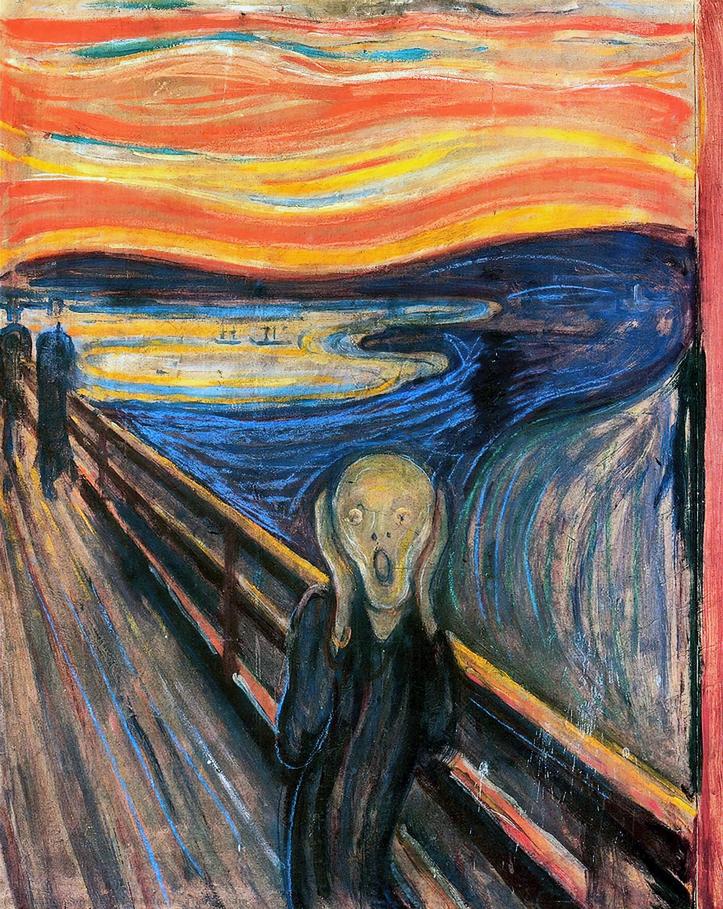 The Scream – Edvard Munch. Wikioo.
“A man should control his life. Mine is controlling me.”
Rudolph Valentino
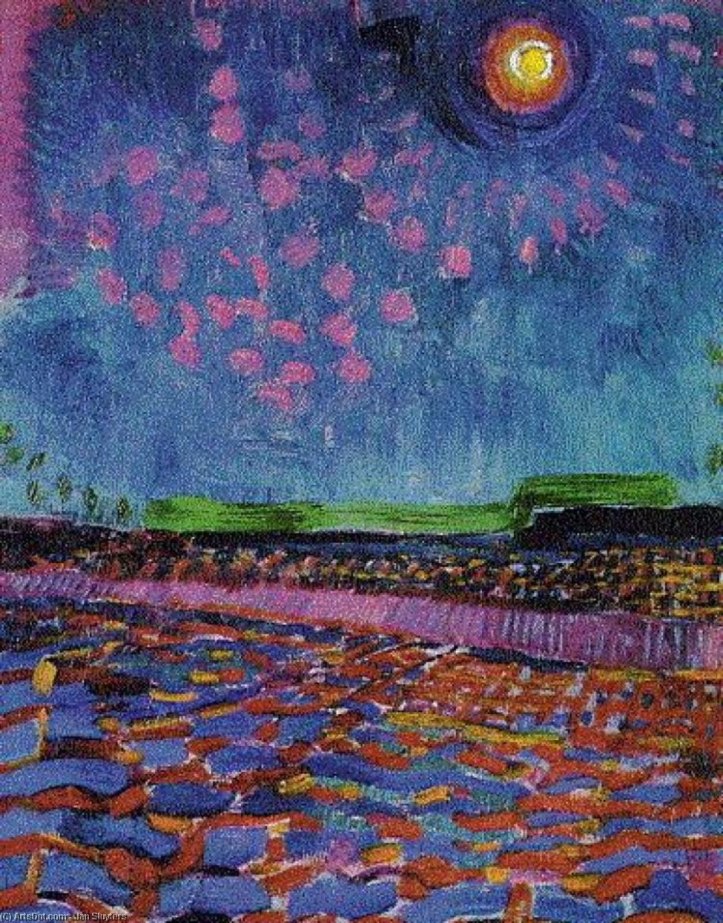 Moon night – Jan Sluyters. Wikioo.
“We have been to the moon, we have charted the depths of the ocean and the heart of the atom, but we have a fear of looking inward to ourselves because we sense that is where all the contradictions flow together.”
Terence McKenna
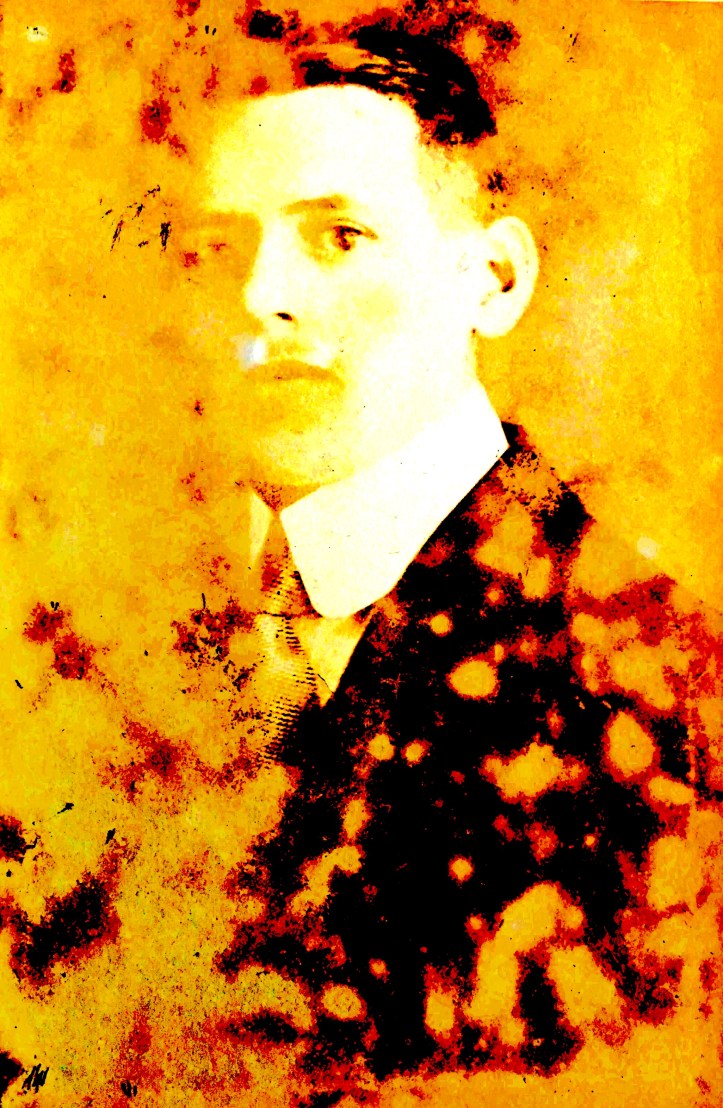 Wolfgang Sterneck. Inner Worlds Behind Outer Facades. Flickr.
“Perhaps it is controlling the chaos within more than the chaos without.”
Erin Morgenstern
- Fearing Monsters And Madness.
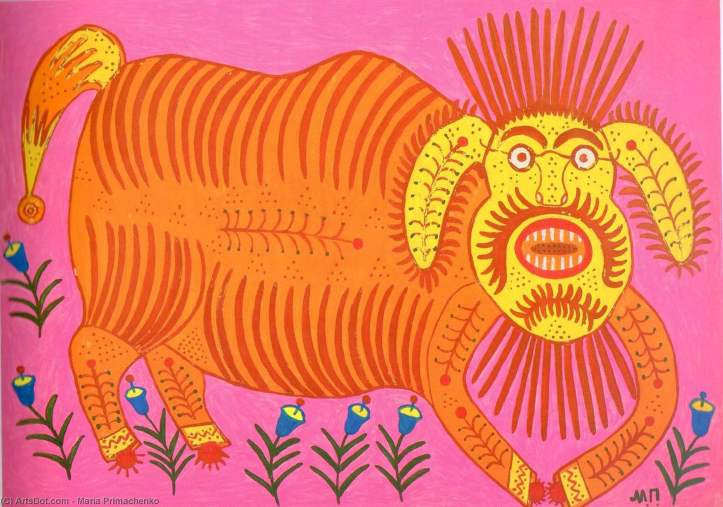 This Beast Went A-Catching Sparrows – Maria Primachenko. Wikioo.
Sometimes, people catch a momentary glimpse of their internal jumble of thoughts and feelings, a whisper of what might be going on deep inside, and they avoid facing all this through intense fear of what might arise. It may feel dangerous, like prodding a wild beast.
Such a clutter of emotions can also feel akin madness, and people might be terrified to approach it, fearing monsters will emerge, and they will lose control. Very often, the darker side, or, as Jung termed it, the shadow side of our personalities are kept under wraps, even from ourselves, buried in the depths of our unconscious.
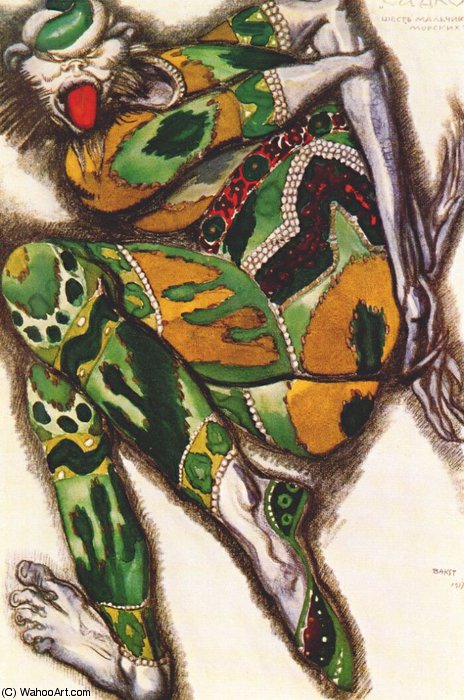
Sadko The Green Monster – Leon Bakst. Wikioo.
However, within the dark mess of ‘madness,’ this internal chaos, there will be structure, meaning, explanations.
“To recognize one’s own insanity is, of course, the arising of sanity, the
beginning of healing and transcendence.”Eckhart Tolle
If we work through our ‘mad’ or ‘monstrous’ feelings, whatever they may be, then channelling such inner chaos into something productive is both healthy and creative.
“The only journey is the one within.”
Rainer Maria Rilke
- Attempting To Control The Future.
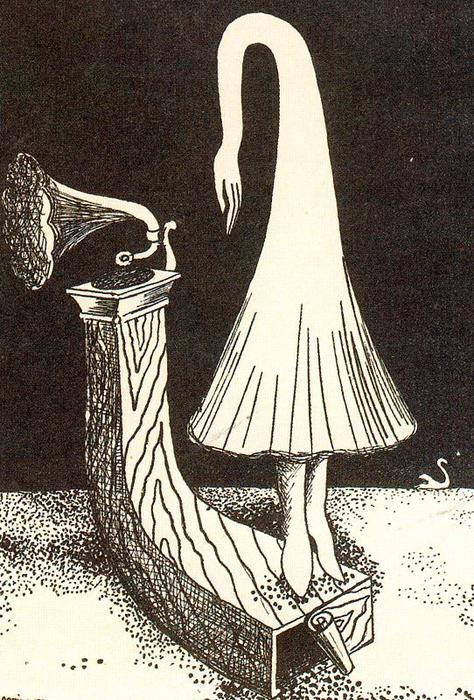
The Memory of the Future – Oscar Dominguez. Wikioo.
“Our anxiety does not come from thinking about the future, but from wanting to control it.”
Khalil Gibran
We cannot control the future and we cannot change the past. Anticipatory anxiety, worrying about the future, is a waste of our energy and time in the present, for we can never predict what will happen to us and to those around us.
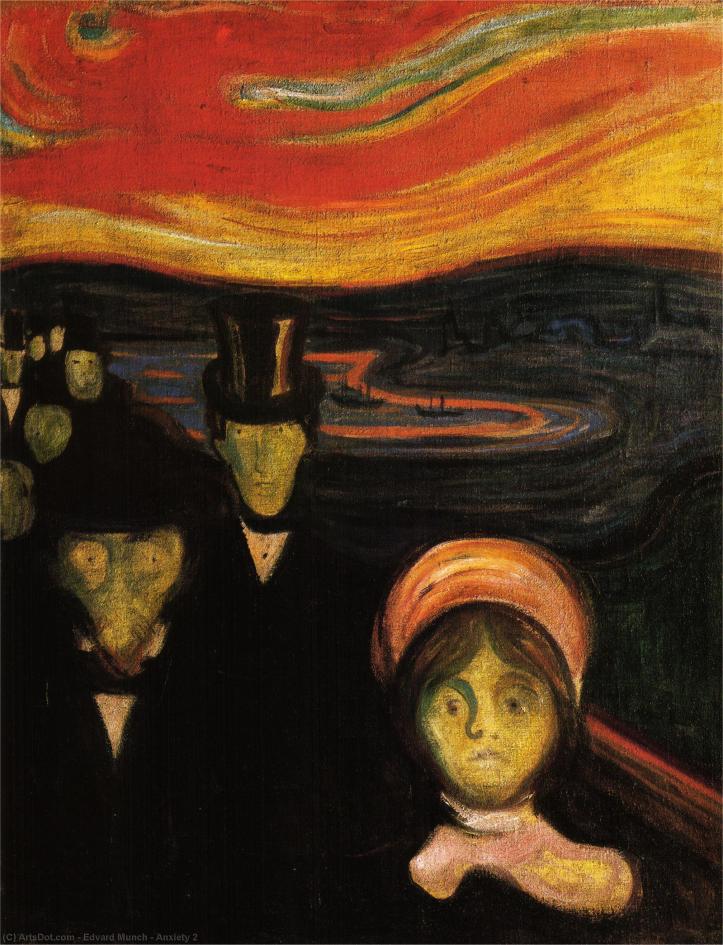 Anxiety 2 – Edvard Munch. Wikioo
“Worry never robs tomorrow of its sorrow, it only saps today of its joy.”
Leo F. Buscaglia
Whilst it is natural for everyone to worry sometimes, if such anxieties become all-consuming, we might need psychological help.
Such persistent fears are often rooted in past experience, especially when there has been acute trauma.
Winnicott’s words are highly relevant here:
“The catastrophe you fear will happen has already happened.”
Winnicott.
This quotation alerts us to the fact that our deepest fears in adulthood will have had their origin in an early experience of trauma that has already occurred, even though they feel like a present and future threat.
We may not remember the ‘catastrophe’ exactly, as trauma is often repressed; however if we experience current feelings of terror, this will likely indicate that something painful happened to us at some point in our lives.
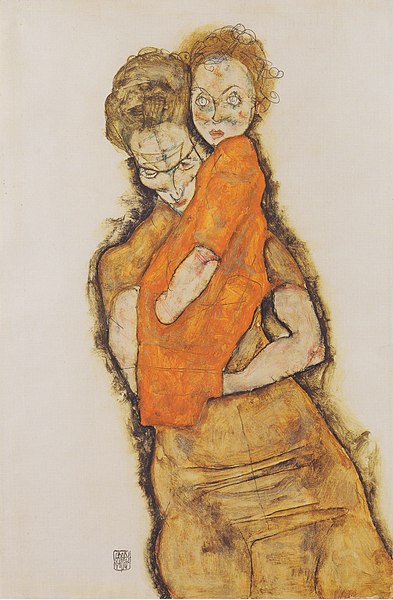
Egon Schiele – Mother & Child. 1914. Wikimedia Commons.
It can be a comforting and empowering thought that we survived it all then, when we were children, perhaps with little, if any, support or comfort. We will most likely be able to survive such pain now, in adulthood, when we have more strength and more resources.
- We Don’t Have A Crystal Ball….
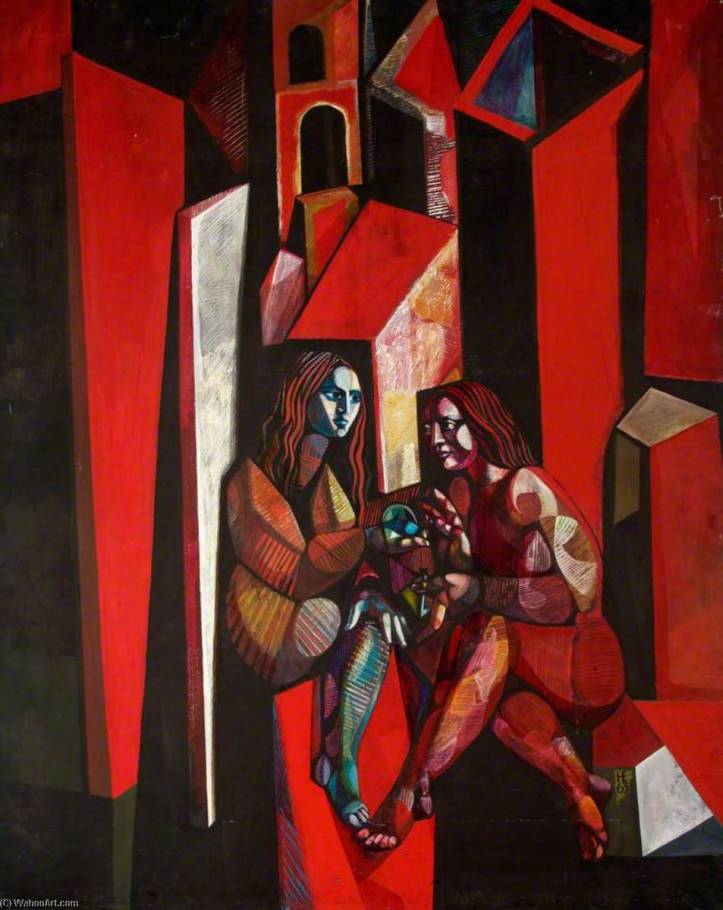 Fortune Teller – Handel Cromwell Evans. Wikioo.
“Those who have knowledge, don’t predict. Those who predict, don’t have knowledge.”
Lao Tzu
The fact is, the future is uncertain, unknown, unpredictable. We are not fortune-tellers and we have no crystal ball.
“You may not control all the events that happen to you, but you can decide not to be reduced by them.”
Maya Angelou
Life itself, as we all know too well, can and does present us with many harsh ups and downs along the way. We have all endured many difficulties in the past and mostly managed to get through them; and, as I have emphasised above, we need to remind ourselves of this fact, whatever the future might bring.
We cannot expect life to be without difficulties and problems, for this is not realistic, but we can tell ourselves that we do, realistically, have some control.
“We often cause ourselves suffering by wanting only to live in a world of valleys, a world without struggle and difficulty, a world that is flat, plain, consistent.”
bell hooks
Without some obstacles along the way, life would be like a monotonous and uneventful highway, with no twists and turns, no interesting sights or experiences, no colourful scenic contrasts.
Painful as they may be, we would not learn how to live, relate or function without these difficulties.
“Some of you say, “Joy is greater than sorrow,” and others say, “Nay, sorrow is the greater.”
But I say unto you, they are inseparable.
Together they come, and when one sits alone with you at your board, remember that the other is asleep upon your bed.”
Kahlil Gibran
We cannot change this fact, that all of us are powerless to direct the universe, or alter this reality, and we all come to understand that we only have limited control of life.
“There are some things I can’t control, & that’s just the way it is.”
Susane Colasanti
However, accepting this truth is somehow freeing. If we stop trying to control things, we will discover that we are more able to live and enjoy life and appreciate what we do have.
It is through this acceptance of the human condition, that we are, paradoxically, more at liberty to change ourselves and to have some impact on the world around us.
Life is a mixed and uncertain blend of happiness and sadness, conflict and peace, and facing up to this fact can bring us new perspectives.
With such awareness, we can come to understand that, despite tragedy, life can still hold beauty for us. Whatever happens, the world miraculously, and reassuringly, continues to move round and we learn that all things will change…. that is the only certainty.
Next week, this post will continue in Part 2, looking at how we try to control others, and how we can work at letting go of wanting to control everything.
See you next Tuesday on ways of thinking!
© Linda Berman.
 waysofthinking.co.uk
Thank you for such an important topic. There could be a social channel where people talk about their shadows. It may not be attractive but humane.
Current social media tend to glamorise people’s lives falsely leading people to strive for unrealistic and unachievable ideals. Like Keats who says that the point in diving in a lake is not to swim to the shore but to luxuriate in the water and be in it, sometimes we need our intrinsic and original nature to emerge, one that is not controlled by external forces.
LikeLiked by 1 person
That is such an important point, Arun. I do agree about people’s lives being falsely glamourised. Authenticity does not seem to be ‘fashionable,’ in so many contexts. Thanks for your comments and I’m so glad you liked my post.
LikeLike