
- Attempting To Control Others.

“I have no power at all over people, places and things, and if I ever for a moment mistakenly believe that I do, and act as if I do, pain is on its way.”
Russell Brand
Human beings have many ways of externalising their fears of lack of control. One way in which some people might attempt to deal with their inner chaotic world is to try to control others.
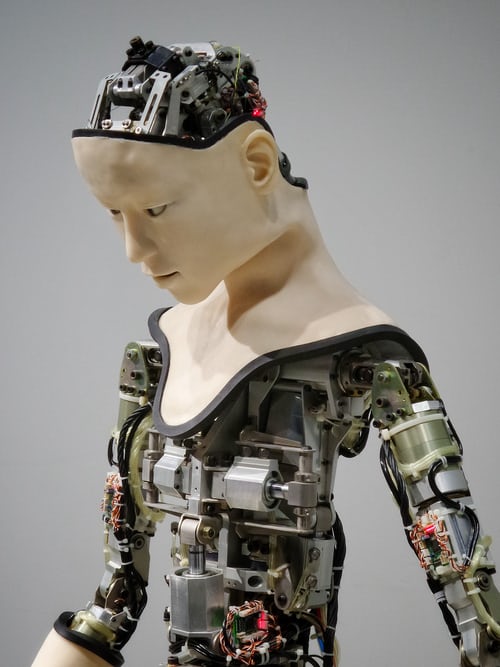
“The first thing that you can learn as a leader is that you’re not working with robots but with emotional beings.”
Pooja Agnihotri
People are not robots. We cannot control them, or order them around with a verbal command or with the push of a button.
Neither are they puppets, dependent on others for every move in life.
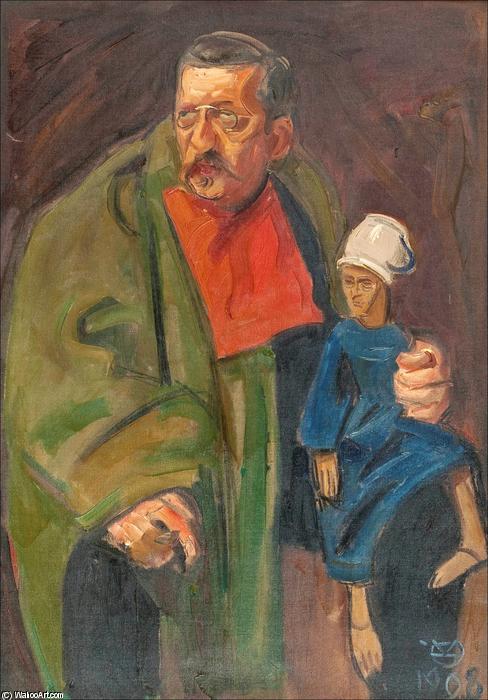 A Man and a Puppet – Akseli Gallen Kallela. Wikioo.
“Fear sticks like a barb in the mind. Someone cold enough to take advantage of it can attach strings to those barbs and make puppets of men and women.”
Lance Conrad
The behaviour of those who try to control everything and everyone around themselves is sometimes borne out of a kind of anxiety. They can succumb to the conviction that, unless they are in charge, something bad will happen.
This means that they cannot delegate, because they are too afraid that nobody can do things as well as they can, or perhaps they fear that others might do better. Therefore they need to take over everything, and everyone.
This can result in exhaustion for the ‘controller,’ and perhaps some out-of-control irritability. No-one can possibly keep all the ‘balls in the air at the same time’ without help.
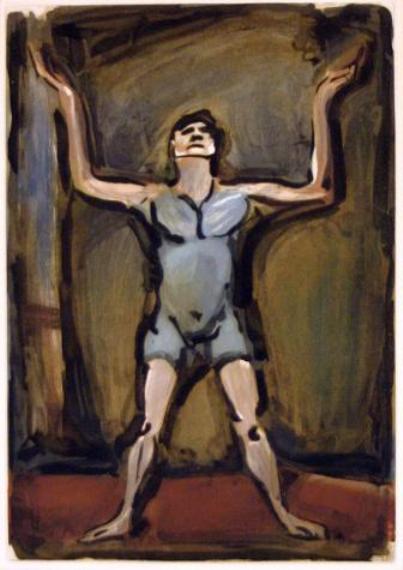
Juggler, from the series Cirque de l’Etoile filante Georges Rouault. Wikioo.
Attempting to control others can end in resentment and rebellion, as people gain the confidence to refuse to be dominated in this way, or tolerate being treated like dummies.
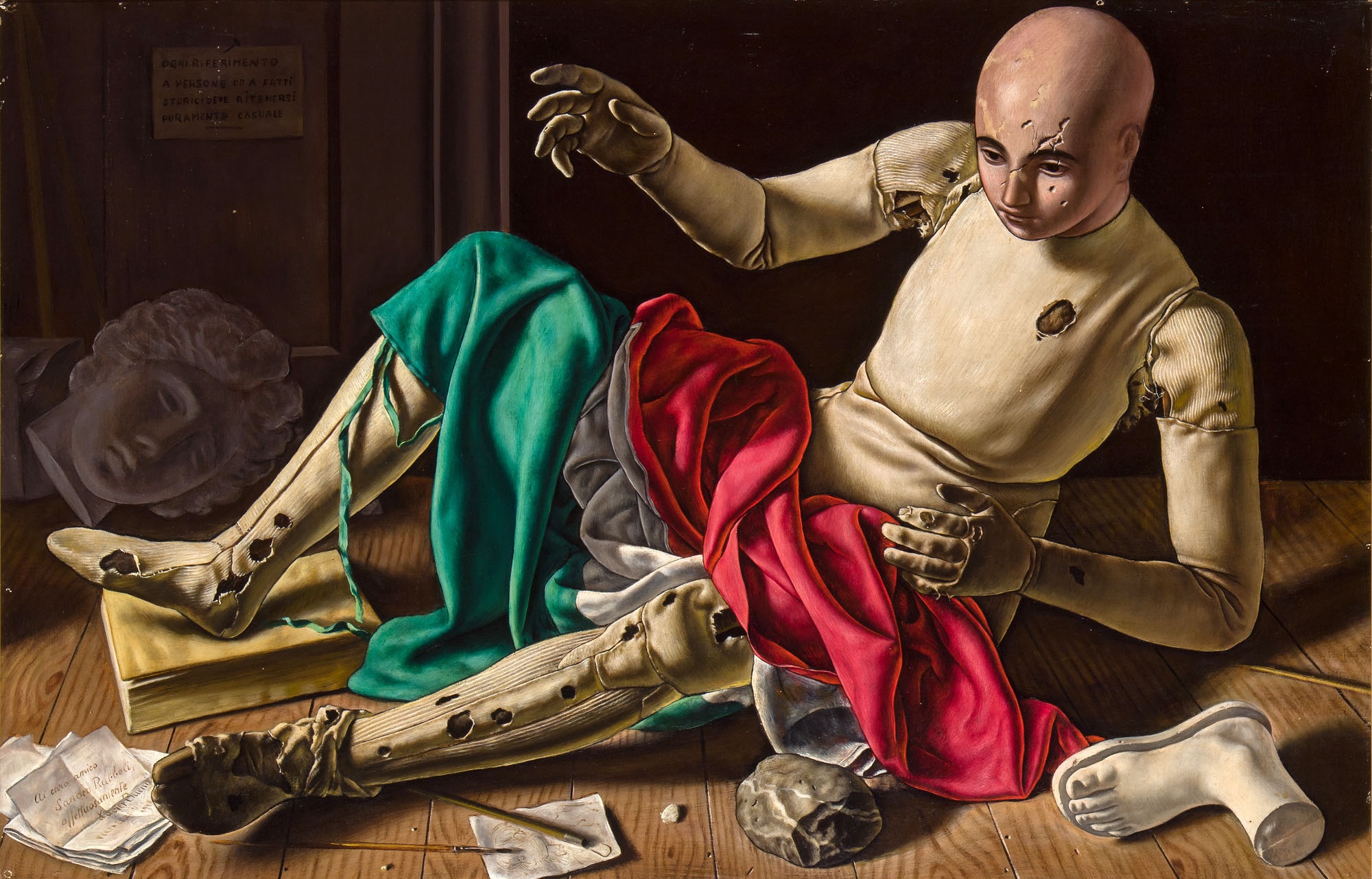 Xavier Bueno – The Dummy [1948] Gandalf’s Gallery. Flickr.
Such control can rapidly become abusive, and, for everyone who experiences this sort of authoritarian, bullying behaviour from another, it creates a very unhappy life all round.

They may become the victims of a dominating and tyrannical oppressor.
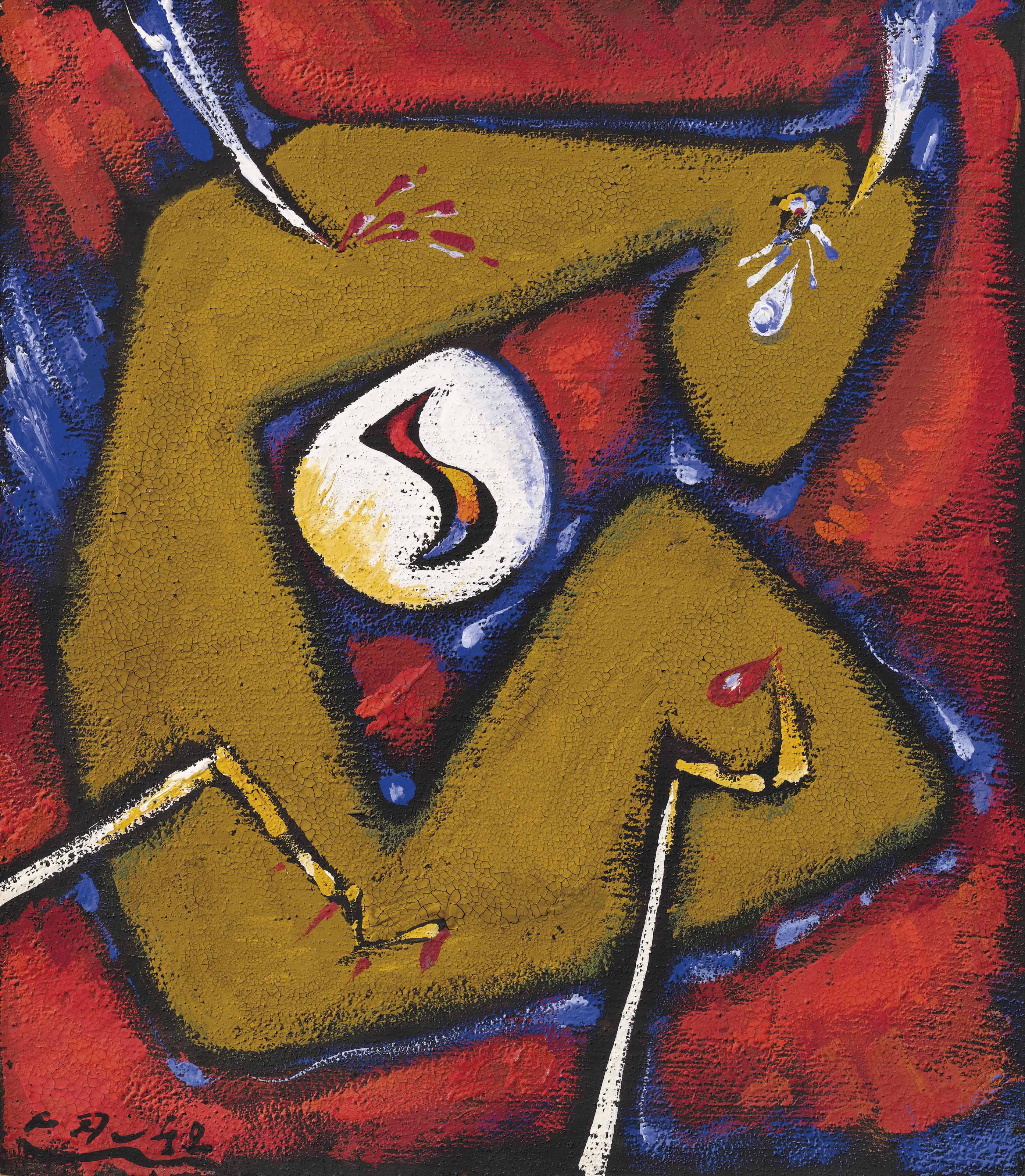 André Masson – The Victim [1942]Gandalf’s Gallery. Flickr.
“I swore never to be silent whenever and wherever human beings endure suffering and humiliation. We must take sides. Neutrality helps the oppressor, never the victim. Silence encourages the tormentor, never the tormented.”
Elie Wiesel
When taken over in this way, personal boundaries are violated, physically and/or mentally, and people are often paralysed with fear, which keeps them controlled and, in some instances, dependent, on their tormentor.
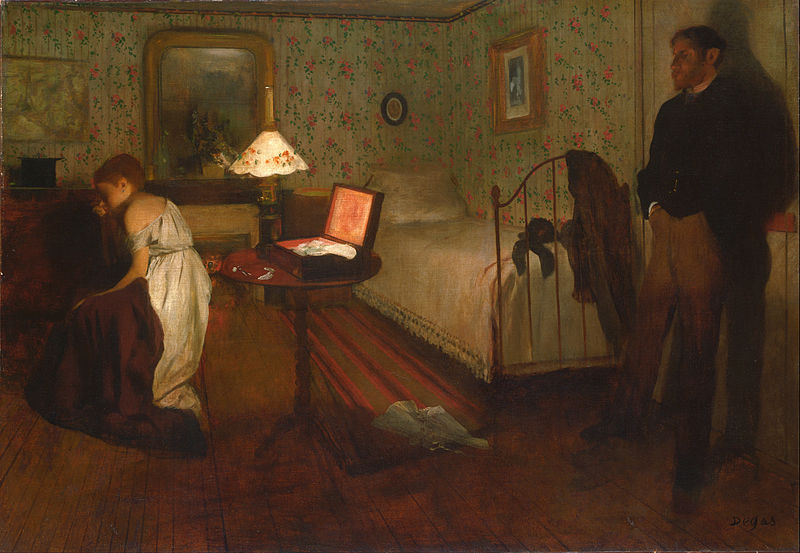 Edgar Degas – Interior. 1868. Wikimedia Commons.
“Abuse grows from attitudes and values, not feelings. The roots are ownership, the trunk is entitlement, and the branches are control.”
Lundy Bancroft
When treated in this controlling and abusive way, whether psychological or physical, or both, whether in the workplace or within the family, victims of such harm may need much support from others and psychological help to become survivors.
This can help people to regain their self-esteem and autonomy and to put the responsibility for such dreadful experiences firmly back in the hands of the perpetrator.
“Inner peace begins the moment you choose not to allow another person or event to control your emotions.”
Pema Chodron
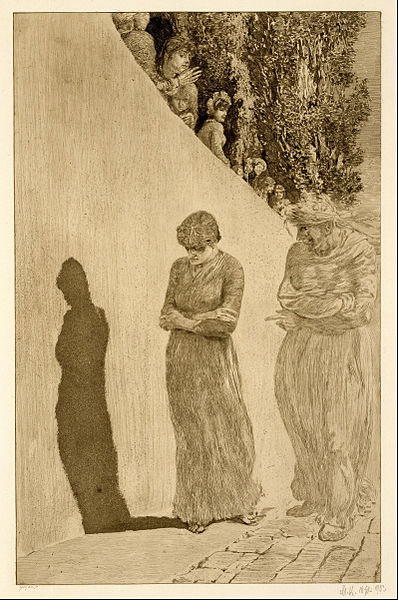
Max Klinger – Shame. Wikimedia Commons.
“He who invalidates another invalidates himself.”
Talmud.
- Giving Up Trying To Control Everything, Except Ourselves.
“Man has demonstrated that he is master of everything except his own nature.”
Henry Miller
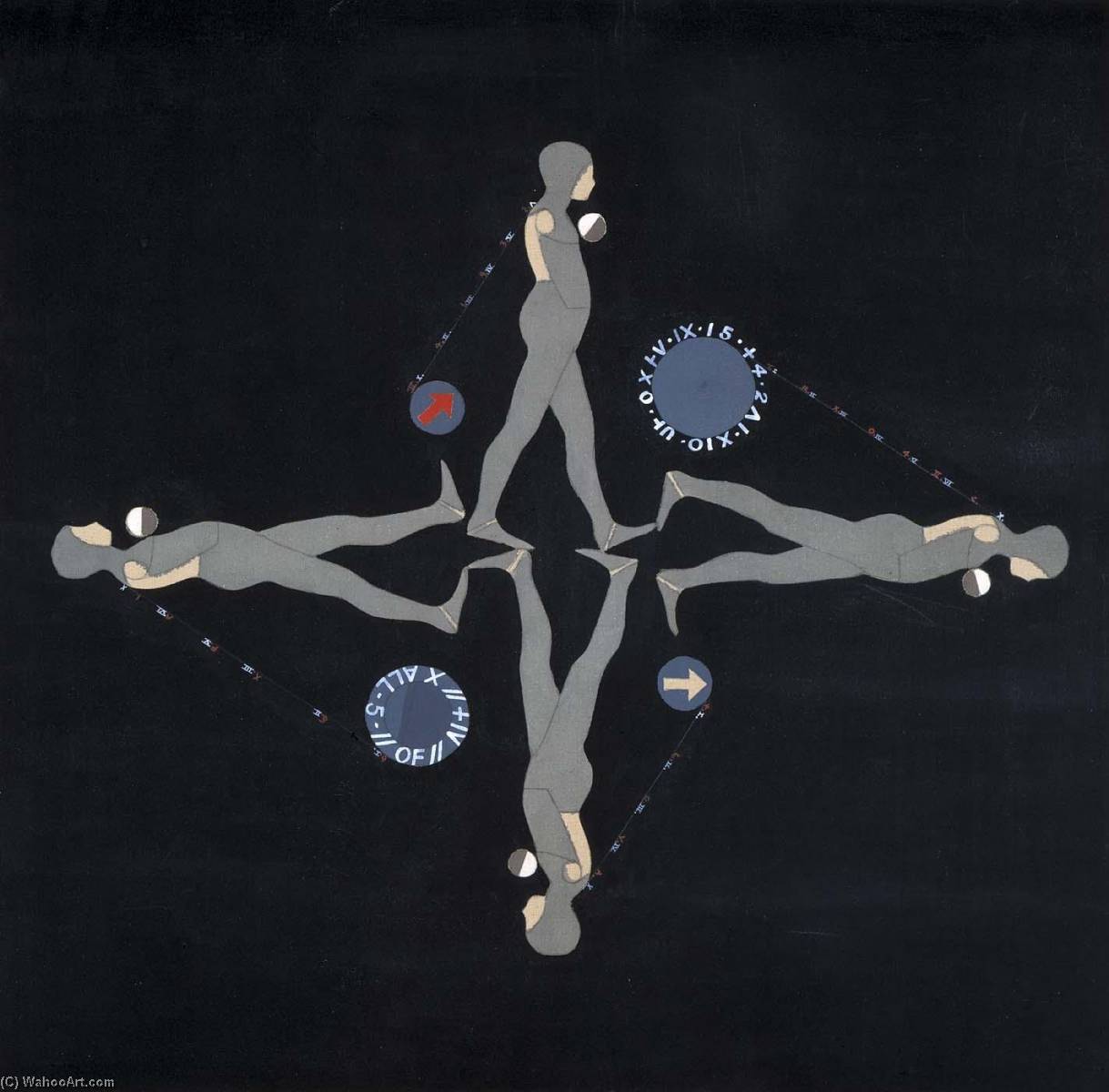 ‘Whatever liberates our spirit without giving us self control is disastrous.’ Johann Wolfgang von Goethe, 1749 1832. From the series Great Ideas of Western Man – (Ernest Tino Trova)
“Maintaining the illusion that I am in control is futile, lonely, and in the long run always more costly than the effort is worth.”
Sheldon B. Kopp
Trying to control others is very likely to incite anger and resentment, which will, inevitably, rebound back to the controlling person. The Hindu and Buddhist principle of Karma is related to how we act in the world. If we do bad, hurtful things, there will be consequences for us.
Equally, good energy will come back to us if we do good deeds. It is a matter of action and reaction. Whether or not you believe in Karma, there is no doubt that, if we constantly send out bad vibes and negative energy, we may get this boomeranging back at us in the future.
Thus, disrespecting others through attempting control will mean that, ultimately, there are likely to be unpleasant repercussions for the controlling or abusive person.
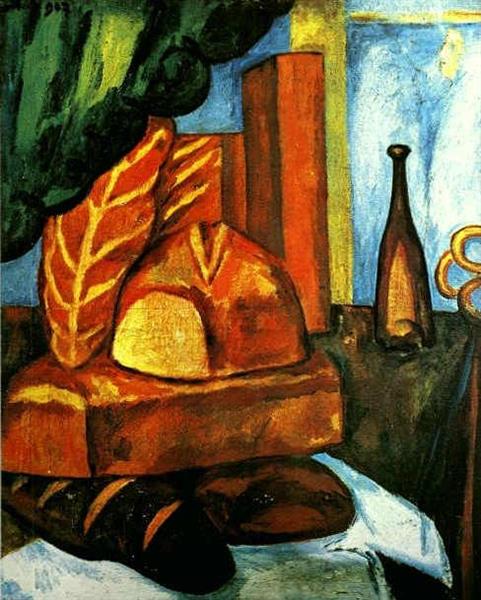
Mikhail Larionov. Bread. Wikiart.
“People who treat other people as less than human must not be surprised when the bread they have cast on the waters comes floating back to them, poisoned.”
James Baldwin
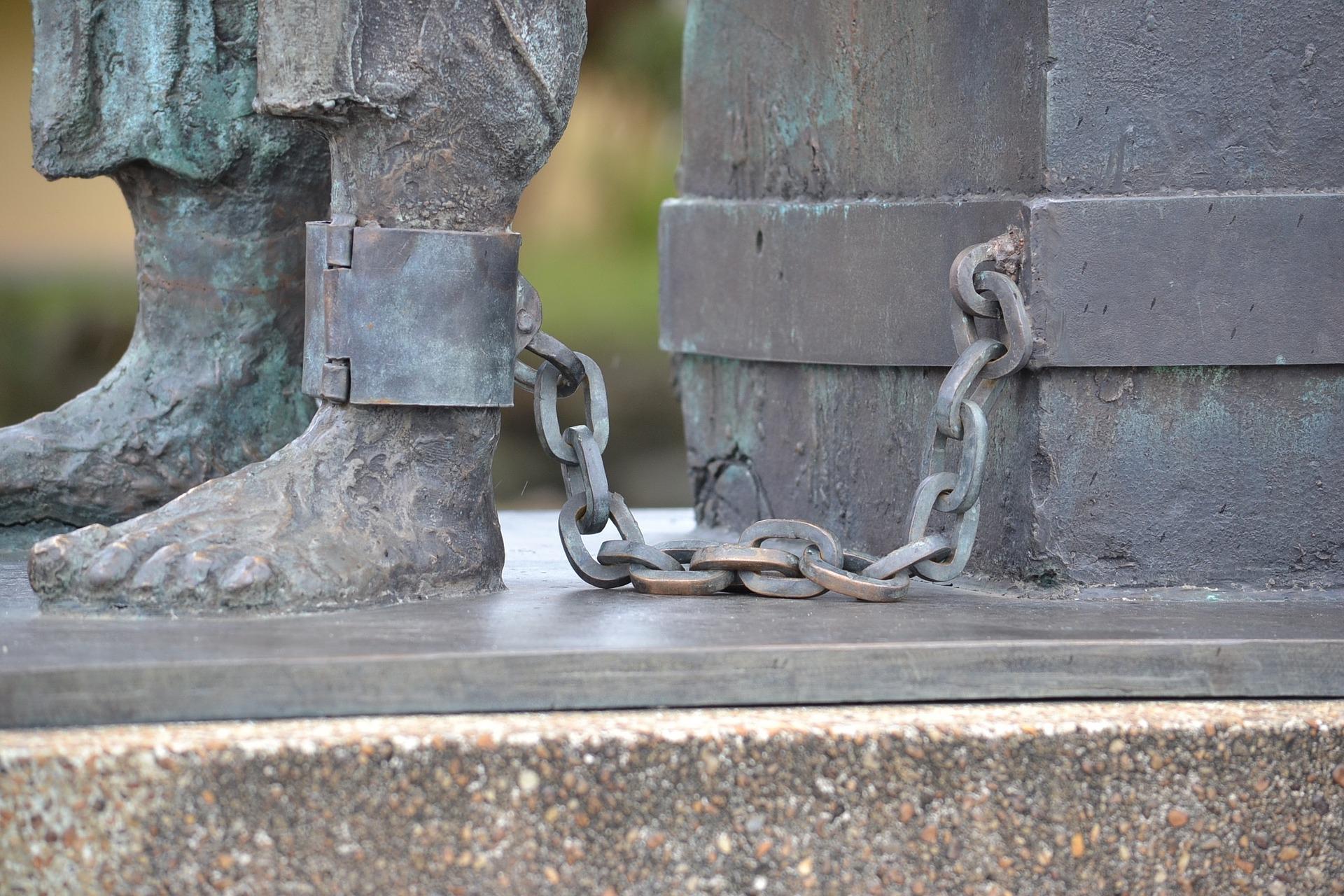
“No man can put a chain about the ankle of his fellow man without at last finding the other end fastened about his own neck.”
Frederick Douglas
Even though it may take some time, and it does not always happen, there is a likelihood and risk that people who have been oppressed will gain strength and retaliate. The boomerang will return to the oppressor to settle the score.
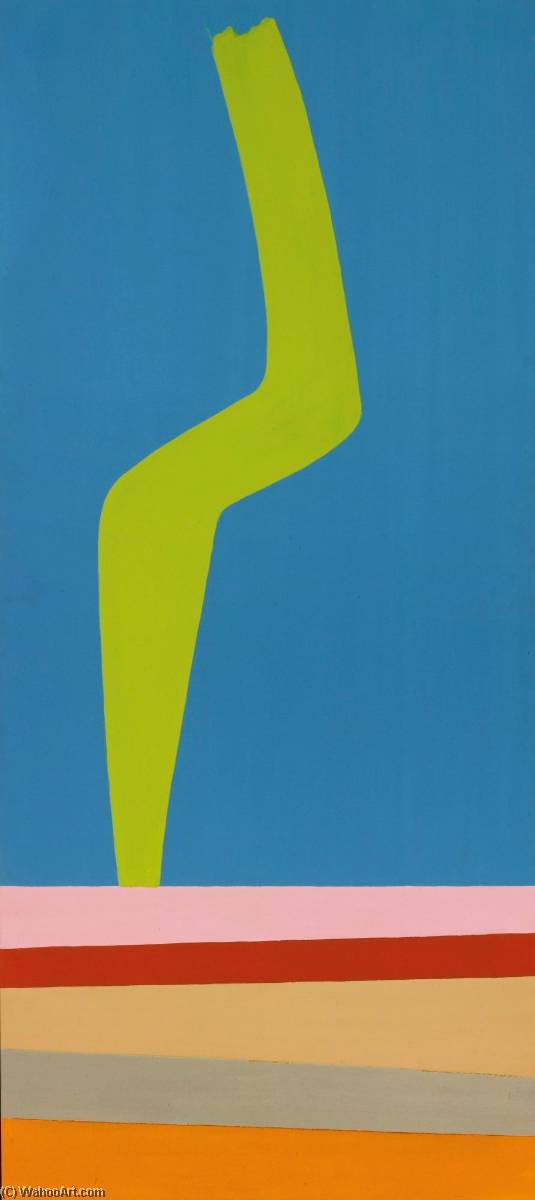
Boomerang – Jack Hamilton Bush. Wikioo.
If we perceive this tendency to control in ourselves and we have come to recognise how destructive of self and other this can be, how might we change our controlling behaviour?
We need to face the fact that we cannot control anything except parts of ourselves; this realisation can be a painful shock. Life throws many difficult experiences at us, personally and universally, no matter how much we try to exert power over the world.
 Nadav Kander – The Doctor, Chernobyl. Chromogenic print. [2019]Gandalf’s Gallery. Flickr.
“The most difficult thing to admit, and to realize with one’s whole being, is that you alone control nothing.”
Henry Miller
However, as I indicated in Part 1 of this post, it can also be freeing to understand and accept that we only have limited control, in that, although we cannot control the world around us, we can choose how we might respond. (See also my post on reacting and responding.)
It is also important to recognise what we can control in our lives, and not always focus on the impossible.
Any attempts to try to exert control, as we have seen, will inevitably backfire on us, and we need to remember this fact. Understanding why we feel the need to control others is crucial, and it may be that we need a therapist’s help in order to discover the roots of, and fears beneath, our controlling behaviour.
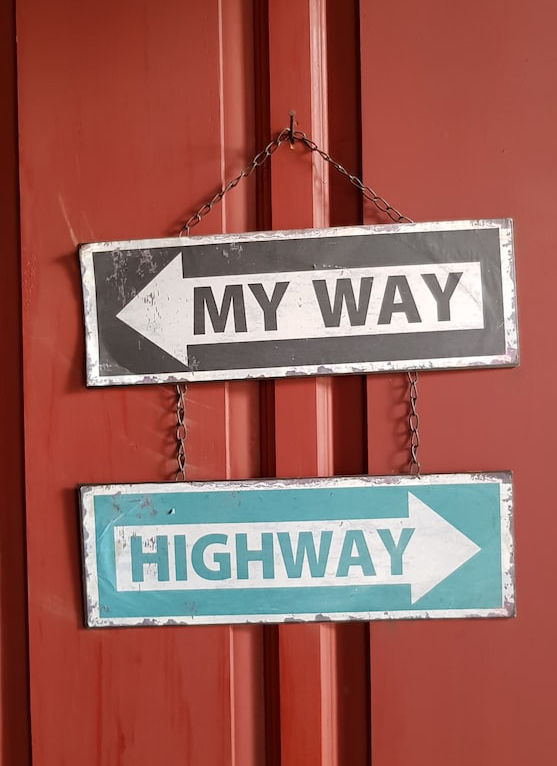
Ask yourself whether you are always trying to be right, to teach others, because you think you know better….. Is it ‘my way or the highway,’ because of a fear that others cannot be trusted? If trusting, and depending on others is difficult, and if you cannot delegate, why is this?
We all need others in our life and, whilst it is important to develop an ability to assess whether they can be trusted, it is crucial that we allow people into our life, those who can support and help us when we are in need.
“You may be deceived if you trust too much, but you will live in torment unless you trust enough.”
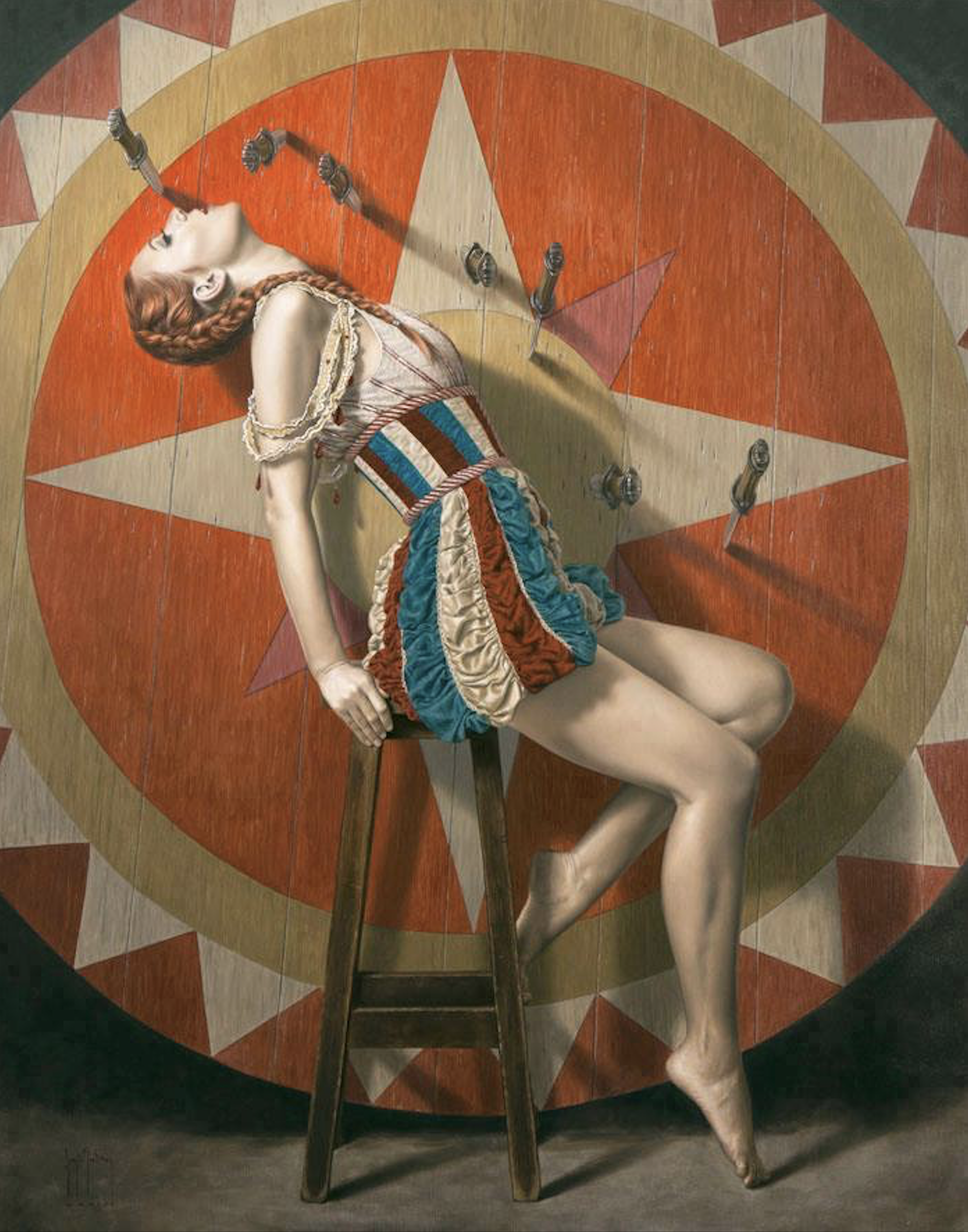 Sergio Martinez Cifuentes – Knife Thrower [2013]Gandalf’s Gallery. Flickr.
“You must trust and believe in people or life becomes impossible.”
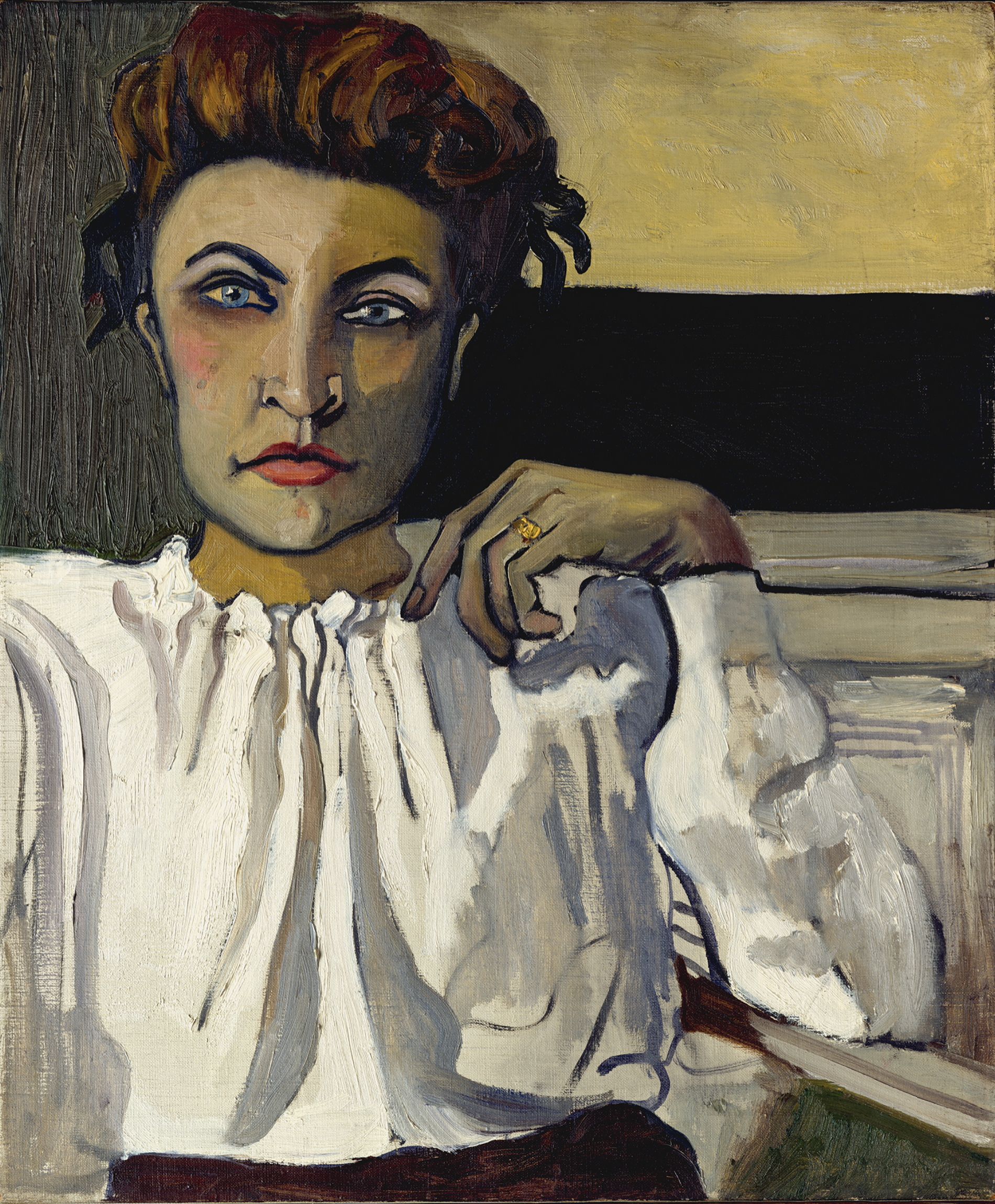 Alice Neel – Elenka [1936]Gandalf’s Gallery. Flickr.
“Because you believed I was capable of behaving decently, I did.”
Paulo Coelho
- Trying To Control Nature.
“We can save ourselves, but only if we let go of the myth of dominance and mastery and learn to work with nature.”
Naomi Klein
The recent hottest day ever in the UK, and subsequent hot days, are evidence of how trying to control nature certainly has its effects on us all. The world has not ‘worked with’ nature, and extreme weather is the result.
Many times, we have tried to dominate the natural world, and in doing so, we have caused damage to flora and fauna. A further example of human beings not working with nature is the careless act of releasing plastics and chemicals into the atmosphere, and into soil and water, creating severe pollution.
Whilst we may build sea walls and shore up crumbling cliffs, ultimately, we cannot interfere with the deeper mechanisms of nature. Just as we need to respect, rather than control, others, so we must honour nature and the mystical workings of the Universe.
“What is missing from our economic system and its technological base is humility and reverence for a universe that may, well, in some measure, always be beyond scientific understanding.”
Steve Cohen.(Columbia Climate School.23.8.21)
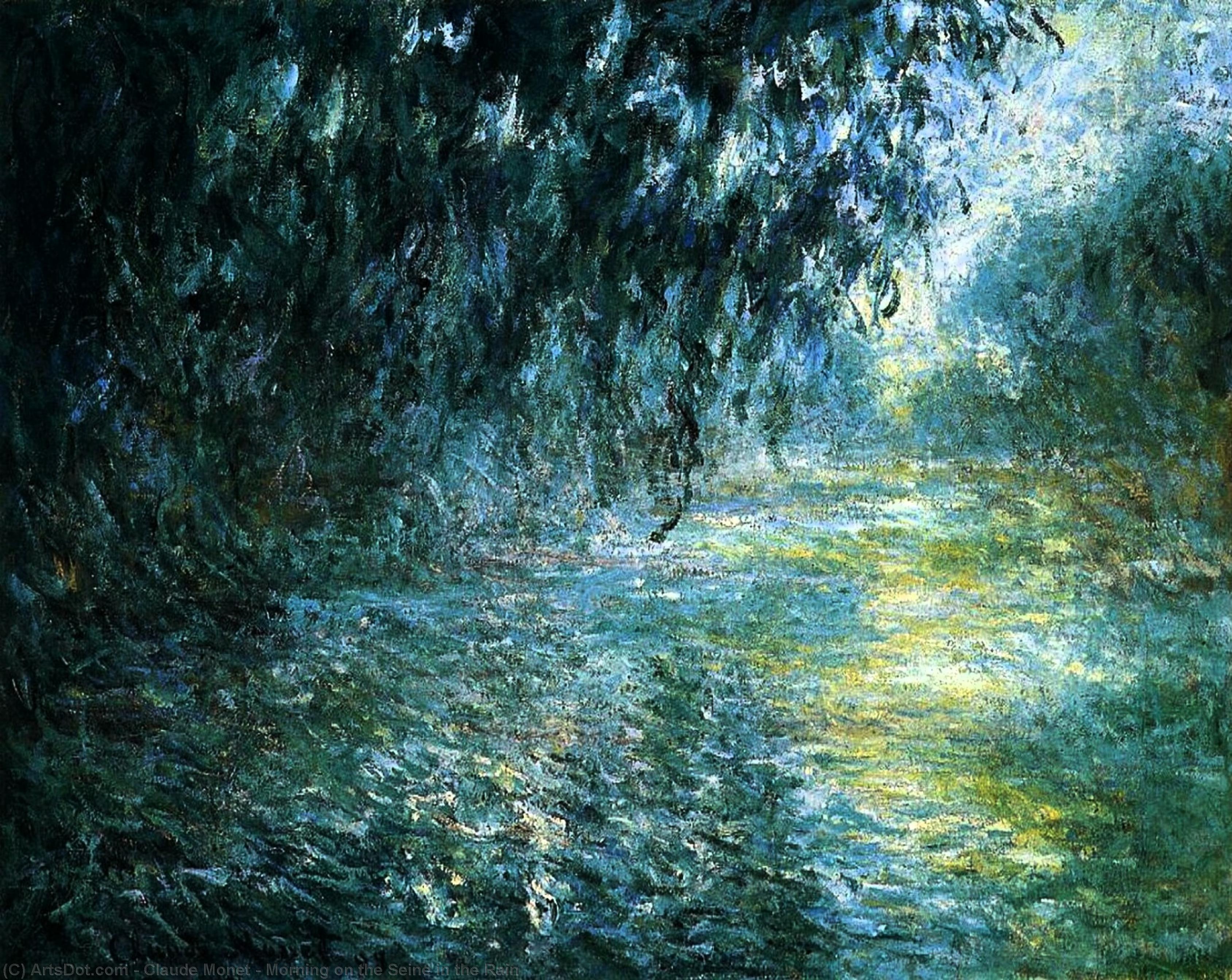 Morning on the Seine in the Rain – Claude Monet. Wikioo
“The best thing to do when it is raining is to let it rain.”
Henry Wadsworth Longfellow.
© Linda Berman
 waysofthinking.co.uk