
Harmony With Nature.
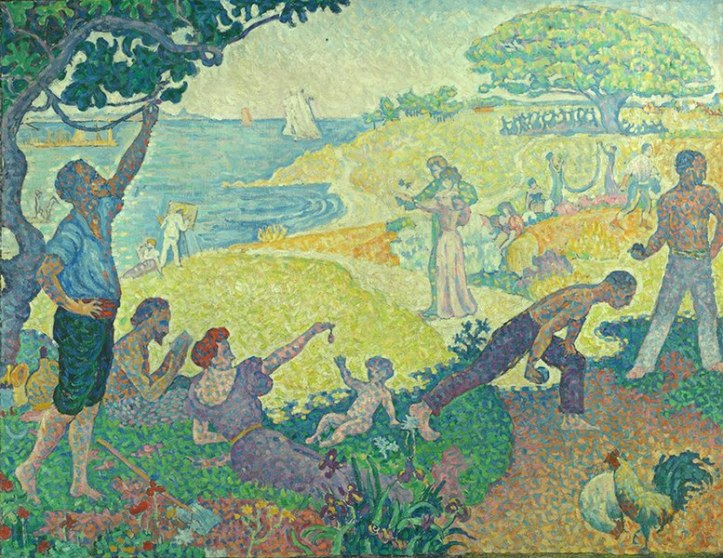 ‘In the Time of Harmony; the Golden Age is Not Passed…’ by Paul Signac,Wikimedia Commons.
“I tried to discover, in the rumour of forests and waves, words that other men could not hear, and I pricked up my ears to listen to the revelation of their harmony.”
Gustave Flaubert
Nature has much to teach us about harmony, if only we would slow down a little and take heed of its ‘revelations.’ If we feel relatively peaceful inside, then that is the time to turn outwards, to see what the environment has to offer us and to teach us.
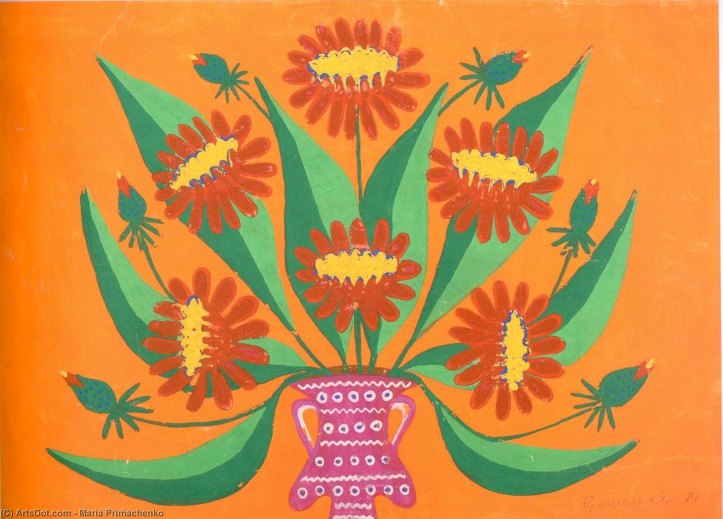 Do I Love Orchards, Do I Love Forests – Maria Primachenko. Wikioo.
“Love yourself. Then forget it. Then, love the world.”
Mary Oliver
How often do we pause to discover the intricate and miraculous workings of nature? Can we find a few moments moment to ‘stop and smell the roses?’
If we are able to take this time out from the busy-ness of our daily lives, and think more deeply about nature’s wonders, then we might discern subtle, harmonious and marvellous patterns across species, and see such patterns reflected across our world.
If we do this, then we will come to discover how the whole of the world is connected, forming a harmonious whole, an intricate network, and how we are very much a part of this universal and natural system.
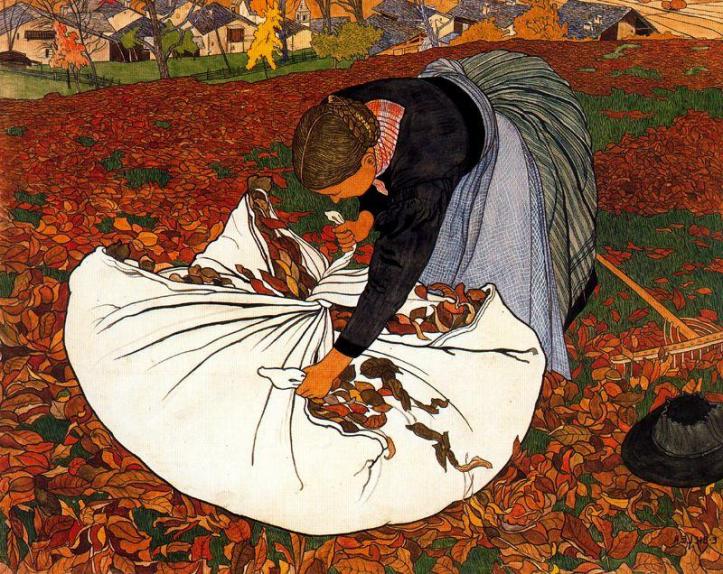 The Leaf Gatherer – Ernest Bieler. Wikioo.
“Every particular in nature, a leaf, a drop, a crystal, a moment of time is related to the whole, and partakes of the perfection of the whole.”
Ralph Waldo Emerson.
This is holistic thinking, which means seeing the world as a whole, with each of its smaller parts reflecting and relating to each other and to the whole.
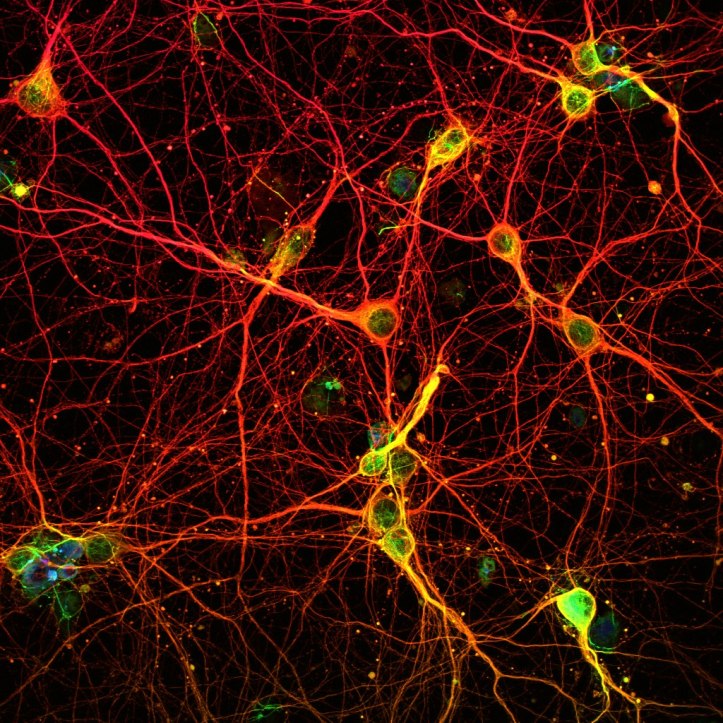 Neurons under a microscope. Author: hor ALol88. Wikimedia Commons.
“In geometric harmony of the cosmos there are ways that resemble, there are universal patterns, from blood vessels, to winter trees or to a river delta, from nautilus shell to spiral galaxy, from neurons in the brain to the cosmic web.
A whole universe of connections is in your mind – a universe within a universe – and one capable of reaching out to the other that gave rise to it. Billions of neurons touching billions of stars – surely spiritual.”
Alejandro Mos Riera
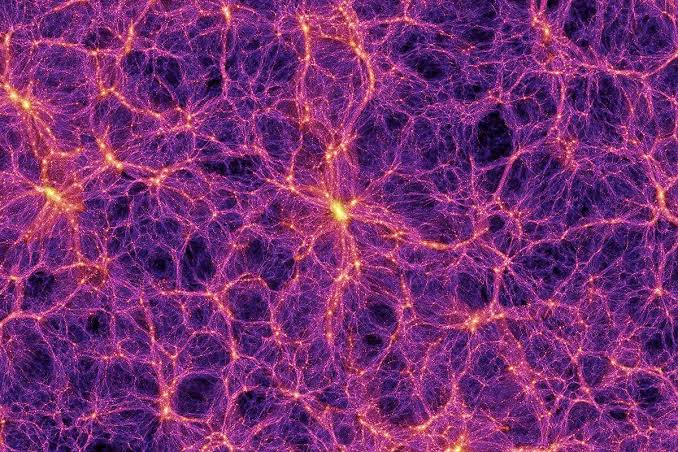 The Cosmic Web. Wikimedia Commons.
“There is not a fragment in all nature, for every relative fragment of one thing is a full harmonious unit in itself.”
John Muir
In order to gain some insight into nature’s harmonies, it is important to look, to listen, to study, and learn to decipher the language of the natural world.
“There is a way that nature speaks, that land speaks. Most of the time we are simplynot patient enough, quiet enough, to pay attention to the story.”Linda Hogan
“Nature has her language, and she is not unveracious; but we don’t know all the intricacies of her syntax just yet, and in a hasty reading we may happen to extract the very opposite of her real meaning.”
George Eliot
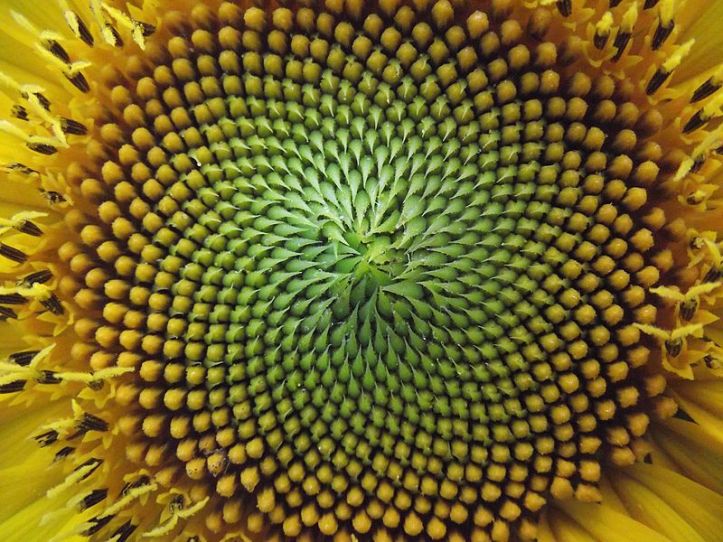 Fibonacci Spiral in a Sunflower. Anna Benczur. Wikimedia Commons.
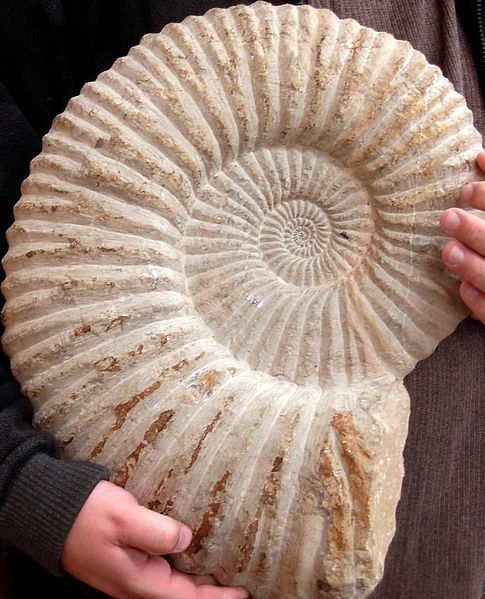
Fibonacci Spiral in Ammonite Fossil. Jonathunder. Wikimedia Commons.
“The Fibonacci Sequence turns out to be the key to understanding how nature designs… and is… a part of the same ubiquitous music of the spheres that builds harmony into atoms, molecules, crystals, shells, suns and galaxies and makes the Universe sing.”
Guy Murchi
The Fibonacci sequence is a communication from nature, hiding in plain sight. If we really look closely, we will find it everywhere we look in nature.
In some ways, the Fibonacci Sequence may be a little reflected in therapy, for as we work through our problems, we find ourselves spiralling round into what feel like old issues.
It is important to be able to recognise repeated patterns in our life and our behaviour; some of these may be helpful, others not. Could more concentrated and exploratory ways of thinking about nature and the world lead to us also discovering more meaningful, repeated patterns in our own lives?
Psychological material that requires more working through will always return for us to consider and try further to come to terms with. This is far from a bad thing; indeed, we will come to realise that each time we revisit a problem, we gain a little more knowledge and understanding of it.
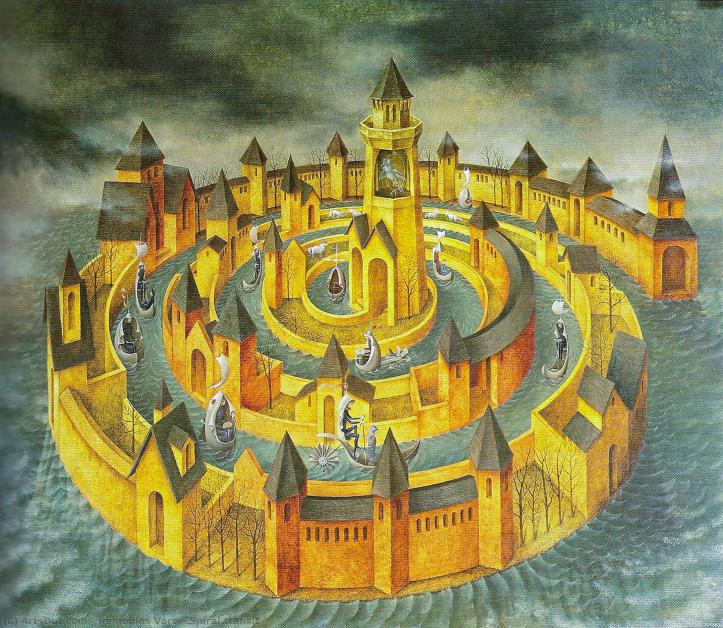 Spiral transit – Remedios Varo. Wikioo.
“The growth of understanding follows an ascending spiral rather than a straight line.”
Marion Milner
We may feel as if we are in the same place as before, but in actuality we are higher up the spiral of self-knowledge and healing. This is both an individual and a universal path to personal growth and development.
“The path isn’t a straight line; it’s a spiral. You continually come back to things you thought you understood and see deeper truths.”
Barry H. Gillespie
As we move forward in therapy, we will become enriched through the spiralling repetition and the new perspectives we gain.
- In Harmony With The World: “ An Intimate Infusion With Nature.”
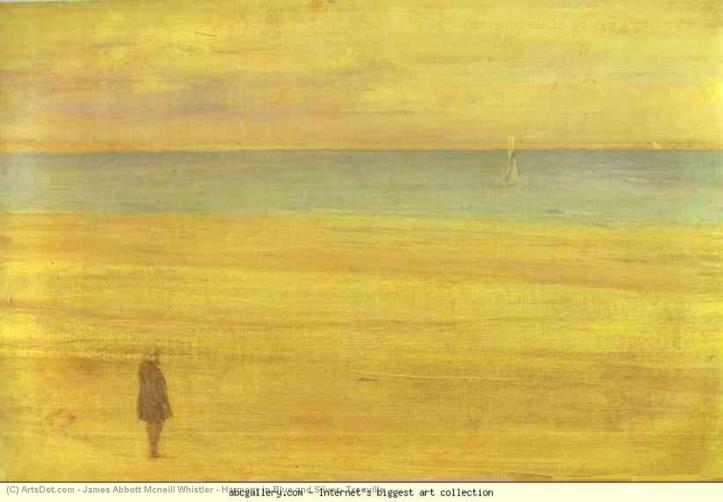 Harmony in Blue and Silver, Trouville – James Abbott Mcneill Whistler. Wikioo.
“The goal of life is to make your heartbeat match the beat of the universe, to match your nature with Nature.”
Joseph Campbell
Whilst it is obviously important to be as aware and mindful as possible about what is happening in our inner world, as I described in last week’s post, this certainly does not imply that our external world is not also crucially important to our wellbeing.
“Nature is painting for us, day after day, pictures of infinite beauty if only we have the eyes to see them.”
John Ruskin
“Normally, we do not so much look at things as overlook them.”
Alan Watts.
The landscape around us is created by Nature, by others and by ourselves. The part we play in arranging our lives externally, and the home we have, express much about who we are.
“An individual’s harmony with his or her ‘own deep self’ requires not merely a journey to the interior but a harmonising with the environmental world.”
James Hillman
The artist Monet created his garden; it was an aspect of and a reflection of himself and he was a part of all that was in it.
“Dwell on the beauty of life. Watch the stars, and see yourself running with them.”
It was a place for him to be himself, somewhere to ease his considerable tensions and frustrations.
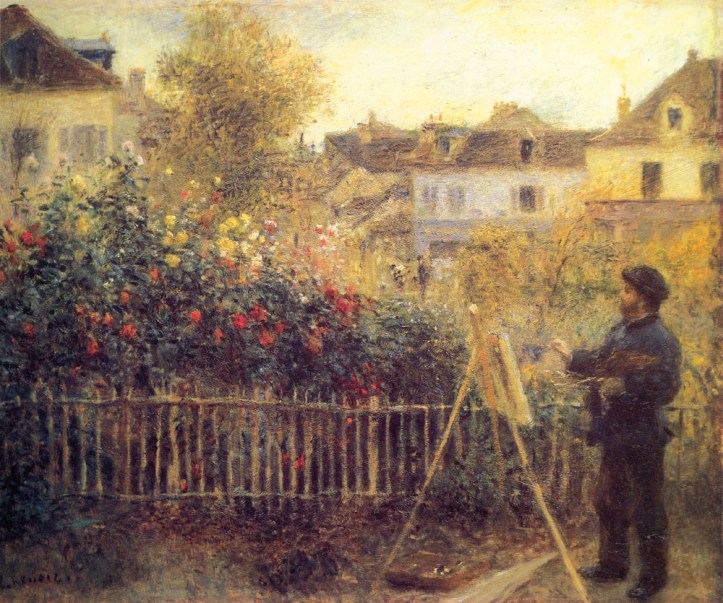 Monet Painting In His Garden in Argenteuil. Renoir.Wikimedia Commons.
“My garden is my most beautiful masterpiece.”
Monet.
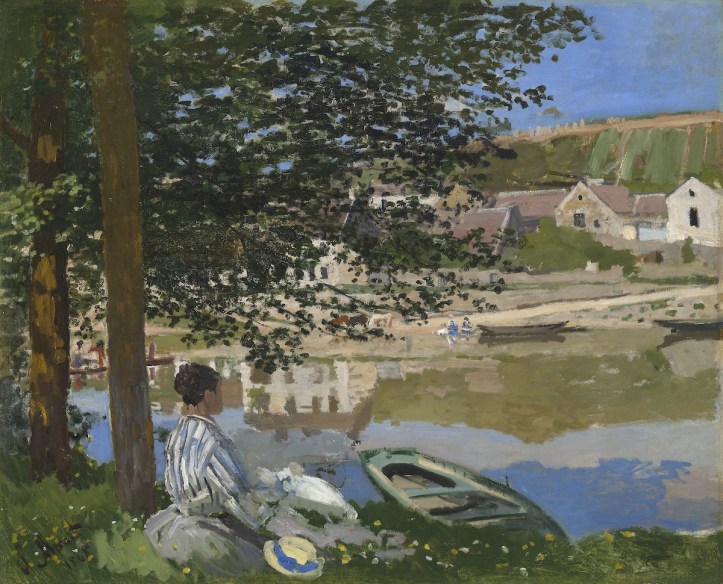 Claude Monet, On the Bank of the Seine, Bennecourt, 1868. Wikimedia Commons.
“My only desire is an intimate infusion with nature, and the only fate I wish is to have worked and lived in harmony with her laws.”
Monet.
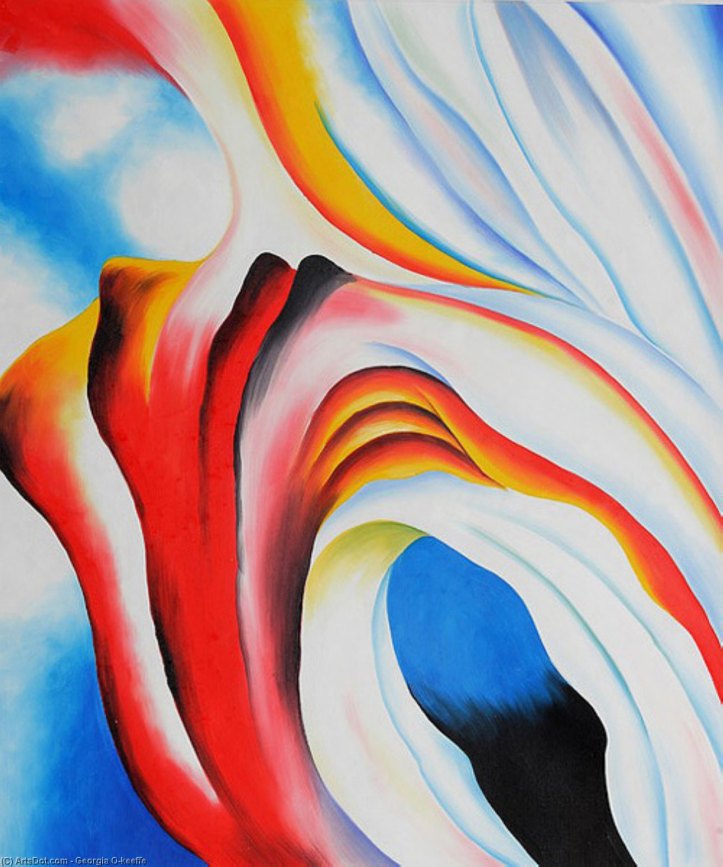 Music Pink and Blue II – (Georgia Totto O’keeffe)
“Harmony sinks deep into the recesses of the soul and takes its strongest hold there, bringing grace also to the body & mind as well. Music is a moral law. It gives a soul to the universe, wings to the mind, flight to the imagination, a charm to sadness, and life to everything. It is the essence of order.”
Plato
- ‘Thinking Other’: Harmony, Diversity And Hospitality.
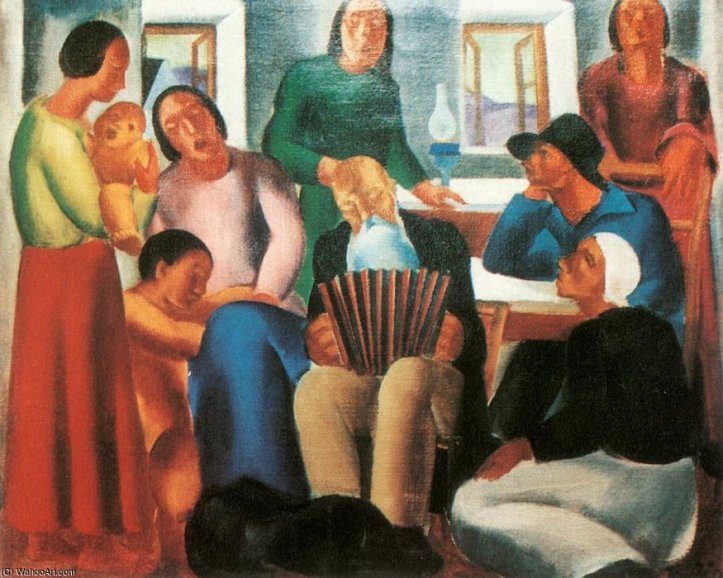 Singing Family – David Jandi. Wikioo.
“We don’t get harmony when everybody sings the same note. Only notes that are different can harmonize. The same is true with people.”
Steve Goodier
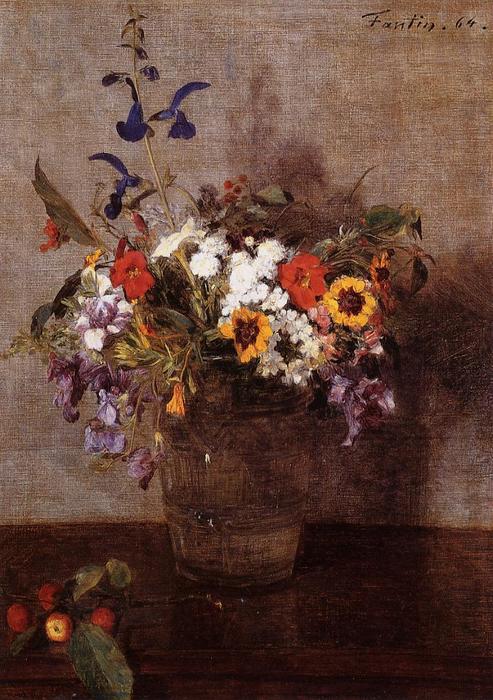
Diverse Flowers – (Henri Fantin Latour)
“Be in harmony yet be different.”
Confucius.
Welcoming difference and being hospitable and open to others is an essential part of creating harmony, openness and tolerance in families, communities, the workplace and schools. An attitude of acceptance and inclusivity to all-comers fosters empathy, respect, understanding and creativity.
Instead of thinking in terms of creating outsiders and building fictional divisions, it is important to contemplate commonality. We need to make boundaries between self and another more elastic, translate across language and vernacular, offer greeting, help, welcome, invitation to others.
‘Let us say yes to who or what turns up, before any determination, before any anticipation, before any identification, whether or not it has to do with a foreigner, an immigrant, an invited guest, or an unexpected visitor, whether or not the new arrival is the citizen of another country, a human, animal, or divine creature, a living or dead thing, male or female.’
We need to practise creating spaces to meet and to offer welcome, rather than devising methods of exclusion.
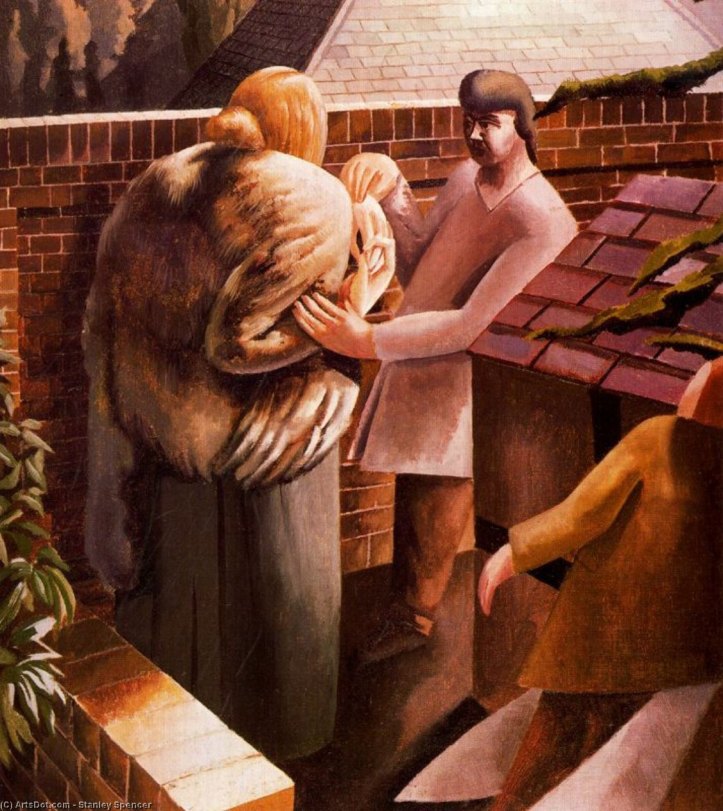 The Meeting – Stanley Spencer. Wikioo.
“Woven into our lives is the very fire from the stars and genes from the sea creatures, and everyone, utterly everyone, is kin in the radiant tapestry of being.”
Elizabeth A. Johnson
How could we learn to create such encounters, such kinship? How can we ‘think other’ and what might this mean? Thinking other begins with changing attitudes, shifting towards dissolving boundaries between people rather than erecting them.
Then one might be able to experience how feels to de-territorialize, to think ourselves into the other’s being, to somehow become other, believing that this will create harmony, rather than discord.
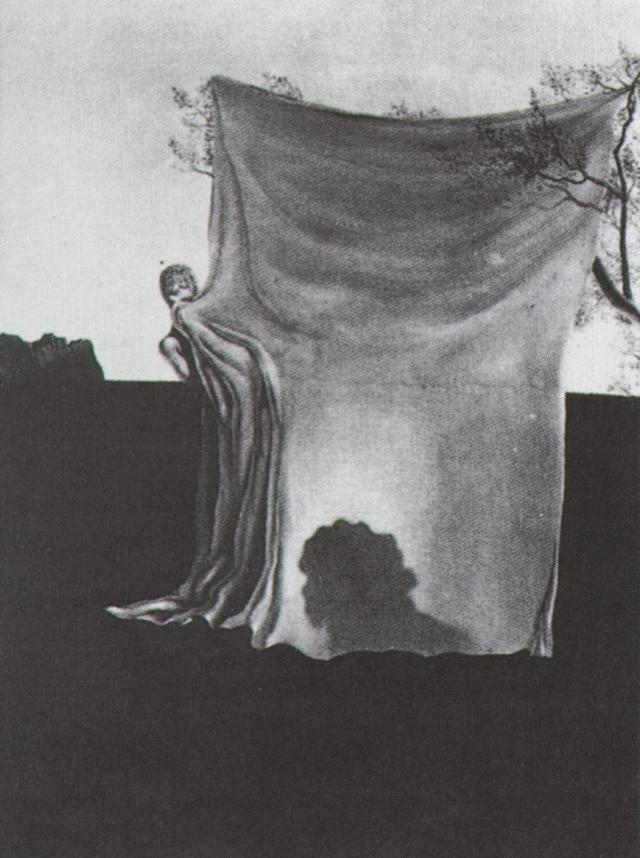 The Feeling of Becoming, 1930 – Salvador Dali. Wikioo.
The hospitality of which Derrida speaks in the quotation above links powerfully with the idea of becoming-other.
This is a process in which we enter into another’s world, internalising something of their essential nature, whether they be human or animal.
The discovery of commonalities deep within another may often be achieved, for example, through painting, writing, film or music. The sounds, when such music is made, are not mere recordings, they are actual, real, instrumental ‘becomings……’
“Becoming is never imitating. When Hitchcock does birds, he does not reproduce bird calls, he produces an electronic sound like a field of intensities or a wave of vibrations, a continuous variation, like a terrible threat welling up inside us.”
I have experienced ‘becoming other’ through painting and also through being a therapist. I am sure that many therapists will have really felt that they have had , at times, more than deep empathy with a patient, an experience that really feels more like Deleuze’s becoming, an at-oneness with another.
When a patient in therapy myself, I have also felt a kind of becoming other in terms of feeling really heard and understood by my therapist, and really taking on board her ways of thinking and being. Again, this is not ‘copying’ the other, but is closer to a feeling of transformation and real change.
Of course, this therapy experience I have described may involve many other complex psychological mechanisms too, relevant to both therapist and patient. I do think, nevertheless, that the process of becoming other frequently occurs in therapy. I would be interested to know whether other therapists have experienced this.
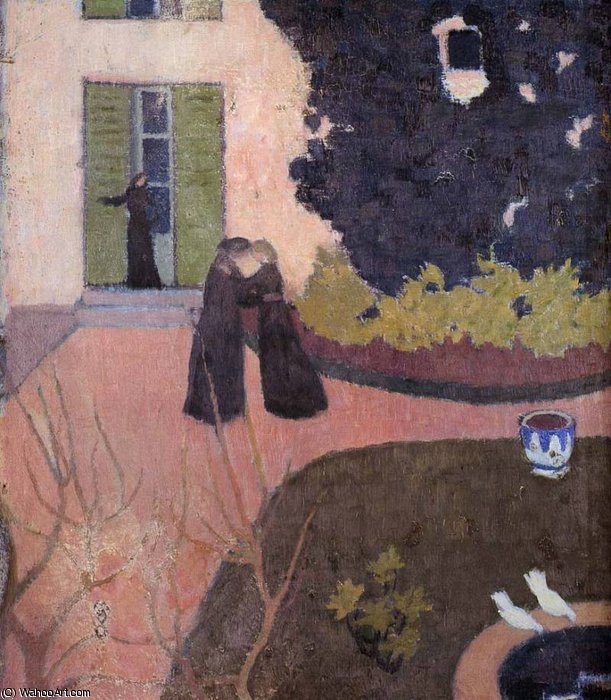 The Meeting – Denis Maurice. Wikioo.
Outside of therapy too, this mutually beneficial process involves an awareness that the boundaries between self and other can be regarded as permeable, that we can find new ways of entering into another’s world and inviting them into ours.
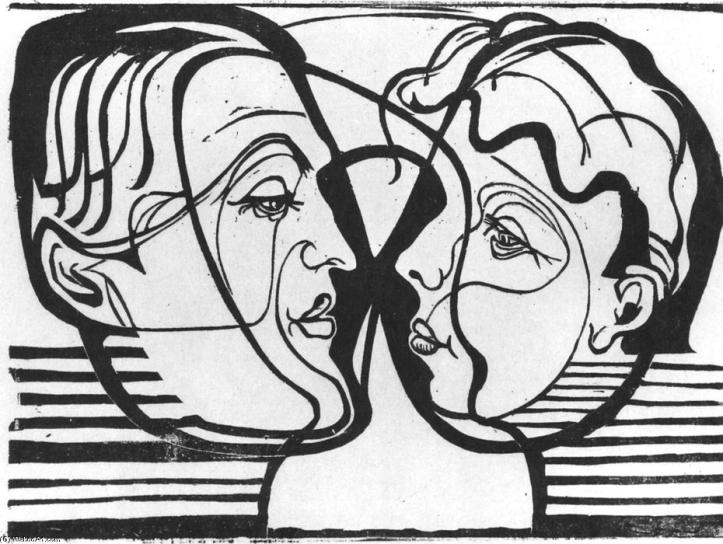 Two Heads Looking at Each Other – Ernst Ludwig Kirchner. Wikioo.
This is doubtlessly a highly creative endeavour, a charting of new territory, an advancing into a potentially productive and yet unknown area. It envisages a different approach to integration, to internalisation…. to real harmony between self and other.
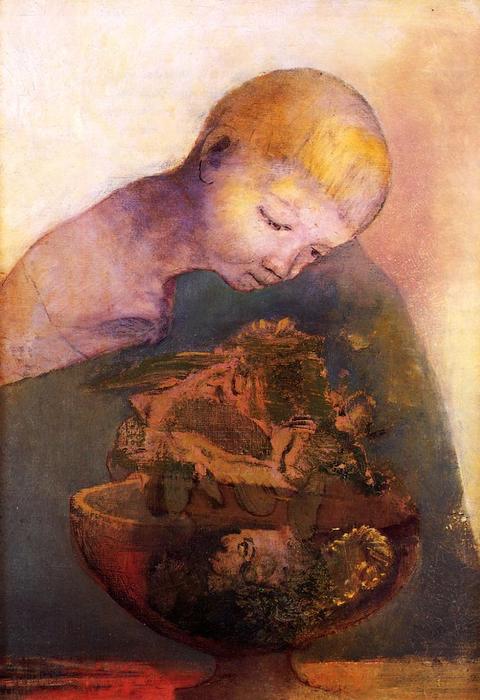
The Chalice Of Becoming – Odilon Redon. Wikioo.
This ‘becoming’ is more than welcoming another, it is more than empathy, for it is a process of growth, challenging concepts of ‘otherness,’ offering flux, change and harmonious transformation.
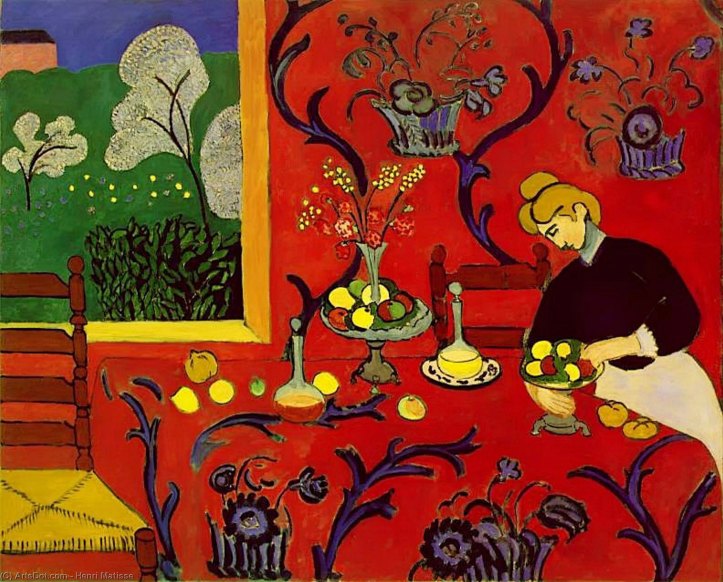 Harmony in Red (La desserte), Spring – Henri Matisse. Wikioo.
“Everything is connected. The wing of the corn beetle affects the direction of the wind, the way the sand drifts, the way the light reflects into the eye of man beholding his reality. All is part of totality, and in this totality man finds his hozro, his way of walking in harmony, with beauty all around him.”
Tony Hillerman
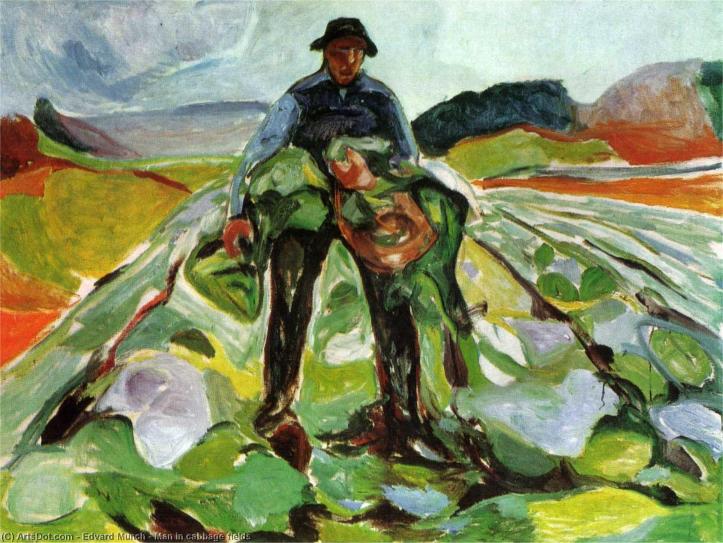 Man in Cabbage Fields – Edvard Munch. Wikioo.
We call it “Nature”; only reluctantly admitting ourselves to be “Nature” too.”
Denise Levertov
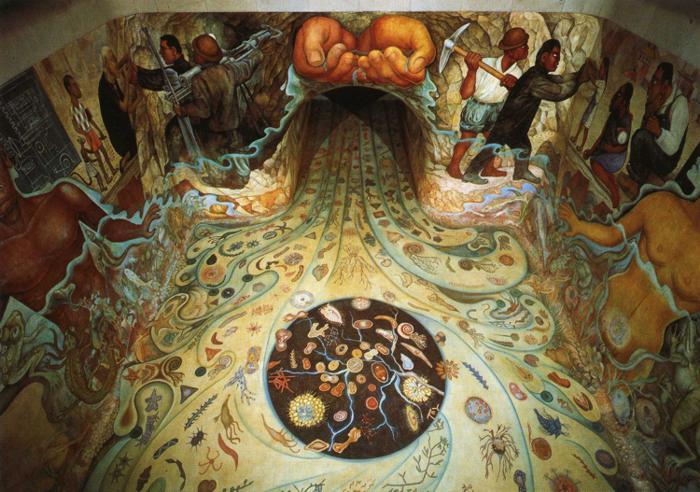 The Hands of Nature Offering Water – Diego Rivera. Wikioo.
“I rejoice in the knowledge of my biological uniqueness and my biological antiquity and my biological kinship with all other life forms. This knowledge roots me, allows me to feel at home in the natural world, to feel that I have my own sense of biological meaning, whatever my role in the cultural, human world.”
Oliver Sacks
© Linda Berman.
 waysofthinking.co.uk
Reblogged this on penwithlit and commented:
Some very interesting points and paintings. I have also discovered Wikioo too. There is a feeling of quasi-Jungian balance here.
LikeLiked by 1 person
Thanks for the reblog and for your comments and great feedback. 🤗
LikeLike