
This is very much a poem for when we go through tough times. It has some strong messages and powerful depictions of grief, bringing both sadness and hope. From the very first line of the poem, Ellen Bass urges us ‘to love life.’ Sometimes we might have to try really very hard to do this, especially when we have ‘no stomach for it.’ When we are grieving, ill, lacking enough money, or suffering in many other ways, it is very difficult to feel such a love for life or to recall ways of thinking that might make us feel any better. The tortuous pain seems to dominate everything.The Thing Is
to love life, to love it even when you have no stomach for it and everything you’ve held dear crumbles like burnt paper in your hands, your throat filled with the silt of it. When grief sits with you, its tropical heat thickening the air, heavy as water more fit for gills than lungs; when grief weights you down like your own flesh only more of it, an obesity of grief, you think, How can a body withstand this? Then you hold life like a face between your palms, a plain face, no charming smile, no violet eyes, and you say, yes, I will take you I will love you, again.
“The Thing Is” by Ellen Bass, from Mules of Love. © BOA Editions, Ltd., 2002
 Melancholy – Edgar Degas. Wikimedia Commons.
When things are going badly for us, it is easy to lose sight of anything good. It is easy to forget that everything in life is transient, impermanent, and that, somehow, the difficult times will most likely pass. However, if we can muster the strength to do this, rather than spoiling our days on earth, thinking about transience can enhance them and give us the courage to go on. Accepting the impermanence of life is crucial in developing gratitude for what we do have.“…love it even when you have no stomach for it…”
“It’s only when we truly know and understand that we have a limited time on earth – and that we have no way of knowing when our time is up, we will then begin to live each day to the fullest, as if it was the only one we had.”
Knowing that all is impermanent, when everything is crumbling around us, as the poet says, when we are weighed down by ‘an obesity of grief,’ we can still maintain a little hope, a chink of light, an awareness that ‘this too will pass.’ As life goes by, we may learn that the concept of impermanence is, in fact, massive. It may feel like cold comfort during the actual loss, though….Elisabeth Kubler-Ross
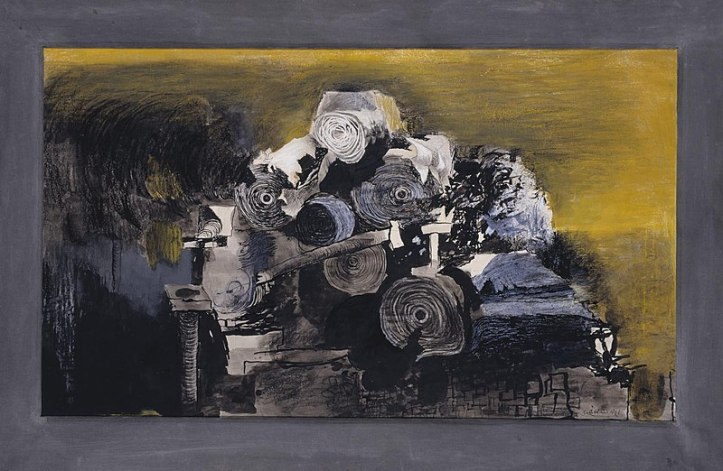 Devastation, 1941, East End, Burnt Paper Warehouse by Graham Sutherland
Bass’s description of huge grief is powerful, creating a sense of breathless, suffocating devastation, and a feeling of unbearable burden and weightiness, almost as if we are sinking ourselves.“…and everything you’ve held dear crumbles like burnt paper in your hands…”
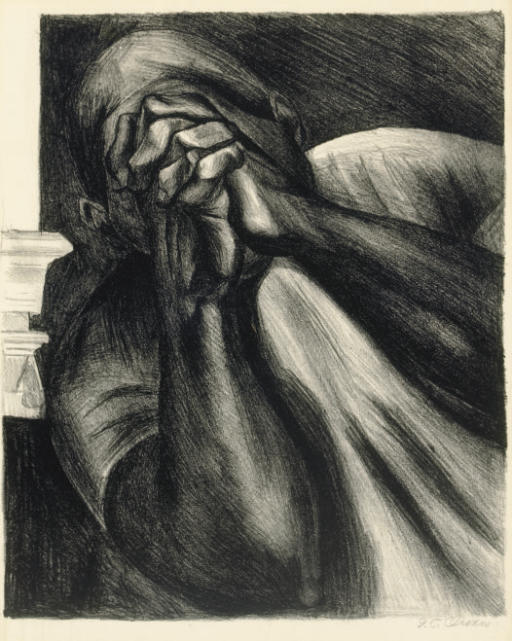
Grief – Jose Clemente Orozco. Wikioo.
Grief is compared to an intolerable, heavy heat, the air ‘thickened’ and ‘heavy as water.’ There is a sense that we may be stifled by the penetratingly desolate, acute feelings of loss, as we are all but drowned by this pervasive, submerging force.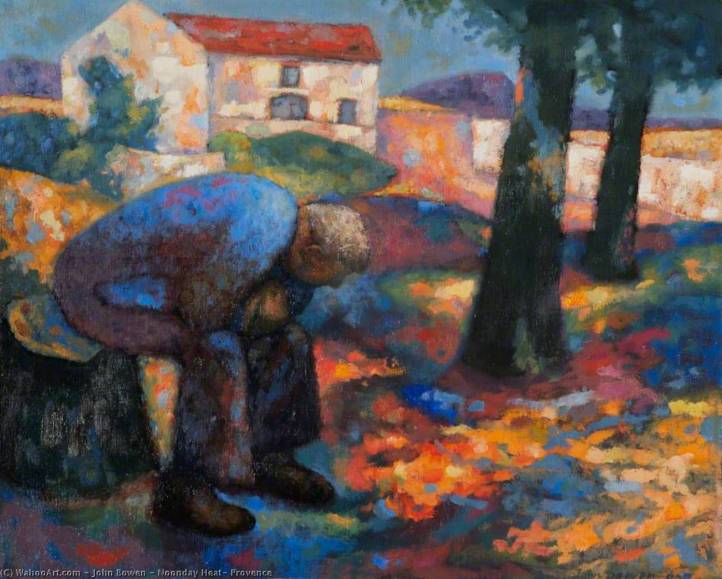 Noonday Heat, Provence – John Bowen. Wikioo.
Desperation in the face of such grief and pain can be so great that we wonder whether we will survive it. Will it be so heavy that it will make us explode through its utter excess, through the enormity of our devastation and emotion? Will we ever breathe freely again, given that the air is so chokingly oppressive?“When grief sits with you, its tropical heat thickening the air, heavy as water…”
The Pain – Nikolaos Gyzis, 1898. Wikioo.
Towards the end of the poem, however, the heaviness lifts, quite suddenly, and we begin to recover and breathe again. We may feel as though something has been worked through and a realisation has been made that we can experience pain, grief and loss and still start to find ways to love life. At this point, it is as if a dense mist has lifted from us and we become aware of the fact that life was continuing all the time, despite our grief. It is still there for us, ready to be embraced again……“you think, How can a body withstand this?”

Life is certainly not all about joy and happiness, neither is it completely full of pain and sorrow. We need to come to understand that we can live with both, that we can ‘learn to dance in the rain.’ In terms of grief and loss, the sad memories and the pain will remain, but in time they will become less heavy to carry.“In three words I can sum up everything I’ve learned about life: it goes on.”
Robert Frost
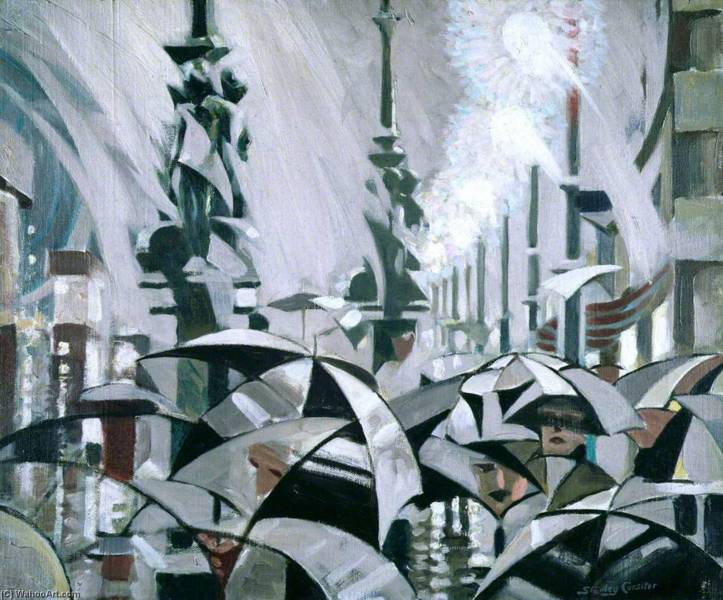 Rain on Princes Street – Stanley Cursiter. Wikioo.
Remembering this duality is difficult, especially when we are overwhelmed by grief and sadness.“Be still, sad heart! and cease repining; Behind the clouds is the sun still shining; Thy fate is the common fate of all, Into each life some rain must fall.”
Henry Wadsworth Longfellow
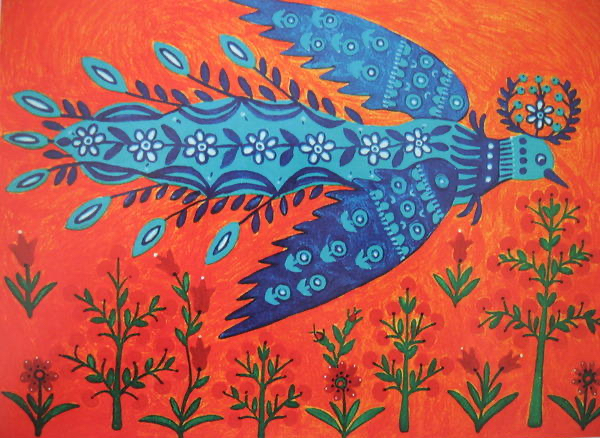 Sun-Bird, Rye and Wheat – Maria Primachenko. Wikioo.
“Even in the mud and scum of things, something always, always sings.”
Ralph Waldo Emerson
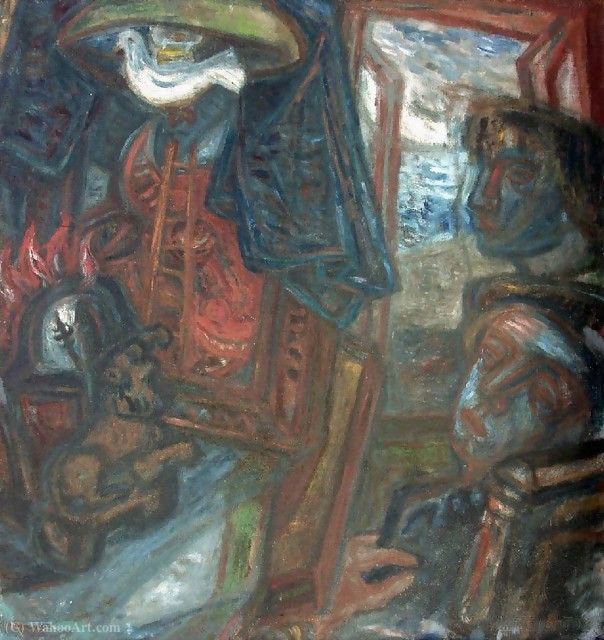
Dark times – Gyula Hincz. Wikioo.
“It is during our darkest moments that we must focus to see the light.”
Aristotle
Accepting the ordinary days, and the ordinariness within ourselves and our lives, will, paradoxically, free us to be extraordinary. We may become relaxed enough to be increasingly creative and productive…. and to begin to love life again, after grief and pain.“I like living. I have sometimes been wildly, despairingly, acutely miserable, racked with sorrow, but through it all I still know quite certainly that just to be alive is a grand thing.”
Agatha Christie
“What we call the beginning is often the end. And to make an end is to make a beginning. The end is where we start from.”
T. S. Eliot
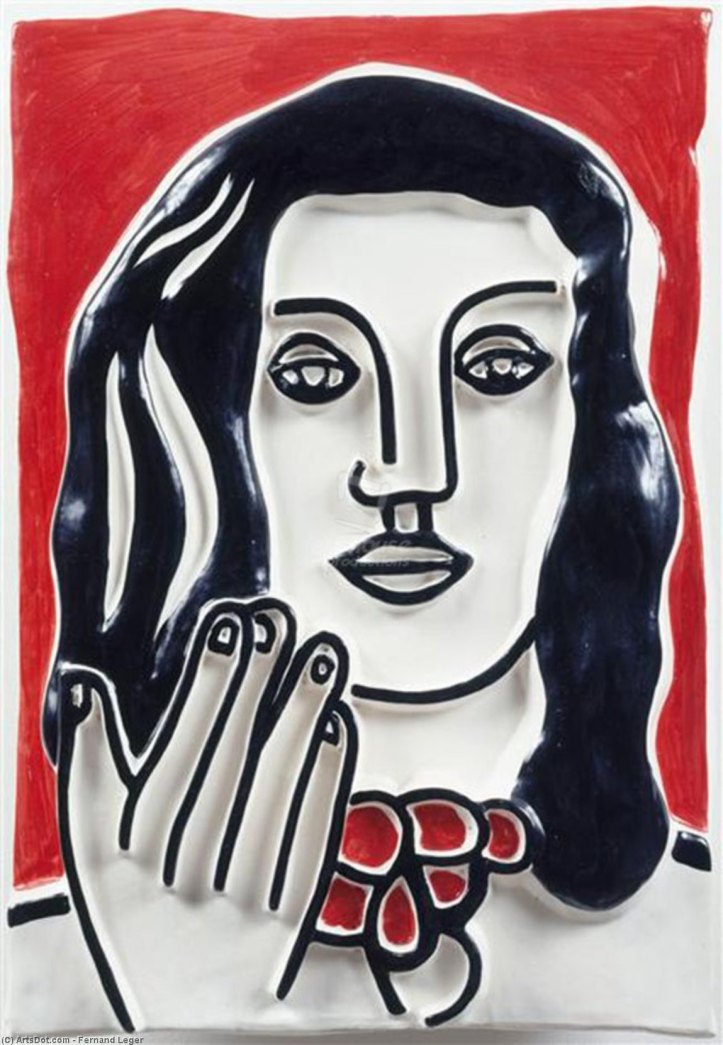 Face With One Hand on a Red Background – Fernand Leger. Wikioo.
Whilst we cannot fool ourselves into thinking that, when we are happy, sadness does not exist, we can, temporarily, allow ourselves to become lost in our joyousness. Having worked through some of the dreadful heaviness of grief, it is possible to manage our memories, perhaps with the help of a therapist, and to live, and love life, once more.“Then you hold life like a face between your palms, a plain face, no charming smile, no violet eyes…”
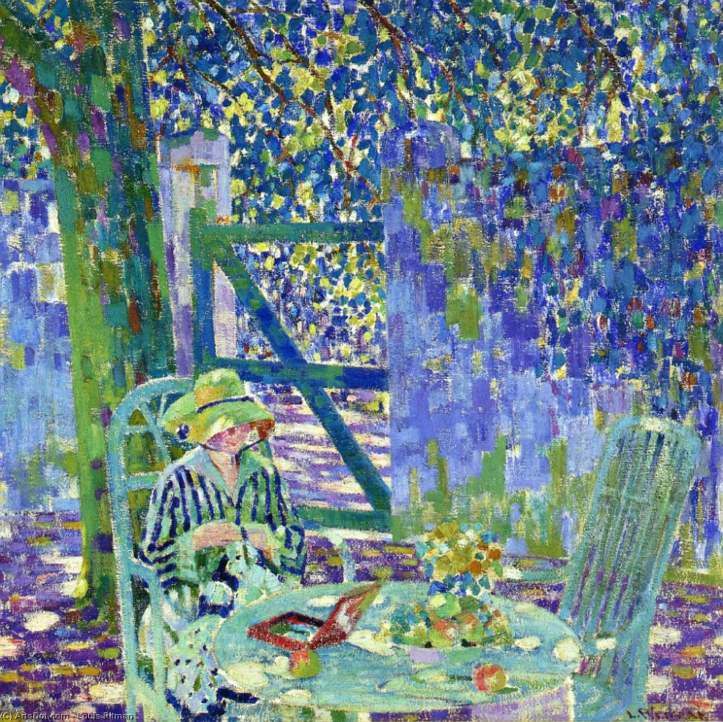 A Summer Afternoon – Louis Ritman. Wikioo.
© Linda Berman.“…and you say, yes, I will take you I will love you, again.”
 waysofthinking.co.uk