
Part 1: Remembering & Forgetting
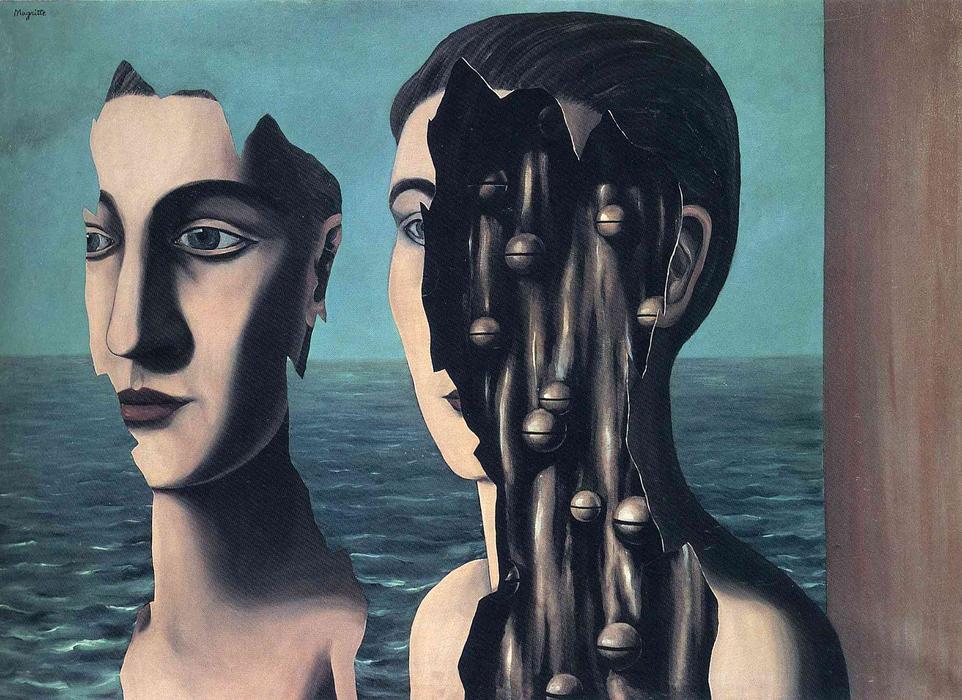 René Magritte. The Double Secret, 1927. Wikioo.
“Whenever we give up, leave behind, and forget too much, there is always the danger that the things we have neglected will return with added force.”
Carl Jung
As a psychotherapist with a broadly psychoanalytical approach, why on earth am I highlighting the benefits of forgetting?
Before I explain myself and begin to discuss the possibilities of a different way of forgetting, I want to emphasise that we cannot erase anything from our minds at will…..
The Importance Of Remembering And The Impossibility Of Erasure.
I truly believe that we cannot totally forget anything, for it will lie dormant in our unconscious mind, emerging in dreams, or being acted out in some perhaps destructive way, if it is not worked through.
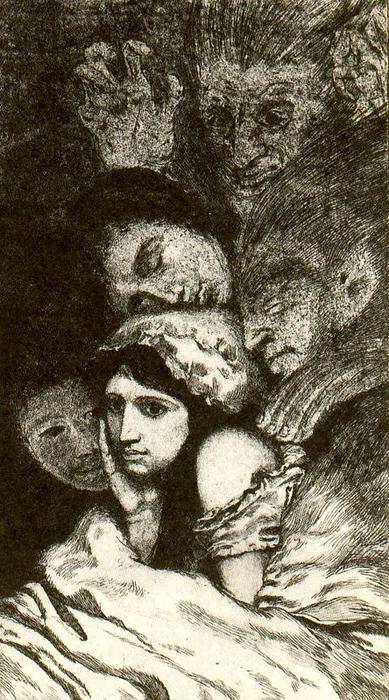
Dreams – Max Klinger. Wikioo.
“All the things one has forgotten scream for help in dreams.”
Elias Canetti
It is imperative to work through our problems in therapy, if we wish to lead fulfilling and meaningful lives.
Erased de Kooning – Robert Rauschenberg. Wikioo.
Our memories are supremely important when we want to understand ourselves and the world. They can teach us consequences and help us to avoid making the same old mistakes again that people have made for generations.
It is not just unchangeable physical resemblances that are passed down in families, but also patterns of behaviour, which can be altered, once we are aware of them.
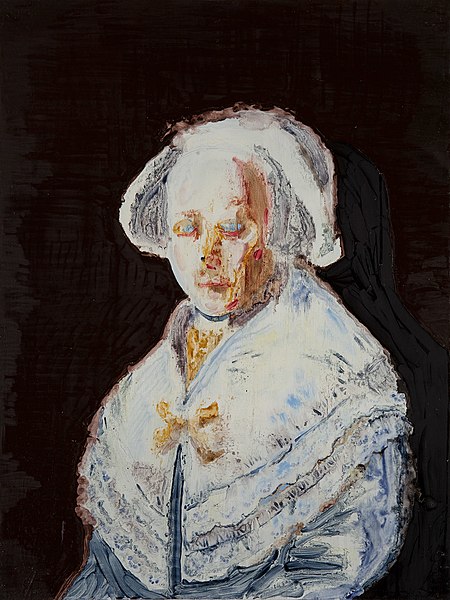
History Repeating Myself, painting by Lizza Littlewort. Wikimedia Commons.
“Those who cannot remember the past are condemned to repeat it.”
George Santayana
Freud encouraged us all to remember, to recall, not to repress memories, but bring everything to consciousness.
He would definitely see this focus on forgetting as advocating resistance and he would point out, in no uncertain terms, that the result will be acting out and repeating everything that has willingly been ‘forgotten.’
Lingering in the depths and murkiness of our unconscious are a host of ‘forgotten’ memories.
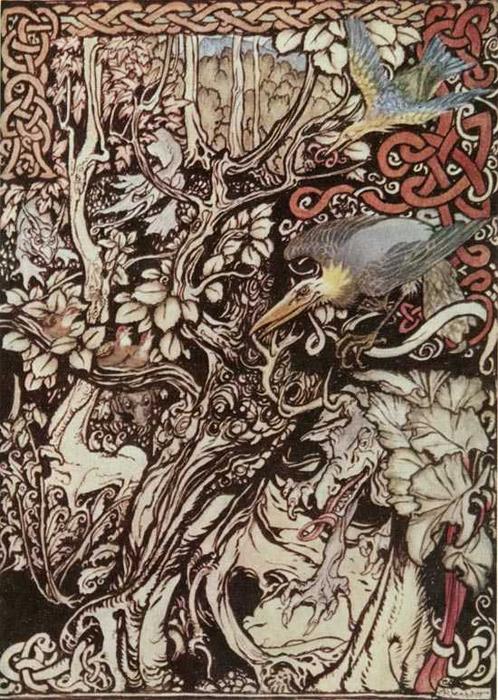
Wild and shy and monstrous creatures ranged in her plains and forests – Arthur Rackham. Wikioo
“Where does a thought go when it’s forgotten?”
Sigmund Freud
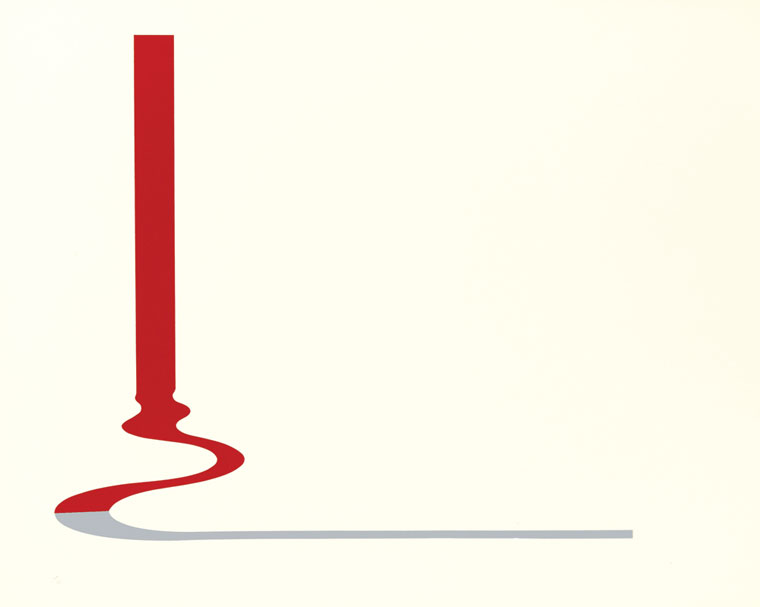
Trace – (Gerald Laing)
“I feel that there is no such thing as ultimate forgetting; traces once impressed upon the memory are indestructible.”
Thomas de Quincey
In addition, it is impossible to ‘try’ to forget. In that case, we will recall the memory even more, and it will have the reverse effect…
“When you put so much effort to forget someone, the effort itself becomes a memory. Then you have to forget the forgetting, and that too is memorable.”
Steve Toltz
This vain effort to forget is doomed to failure. It reminds me of the Victorian photographers who produced ‘hidden parent’ photographs of children.
In order to get the child to sit still for the sometimes long exposure process of photography, a parent would attempt to hide themselves behind a curtain or disguise themselves as a chair.
The photographer is asking the viewer of the photograph to do more than suspend disbelief; he is asking us to ‘forget’ that there is a parent there, to instantly erase our memory of what we are actually perceiving.
The more we look at the picture, the more we remember- and see- the hidden parent! It is actually the child that gets overlooked….
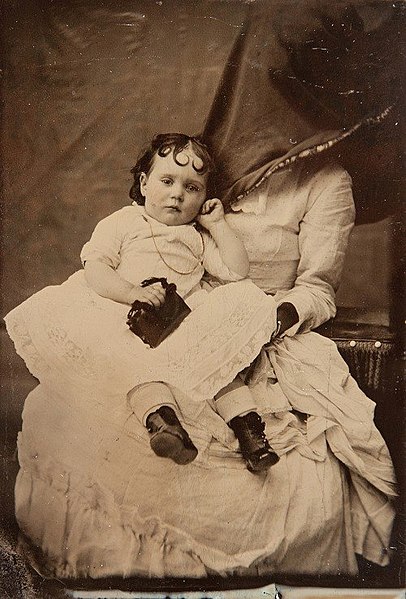
The Hidden Mother. Wikimedia Commons.
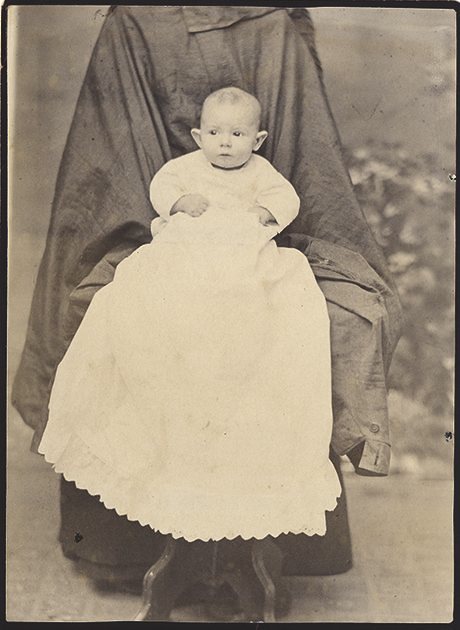
The Hidden Mother. Wikimedia Commons.
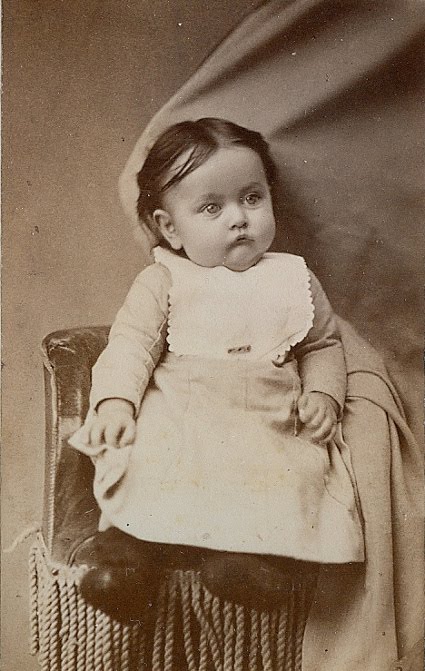
A Victorian toddler, mother’s arm obscured by fabric. Wikimedia Commons.
“Obscured?” I don’t think so!
This is also reminiscent, in a different way, of those patients in therapy who scratch, rub out or blur the image of someone they hated in a photograph. This is a way of trying to forget, to obliterate one’s memory and one’s rage.
 mimosa. not presence not absence. Flickr
Often, this defaced image becomes more of a reminder of that person than before, until the patient has worked though their painful feelings.
“The more she tried to forget, the more she remembered.”
T.K. Kiser
Whilst in some way erasing a part of a photograph can be highly cathartic, it is important that such an action is part of a process of working though and gaining insight.
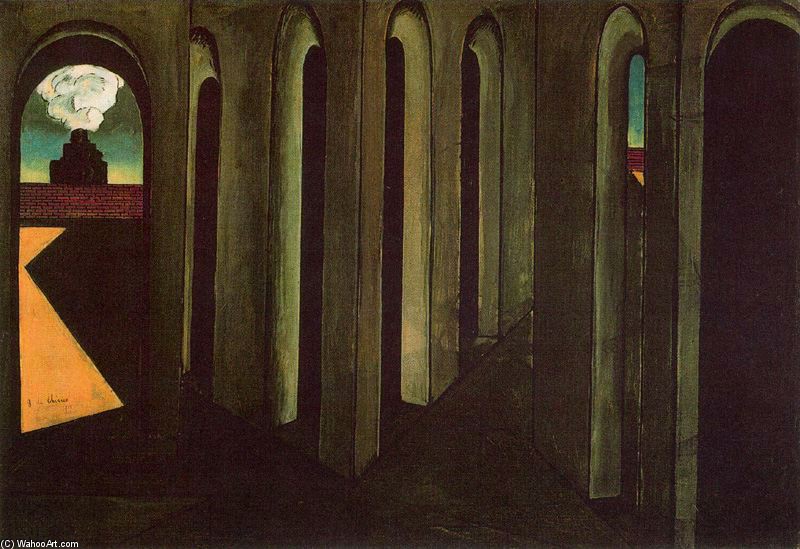 The Troubled Journey – (Giorgio De Chirico)
“I think it’s difficult to forget things that are unresolved.”
Chris Van Allsburg
Lest We Forget…..
There are also some things we should definitely never forget…….
“To forget the dead would be akin to killing them a second time.”
Elie Wiesel
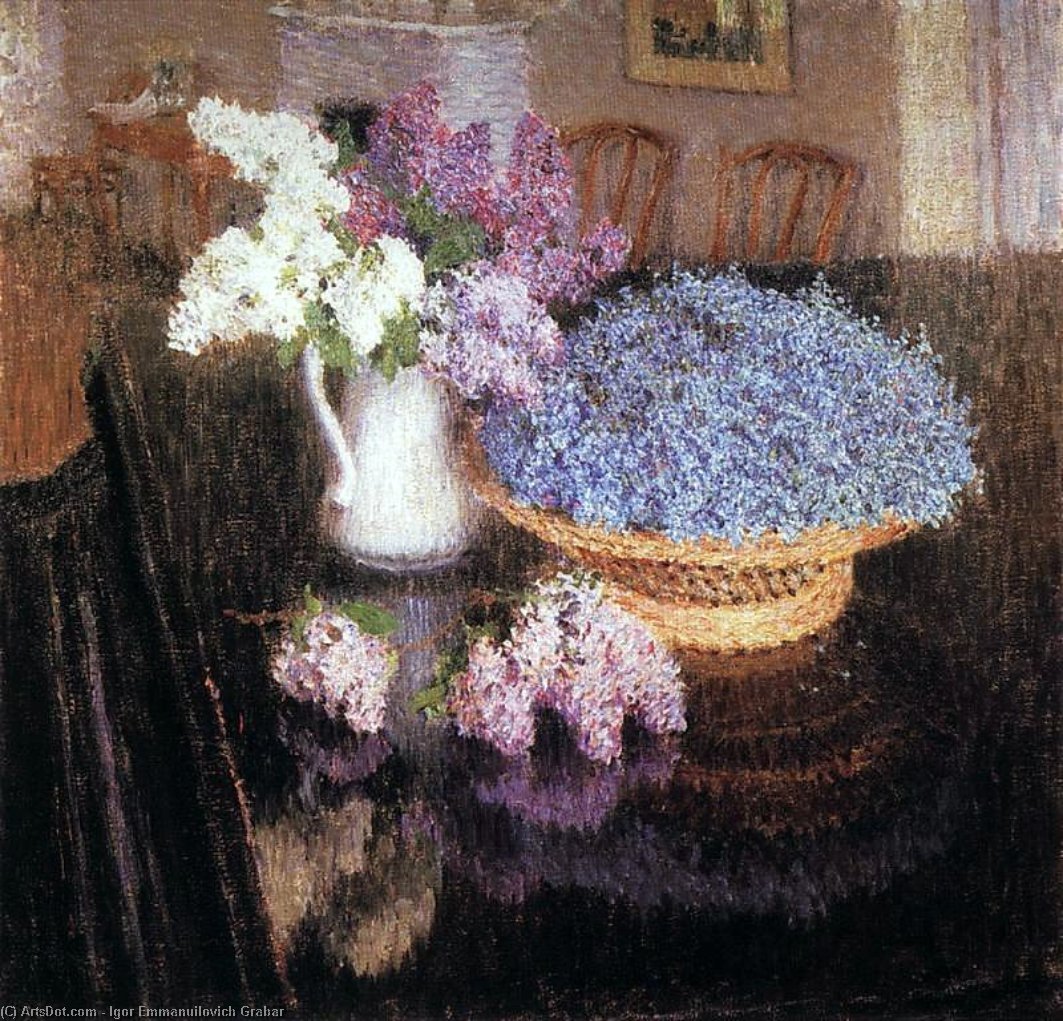 Lilacs and Forget-Me-Nots – Igor Emmanuilovich Grabar. Wikioo.
“If I should die, think only this of me:
That there’s some corner of a foreign field
That is for ever England.”Rupert Brook. Extract from ‘The Soldier.’
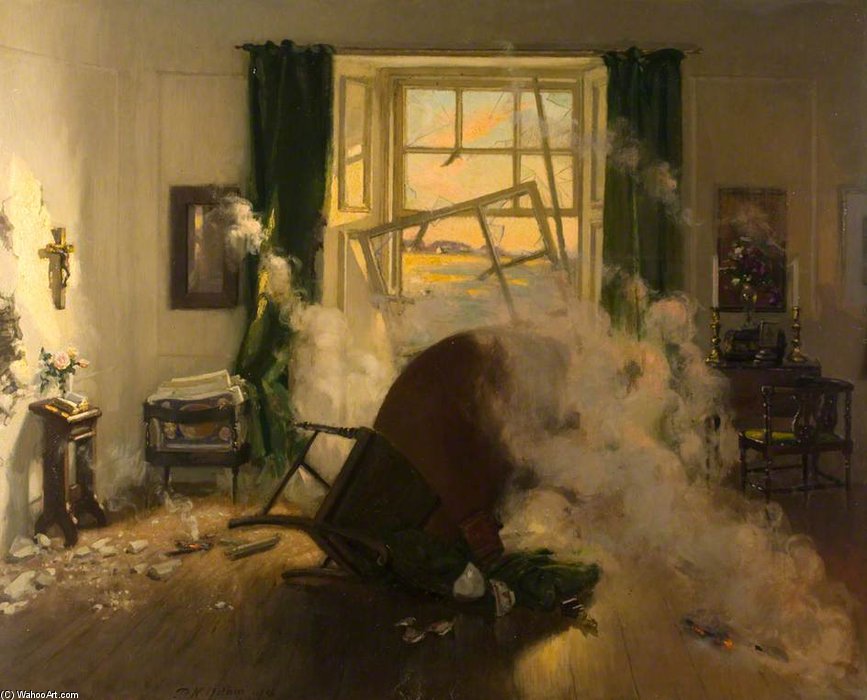 War – Patrick William Adam. Wikioo.
“All the great crimes of history, lest we forget, have their genesis in the moral wilderness of their times.”
Eskinder Nega
- Why, Then, Should We Want To Develop Our Abilities To Forget…. And How Is This Possible?
 Kurt Norlin. Unwanted Memories. Digital Painting. Flickr.
“With all the focus on improving memory, are we in danger of forgetting the art of forgetting?”
Traumatic memories need to be put in their place, once they have been explored and when we feel ready to let go. Of course, this is not a complete process; we can never wipe trauma from our brain.
We can never simply ‘forget.’ That would not be therapeutic at all. But we can learn to carry the painful memories better, so that they do not control our lives.
Once we have faced, and worked through, our difficult memories as far as is possible for us in therapy, then we have a choice. We can choose to remember them often, or we can relegate our memories to the ‘back-burner’ of our minds, so they do not dominate our everyday lives.
Thus, we simultaneously remember…. and forget. Both are important.
(However, once we have worked on them, such memories often tend to come less frequently to the forefront of our minds in any case.)
In his interesting Guardian review of a book on Forgetting by Lewis Hyde, Oliver Burkeman lists many influential writers and therapists who have all urged us “to see memory and forgetting in a relationship of intimacy rather than of opposition, to notice the many ways in which each assumes and depends on the other.”
From : “The Sentence”
Anna Akhmatova
“Today I have so much to do:
I must kill memory once and for all,
I must turn my soul to stone, I must learn to live again-“
This kind of forgetting is certainly not about erasure, but about working though difficult memories as far as is possible, and then being able to feel free enough of the related affect, to move forward in life. We can do this, whilst also being aware that the memory is there.
Let us begin to explore this kind of forgetting in more detail….
- A Different Way Of Forgetting…..
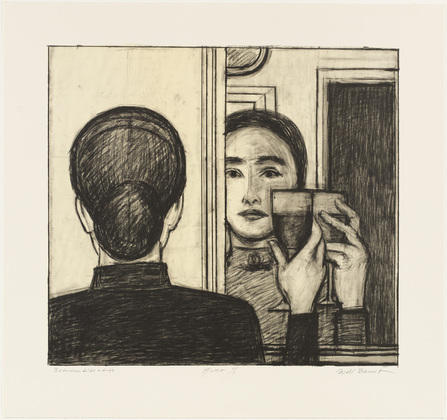
Between Life and Life – Will Barnet. Wikioo.
“Without forgetting, it is quite impossible to live at all.”
Nietzsche.
The quotation above draws our attention to the importance of forgetting in order to live. This is a big statement. What did Nietzsche mean by this?
“In the smallest as in the greatest happiness, it is something that happiness is happiness: the ability to forget, or to put it in terms most learned, the ability to feel things, as long as happiness lasts, without any historical perspective.”
Nietzsche.
Stripping memories, and the associated feelings, of their historical perspectives in order to experience happiness is not an easy task. It requires, I think, that we have worked through and ‘settled’ some difficult feelings and can now choose to ‘forget.’
Nietzsche’s further explanatory quotation reminds me of Bion’s instructions to therapists to begin each session ‘without memory or desire.’
What Bion is suggesting is not a total erasure of memory on the part of the therapist, but a suspension, a withholding, so that the therapist’s own desires and memories will not interfere with the patient’s therapeutic process.
He is advocating a kind of temporary clean slate at the start of each session, so that the patient’s material will be left unclouded.
“The first point is for the analyst to impose on himself a positive discipline of eschewing memory and desire. I do not mean that ‘forgetting’ is enough: what is required is a positive act of refraining from memory and desire.”
Bion’s description of positively ‘refraining from memory’ comes close to this intended ‘new’ meaning of the act of forgetting, in a different context; that is, at times when, having largely worked through difficulties, we can choose to ‘not remember’ them.
The meaning of forgetting I am talking about is, therefore, somewhat different to the usual. It also has something in common with ‘not-knowing,’ when the therapist consciously suspends their knowledge or expectations, allowing a state of reverie for both therapist and patient.
It is a struggle to find the right words for this kind of forgetting; I think we need to invent another word…….
Perhaps we can apply some of Bion’s approach, in the context of our everyday lives. How might we do this?
To be continued next Tuesday……
©Linda Berman.
 waysofthinking.co.uk