
Quote 1.
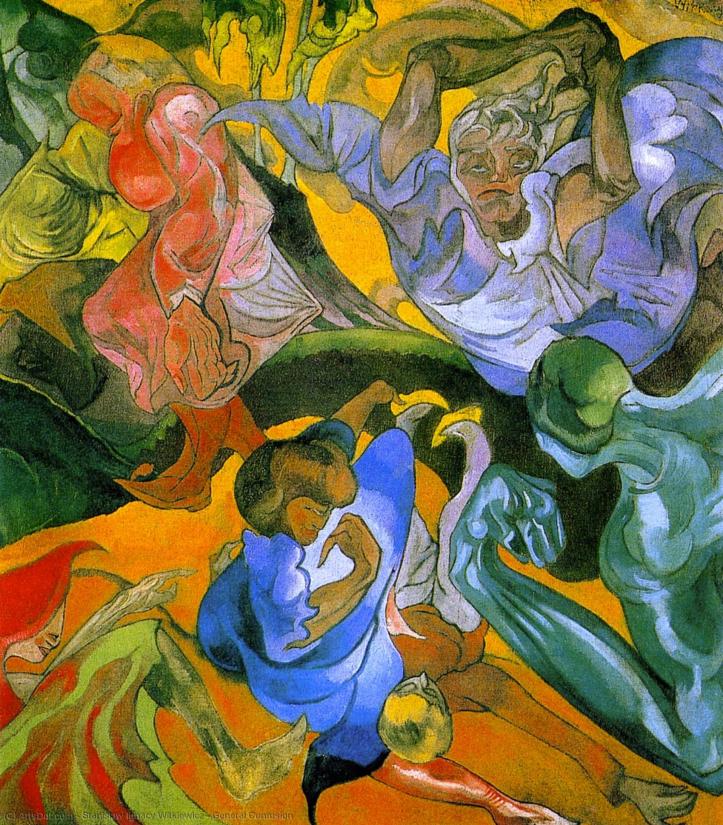 General Confusion – (Stanislaw Ignacy Witkiewicz)
“The conflict between the will to deny horrible events and the will to proclaim them aloud is the central dialectic of psychological trauma.”
Judith Lewis Herman
Judith Herman is a well-respected American professor of psychiatry, whose work on understanding trauma has contributed greatly to current knowledge in this area. Her quotation exactly encapsulates the terrible ‘dialectic’ that trauma survivors experience, both in life and in therapy.
There is a simultaneous desire to scream out loud about what has happened and a dreadful fear of doing so. Some people are afraid that they will be ridiculed or disbelieved if they share their awful stories. Others can feel that, if they do put their thoughts, memories and feelings into words, this will make what happened feel too real, too present, and that it will be retraumatising.
Quote 2.
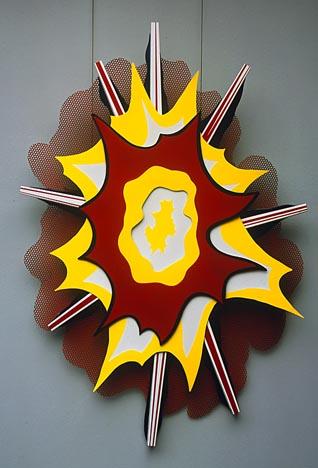
Explosion I. Roy Lichtenstein. Wikioo.
“Triggers are like little psychic explosions that crash through avoidance and bring the dissociated, avoided trauma suddenly, unexpectedly, back into consciousness.”
Carolyn Spring
This graphic quotation brings to our attention the dramatic power of the trigger, which represents any stimulus that strongly reminds a person with PTSD of something very distressing from their past. This could be an experience, such as injustice or rejection, noise, a sound, a sight or an odour. Even if there is a strong effort made to repress any memory of the trauma, such triggers can revivify the past in an instant.
For example, many Holocaust survivors were emotionally triggered by the sight of a person in uniform, which brought back past terror of Nazi officials. This could revivify terrible memories, which feel alive in the present.
Survivors of such horrific trauma live on a daily basis with their often unspeakable memories; they may function well in the world and they may appear contained. However, one must not assume that this means they are feeling well inside. One must not forget that they can never forget and that their burdens are engraved forever on the soul and in their memory.
Tragically, we witness the same reactions to trauma today, in the desperate people who are seeking asylum and refugees fleeing from war-torn and repressive regimes across the world, who are arriving in our country.
Quote 3.
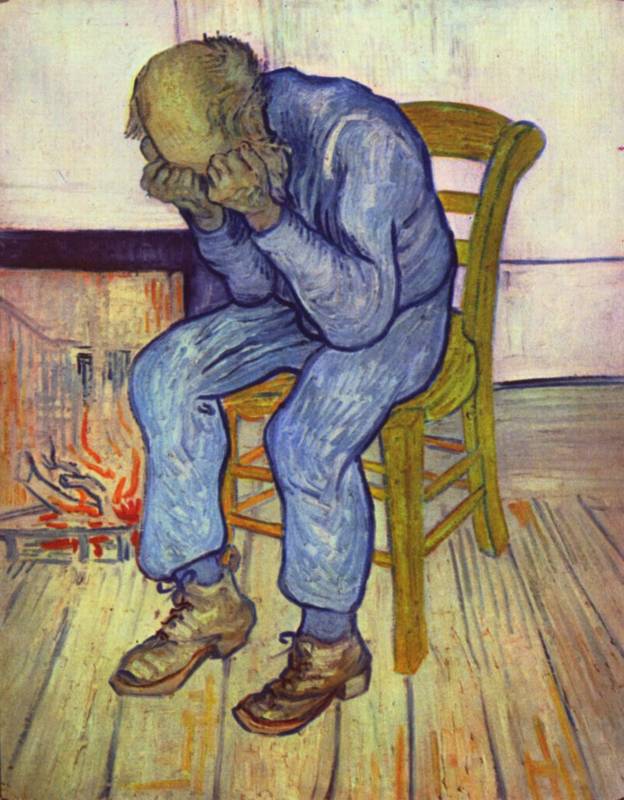
Van Gogh. Sorrowing Old Man. Wikimedia Commons.
“A traumatised person does not remember the trauma, but experiences it over and over again.”
Paul Verhaeghe
When traumatic memories are just too hard to bear, there is often a ‘forgetting’ of them, they are relegated to the realms our unconscious, as a protective mechanism. However, as in the previous quotation, the trauma can be re-experienced in other ways.
These include ‘remembering’ with the body, so that we might develop various psychosomatic symptoms or illnesses. Even if there is no conscious memory of the trauma, there can be feelings and behaviours that emanate from it, without the memory passing through our conscious awareness.
Quote 4.
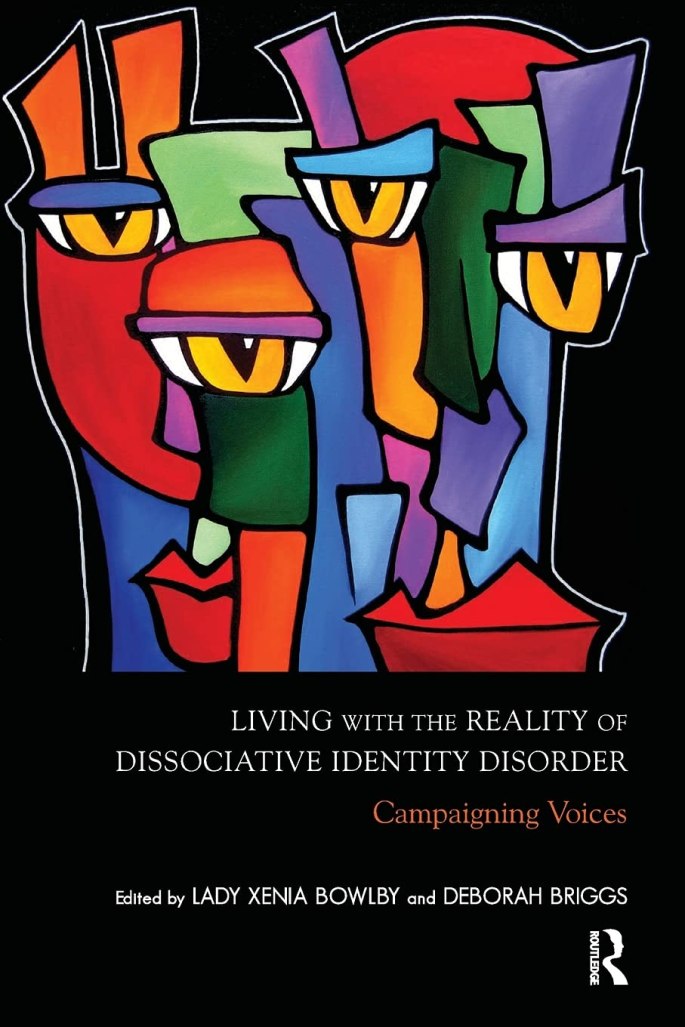
 Dissociative identity disorder.Bahasa Indonesia.04Mukti. Wikimedia Commons.
“In the same way that the women’s movement of the seventies and eighties brought rape and incest into public consciousness, we can do the same with the causes and reality of dissociation and multiplicity.”
Carolyn Spring.
Dissociative Identity Disorder (DID), previously known as Multiple Personality Disorder, occurs as a result of severe childhood trauma. There is memory loss, uncertain identity and the splitting of the personality into many other identities, or ‘alters.’ It also involves conditions like depression, anxiety, PTSD, detachment and other mental disorders.
Dissociation can occur when a traumatic and very stressful experience feels too much to bear or to manage. In a chapter in the book shown below, Kim Noble gives a graphic description of her own experiences of DID, revealing that she has about twenty ‘alters,’ other distinct personalities, but each has no memory or awareness of the other. She sees herself as ‘sharing a body’ with the others.
Kim describes her condition as a splitting off, a fragmentation, in order to cope with horrific childhood abuse. Being one integrated personality would be unbearable. She was faced with denial of her experiences by those around her, with her abusers’ case being dismissed by police after sixteen months of investigation.
Denial of traumatic events is a natural way of coping with them, with the child or adult saying to themselves ‘this cannot be happening to me….’ and often mentally detaching from their bodies as a protection and a survival mechanism.
Often people feel shame about their DID, and hide this from others. When working with people with DID, it is important that the therapist recognises and values each of their personalities, rather than advocating repression or denial of these parts of the self.
The therapist will aim to encourage them to communicate with each other, to work together, helping fortify their co-operation with each other, rather than their separateness. This approach can help the patient to integrate and develop awareness of their various identities.
The following video, produced by Mind, shows some people who experience dissociative disorders talking about how this has impacted on them and how they are receiving good therapeutic help for their issues…
Quote 5. (Actually 3 for the price of one.)
“Our wounds are often the openings into the best and most beautiful part of us.”
David Richo
To end this post, I include the above quotation to give a note of hope to those who have experienced intense trauma in their lives. What does it mean?
The words express a great truth…. that the parts of us that are damaged can develop into areas of learning, of humility, of empathy and understanding. This quotation links to the words of two other powerful quotations:
 Andrew Bowden. Looking Through a Crack in the Gorge. 2007. Flickr.
“Ring the bells that still can ring
Forget your perfect offering
There is a crack, a crack in everything
That’s how the light gets in.”
Leonard Cohen
This beautiful quotation reminds us of the paradox of imperfection. It tells us that we all need to have our less-than-perfect areas, because through them, ‘the light gets in.’ What does this mean?
What we have regarded as our defects, weaknesses and faults can actually be the source of ‘light,’ of learning and insight. Frequently, our human fallibility can be a foundation for empathy and compassion; being flawed is different from being weak.
Our idiosyncrasies make us unique and individual; loving another person involves embracing their, and our own, limitations. Perhaps, paradoxically, our irregularities, our incompleteness, are what makes us real, whole people. The impossible quest for perfection creates unbearable tension; it is often about feeling inadequate and not good enough.
People who have experienced brokenness and subsequent healing, those at all stages of personal renewal, can be beautiful. Imagine how dull life would be if we all resembled a prototype of human robotic perfection….
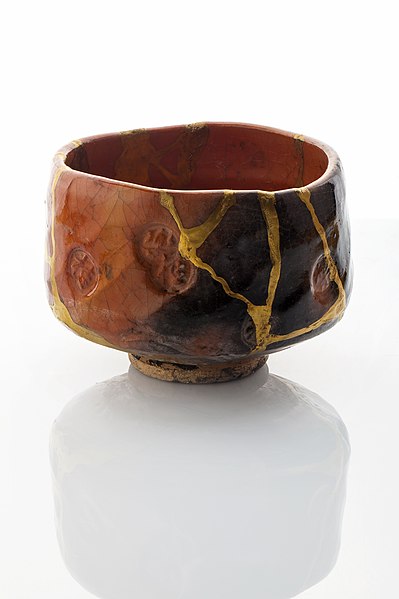
Chiara Lorenzetti Kintsugi. 2021. Wikimedia Commons.
“The world breaks everyone and afterward many are strong at the broken places.”
Ernest Hemingway.
© Linda Berman.
 waysofthinking.co.uk
This is an excellent post connecting post trauma sequelae and empathising with our own weaknesses and faults. Thank You
LikeLiked by 1 person
Thank you Arun. I’m glad you liked my post. I appreciate your feedback.
LikeLike