
Quote 1
 Man Thinking – Geoffrey Arthur Tibble. Wake
“Disregard all prejudices, all pre-conceived notions and all the rubbish some people try to make you think. Think for yourself. Regarding books or anything in life. Think for yourself.”
Carlos Ruiz Zafón
Do you allow people to tell you what to think? Do you take on board what others say without a questioning attitude?
There are times when it is important to say ‘no’ to other people’s ideas and to the pressure to conform to their views; we need to learn to value ourselves and our opinions, even when we may be a lone voice in the crowd.
The quotation above points to the fact that there is pressure all around us to take on the ‘rubbish’ that others might peddle on a daily basis; this ‘rubbish’ includes preconceptions, prejudice, rigid ideas and biases.
We can find such thoughts from some sensationalist, misleading and erroneous newspaper headlines and articles, in the media generally, and from people around us spouting their home-grown ‘wisdom.’
At times we may need to ‘detoxify,’ to recognise the detritus of phony ideas that may surround us, some of which may have been internalised.
Allowing ourselves to be over-influenced and manipulated by others indicates that we need to set firm boundaries, to know ourselves and our views, and have the confidence to be authentic enough to say what we really think.
Quote 2

Aksel Waldemar Johannessen. Market Scene. c 1916.
“We hear a lot about identity theft when someone takes your wallet and pretends to be you and uses your credit cards. But the more serious identity theft is to get swallowed up in other people’s definition of you.”
Stephen Covey
If we allow others to define us, we are permitting a kind of psychological identity theft on ourselves, letting the views of others ‘rob’ us of who we are and how we really think. We can become overloaded with and manipulated by, others’ opinions, which may be crowding out our own, if we are not careful. This is, as the quote says, quite serious, in that it can have an impact on our psychological health and wellbeing.
Unless we become a more whole and individuated person, it will be difficult to feel separate from others and have our own personal boundaries. If we do not have a distinct and authentic self, we may become over-dependent on others, merging with them and taking on their views and ways of thinking. Being ‘swallowed up in other people’s definition of you’ will mean that we will lose ourselves and be uncertain of who we are.
Knowing oneself, through therapy, through others and through life-experience, is a key to feeling more secure in one’s identity, so that then we can learn to think for ourselves and more clearly define our core beliefs.
Quote 3
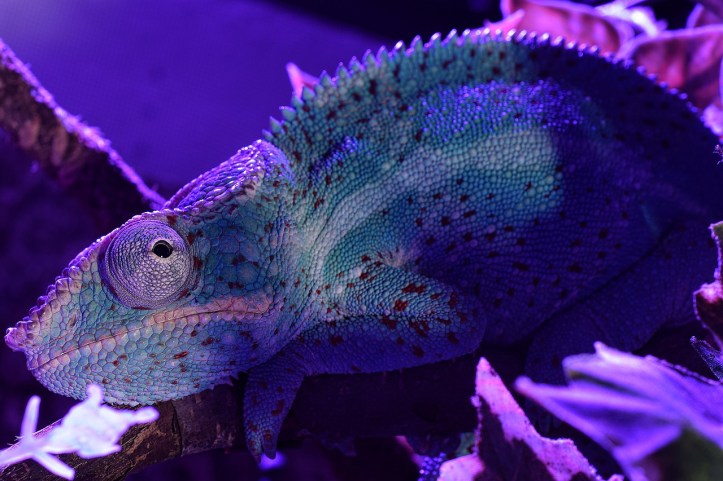
“Too many milieux injure an adaptable sensibility. There was once a chameleon whose owner, to keep it warm, put it on a gaudy Scottish plaid. The chameleon died of fatigue.”
Clive James
The ability to think for yourself is one that is precious in terms of living a fulfilling life; without it we become chameleons, forever changing colour to blend in with others around us. It is, indeed, exhausting to have to keep fitting in with others’ thoughts and ideas and not to have developed or recognised one’s own ways of thinking.
Pleasing others, merging socially and with the environment, adapting to others’ needs, being afraid to stand out from the crowd, continually craving acceptance, are all a denial of oneself, of one’s identity and individuality.
Constantly being accommodating and longing for acceptance by others will become a fruitless and self-destructive quest.
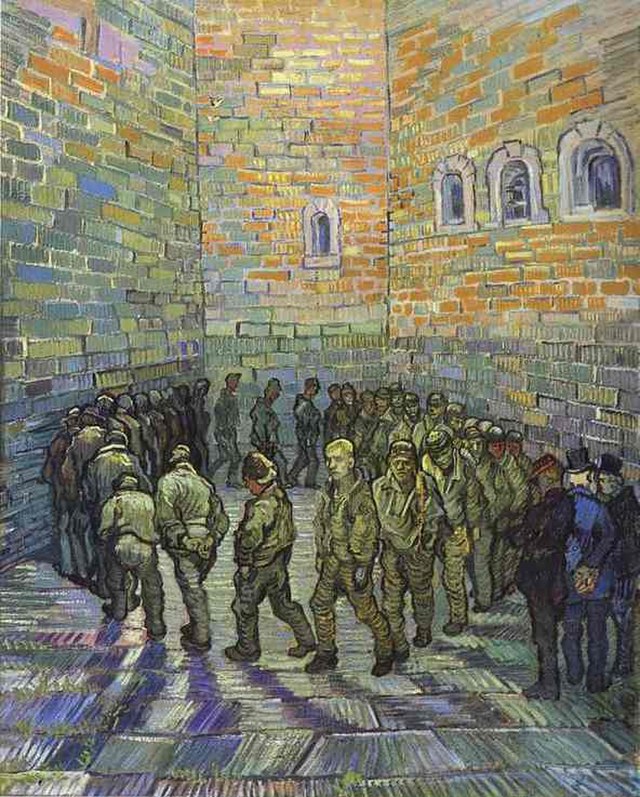
Vincent Van Gogh. The Prison Courtyard. 1890. Wikimedia Commons.
“Care about people’s approval and you will always be their prisoner.”
Lao Tzu
It is a fact that we give our power away to others when we feel dependent on their affirmation and assent and cannot think for ourselves. Often, the roots of this lie in our past, with unmet needs for love and approval; this behaviour pattern can continue into adulthood, as we try to please everyone at the cost of losing ourselves.
How can we possibly please everyone and become what we imagine they want us to be? Obviously we cannot.
The continual, and exhausting effort to do this, to make oneself like others, means that there is no room for authenticity, for being real. This is trying too hard, and it is not the way to achieve a sense of inner peace.
Fitting in with others online…
The impact of social media on people’s ability to think for themselves is also considerable. This may be seen, especially in the young, who can be negatively- and sometimes dangerously- affected by the opinions and ideas they find online.

On social media, we may feel pressurised to fit in with others’ ways of thinking. This can be even harder than in ‘real’ life, as there are an enormous amount of other people’s views online that might feel as if they are ‘swallowing us up.’
Social media overload can be exhausting and confusing, as we become engulfed in a sea of others’ opinions, ideas and information.
Then we may need to limit our time online, to allow ourselves to think more clearly, to refresh our minds, unencumbered by massive and random blasts of potentially dubious digital content.
Quote 4

Manners And Lessons – John Tenniel. Wikioo.
“If you want someone to tell you what to think,” the phantom answered briskly, without looking up, “you will never be short of people willing to do so.”
Frances Hardinge, Fly by Night
This quotation expresses a sad truth; people often tell us how we ‘should’ think, (i.e. like them) and give us advice about this, in order to come over as knowledgeable or important. Some make a habit of unthinkingly relating the issues of others to themselves, appearing clever and offering instant solutions from their own perspective, their frame of reference.
This may be well-intentioned, but it is neither wise nor empathic; it is actually not listening and is putting oneself first, seeking to affirm oneself and one’s own solutions as applicable to all.
Giving suggestions from their own frame of reference means that people think that every one else is, or should be, like them. This makes them feel in control, as they try to take over our own thinking processes. However, we are all different, and we need to be allowed to discover what is right for us as individuals…. and to learn to trust our own judgement in this regard.
Quote 5

Numbers (1) – Wendy Lewis. 1998. Wikioo.
“All the geography, trigonometry, and arithmetic in the world are useless unless you learn to think for yourself. No school teaches you that. It’s not on the curriculum.”
Carlos Luis Zafón
This quotation emphasizes the fact that the school curriculum does not include learning to think for oneself. This may be changing in many schools today, but it is still necessary to bear in mind that children need to be given the confidence to have their own thoughts and opinions.
These develop in an atmosphere of acceptance and a lack of judgement and criticism; they also emerge naturally out of the experience of playing. Play helps children’s brains develop and aids learning and they need to be given considerable amounts of time and space to do this.
It helps them be creative and dextrous, to interact with others, to learn to share, negotiate, make decisions, compromise, to gain strength and resilience, both physically and psychologically…..and to develop their own thoughts.
Sometimes, encouraging children to choose what they want to wear, without criticism or interference from adults, is important, as is making sure that we are not answering for our children when someone asks them a question.
We need to allow them to form their own opinions without contradiction, letting them find their own ways round puzzles and problems, only helping with some encouraging guidance if they really need it. This is about us being there, available if needed, but not in a controlling or pedagogical way.
Through this approach, they will learn through their own experience how to problem-solve. This is about giving a child space to develop in their own way, to find their own path, so that they learn to think independently.
“Children must be taught how to think, not what to think.”
Margaret Mead
Teaching needs to be more about drawing out than pouring in; we must try to encourage independent and autonomous thinking in our children. Teaching a child to think logically and coherently is highly important, as is helping them be intuitive and creative.
“Thinking for yourself and making your own decisions can be frightening. Letting go of other people’s expectations can leave you feeling empty for a time. And yet seeing yourself as an independent adult who can stand up for your own choices frees you to accept yourself as you are.”
Ellen Bass, The Courage to Heal
It is vital to strive to be true to ourselves, develop the resilience and courage to be authentic, and not allow ourselves to be cowed by public opinion.

Discussion (Blue) – Emile Nolde. Wikioo.
Thinking for ourselves does not mean that we do not engage with others, or take notice of others. In order to clarify and identify our own beliefs, we definitely need to take other views and approaches into account.
Through conversation, discussion, education and reading, we can discover new ways of thinking and free ourselves from the pain of feeling we have to constantly adapt to others.
 Guernica. Picasso. 1937. Wikioo.
“Every manmade disaster begins when one man thinks for another. However benevolent they begin, the ultimate outcome is tyranny.”
John Kramer
© Linda Berman
 waysofthinking.co.uk
Another masterful job of curating art and gnomes of wisdom. The different colors you assigned to the text under the chameleon picture is a deft touch. hehe
While I’d nod accord with these various tracts on thinking for oneself, I’d incline towards nesting them in a social context. We are social animals, afterall. Likemindness and unity of purpose make for the critical harmony of winning teams, peaceful communities, just societies. For me, above the clamour and chaos of hyper-individualism is the fine-tuned craft of balance metaphorically exemplified by the wordless oak tree. That is, on the one hand, my unique identity and thinking are my roots, but on the other, my branches reach upward and outward towards an awareness that I am one tree in forest of others much like me. I am one tree but also one constituent in a forest of many. We share thinking as we all share the sunlight and the soil which binds us in collective growth.
So, it could be said, lacking this balance through a clenched focus on individualism, the one may fail to see the forest.
Music is also analogous. Thinking for oneself can evoke the voice of an alluring solo melody, but unique notes piled on top of one another make for symphonic harmonies and a transcendent experience. Case in point, Beethoven’s 9th Symphony and his Ode to Joy choral finale. It begins with a haunting soloist but culminates in a thunderous chorus of many voices, all, so the saying goes, “singing from the same songsheet”.
Thanks for the inspiration, Linda. My mind was a little swampy and sludgy until I read your post today! You threw a rock into my pond. Ripples ensue. haha
LikeLiked by 1 person
Thanks Bob, for your excellent thoughts on my blog post, as ever. I do agree with the other, community dimension you speak of and I’m glad you added this. I’m so pleased that I helped clear your mind today- you help clear mine with your pertinent and perceptive thoughts. Thanks for noticing the colours!
LikeLike