
- Settings in Life
Settings, backgrounds, atmosphere… all are so important in our daily lives. Why is this?
Imagine you’re going on a picnic. You have a choice of the 3 settings pictured below. Which would you choose?
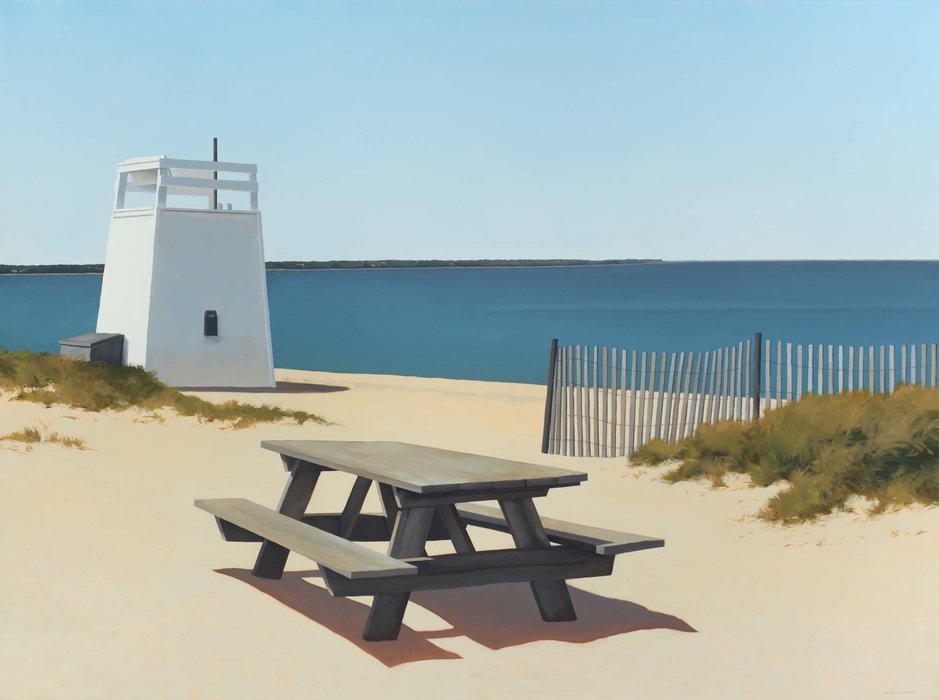
Picnic Spot – James Netherlands. Wikioo.
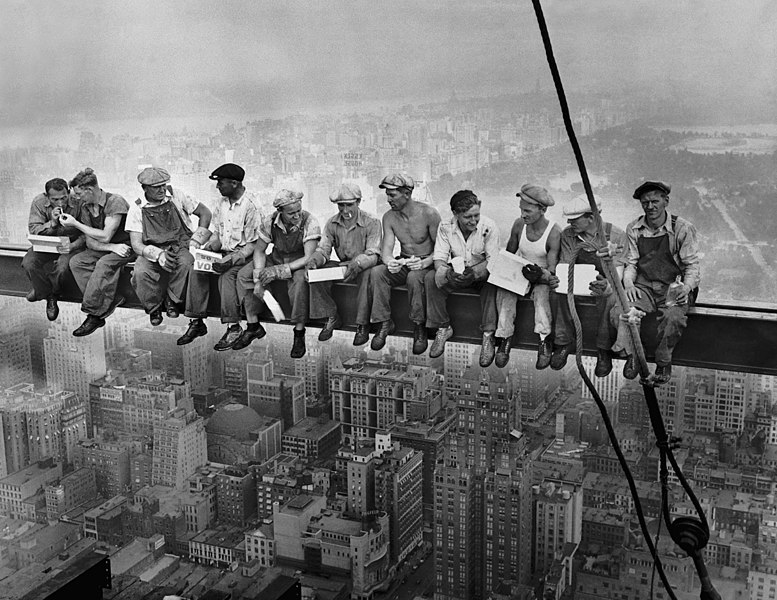 Lunch Atop a Skyscraper. Charles Clyde Ebbets, Photographer. Wikimedia Commons.1932
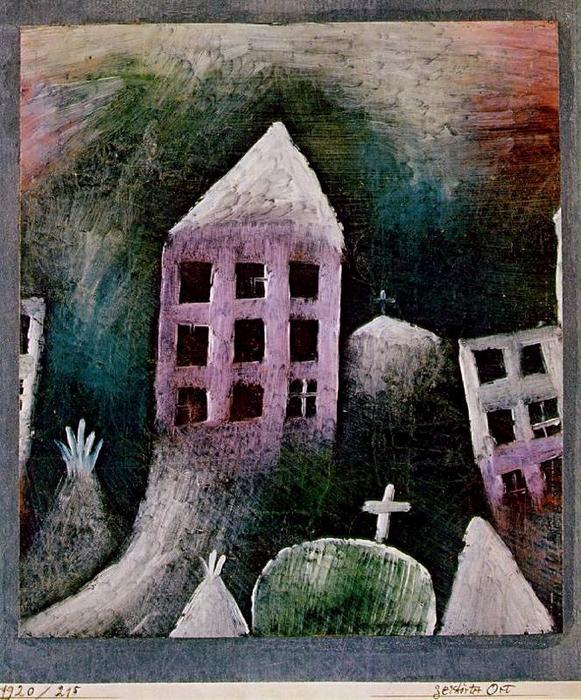
Destroyed place – Paul Klee. 1920. Wikioo
It is not difficult to conclude that most of us would opt for the first setting, for it is a peaceful, safe and happy place. In picture 2, unless we love or are accustomed to heights and danger, we might not be able to relax and enjoy our food for fear of falling to our deaths. Stressful….
Image 3 seems to me a place full of ghosts of the past, of things, and people, who one were, but are no more. Picnicing here would be no picnic… it would feel unpleasant, perhaps scary, certainly not conducive to relaxation.
Of course, in different situations, we require different settings. Generally, though, it is not pleasant to feel cooped up, uncomfortable, fearful or pressurised. The atmosphere needs to be facilitative of our comfort, both mentally and physically, whether we are at work, or at home. Tension, stress, lack of safety, threat, danger… all of these can contribute to a hostile and discomfiting setting.
- Houses
Some people’s houses can have a comfortable and welcoming atmosphere as soon as we enter them.
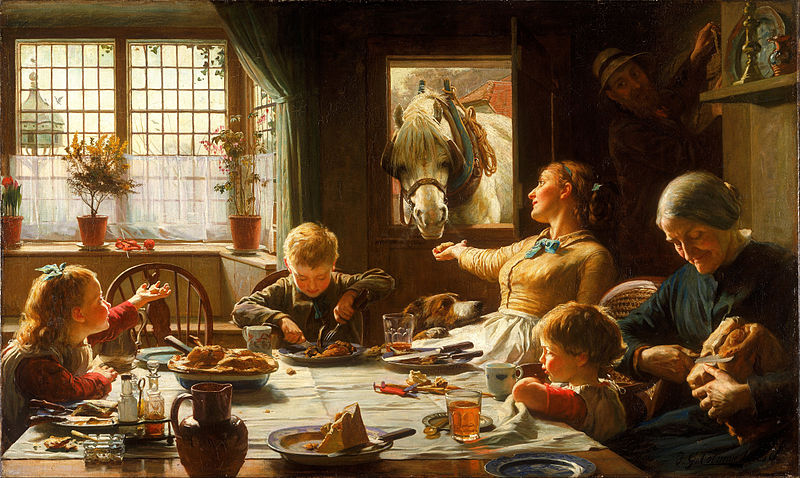
Frederick George Cotman – One of the Family. 1880. Wikimedia Commons.
Others can feel cold, tense and austere; these are places where we do not feel settled. They lack an atmosphere of hospitality. This may reflect the house’s owners or occupants, but even without them there, such a house can lack a sense of welcome and comfort.
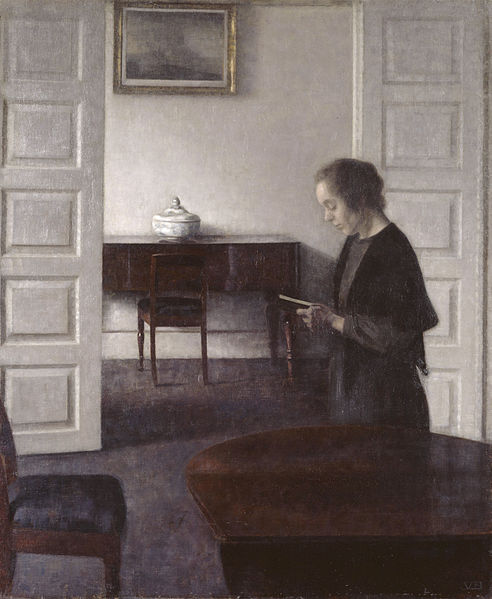
Hammershoi – Interior with a Lady Reading.1900. Wikimedia Common
- The Heterotopia
One of the strange facts about settings in life in general is the human need to create heterotopias.
Foucault’s principles of the heterotopia, which he describes as ‘spaces of otherness,’ ‘outside of all spaces,’ can be applied to places that are a world unto themselves. The atmosphere and settings can feel enclosed, other-worldly, disturbing, contradictory, weird.
For example, this sometimes happens in zoos, where the attempt to create an atmosphere of ‘the wild’ often produces some strange results.
 Animal enclosure in a Spanish zoo. Linda Berman. Oil on canvas.
Heterotopias can reflect disparate aspects of the outside world all gathered in one place, (like gardens and vegetable patches in prisons, or mini-golf ‘greens’ on cruise ships) yet they also have a jarring, misplaced, fabricated and disturbing feel.

Mini golf in the cruise ship, Harmony of the Seas. Wikimedia Commons. Author:SpaceEconomist192. 2018.
Foucault listed six principles of ‘heterotopology,’ among which are the fact that all cultures create them and that societies through the ages make existing heteroropias function in different ways.
Hospitals, prisons, museums, cemeteries, boarding schools, and the world we see through the looking glass, are all heterotopias. They are real and unreal, life as we know it, except different; their atmosphere and settings are somehow strange.
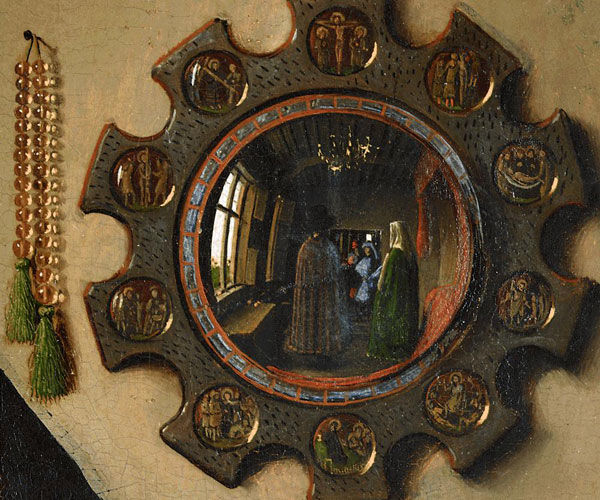
Jan van Eyck. Portrait of John Arnolfini and his Wife (detail), 1434. Wikimedia Commons
Many of these spaces have their own atmosphere, rules or customs, reflective of the world we live in everyday, but also unlike them. In these settings, we might feel a little wary…as if we do not quite know their protocol and workings. Such places, however, at some time or another, may be part of our own life experience.
- The setting in therapy
The therapy space, too, is a heterotopia. Think about it… it is set apart from the rest of the world, it has a set of rules all its own, it is reflective of, perhaps, anyone’s living room… with some differences. There are usually armchairs, books, tissues, pictures , lights, carpets, just like we would find in anyone’s living room…. and yet….
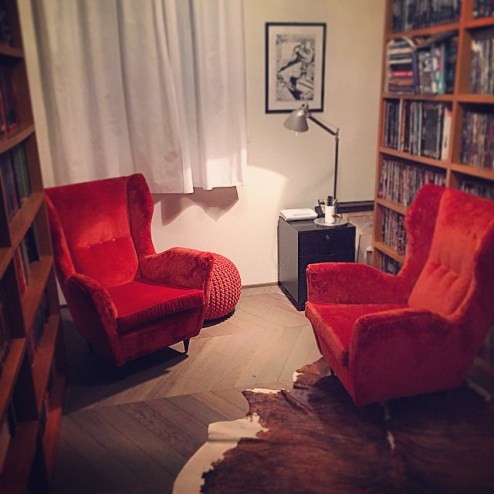
Image: Marco 40134 Flickr.com
It is difficult to find a photograph that I can use of a therapy setting! Often, the images depicted a setting where the therapist’s and patient’s chair were facing each other, in a rather confrontative way.
The image above is not bad, but I think the chairs are too close. However, we live in a real world; sometimes therapists have to work with what they have, and some rooms might be too small to create much physical distance.
How not to….
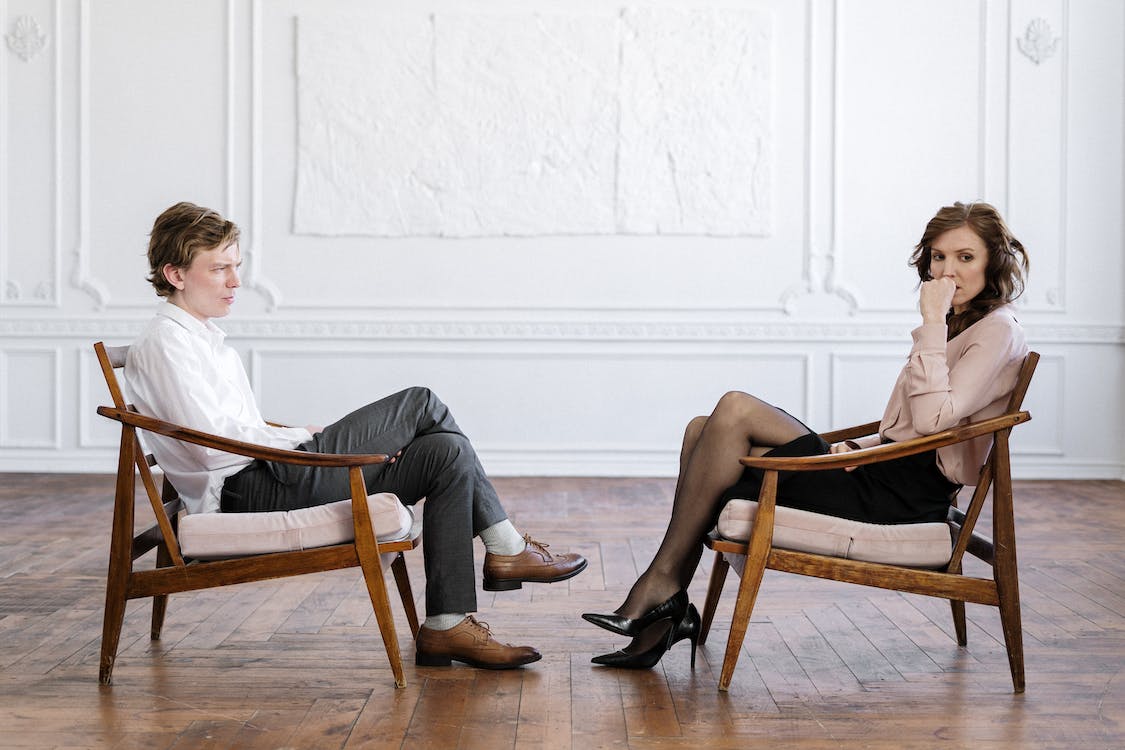
In the image above, found on Pexels, the chairs are near to each other and directly facing, which can feel too ‘head-on,’ and the room is empty and devoid of comforts, such as pictures, side-tables, lamps, tissues. The chairs need to be placed at an angle to allow the patient to look away without turning their head.
The legs of the two people are too near each other and this could create awkward, boundary-breaking moments! The woman, presumably the patient, has to turn to look away from the man, if she needs some visual ‘space’ for reverie, or deep thought.
The whole setting here is wrong…. it lacks warmth…. and an atmosphere of ‘professional hospitality.’ They are surrounded by emptiness in that large, white, unforgiving room.
- Hospitality in therapy
Creating an aura of hospitality is also a part of the process of psychotherapy, an important part. What do I mean by this statement? How are the two concepts connected?
Hospitality may be defined as welcoming another into our space, with a view to looking after them. Whilst a therapy room is not a home, it needs to have a relaxing and welcoming atmosphere, so that the patient can feel comfortable enough to be able to share sometimes very uncomfortable thoughts and feelings.
Both hospitality and therapy have the features of providing a setting where people feel safe and free enough to effect change themselves.
In both cases, we are not imposing anything on the patient or guest, but being there in a way that enables the other to respond to insights, interpretations and perceptions, offered as possibilities.
Psychotherapy also involves developing trust in the kindness of a stranger. Granted, the stranger in this case is a professional, but they and the patient are still previously unknown to each other.
As therapists, we ensure that the setting of our therapy room is private, comfortable, relaxing and safe. We welcome the patient into our space with a smile and a warm, caring and empathic manner. We show interest and care, and we are non-judgemental and open in our attitude and our welcome of other human beings in need.
We may not offer tea and cake, as we might do with a guest in our home, but we do provide an atmosphere in which the patient will experience the ‘gift’ of our empathy and our professional, boundaried loving care.
“There is no hospitality like understanding.”
Vanna Bonta
Transformation and change are relevant both to the notions of hospitality and of therapy.
“Hospitality means primarily the creation of free space where the stranger can enter and become a friend instead of an enemy. Hospitality is not to change people, but to offer them space where change can take place. It is not to bring men and women over to our side, but to offer freedom not disturbed by dividing lines.”
Henri J.M. Nouwen
“Hospitality should have no other nature than love.”
Henrietta Mears
- Settings in stories
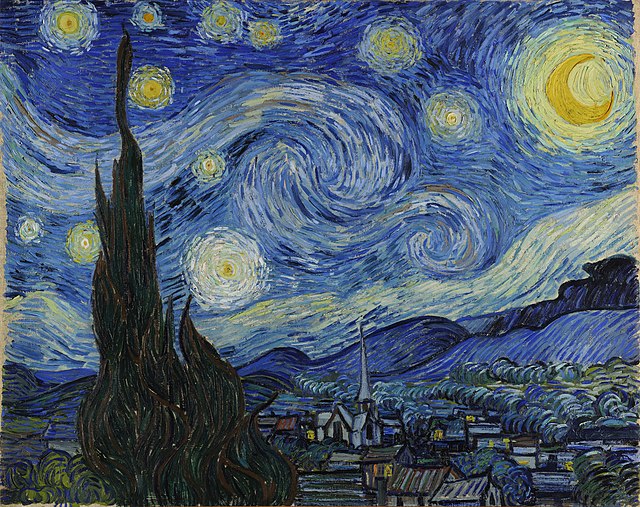
Starry Night. Van Gogh. 1889. Wikioo.
Settings in stories, in art, in poetry, drama and literature, provide context, forming a frame and a background for the ‘action.’ Without a setting, the story will float in nothingness and it will feel vague, uncertain and unappealing.
In therapy, the setting is also the background to a story… the patient’s personal story. The setting grounds the person in therapy, gives them security, and a time and a place. It also is an important part of the therapy, helping the therapist achieve the ‘right’ atmosphere and surroundings for the work.
Patients are offered a place and the necessary conditions for them to be open with their feelings, if they wish to do so, and to work through their pain, expressing themselves without fear of judgment or of breaches of confidentiality.
The secure environment of the therapy room is vital in helping the therapist offer a place for patients to relax and feel able to open up in a psychologically holding and containing atmosphere.

Alan Cleaver. Counselling. 2008 Flickr.
“Sometimes I felt like I’d just drift off into oblivion if it weren’t for your hand anchoring me to my life.”
*********
If you like my posts, you are most welcome to follow my blog… Come on in to my world of waysofthinking.co.uk!
©Linda Berman.
 waysofthinking.co.uk