
What do I mean by the ‘forest inside’?
Within our minds, we all have an internal landscape, a vast and complex inner world of our creation, both conscious and unconscious, a blend of many aspects, including memories, dreams, beliefs, imaginings, experiences, fears, thoughts and feelings.
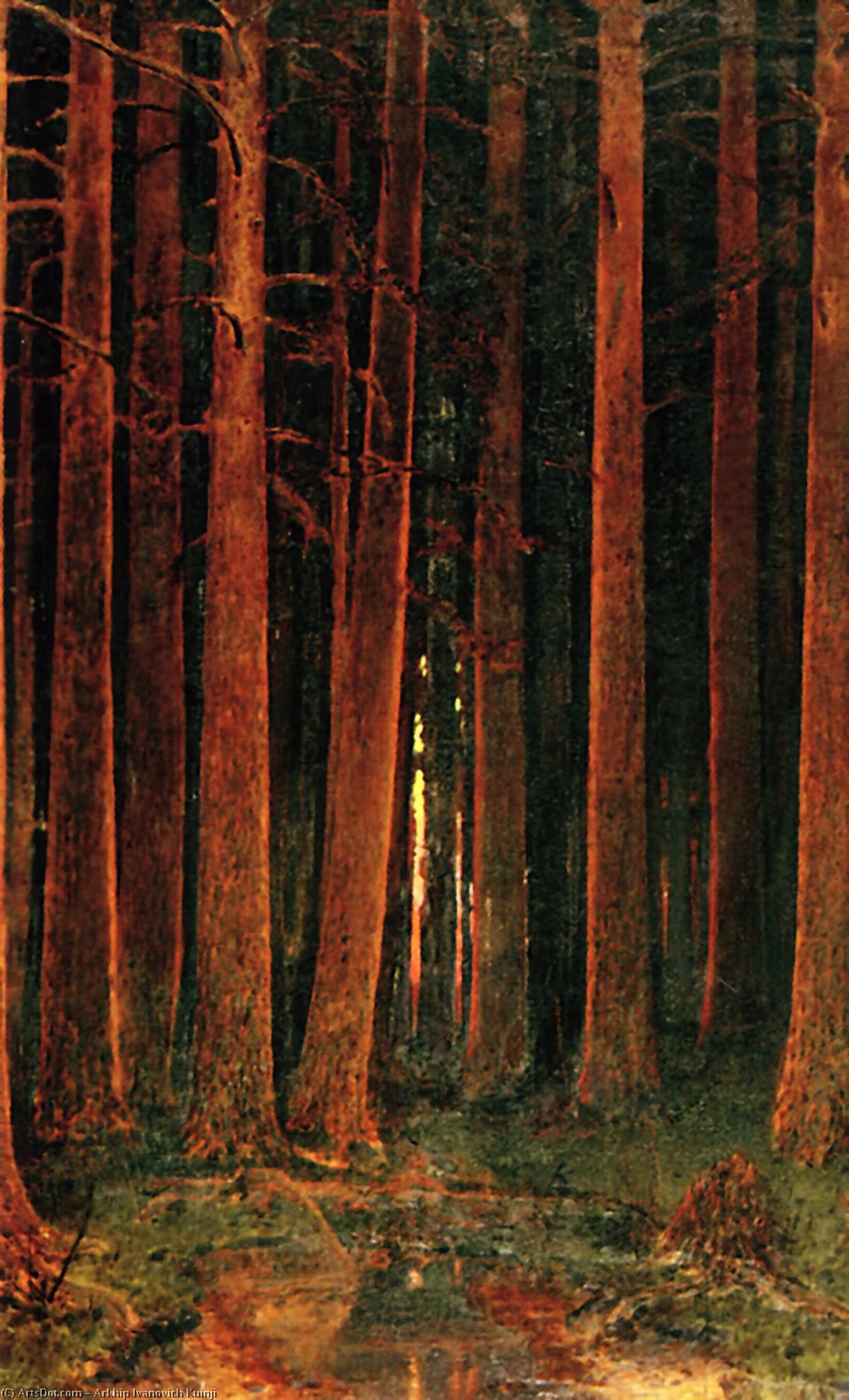 Sunset in the forest – Arkhip Ivanovich Kuinji. 1878. Wikioo.
“This inner world is truly infinite, in no way poorer than the outer one. Man lives in two worlds.”
Jung.
The metaphor of the forest perfectly expresses this inner part of us, for there exist, inside us all, dark places, uncharted, unexplored areas, shadows, dense thickets of unconscious material.
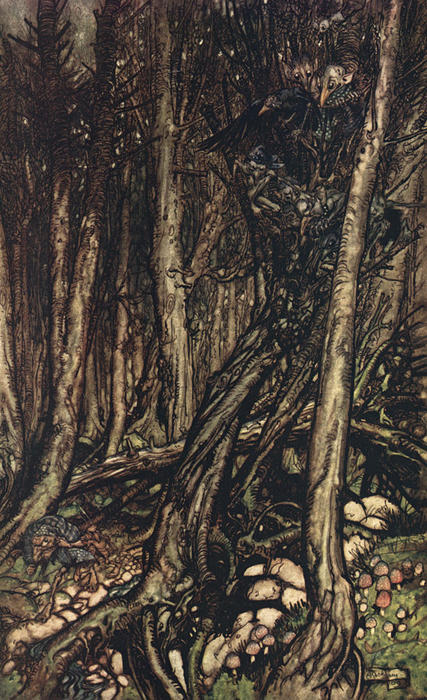
At the back of the little tonge of land, there lay a fearsome forest right perilous to traverse – Arthur Rackham. Wikioo.
‘Traversing’ such a scary landscape takes courage and patience, for there, deep within us, we will come face to face with our lurking monsters, our demons, our darkness and our ‘shadow side.’
 Kimberly Dow – Speak of the Devil [2021] Oil on panel. Gandalf’s Gallery, Flickr.
We cannot discover these aspects of ourselves unless we feel ready enough and strong enough; when we do reach this stage, we may decide to have psychotherapy.
- How to find the way out?
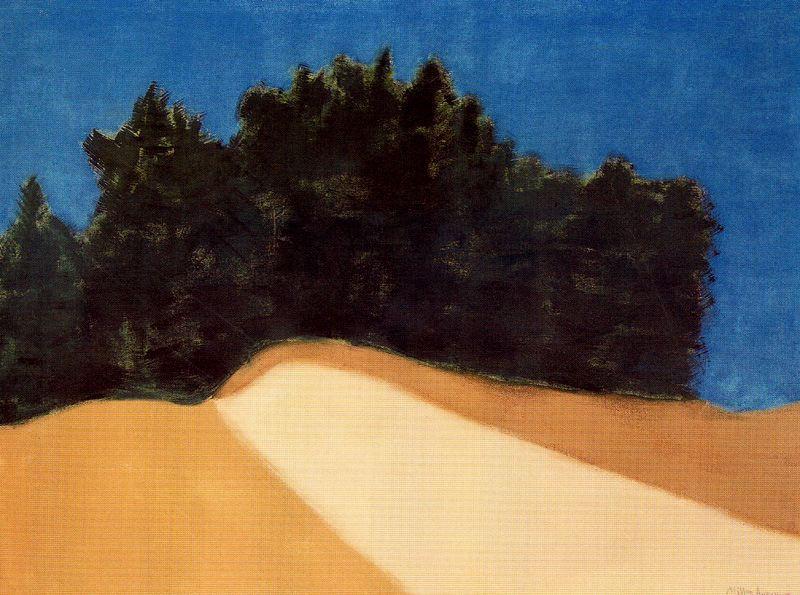 Dark Forest – Milton Avery. Wikioo
“There is a way out, but the way out is really a way within.”
Ken Wilber
Finding one’s way out of the forest, as the quote says, is actually, paradoxically, a personal journey into the self.
“The only journey is the one within.”
Rainer Maria Rilke
The metaphor of the forest inside is also relevant in terms of the symbolic aspects of the trees themselves.
Forests have many remarkable qualities that can inspire and instruct us on life. Since time immemorial, people have used trees to express aspects of their inner and outer worlds.
Trees do reflect humanity and the human life cycle. Somehow, they have a knowing quality, born of longevity, experience and a kind of meditational, silent calmness.
We internalise their spirituality and their magic; it is as if they become a part of our inner world.
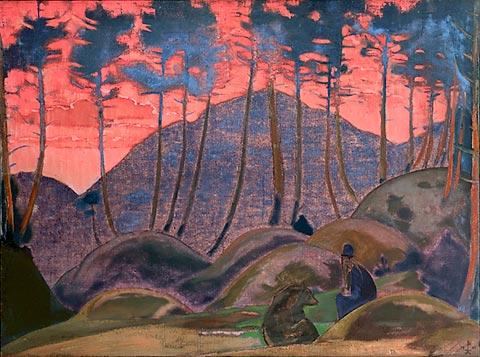
Language of the forest – Nicholas Roerich. 1922. Wikioo.
“Trees do not preach learning and precepts. They preach, undeterred by particulars, the ancient law of life.”
Herman Hesse
- Can the monsters inside be tamed?
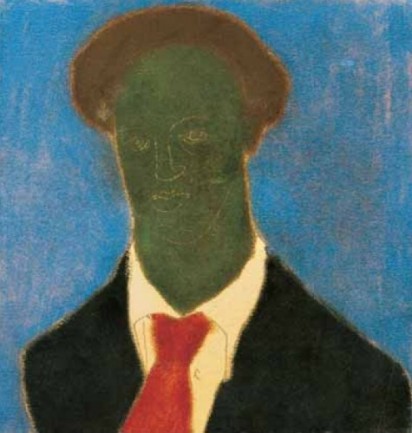
Lajos Vajda (1935) Dark Self-portrait. Wikimedia Commons
“We have to recall the functional definition of the Shadow as that which renders us uncomfortable in confronting in ourselves.”
James Hollis
The scary part of going into the dark forest that is part of our inner world is that we might have to face aspects of ourselves that we do not like, the dark side, the ‘shadow’ side.
That is why it has to be deeply hidden, even from our conscious selves, amongst the bracken, thorns and undergrowth of our shadowy, symbolic, internal forest.
The degree to which this happens varies according to each person’s openness to the inner workings of their psyche.
Why should we enter the dark forests of ourselves at all? Wouldn’t it be easier to stay in the ‘sunshine?’
It is, inevitably, a painful process, searching through the dense forests of our unconscious in psychotherapy, although it can produce great rewards.
“If you want to choose the pleasure of growth, prepare yourself for some pain.”
Without the promise of the rewards of enlightenment, clarity, peace of mind and insight, we would not traverse the bumpy roads of self-knowledge, whether these paths take us through study, research, relationships or psychotherapy.
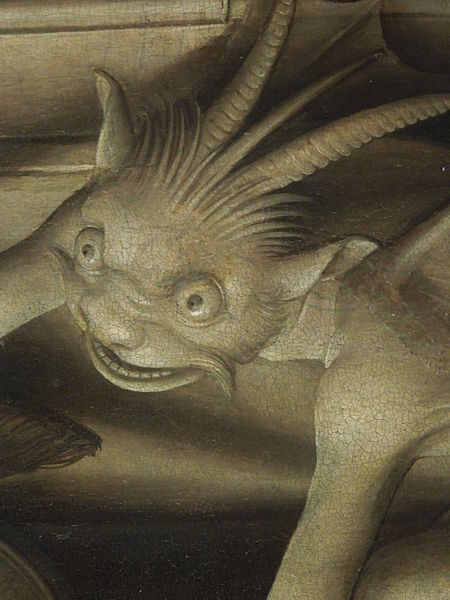 The Last Judgment. Painting. Winged altarpiece .
Devil (detail.) 1467. Hans Memling. Wikimedia Commons.
“You cannot defeat darkness by running from it, nor can you conquer your inner demons by hiding them from the world. In order to defeat the darkness, you must bring it into the light.”
Seth Adam Smith.
If we are unaware of the ‘monster inside,’ of our own potential to be cruel, murderous, evil or sadistic, then such monstrous feelings can be acted out, running riot and causing mayhem to self and other.
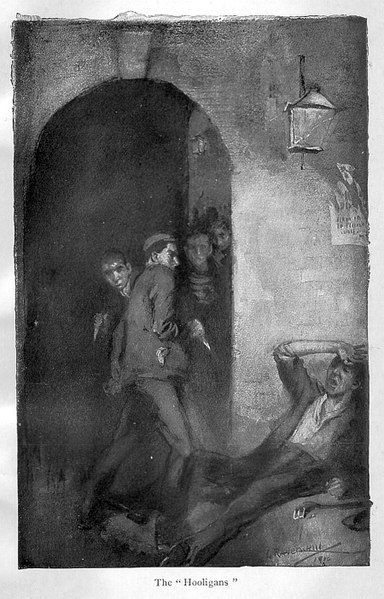
Leonard Raven-Hill – The Hooligans – 1899. Wikimedia Commons
“Inside each of us, there is the seed of both good and evil. It’s a constant struggle as to which one will win. And one cannot exist without the other.”
Eric Burdon
Do not be too afraid, however, dear reader, for, once faced and understood, these monsters can be useful parts of ourselves, as long as they are tamed and controlled. If we ‘befriend’ them and lead them out of their ‘forest’ hiding-place they can turn into beneficial aspects of our whole selves.
What do I mean by this? Within an enabling and accepting experience of psychotherapy, we can hopefully risk becoming aware of the parts of us that have been hidden, often because we are afraid or ashamed of them.
Rather than fighting our inner demons, we need to nourish them, make sure that we are no longer afraid or ashamed of them, but that, instead we recognise them as parts of ourselves and see their potential value to us.
We need them, just as we have needed the forest in which they could hide until we were ready to face them. Everything has a function in our internal world.
Now we have a chance to face these parts of ourselves, or, as the Buddhists frequently say, ‘to feed the monster inside.’

(https://clipart-library.com/clipart/1851010.htm)
“Our demons lose their power when we pull them out of the depths where they hide and look them in the face in broad daylight.”
Isabel Allende
For example, we all need to be able to manage anger, lust, inner strength, ambition, etc. These are examples of what we would be without if we totally eradicated our ‘monsters,’ instead of coming to terms with them.
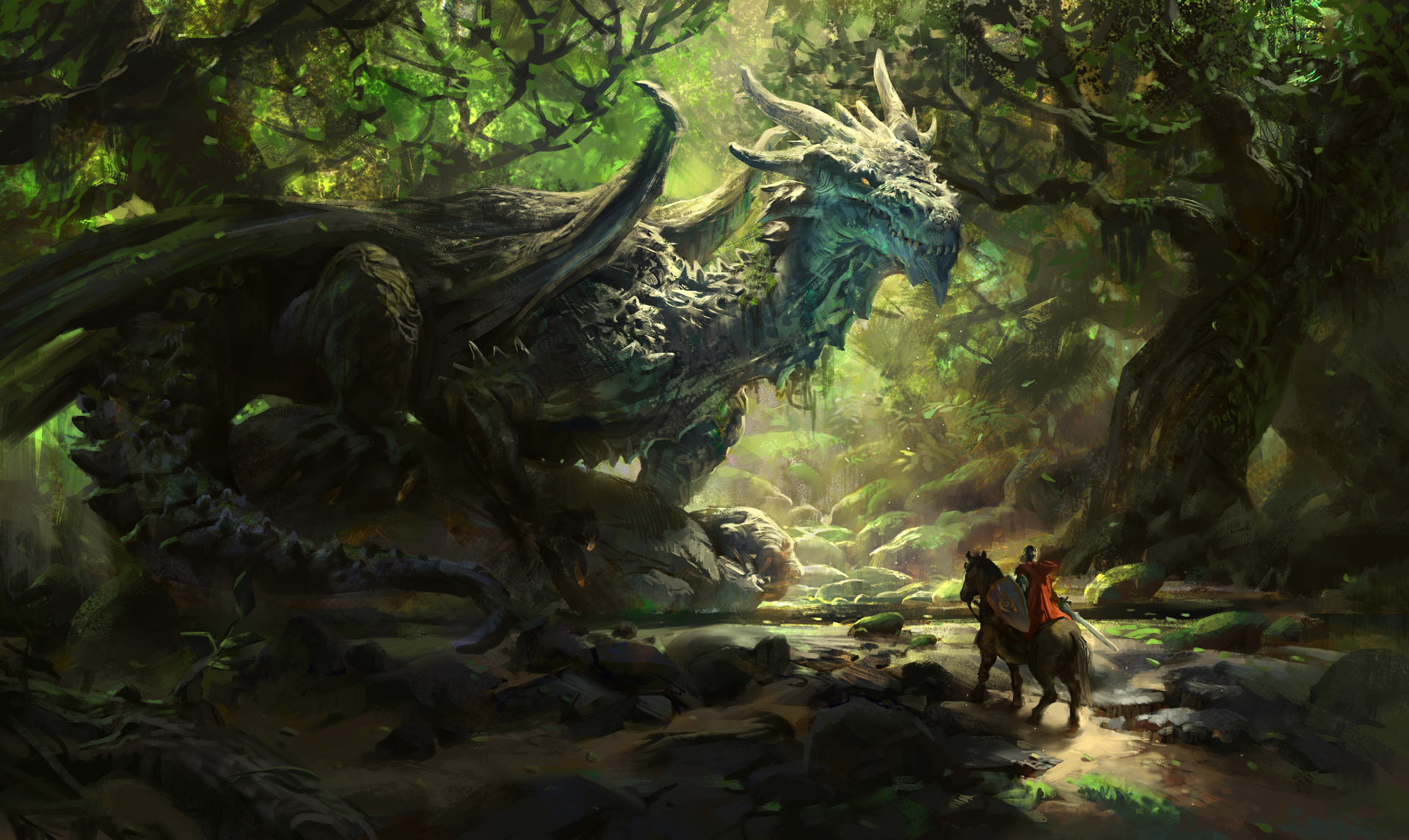
(https://clipart-library.com/clipart/8TEbRAdjc.htm)
“We all hold a monster inside. The only difference is what form it takes when freed.”
Mary Lindsey.
Freeing our monsters means that we will have, hopefully, ‘negotiated’ with them, in order to render them manageable and controlled. Instead of feeling at the mercy of, for example, our rage or violent feelings, we can develop control and mastery of them and not ‘release’ them until they are more ‘tame.’
Facing these ‘monsters’ inside the deep forest of our unconscious and then befriending them is the best way of disarming them. Therapeutic help may be needed to facilitate such a process.
- An individual journey into the self
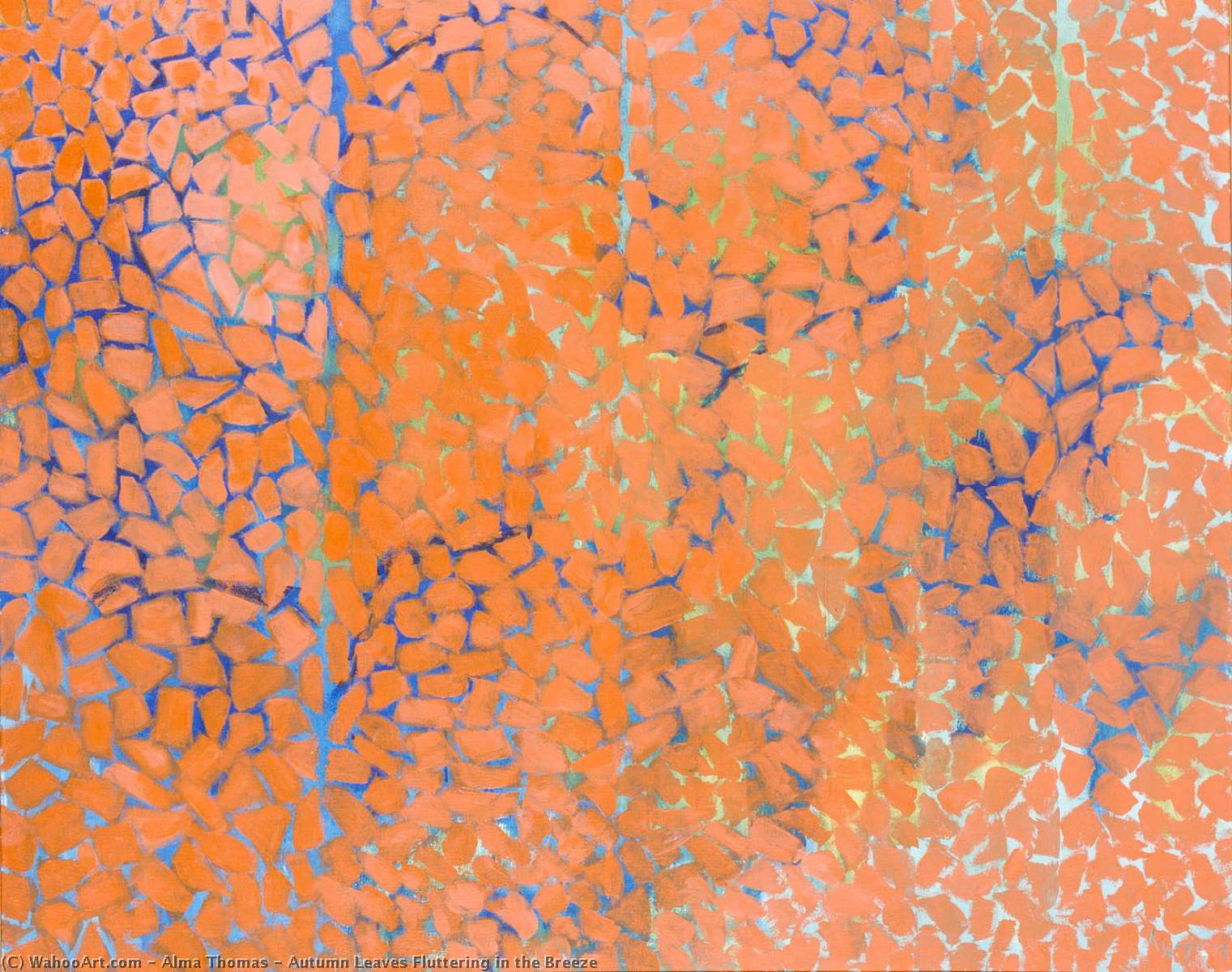 Autumn Leaves Fluttering in the Breeze – Alma Thomas. 1973. Wikioo
“In a forest of a hundred thousand trees, no two leaves are alike. And no two journeys along the same path are alike.”
Paulo Coelho
To continue with the metaphor of forests and the unconscious, we may compare a journey through a deep forest with our quest for self-discovery.
Each journey is different, as we are all unique individuals. The journey can be arduous and painful, for facing these less palatable parts of ourselves can be difficult.
“Transformation is a process, and as life happens there are tons of ups and downs. It’s a journey of discovery – there are moments on mountaintops and moments in deep valleys of despair.”
Rick Warren
The quotation above is referring, of course, to a journey into the self.
This is a journey of discovery, one in which we will hope to get to know ourselves; it is a moving inwards towards our real selves.
As Warren points out, above, there are times when this journey is full of pain and suffering. To face newly-discovered aspects of oneself is no mean feat.
“No one who, like me, conjures up the most evil of those half-tamed demons that inhabit the human breast, and seeks to wrestle with them, can expect to come through the struggle unscathed.”
Sigmund Freud
- Getting lost in the forest
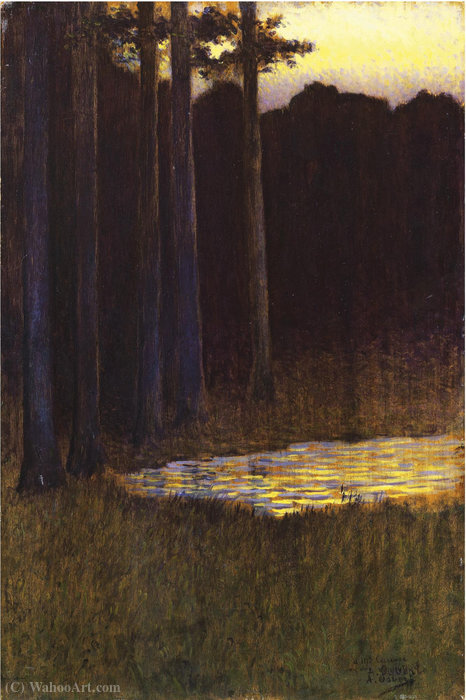
Forest night – Alphonse Osbert. Wikioo
“We all have forests in our minds. Forests unexplored, unending. Each one of us gets lost in the forest, every night, alone.”
Ursula K. Le Guin
This beautiful quotation reminds us of how deep and ‘unending’ is the inner forest of our unconscious mind. Each night we re-enter it, in our dreams, uncertain of the direction, but learning as we go.
Perhaps we have to experience a sense of being lost internally before we can find who we are. Feeling lost can lead to change, as we traverse our inner landscape, searching for hidden parts of ourselves.
We may, at times, experience being lost when we are in therapy; this can affect both therapist and client. The importance of staying with the lost feeling, of not knowing which way to go, cannot be overestimated. Only in this way can we eventually find new lands, new paths, new directions.
“Everyone should have the experience of getting lost in life at least once. Part of growing up is learning how to tolerate uncertainty, and when the time is right, to find or create a new path for yourself.”
Cole Todd
Losing our way may help us discover our real needs, the hidden treasure that is both within ourselves and in the world around us.
 Nuria Armengol – Journal de Voyage 7 [2008]Gandalf’s Gallery. Flickr.
“To lose yourself: a voluptuous surrender, lost in your arms, lost to the world, utterly immersed in what is present so that its surroundings fade away. In Benjamin’s terms, to be lost is to be fully present, and to be fully present is to be capable of being in uncertainty and mystery.”
Rebecca Solnit. A Field Guide To Getting Lost.
- ‘Discovering roses:’ finding some peace
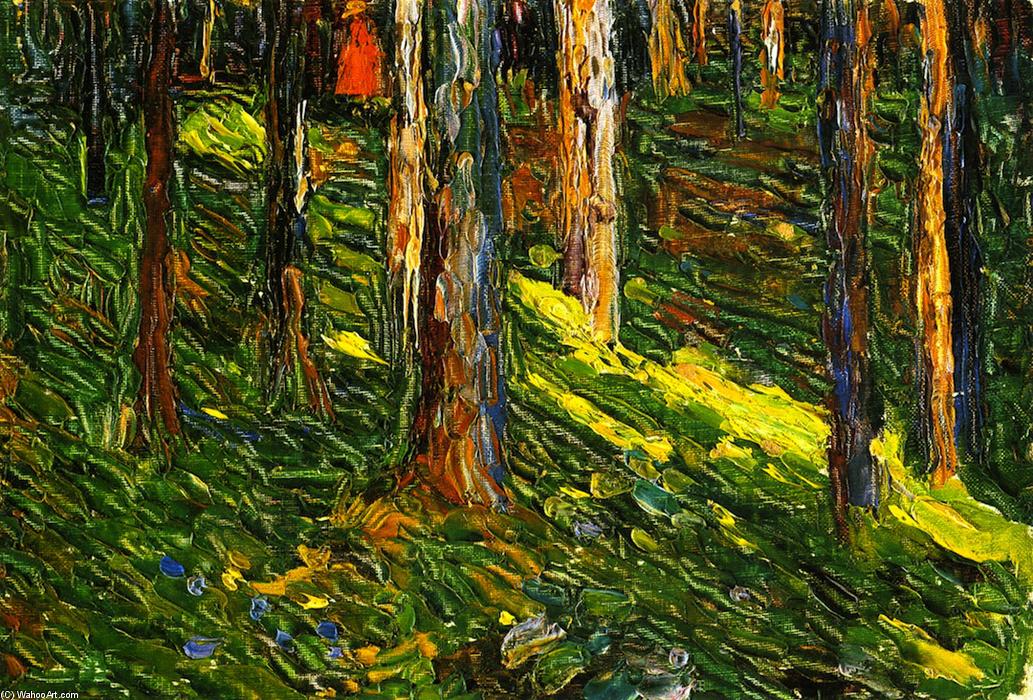 Forest Landscape with Red Figure – Wassily Kandinsky. 1902. Wikioo.
“But I’ll tell you what hermits realize. If you go off into a far, far forest and get very quiet, you’ll come to understand that you’re connected with everything.”
Alan Watts
Understanding that we are ‘connected with everything’ is immensely comforting, as we journey on through the forest, and find quite areas in which to sit and ponder.
The journey into ourselves, and the new learning that results from it, will never end. The work of self-knowledge continues until we die. We never, actually get ‘there,’ wherever or whatever ‘there’ may be.
“It’s the not the destination. It’s the journey.”
Ralph Waldo Emerson
However, along the way through the inner forest, the feeling that we are going in the ‘right’ direction for ourselves, individually, can result in a sense of peace and tranquillity.
Having confronted some of our inner darkness, our shadow side, and having found that we can make peace with this and can integrate some of the ‘monsters’ that represent it, we can take some time to appreciate how far we have travelled, and how our lives may have changed through knowing ourselves better and becoming more whole.
The result of going into the deep forest of ourselves is likely to be more openness, more freedom, more choices. We will feel less hindered by inner obstructions, conflicts and fears, which can prevent us from being authentic. Having experienced therapy, we may find a new confidence and strength with which to face the world.
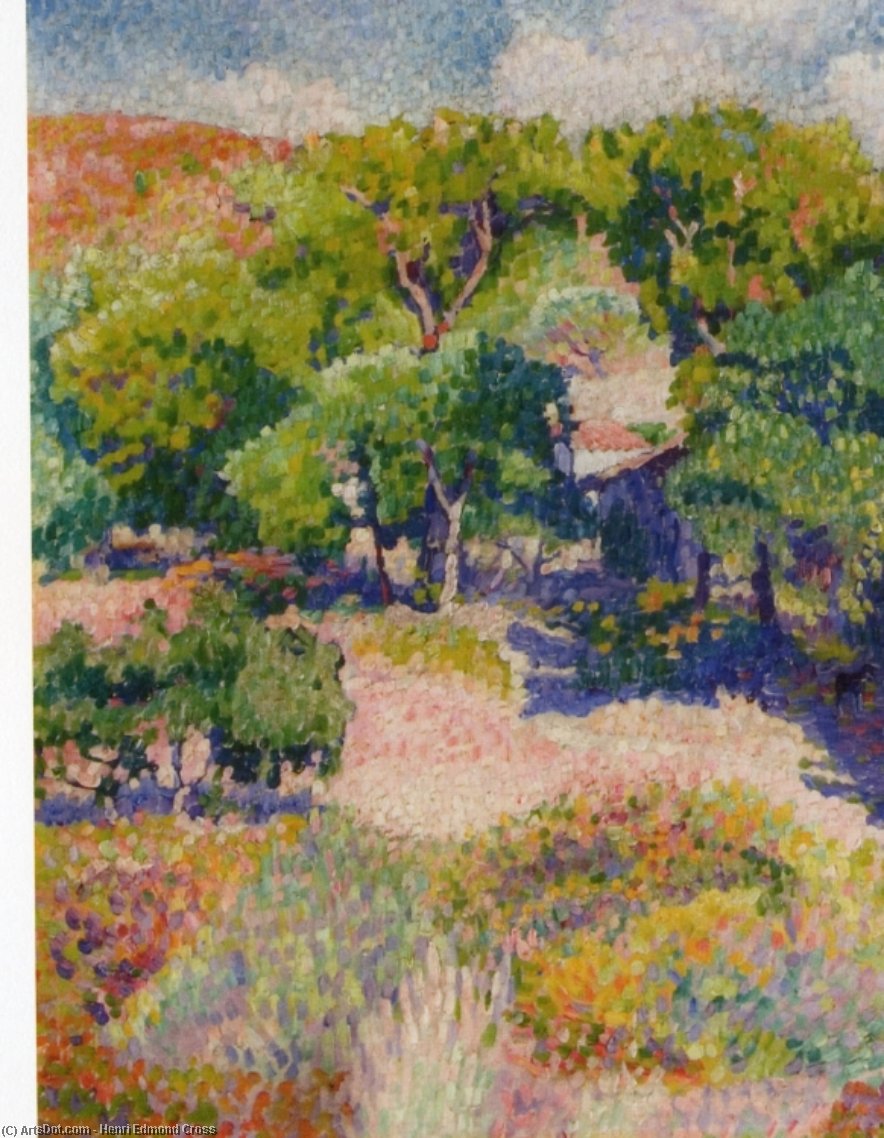 Cypresses – Henri Edmond Cross. Wikioo
“I am a forest, and a night of dark trees: but he who is not afraid of my darkness, will find banks full of roses under my cypresses.”
Friedrich Nietzsche
© Linda Berman
 waysofthinking.co.uk