
Why are people two-faced? Can you identify with this behaviour yourself? What does the term even mean?
Today’s post explores these questions and provides some ways of thinking that will shed light on aspects of this thorny issue.

Two faced. Wikipedia Commons. Dall-E; prompted by Edgard Purwandi.
“When I see you, I think, “I wonder which face she sees when she looks into the mirror.”
C. JoyBell C.
Being two-faced means that we are not sincere or honest, that we adopt a different ‘face’ for different people. It is often a backbiting and manipulative form of behaviour, when a person derives pleasure from covertly putting others down.
Two-facedness has its roots in childhood; a child who has been loved for who they are does not need to manipulate or wear a false front. Often people who fear rejection for being who they are can develop such a two-faced way of being.
- Two faced or having many aspects?…
 A two faced statue from France. Ahmed 3111. Wikimedia Commons 2018.
“Binary paths belong in bygone past, all things civilized are non-binary.”
Abhijit Naskar
Of course, we all have many aspects to our personality; we are so much more, in reality, than people who have one or two faces. As the poet says…
“Do I contradict myself?
Very well then I contradict myself,
(I am large, I contain multitudes)”Walt Whitman. Song of Myself, 51.
We all ‘contain multitudes,’ we are all a fusion of many parts. This is important, for it is what makes us real, whole human beings. In a healthy person, who is not fragmented and dissociating through trauma, the different aspects are mostly connected and form a more harmonious whole.
However, it is important to emphasise that we must differentiate between being two-faced and having different parts to ourselves that make up a well-functioning whole, for two-facedness is more devious and dishonest.
It is about blatantly having double standards. This takes the form of being smiling and pleasant to an another’s face, whilst speaking critically and maliciously about them behind their back.
- To some extent….
 Emma Jane Hogbin. Two Faced,2004. Wikimedia Commons.
To some extent we are all, at times, hypocritical and two-faced. As the quote says, we are all human:
“A hypocrite is a person who—but who isn’t?”
Don Marquis
There are myriad minor ways in which we may be two-faced each and every day. We may wear a mask of attention and appear to be listening, yet we are really somewhere else inside our heads.

The Lost Balloon – William Holbrook Beard. 1882. Wikioo
“I’d be smiling and chatting away, and my mind would be floating around somewhere else, like a balloon with a broken string.”
Haruki Murakami
How often do public speakers appear confident whilst quaking inside?
 Mask of Fear – Paul Klee
“Boldness is a mask for fear, however great.”
John Dryden
We may appear politely pleased to bump into someone we know in the street or supermarket, when we really are wanting to get on with our day/shopping/ work/ precious free time…

Politeness simulation (LOC cph.3g08085).gif. Wikimedia Commons.Published in: McLean’s optical illusions; or magic panorama. London, T. McLean, 1833.
“Politeness, n: The most acceptable hypocrisy.”
Ambrose Bierce
- Malice
Whilst the above versions are largely benign and ‘acceptable’ ways of being two-faced, there are more sinister versions that can cause offence and upset.
“God has given you one face, and you make yourself another.”
William Shakespeare. Hamlet.
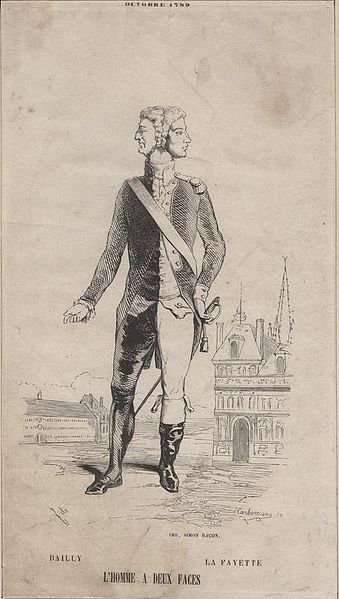
Man with two faces – Bailly and Lafayette. Jean Baptiste Charles Carbonneau (1815–1869) Wikimedia Commons.
“Some people should have two Facebook accounts. One for each face.”
Unknown
Deliberately being two-faced is associated with duplicitous back-stabbing and malice; it involves insincerity, pretence and untruths about another person, whilst feigning friendship. Such a person is, in fact, a ‘frenemy,’ someone who convincingly pretends friendship, but is actually an enemy.
- Envy

“One may smile and smile and be a villain.”
(Shakespeare: Hamlet, Act 1 Scene 5)
Envy involves resentful feelings about what others have that we do not ourselves have and very much desire. It may be hidden behind a smile and pleasantries; however, when it lurks covertly behind such smiles, envy can subsequently emerge in dangerous ways.
It can be destructive of both the one who feels it and the individual it is aimed at, and can result in the envious person being very two-faced.
 James Ensor – Ostend Masks. 1928-9. Wikimedia Commons.
“Villainy wears many masks; none so dangerous as the mask of virtue.”
Washington Irving
Those who feel envious of others may spread malicious gossip behind their ‘friend’s’ back. All this may say more about the gossipy person themselves than their victims.
“Never judge someone’s character based on the words of another. Instead, study the motives behind the words of the person casting the bad judgment.”
Suzy Kassem

Steve Johnson. envy. 2010. Flickr.
“Those who clap you on the back with one hand may clench envy’s mask behind theirs with the other.”
Stewart Stafford
At times, we might all feel envious of people; there will be aspects of others, their lives, appearance, possessions, talents, skills, that we wish we had. These are natural and universal feelings, part of the human condition.
Destructive, spoiling envy, however, is different and can be dangerous. It represents an acting out of malicious thoughts and feelings, giving into them, rather than maintaining self-control, and working them through.

Peter Paul Rubens – Cain slaying Abel.1608-9. Wikimedia Commons
“Never underestimate the power of jealousy and the power of envy to destroy. Never underestimate that.”
Oliver Stone
Envy can result in violence. A biblical example is when Cain killed Abel because Abel’s sacrifice received divine acceptance, but Cain’s did not.
Such envious feelings may also emerge in disguise, manifesting themselves in the form of prejudice, bullying, gossiping, racism, hypocrisy, malice, spite, criticism, competitive or undermining behaviour, hatred, threat or manipulation.
Beware of those who speak to you about others maliciously, for they do so only for themselves, perhaps to boost their own self-image at the expense of someone else. They are also quite likely to speak badly of you too, behind your back.
“There is perhaps no phenomenon which contains so much destructive feeling as ‘moral indignation,’ which permits envy or hate to be acted out under the guise of virtue.”
 Standing Figure with Halo – Egon Schiele. 1913. Wikioo.
‘Moral indignation is jealousy with a halo.”
HG Wells.
Others may malign us for many reasons. Even if they feel we have wronged them, spreading their own bad thoughts about us will inevitably rebound on the person who promotes such gossip.
Envy may also have a part to play in speaking ill of others and being two-faced. Putting others down behind their backs may be a way of boosting themselves.
“Because they feel unhappy, men cannot bear the sight of someone they think is happy.”
Schopenhauer
In addition, people may project onto us aspects of themselves which they do not like. It is easier to see the other as ‘bad,’ rather than own aspects they are afraid or ashamed of in themselves.
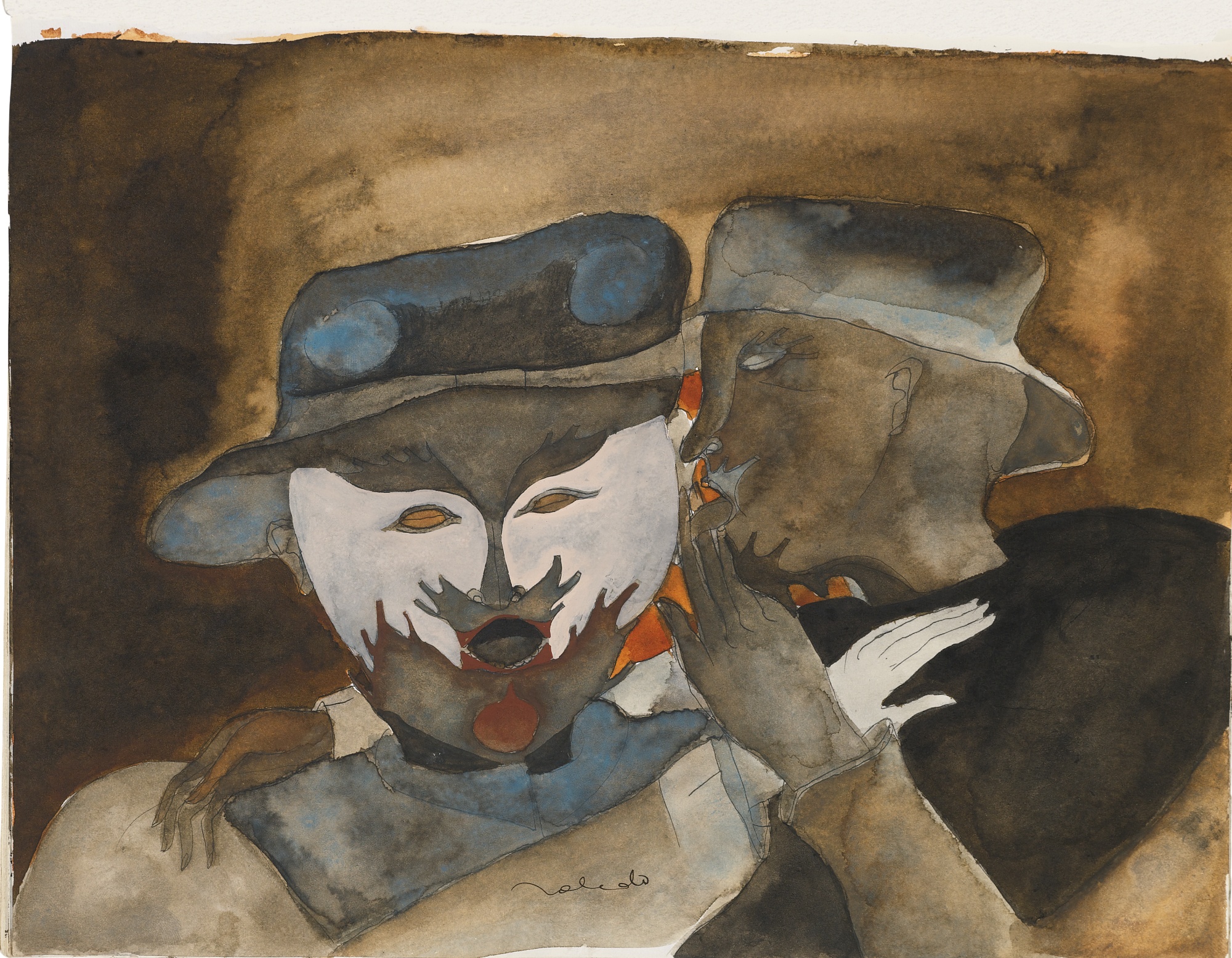 Francisco Toledo – New York Sketchbook [c.1970s] Gandalf’s Gallery. Flickr.
“The opinion which other people have of you is their problem, not yours.”
Elisabeth Kubler-Ross
Avoiding being two-faced involves being honest with the self, true to the real person we are. It means being aware of ourselves and our reactions to others, and requires willingness to gain self-knowledge and understanding.
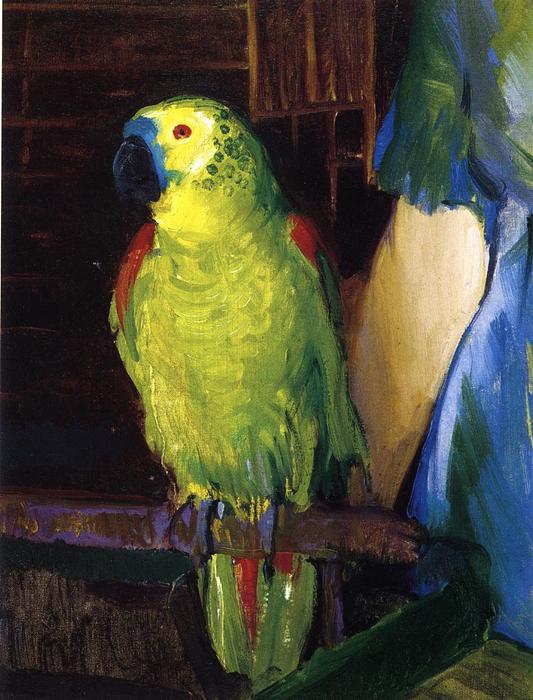
Parrot – George Wesley Bellows.1915. Wikioo
“Live in such a way that you would not be ashamed to sell your parrot to the town gossip.”
Will Rogers
- Defensive masks
 Masks – (Louis Soutter)1937. Wikioo
Having another face can also be achieved in the form of (invisible) masks. We all wear them, at some time or another, and some of us wear them continuously. Perhaps we do not even know who we actually are.
Defences are ways of managing insecurities and fear; they are psychological mechanisms that help keep us away from whatever might be unpleasant and disturbing. They allow us, for example, to block off, deny or rationalise away difficult memories, and feelings like guilt and shame.
Many of these defence mechanisms lie deep in our unconscious minds. They will be largely out of our awareness, unless we choose to bring them to consciousness and explore them in psychotherapy.
Masks can thus be used defensively; for example, people with low self-esteem might develop a false ‘social face,’ in order to feel more accepted and acceptable.
Some may act stupidly to cover up their fear of really being ‘seen.’ They may adopt a joker or jester stance to cover up social fears or a sense of inadequacy; such defences may indeed be necessary if people are too afraid to be authentic.

Masks and buffoons – Maurice Sand. 1862. Wikioo
- Some thoughts on reflection and on being oneself
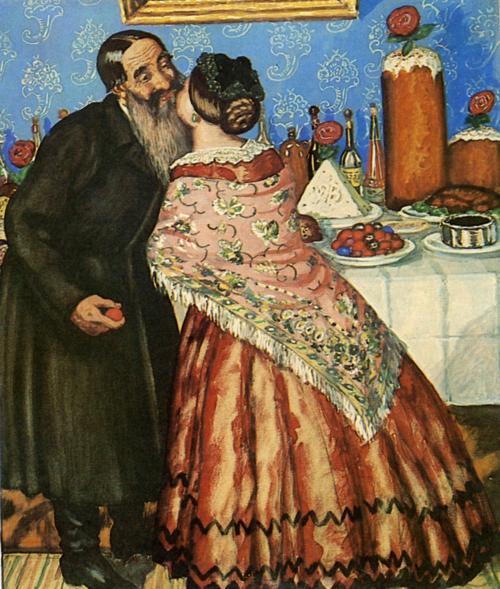
Christovanie (Easter Greeting)1916. Boris Mikhaylovich Kustodiev.Wikioo.
“I’m a very positive person, but this whole concept of having to always be nice, always smiling, always happy, that’s not real. It was like I was wearing a mask.”
Alicia Keys
Sometimes people develop a ‘false self’ (Winnicott) in order to defend against a feeling of emptiness or lack of identity. This is not the same as being two-faced, and, for some, it is a genuine defence against depression and despair.
 Portrait of a Woman (Double Sided) – Theo Meier.Wikioo
There are many people who do not have any concept of who they really are; they may need to have psychotherapy to discover themselves.
Perhaps they might also meet another person who will be able to reflect them, who can love them enough to help them relax into being more of their real, congruent self. Then they will, hopefully, feel happier in their own skin and not need to resort to being two-faced or defensive.
“The mirror is a worthless invention. The only way to truly see yourself is in the reflection of someone else’s eyes.”
Voltaire
From our earliest days, we have looked for and responded to mirroring. In order to develop and maintain our identity, we have a need to see ourselves, reflected in others, and in the world.
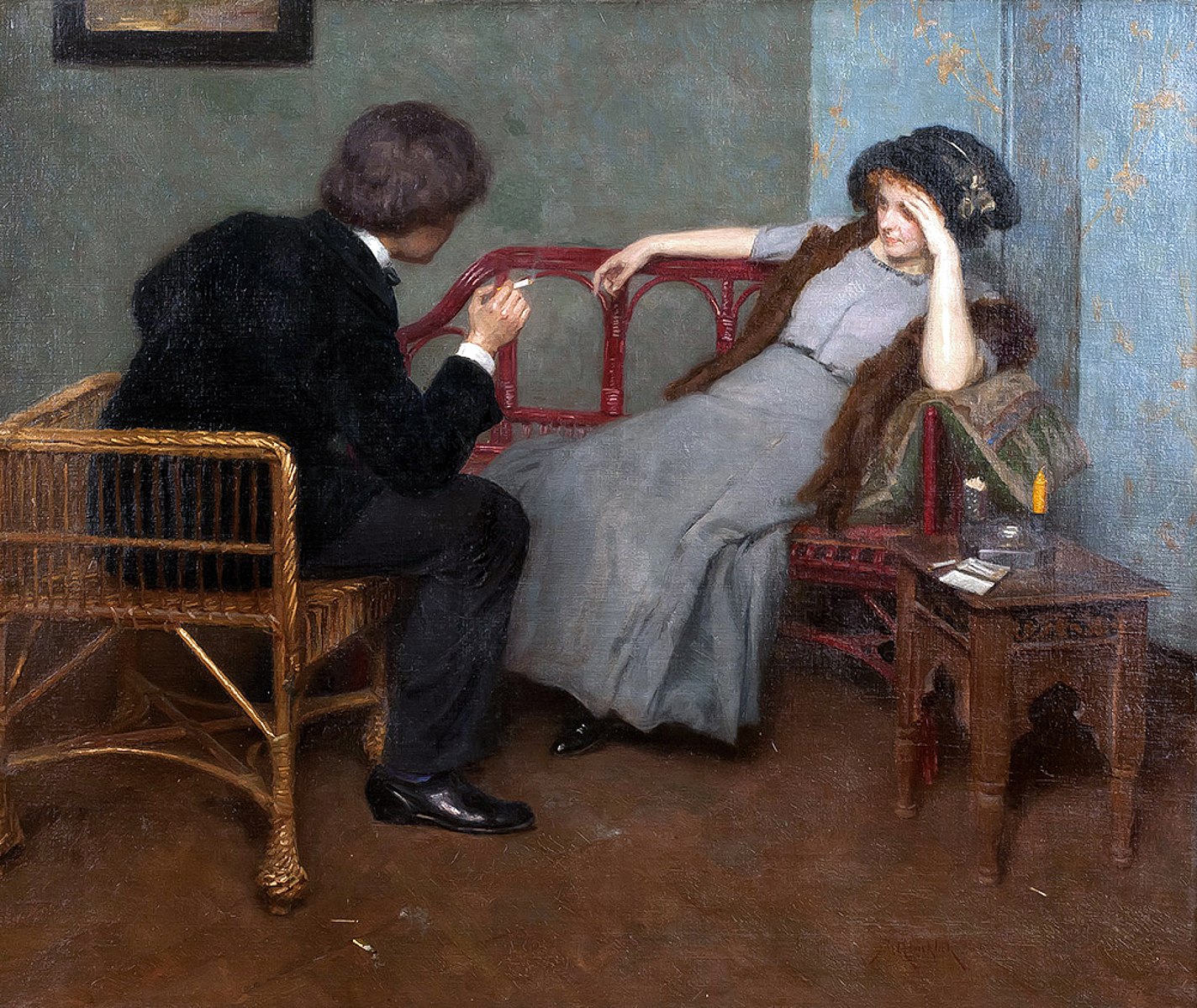
Simon Glücklich (1863–1943) Couple in Conversation. Wikimedia Commons
“Love takes off masks that we fear we cannot live without and know we cannot live within.”
James Baldwin
We mostly live in relationship to others and this is essential to our mental and physical well-being. Crucially, other people will mirror and reflect who we are in terms of what they say, their behaviour and how they relate to us.
Another who can see us relatively clearly is an asset in our lives.
“The one who has a good friend doesn’t need any mirror.”
Rumi.
We can, therefore, in relationships, serve as mirrors for each other. We can reflect back to the other person issues within them that we feel need to be worked on, and in turn learn what we need to attend to in ourselves.
“Through others we become ourselves.”
Lev S. Vygotsky
When we feel loved and cared for, we can feel safe enough to drop the mask, the fakery and the two-faced stance that can bring so much pain and heartache to self and other.
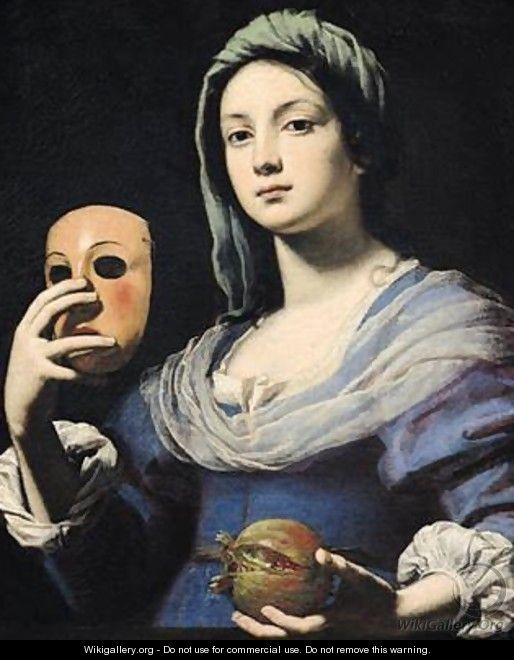
Woman with a Mask 2. Lorenzo Lippi. (1606-1665) Wikimedia Commons.
“In the end, people always have a way of revealing who they are. You just have to give them the space and time to do so. No mask can be worn forever.”
Morgan Richard Olivier
- Choosing your friends wisely.
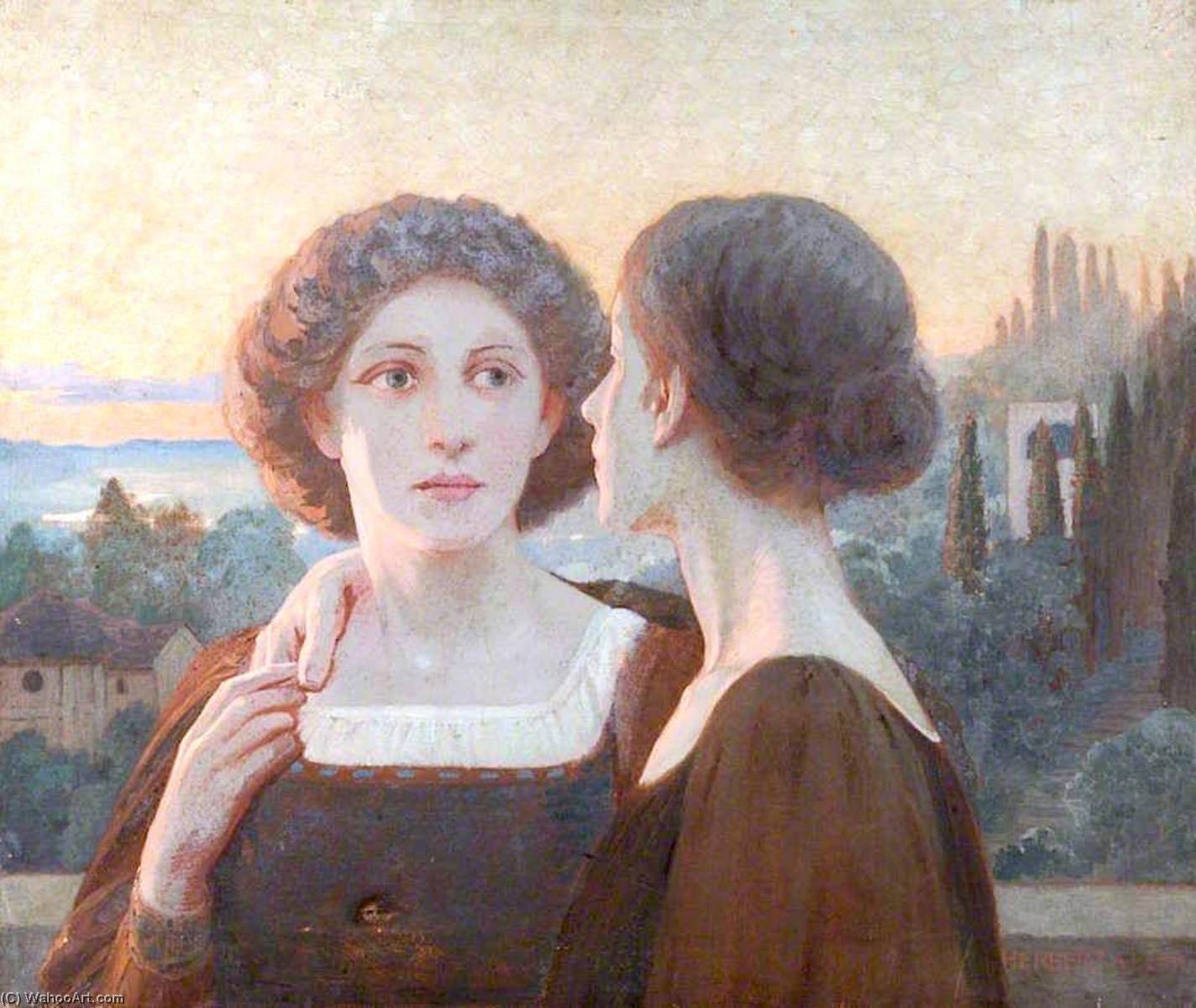 Friendship – William Herbert Allen. Wikioo
“The most dangerous among us come dressed as angels and we learn too late they are the devil in disguise.”
Carlos Wallace
Discerning who is and is not friendly towards us can be difficult; there are many ‘smiling assassins’ around.
On the other hand, people might also wear a scary mask, but be gentle underneath. Who knows?
In order to avoid being hurt by those who are two-faced, it is important to remember that their behaviour is to do with them, not us.
Protecting ourselves and our own mental health is important, so it is our responsibility to be discerning, choosing friends who genuinely have our interests at heart.

Jerry Weiss. Friends, oil on canvas, 2003. Wikimedia Commons.
“I don’t have time to worry about who doesn’t like me … I’m too busy loving the people who love me.”
Charles M. Schulz
©Linda Berman
If you have valued this post, do become a follower of my blog!
 waysofthinking.co.uk
Hello, Dr. Berman. I just read your piece about two-facedness. Last week, on Our Friendship Bench https://www.eventbrite.com/e/our-friendship-bench-registration-206175936777?aff=oddtdtcreator&utm-source=cp&utm-campaign=social&utm-content=attendeeshare&utm-medium=discovery&utm-term=listing, we started our conversation with Janus (the two-faced Roman deity). Go figure . . . Anyhow, I would like to have you appear on back2different https://www.buzzsprout.com/1171136, a podcast I started hosting in 2020 after hearing (and hearing and hearing) “I can’t wait until things get back to normal.” So could we talk? I enjoy and grow with your insight. Thanks, Mac 🙏
LikeLiked by 1 person
So glad you liked the post, Mac. Yes, we can talk. Please could you email me with some possible zoom dates?
LikeLike
Good day, Linda.
Glad to hear right back from you.
You’re in the UK, correct? So we have a five-hour time difference (I’m EST, USA).
How about next Monday or Tuesday (1/15 or 1/16) between 2:00 PM and 7:00 PM your time?
Just let me know, or if other spots work on your calendar . . .
Thanks,
Mac
LikeLike
Hi Mac
I can do next Monday at 2.30 my time.
If that’s ok will you send me a zoom code?
Thanks
Linda.
LikeLike
Hi Mac- could you send me the zoom code?
LikeLike