
- Anger as motivation
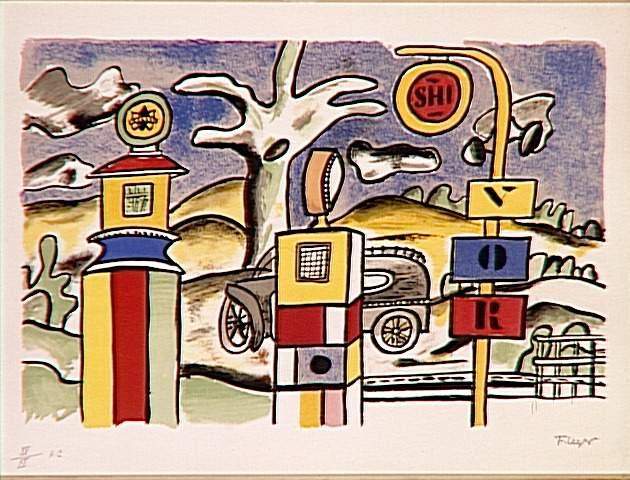
Fuel Pump – Fernand Leger. Wikioo
“Use your anger for good. Anger to people is like gas to the automobile – it fuels you to move forward and get to a better place. Without it, we would not be motivated to rise to a challenge. It is an energy that compels us to define what is just and unjust.”
The Gift of Anger
When we feel strongly about an issue that we have considered and discussed, feelings of outrage about an injustice or a need for a new direction, can, indeed, motivate us further.
Anger does not have to be expressed through violence or aggression, which can cause damage and injury. It can be protective of self and other if it is channelled away from these negative manifestations; in this way it can be a force for good.
“The world needs anger. The world often continues to allow evil because it isn’t angry enough.”
Bede Jarrett
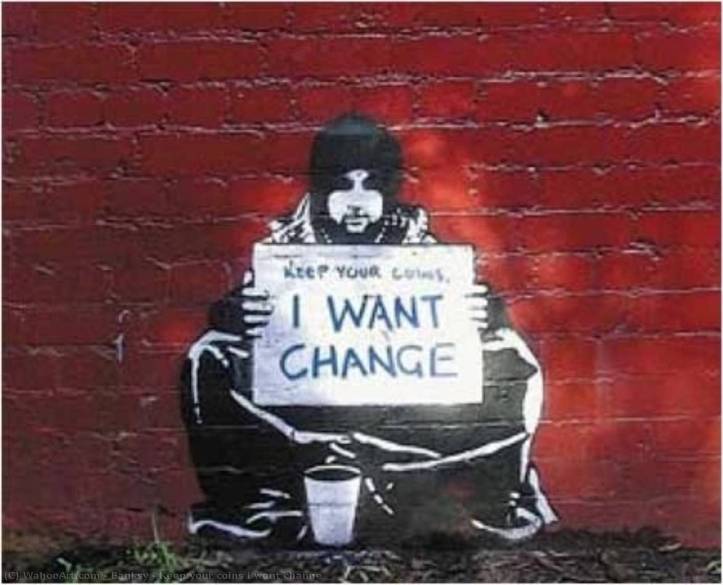 Keep your coins i want change – Banksy. Wikioo.
“There’s nothing wrong with anger provided you use it constructively.”
Wayne Dyer
Without anger, we humans would lack the energy to march, protest, or demonstrate for change. This would be a huge loss to society and would mean stasis and a dangerous state of rigid, set ways of thinking. Anger can help us to identify who we are, giving us strong insights into what we believe and the causes we feel deeply about.
- Transforming anger

An Alchemist – Edward Charles Barnes. Wikioo
“Anger is a means to achieve a goal. When I first read this sentence, it hit me like a ton of bricks. But at the same time, I felt that it went hand-in-hand with an idea I’ve grown to realize about anger. I’ve recognized that it is an emotion that can be utilized and transmuted into alchemy.”
Using our anger to create alchemy, that is, a seemingly magical transformation, is a powerful way to deal with this sometimes passionate emotion, turning it into ‘gold.’ Furthermore, it can drive us forward to achieve goals in life, despite the challenges that we might encounter along the way.
Anger can also be ‘magical’ in terms of helping us to understand ourselves better. If we take note of what our anger is really communicating, it may be that we will discover its roots in our past.
Then we can learn what triggers us and why we sometimes become angry over the same old issues, repeatedly. Anger can give us that ‘jolt’ that may propel us forward into a more whole understanding of self and our world.
- Anger as a mask
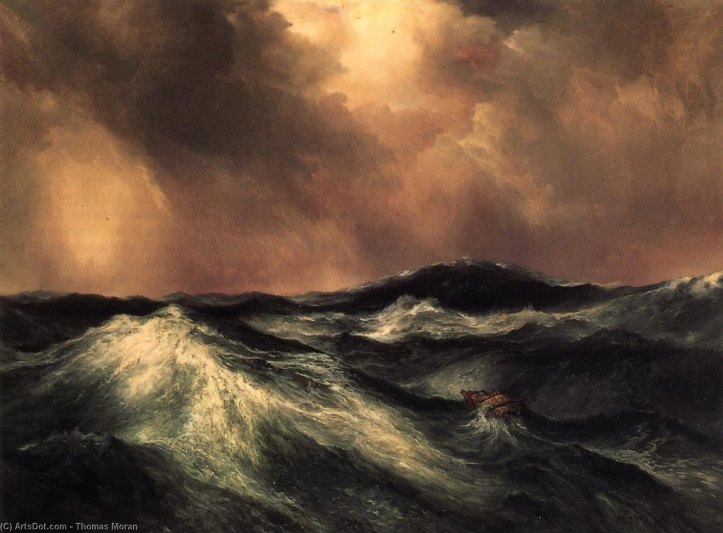 The Angry Sea – Thomas Moran. 1911. Wikioo
“Yes, it’s important to feel your way through life and to completely embrace these various emotions; including anger. But we cannot dismiss the underlying goal. So what do I mean by this? Well, exerting anger negatively is usually a cover-up for what’s really happening deep down inside.”
Anger may at times be a mask to conceal other emotions, like grief, sadness, or guilt. Perhaps it is easier to show anger than other, painful feelings.
“I sat with my anger long enough until she told me her real name was grief.”
C.S. Lewis
Men have often been socialised not to reveal any vulnerability, not to shed tears; many have grown up concealing and denying such feelings, getting angry instead.
Hopefully, this hiding of tears is changing for them, in that it has become much more acceptable for men to show their emotions.

- Holding onto pain
Further insight into ourselves may be gained from exploring the motivations behind our anger in relationships; why do we hang on to past internalised ‘bad objects,’ still allowing them to make us feel bad?
“Anger and jealousy can no more bear to lose sight of their objects than love.”
George Eliot
I am reminded by the above quotation of the phrase ‘the familiar unpleasant.’ Holding on to past ‘bad objects’ in this way, means that we are constantly returning to internal representations of people in our past with whom we felt some kind of pain.
As we have seen, it is possible to transform anger into all kinds of hopeful achievements. In doing this, we are letting go. However, there are many sad relationships and situations where people feel stuck and unable to let go or move on together.
When people separate or divorce, sometimes it is only anger that unconsciously keeps them connected. As George Eliot rightly says, the strength of such anger can be as great as love, meaning that the connections feel imperative to maintain.
Really exploring what lies beneath these feelings and behaviours can be important and psychotherapy may be necessary in order to help manage this.
- Clinging on and letting go
 Daniel Bilmes – ‘Held.’ Gandalf’s Gallery. Flickr.
“Some people believe holding on and hanging in there are signs of great strength. However, there are times when it takes much more strength to know when to let go and then do it.”
Ann Landers
Sometimes it can be hard to know when it feels right to let go of our furious anger and move on. Clinging on is the opposite of letting go. It suggests a kind of desperate need, an unwillingness to face reality or change.
It may involve remaining in the same problematic situation, which may be uncomfortable, but it is a kind of ‘cocoon of the known.’ It is trapping, but somehow strangely safe.
Often we may feel it is easier not to let go, as this will involve facing some kind of ending. Letting go has different meanings for different people. It usually includes taking some risks.
“Courage is the power to let go of the familiar.”
Raymond Lindquist
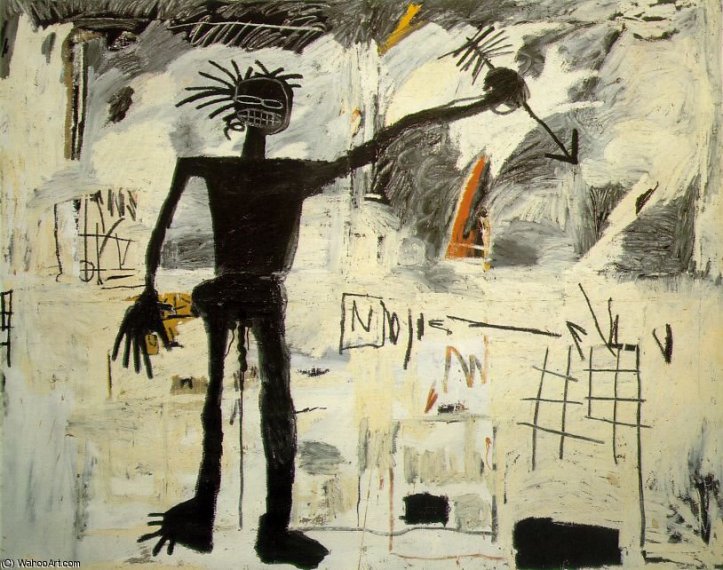 Self-portrait coll.franzen.1982. Jean Michel Basquiat. Wikioo
“There is so much anger buried deep inside me that if I dump them out onto the world, there won’t be any world left. So I chose to turn that anger into strength instead of weakness – I turned that anger into an instrument of creation rather than a weapon of destruction.”
Whilst facing and understanding the roots of our anger is important, many people find other ways of using their angry energy that are creative and hopeful.
Jean Michel Basquiat was an artist who became increasingly angry about the injustices he encountered in the form of racism and envy.
He had the awareness and presence of mind not to act out his rage on others, knowing how destructive it could be if he allowed it free rein.
“When anger rises, think of the consequences.”
Confucius
He was well able to predict the consequences of releasing his fury at the injustices of the world and so he conducted a little alchemy himself by transforming it into art. He allowed the artistic medium to express his anger.
Sadly, Basquiat died in his thirties of a drug overdose, but his work serves as a powerful reminder of how creativity can be a way of processing dangerous emotions.
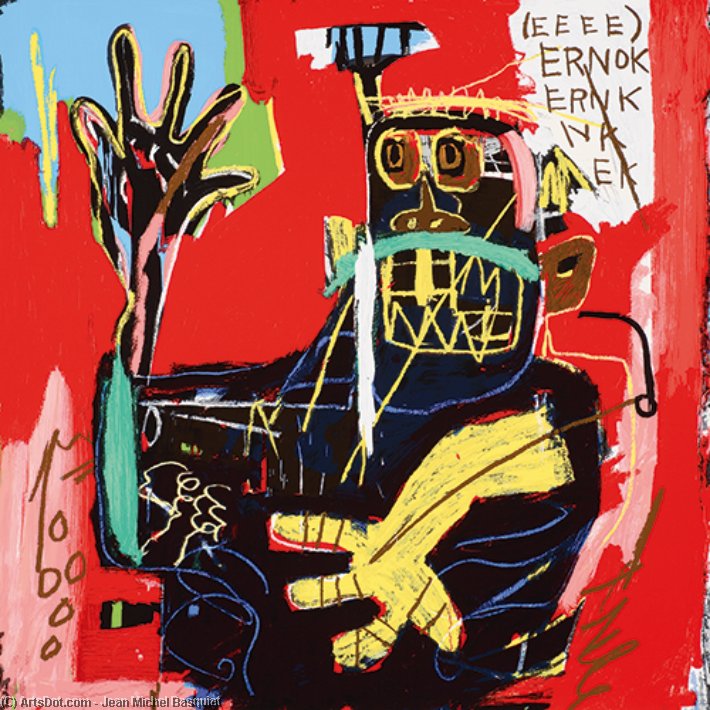 Untitled (ernok) – Jean Michel Basquiat. Wikioo
- Children and anger
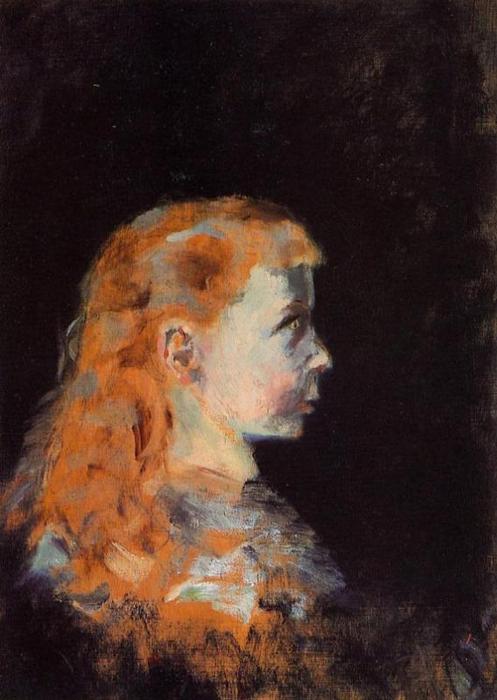
Portrait of a Child – Henri De Toulouse Lautrec. 1882. Wikioo.
“Do not teach your children never to be angry; teach them how to be angry.”
Lyman Abbott
How to teach a child to be angry? If a child grows up in an atmosphere where feelings can be expressed and discussed, then they can learn how to manage their anger constructively, because this can be talked about.
Identifying what is at the root of a child’s anger can be helpful; sometimes children might show anger when they are feeling disappointed, sad or rejected and it is important to gently help them recognise this.
Children also learn to manage their anger though the example of their parents. Witnessing parents, and other important people in their lives, as they stand up for themselves and challenge others in difficult, anger-provoking scenarios, is crucial to a child’s learning about how to manage their anger.
Letting anger out can be a relief, stress-reducing and, where appropriate, a freeing experience. It is also important to reiterate here that, if possible, anger needs to be expressed in a constructive and healthy way, not just as a cover-up for other feelings.
If we constantly hide our vulnerable and difficult emotions beneath a veil of fury we might find ourselves in a continual state of easily-and inappropriately- roused anger. This can detrimentally affect our relationships and our lives in general. It damages our own well-being and that of others around us.
- Moving forward after anger
When the anger has been expressed and has subsided, there may be forgiveness and reparation, or there may not, depending on the choices and wishes of those involved. Whatever the outcome, it is important that we can move forward after expressing our anger in as constructive a way as possible.
This may be easier said than done, but what is paramount is to gain some kind of clear perspective and understanding of self and other, in terms of what the anger was really about.
Such insight also needs to extend to a recognition of how past and present can become entangled and confused in our minds, so that we may overreact to something small today that reminds us of traumatic and painful past experiences.
Being stuck in the anger of the past in this way can be very debilitating and can prevent us from enjoying life and experiencing the freedom of living in the now…

“I was angry with my friend
I told my wrath, my wrath did end.
I was angry with my foe:
I told it not, my wrath did grow.”
William Blake(From the poem, A Poison Tree)
© Linda Berman
 waysofthinking.co.uk