
 Duffy Sheridan – Head Study with White Scarf. 2010. Gandalf’s Gallery, Flickr.
“To have that sense of one’s intrinsic worth which constitutes self-respect is potentially to have everything: the ability to discriminate, to love and to remain indifferent. To lack it is to be locked within oneself, paradoxically incapable of either love or indifference.”
Joan Didion, Slouching Towards Bethlehem: Essays(FSG Classics)
The esteemed writer, Joan Didion, succinctly defines self-respect as a way of having it all. It is, indeed, a precious gift.
Self-respect enables us to have the ability to know our own minds, so that we can decide who or what is right for us in life…. and to know what is not.
Without it we are lost, unable to have relationships, to love others or to value ourselves. We will not be able to make important decisions and will be ‘incapable of love or indifference.’
Knowing what to be ‘indifferent’ to is as important, Didion implies, as knowing what to love. It is about having the self-respect to recognise who we are and what we do and do not need in life.
- Self-respect brings us power and freedom
 Eddi van W. Self-Respect. Flickr.
“Respect your efforts, respect yourself. Self-respect leads to self-discipline. When you have both firmly under your belt, that’s real power.”
Clint Eastwood
Respecting ourselves and our ‘efforts’ involves having the confidence to remain true to ourselves and our ideals.
It is related to being clear about our beliefs, ideas, responsibilities, boundaries and principles, and having the courage to remain true to all these in a tough world and despite others disagreeing with or criticising us.
Self-respect is also about self-knowledge and being aware of one’s ethics and moral principles. If we achieve clarity in our beliefs, then we will not feel constantly swayed by others’ views and we will know what is the right path for us personally.
This is not to say that we should ignore other people’s views or stifle all doubt; it is actually about weighing the options and making a choice that suits ourselves.
It is a fact that we give our power away to others when we feel dependent on their affirmation and assent. Often, the roots of this lie in our past, with unmet needs for love and approval, which can continue into adulthood, as we desperately keep on trying to earn others’ acceptance.
Learning to develop, listen to and amplify our own clear inner voice, drowning out the clutter and babble of external opinions, can ultimately help us to recognise that, deep inside, we are actually good enough. If we respect ourselves, then we are freer to think for ourselves and be authentic.
“You can search throughout the entire universe for someone who is more deserving of your love and affection than you are yourself, and that person is not to be found anywhere. You yourself, as much as anybody in the entire universe deserve your love and affection.”
Buddha
- Freedom and self-respect

“To free us from the expectations of others, to give us back to ourselves – there lies the great, singular power of self-respect.”
Joan Didion
Constantly fearing others’ disapproval and feeling that we have to fit in with their ways of thinking is stressful and obviously draining of our own personal power.
Being aware that we are trapped by others’ expectations is stultifying and weakening; it means we cannot freely be ourselves, for we must always please others and live up to their expectations.
“Don’t lose your dignity and self-respect trying to make people accept, love, and appreciate you when they just aren’t capable.”
Unknown
Even in the absence of critical others with high expectations of us, we can still feel discouraged inside. We all talk to ourselves; usually we do this silently. Sometimes, however, the voice is not authentically ours and it constantly continues to give us criticism and discouragement.
When the origin of this inner voice has not been considered, and we do not pause to explore and change it, then it can become a painful and often prolonged experience, like someone repeatedly picking at us from within.
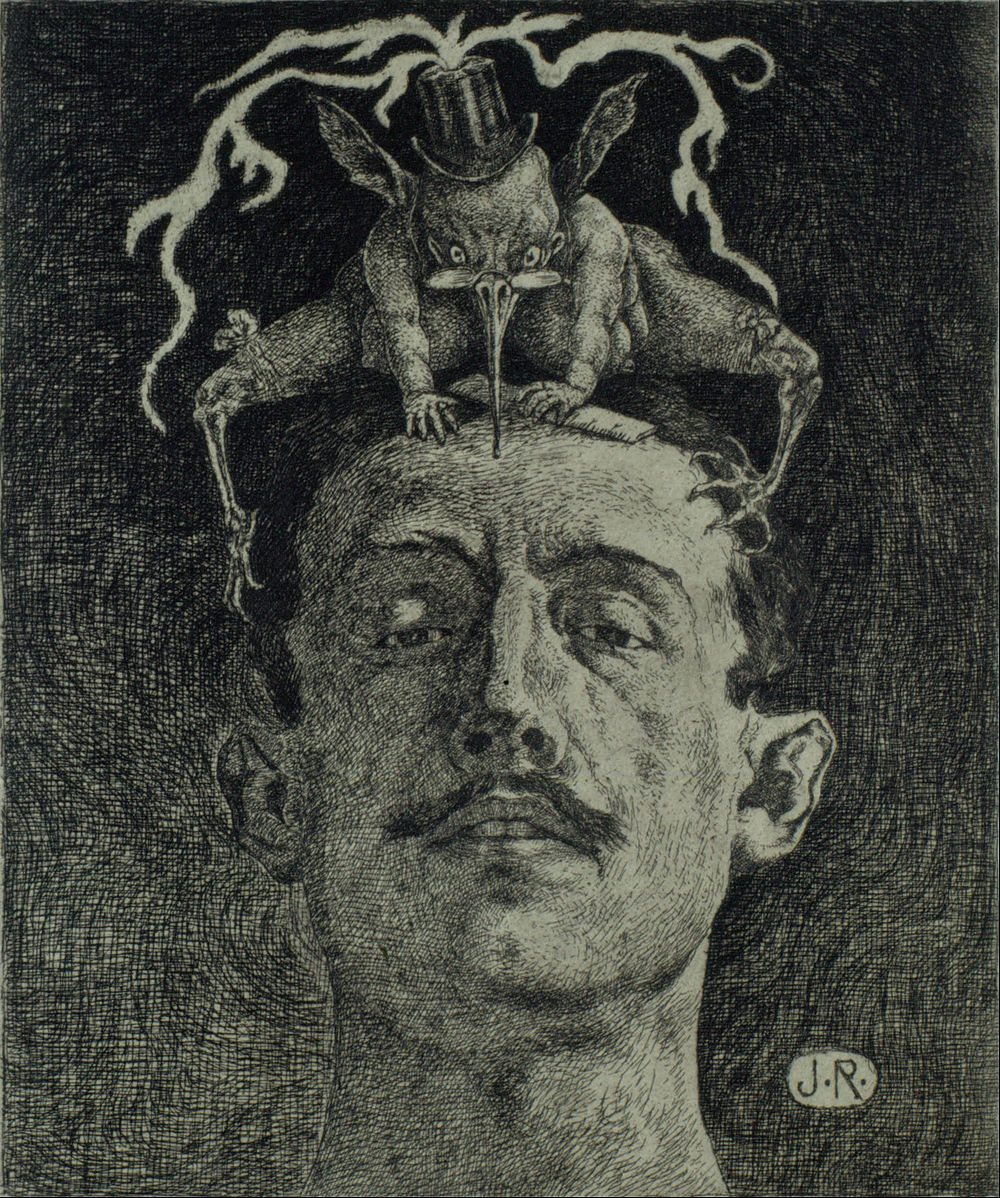 Julio Ruelas – Criticism. Wikimedia Commons.
This constant self-hammering depletes any self-respect we might have, and it will inevitably discourage innovation and enterprise. It will mean that we are in fear of a part of ourselves, a part that represents internalised ‘monsters.’ Ridding ourselves of these gives us strength to face the world and all its vicissitudes.
“If you are not afraid of the voices inside you, you will not fear the critics outside you.”
Natalie Goldberg
Where do these gloomy inner voices originate? Often, the roots of these unkind messages to ourself reach deep into the past. Perhaps we were criticised, or compared to our siblings or friends in childhood and found wanting….
Eventually, the critical voices of others in the past who compared us negatively can become internalised- they are then a part of us – and we play the same messages over and over to ourselves inside our heads. The internal nagging voices have been absorbed from external criticisms that have now been taken into ourselves.
Now this is no longer an external rebuke, it has been assimilated by us and it has metamorphosed into our own voice, fooling us and in disguise, appearing to come from ourselves, telling us that we are no good and that others are better than we are.
It is important to develop awareness of such inner messages, so that we can neutralise and disable them, consigning them to the past.
If we are able to replace such voices with ones that speak to us honestly of our personal value, we can discover who we really are and develop self-respect. We will then have no need to torment ourselves with put-downs or distressing comparisons to others.
The importance of learning to value our uniqueness, our differences, and even our eccentricities, our ‘weirdness,’ cannot be overstated here.
- Self-respect and self-knowledge
 Kelly Birkenruth – Looking Within [2019] Gandalf’s Gallery, Flickr.
Gaining self-respect very much depends on having self-knowledge. If we are genuinely confident about who we are, clear about our true values in life and strong in protecting what we think and believe, then we can remain steadfast in the face of challenge and confrontation.
There are times when people are afraid to know themselves, for fear of what they might find. In trepidation at the very thought of examining their real self, they imagine that they will not like what they discover and therefore will feel less self-respect.
In fact, knowing yourself, recognising your strengths and accepting your weaker parts, can be a wonderful prelude to change and the gaining of self-esteem. It may be a difficult journey, but the rewards are manifold, not least the self-respect that tends to emerge from self-knowledge.
“But I know that trying to black out my past with oblivion will just damage my future. I made the decision to stop running from my fears, and to walk slowly and deliberately towards self-nurture, self-respect, and better mental and physical health.”
Jack Monroe
As we have seen in previous posts, having therapy can be an experience which improves our mental health, our relationships and our lives in general. Allowing ourselves to engage in psychotherapy is certainly a way in which we can develop and strengthen respect for ourselves.
- Self-respect and creativity
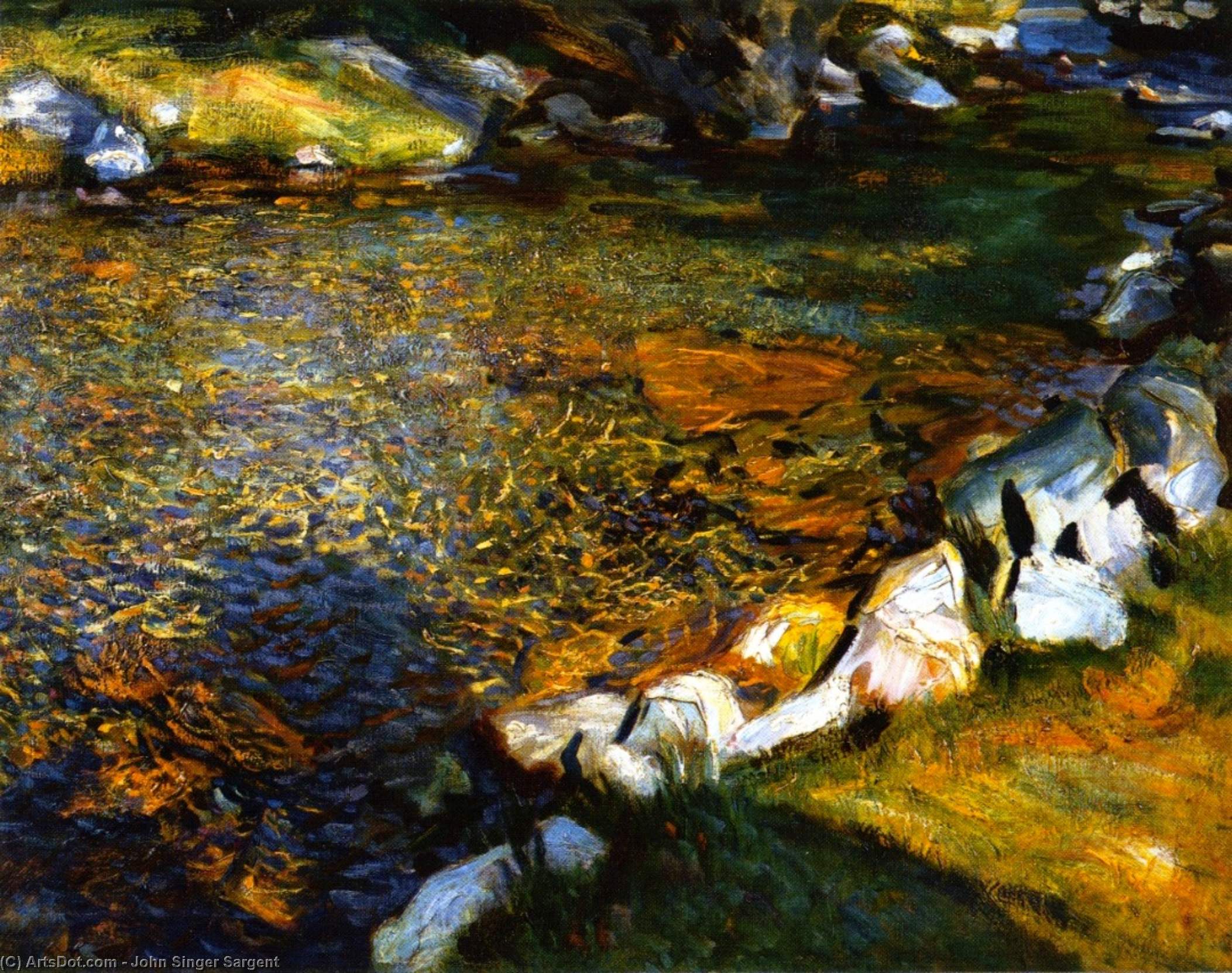 Val d’Aosta, Stepping Stones – John Singer Sargent.1910. Wikioo
“I have always thought of poems as stepping stones in one’s own sense of oneself. Every now and again, you write a poem that gives you self-respect and steadies your going a little bit farther out in the stream. At the same time, you have to conjure the next stepping stone because the stream, we hope, keeps flowing.”
Seamus Heaney
Making something that is creative, in whatever way we choose, can truly enhance self-respect. Heaney’s comparison of writing poems with stepping stones towards self-respect encapsulates this idea.
Having creative freedom depends very much on being able to be independent of spirit, and not allowing ourselves to become too influenced by others’ attempts to dominate or deprecate our ideas. If we do have self-respect, we will also be likely to remain calm when criticised and not be too overblown if we receive fulsome praise.
In addition, it is also important, as we have seen, not to be too self-critical or too self-doubting, for these can scupper our early attempts to be creative and productive.
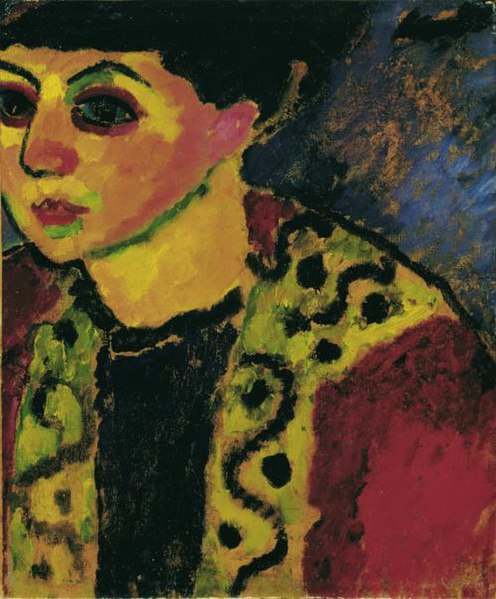
Lady in front of a blue background. Alexej von Jawlensky. 1908. Wikimedia Commons
“The worst enemy to creativity is self-doubt.”
Sylvia Plath, The Unabridged Journals of Sylvia Plath
In order to be truly original and innovative, therefore, it is crucial that we have self-belief and self-respect, not minding too much if we shock or disturb people (in a good way.)
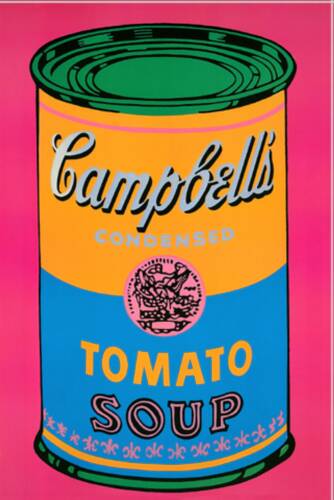
Campbells Soup Pink – Andy Warhol. Wikioo.
“Creativity involves breaking out of expected patterns in order to look at things in a different way.”
Edward de Bono
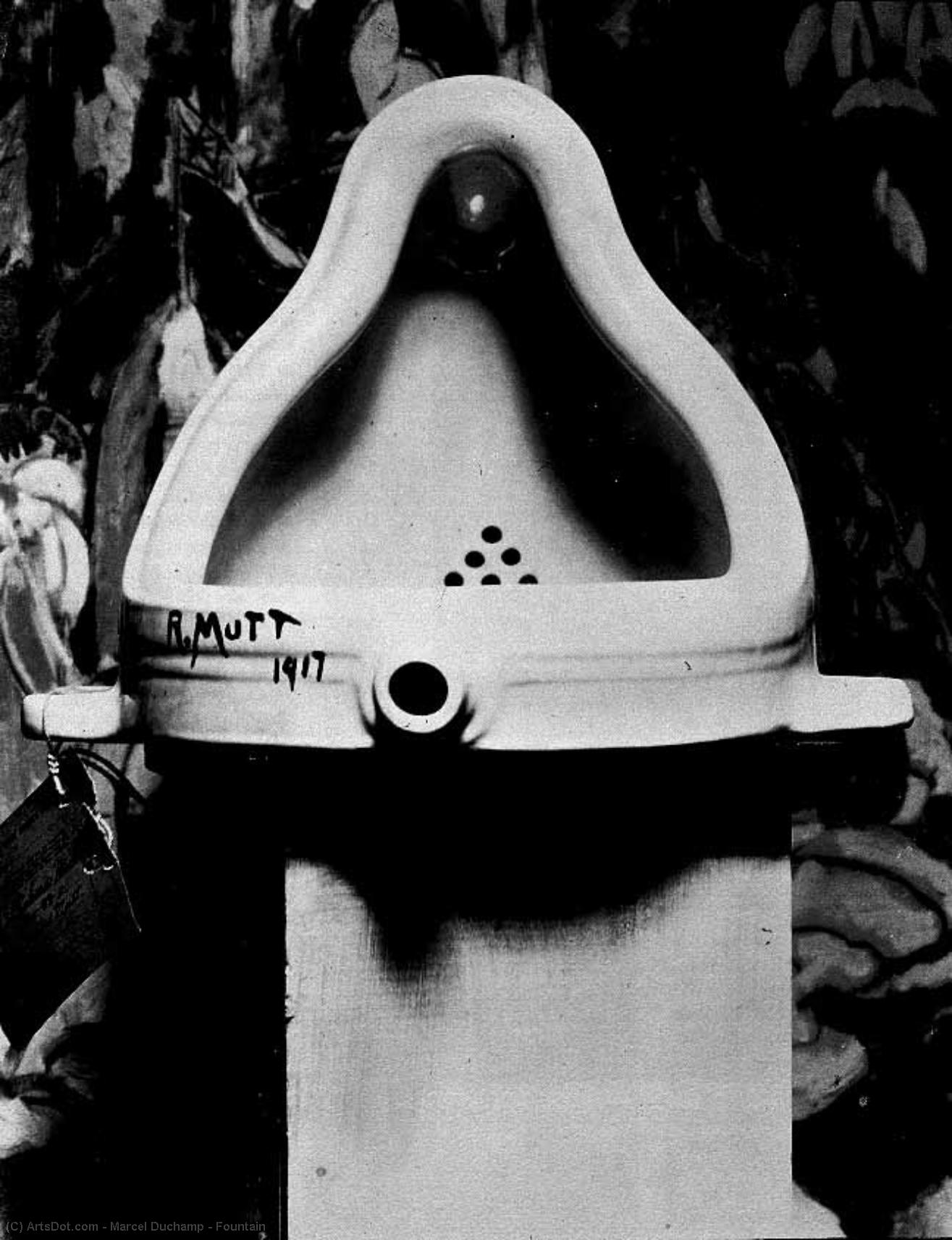 Fountain – Marcel Duchamp. 1917. Wikioo
(“In December 2004, Fountain was voted the most influential artwork of the 20th century by 500 selected British art world professionals.” Wikioo)
“Creativity is inventing, experimenting, growing, taking risks, breaking rules, making mistakes, and having fun.”
Mary Lou Cook
Recognising our own value is certainly necessary to creativity; faith in ourselves and our abilities means that we will be more able to ‘take risks, break rules, make mistakes,’ without the obstruction of fear of failure or rejection by others.
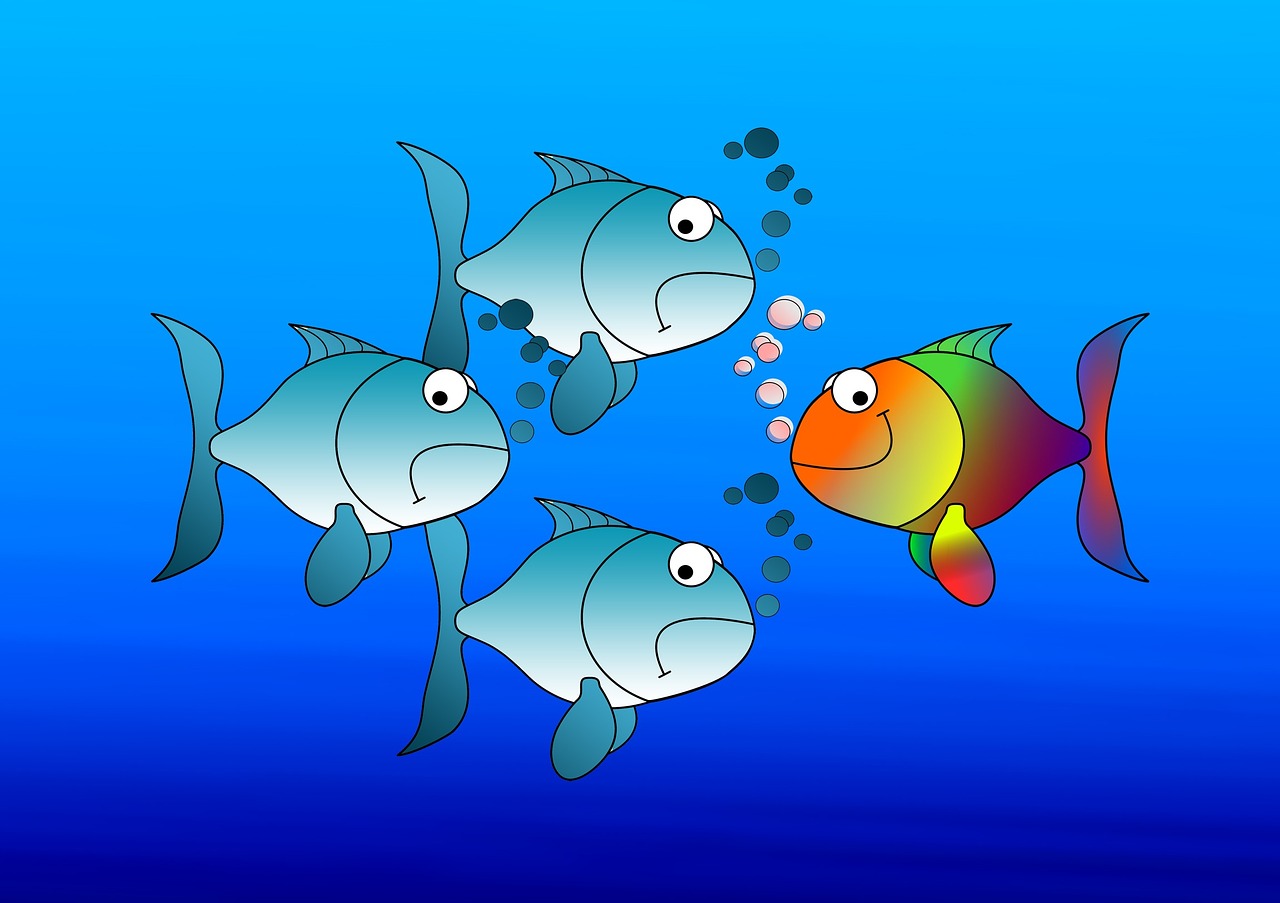 Against the Current. Pixabay.
“You’ll learn, as you get older, that rules are made to be broken. Be bold enough to live life on your terms, and never, ever apologize for it. Go against the grain, refuse to conform, take the road less traveled instead of the well-beaten path.”
Mandy Hale
Outer and inner limitations that are imposed on our creativity need to be surmounted; going against the grain is often necessary. To do this really does require us to have confidence in ourselves and the direction in which we are going.
In order to gain and keep our genuine self-respect, we need to try to resiliently face and overcome the challenges of life, whilst valuing the skills we have in meeting such difficult tasks.
It is also important to be in touch with the reality of ourselves and not be a perfectionist or over-exaggerate our own talents.
In the process, we will, inevitably, find that many people recognise that we respect ourselves and will also respect us in return!

“If you want to be respected by others, the great thing is to respect yourself. Only by that, only by self-respect will you compel others to respect you.”
Fyodor Dostoyevsky
©Linda Berman
 waysofthinking.co.uk