
- Asking questions
Most children love to ask questions. Apparently, they typically ask between 250 and 300 a day! (Myelin) Although it may sometimes be difficult, we need to try to answer their questions with patience, encouragement and understanding.
For how else can they learn about themselves and the world?
 Questioning Children – 1949. Karel Appel. Wikioo
“The best scientists and explorers have the attributes of kids! They ask questions and have a sense of wonder. They have curiosity. ‘Who, what, where, why, when and how!’ They never stop asking questions, and I never stop asking questions, just like a five year old.”
Sylvia Earle
Einstein was very much able, as an adult, to maintain his childhood sense of wonder. He continued to see the universe through a child’s eyes, keeping alive feelings of awe at the world and its miracles, which he saw everywhere.
As a result, he noticed things that other people merely passed by, whilst he paused, questioned and explored what he perceived.
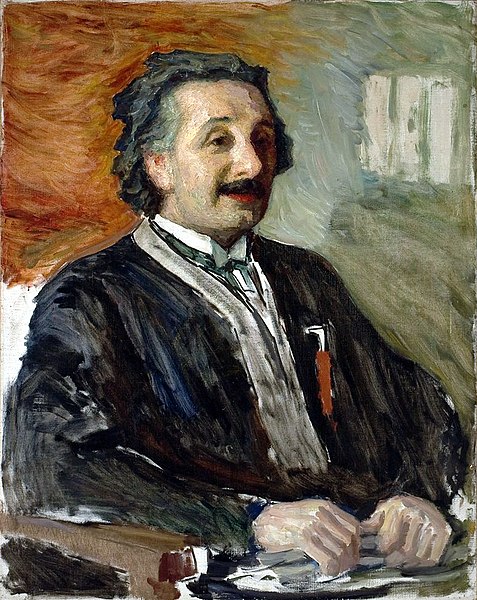
Leonid Pasternak – Albert Einstein (1924).Wikimedia Commons
“Curiosity, in Einstein’s case, came not just from a desire to question the mysterious. More important, it came from a childlike sense of marvel that propelled him to question the familiar, those concepts that, as he once said, ‘the ordinary adult never bothers about.’”
Walter Isaacson. 2007. Einstein: His Life and Universe.
It was Einstein’s curiosity that inspired his creativity and inventiveness; he valued his imagination enormously and as he worked, he played with ideas in his head that he called ‘thought experiments.’
 Untitled (Three Tiered Perspective) – Mark Grotjahn. Wikioo
“To raise new questions, new possibilities, to regard old problems from a new angle, requires creative imagination and marks real advances.”
Albert Einstein
The great scientist knew that asking the ‘right’ question was crucial, so that the core of the issue was comprehensively defined and formulated. It becomes easier to find a solution, once the question has been clearly identified.
“If I had an hour to solve a problem and my life depended on the solution, I would spend the first 55 minutes determining the proper question to ask… for once I know the proper question, I could solve the problem in less than five minutes.”
Albert Einstein
- Keeping an open mind
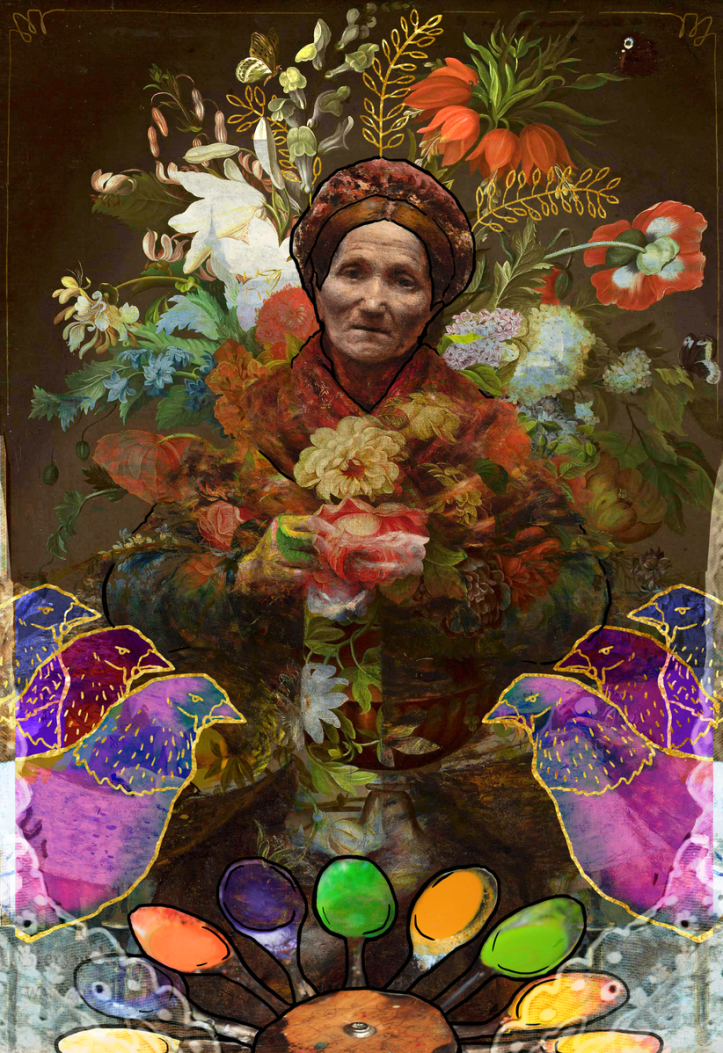 Open heart is an open mind. Frailey. 2020. Wikimedia Commons
When an opinion is put forward that might feel controversial or different, we need to explore and question, rather than accept or reject it immediately.
An open mind is important here, so that we can learn and gain new knowledge from others who may have very different approaches to us.
Could some more concentrated questioning and exploratory ways of thinking actually begin to make a difference in our lives?
Having a mind that is accepting, flexible and tolerant of new ideas is crucial in this regard. If we are shut inside an entrenched, doubt-free mindset, we are constrained by our own restricted, dichotomous worldview. This will, inevitably, put limitations on the questions we might ask, stunting creativity, clarity and vision.
Making space and time for contemplation, for considering others’ viewpoints, for questioning, or even just waiting for an answer to come, gives us the chance to weigh up situations, rather than jumping into unquestioning certainty.
If we keep a spirit of enquiry throughout our lives, it will mean that we are constantly learning, whether formally, from books, travel, or from being amongst others in our world. We can continue questioning some set ideas or biases we may have harboured, developing ways of thinking that can be adaptable, constructively critical and analytical.
“In all my affairs it’s a healthy thing now and then to hang a question mark on the things you have long taken for granted.”
Bertrand Russell
Questioning, both ourselves and others, can challenge fixities and rigidities of thinking; it can mean that long-held, worn out and outdated ideas can be aired and discounted if they no longer have relevance.
“The important thing is not to stop questioning; curiosity has its own reason for existing.”
Albert Einstein.
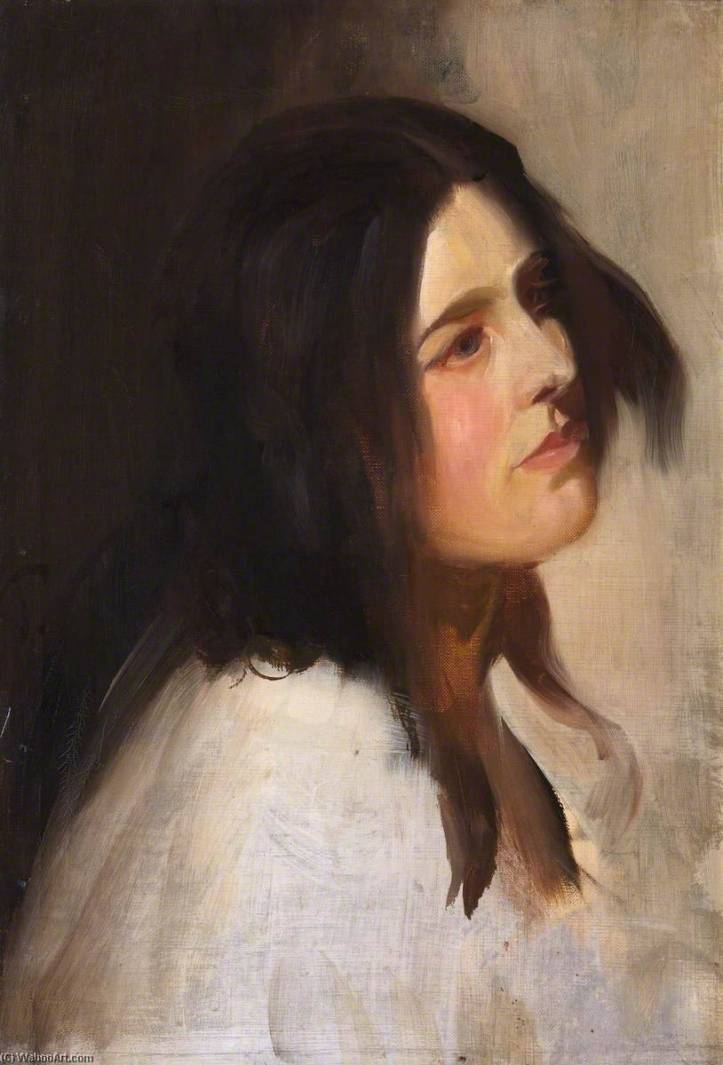 The Question – James Torrance. (1859-1916) Wikioo
“A prudent question is one-half of wisdom.”
Francis Bacon
- The Know-All
 Laughing Fool. Jacob Cornelisz van Oostsanen. 1472-7. Wikimedia Commons.
“A wise man never knows all, only fools know everything.”
African proverb
“The worst decision most adults make is to stop asking questions — trading their curiosity for the appearance of competence.”
Sven Stingers
I am sure that we all know someone who has ‘all the answers.’ They tend to be people who like the sound of their own voice, who block out others’ knowledge with their own pompous pontifications, and do not leave any space for anyone to think, ponder or reflect on the world, least of all themselves.
Without curiosity we will most likely be dull and uniformed. If we do not continually question things throughout our lives, we will lack energy and dynamism and be stuck in our old ways.
Some people may, as the second quotation above states, use a lack of curiosity as a defence against appearing not to know something. With eyes closed, or looking down or up to the heavens, they broadcast their dogmatic,’expert,’ all-knowing and uncompromising ‘knowledge’ to, or at, anyone who will listen.
 arrogant by nickbleb. https://www.deviantart.com/nickbleb/art/arrogant-943035233
However, this attitude is unproductive for all concerned; it is an unattractive quality to appear to be an arrogant know-all and it certainly does not endear people to us.
Some of the wisest people throughout history have acknowledged this fact; the quotations below show how they came to the same conclusion, expressed in different ways…

“It’s better to know some of the questions than all of the answers.”
James Thurber
“It is not the answer that enlightens, but the question.”
Eugene Ionesco
“The only true wisdom is in knowing that you know nothing.“
Socrates

“If we would have new knowledge, we must get a whole world of new questions.”
Susanne Langer
“The key to wisdom is this – constant and frequent questioning, for by doubting we are led to question and by questioning we arrive at the truth.”
Peter Abelard
Maintaining an enthusiastic, probing and investigative approach to life and a deep belief in the benefits of ongoing learning, will all reap many rewards, both for ourselves and our children. Modelling an attentive and energetic attitude, and showing interest in what is around us, is the surest way to inspire others to question and to feel comfortable with asking their questions.
- Questions…. and answers.
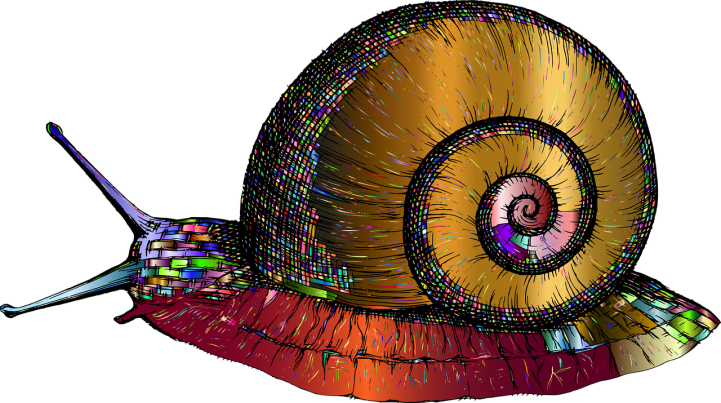
“We get wise by asking questions, and even if these are not answered, we get wise, for a well-packed question carries its answer on its back as a snail carries its shell.”
James Stephens
“…be patient toward all that is unsolved in your heart and to try to love the questions themselves like locked rooms and like books that are written in a very foreign tongue. Do not now seek the answers, which cannot be given you because you would not be able to live them. And the point is, to live everything. Live the questions now. Perhaps you will then gradually, without noticing it, live along some distant day into the answer.”
Rilke
Rilke counsels us to love, live and embrace the questions; we are not always ready for the answers and may need to wait until, one day, the answers arise out of our lives. This is highly relevant to the therapy situation. People often enter therapy with so many questions, desperate for answers and looking for an oracle, rather than a flesh and blood human being.
“I have always been much better at asking questions than knowing what the answers were.”
Bill James
In constantly seeking answers, we can be on a hiding to nothing, especially when we are not ready, or able to hear the answers. Then we need to learn to stay with the questions and avoid the disappointment of facing the fact that the answer may not be available, or not what we want to hear, or perhaps there could be several answers.
- Questions, therapy, timing: when some questions may not be helpful…
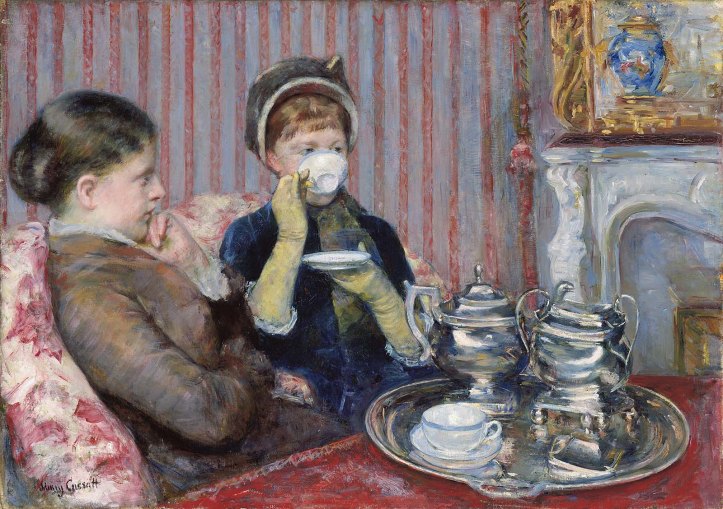 Mary Cassatt – The Tea. 1880. Wikimedia Commons
“When someone asks you how you are, you are meant to say FINE. You are not meant to say that you cried yourself to sleep last night because you hadn’t spoken to another person for two consecutive days. FINE is what you say.”
Gail Honeyman, Eleanor Oliphant Is Completely Fine
There are some therapists who begin sessions with social questions; this does not set the tone for a therapy where social niceties can be dropped in favour of real, authentic expression of feelings on the part of the client.
Thus, therapist questions such as ‘How are you?’ set a kind of social scene and encourage superficial answers like ‘fine.’ Therapy is not about ‘tea and sympathy.’ Whilst tea and sympathy may sometimes be necessary in a relationship outside the therapy room, whether with family or friends, it is certainly not therapy.
If therapy begins to spill over into this kind of interaction, it becomes unhelpful, and potentially damaging.
It is important to remember that the start of the therapy session prepares the scene for the whole session. Psychodynamic psychotherapist Professor Jonathan Shedler points out that:
“I try to let patients start, but for those who need a little invitation, I tend to use the phrase ‘what is on your mind (the morning, this afternoon)?'”
“..or to avoid the question format…’ I imagine that you’ve had some thoughts since last time.’ Or the like.”
Jonathan Shedler, 20.12.22. Twitter.
In therapy, asking questions can also sometimes feel interrogatory, attacking, or like a cross-examination for the client and they might experience a feeling of pressure to produce the ‘right’ answer. This will create a therapy that is not exploratory or conversational, as it very much needs to be.
Understanding the difference between closed and open questions is essential for the therapist. Open questions enable and facilitate the client to answer freely, allowing space for them to elaborate and move further into their own material. They encourage recall and the sharing of further information.
These kind of questions lead the client to think, feel and explore, with a view to insight, as the therapy process deepens. As therapists, we will be aiming to help the client find their own truths and their own answers, to achieve growth through self-reflection, self-questioning and curiosity about their inner world.
Examples of open questions are:
‘Can you tell me what has brought you here today?’
‘How did you feel about that encounter?’
Closed questions require only a ‘yes or no’ type of brief response. They can shut off conversation. They may actually be necessary at times during the therapy process, especially during assessment, when factual information is especially needed. However, further into therapy, they do not help the client move on into deeper issues, as open questions can do.
Examples of closed questions are:
‘Do you live alone?’
‘Have you any children?’
- Not-knowing, not asking…
Whilst it is important to have a questioning mind, it is also essential to know what questions to ask, how and when to ask them…. and, crucially, when NOT to ask them.
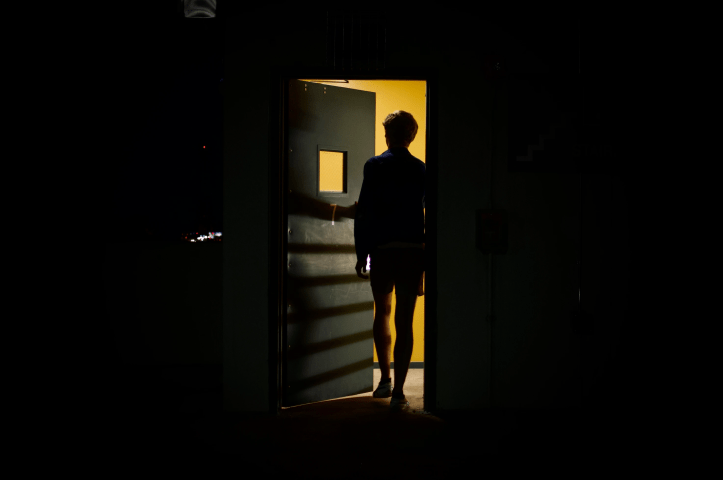
“How many times have I said to those under my supervision, when they say to me – I had the impression he meant this or that – that one of the things we must guard most against is to understand too much, to understand more than what is in the discourse of the subject. To interpret and to imagine one understands are not at all the same things. It is precisely the opposite. I would go so far as to say that it is on the basis of a kind of refusal of understanding that we push open the door to analytic understanding.”
Lacan
Lacan’s important statement underlines a truth-bearing paradox: staying with not-knowing can aid understanding in therapy. The danger is that the therapist will too quickly come to ‘understanding,’ rather than waiting and ‘refusing’ to understand.
Not-knowing can, indeed open doors. It is about allowing ourselves time and space to ponder and reflect on what is happening in the therapy room, without rushing into trying to understand.
Asking questions at too early a stage, appearing all-knowing and quickly coming to conclusions, can be a block to attaining a real understanding of the client.
Sometimes therapists may want to help the client too much, so that there will be a feeling of ‘one-up, one-down,’ with the therapist setting themselves up as the one who knows. This might well reflect the kind of authoritarian relationships the client has had in the past, and is the opposite to being therapeutic.
“…it is natural to want to demonstrate our competence, to show our patients that we have something to offer. This inclination can get in the way of maintaining enough reserve to let people make their own discoveries and come up with their own solutions to the problems in their lives.”
Nancy McWilliams, Psychoanalytic Psychotherapy: A Practitioner’s Guide
The therapist is certainly not an all-knowing being, despite what people may project onto them. The therapeutic process is about an equal, collaborative and co-operative curiosity, where both therapist and client can function together with a spirit of exploration, enquiry and discovery.
In this atmosphere of searching and introspection, the therapist can spark the patient’s innate self-knowledge by demonstrating how valuable is the process of wondering and questioning together, rather than coming to speedy conclusions.
If the therapist rushes into interpretation and quick ‘understandings,’ without waiting with the client to see what might transpire, something valuable may be lost and the therapeutic process compromised.
In fact, developing a capacity not to know can be highly creative and freeing. Instead of rushing to find solutions, what if we were to allow some degree of uncertainty, wondering, curiosity? Could we take the risk of facing the unknown and give ourselves, and others, some space and time to wait and see what emerges, without question?
Allowing ourselves sometimes to be uncertain and doubtful can mean that we will be able to reflect and develop flexibility and originality in our thinking.
Having allowed the process of not-knowing, we will then be more ready for gentle and thoughtful questioning to understand more about the client. Questioning is a great skill in itself, both in therapy and in our lives generally.
“The art and science of asking questions is the source of all knowledge.”
Thomas Berger
 Newton’s-apple. Alexander Borek. Wikimedia Commons.
“Millions saw the apple fall, but Newton was the one who asked why.”
Bernard M. Baruch
- Not all questions have answers…
Our life on this earth will inevitably be full of unanswered questions, and it is likely that some of these can never be answered. This may be highly frustrating at times, for as human beings we are primed to wonder, and to ask questions.
Yet the knowledge that we do not have all the answers can ultimately enrich us as people, for it offers us a lesson about humility and maturity, about learning to stay with the question and realising that we are forever, and ever, engaged in a lifelong quest for meaning…
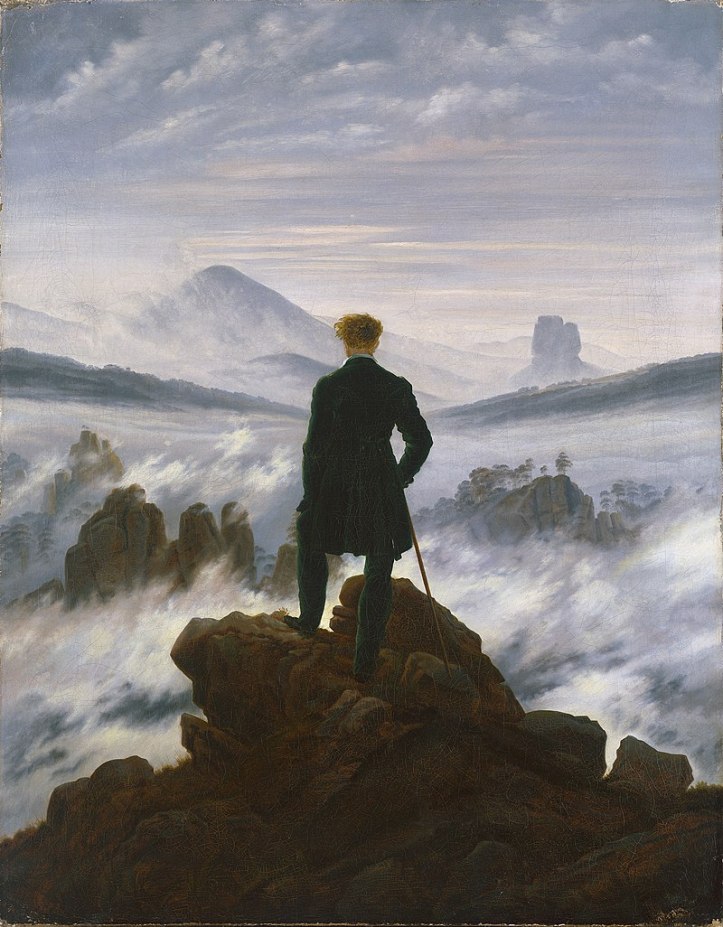 Caspar David Friedrich – Wanderer above the Sea of Fog.c 1817. Wikimedia Commons.
“Life is an unanswered question, but let’s still believe in the dignity and importance of the question.”
Tennessee Williams
© Linda Berman
 waysofthinking.co.uk
