
This is a post in two parts for you all, to welcome the arrival of Spring. It is a joyful, celebratory post and I hope you, the reader, will find it both soothing and enlightening.
- Learning from the garden
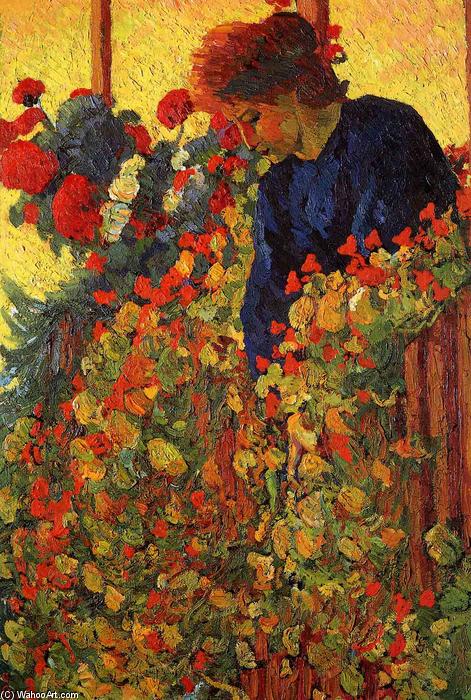
Garden – Giovanni Giacometti. 1910. Wikioo
“A garden is a grand teacher. It teaches patience and careful watchfulness; it teaches industry and thrift; above all it teaches entire trust.”
Gertrude Jekyll
How can a garden teach us anything about ourselves and our life? And what does it symbolise to us? The quotation above speaks of patience, watchfulness, industry, thrift and trust. That is a tall order!
And yet…. all these qualities can be a product of owning, loving and working in a garden. How industrious are we in a garden, planting, weeding, pruning…. And how trusting we will need to be, as we must have a real belief that nature will reward us with its lush and beautiful progeny.
How patient we are, as we wait until the new green shoots of spring slowly appear. Now that March is upon us, the benefits of our labour have begun to reveal themselves…
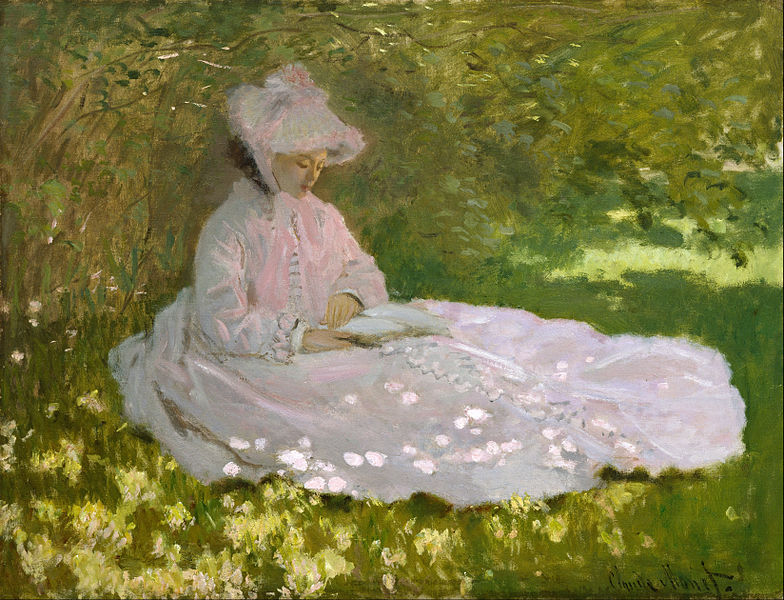 Claude Monet – Springtime 1872. Wikimedia Commons.
However, in this fast-paced world of ours, many seek immediate gratification. Waiting is not on the agenda; everything must be instant, quick-fire, high-speed.
Apart from those captured in a time-lapse film, flowers and plants do not grow in seconds before our very eyes! Wonderful though such films are, they are not reality. Life just does not happen like that.
“Everyone wants instant everything, and they want instant success, but I always think you should treat things in the arts like a garden, and let them grow.”
Penelope Keith
The quotation compares the arts to a garden; we will see later in this post how true that is, in the beautiful work of Monet. Artworks, too, take time to develop and grow; we cannot hurry them, for we need instead to allow them to take shape as we work and create.
- Books and flowers: gardens and reading
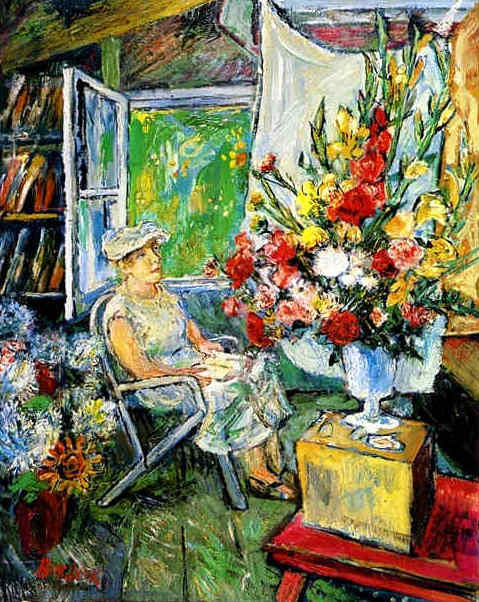 Marusia in the Library – David Davidovich Burliuk. Wikioo
“If you have a garden and a library, you have everything you need.”
Marcus Tullius Cicero
Books and flowers…. what more could we want? Well, a lot more actually, but, thinking about it, we do, indeed, have a great deal if we can read and learn from our great store of books, whilst surrounded by bounteous greenery and flowers.
Although today’s gardens and libraries are very different from those in Cicero’s time, his words echo through the ages and still have relevance. Reading in a garden brings us relaxation and peace; the soft sounds and scents of a beautiful garden enhance concentration and stimulate the imagination.
Perhaps, too, the garden reveals to us the beauty, charm and simplicity of nature, teaching us the benefits of slowing down, inspiring us to reflect, learn and listen to what the world has to offer us.
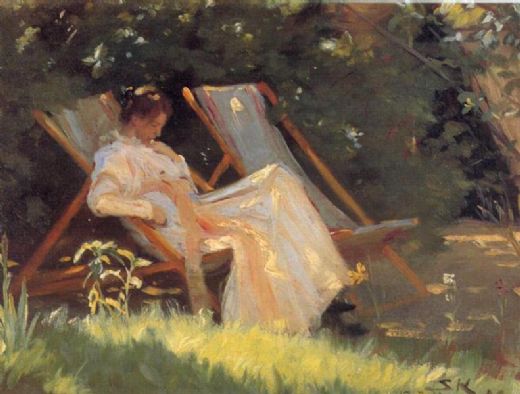
Peder Severin Krøyer: Marie in a deckchair in the garden, reading.
- Gardens and love
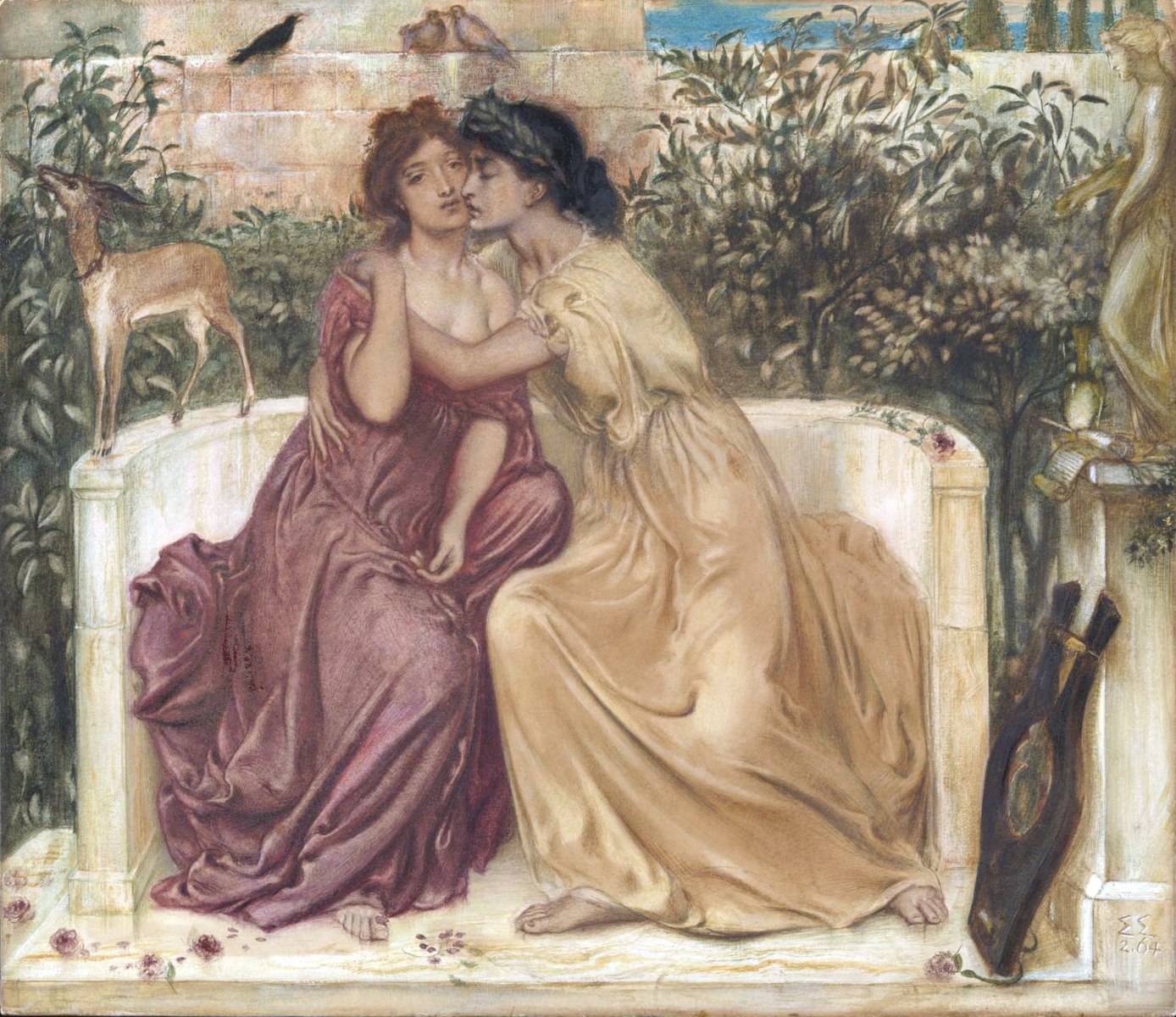
“Love is the flower of life, and blossoms unexpectedly and without law, and must be plucked where it is found, and enjoyed for the brief hour of its duration.”
D. H. Lawrence
These beautiful words speak of the wonders of love, and also of the enjoyment of flowers. Both have real similarities, in that they ‘blossom’ unexpectedly; we need to ‘seize the day’ in terms of them both. Lawrence reminds us of the impermanence of life, the ephemeral nature of love and of the flowers in the garden…all are beautiful, and all are transient in terms of their existence.
He urge us to enjoy them now, for soon they, and we, will die. This is a quotation that puts us in mind of ‘memento mori,’ emphasising the fact that that nothing lasts.
It may at first sound a little morbid, but actually, if we heed these words, we can decide that we will enjoy every moment, every experience of love, and flowers, of beauty and relationship. Their symbolic meaning, their lessons for us, are manifest: value and live in the moment, every moment.
- Quotations that contradict each other…or do they?
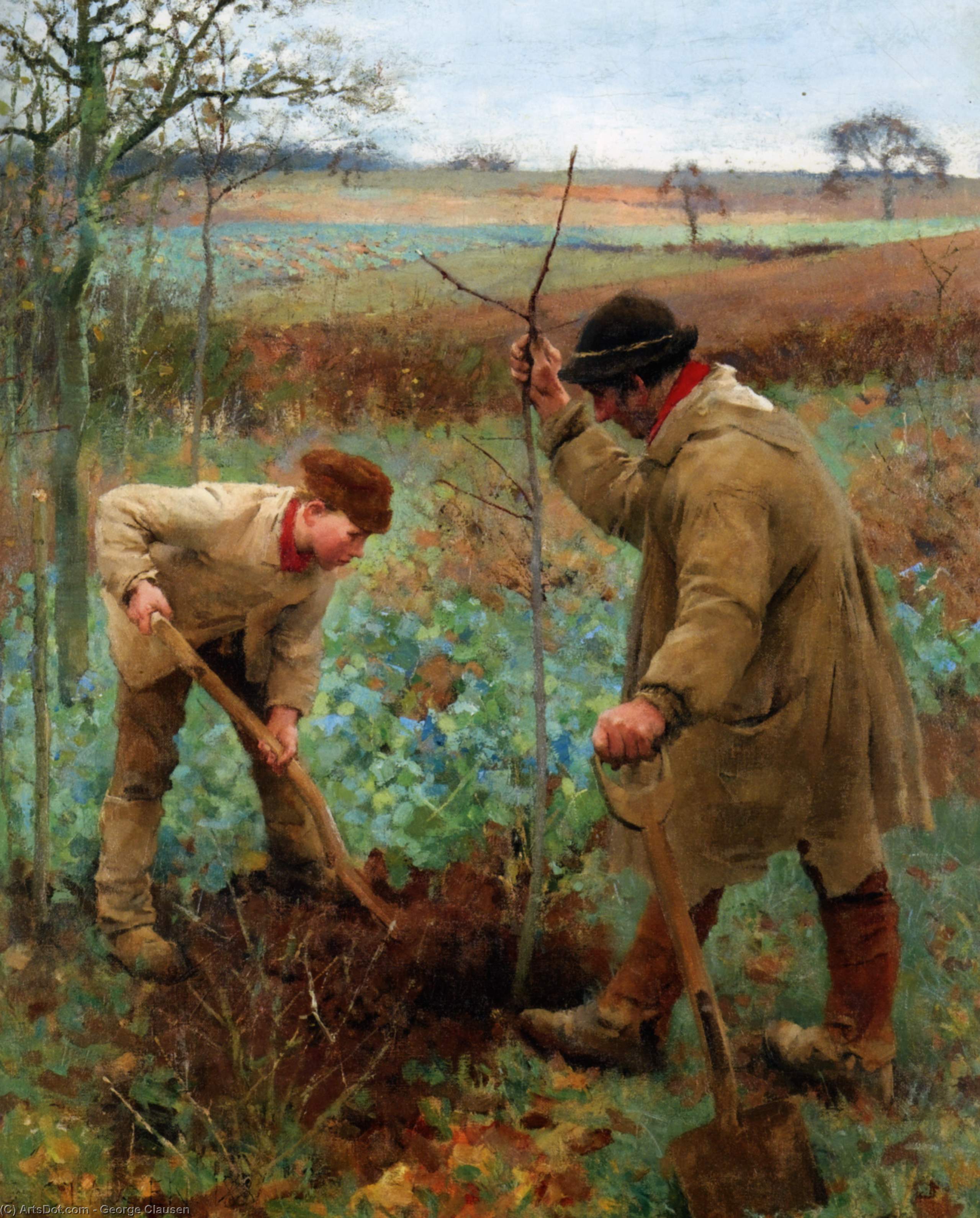 Planting A Tree – George Clausen. Wikioo
“A man has made at least a start on discovering the meaning of human life when he plants shade trees under which he knows full well he will never sit.”
D. Elton Trueblood
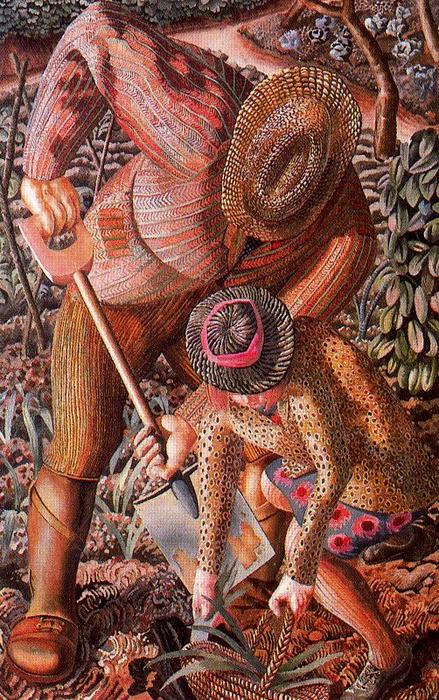
Gardening – Stanley Spencer. Wikioo
“Garden as though you will live forever.”
William Kent
The two quotations above may seem contradictory; let us examine their meaning. The first quotation speaks of preparing our garden- and our life’s work- for future generations. We know that we will no longer be here to ultimately benefit from this work, but it will come to fruition at a time when our descendants can gain from it.
This is the meaning of human life, preparing the way for, and helping, those around us, both now and for the future. This is benefitting the world too. It is not for us, but from us.
The second quotation may appear different to the first on initial reading; however, it is the important words ‘as though’ that make them, actually, very similar.
This ‘as though,’ is like the ‘as if’ in dramatic productions, which urges us, for a relatively short time, to suspend any doubt and disbelief and lose ourselves in the fantasies presented onstage.
Many times, in the theatre, in an art gallery, or when reading novels, we allow ourselves to enjoy being part of an unreal fantasy, identifying with events and characters that are totally fictional.
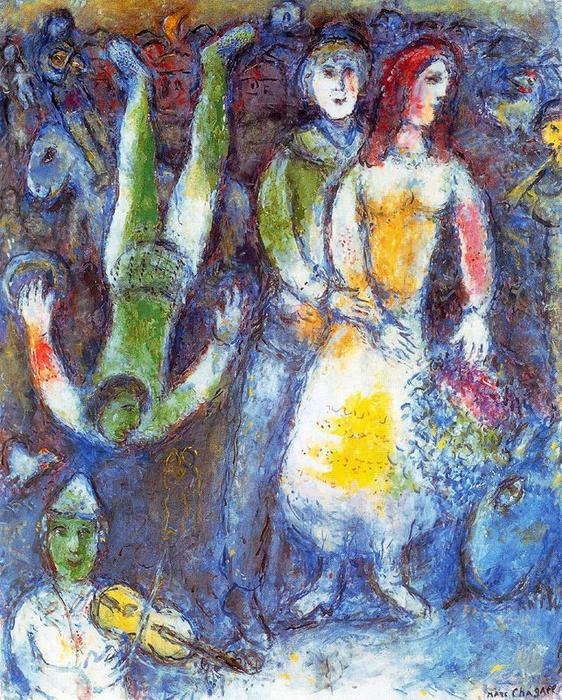
The Flying Clown – Marc Chagall. 1981. Wikioo
In relation to the notion of existing for eternity, we know that none of us will live forever, but if we act as if we are immortal for a while, we will, inevitably, put more energy into our gardening work, and into everything else we may do.
Perhaps we can also interpret these words in a symbolic way; gardening could be, as we have seen, a metaphor for life, for our time on earth, and, if we function as though we are going to live forever, whilst not denying reality, then we will be less likely to be discouraged by the implications of the ageing process.
- Nourishing the spirit….
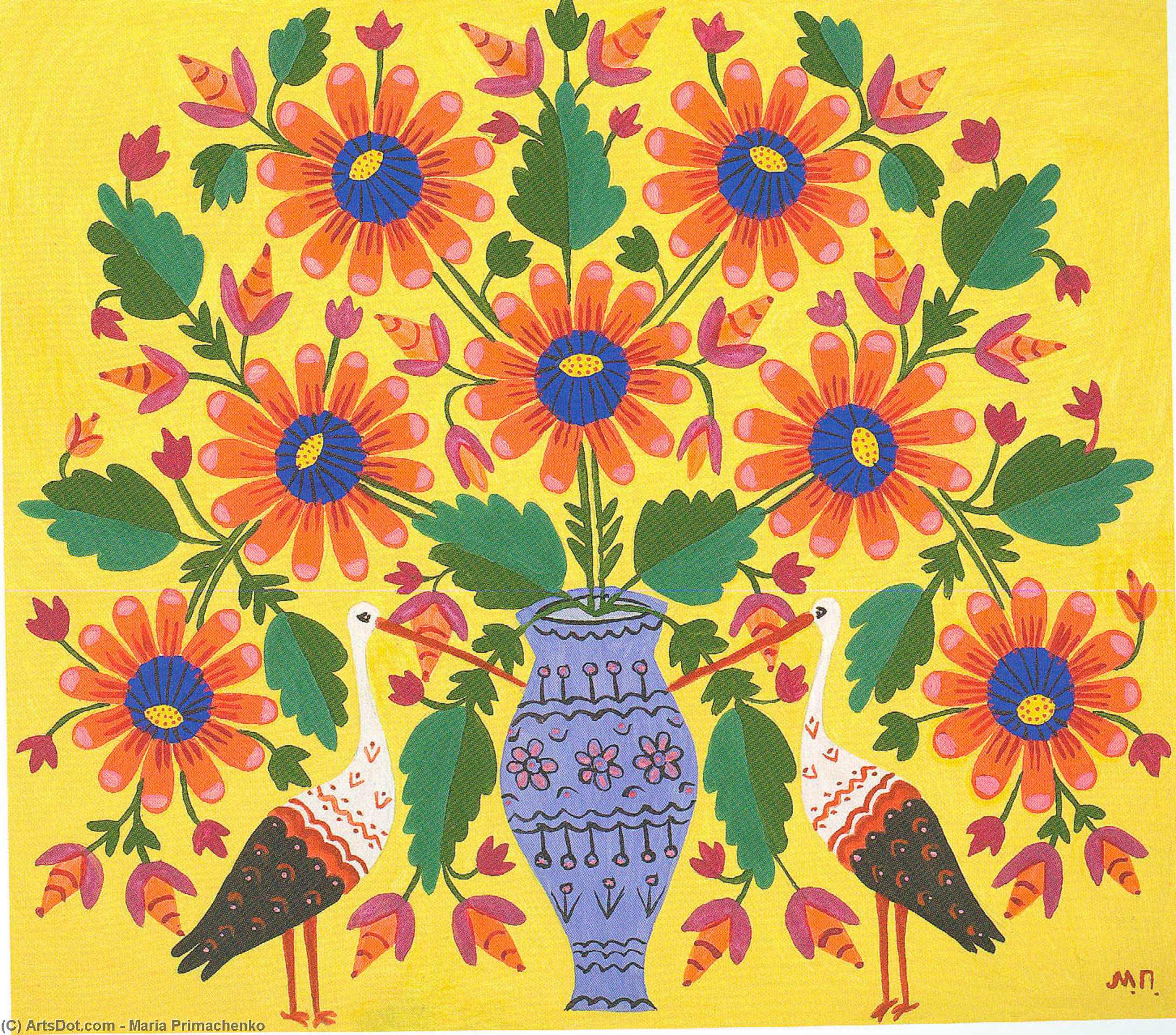 Lovely Spring, What Did You Bring? – Maria Primachenko 1977. Wikioo
The garden, above all, symbolises the enrichment of our outer and inner worlds; it represents an intense life-force, the miraculous potency and energy of nature, its impact deeply nourishing and animating our spirit and our senses.
“The many great gardens of the world, of literature and poetry, of painting and music, of religion and architecture, all make the point as clear as possible: The soul cannot thrive in the absence of a garden…”
Thomas Moore
© Linda Berman
Next Tuesday, in Part 2 of this post, I will be exploring gardens and our identity…🌹🌷🌻
 waysofthinking.co.uk