
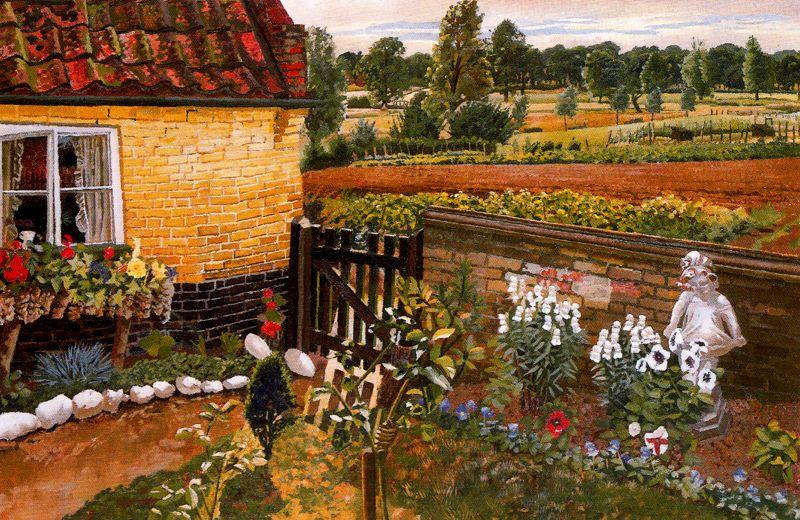
 Cottage at Wangford – Stanley Spencer. Wikioo
“To dwell is to garden.”
Martin Heidegger
Heidegger’s words make us think. Whatever does he mean?
To my mind, Heidegger’s ‘dwelling’ actually refers to living; it symbolises existing within a space and simultaneously interacting with it and caring for ourselves, others and our surroundings within that space. This metaphor links living and gardening.
In the same way as we need to look after ourselves, we look after our garden, thoughtfully and with great care, for we are intricately connected with it and with the whole of nature. Our mental and physical health partly depend on having such connections…
“A large body of literature suggests that wellbeing is intimately linked to attachment – not only to other people, but also to the natural world.”
George Monbiot
If we are lucky enough to have our own garden, then our links to nature are near at hand; if not, we may take delight in a local park, allotment, or communal area.
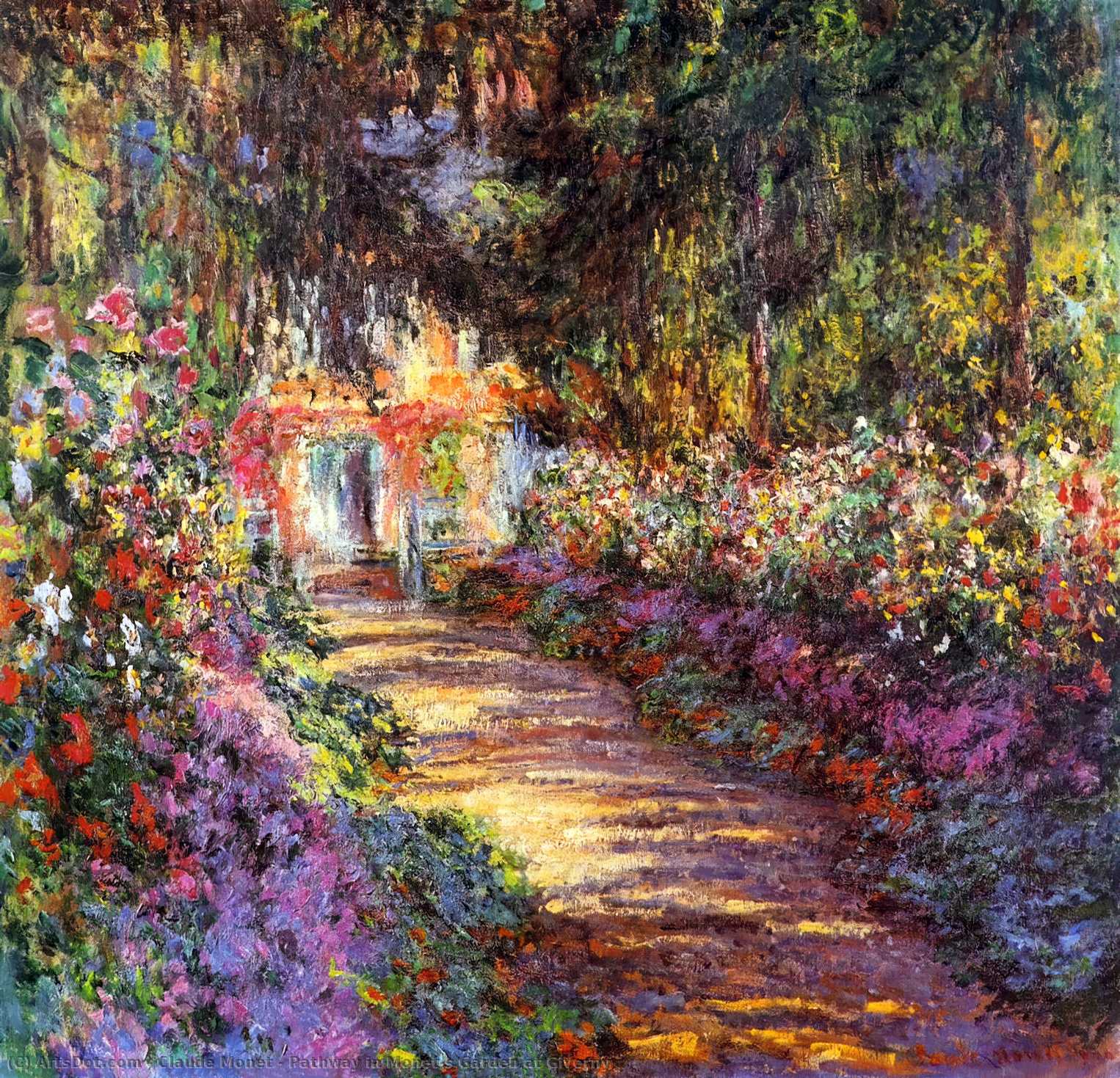 Pathway in Monet’s Garden at Giverny – Claude Monet. 1902. Wikioo.
“All gardening is landscape painting.”
William Kent
Monet grew his stunningly beautiful garden because he loved nature, water and flowers; it also inspired his wonderful paintings.
“My garden is my most beautiful masterpiece.”
Monet.
His garden certainly embodied aspects of and secrets about himself; it reflected him and he was a part of all that was in it. This was a place for him to be alone, in creative solitude, and somewhere to express the deepest aspects of himself and appease his considerable tensions and frustrations.
The above quotation certainly applied to Monet, for the design of his garden was as exquisite as his artworks.
Landscaping a garden is so similar to planning out a painting, with great attention given to shape, line, form, texture, colour and space. Both enable self-expression and can be highly reflective of our inner world.
- ‘In the night garden…’
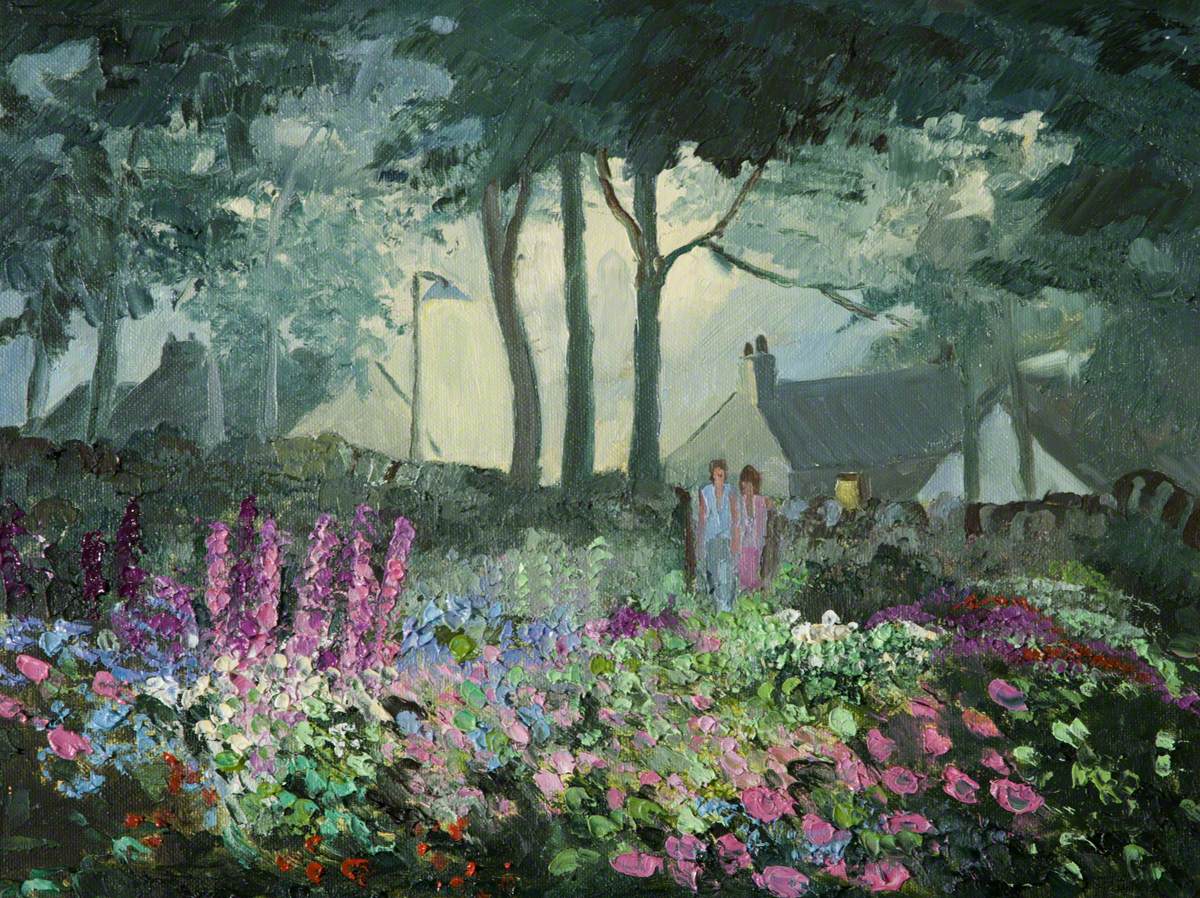 Sutherland, Irene; Garden at Night.
“It is a good idea to be alone in a garden at dawn or dark so that all its shy presences may haunt you and possess you in a reverie of suspended thought.”
James Douglas
A garden has different secrets and meanings at night; as Douglas says, it takes on a haunting quality, with ghostly, ‘shy’ presences, strange light and weird shadows.
In addition, there is no doubt that gardens, especially darkened ones, are highly conducive to reverie and deep thought.
A reverie is, indeed, a ‘suspended thought,’ a state of mind that is relaxed, silent and freeing. It is perhaps best described as a kind of creative mind-wandering or, in the dusky garden, a waking night-dreaming.
“Active imagination requires a state of reverie, half-way between sleep and waking.”
Carl Jung
For a while, in the quiet and darkened garden, we can mentally retreat into our own world, allowing feelings and thoughts to drift by, without coming to any conclusions, but letting the process take its course.
- The creatures of the night
The garden at night attracts different creatures, and sometimes we can catch sight of them. The nocturnal ‘shift’ takes over, some of them audible, some scurrying, fluttering, creeping, swooping: bats, badgers, pollinating insects, hedgehogs, moths, foxes, owls, slugs and snails emerge into the crepuscular, fading light. Pale-hued and white flowers stretch open to glow in the dark.
Something that symbolises the other-worldly, the spiritual, the mystical, the underground, materialises out of the gloom. The garden whispers to us at night, and we hear different messages from those in the day; in the darkness, it reflects the more intense and hidden aspects of our own psyche.
Perhaps the murmurings and rustlings in a night garden reach deeper into our own unconscious landscape. They disturb our equilibrium, their soft voices telling us that there are mysteries and secrets to discover in this reverse world, and some may be a little scary.
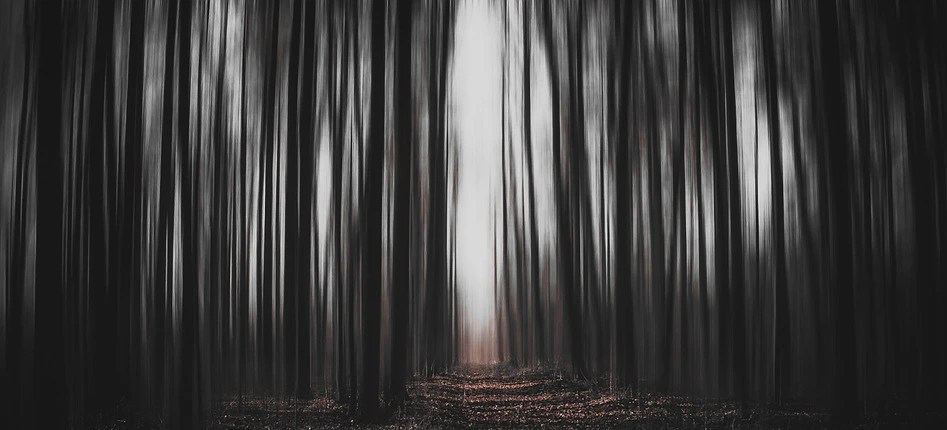
As the shadowy creatures of the night awaken to feed, to hunt, to ambush the unsuspecting and the unwary, we may wonder if they reflect aspects of our own shadow-side, ones that we sometimes wish to deny…
This short film shows us a little of the world of a British night garden. Take a few minutes to watch it, to contemplate and reflect on it:
- The poet Mary Oliver in her garden
We can also experience reverie in a garden during the day, although there is a different quality; perhaps it is best described as an imaginative daydreaming. Out of this, often emerges some new insight, based on allowing the self to drift to another level of consciousness. The daytime garden can symbolise an escape for us, a place to reflect, to speculate, to meditate.
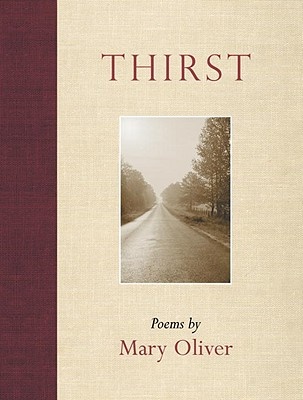
Mary Oliver describes this feature of the garden brilliantly in her poem, below…
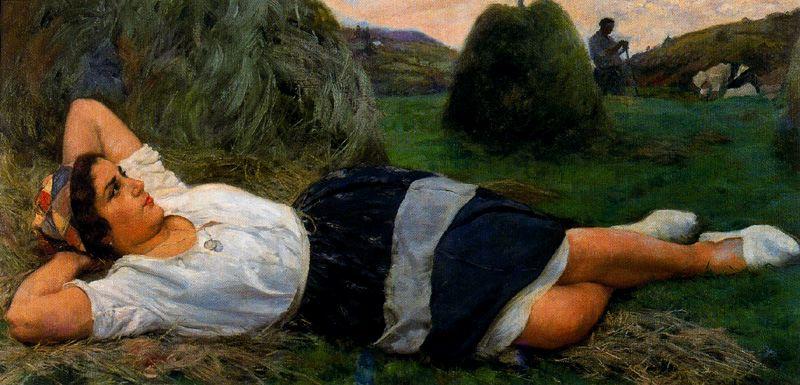 Grass – Ignacio Díaz Olano. Wikioo.
“I lounge on the grass, that’s all. So
simple. Then I lie back until I am
inside the cloud that is just above me
but very high, and shaped like a fish.
Or, perhaps not. Then I enter the place
of not-thinking, not-remembering, not-
wanting. When the blue jay cries out his
riddle, in his carping voice, I return.
But I go back, the threshold is always
near. Over and back, over and back. Then
I rise. Maybe I rub my face as though I
have been asleep. But I have not been
asleep. I have been, as I say, inside
the cloud, or, perhaps, the lily floating
on the water. Then I go back to town
to my own house, my own life, which has
now become brighter and simpler, some-where I have never been before….”Mary Oliver 6. Recognitions of the Lord (Extract from book below.)
- Gardens and Identity
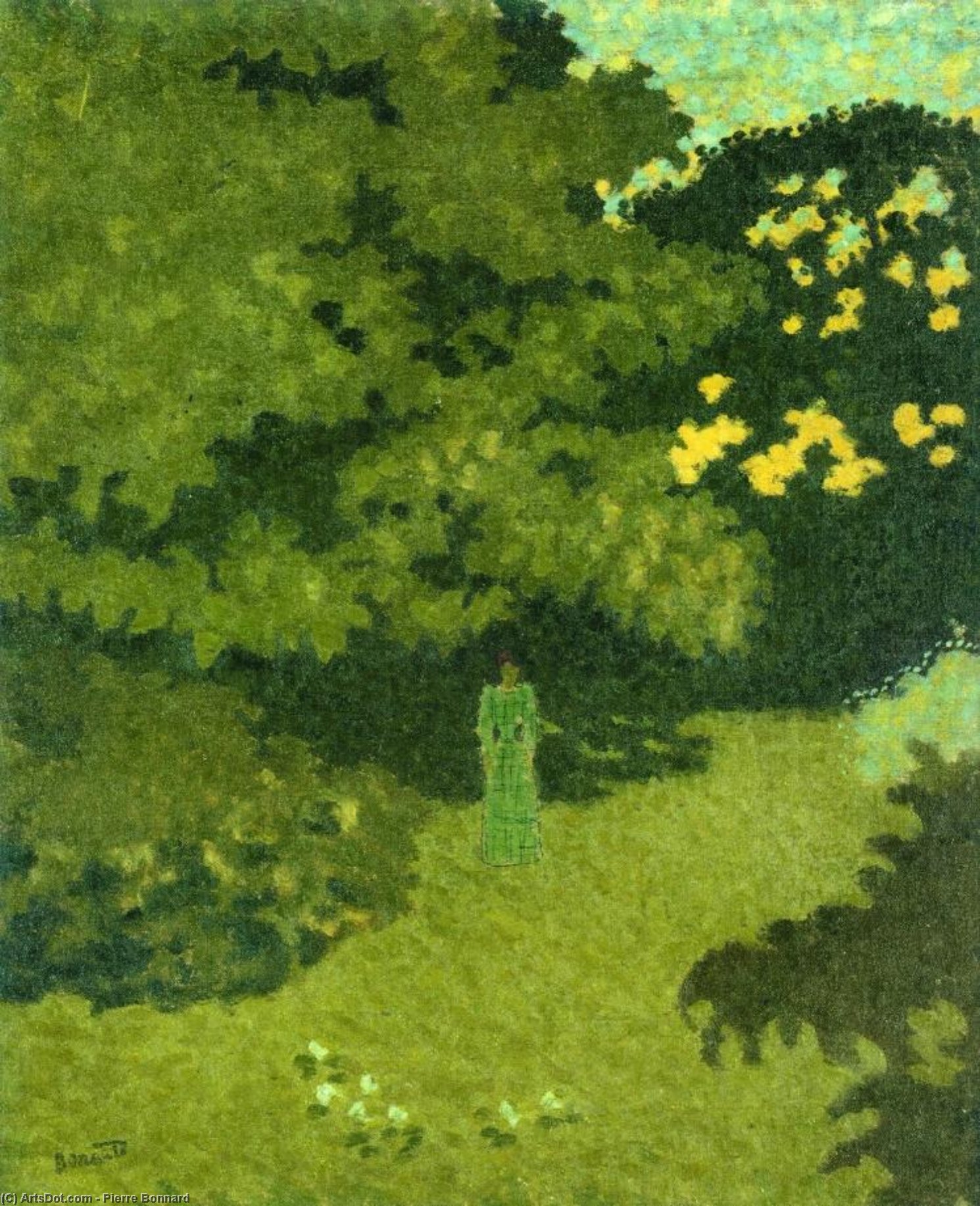 Woman in a Green Dress in a Garden – Pierre Bonnard. 1892. Wikioo
“Show me your garden and I shall tell you what you are.”
Alfred Austin
It is very apparent that gardens reflect their designers and carers, not only today, but throughout history. They can remind us that they do have a past, as we do.
We inherit some of their history, seen perhaps in stone gargoyles rescued from the historic neighbourhood church, old, weathered, heavy troughs, sundials and urns, gnarled and ancient trees, well-established plants and flowers that have spread and burgeoned over the years.
They also represent life, human needs, wishes and personalities. The planting of our favourite fruit trees or vegetables tells of our tastes and preferences; a garden full of secret nooks, old walls, a stone bench or two, strewn with rocks and ornaments, speaks volumes about our wishes, our preferences and our personal taste.
Symbolically, we plant our gardens in our own image, consciously or unconsciously. What aspects of our personalities can they embody?
Is the planting neat, controlled, with rows of serried, orderly flowers standing to attention in strict municipal style?
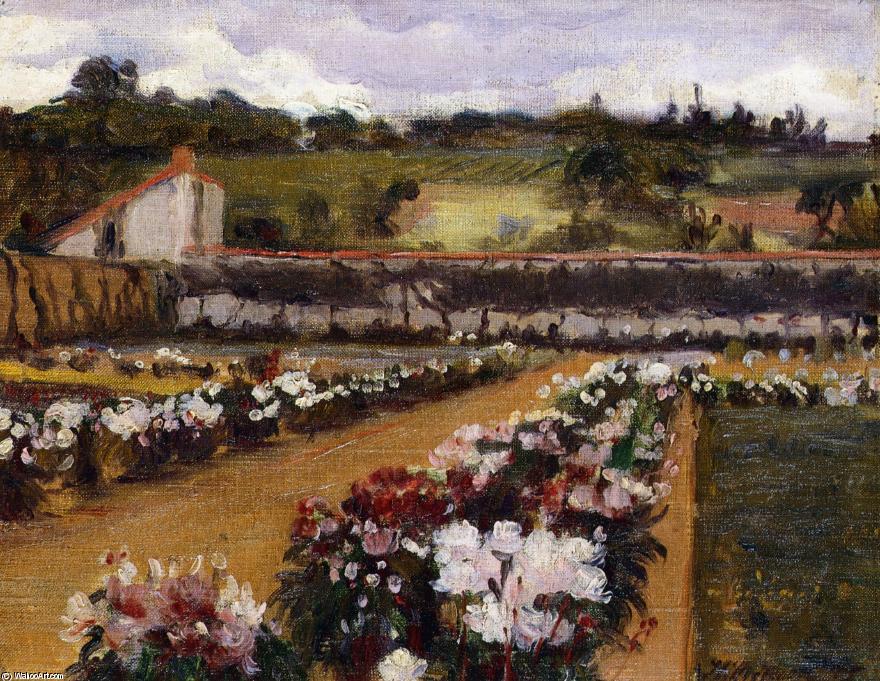 Monet’s Formal Garden – Willard Leroy Metcalf. 1885-6. Wikioo.
Is it a quiet, sedate, ‘introverted,’ secret garden, full of soft, wispy plants and muted pastel colours, with flowers like scented lavender, cornflowers and delicate pale pink anemones?
Does it have steps and hills, on the other hand, or big, happy, blowsy, ‘shouty’ flowers like dahlias and sunflowers, chrysanthemums and gladioli? Are there many plants with thorns, poisonous berries, foxgloves, and perhaps, a few stinging nettles? Or is it a mixture of styles, personalities, moods and designs?
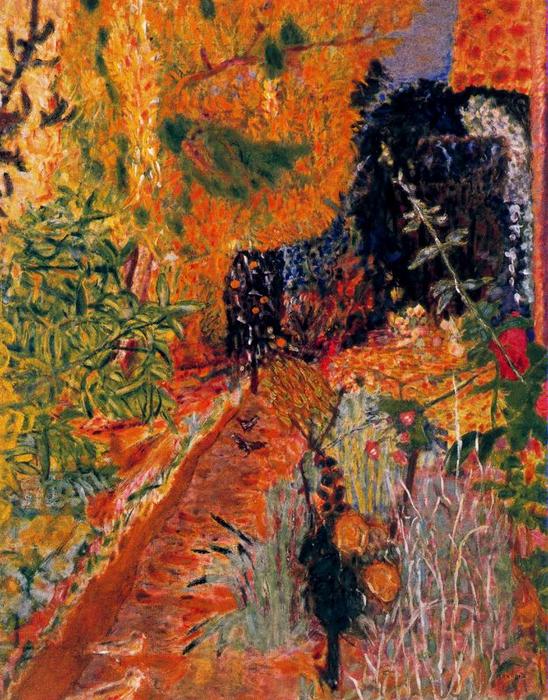
The Garden – Pierre Bonnard.1837. Wikioo
Our garden is a kind of living art, changing before our very eyes. If there is a pond or a fountain, the garden becomes even more animated as the sound of water is added to the mix.
- Gardens, change, hope…
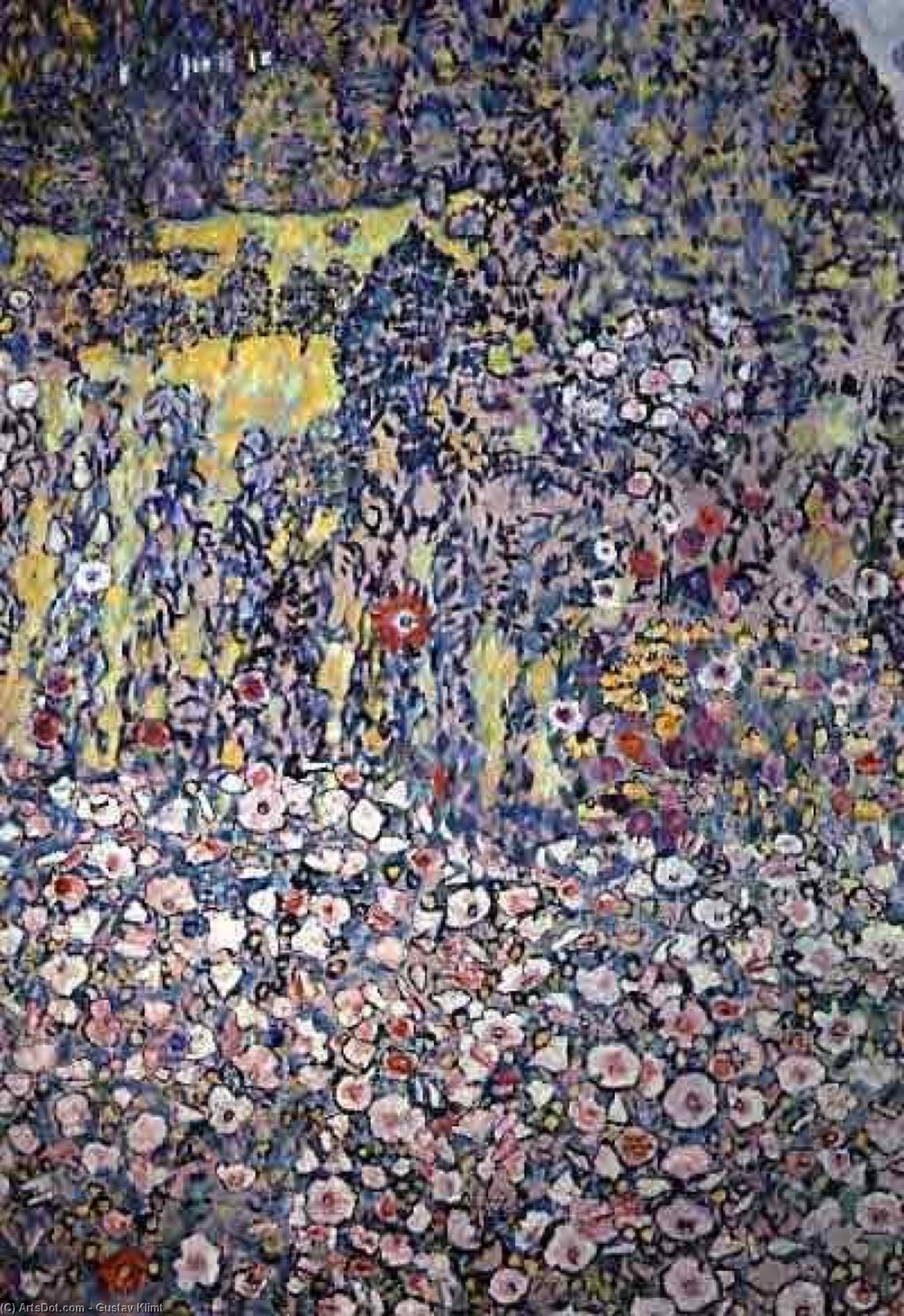 Garden On The Hill – Gustav Klimt. 1916 Wikioo.
“To plant a garden is to believe in tomorrow.”
Audrey Hepburn
The changing garden constantly offers us the promise of new perspectives; it has healing and restorative properties, giving us hope for the future and powerfully reminding us of our human connections with the earth.
I once had a client who felt suicidal. We worked together for a long time, and the turning point became very apparent when they began to talk about planting things in their small garden. Something in the quality of their language had changed; symbolically, they were talking about the future…. and growth.
The intention to plant a garden became an ongoing metaphor in this therapy to express this client’s desire to live on, and to imbue the garden with their own new feelings of hope and life. It became a beautiful, changing, living representation of how its owner was feeling and growing as therapy developed.
Physically and mentally we humans can take succour from the garden; there is something of the eternal in it, and, as we have seen, there are lessons about being patient and waiting. When the rewards do come, we can feel a real sense of fulfilment, as we might experience during the process of therapy.
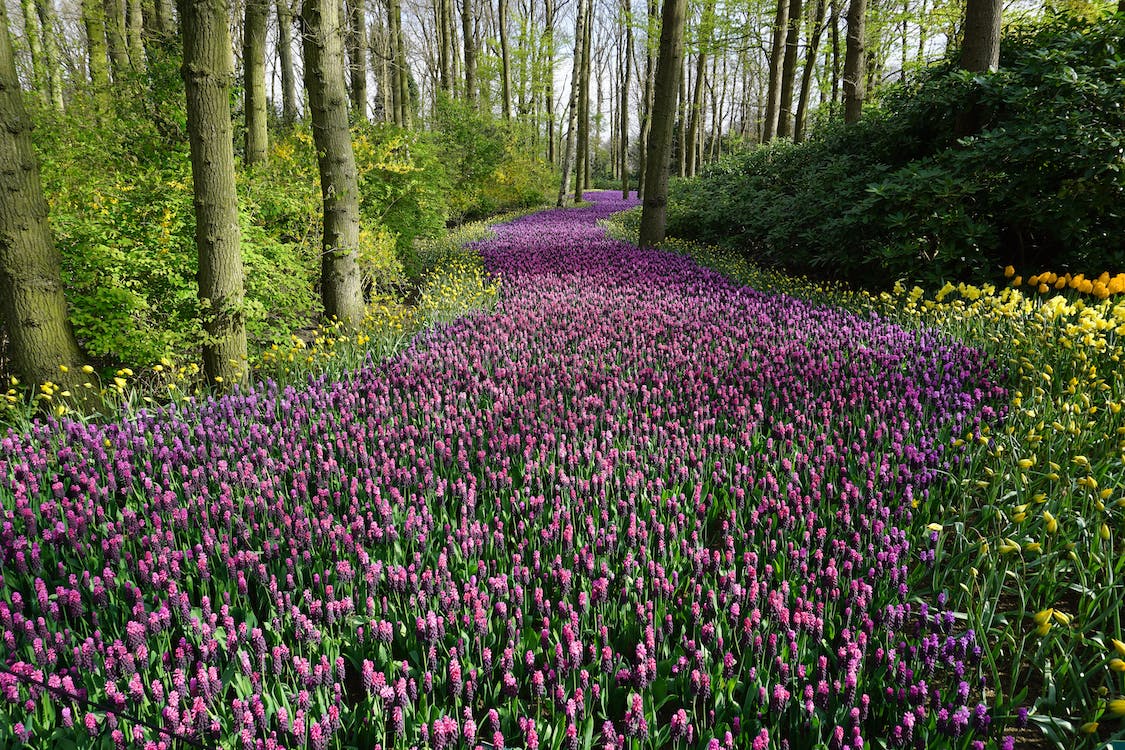
“Gardening is inevitably a process of constant, remorseless change. It is the constancy of that process that is so comforting, not any fixed moment.”
Monty Don
- The inner garden and self-sufficiency

“So plant your own gardens and decorate your own soul, instead of waiting for someone to bring you flowers.”
Jorge Luis Borges
In creating and tending our garden, we learn to be independent; this applies equally to the gardens in our inner and outer worlds.
What is our inner garden? This is the part of ourselves that resides mostly in our unconscious; we need to attend to this area of ourselves, to develop an internal ‘gardener.’ For this is the garden of our psyche, the place inside our minds that may be neglected if we are unaware of its existence.
Within our minds, we all have an internal landscape, a vast and complex inner world of our creation, both conscious and unconscious, a blend of many aspects, including memories, dreams, beliefs, imaginings, experiences, fears, thoughts and feelings.
Many people live their lives believing only in conscious, rational thought, reacting ‘logically’ to the world around them.
In fact, there is a whole ‘other part’ of them, busily active, which they ignore or choose not to know about.
“Life is not so much defined by the external situation as it is by the internal one.”
Jacob Needle-man
These inner and outer worlds are inextricably linked, forming a complex network of connections. We are irrevocably interwoven into our surroundings, a part of them, dependent on all that the external world has to offer us.
“But what is happiness except the simple harmony between a man and the life he leads?”
Albert Camus.
When the outside world and our inner world are largely in alignment, we will feel more peace and harmony than if we experienced a jarring discord between these two worlds, with hatred and enmity towards others.
“The goal of life is to make your heartbeat match the beat of the universe, to match your nature with Nature.”
Joseph Campbell
The connection between outer and inner is supremely important. It is as if our gardens express something of our inner world, speaking to us and for us, helping us think and feel, mystically nourishing our imagination and our soul.
“This inner world is truly infinite, in no way poorer than the outer one. Man lives in two worlds.”
Jung.
Instead of looking outwards, for help from others all the time, there is a need to look inside ourselves and discover our own strength. This is personal growth, from the inside.
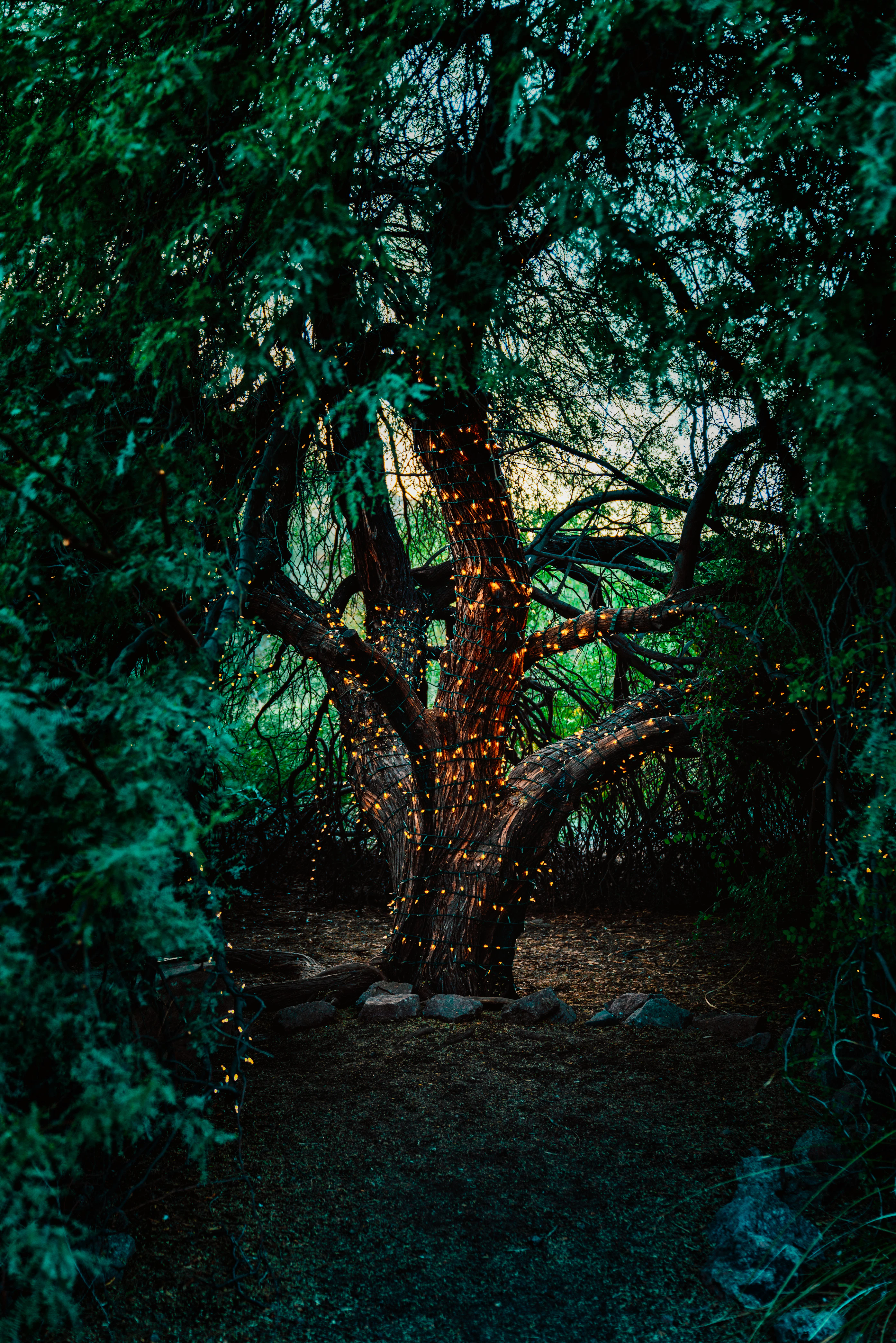 Photo by Meritt Thomas on Unsplash
Perhaps our outer garden is untamed and free… part of a rewilding scheme? We could link this to how some people determine to become freer, to go their own way, find their own path in life, become wilder, more in tune with nature, and with their own true authentic selves.
Whatever its style, the garden will reflect its owner, in terms of what is planted there and how it is arranged. There is a parallel here with the thoughts and influences we choose to ‘implant’ in our own minds, in our inner gardens:
“Our bodies are our gardens, to the which our wills are gardeners.”
(Shakespeare, Othello.Act I, Scene iii)
Like us, the garden changes, grows, has moods, dull days and brighter ones.
The landscape around us is created by Nature, by others and by ourselves. The part we play in arranging our lives externally, and the home we have, express much about who we are.
“An individual’s harmony with his or her ‘own deep self’ requires not merely a journey to the interior but a harmonising with the environmental world.”
James Hillman
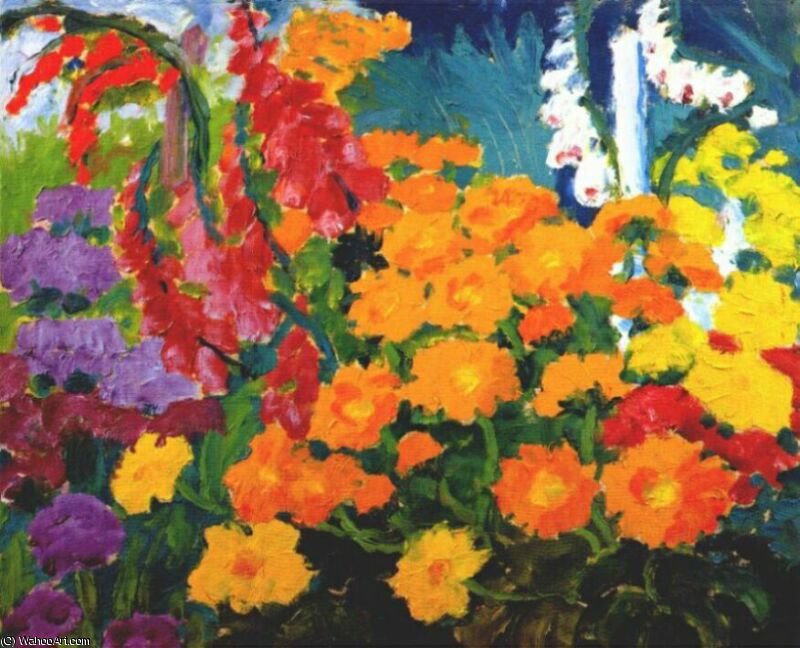 Flower Garden (Marigolds) Emile Nolde. 1919. Wikioo
“People from a planet without flowers would think we must be mad with joy the whole time to have such things about us.”
Iris Murdoch
*******
This blog is totally non profit-making. As a retired psychotherapist with over 30 years experience, I write both for my own self-expression and to help others.
If you have liked this post, I would much appreciate you showing support to me by spreading the word about my blog and becoming a follower of waysofthinking.co.uk
Thank you.
© Linda Berman.
 waysofthinking.co.uk