
**Just a warning to the reader that this post deals with some difficult issues and could be disturbing to some people.
 The Lie – Felix Vallotton. 1896. Wikioo
“Manipulation thrives in an atmosphere of ignorance and naivety.”
Margaret Atwood, The Handmaid’s Tale
Manipulation of other people can be exploitative and unkind; it may be described as influencing another in an unscrupulous way, to further one’s own ends. Sometimes this can be done subtly and deviously, so that the person hardly knows that they have been mistreated, lied to, or wronged in an underhand way.
Manipulation is a coercive and unpleasant psychological strategy, playing on people’s emotions and often boosting the manipulator’s low self-esteem by making the other feel guilty, irresponsible or stupid. The gaslighter is hyper-sensitive to anything they perceive as critical or blaming of them; they will often used the method of ‘turning the tables,’ which involves switching the responsibility to the other person.
Frequently, a manipulative adult has discovered in childhood that they will not get what they need to feel a little more safe and secure unless they use devious means. If they have been raised by a manipulator, some of that degenerate, manipulative energy will inevitably seep into them.
The following discussion and quotations highlight some of the many contexts in which people can be especially manipulative.
- Abuse and manipulation
 Helene Schjerfbeck – Silence. 1907. Wikimedia Commons
“Abuse manipulates and twists a child’s natural sense of trust and love. Her innocent feelings are belittled or mocked and she learns to ignore her feelings. She can’t afford to feel the full range of feelings in her body while she’s being abused—pain, outrage, hate, vengeance, confusion, arousal. So she short-circuits them and goes numb.”
Laura Davis
This quotation encapsulates the way in which the perpetrator of childhood abuse manipulates the innocent child; it is not difficult for an abuser to harm a child in this abominable way, for, initially, children are trusting and naturally want to please.
This awful crime picks on the most vulnerable and the most at risk. It has a lifelong effect, physically and mentally, on the childhood victim.
The victim’s boundaries are violated physically, emotionally and psychologically and the thinking processes of the abused child become disorientated and confused. Frequently, the child feels to blame, as abused children are often told that what happened was their fault.
There is also often denial by the abuser, family or friends, that abuse has occurred, making the child feel alone, a liar, or crazy for having a different reality, which is not affirmed by others.
The boundary between fantasy and reality is confused; sometimes the abused person cuts off from reality during the abuse as a coping mechanism.
The child’s sense of agency, rights and personal power are often destroyed or damaged; this is a desperately invasive, core injury. Being deceived and lied to shakes the child’s trust and belief in others; they will, inevitably, need therapeutic help to deal with the pain that this dastardly form of manipulation will cause them.
“You may be deceived if you trust too much, but you will live in torment unless you trust enough.”
Having lived through desperately painful experiences of deceit and manipulation, the child will not be able to make real and trusting relationships, and will certainly be unhappy and rejected. If they cannot trust other people, then no-one is likely to trust them.
Furthermore, they will be unlikely to be able to trust themselves either, in that a life built on repeated experiences of manipulation and deception means one cannot trust one’s own intuition, opinions or wishes and plans for the future.
“When a person is punished for their honesty they begin to learn to lie.”
Shannon L. Alder
Learning to lie often happens early in life; as the quote says, if children are punished for telling the truth, they will discover that lying is a safer option. In a punitive atmosphere, lying will inevitably develop as a response to fear. Children will become increasingly adept at telling lies to try to avoid punishment.
This is, sadly, likely to become the habit of a lifetime, unless the person is able to work on themselves and understand that they no longer have to lie or fear parental punishment for being truthful in adulthood.
- Manipulation through playing the victim
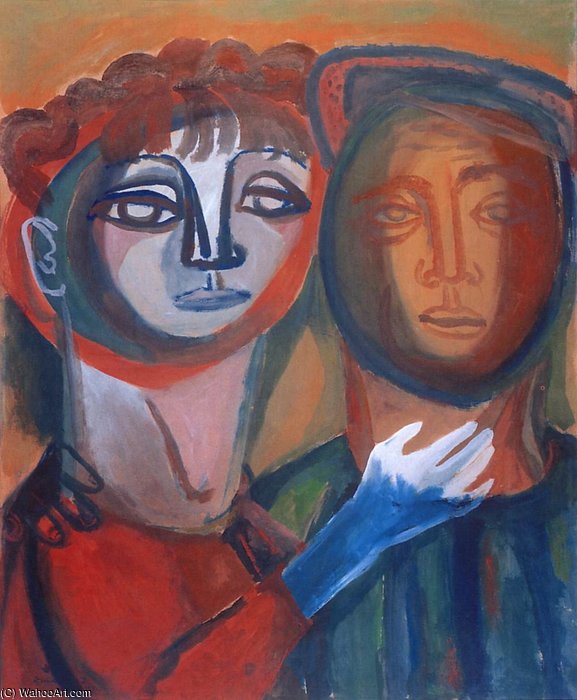
Sympathy – Margit Anna. Wikioo.
“Playing the victim role: Manipulator portrays him- or herself as a victim of circumstance or of someone else’s behavior in order to gain pity, sympathy or evoke compassion and thereby get something from another. Caring and conscientious people cannot stand to see anyone suffering and the manipulator often finds it easy to play on sympathy to get cooperation.”
George K. Simon Jr
The deceit and powerful manipulation described above is designed to prey on the vulnerable and to take advantage of others’ kindness, or perhaps to exploit those who have weak and uncertain boundaries.
Saying ‘no’ can be difficult for some, and those who are out to get what they can for themselves, regardless of other people’s feelings, will hone in on people they come across who may not be very ‘streetwise.’
This seems particularly obvious in relation to internet scams, where criminals obtain money by manipulating their innocent victims out of large amounts of their money with the promise of a successful investment or a loving life-partner.

A Woman in Tears – Pablo Picasso.1937. Wikioo.
Tears, whilst mostly genuine, important and meaningful, may indeed be used disingenuously to manipulate others. But perhaps there is sometimes also a need behind the manipulation; the tears may still be expressing the wish for understanding in a desperate person who knows no other way of gaining some care and attention.
If we are aware of being manipulated by ‘manufactured’ tears, then we may decide to respond empathically; in this case we are not really allowing ourselves to be manipulated, for we have the conscious choice to decide our responses, given this awareness.
“The art of manipulation is only successful when the manipulator remains undetected.”
Paula Hawkins, The Girl on the Train
It is awareness that is the key in terms of being manipulated in any situation. If we are unaware, then we may be led into dangerous territory, unknowing and unprepared.
- Evasive and manipulative parenting.
 Aurora Mazzoldi – Mother 1 – Possessiveness. 2008. Wikimedia Commons.
“Children who are not encouraged to do, to try, to explore, to master, and to risk failure, often feel helpless and inadequate. Over-controlled by anxious, fearful parents, these children often become anxious and fearful themselves. This makes it difficult for them to mature. Many never outgrow the need for ongoing parental guidance and control. As a result, their parents continue to invade, manipulate, and frequently dominate their lives.”
If children are over-protected, dominated and manipulated in a multitude of ways by over-anxious and needy parents, then they may find as they grow up that they are always looking for a parent figure to tell them what they ‘should’ do.
They cannot trust their own judgement and do not feel any confidence in themselves and their identity. This can leave them open to manipulation and exploitation. Whist the parents are still alive, they may still ‘need’ their approval and assent for many of the issues in their adult lives.
If we allow others to define us, we are permitting a kind of psychological identity theft on ourselves, letting the views of others ‘rob’ us of who we are and how we really think. We can become overloaded with and manipulated by, others’ opinions, which may be crowding out our own, if we are not careful. This is quite serious, in that it can have a powerful impact on our psychological health and wellbeing.
As adults, allowing ourselves to be over-influenced and manipulated by others indicates that we need to set firm boundaries, to know ourselves and our views, and have the confidence to be authentic enough to say what we really think. Many people engage in therapy to deal with such issues.
Unless we become a more whole and individuated person, it will be difficult to feel separate from others and have our own personal boundaries. If we do not have a distinct and authentic self, we may become over-dependent on others, merging with them and taking on their views and ways of thinking.
Knowing oneself, through therapy, through others and through life-experience, is a key to feeling more secure in one’s identity, so that then we can learn to think for ourselves and more clearly define our core beliefs. This will mean we are far less likely to be taken in by others’ manipulations.
- Control and manipulation

“Until you realize how easy it is for your mind to be manipulated, you remain the puppet of someone else’s game.”
Evita Ochel
This quotation stresses the importance of awareness that we are being manipulated, as mentioned above. Self-knowledge is crucial in this, for if we are out of touch with our own needs, if we do not have a strong sense of who we are, then it will be easier for unscrupulous people to play havoc with our minds and persuade us that our truths are lies.
If we lack confidence in who we are, it means that we might fall into needing others’ apparent support even more, and might find ourselves being preyed on and taken advantage of.

Cesarleal.Brainwashing 1. 2006. Wikimedia Commons.
“The greatest manipulation is to convince others they are in control, when in fact, you are the puppet master pulling the strings.”
Robert Greene
Human beings have many ways of externalising their fears of lack of control. One way in which some people might attempt to deal with their own inner chaotic world is to try to control others. Sometimes this is done by instilling fear in the other person, perhaps in the form of threats or blackmail.
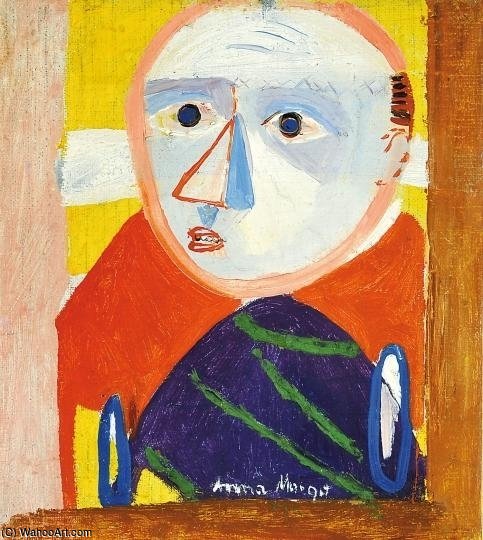
Puppet – Fear – Margit Anna. 1946. Wikioo
“Fear sticks like a barb in the mind. Someone cold enough to take advantage of it can attach strings to those barbs and make puppets of men and women.”
Lance Conrad
They may become the victims of a dominating and tyrannical oppressor. When taken over in this way, personal boundaries are violated, physically and/or mentally, and people are often paralysed with fear, which keeps them controlled and, in some instances, dependent, on their manipulating tormentor.
Thus, control can rapidly become abusive, and, for everyone who experiences this sort of authoritarian, bullying behaviour from another, it creates a very unhappy life all round.
- Gaslighting
 waltarrrr. Gaslight. Flickr,2016.
“A skilled manipulator can make you question your own reality.”
Gaslight, directed by George Cukor (1944)
The term gaslighting originated from the play Gaslight ; it tells the story of a husband who tried to make his wife think she was losing her mind by altering the intensity of the gaslights in their home and persuading her that it was all in her imagination.
Gaslighting is a very powerful, cruel and destructive form of manipulation, with the aim of causing another person to question their own perception of reality and to become dependent on the manipulator. Gaslighting involves outright lies, deception, coercive control, and turning the tables in terms of blame, so that the victim appears responsible.

“Gaslighting preys on self-doubt and fear, manipulating someone’s reality to maintain control.”
Julia Lee
The confusion that is caused by gaslighting is entirely what the perpetrator depends on. By causing such befuddlement in the victim, there is the intention to gain power over them, to make them feel they are going crazy and that they can no longer trust their own minds or ways of thinking.
Their memories and perceptions are called into question, as the deliberate planting of self- doubt and uncertainty takes hold. This is a wicked and abusive way of treating another person, for it can cause huge distress, bewilderment, guilt and fear.
It is aimed at making the gaslighter feel powerful and strong, in contrast with the victim who is persuaded that they are weak and to blame for everything. Often, the gaslighter will work at isolating their victim from family and friends, taking over their minds and reinforcing their sense of loneliness, neediness, dependence and hopelessness.
How to manage such gaslighting manipulation? This is far from easy and not always possible.
In next week’s post I suggest 3 ways to think about how we might deal with gaslighting.
©Linda Berman
 waysofthinking.co.uk