
Quote 1
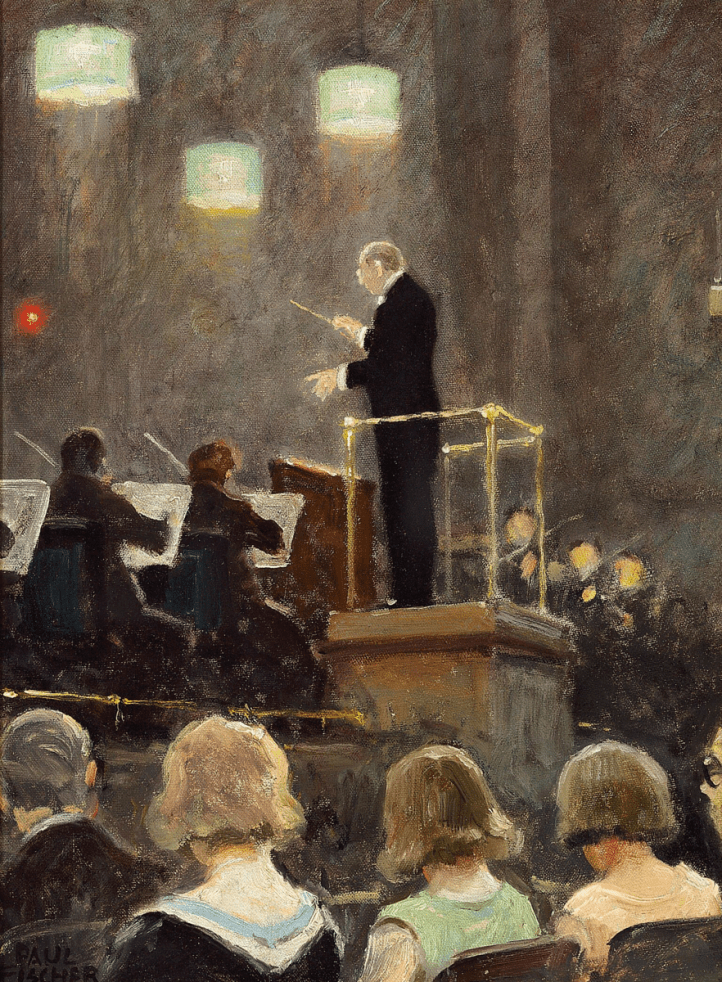 Emil Reesen conducts the Danish Radio Symphony Orchestra. Oil on canvas.c 1929. Wikimedia Commons
This is an inspiring and thought-provoking quotation, for even though the conductor of an orchestra may have considerable fame and notability, they face the musicians they are leading. The audience can only see their back and will mostly focus on the orchestra. If we really think about it, we will see that this is an excellent model for the leadership role. There are many ways of describing leadership; one’s style depends very much on personality, self-awareness and intelligence. If you are in any kind of leadership position, can you define your own style? Below are a collection of quotations that can help in your decision, as well as in the interpretation of the leadership role. However, it is important to bear in mind that, when put together, they describe an ‘ideal’ leader and, of course, we are all human. Striving to be perfect at all times is certainly a dysfunctional behaviour model for a leader; if we aim to be good enough, achieving only a selection of the qualities described, then we will be doing well in this skilled and difficult job! In addition, we will inevitably learn from our mistakes.“A man who wants to lead the orchestra must turn his back on the crowd.”
Max Lucado
Quote 2
 Looking Within. Kelly Birkenrith. 2019. Gandalf’s Gallery. Flickr.
A leader needs self-awareness so that they do not unconsciously harbour prejudice and bias, which would be highly detrimental to the leadership role and the manner in which others are treated. Even if a leader manages to keep their cool at work, if tension is building inside, it may be that this is unfairly released on unsuspecting others outside of the work environment.“Practice self-awareness, self-evaluation, and self-improvement. If we are aware that our manners – language, behaviour, and actions – are measured against our values and principles, we are able to more easily embody the philosophy; leadership is a matter of how to be, not how to do.”
Frances Hesselbein
Jung was referring to the fact that the behaviours and feelings that trouble us most in others must be within ourselves, otherwise we would not feel so disturbed by them. If, for example, we are always irritated by another’s attitude, perhaps they are giving vent to something that we find difficult to express.“Everything that irritates us about others can lead us to an understanding of ourselves.”
Carl Jung
 Engine check light on a VW Bora indicating a fault in the engine management system. 2011.Wikiuser100000. Wikimedia Commons
Through exploring ourselves, and our inner world, perhaps in therapy, we are preparing the way for being able to lead others. In noticing and checking any ‘warning indicators’ about our feelings and behaviour, such as frequently feeling irritated or offended by other people, we can identify our ‘weak’ areas and the usual points at which old reactions begin to be triggered. Until we have worked on resolving any major issues that might block open communication and relationships with others, we cannot even begin to lead other people. The importance of recognising the difference between being and doing is highly relevant here; the quotation emphasises the fact that, for a leader, ‘being’ is central to the task. In this sense, ‘being’ means that we are doing our best to be authentic and true to ourself and our beliefs, as we interact with others. It involves being on centre, reflecting on ourselves, our behaviour, and our ways of thinking as leaders. ‘Being’ means that we will take the time that we need, wherever possible, to work through difficult issues. An unconsidered rushing into action, or a feeling of pressure to produce instant solutions, results and advice, will likely result in the worsening of a problematic situation. This hasty approach, springing into ‘doing,’ without any thinking, consultation with others, or discussion, does not take into account the other person’s skills or abilities to work on issues themselves. It will interfere with others’ being.“The feeling of being ‘offended’ is a warning indicator that is showing you where to look within yourself for unresolved issues.”
Bryant McGill
Having the ability to just ‘be’ in the midst of busy-ness, pressure and activity can be essential to our wellbeing, both in a personal sense and in our working lives. Achieving this can mean that we will establish and model as leaders a culture in which there is mutual consultation, respect, consideration and care. The atmosphere of calmness and wisdom will permeate the rest of the team.“A leader’s job is not to do the work for others, it’s to help others figure out how to do it themselves, to get things done, and to succeed beyond what they thought possible.”
Simon Sinek
“The alternative to being is reacting, and reacting interrupts being and annihilates.”
Winnicott

Light magic – Emile Nolde. Wikioo
Leaders who encourage others to gain more strength and personal growth have, largely, worked through some of their own issues. They have perhaps become aware and gained control of their ‘dark’ areas, their shadow side, so that they can be freer to assist and encourage other people where necessary.“It is essential that you become aware of the light, power, and strength within each of you, and that you learn to use those inner resources in service of your own and others’ growth.”
Elisabeth Kubler-Ross
If we feel some sense of serenity inside, we can transmit that feeling to those we are leading or interacting with.
Of course, sometimes we need to work quickly, keep deadlines, meet targets. It is also of supreme importance to make more time, as far as possible…time to think, to reflect, to be creative.
With all the pressure of modern technology and the general speed of contemporary life, finding such reflection time might prove difficult. However, it is crucial to discover some way of taking some space that appeals to you as an individual…

Some further leadership qualities…“You should sit in meditation for twenty minutes everyday – unless you’re too busy; then you should sit for an hour.”
Dr. Sukhraj Dhillon
- compassion and empathy
- firmness and fairness
- flexibility, approachability and adaptability
- clarity of vision
- resilience
- integrity and honesty
- responsiveness
- having the ability to take fair criticism and admit mistakes
- accepting one’s own, and others’, limitations
- having the necessary skills and expertise, and keeping them regularly updated
“The privilege of a lifetime is to become who you truly are.”
C.G. Jung.
- The importance of having empathy as a leader
People frequently fail to listen to one another, making little direct eye contact and remaining totally involved in their own words and their own world. Listening between the lines is a beautiful way of describing what it means to really hear another person. The phrase combines ‘listening to the music behind the words’ and ‘reading between the lines.’ It means that we are able to detect every nuance, hidden meaning, implication, reference and ambiguity in the other’s words. Whilst this is very much a quality that therapists need, it is also highly relevant to the leadership situation. Developing such skills will enable a leader to hear what is not expressed directly, but hinted at or implied. Additionally, valuing another’s opinions in any kind of team and respecting their views is a way of making them feel important and special. We all want to be appreciated for what we know and for our skills and expertise, at all levels.“One of the benchmarks of great communicators is their ability to listen not just to what’s being said, but to what’s not being said as well. They listen between the lines.”
“If you don’t realize there is always someone who knows how to do something better than you, then you don’t give proper respect for others’ talents.”
Quote 3
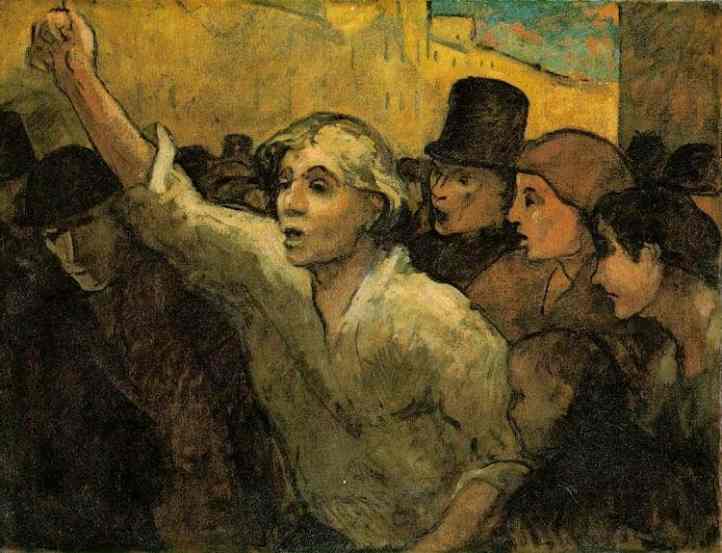 Honoré Daumier, “The Uprising,” 1848 or later . Wikimedia Commons
Some people equate the position of leader with being a boss, on a pedestal, with the team following them in rapt admiration. This directive ‘leadership’ style will most likely produce resentment, envy and a hierarchical structure. There will, inevitably, be feelings of ‘one up, one-down’ and a culture of superiority/inferiority spreading throughout the organisation.“A leader is best when people barely know he exists. When his work is done, his aim fulfilled, they will say: we did it ourselves.”
Lao Tzu

Part 2 of this post will be published next Tuesday. I’d be highly encouraged if you would become a follower of my blog and receive a reminder of the next post directly into your email inbox. Thank you all for your ongoing support! Linda. ©Linda Berman“The greatest leaders mobilize others by coalescing people around a shared vision.”
Ken Blanchard
 waysofthinking.co.uk