
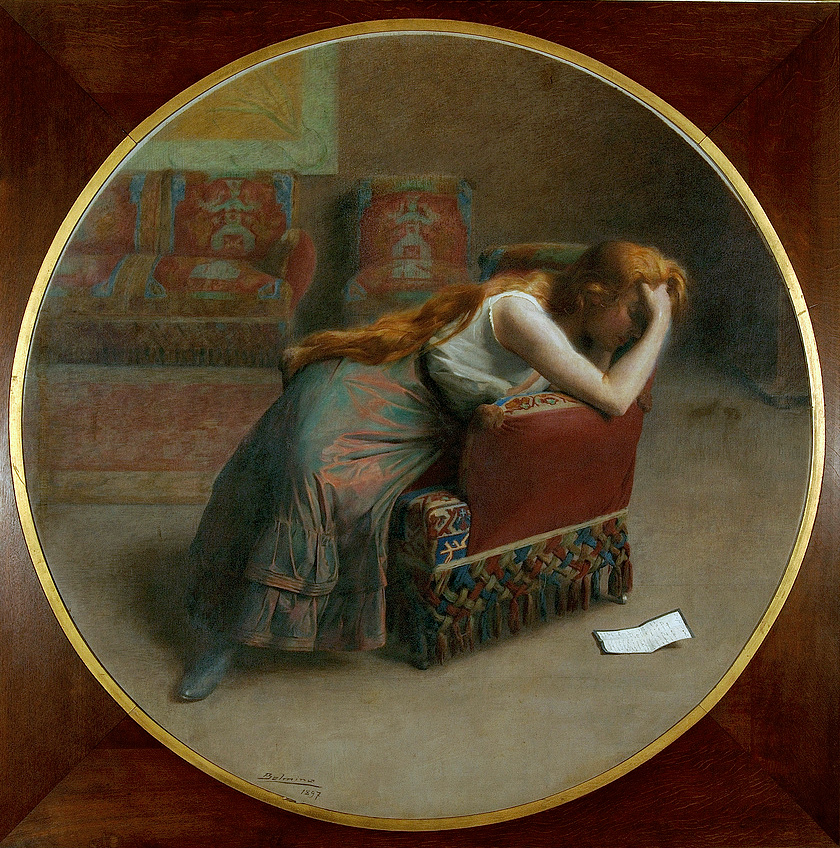
 Belmiro de Almeida.1897. “A má notícia” Wikimedia Commons.
“The worst pain in the world goes beyond the physical. Even further beyond any other emotional pain one can feel. It is the betrayal of a friend.”
Heather Brewer
Being betrayed by another, who breaks a precious bond of trust, can be devastating. Whether in a personal, business or professional context, it can shake a relationship to its foundations, and it may destroy it.
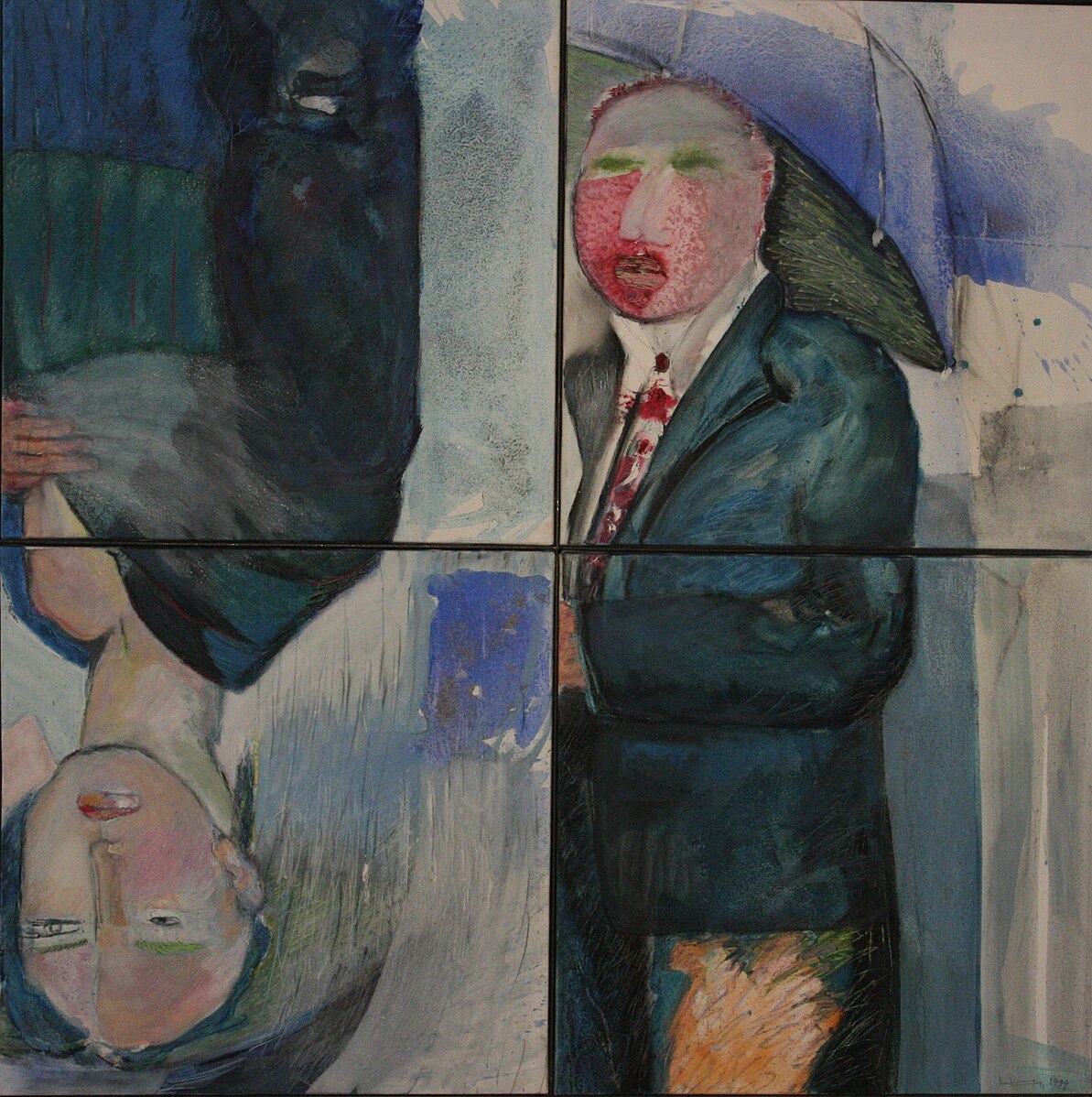 The Couple, A Never-ending Story, Modul Art painting by Leda Luss Luyken.1996 Wikimedia Commons
In a different vein, being defrauded or swindled by someone we thought was trustworthy can leave us feeling totally bereft, foolish and unsafe.
Online scamming can be aimed at the most vulnerable in society, young and old; it is a heartless and potentially devastating crime. The shock and trauma can cause PTSD and the victims may need mental health support.
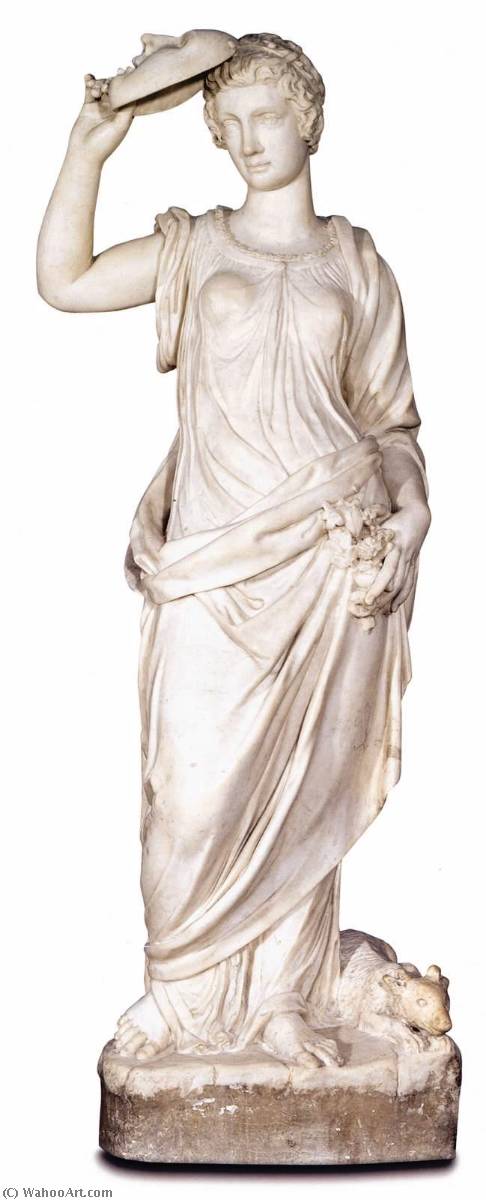
Fraud. Francesco Susini.1622. Wikioo
- Fidelity to oneself
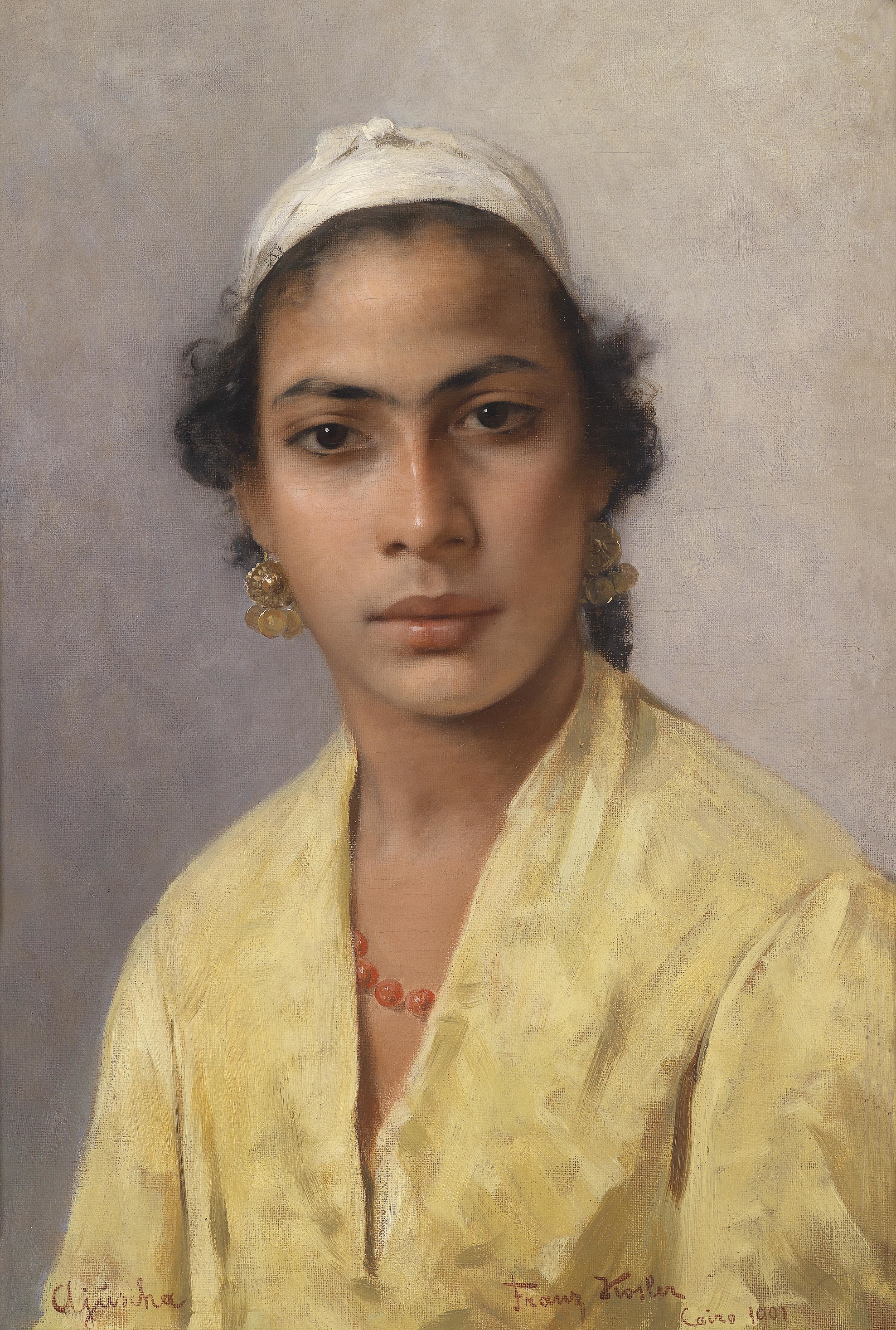 Franz Xaver Kosler – Ajuscha Kairo [1901] Gandalf’s Gallery. Flickr.
“If you do not express your own original ideas, if you do not listen to your own being, you will have betrayed yourself.”
Rollo May
The importance of being faithful to oneself cannot be overstated. What does this really mean? This quotation is about authenticity, about knowing ourselves and being able to be true to ourselves. If we are not true to ourselves, we cannot be true to anyone else.
“It is necessary to the happiness of man that he be mentally faithful to himself. Infidelity does not consist in believing, or in disbelieving, it consists in professing to believe what he does not believe.”
Thomas Paine
Trusting oneself requires confidence and a feeling of self-worth; it involves a conviction that we deserve to trust in ourselves, our own opinions, decisions, beliefs.
However this conviction depends strongly on self-awareness and self-knowledge. Without this, we may be harbouring rigid thoughts and ideas, never doubting ourselves and being convinced our way is the right one for all.
This is a dangerous and self-destructive place to be, for the rigidity will be covering many unresolved feelings that can emerge unprocessed at any time in our lives.
“I can do nothing for you but work on myself…you can do nothing for me but work on yourself!”
Ram Dass, Be Here Now
An attitude of tolerance towards our own mistakes is also important here. If we can forgive and be kind to ourselves, then it is more likely that we will feel confidence and self-trust.
Self-critical people tend to have low self images and struggle to develop this trust. They may doubt themselves and the world.
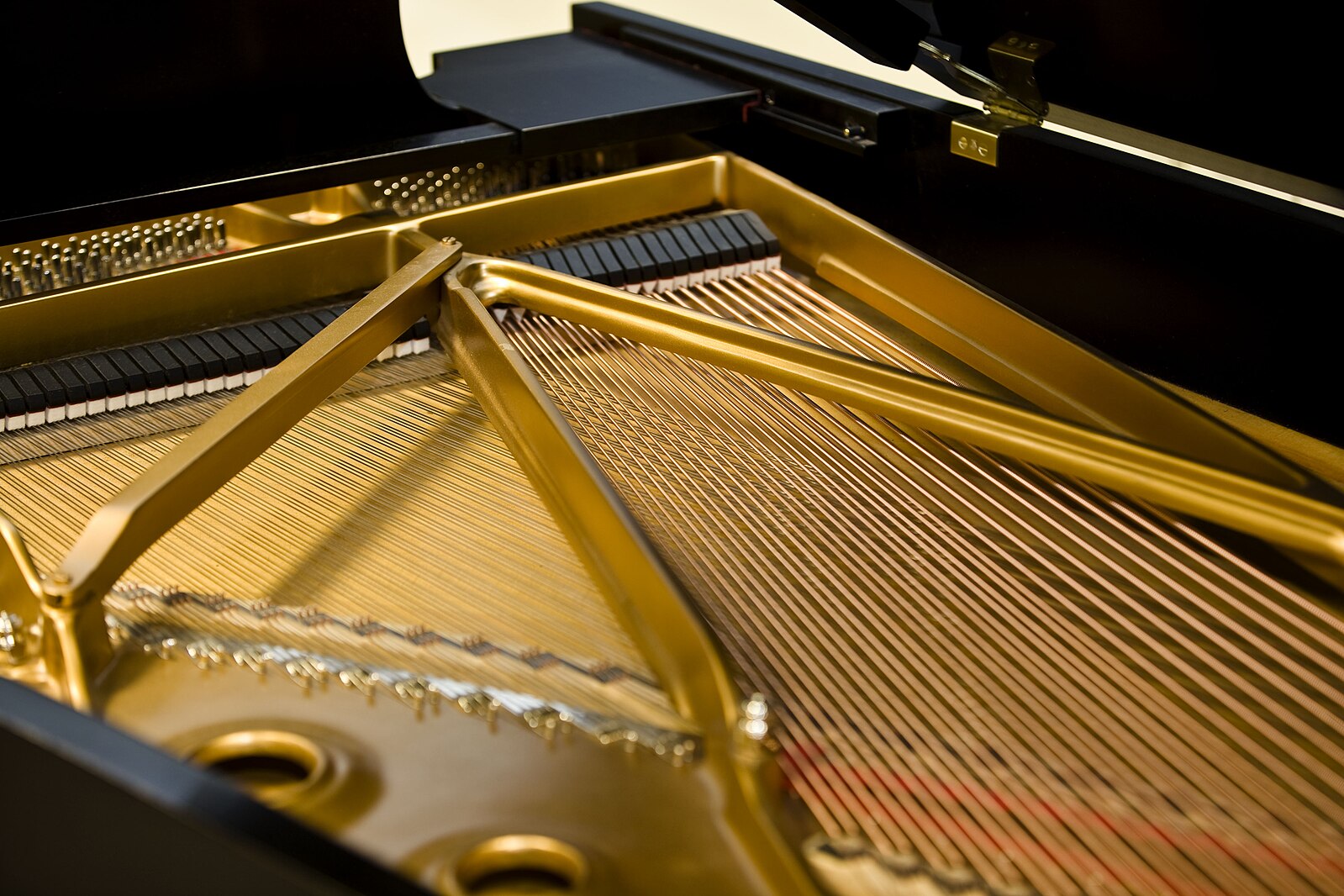 Steinway Grand Piano Iron Plates and Strings. David Maiolo. Wikimedia Commons.2010.
“Trust thyself: every heart vibrates to that iron string.”
Having faith in one’s own gut feelings is also important, and research shows us that we do need to trust the intuitive part of ourselves.
“As soon as you trust yourself, you will know how to live.”
- The agony of betrayal
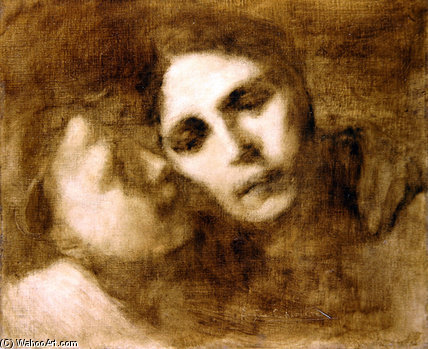
The Secret – Eugène Anatole Carrière Wikioo.
“Whoever is careless with the truth in small matters cannot be trusted with important matters.”
A serious betrayal of trust, once experienced, can make it difficult to trust again. It is as if a person who has been betrayed generalises from the experience, seeing disloyalty in every person’s eyes.
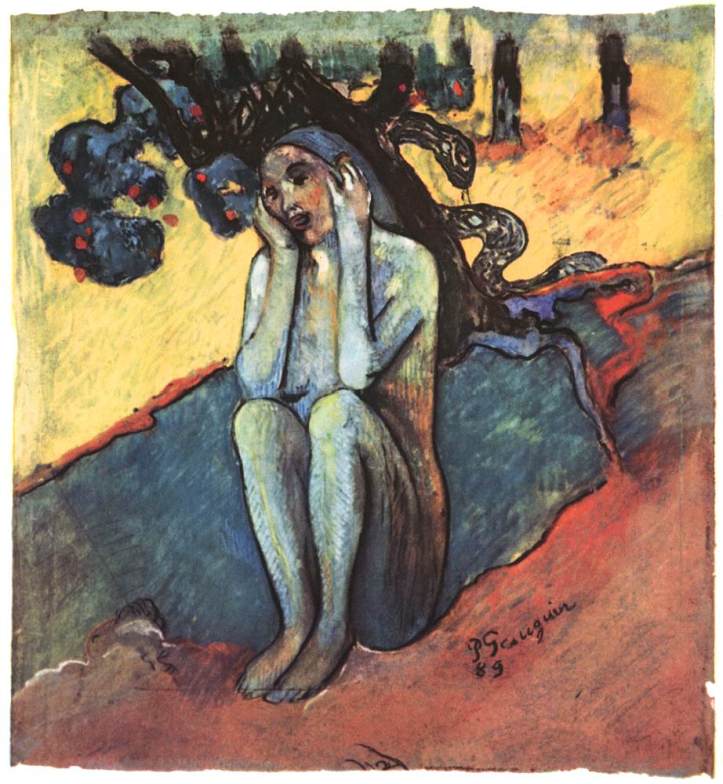
Paul Gauguin: Eve – Don’t Listen to the Liar. 1889 Wikimedia Commons.
“I’m not upset that you lied to me, I’m upset that from now on I can’t believe you.”
The pain of betrayal by someone who has been relied upon can have harrowing effects on the betrayed person. They will likely be deeply shocked and distressed, heartbroken at the breach of trust.
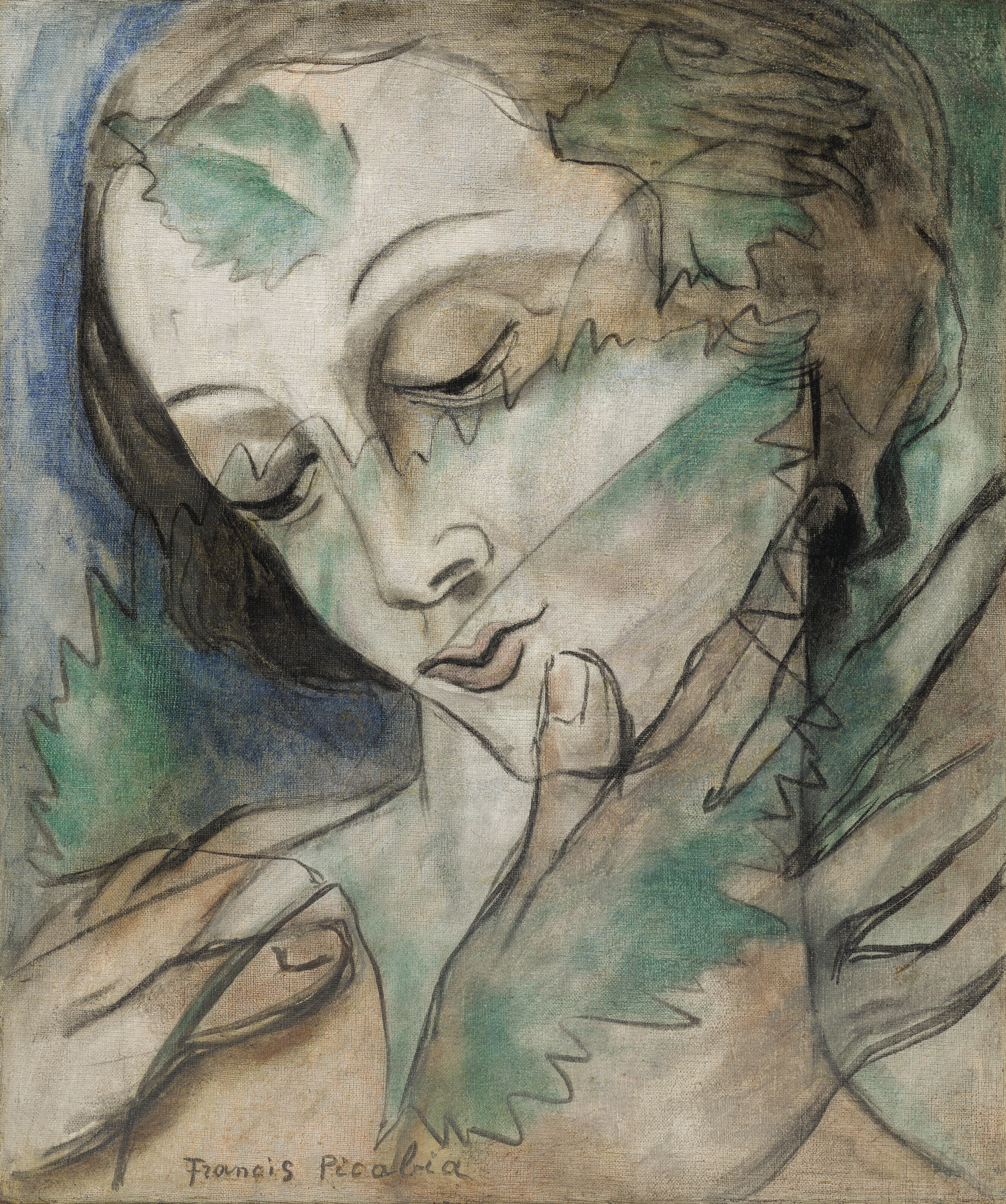 Francis Picabia – Untitled [c.1930-33] Gandalf’s Gallery. Flickr.
“Familial betrayal is, to me, the most heartbreaking kind – because if you can’t trust your family to love you and protect you, who can you really trust?”
Alexandra Bracken
Betrayal, of whatever kind, can be an intense trauma, affecting self-belief and self-confidence and damaging both emotional and physical health.
Maybe the betrayal happened in childhood; terrible betrayals such as abuse, sexual, physical or emotional, can be absolutely unforgivable and can create a lifetime of problems in adult relationships.
Will the betrayed person ever be able to trust anyone again?
Stosny, below, underlines the importance, in time, of developing ‘wise trust.’ This is about gaining confidence and learning the lessons of betrayal, such as being able to assess people better and being less trusting where necessary. This is, of course, not easy for anyone.
“Wise trust cannot be expected to return fully until self-compassion and core value have grown larger than the fear of being hurt yet again.”
Stephen Stosny ‘Trust and Betrayal’
- Can there be a way forward?
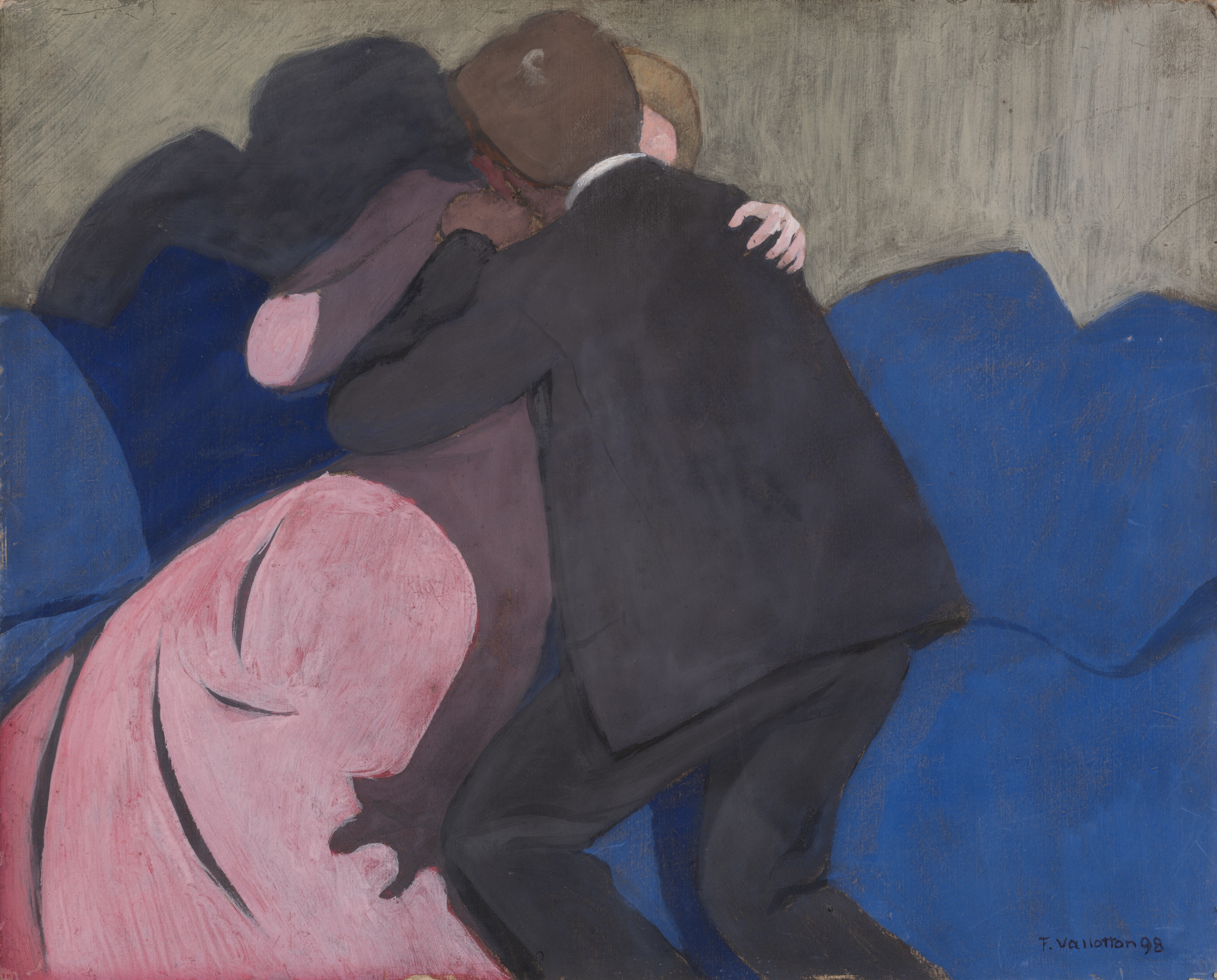
Félix Vallotton – The Kiss [1898]Gandalf’s Gallery. Flickr.
“Betrayal hurts, but it can be healed. An affair can even be the doorway to a new marriage—with the same person. With the right approach, couples can grow and learn from these tumultuous experiences, together or apart.”
Esther Perel
Even when betrayed, it is sometimes possible to move towards healing and repair, to try to understand why the other person betrayed you, or what the other faces in life.
 Moving Towards the Light. 2015. Diana Dean. Wikimedia Commons.
This is not about making excuses; it is about having compassion, whilst maintaining crucial personal boundaries against further betrayal. It is not always possible.
It must be emphasised that some relationships are irrevocably broken and they cannot be rebuilt. There may be no desire for repair in such cases.
There are no rules and no judgements to say that we ‘should’ forgive those we feel have treated us badly. Indeed, some things can never be forgiven or repaired. That is as it is. Time to say goodbye, and if at all possible, with a degree of compassion… but only in some circumstances.
“You can be compassionate without trusting.”
Stosny
If, however, there is a willingness to move towards some kind of resolution, then the services of a mediator or, in the case of a couples relationship, a couples therapist, may be required. Being able to share feelings about betrayal can be a way forward.
“It takes courage to trust after betrayal and to speak instead of staying silent, but it is worth it.”
Elizabeth Lowham
It is also important to remember the words of Hemingway. They apply to the self, and also to relationships that have been sorely tested:
“The world breaks everyone and afterward many are strong at the broken places.”
If a betrayal has occurred and there is the chance of healing, a person, a relationship, a life, may be enriched by this ‘restoration,’ like the broken Japanese vase that is restored and repaired with gold. (Kintsugi)
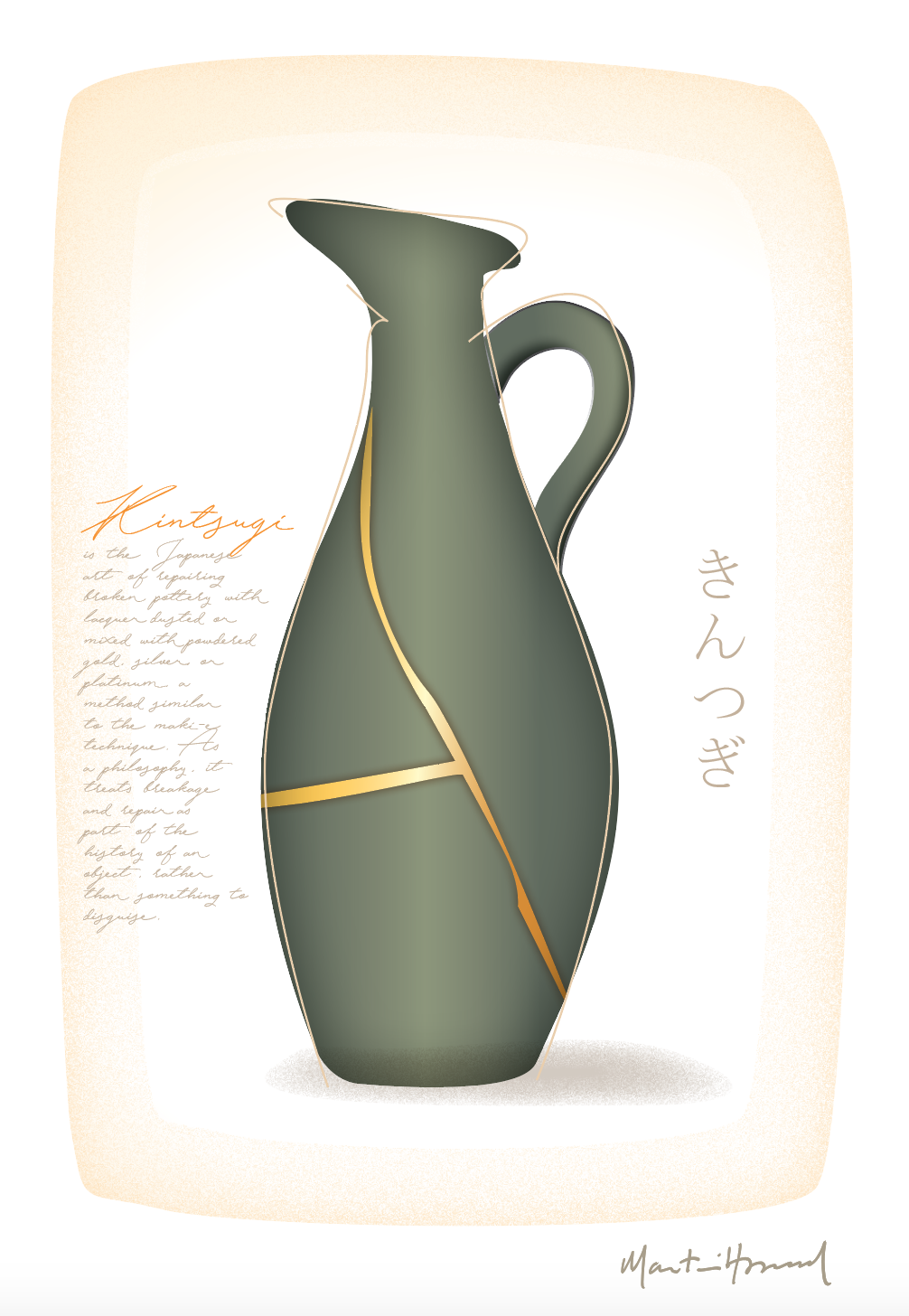 kintsugi jug. Poster Print by artist Martin Howard. Flickr.
“Trust is like a vase, once it’s broken, though you can fix it, the vase will never be same again.”
The above statement is true; however it does not allow for the fact that some vases can be changed, restored, and this can make them stronger. As it is with vases, so it is with ourselves and our relationships.
- Couples therapy
The exploration of what has happened in a relationship where there has been betrayal, whilst a difficult process, will enable both parties to gain in self-knowledge.
A non-judgemental, empathic therapist can help the couple realise that, even though it might superficially appear that one person is ‘to blame,’ marital breakdown is about two people; it is an interaction. It might seem as if one partner is ‘at fault;’ that partner, however, is always unconsciously expressing something for the other.
The couple represent two parts of a whole; they created the entity of the marriage and they both have a part in its demise. Apportioning blame to one partner or another represents ways of thinking that are limited and incomplete.
This inability to hold in mind both partners’ experience simultaneously is the product of a one-sided approach to life. It is a way of thinking that cannot recognise the validity of two different viewpoints, two real experiences. The result is a jumble of half-truths, judgements, and intolerant, biased versions of reality. This will certainly herald a full stop in the relationship.
“But when we reduce the conversation to simply passing judgment, we are left with no conversation at all.”
Esther Perel, The State of Affairs: Rethinking Infidelity
This is where self-knowledge in a relationship is crucial and where couples therapy can be enlightening. Instead of regarding the other as all bad and the self as good or faultless, we might pause a moment to look at how easy it is to denounce another, rather than to admit that all is not perfect inside oneself.
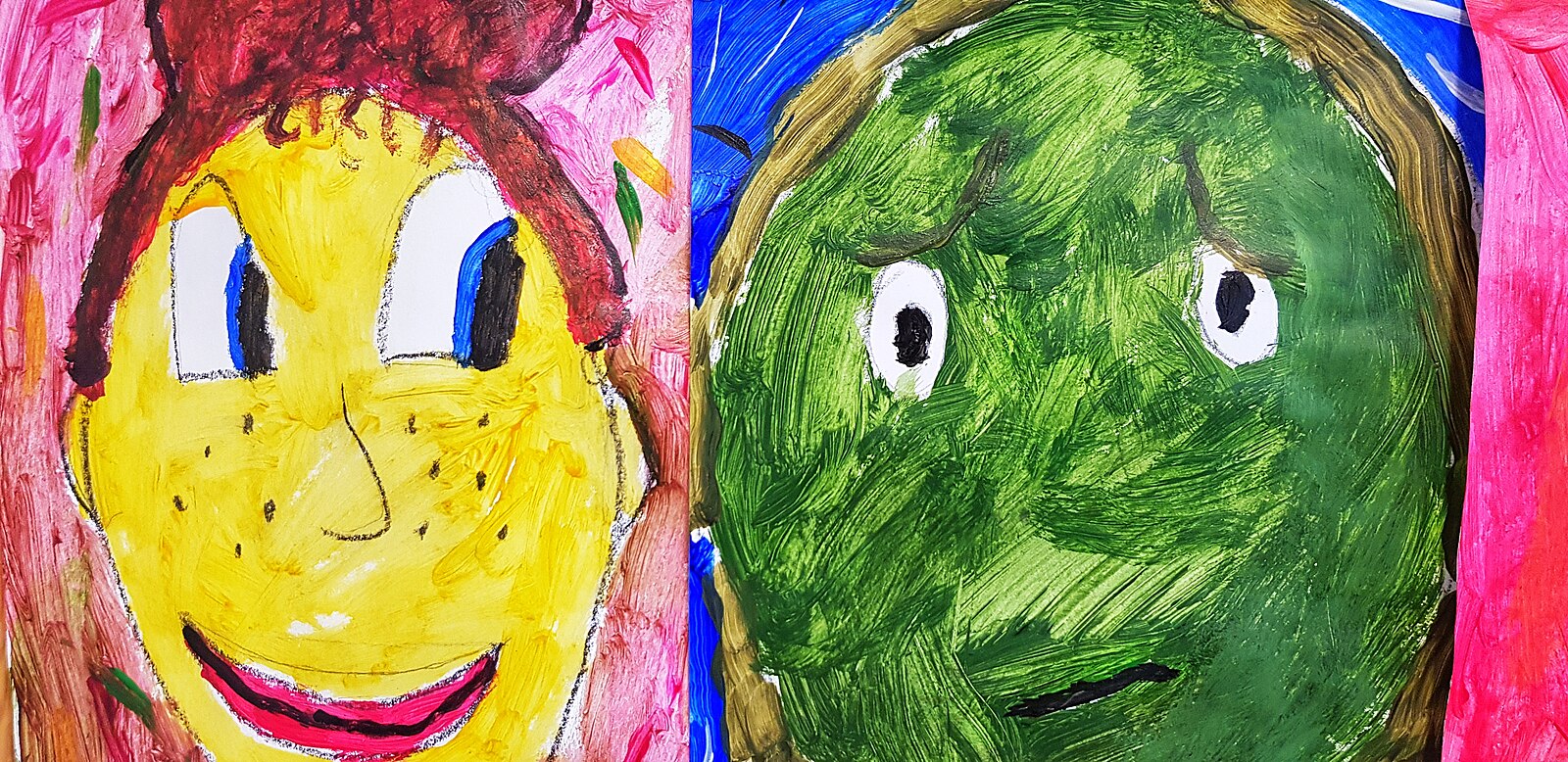 Happy and Sad. Child art. Artist: 9 year old girl. 2018. Lars Krogh Berg. Wikimedia Commons
The Spanish proverb ‘An optimist is a person who has a depressed friend’ illustrates my point perfectly. It is easier to deny one’s own pessimism if one can focus on another’s depression or misery and unconsciously project unwanted feelings onto them.
These feelings unconsciously become attributed to another person and will then be disowned in the self. That is when people get labelled…’the depressed one,’ the angry one,’ ‘ the happy one.’
We do have a responsibility to continue to improve ourselves in a relationship, both for ourselves and our partner. If we remain static and unaware of the effects we are having on the other, refusing to change and sticking to old patterns of behaviour, then the relationship is likely to become stale and full of resentment and pain.
Then, it may be that one or other of the partners has an affair.
‘We repeat what we don’t repair.’
Christine Langley-Obaugh
Relationships need work; inevitably, being in a relationship revivifies past unworked through issues. Understanding the links between past and present and how past experiences affect the present in terms of behaviour, feelings and ways of relating to others can be a very important part of the process of change.
The above quotation is highlighting the fact that patterns of behaviour that may be adversely affecting our lives and relationships can be unconsciously repeated unless they are identified and brought into awareness. These patterns will be recognised and explored in couple psychotherapy.
Affairs are an indication, a symptom, of something deeper, of psychological issues related to both partners and their interactions. An affair makes a big statement about the whole relationship and certainly about both partners, even though one person may appear the more superficially ‘responsible.’
If the roots of the marital problems in both partners are not worked through, these deeper issues will recur in further relationships.
“An affair simply alerts us to a preexisting condition, either a troubled relationship or a troubled person.”
Esther Perel, The State of Affairs: Rethinking Infidelity
If we unconsciously harbour repressed feelings, these will inevitably return in the context of a relationship:
‘Unexpressed emotions will never die. They are buried alive and will come forth later in uglier ways’.
Freud.
- Learning to recognise the child in the other
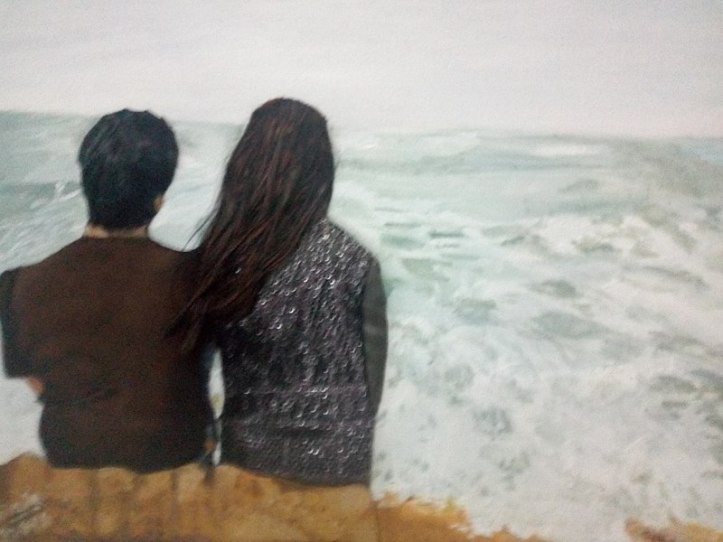 A painting of a loving couple sitting at Maha Sindhu Sagar, on the seashore. JoghiAsad. Wikimedia Commons.
“We often tend to ignore how much of a child is still in all of us.”
Elisabeth Kübler-Ross.
Sometimes, couples therapy can enable each partner to see the child in the other.
Having worked in psychotherapy with many couples over the years, I have discovered that, if each can see the child self of the other, they often tend to soften and become more compassionate towards their partner.
What exactly does this mean?
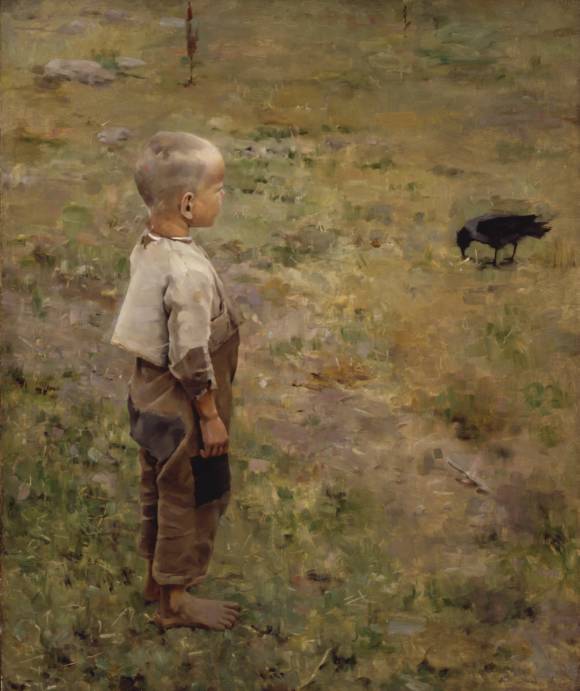
The Boy and the Crow – Akseli Gallen Kallela. 1884. Wikioo
The child that we once were still remains inside us all. They are there, in memories, reactions, experiences. Understanding that the other person has also struggled with their own issues might mean that mistrust lessens and we may see another, more tender side of our partner.
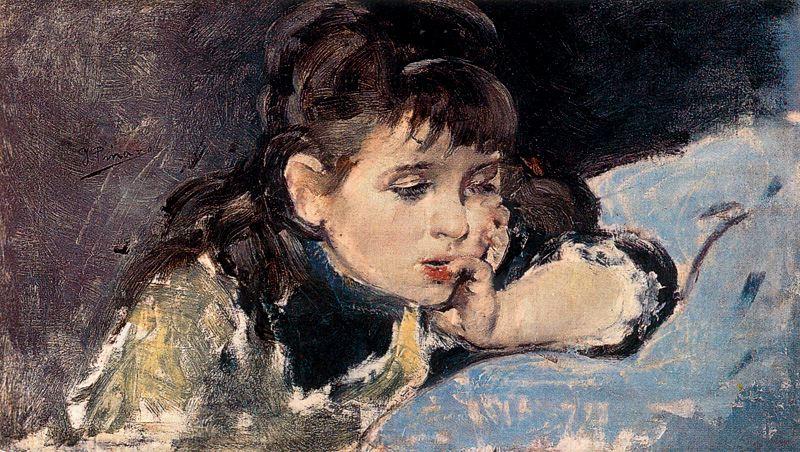 Little Girl Reading– Ignacio Pinazo Camarlench.1890-95. Wikioo
We may glimpse their child vulnerability and feel more empathic towards them, instead of judging and condemning their ‘adult’ front. It is very striking that, when partners in a relationship are able to show each other their child feelings from deep inside, there is a discovery that they had similar issues. Unconsciously, that is part of why they chose each other. (For further explanation, see a previous post by pressing this link)
Learnt adult behaviour, sometimes manifesting in the form of aggression, often masks vulnerable, defenceless feelings. These need to be explored and shared in couples therapy.
 Let me into your heart – Raymond Leech. Wikioo
“Love is messy; infidelity more so. But it is also a window, like no other, into the crevices of the human heart.”
Esther Perel
 The Wounded Deer. Frida Kahlo. 1946 Wikioo.
“I think I fall in love a little bit with anyone who shows me their soul. This world is so guarded and fearful. I appreciate rawness so much.”
Emery Allen
© Linda Berman
 waysofthinking.co.uk
[…] Writers often explore how trust shatters, revealing profound emotional scars. These scars can persist for years, creating lasting challenges in personal relationships4. […]
LikeLike
Thank you for referencing my blog.
Linda
LikeLike
[…] Time reveals that “trust takes years to build, seconds to break, and forever to repair” [18]. The most significant change comes from how betrayal forces you to rebuild your core beliefs about […]
LikeLike