
- Seeking help for our anxiety
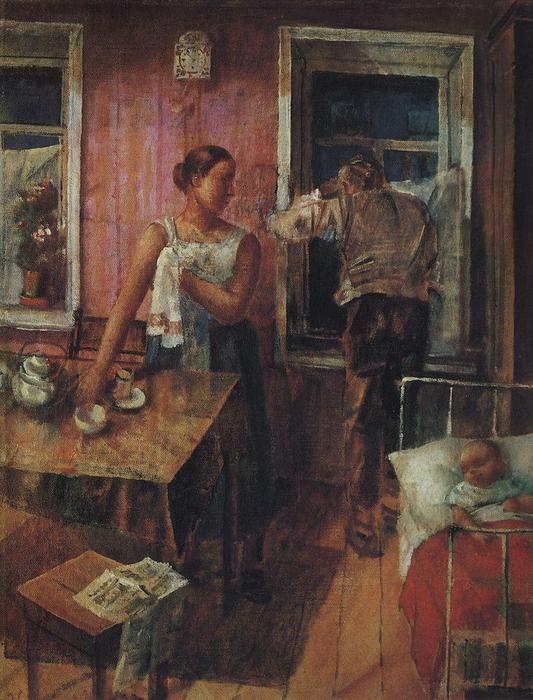
Anxiety – Kuzma Petrov-Vodkin. 1926. Wikioo
“Depression and anxiety affect a huge number of us. It’s so important that the barriers that keep us from talking, seeking out help, and finding a way to cope when things feel desperate are removed.”
Jacob Anderson
Everyone feels some kind of anxiety; in our daily lives there may be many experiences which can trigger anxiety in us. Sometimes, when things start to feel overwhelming, we find that sharing our thoughts and feelings with a trusted friend or family member can be enough to help us through.
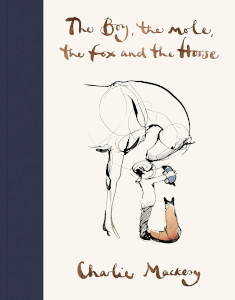
“Everyone is a bit scared,” said the horse. “But we are less scared together.”
Charlie Mackesy. The Boy, The Mole, The Fox And The Horse. 2019
Anxiety can actually be necessary in the short term; it may be a protective mechanism if we are faced with real danger, or help us to feel focussed, alert and determined at a job interview. Such anxiety usually passes when the cause of the concern has gone.
If, however, we are suffering from the overwhelming distress of a prolonged depression or anxiety disorder which is affecting our lives and relationships, it is important to obtain help.
Some of the symptoms of anxiety can be: difficulty sleeping, loss of appetite, headaches, panic attacks, finding it hard to concentrate, fear of certain experiences and situations, rapid heartbeat, dry mouth or sweating.
Getting help may begin with a visit to a GP, or with self referral to a therapist, or both. To find out more about getting help, follow this link.
The quotation above highlights the fact that, sometimes, people have ‘barriers’ which prevent them from sharing their feelings and concerns. What are these ‘barriers’?
Often, people experiencing anxiety feel alone and afraid. If they tell someone, how will that other person respond? What will they think of them? Embarrassment, fear of rejection or ridicule and judgment, shame, or guilt, can be some of the reasons for erecting defensive barriers against sharing anxieties and pain.
 Frightened – Roy Lichtenstein. 1964. Wikioo.
“Where your fear is, there is your task”.
CG Jung
- Anxiety in therapy
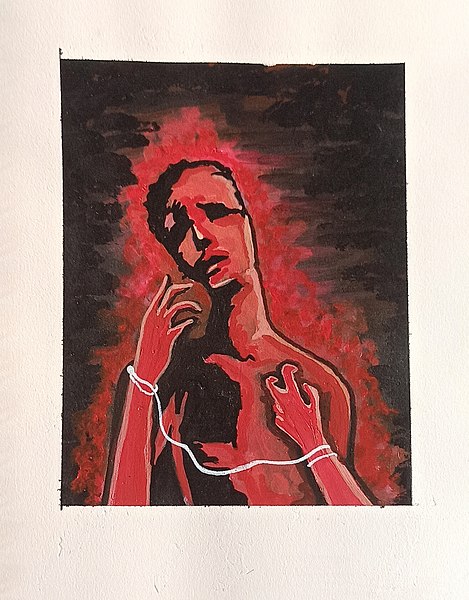
Anxiety. 2021. Bhargov Buragohain. Wikimedia Commons
“As a therapist, one of my primary goals has been to shift my clients’ experience of anxiety from an unconscious trigger resulting in avoidance into a conscious cue for curiosity and exploration…In this way, anxiety becomes woven into a conscious narrative.”
Louis Cozolino (Quoted on Twitter by @bitesizetherapy)
This is a very important quotation in relation to helping the client convert their anxiety into something that can be used beneficially in therapy. Instead of avoiding it, the client is helped to see their anxiety as something that can be productive in terms of understanding and insight into what the anxiety is really telling us.
Professor Jonathan Shedler comments further on Twitter:
“Some therapists think anxiety is a symptom to be managed. Others think it is a question to be answered. Choose wisely.”
So many counsellors and therapists think that their role is to comfort and soothe the client; they produce ‘exercises’ and give suggestions that are meant to soften and alleviate the anxiety.
“Some “therapists” default to soothing & calming—as if the main goal is to induce calm & avoid anxiety. This does not lead to growth & change. Real psychotherapy means facing what’s distressing—which entails anxiety. If there’s no anxiety, there is no psychological work happening.”
Jonathan Shedler
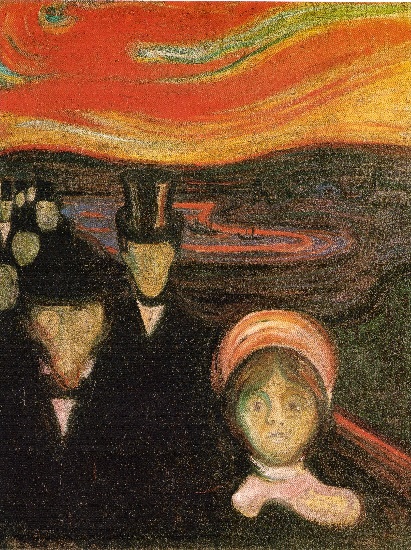
Anxiety – Edvard Munch. 1894. Wikioo
“Trust yourself. You’ve survived a lot, and you’ll survive whatever is coming.”
Robert Tew
Being able to trust oneself based on our past experiences of coping through difficult times is the message of this quotation. It is comforting to know this… that we survived before and we are likely to get through problems that face us now.
Learning to trust our own knowledge and intuition and relying on one’s own instincts takes courage.
“As soon as you trust yourself, you will know how to live.”
Trusting oneself gives us a certain independence, a way of being that allows us to be alone and secure when necessary.
It is sometimes difficult to trust oneself and one’s instincts. At times, we may feel panicked without really tapping into our own intuitive energy. Anxiety, if not addressed and understood, can prevent us from allowing ourselves to do this.
“Intuition has always been my greatest gift. It has provided me with many ideas for my creative work and saved me from a lot of trouble. It’s just that when I feel stressed and desperate, I forget this gift.”
Yong Kang Chan
- “Too much future”
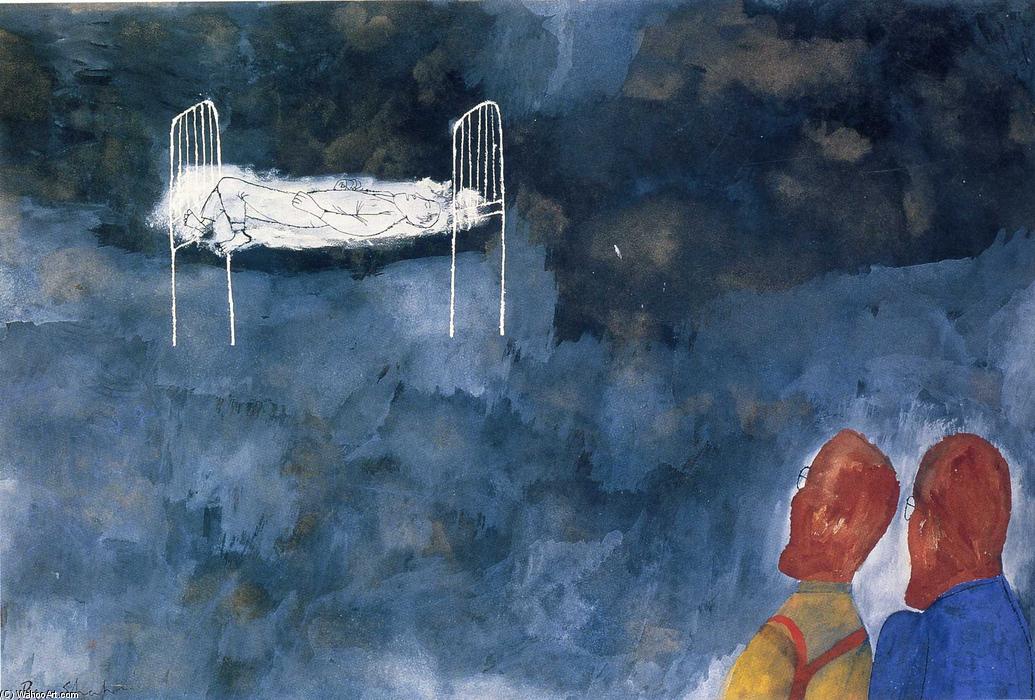 Age of Anxiety – Benjamin Shahn. 1953. Wikioo
“Unease, anxiety, tension, stress, worry — all forms of fear — are caused by too much future, and not enough presence.”
Eckhart Tolle
The play on the word presence is important in this quotation, for Tolle is referring to the present time as well. Both our presence (being fully in the now) and the present are crucial if we are to stave off the existential anxiety about the unknowns of tomorrow.
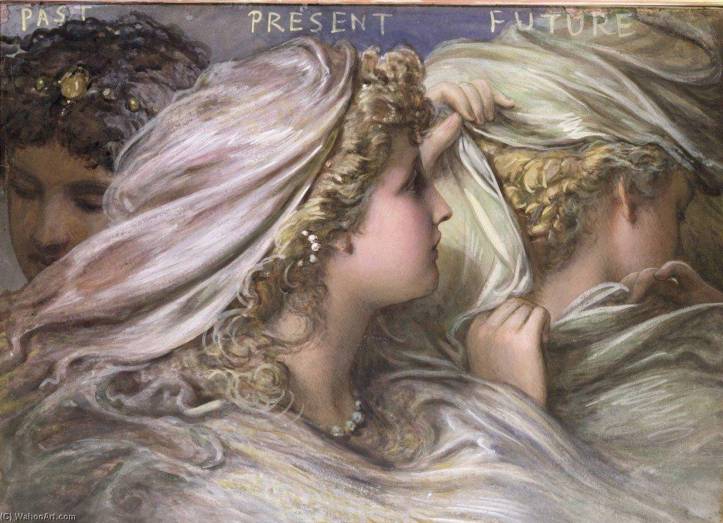
The Fates Past, Present, Future – Egron Sillif Lundgren. 1815-1875. Wikioo
Practising being able to be present in the here and now, really focussing on this moment and not on what might happen in the future, is one good way of working on anxiety. Our fears about the future can only emanate from imagination and supposition. Such anticipatory anxiety is painful; it may also be based on our past responses to difficult events in our lives.
- Wanting control over uncertainty
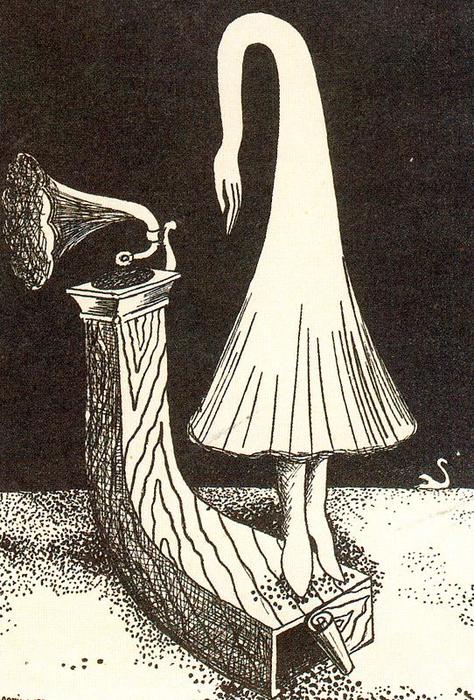
The memory of the future – Oscar Dominguez. Wikioo
“Our anxiety does not come from thinking about the future, but from wanting to control it.”
Kahlil Gibran
Gibran’s wise statement highlights an aspect of what may lie beneath existential angst; facing impermanence and uncertainty can have the effect of making people feel helpless to change anything in their lives. They may become desperate to have some kind of power and mastery over what might transpire in the future. Of course this is an impossibility, for our collective fear of death is not removed by the vain hope of defeating it.
Accepting this reality, hard though it may be, can lead us to experience a more peaceful life…
- Existential angst
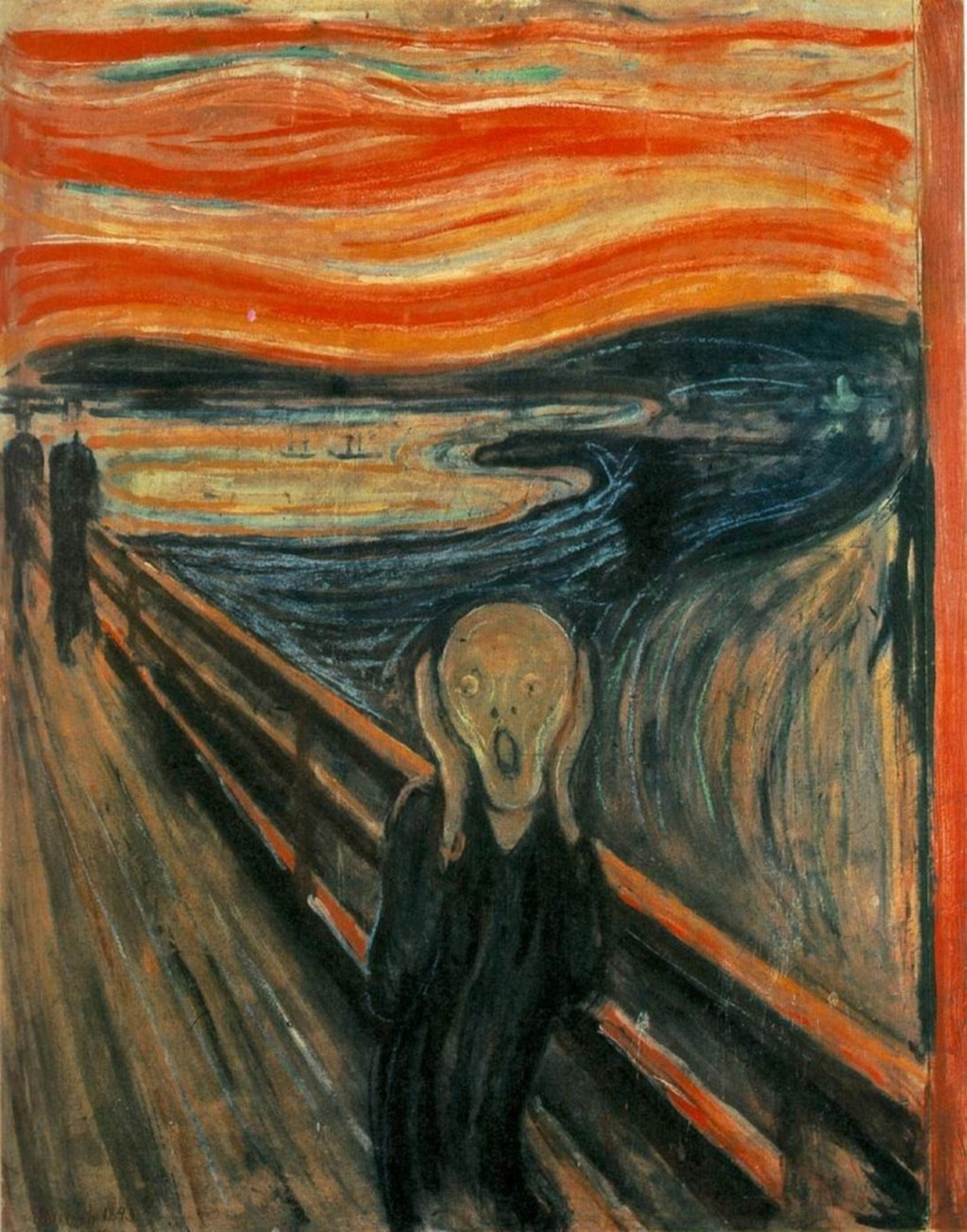
Munch. The Scream. Wikimedia Commons 1893.
“I stood there trembling with anxiety – and I felt a vast infinite scream through nature.”
Extract from Munch’s diary. 1892.
Munch’s own existential angst is powerfully depicted in his painting, which also expresses a universal connection between inner and outer states.
“ (The Scream) presents man cut loose from all the certainties that had comforted him up until that point in the 19th Century: there is no God now, no tradition, no habits or customs – just poor man in a moment of existential crisis, facing a universe he doesn’t understand and can only relate to in a feeling of panic.”
The existential psychotherapist Irvin Yalom speaks often of the need to cope with this anxiety about death, which we all suffer. Yalom thinks we never really get over our death anxiety; however, it is important to attempt to face the reality of our mortality if we are to gain any kind of quality of life.
“I feel strongly, because a man who will himself die one day in the not too distant future and, also, as a psychiatrist who spent decades dealing with death anxiety, that confronting death allows us, not to open some noisome, Pandora’s box, but to re-enter life in a richer, more compassionate manner.”
Irvin D. Yalom
Being able to confront our existential fears and anxieties will make it easier to live for today, in the here-and-now of our lives, and to appreciate the life we do have, even though it will not last forever.
“The ability to be in the present moment is a major component of mental wellness.”
Abraham Maslow
- Trusting the process

George Grie. Panic Attack or Anxiety PTSD. 2007. Wikimedia Commons
“I’ve had a lot of worries in my life, most of which never happened.”
Mark Twain
Mark Twain’s statement is a big one; we often worry about the future, wasting the present moment, not being in the now. This is not always easy, for it involves waiting, taking time, having patience, and hoping that things will turn out right for us.
Whilst time itself does not always heal wounds or make everything right, we can still learn much from the Buddhist views of time, truly discovering the importance of being in the present moment and being thankful for the reality of impermanence: “This too shall pass.”
Trusting the process takes hope and some realistic optimism and understanding that nothing lasts forever, good or bad, difficult times will pass and things will become easier…eventually we will move on in life.
- Ways of looking…
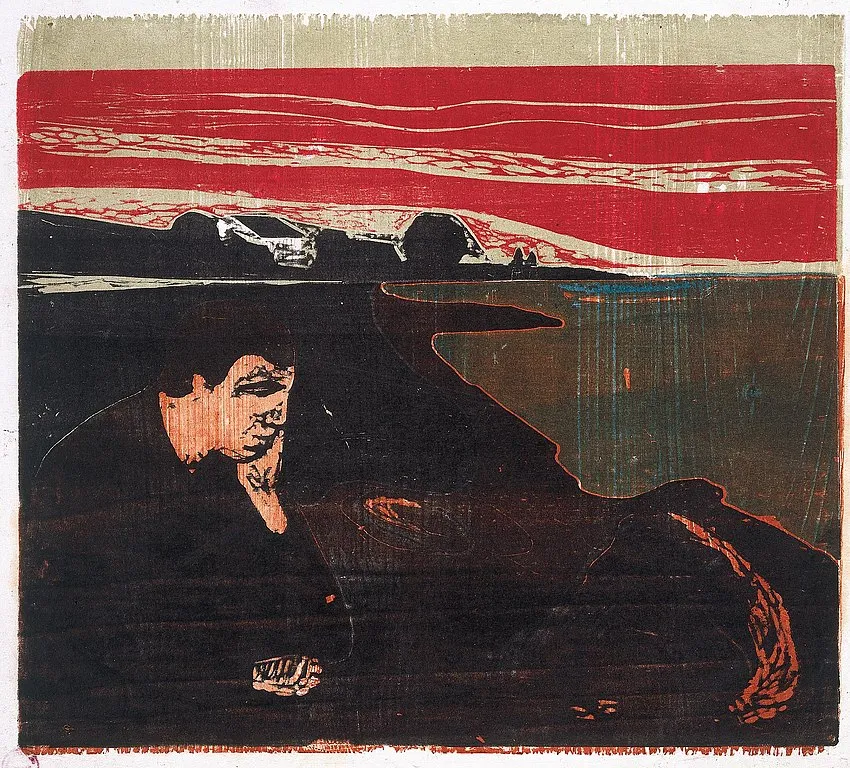 Edvard Munch, Evening. Melancholy I (1896). Wikimedia Commons
“The world only exists in your eyes. You can make it as big or as small as you want.”
F. Scott Fitzgerald
These words are telling us that we do have a choice about how we view the world. If we catastrophise, turning every deal into a big deal and making mountains out of molehills, then our world will seem enormously overwhelming.
However, if we have the attitude that we will try to cope, no matter what life throws at us, then our fears about the world will lessen. This is, or course, no easy task, but it is important to remember that we do have some power to change the way we see the world, even though we may feel powerless. We may find psychotherapy helps with this.
“When we change the way we look at things the things we look at will change”
Wayne W. Dyer
Internal turmoil and unresolved anxiety can blur our viewing lens. If we are too preoccupied with, or encumbered by, past or present concerns, we cannot allow ourselves to ‘be’ in the world and will tend to drift through life without really being impacted by what is around us. Our true vision will be defective; we will not focus and we will remain in a state of anxiety.
Being able to see clearly always involves cleaning that inner viewing lens, in order that we can witness our own reality.
The following quotation sounds paradoxical, but actually is offering us some deep wisdom:
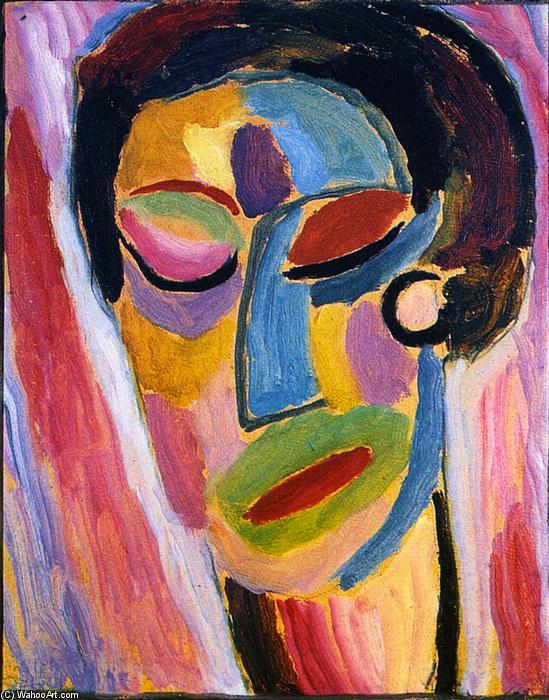
Mystical Head: Closed Eyes – Alexej Georgewitsch Von Jawlensky. 1917. Wikioo.
“Shut your eyes and see.”
James Joyce
How can we see with our eyes closed?
What we can see, if we can risk looking, is our internal landscape. We live in two connected worlds, the inner and the outer. When we shut our eyes, we can ‘see into’ our inner world, discovering our feelings, ‘hearing’ our silent monologues, reflecting on our authentic self.
Allowing ourselves to venture into our unconscious in psychotherapy can enable awareness of what is really going on inside our minds. Avoiding knowledge and understanding of what may be happening in our internal world and denying its existence, is a way of avoiding anxiety that will, inevitably, lead to further pain.
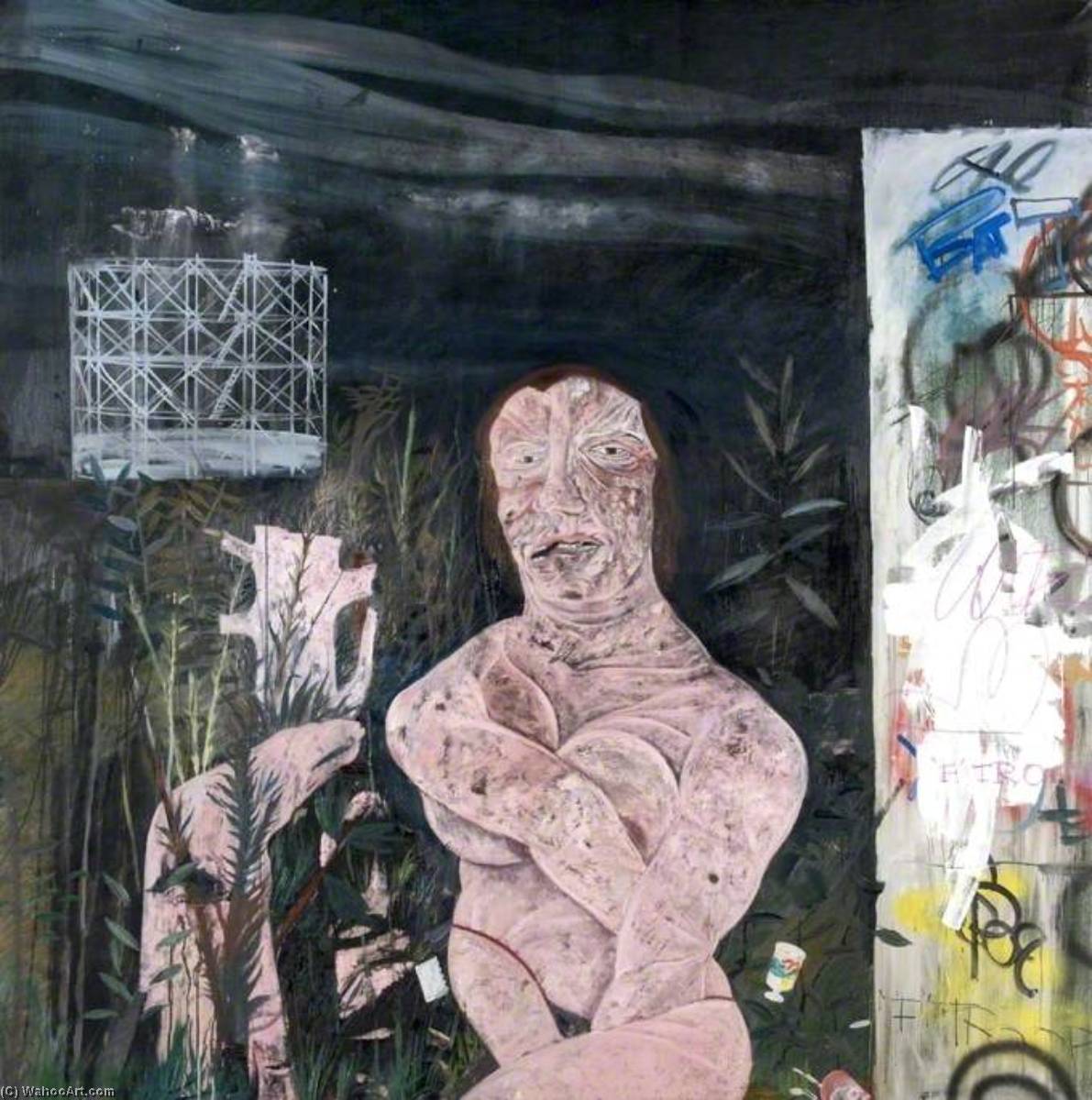 Depression – Jock Mcfadyen. 1990. Wikioo.
“Unexpressed emotions will never die. They are buried alive and will come forth later in uglier ways.”
Sigmund Freud
Such ‘uglier ways’ take the form of anxiety, depression, neurosis or other pathological symptoms.
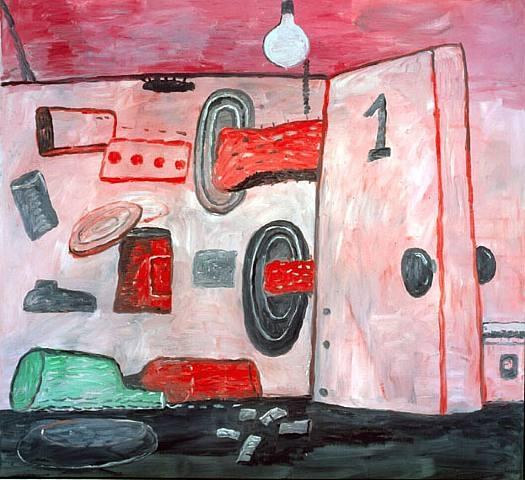
Inside – Outside – Philip Guston. 1977. Wimioo.
“Some split between the inner world and outer world is common to all behaviour, and the need to bridge the gap is the source of creative behaviour.”
Anthony Storr
‘Bridging the gap’ between our outer and inner worlds can be achieved through such ‘creative behaviour’ as, for example, psychotherapy, art therapy, interpretation of dreams, meditation, art, music and writing. Avoiding life and its difficulties and shunning our inner pain will only result in further anxiety.
Facing the difficult and painful feelings and really working at understanding why we have anxiety is the beginning of the process of resolution.
“Anxiety can be treated constructively by accepting it as a challenge and a stimulus to clarify and, as far as possible, resolve the underlying problem.
Rollo May
The Meaning of Anxiety
Once free of this internal pain, we can begin to reply see ourselves and the world again, in all its splendour!
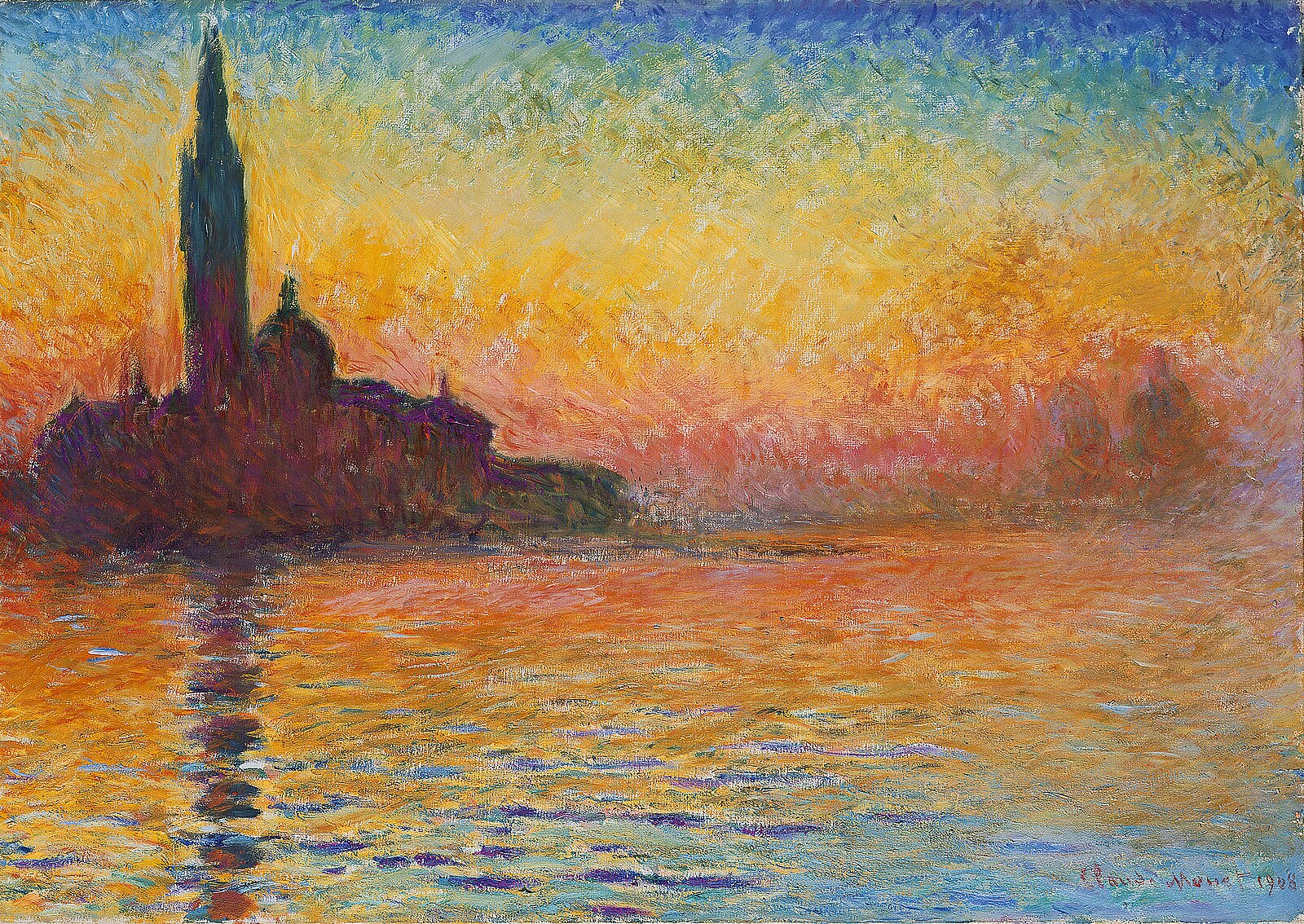 Claude Monet. 1908. Saint-Georges Majeur Au Crépuscule.Wikimedia Commons
“When our eyes are graced with wonder, the world reveals its wonders to us. There are people who see only dullness in the world and that is because their eyes have already been dulled. So much depends on how we look at things. The quality of our looking determines what we come to see.”
John O’Donohue
© Linda Berman
 waysofthinking.co.uk