
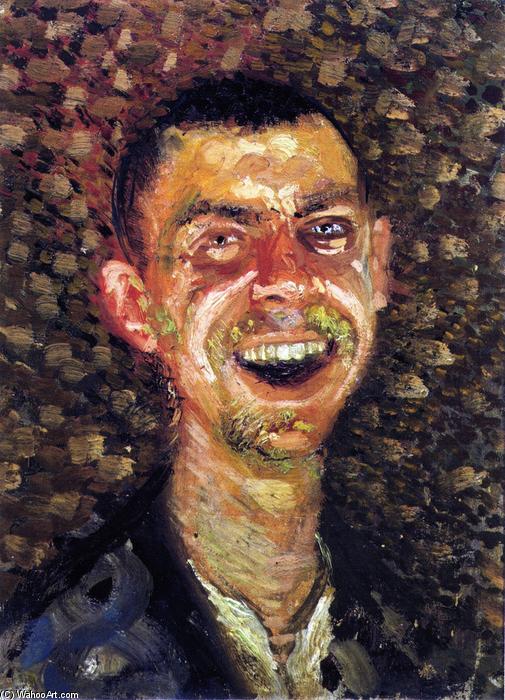
Laughing Self Portrait – Lovis Corinth Franz Heinrich Louis. 1908. Wikioo.
Whilst we all know that having a good laugh makes us feel great, we are also aware that, in reality, it cannot be a ‘cure’ for all the ills of the world. Sharing a hearty laugh with friends, however, inevitably brings us closer and gives us good feelings, relieving stress.
The phrase “laughter is the best medicine” originated in the Bible:
“A cheerful heart is good medicine, but a crushed spirit dries up the bones.”
(Proverbs 17:22)
- Laughter connects us
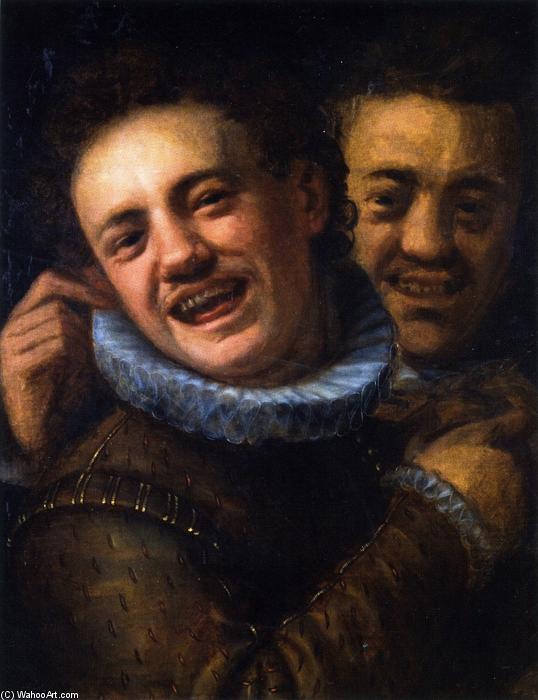
Two Laughing Men. Hans Von Aachen.
“Laughter is the closest distance between two people.”
Victor Borge
Laughter brings us together; sharing a joke or a funny experience means that both people are having a similar view of the world, they see things alike.
This inevitably helps to strengthen relationships, as a couple begins to develop ‘private jokes’ or, in time, ‘family jokes.’ This forges a sense of togetherness and a shared feeling of intimacy.
“Among those whom I like or admire, I can find no common denominator, but among those whom I love, I can: All of them make me laugh.”
W.H. Auden
A research study into the beneficial effects of shared laughter reveals that:

“… the proportion of the conversation spent laughing simultaneously with the romantic partner was uniquely positively associated with global evaluations of relationship quality, closeness, and social support.”
Putting Laughter in Context: Shared Laughter as Behavioral Indicator of Relationship Well-Being
- Different kinds of laughter
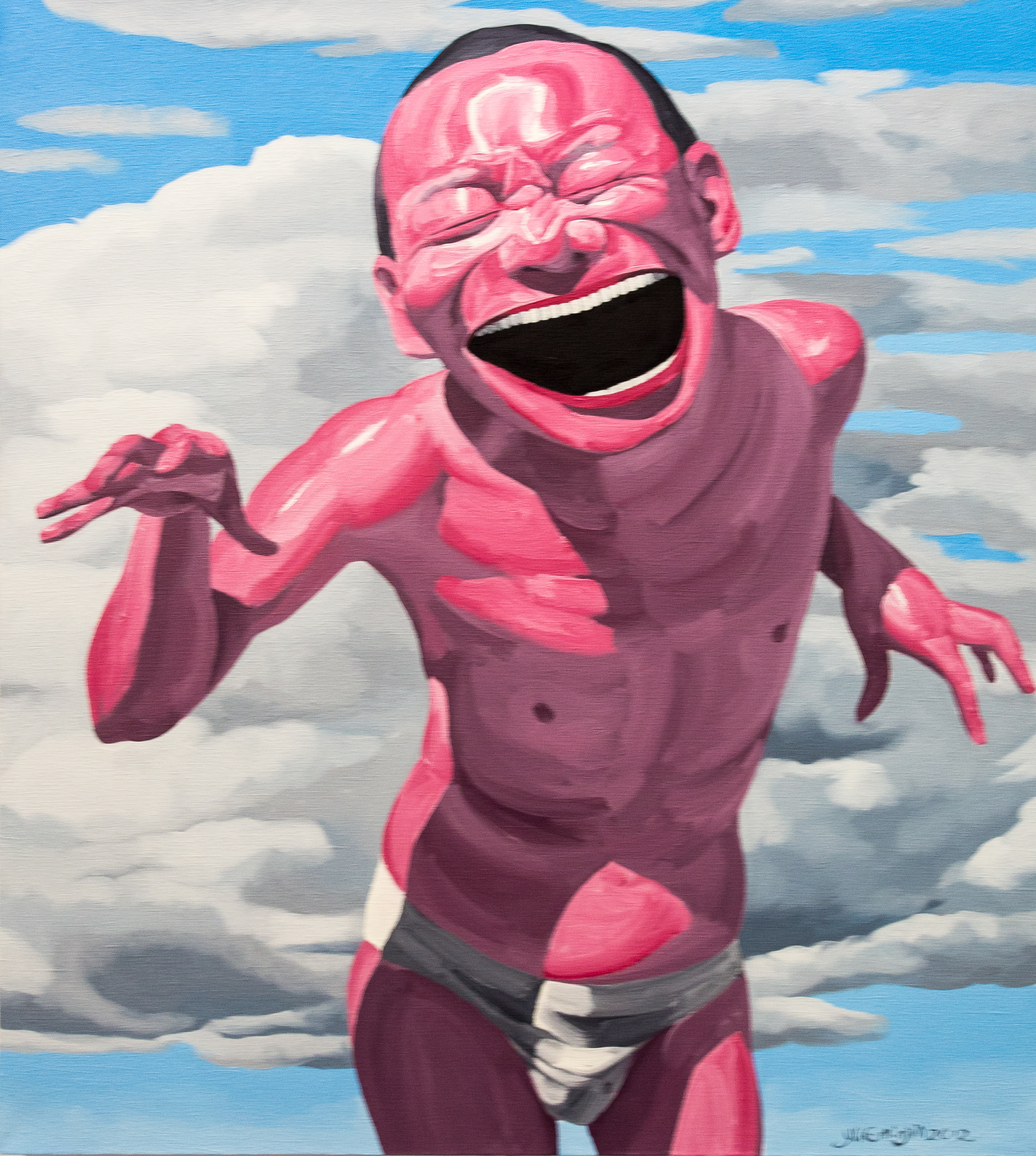
Not all laughter is well intended or good-natured. Some laughter is mean-spirited, ridiculing and debasing of others.
There is a huge difference between laughing with someone and laughing at them. Sneering, teasing or poking fun at someone can all be cruel and heartless; having a laugh at another’s expense can be very hurtful to the person on the receiving end.
Some people laugh when they are nervous or anxious, others as a kind of escape from something morbid or painful. Sometimes, dark humour can be a way of managing very unpleasant experiences. Such a coping mechanism permits an often necessary release of tension in difficult circumstances.
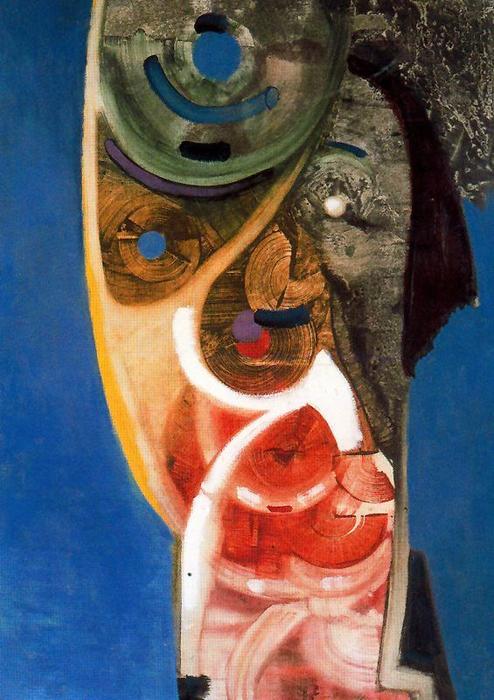
The Clown – Oscar Dominguez. Wikioo
‘Two cannibals are eating a clown. One says to the other: “Does this taste funny to you?”’
Such dark, somewhat degenerate humour can offend some people, but for others it often enables a kind of relief from extreme stress, releasing endorphins, suppressing cortisol, and helping to give us resilience:
“Dark or twisted humor is an acquired taste, as not everyone appreciates the taboo humour others find in disturbing subject matter. But, for people who experience stressful jobs or complicated family dynamics, dark humour often serves as an important protective mechanism.”
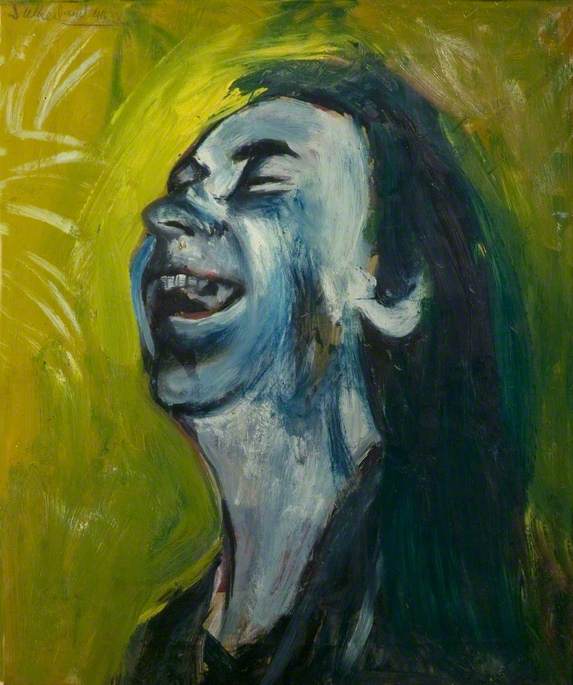
The Laughing Woman (study) – Graham Vivian Sutherland. Wikioo
“Comedy is not the opposite of darkness, but its natural bedfellow. Pain makes laughter necessary; laughter makes pain tolerable.”
Mindy Greenstein
Here are 5 further quotations to celebrate the healing power of laughter:
- Tragedy and comedy : Quote 1
 Tragedy and Comedy. 2012.Tim Green. Wikimedia Commons.
“I don’t think it’s possible to have a sense of tragedy without having a sense of humour.”
Christopher Hitchens
The quotation points to the fact that life is a mixture of both laughter and sadness, and we cannot have the one without the other. This is one of the great paradoxes of life.
“There is a thin line that separates laughter and pain, comedy and tragedy, humour and hurt.”
Erma Bombeck
Because of this paradox, we can find that we move through life encountering both sides; life often presents us with situations that can be tragic-comic. We can never be totally happy and filled with laughter without an awareness, somewhere, that there is sadness and pain. There are no absolutes in life.
“We look before and after,
And pine for what is not:
Our sincerest laughter
With some pain is fraught;
Our sweetest songs are those that tell of saddest thought.”Percy Bysshe Shelley(Extract from The Skylark)
- A daily choice: Quote 2

The Laugh – Umberto Boccioni.1911. Wikioo.
“The most wasted of all days is one without laughter.”
e. e. cummings
We do have a daily choice, to some extent, as to whether we are going to have a smiley or a sad day.
Humour can also lighten our lives, even in dark times. It is contagious, spreading from person to person, as illustrated by this man’s infectious laughter on a train. Nobody knows him and his fellow passengers may at first look miserable and distant, yet most ‘catch’ his giggles…
“There is nothing in the world so irresistibly contagious as laughter and good humour.”
Charles Dickens
Sometimes people cannot control their laughter and they get caught out in embarrassing situations, where ongoing laughter is inappropriate; it is actually very hard to stifle laughter once we become caught up in the joke:
“Everybody laughs the same in every language because laughter is a universal connection.”
Yakov Smirnoff
Even a short few moments of ‘comic relief’ can provide a little welcome respite when life gets tough.
The comedian Tommy Cooper died onstage, with the audience still laughing at his riotous jokes. That is what he would have wanted, to die with people still laughing at his performance.
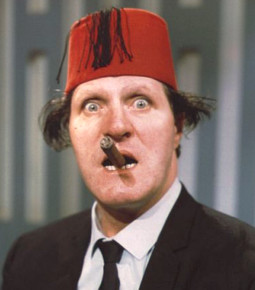
Tommy Cooper. Wikimedia Commons
“So I rang up a local building firm, I said ‘I want a skip outside my house.’ He said ‘I’m not stopping you.”
Tommy Cooper
‘There is something about me that makes people giggle. I honestly don’t know what it is and I don’t want to know, because maybe if I became too self-conscious I’d lose the gift. All I ask is that when I pop off, people say, “Tommy Cooper? He was a right scream that bloke.”
Thomas Frederick Cooper 1921-1984
- Humour in therapy: Quote 4
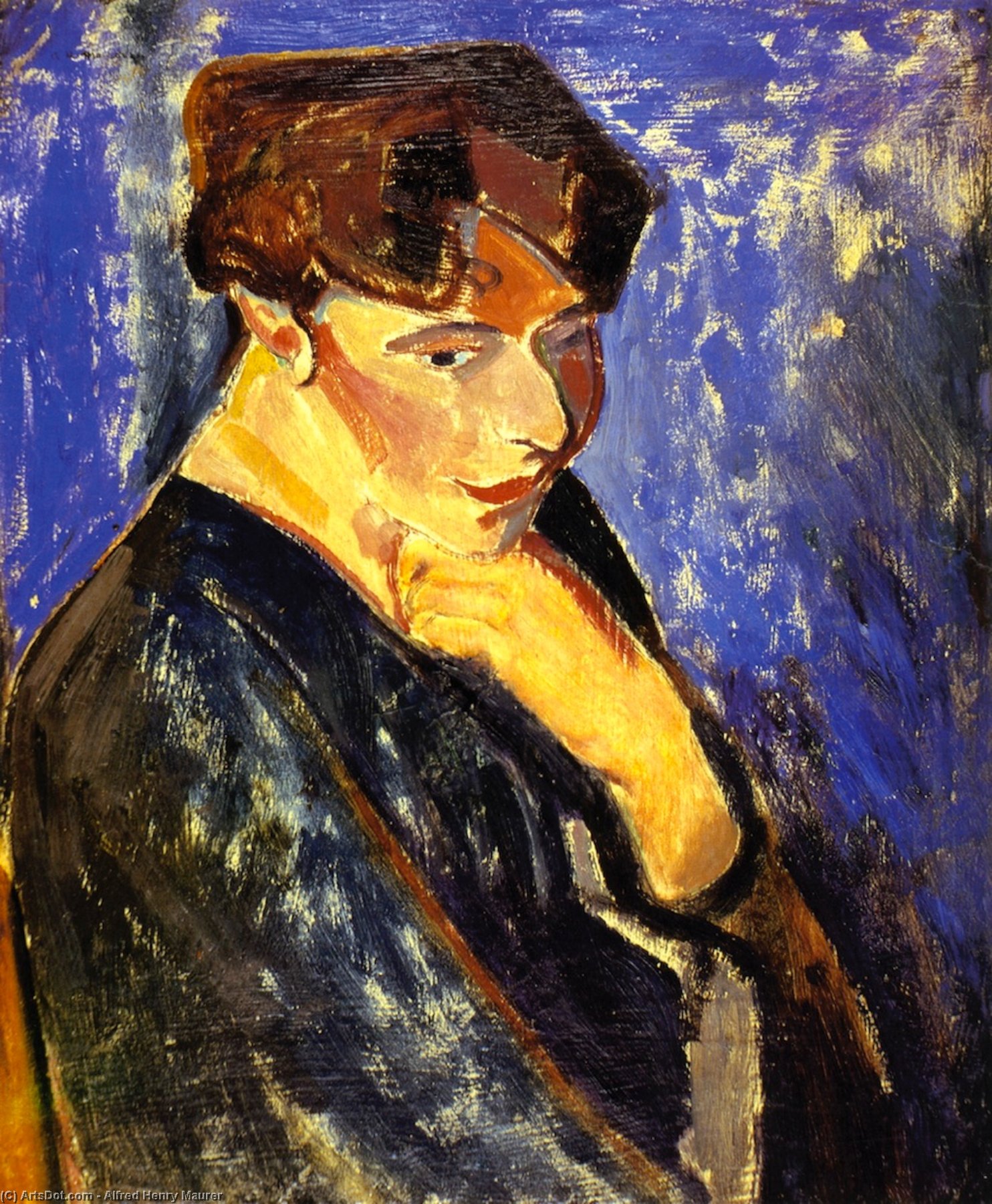
Woman with Blue Background (also known as Portrait of a Woman) – Alfred Henry Maurer. 1907. Wikioo
“Someone’s therapist knows all about you.”
Unknown
‘The ego and super ego walk into a bar
The bartender says: “I’m gonna need to see some ID”’
Does humour have a role in psychotherapy? To my mind, and in my own experience, it certainly does. Therapists need, of course, to use humour with great care, to avoid being over-charismatic, competitive, grabbing the spotlight or wanting to gain attention.
However, used appropriately, humour can be instructive, and it shows authenticity. It can be of benefit to the therapist/client relationship and increase the client’s feeling of safety, building the therapeutic alliance.

“(Humour) is the healthy way of feeling a “distance” between one’s self and the problem, a way of standing off and looking at one’s problem with perspective. One cannot laugh when in an anxiety panic, for then one is swallowed up, one has lost the distinction between himself as subject and the objective world around him.”
Rollo May, Man’s Search for Himself
Being able to laugh our own behaviour, as Rollo May says, can give us a new way of seeing our situation. It is taking a step back to gain a fresh view and not viewing ourselves too seriously.
This is not an easy task, but by accepting our errors and not being too hard on ourself, we will become more accepting and less critical of who we are. As long as we are not demeaning or belittling, gently poking fun at ourselves can be an endearing trait, rather than being defensive or suffering anguish over it.
“A sense of humour, especially a capacity to laugh at one’s own idiosyncrasies, has long been considered a core element of mental health.”
Nancy McWilliams
The erudite writer of the above quotation, states in her book(below) that ‘humour can be extremely defensive.’
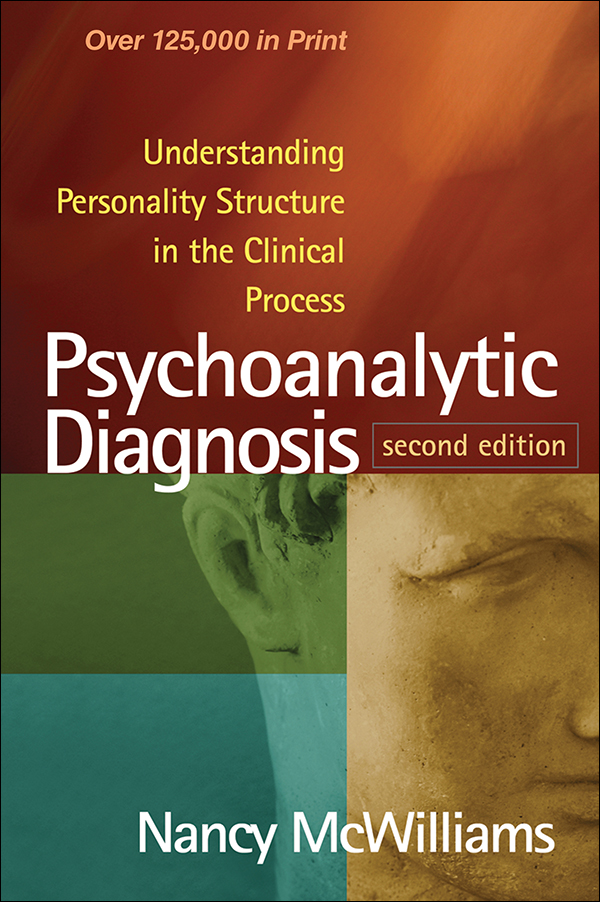
Psychoanalytic Diagnosis, Second Edition: Understanding Personality Structure in the Clinical Process. 2011. Nancy McWilliams. Guilford Press.
Clients who tend to joke their way through the session are definitely using humour as a cover for their real feelings. However, sometimes, especially when we are facing extreme pain, our defences are very necessary, as discussed above.
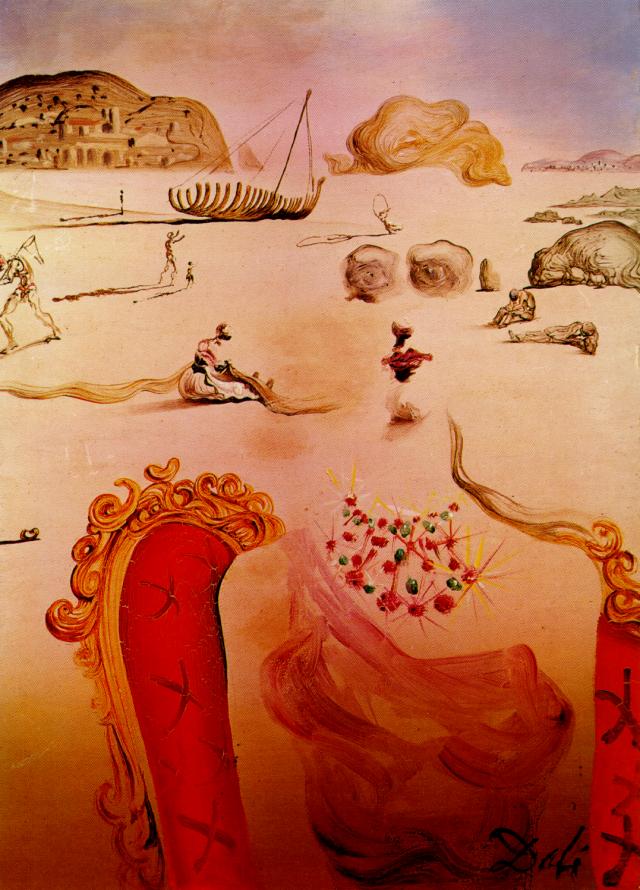
Paranoia (Surrealist Figures), 1944 – Salvador Dali. (Wikioo)
In addition, McWilliams mentions the use of humour with paranoid clients, being careful that they are not made to feel ridiculed:
“…but it does not rule out the therapist’s modelling an attitude of self-mockery, amusement at the world’s irrationalities, and other non-belittling forms of wit. Humour is indispensable in therapy-perhaps especially with paranoid clients-because jokes are a time-honoured way to discharge aggression safely. Nothing relieves both patient and therapist more than glimpses of light behind the gloomy storm cloud that surrounds a paranoid person.”
(McWilliams, p227)
- Nature’s way of laughing: Quote 5
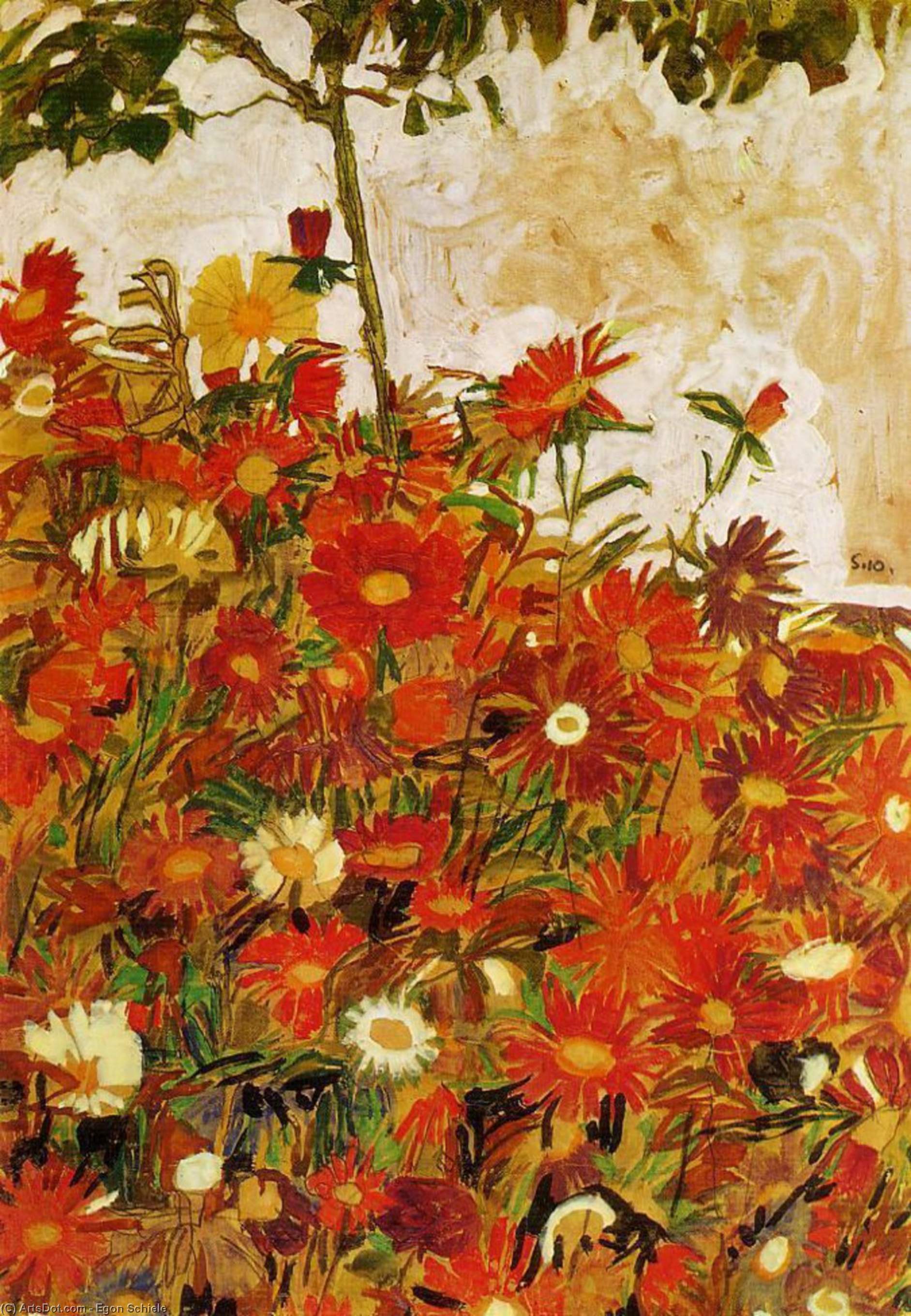
Field of Flowers – Egon Schiele. 1910. Wikioo
“The earth laughs in flowers.”
Ralph Waldo Emerson
Laughter provides us with a natural medicine, a way of healing ourselves; and its burgeoning flowers afford us their warmth and cheer. The ‘laughter’ of the earth spreads as its floral produce multiplies each year, giving us happiness with its bright colours and wonderful scents. How often do we laugh with the flowers, grateful to the earth for the pleasure they bring us!
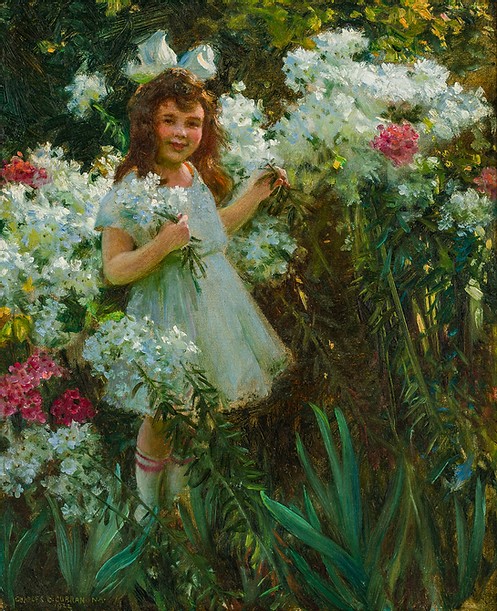
Sunshine and Flowers (Girl with Phlox) by Charles Courtney Curran, 1922
It would certainly bring a smile to my face if you followed my blog!! 😃
©Linda Berman.
 waysofthinking.co.uk