
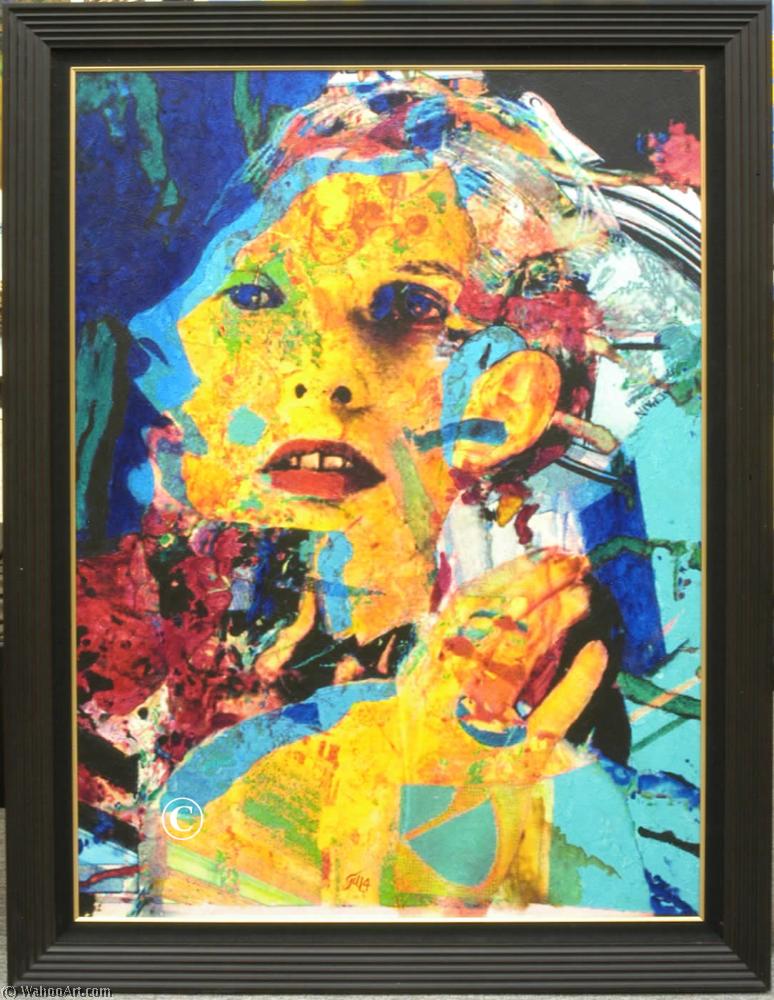
 Passionate repeat – James Gill. b. 1934. Wikioo.
“You know what they say,” Amanda said. “Hatred isn’t the opposite of love, it’s just another variation of it. They both mean you have passionate feelings for someone.”
Robin Brande
- Love and hate : two sides of the same coin.
We all have different aspects to our personalities and we may feel love and hate towards the same person on different days, or even from hour to hour, depending on which parts of themselves they reveal to us. It would be impossible to find someone who is lovable to us in all aspects.
However, both love and hate involve strong passions. Hate is far from indifference; there are intense feelings involved. Indifference means we do not care for the other at all and that they are irrelevant to us and our lives.
“You can only hate someone whom you have the capacity to love, because if you are really indifferent, you cannot even get up the enough energy to hate him.”
Sri Chinmoy
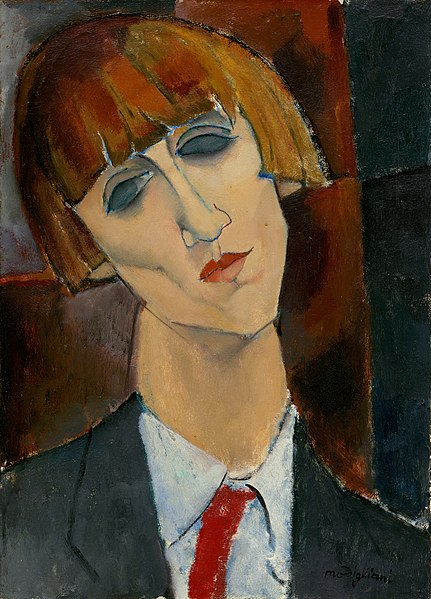
Amedeo Modigliani – Madame Kisling (ca.1917)Wikimedia Commons
“She knew with painful certainty that the opposite of love was not hate, but indifference.”
Susan Wiggs, Summer by the Sea
- Hatred and its projections.
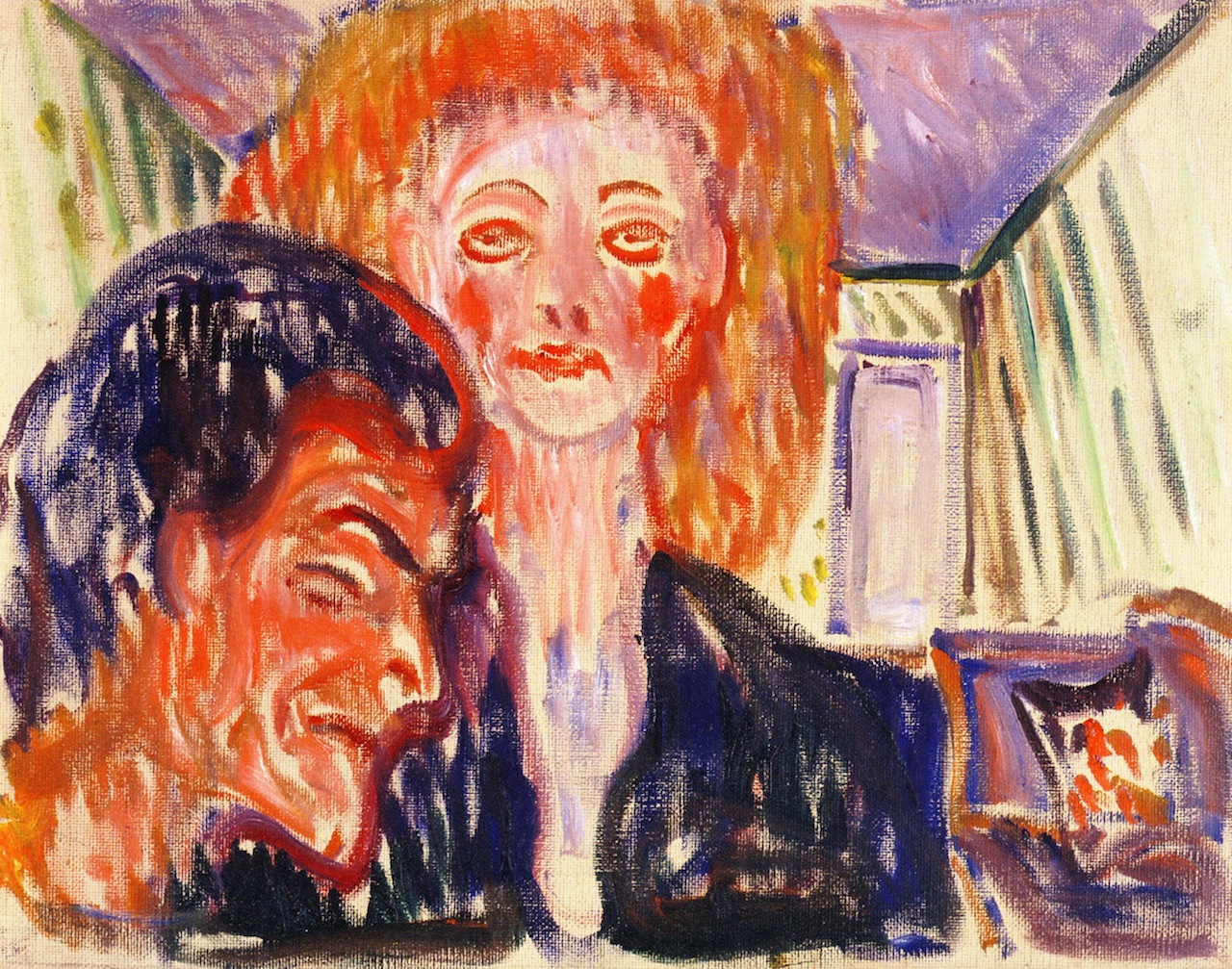 Edvard Munch – Hatred. 1907. Wikimedia Commons
“We hate some persons because we do not know them; and we will not know them because we hate them.”
Charles Caleb Colton
People sometimes take an instant dislike to another person, and this can quickly develop into hate. Why does this happen, when they hardly know them?
“How can two people hate so much without knowing each other?”
Alan Moore
When we hate another person, we may be revealing much about ourselves. What is important to explore are our prejudices and biases; often we may hate a quality that we perceive in another that we do not admit to in ourselves.

“Everything that irritates us about others can lead us to an understanding of ourselves.”
Jung.
Jung’s wise words encourage us to gain more self-knowledge, so that we might challenge aspects of ourselves, rather than judge others superficially or for what we do not like or deny in our own personality.
“Whenever you are about to find fault with someone, ask yourself the following question: What fault of mine most nearly resembles the one I am about to criticize?”
Marcus Aurelius
This is about projection, which is a mechanism of defence; it prevents us from having to face parts of ourselves we do not like. By unconsciously ‘projecting’, that is, attributing, an emotion to another person, we can disown this feeling, and even become irritated, critical or angry towards the other person for displaying it.
- Hating ourselves…
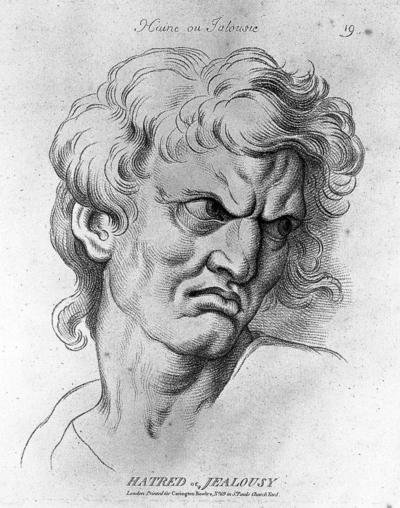
Charles Le Brun, Hatred or Jealousy.1785. Wikimedia Commons
“I was still searching for someone to blame for my suffering. I really wanted someone to transfer my hate to, so that I could stop hating myself.”
Glenn Beck
When we hear that others might think badly of us in the present, this can set in motion the old, worn out criticisms inside of us. These become our inner voice, a kind of hate-message to ourselves.
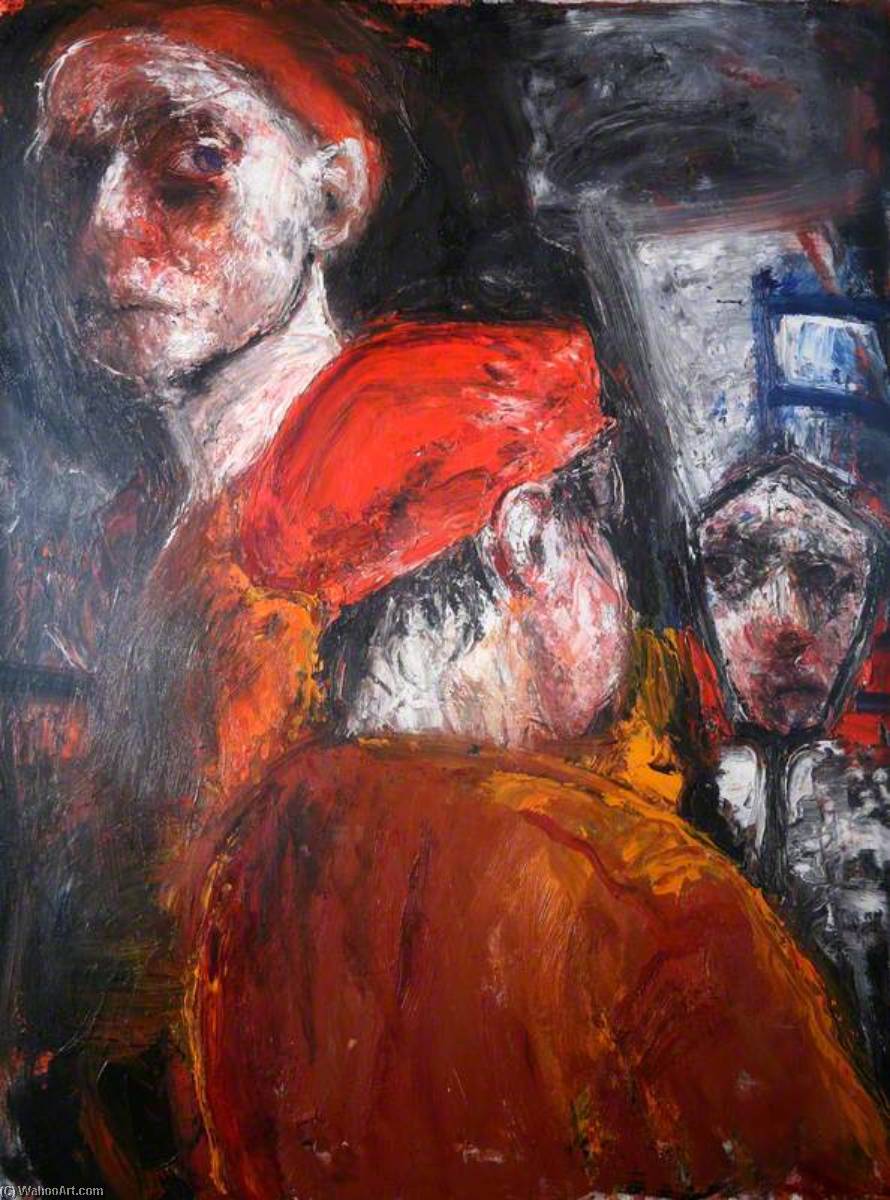 The Mirror – Shani Rhys James. 1994. Wikioo
“All hatred of others is a reflection of self-hatred. All love of others is a reflection of self-love.”
Alan Cohen
Self-criticism can give us a hard time, affecting us from within. The negative voices inside us, some originating from long ago, can now constantly replay in our heads, and we may not know how to handle these. Perhaps we have learnt, often from past parental criticism or punishment, that such aspects of ourselves are bad, and must be severely curtailed.
Very often, the darker side, or as Jung termed it, the shadow side of our personalities is kept under wraps, even from ourselves, buried in the depths of our unconscious.
At some level, these repressed dark aspects of ourselves may feel shameful to us, only revealing themselves symbolically in dreams and nightmares, or perhaps leaking out when we are feeling tired, stressed, or angry.
Because of this shame, we may unconsciously project our uncomfortable feelings onto others around us, scapegoating and demonising them, instead of being able to face our own shadow.
This takes the spotlight off ourselves and prevents us having to face our own real feelings. We will, however, be only partial people.
“The shadow is a moral problem that challenges the whole ego-personality, for no one can become conscious of the shadow without considerable moral effort. To become conscious of it involves recognizing the dark aspects of the personality as present and real. This act is the essential condition for any kind of self-knowledge.”
Carl Jung
Everyone has a shadow side, regardless of how peaceful and happy they might appear. We need to come to terms with this part of ourselves, to acquaint ourselves with and ‘befriend’ what we might regard as the ‘monsters’ inside, without self-judgement. What do I mean by this statement?
Unless we are aware and in control of denied and unrecognised parts of ourselves, they will emerge and be acted out in some disguised and perhaps destructive way, hurting others, rather than being recognised and worked through.
It may give some kind of temporary relief to speak badly of others, in order to make ourselves feel better, but this will not last, because we are not dealing with the roots of our problem. These roots lie within the deeper reaches of our unconscious selves.
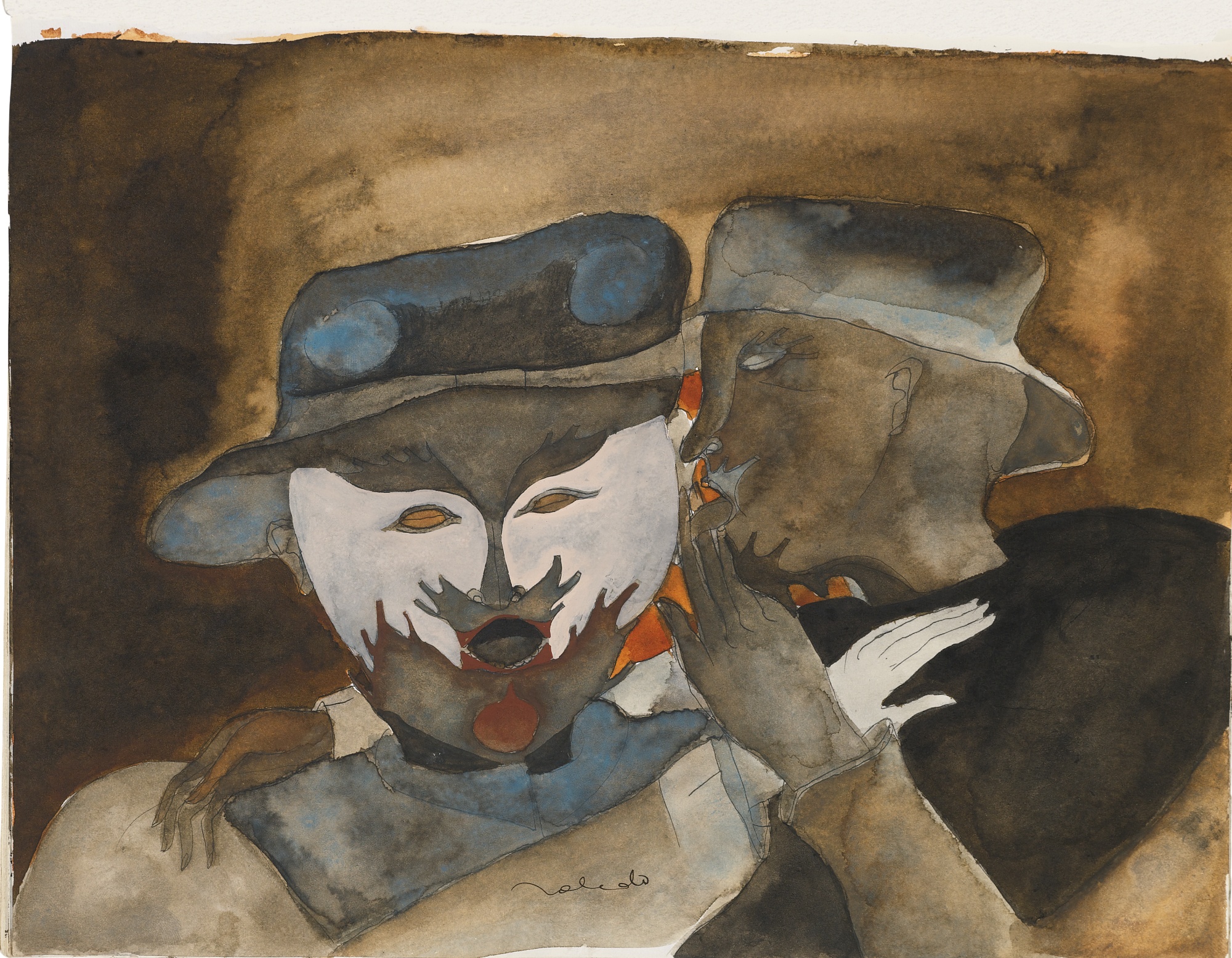 Francisco Toledo – New York Sketchbook [c.1970s] Gandalf’s Gallery. Flickr.
“When we speak evil of others, we generally condemn ourselves.”
Publius Syrus
We do not need to eliminate the less socially acceptable parts of ourselves, but we do need to become aware of them and integrate this side of ourselves into our whole personality.
The parts of ourselves that are seen as the shadow might not only be to do with aspects such as hate, aggression, immoral or irrational thoughts, or cruelty; they may also be about our strength and power.
Integrating such qualities into our personality is essential if we can gain control of all aspects of ourselves and become more rounded people. Depending on how distressed we feel, we may need some therapy to help us.
- Hating the person we love…
When we fall in love, what we recognise in the other person are aspects of ourselves; we make our partner choice on both a conscious and unconscious level.
“An optimist is a person who has a depressed friend.”
(Spanish Proverb/origin unknown.)
Quite often, emotions like rage, anger, grief, hatred, sadness or depression will be projected onto, and into, the other person, who perhaps is more able to manage such feelings. However, because these behaviours may be just too difficult to manage, there may be times when we ‘punish’ our projections in the other.
These quotations beautifully encapsulate the mechanics of this process:
“What I cannot accept in myself, what I cannot handle in the complexity of the world, what I fear in you, often leads me to repress you if I can.”
James Hollis
“We must examine what we envy or dislike in others and acknowledge those very things in ourselves. This helps to prevent our blaming or envying others for what we have not done ourselves.”
James Hollis
“Anything that you resent and strongly react to in another is also in you.”
Eckhart Tolle
- Love
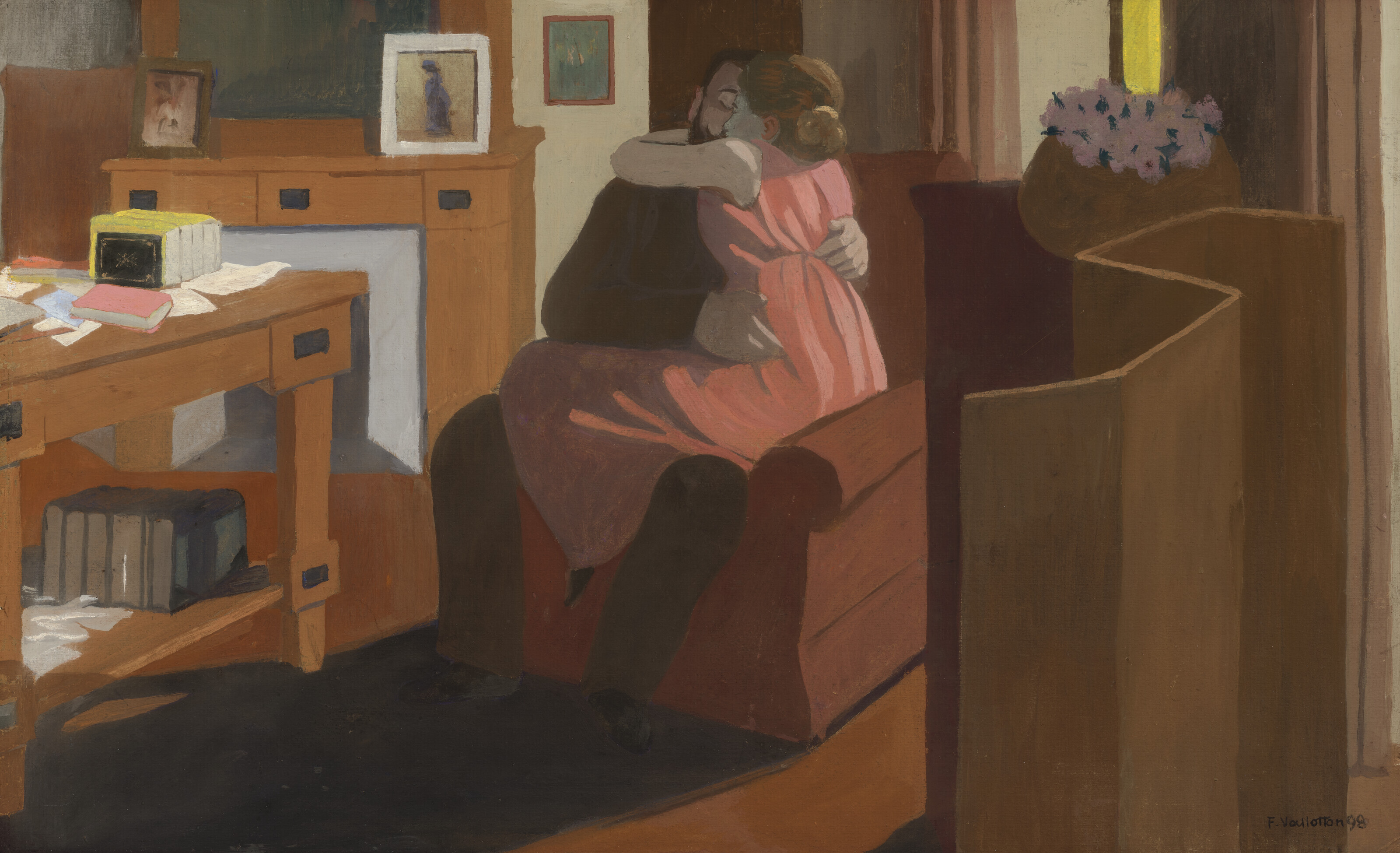 Félix Valllotton – Five Hours [1898] Gandalf’s Gallery, Flickr.
“Love is an adventure and a conquest. It survives and develops, like the universe itself, only by perpetual discovery.”
Pierre Teilhard de Chardin
Love makes the world go round; it sustains and nurtures us. It is the focus of beautiful songs, books, artwork, poetry and many, many fine quotations. As the quotation above implies, love changes and develops as we grow and change, and as the world around us alters over the years. It is, indeed, a journey of ‘perpetual discovery.’
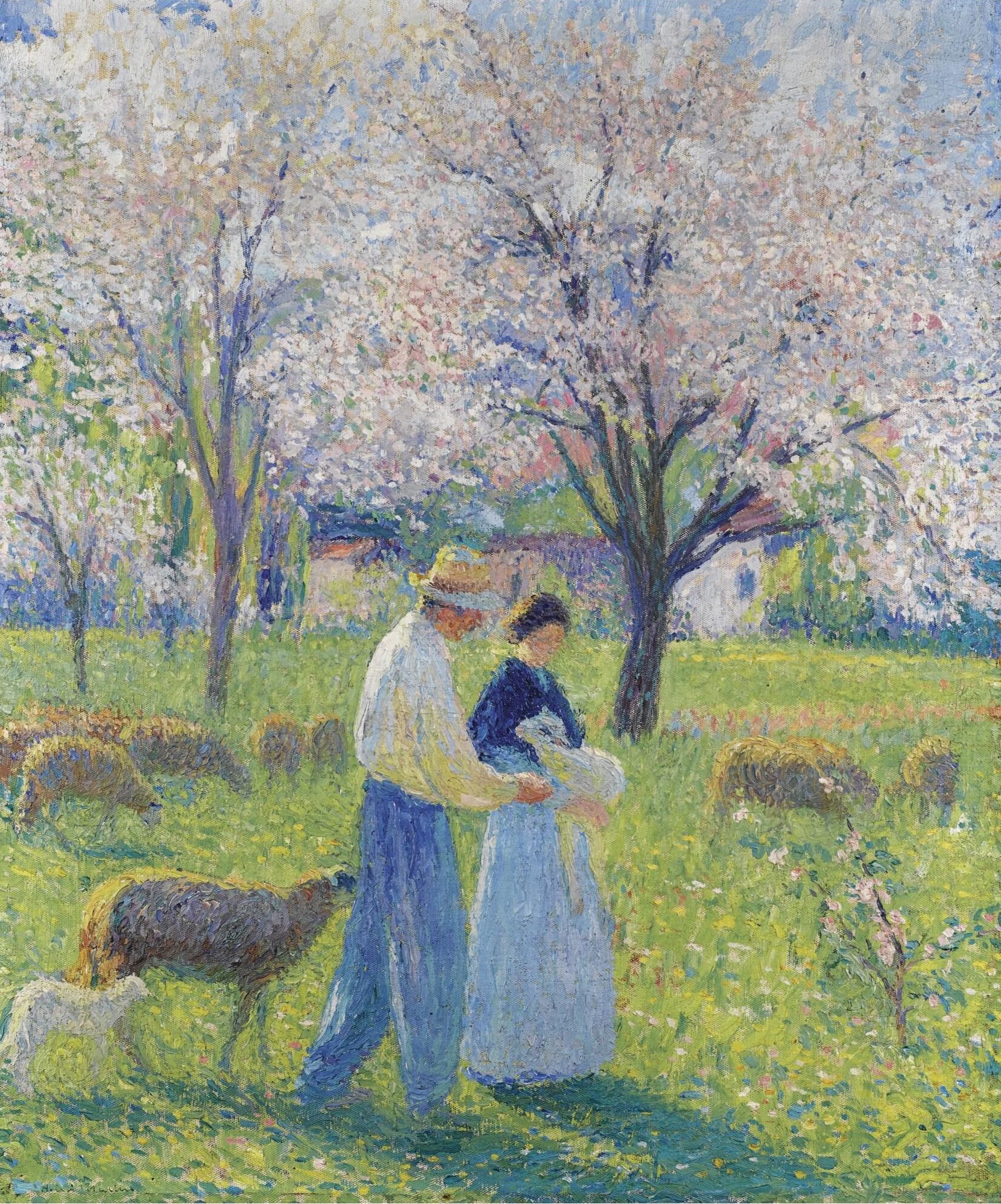 Spring Lovers. Henri Martin. b. 1860. Gandalf’s Gallery
“To love is to recognise yourself in another.”
Echart Tolle
As mentioned above, when we find ‘the one,’ the powerful love feelings that are triggered are partly aspects of ourself which we ‘recognise’ in others, either consciously or at an unconscious level. We see ourselves in the other and, in doing so, we identify someone who might be able to work with us on share unmet needs.

“A soul mate is not found. A soul mate is recognized.”
Vironika Tugaleva
Being in a loving relationship will, inevitably, teach us much about life, the other, and importantly, about ourselves.
If we can learn to accept another, despite what we might experience as their ‘faults,’ then, slowly, we may learn to take back our projections, reclaiming our own difficult feelings and coming to terms with the aspects of ourselves that we have hitherto found hard to process or express.
In psychodynamic couple therapy, this is very often part of the main focus of the work. It will make a couple feel more whole, more able to be two separate people within a constructive, loving relationship, rather than being trapped in a state of merged and troubled enmeshment.
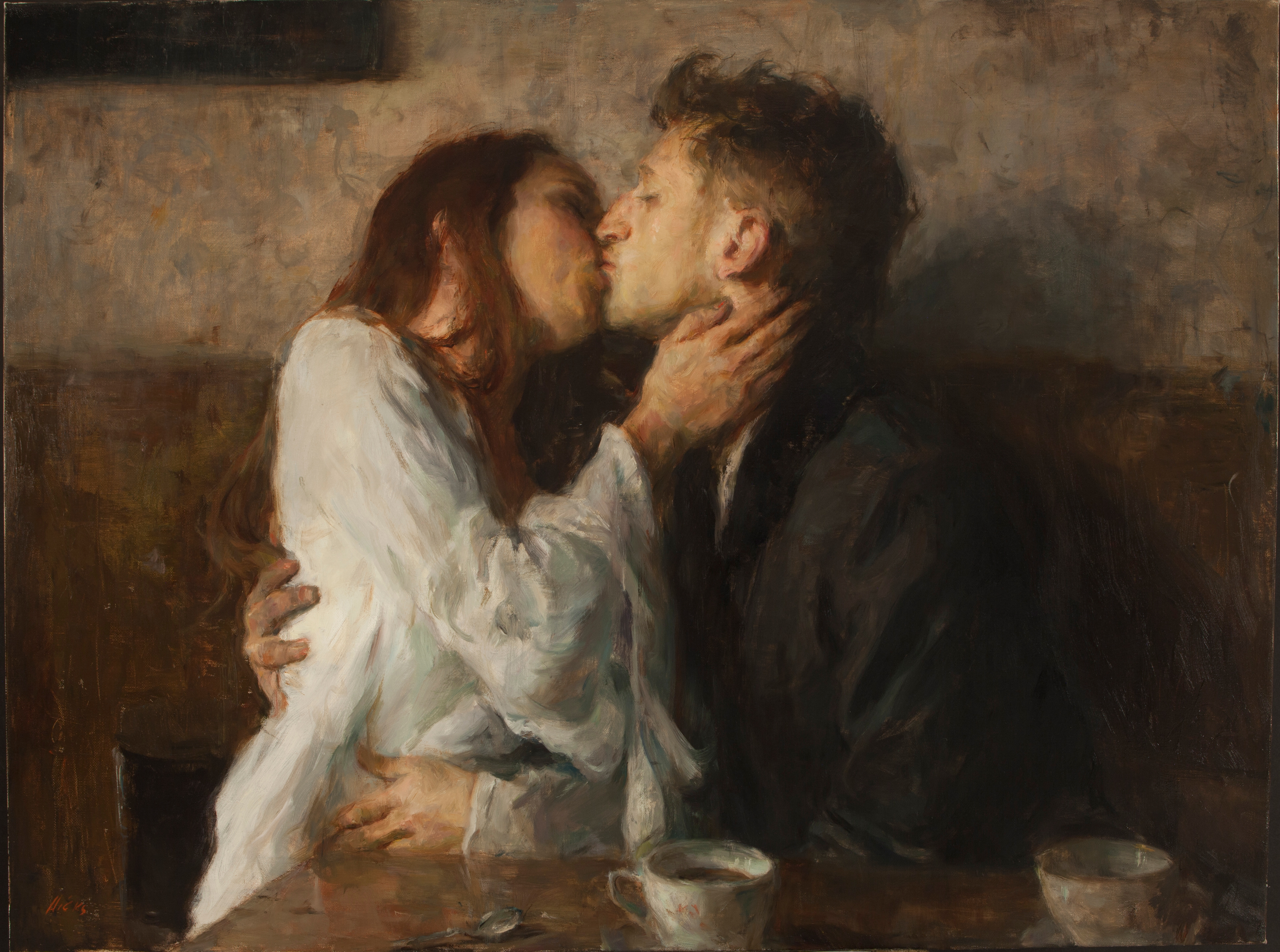 Ron Hicks – Kisses and Coffee [2014]Gandalf’s Gallery,Flickr
“To be fully seen by somebody, then, and be loved anyhow – this is a human offering that can border on miraculous.”
Elizabeth Gilbert
© Linda Berman
 waysofthinking.co.uk