
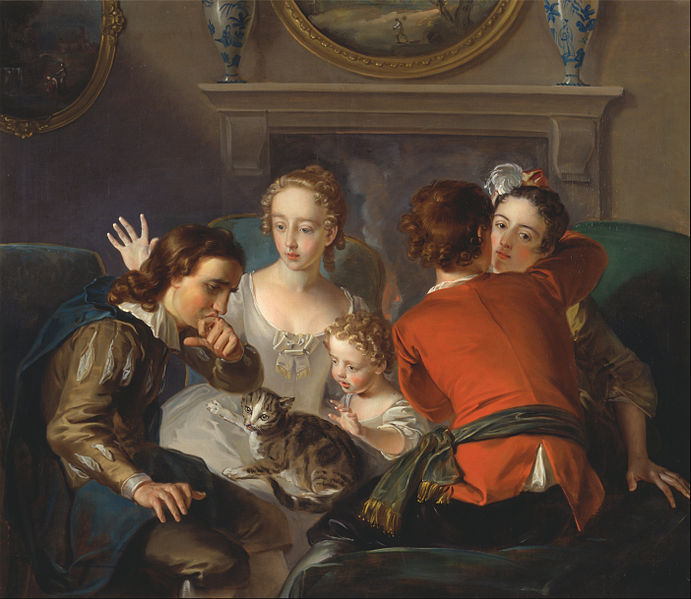
Philippe Mercier – The Sense of Touch. Between 1744 and 1747. Wikimedia Commons
“Touch seems to be as essential as sunlight.”
Diane Ackerman
Touch can mean many things and have several forms; some are wholesome and loving, others less so. Certain kinds of touch can be outright invasions of our privacy and autonomy.
Forcing any kind of touch on a child is highly inappropriate. Parents or caregivers should ensure, as far as possible, that their child is given choice and the right to say ‘no’ when it comes to adult kisses, tickling, or hugs.
Children may be unaware that some touching is not a ‘game,’ but is for the adult’s benefit. Protecting a child is crucial when it comes to touch from others that appears inappropriate to the parent or that is unwanted by the child. Similarly, ordering a child to kiss, hug a friend or relative may not be what the child wants to do. Some children like to ‘high five’ instead.

- Touch that invades and hurts : developing boundaries
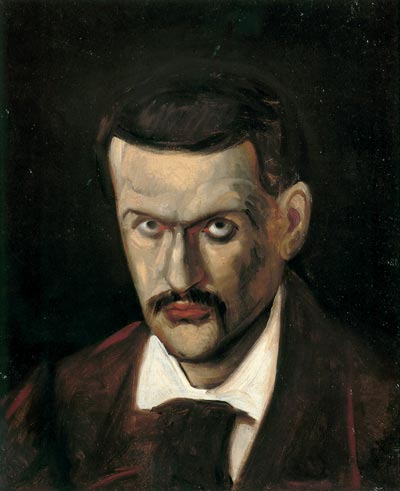
Self-Portrait by Paul Cézanne c.1862-4. Wikiart
‘Once a boy, who was sliding by down the bannister, gave little Paul a vicious kick in the rear. “The kick was so strong and unexpected that ever since I have been obsessed by fear that something of the kind might happen again; hence my uncanny horror of even the slightest physical contact.”‘
Cézanne.
If our past experience of touch by another was violent, sexual or intrusive, then, like Cézanne, we may grow up hating being touched in any way.
We all need to learn how to make boundaries to protect ourselves, and those who have had bad experiences in this area may draw boundaries that are extremely firm, as poor Cézanne did.
Boundaries signify that ‘You may go this far and no further!’ We all have the right to them and they are, as adults, our own responsibility to set as we choose. They are certainly a way of saying ‘no’ to people or requests that we do not want.
We can use words, body language, signs or actions to make it known that we will not have our personal boundaries violated.
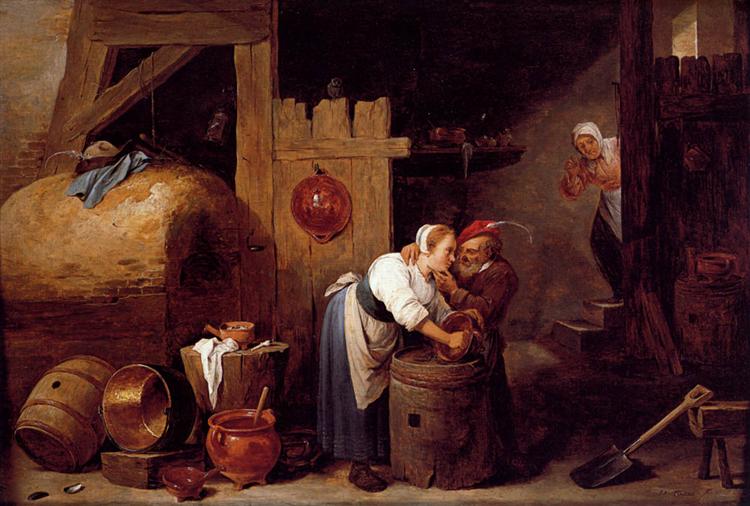 Interior scene with a young woman scrubbing pots while an old man makes advances.
David Teniers the Younger. c.1645. Wikimedia Commons.
Sadly, children are mostly helpless and unable to draw boundaries in such abusive situations. Some adults, too, especially those who are trapped and fearful for their safety or survival, may find it hard to prevent themselves being badly treated.
Tragically, it was ever thus, although today there is more awareness of the existence of abuse and some legal protection against it. This certainly does not mean, however, that abuse does not continue.
As they grow into adulthood, many people are left psychologically damaged by inappropriate or invasive touch. Help now exists for those who have had abusive experiences as children or captive adults.
All inappropriate touching or advances are disturbing and distressing; abusive experiences are truly terrible and survivors may need a lot of acceptance, belief, and support. Therapy can be very necessary to help them when the time is right. Ultimately, there will be help in therapy to learn how to establish personal boundaries, so that the person will feel safer and less vulnerable.
“Love yourself enough to set boundaries. Your time and energy are precious. You get to choose how you use your time. You teach people how to treat you by deciding what you will and won’t accept.”
Anna Taylor
Saying ‘no’ is about creating healthy boundaries. These are permeable; they also need to be elastic, to enable us to be flexible within them.
Learning what we want and do not want in relation to being hugged, kissed or touched and communicating this to others are crucial parts of setting boundaries for ourselves.
It is therefore important to be sufficiently aware of one’s own wants and needs and to be able to express them.
Our personal boundaries represent the rules that each of us makes about how far others can go in terms of relating to us. Boundaries protect us from hurtful and intrusive touch from other people, who themselves may have weak and insecure boundaries.
They give us a way of delineating our own personal and physical space and ensuring our privacy.
There are people who may protest vociferously if we establish firm boundaries for ourselves and refuse to be touched in ways we do not like.
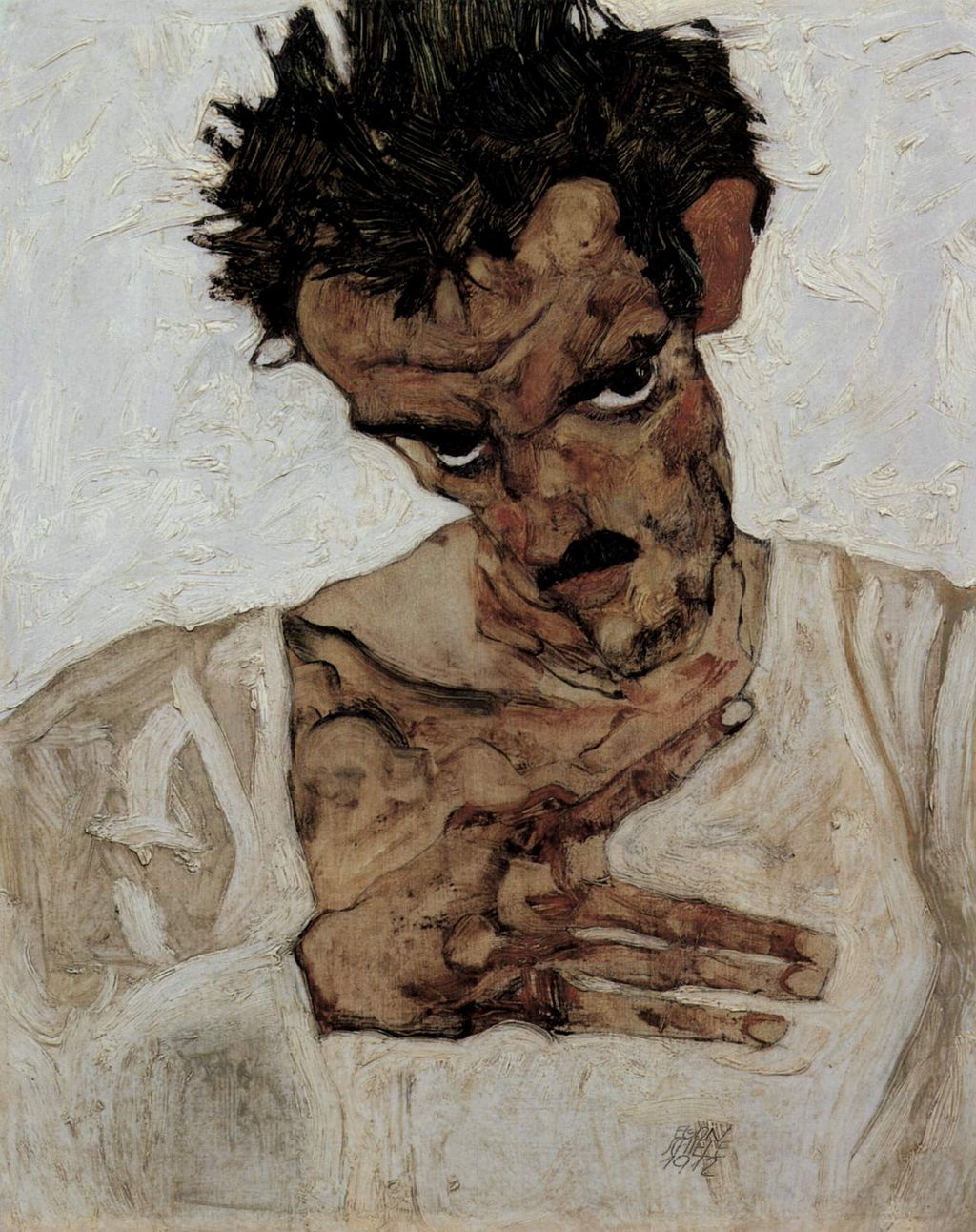 Self-portrait with lowered head, 1912. Egon Schiele. Wikimeida Commons.
“Those who get angry when you set a boundary are the ones you need to set boundaries for.”
J.S. Wolfe, The Pathology of Innocence
As the quotation above accurately states, they are the ones for whom we need to set the clearest and strongest boundaries. It is important to send out the message that our boundaries need to be respected by everyone.
- Touch that nurtures and heals…
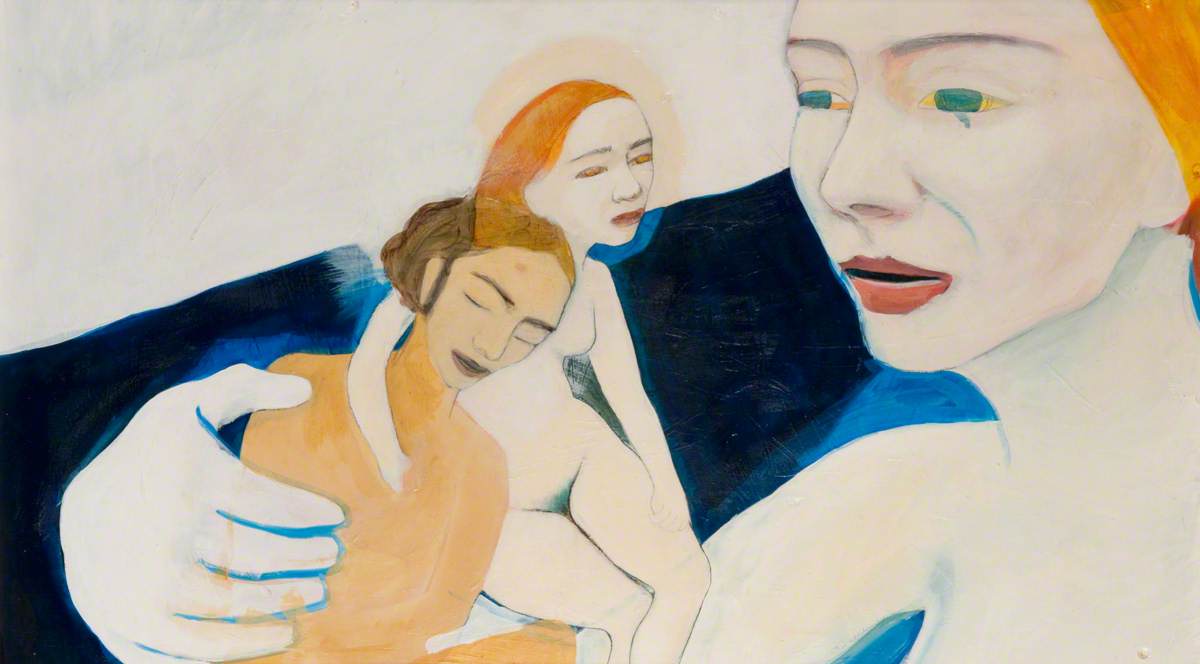 Healing (Protection) – Clare Galloway. 2000. Wikioo.
“Too often we underestimate the power of a touch, a smile, a kind word, a listening ear, an honest compliment, or the smallest act of caring, all of which have the potential to turn a life around.”
Leo Buscaglia
From our earliest of days, we need to be lovingly touched, stroked, cuddled and cared for. Without this, we will feel damaged and abandoned and our mental and physical growth can be affected.
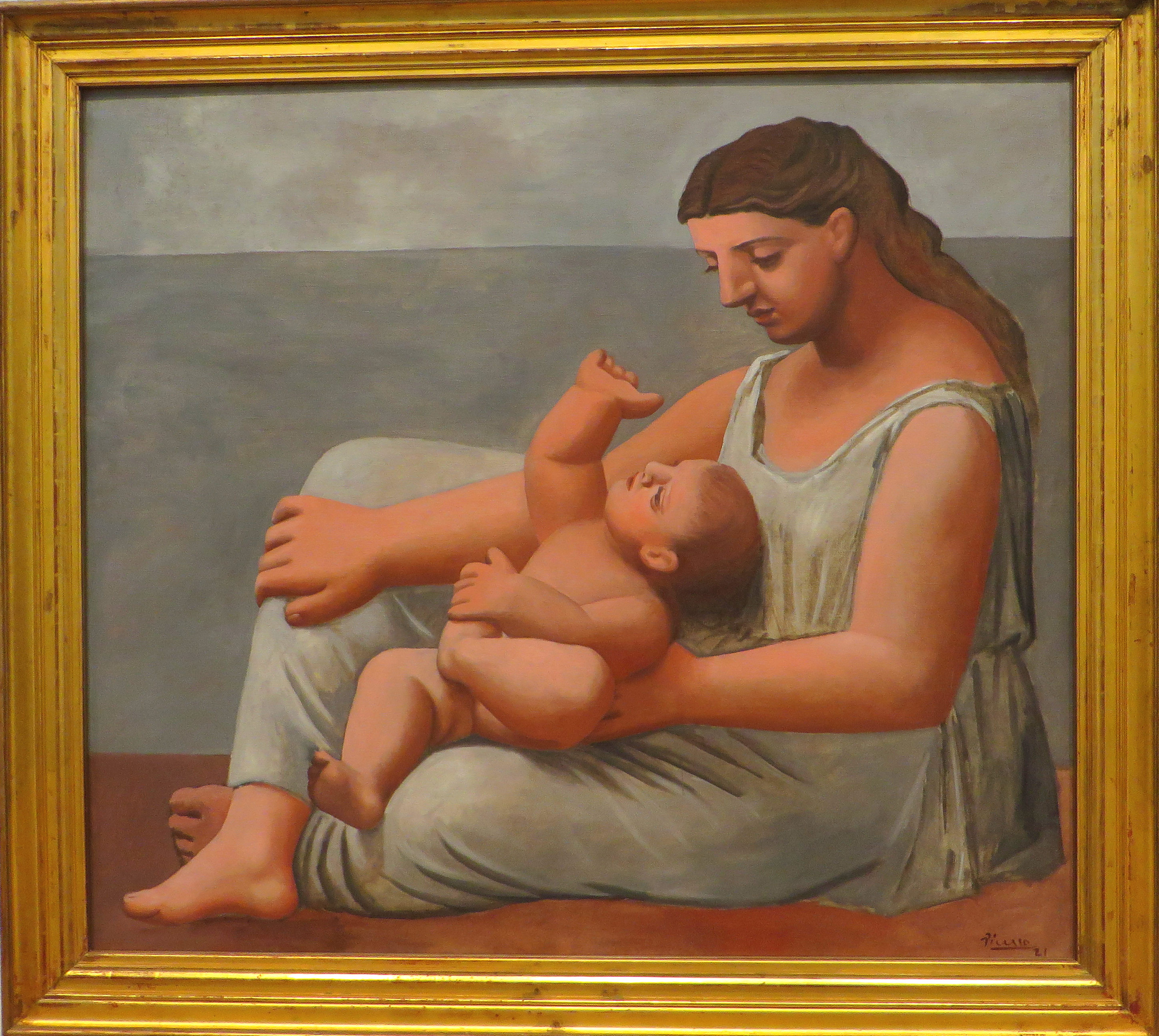 Mother and Child, 1921, Pablo Picasso. Ken Lund. Flickr.
“Touch is essential for human survival; babies who are deprived of touch can fail to thrive, lose weight and even die. Babies and young children who do not get touched also have lower levels of growth hormone, so a lack of touch can actually stunt a child’s growth.”
Infants require gentle, reliable and caring touch and this need for human contact continues into adulthood. Loving touch is a powerful experience at any stage in our lives; this need does not diminish as we age.
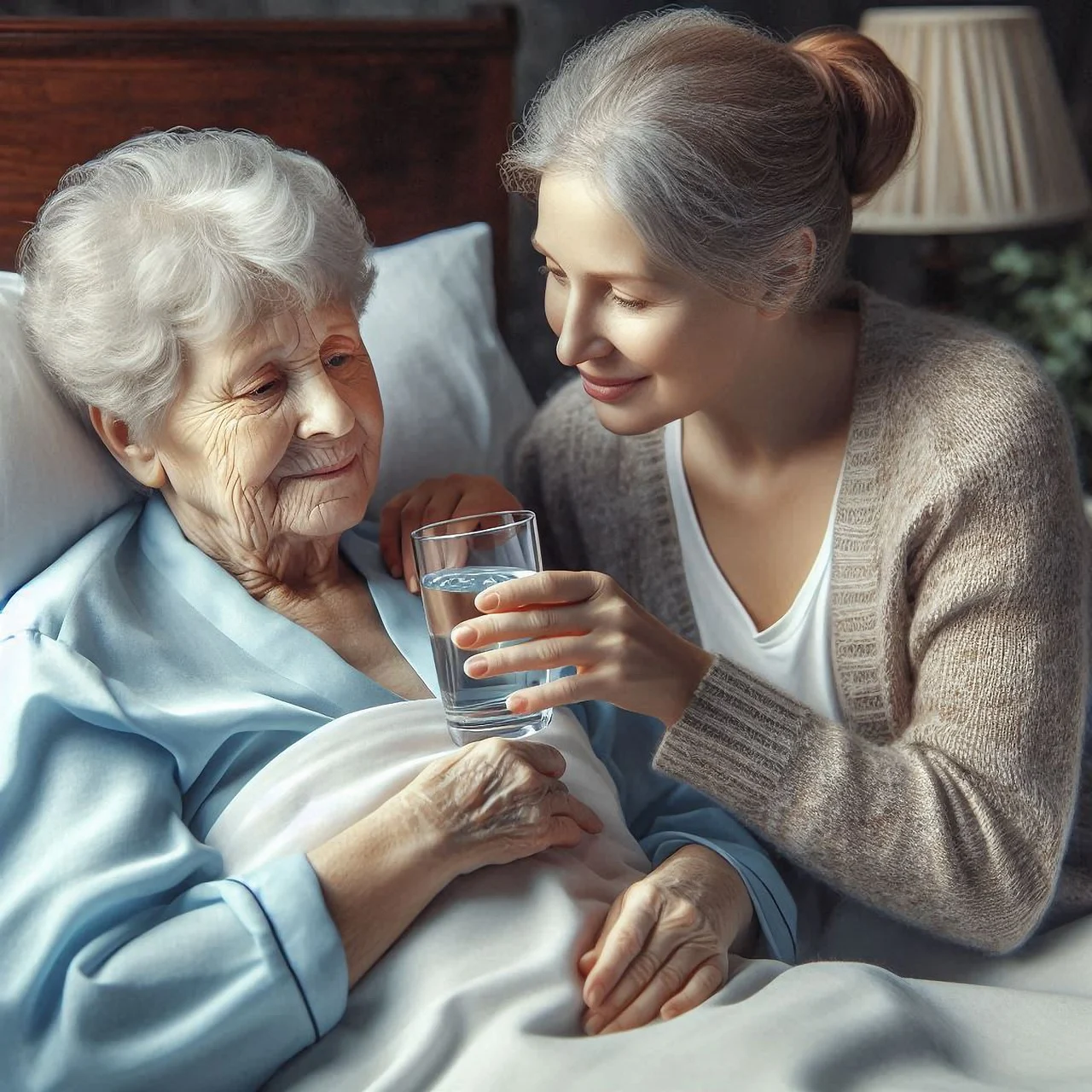
“The psychological and physical holding an infant needs throughout his development continues to be important, and the holding environment never loses its importance for everyone.”
Abram.
During the Covid pandemic of 2020, many people were forced to be alone and deprived of the company and the touch of others. They could no longer shake hands with or hug those they did not live with and everyone by law had to socially distance in restaurants and hotels.
Some people felt abandoned, lonely, unloved and cut-off as they experienced this deprivation of touch and physical closeness. This increased stress and anxiety and affected their wellbeing. In care homes and in hospitals, people were not allowed visitors, and many did not have a friend or relative to hold their hand or to be close to them when they were dying.
“The more we learn about touch, the more we realize just how central it is in all aspects of our lives — cognitive, emotional, developmental, behavioral — from womb into old age. It’s no surprise that a single touch can affect us in multiple, powerful ways.”
Maria Konnikova in “The Power of Touch”
Many people find experiencing the touch of massage healing and comforting; recent research has indicated that therapeutic massage “has a positive impact on the perception of pain relief in patients suffering from chronic pain.”
 Massage in a Bath House – 1891. John Singer Sargent. Wikioo.
“We need touch, but most importantly we need conscious touch, a moment when somebody is connecting with us skin to skin and is also aware that this is happening.”
Mary OMally, Belonging to Life.
- The memory of touch
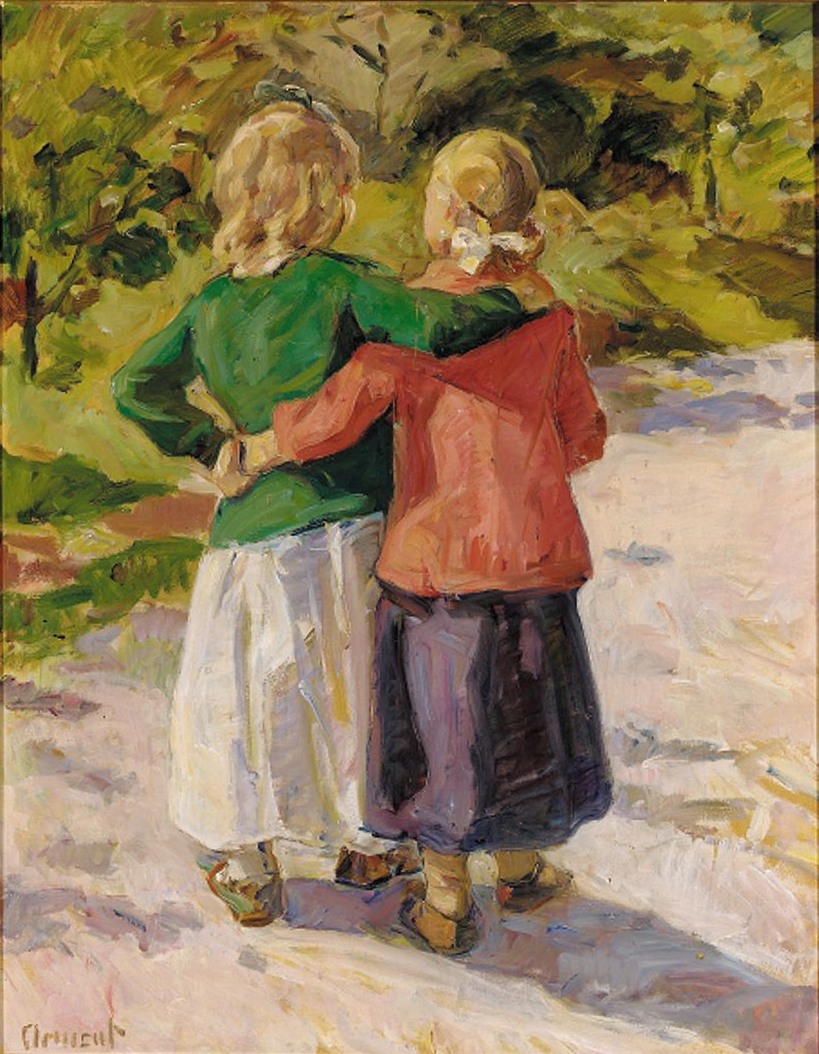 Gad Frederik Clement. Two Friends In A Garden.Between 1835 and 1933. Wikimedia Commons
“Touch has a memory.”
John Keats
Just as painful experiences of touch remain with us, so the feeling of being touched in a loving way by friends and family, will be etched on our memory. Touch is a kind of language in itself and it can communicate so many powerful feelings…
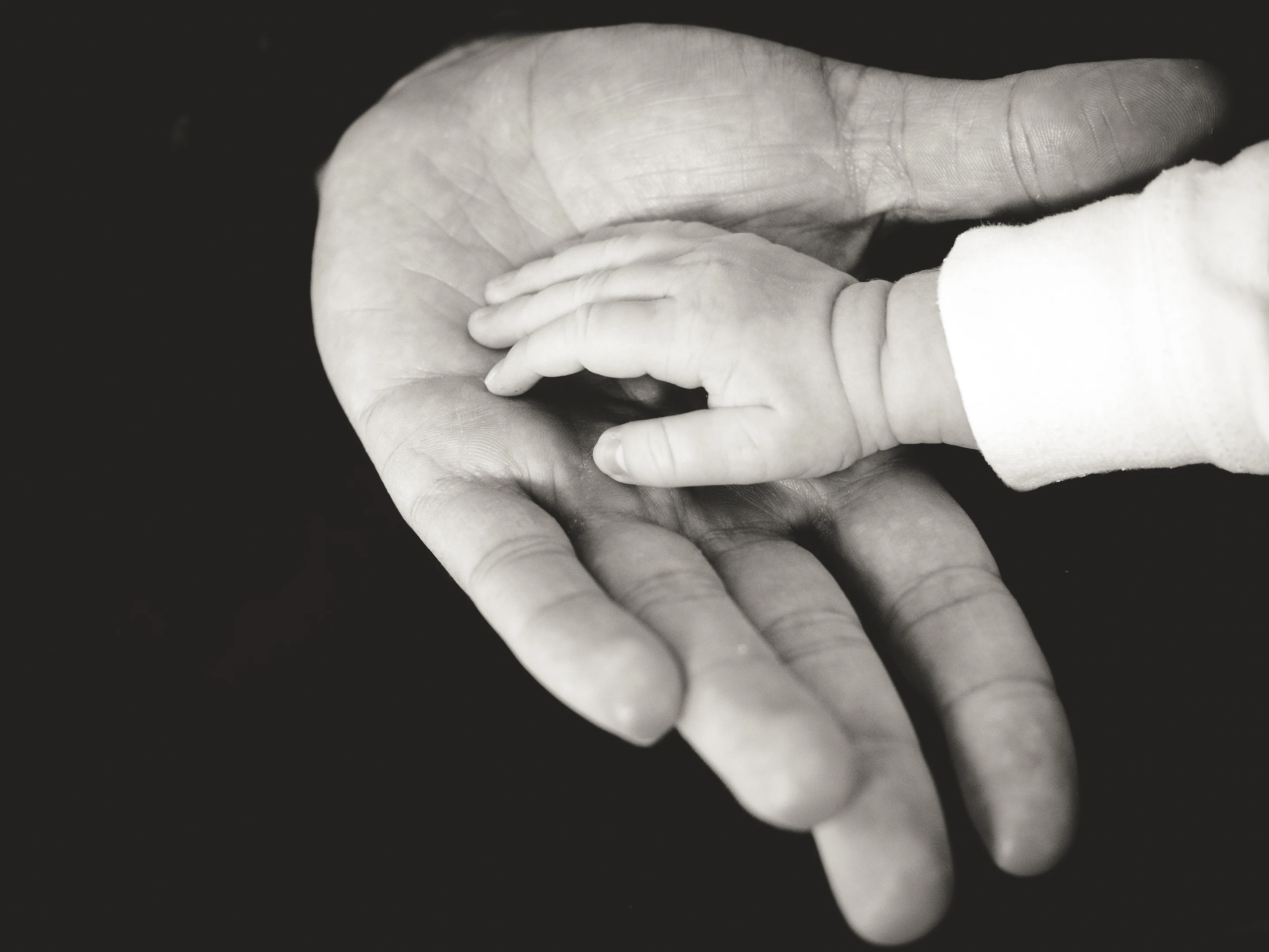
“The psychological and physical holding an infant needs throughout his development continues to be important, and the holding environment never loses its importance for everyone.”
Abram.
Our tactile memory, or haptic memory, enables us to remember the feel and texture of objects; recent research indicates that this memory can be detailed and long lasting.
“You may not realise it, but your brain has spent your entire life cataloguing the feel, weight and shape of everything you’ve touched. This is called haptic memory, and that’s why your muscles know the exact force they need to use to grab a bottle of water as soon as you see it. What’s also fascinating about haptic memory is that all this knowledge is stored in your brain, intertwined with other sensory or emotional memories, whether you are aware of it or not.”
- Romantic touch
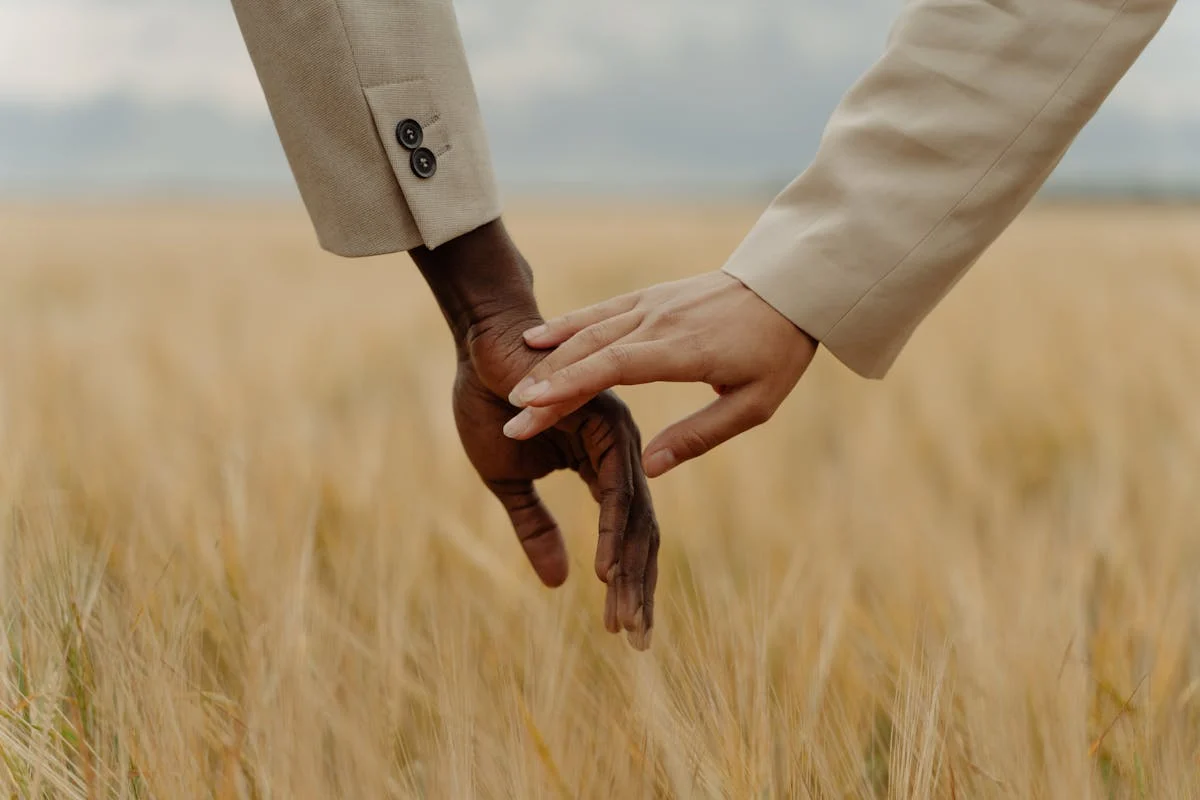
“your hand
touching mine.
this is how
galaxies
collide.”Sanober Khan
In a romantic relationship, touch increases feelings of sexual attraction and love, physical intimacy and emotional connection. Holding hands may be one of the first ways in which we might touch a new partner, and it can symbolise a desire to become closer and to move the relationship forward.
The word ‘touching’ has more than one meaning; we can touch another without being physical, but by saying or doing something that affects another on an emotional level.
Other words for this are ‘affecting,’ heartwarming,’ or ‘moving.’ We may also say that something ‘touched our heart,’ meaning that it aroused empathy in us, that it impacted on us deeply and genuinely.
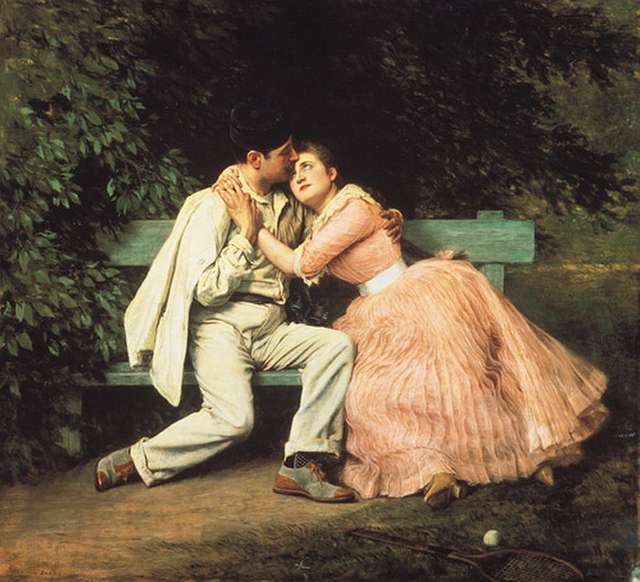
Jan van Beers – Love-Match. Before 1927. Wikimedia Commons.
“When you touch a body, you touch the whole person, the intellect, the spirit, and the emotions.”
Jane Harrington
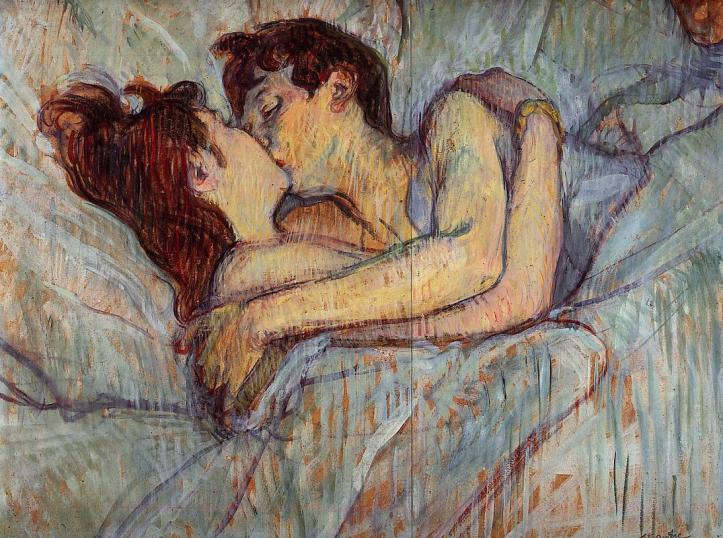 The Kiss. Henri de Toulouse-Lautrec. Wikimedia Commons.
“the time will come, my dear
when I will hold you closeand all will be
right again
in the world.”Sanober Khan
© Linda Berman
 waysofthinking.co.uk