
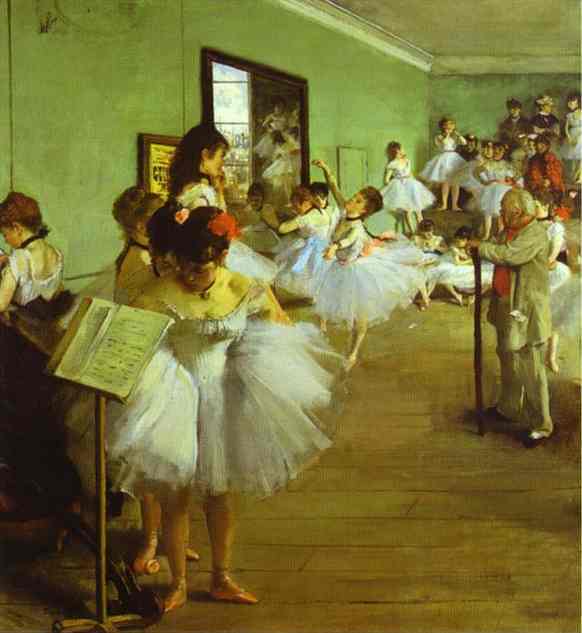
Dancing Examination – Edgar Degas.c. 1880. Wikioo
Having desires is part of what makes us human; it is natural to wish for all sorts of things in life. Without desiring, without wanting rewards and some of the good aspects of life, we will lack motivation and our lives will be static. We need to be careful, though, that we are driven by our own desires to gain and succeed, rather than aiming at doing better than other people around us.“The will to win, the desire to succeed, the urge to reach your full potential… these are the keys that will unlock the door to personal excellence.”
Confucius
“A creative man is motivated by the desire to achieve, not by the desire to beat others.”
Ayn Rand
- Desire and creativity
 Monet Painting in His Garden. Renoir. 1873. Wikimedia Commons
As Shaw says, desire plays a significant role in the process of creativity. Sometimes, artists and writers, scientists and musicians, may desire to write or paint or create something. They can keep such fledgling projects secreted in their heads and hearts until the time feels right for them to externalise them in more concrete form. This involves patience and waiting; we cannot immediately expect to be able to give form to all that we desire to achieve in terms of creativity.“Imagination is the beginning of creation. You imagine what you desire, you will what you imagine and at last you create what you will.”
George Bernard Shaw
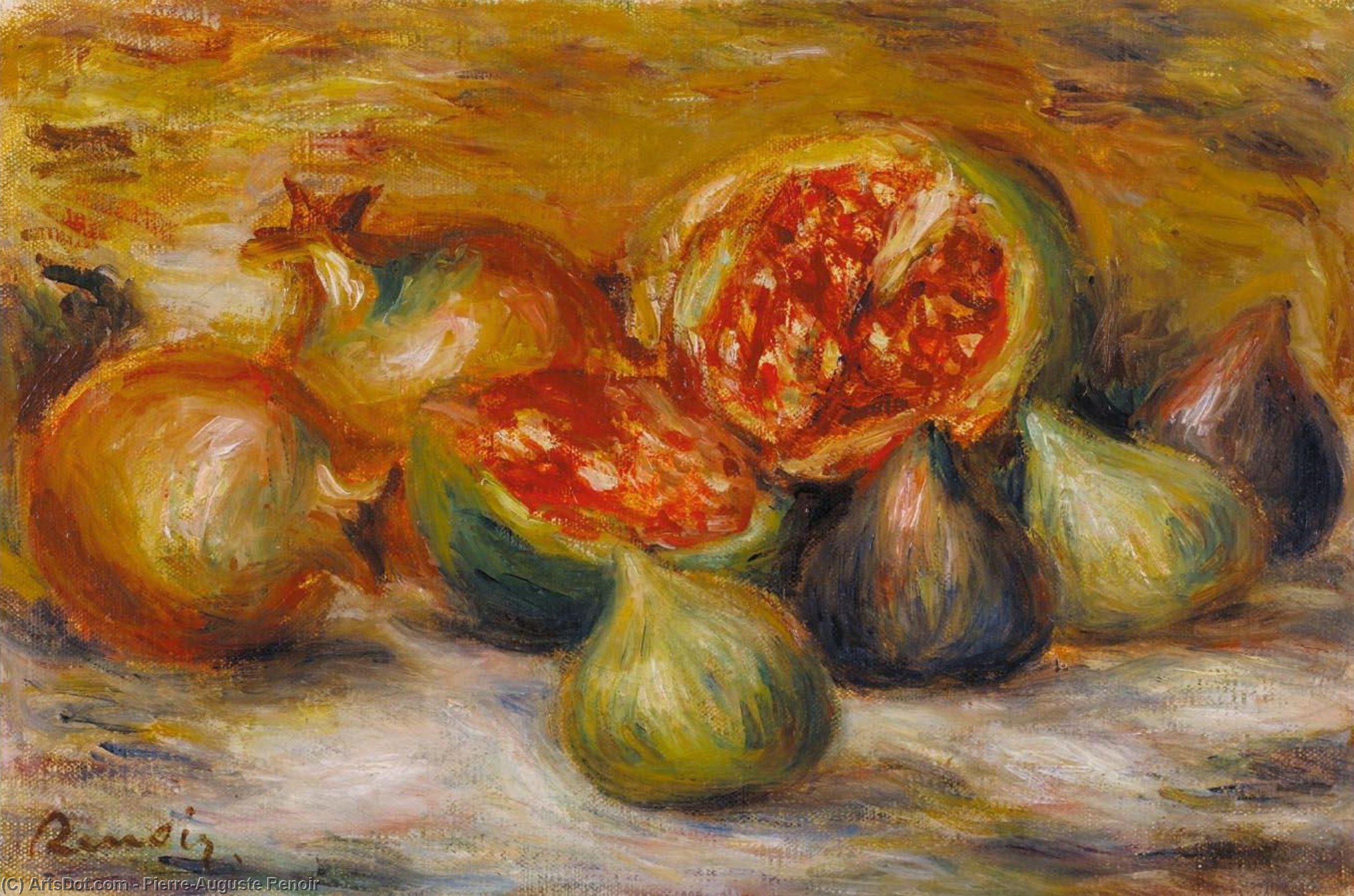 Still Life with Figs – Pierre-Auguste Renoir. Wikioo
“Nothing great is created suddenly, any more than a bunch of grapes or a fig. If you tell me that you desire a fig. I answer you that there must be time. Let it first blossom, then bear fruit, then ripen.”
Epictetus
- Wanting what we cannot have
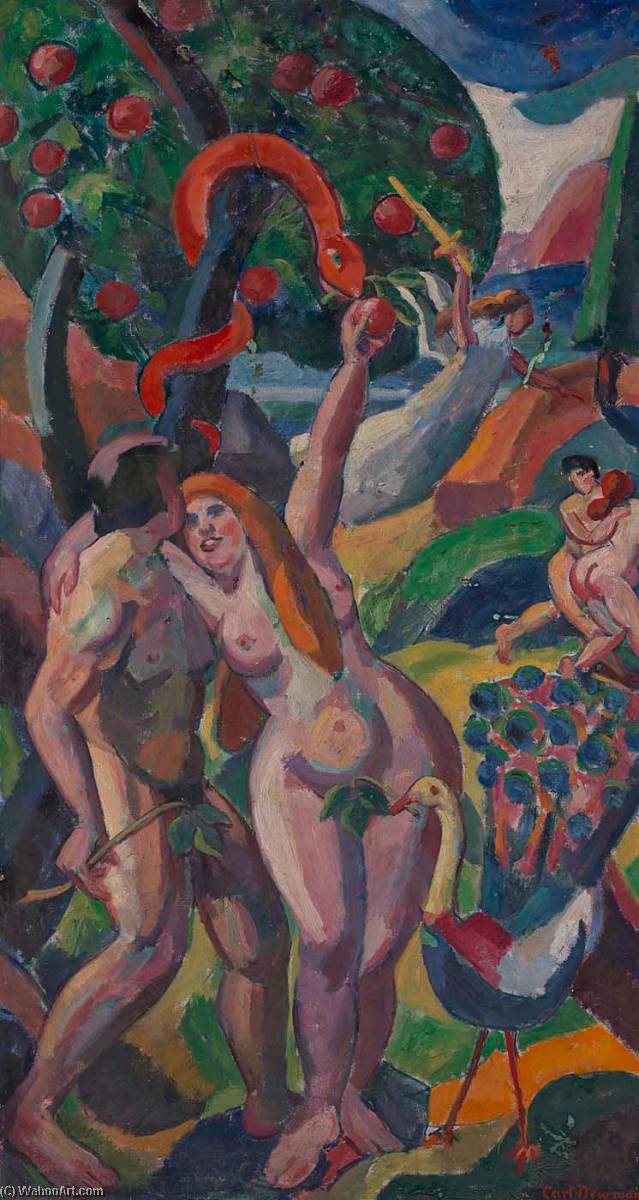
Adam and Eve – Carl Newman. 1932. Wikioo.
It is certainly far from true that we need to satisfy our every desire. Often, the more we get, the more we want. There are some desires that need to be firmly controlled; we must think of the possible consequences of acting out our desires before we indulge them. Used in a bad way, desires involving power, food, sex, money, and many other human wants can be destructive and criminal.“Desire is an odd thing. As soon as it’s sated, it transmutes. If we receive golden thread, we desire the golden needle.”
Holly Black
 Thomas Hawk. Several muralists. The Robbery. Flickr
Wanting too much of anything on this earth may result in disaster; wanting what we cannot have also leads to the destruction of self and other. If we cannot feel satisfied with what we have, then we will remain in a state of forever wanting and feeling unhappy.“The fact of the matter is that poor men do not often steal, and when they do, it is petty theft, something to eat or perhaps an item of clothing to keep them from the cold. Thieves are usually those who have something and want more.”
Louis L’Amour
 Alexej von Jawlensky. Spanish Girl. 1912. Wikimedia Commons
Some people have a sense of entitlement, likely borne out of early emotional deprivation in their lives. They feel that all their desires should be met by others, and become grudging and angry when they are not.“If what you have seems insufficient to you, then though you possess the world, you will yet be miserable.”
Seneca

Barrels of Money. Victor Dubreuil. Wikioo
“People shouldn’t have everything they want. No one is entitled to their every desire. To live in balance, we must willingly decide not to take all that we can from the world, and from others.”
F.C. Yee, The Shadow of Kyoshi
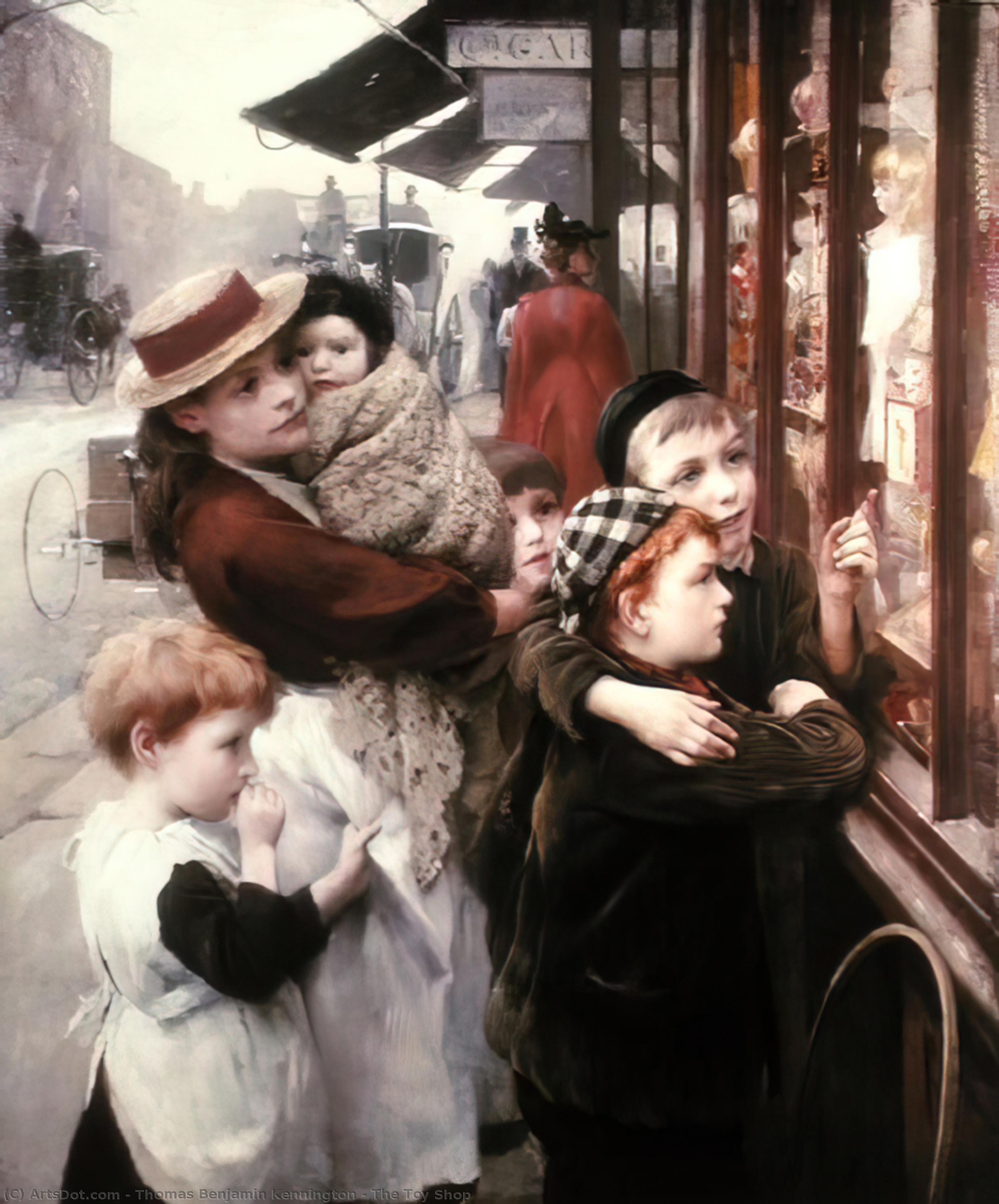 The Toy Shop – Thomas Benjamin Kennington.1891. Wikioo
“We all want things we can’t have. Being a decent human being is accepting that.”
John Fowles
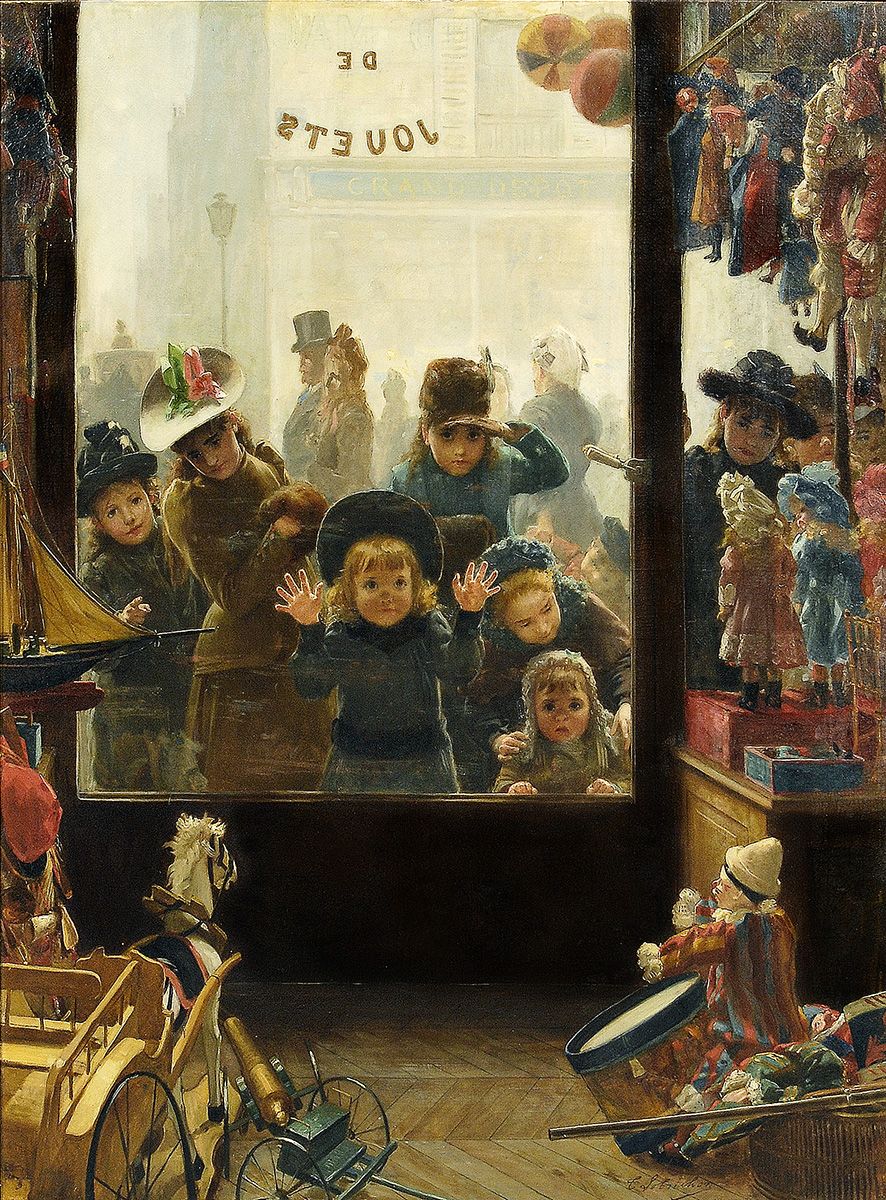 Lobrichon. [1831-1914] La vitrine du magasin de Jouets. (Toyshop window) Wikimedia Commons
It can be tough at any age to not get what we desire! With increased self-acceptance, however, we will be less likely to keep on wanting what we cannot have. This is a lesson that needs to begin early in life. If, as we get older, we still have an insatiable longing for the unattainable, perhaps we have experienced a lack of love and security and have internalised negative feelings about ourselves. This can mean that we continually crave acceptance through acquiring more and more objects, each of which may satisfy us only for a short time. External objects cannot assuage an inner feeling of emptiness and insecurity. Life is surely richer, and we will be less beset by envious, rapacious and needy feelings, if we can focus on who we are and who others are as people, rather than on possessions.“Anyone with any degree of mental toughness ought to be able to exist without the things they like most for a few months at least.”
Georgia O’Keeffe
It is, ultimately, real relationships that matter, caring and sharing, not being acquisitive or unkind, and consequently discontented.“Human beings had two basic orientations: HAVING and BEING HAVING: seeks to acquire, possess things, even people BEING: focuses on the experience; exchanging, engaging, sharing with other people”
Erich Fromm
- Knowing who we are and what we want

Being aware of our desires, wants and needs is extra-difficult if we do not know ourselves. To clearly recognise our own preferences and our own values, we need to develop a firm identity, through life-experience, self-knowledge and maturity. Until this happens we will tend to follow the choices of others around us. We need, simultaneously, to be able to know what we do not want, what makes us unhappy or discontented. This will free us up to make better choices, to establish firm boundaries for ourselves, and to define and refine our own values in life.“True power arises in knowing what you want, knowing what you don’t want, expressing it clearly and lovingly, without attachment to the outcome.”
Leonard Jacobson
- Buddhism’s attitude to desire
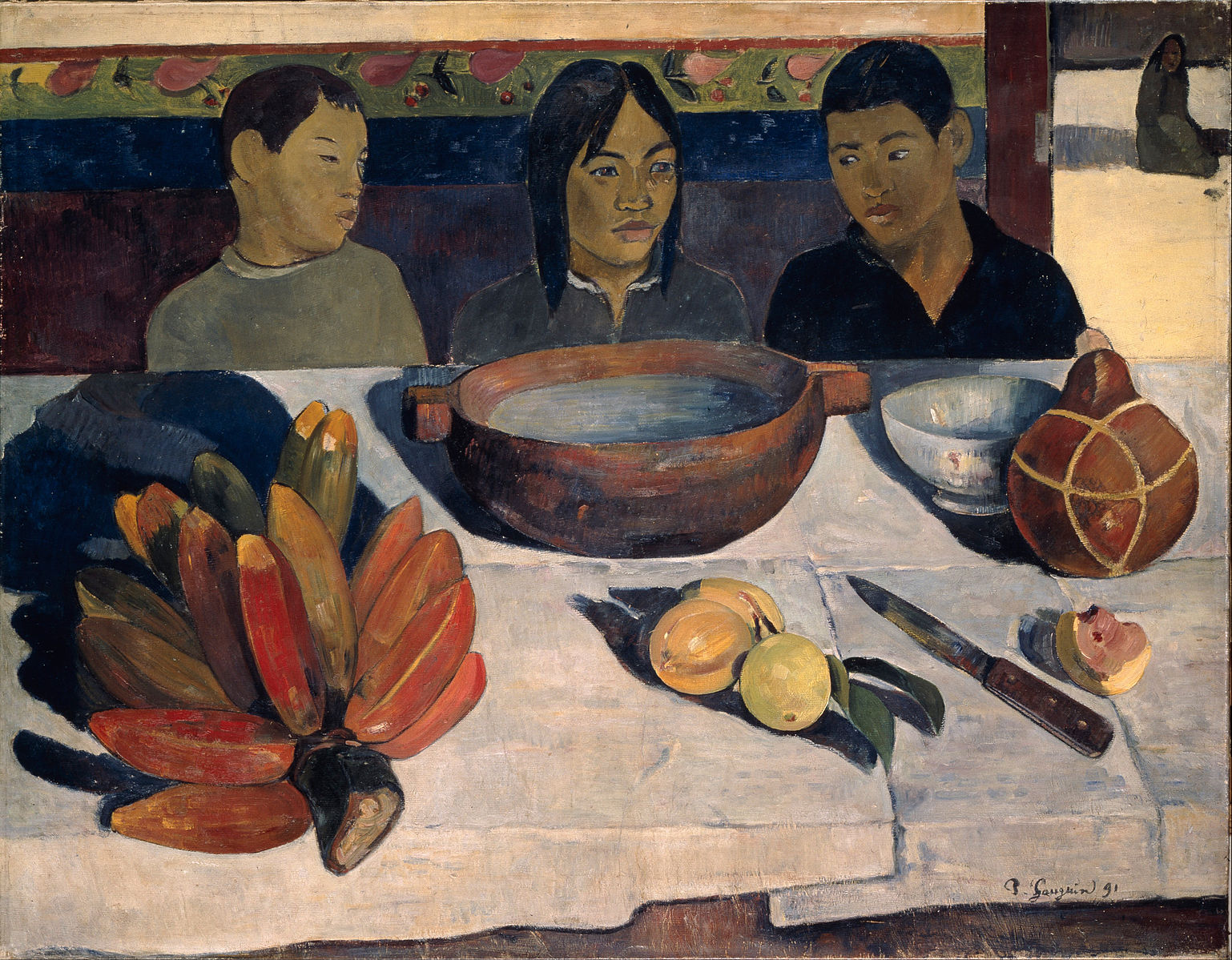 Paul Gauguin – The Meal. 1891. Wikimedia Commons
The Buddhists regard desire as a form of suffering. Their belief is that we are caused immense pain if we are over-attached to anything or anyone.“Manifest plainness, Embrace simplicity, Reduce selfishness, Have few desires.” Lao Tzu
 Edvard Munch – Desire. 1907. Wikimedia Commons.
“In Buddhism, desire and ignorance lie at the root of suffering. By desire, Buddhists refer to craving pleasure, material goods, and immortality, all of which are wants that can never be satisfied. As a result, desiring them can only bring suffering.”
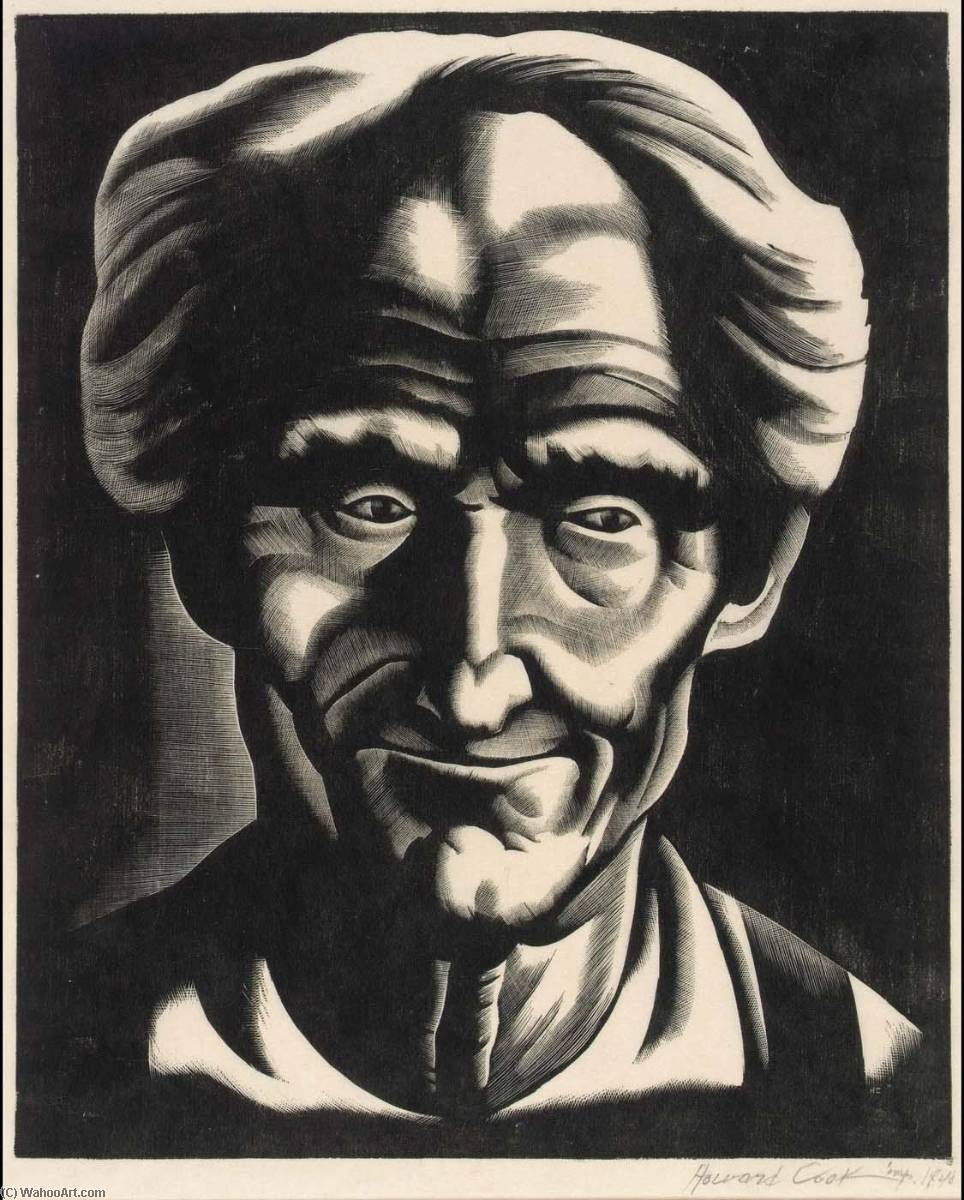 Happy Uncle. Howard Cook.1935. Wikioo
“When you are discontented, you always want more, more, more. Your desire can never be satisfied. But when you practice contentment, you can say to yourself, ‘Oh yes – I already have everything that I really need.'”
Dalai Lama
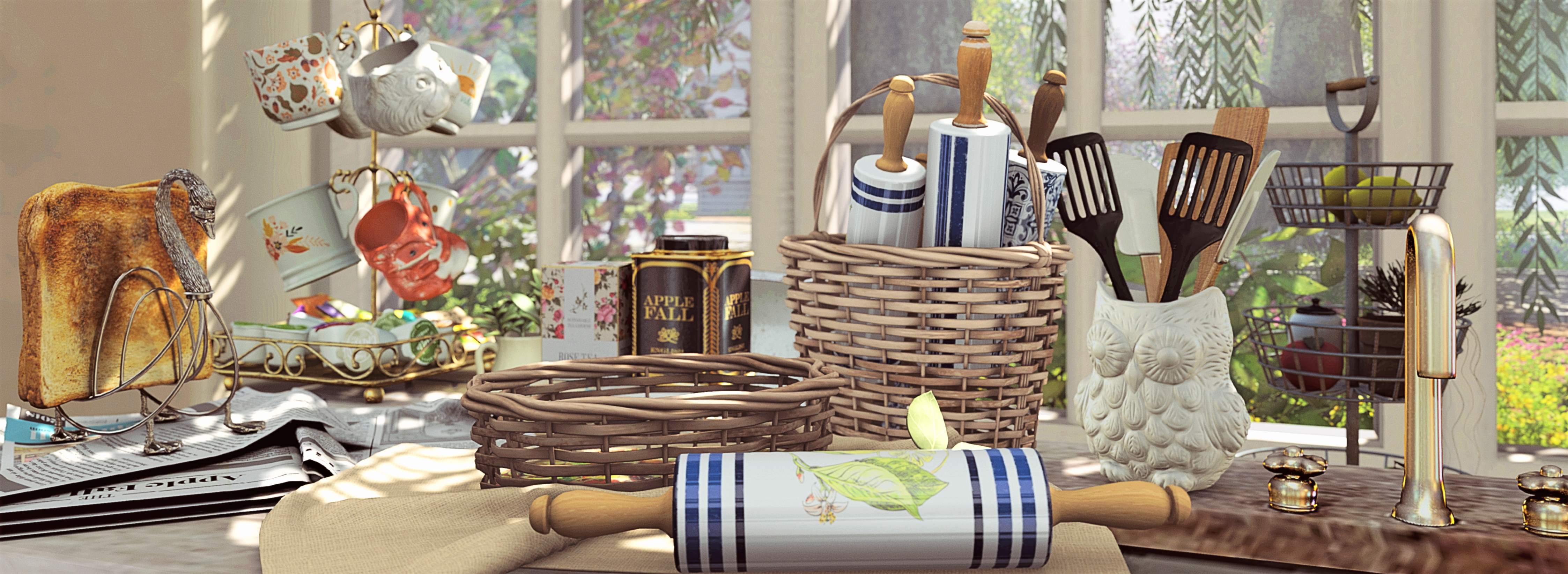 Miru in SL. Morning on a Roll. 2021. Flickr
“Until we have begun to go without them, we fail to realize how unnecessary many things are. We’ve been using them not because we needed them but because we had them.”
Lucius Annaeus Seneca
- Changes in our desires
 Edvard Munch – Christian Munch on the Couch. Wikimedia Commons
© Linda Berman This blog is totally non profit-making. As a retired psychotherapist with over 30 years experience, I write both for my own self-expression and to help others. If you have liked this post, I would much appreciate you showing support to me by becoming a follower of waysofthinking.co.uk. Thank you.“The older I get, the more I desire simplicity.”
Andy Mineo
 waysofthinking.co.uk
love the pictures and mindful thoughts!!!
LikeLiked by 1 person
Thank you Kirsten! I take a lot of time to match the pictures, quotes and my own thoughts together! I appreciate your feedback.
LikeLike