
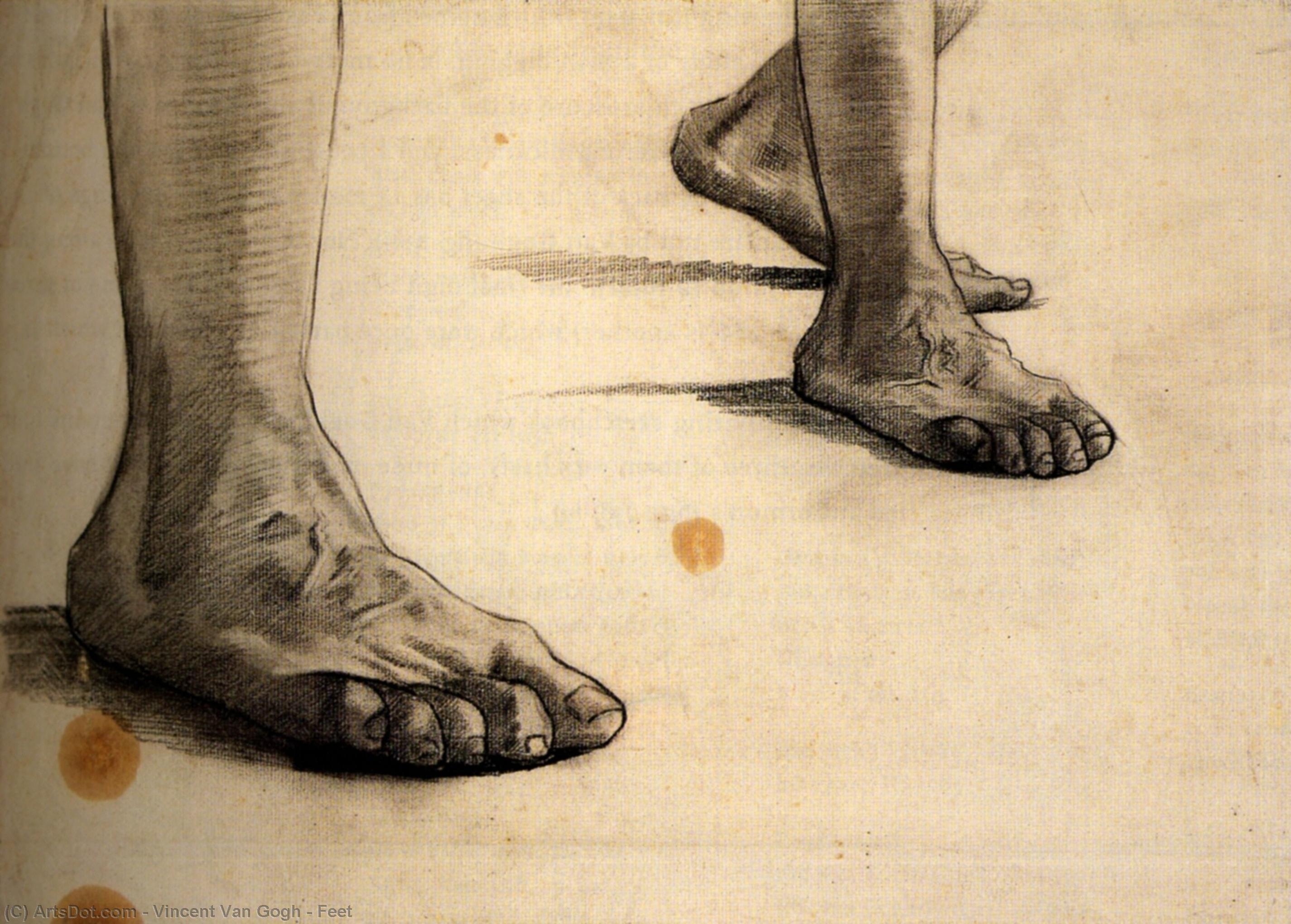
 Feet – Vincent Van Gogh. Wikioo.
How do we understand being ‘grounded’? This word has many shades of meaning, but in this post, I am referring to the psychological state of being ‘grounded,’ that is, well-balanced, with our emotional ‘feet’ on the ground.
We will have a stable psychological base from which we can grow and develop, like strong, wise old trees, earthed, firm, rooted, yet flexible. Trees are planted deep in the earth, their roots stretching down into the depths of our world. Then up, up, up, they grow, towards the heavens.
They reach far, both above and below us, being simultaneously rooted and extending to the sky. They seem to say to us “Stay solid and firm, grow, and reach for the stars, as we do.”
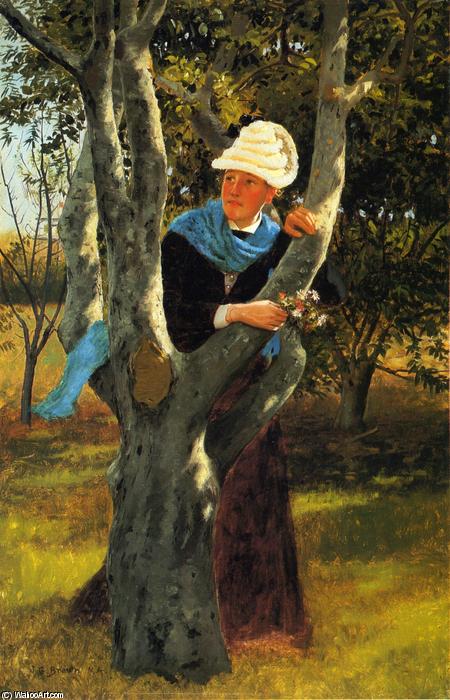
Among the Trees – John George Brown. Wikioo
“When I am among the trees,
I would almost say that they save me.”
Extract from ‘When I am Among the Trees. Mary Oliver. From Thirst, Beacon Press.2006.
Being earthed in this way means that we feel firmly and realistically established in ourselves and in the world and that we are very much ‘on centre.’ When we are with people, if we are truly grounded, we will be able to be very present for them, connected, not distracted or preoccupied and able to stay in the now, aware, receptive, emotionally open and available.
“The ability to be in the present moment is a major component of mental wellness.”
Abraham Maslow
Being grounded implies that we are ‘down to earth’, a phrase which has many connotations. It may mean, literally, that we are in touch with nature, with the earth, and attuned to our natural world, with our ‘feet on the ground.’ We will feel that we have a solid foundation, based on being strong for ourselves and others when needed.
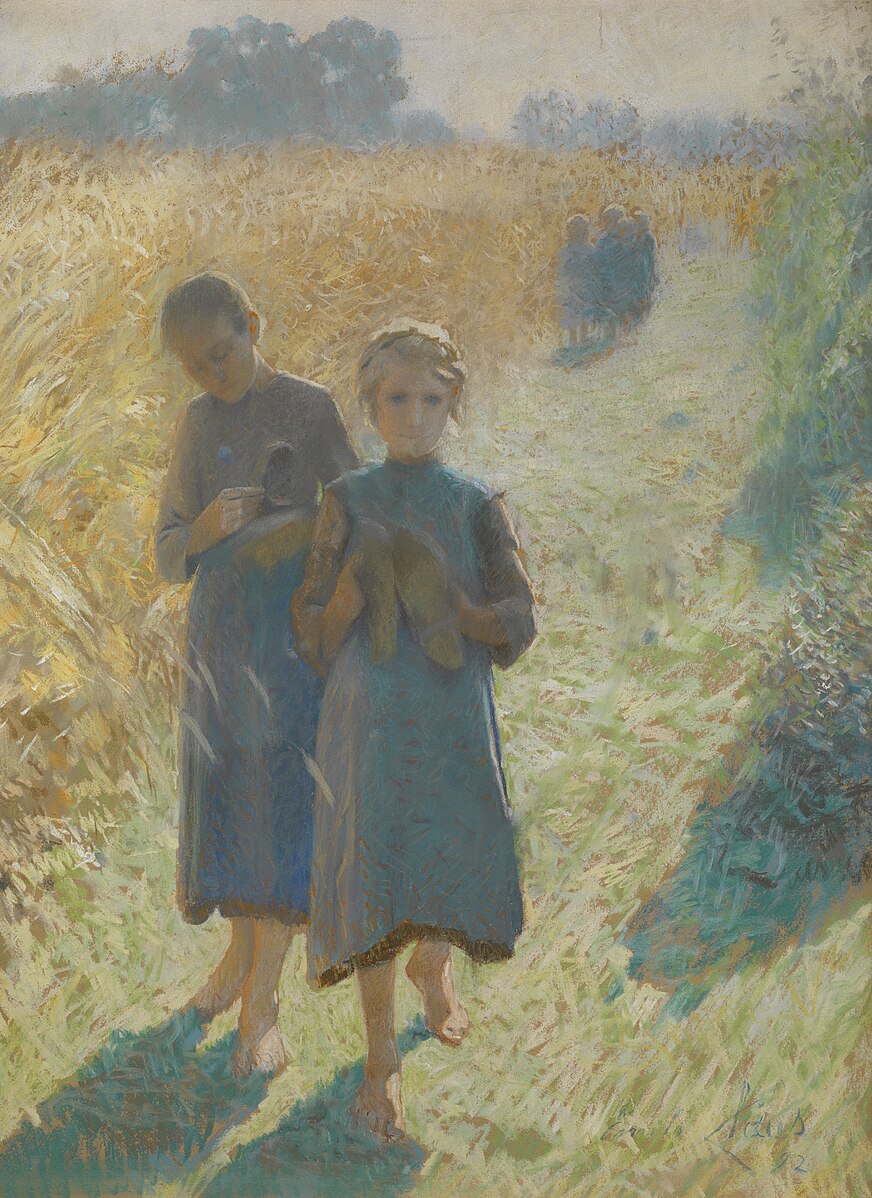 Emile Claus. 1892. Girls in the field. Wikimedia Commons
“Walk as if you are kissing the Earth with your feet.”
Thich Nhat Hanh
Groundedness is about connection, with ourselves, with others, and with the world. It means that we can remain calm in a crisis, accepting life’s ups and downs, without a sense of entitlement or resentment.
How do we achieve this state ? Well, no-one can truly be fully grounded, free from inner angst and disquiet; but it is certainly something to aim for in our lives. We can try to accomplish this difficult task through becoming more aware of ourselves, discovering what is happening in our internal world.
We might talk with close friends about how we come over to others, identifying the areas we might need to work on, how we might be better than we are. This is a journey of self-discovery, where we will hope to get to know ourselves and begin to understand what is happening in our unconscious mind; it is a journey inwards into authenticity.
Through travelling inwards, we gain new perspectives about ourselves and others. The journey along the road of life gives us different viewpoints, as we move forward into new experiences, new encounters and relationships, new learning.
Many people enter therapy in order to find who they are and to achieve a greater sense of being grounded.
- The opposite of being grounded…
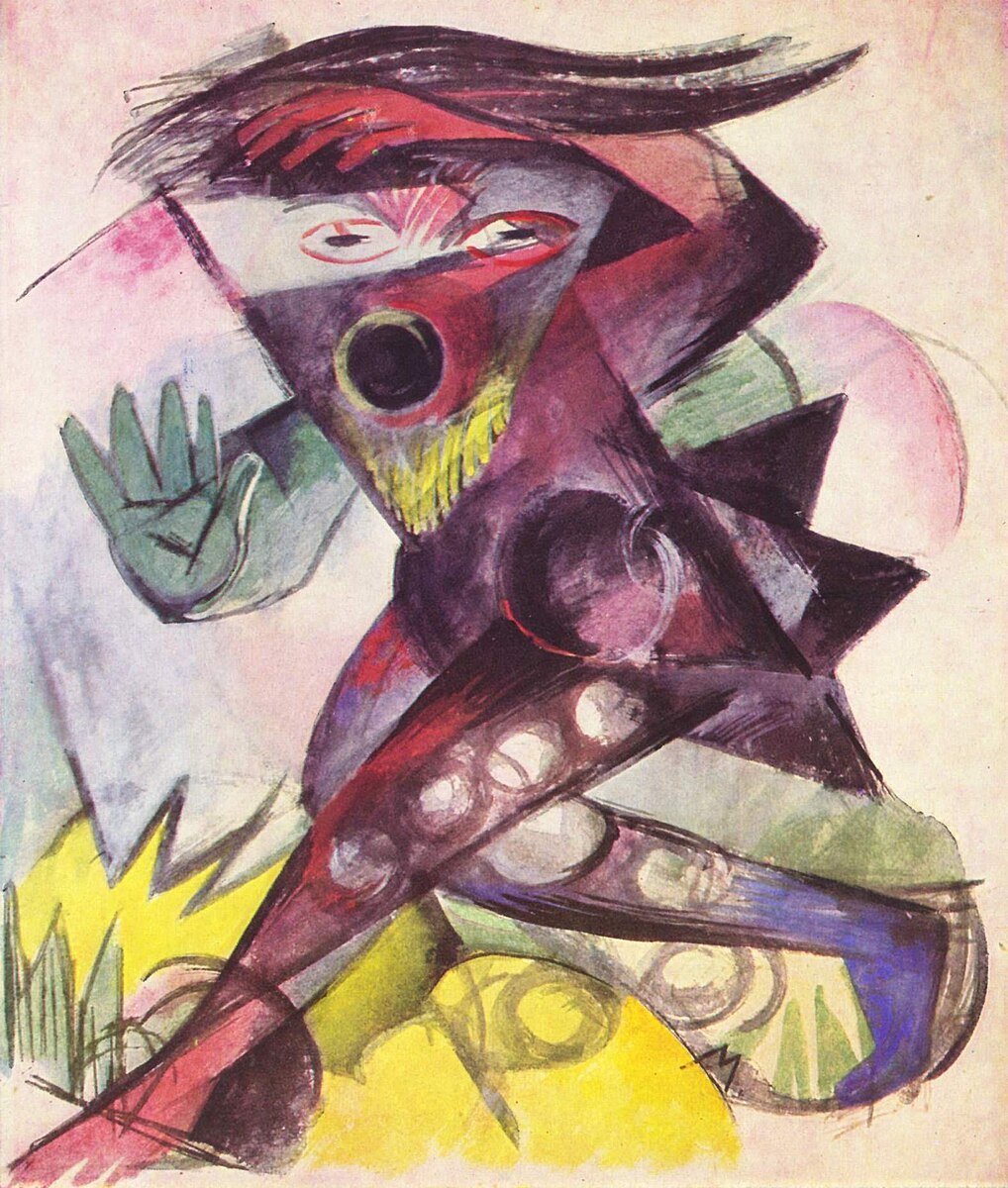 Caliban, from Shakespeare’s ‘The Tempest.’ Franz Marc, 1914. Wikimedia Commons.
The grounded state is very different from being ‘all over the place,’ from being flighty, lightweight or erratic. It represents a wholeness, a feeling of being integrated, rather than being fragmented and scattered emotionally.
In the painting above, there is a sense of inadequate balance, fragmentation and a lack of serenity. It feels like the fractured figure of Caliban is on ‘uneven ground,’ both physically and emotionally.
In Munch’s work, below, the screaming figure is insubstantial, almost spectral, far from grounded in body or soul. Unable to accept the uncertainty of life, this figure is wracked with anxiety, insecurity and fear.
The painting has come to represent extreme existential foreboding, and can be interpreted in many ways. Munch himself had a very difficult and angst-ridden life and the distortions within the work may represent this, as well as a more universal kind of anguish, which we can certainly recognise in the world today.
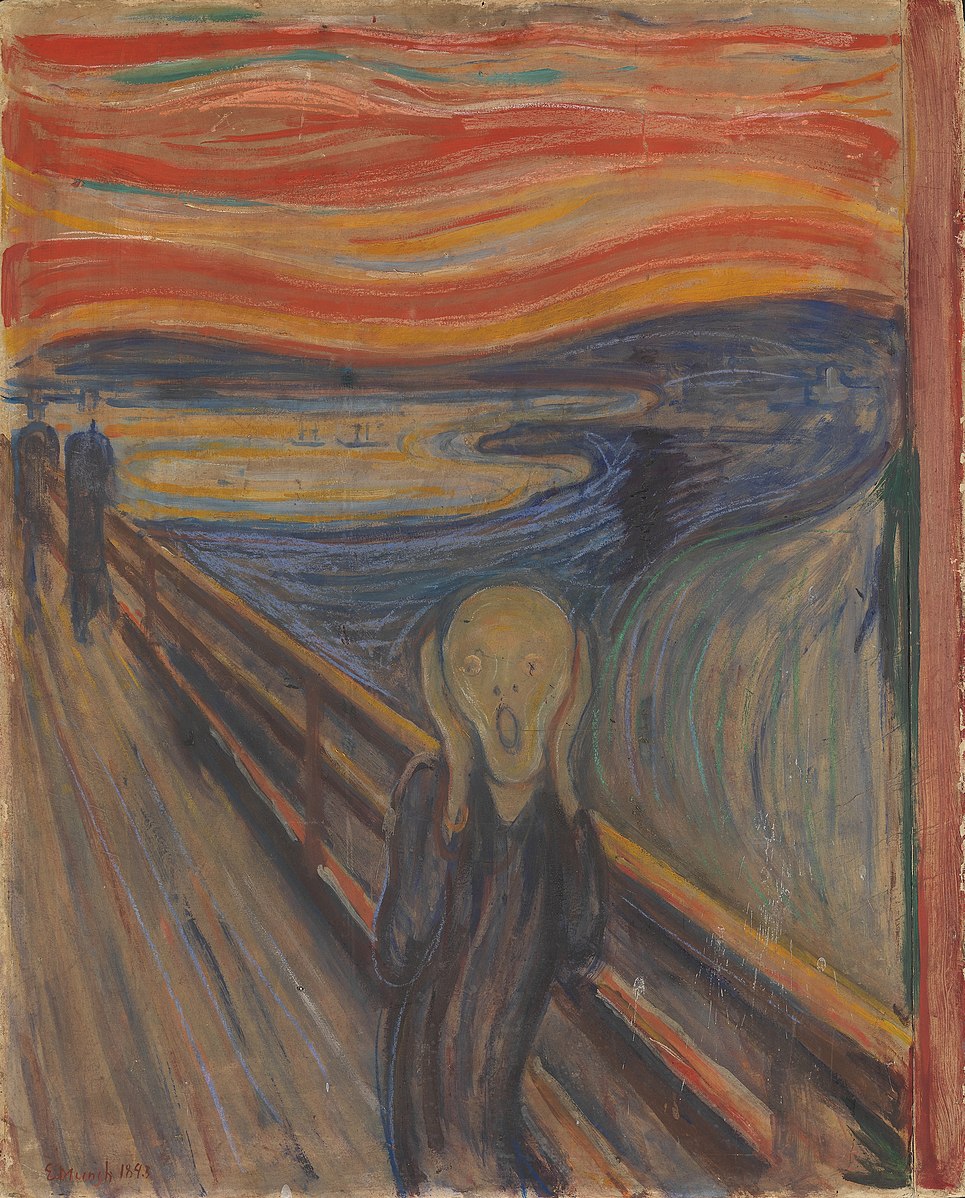 Edvard Munch, 1895, The Scream. Wikimedia Commons
In this expressionist painting, the sky itself appears to writhe, to twist, reflecting the agony in the world. There is a panicky feeling of horror and terror that pervades the whole image. Art historian Jill Lloyd describes it as follows:
“The Scream is one of those images that sums up a changing point in history. It presents man cut loose from all the certainties that had comforted him up until that point in the 19th Century: there is no God now, no tradition, no habits or customs – just poor man in a moment of existential crisis, facing a universe he doesn’t understand and can only relate to in a feeling of panic.”
This is a good description of ‘groundlessness,’ a feeling that there is nothing to contain or hold us.
The more grounded, contrasting scenario is one in which we can walk through an external storm, both literally and metaphorically, whilst maintaining a firm and solid inner base. If we feel content with ourselves, then we can develop more resilience during difficult times.
This is part of having a grounded attitude, a foundation which enables us to be more confident that we will weather the storms of life.
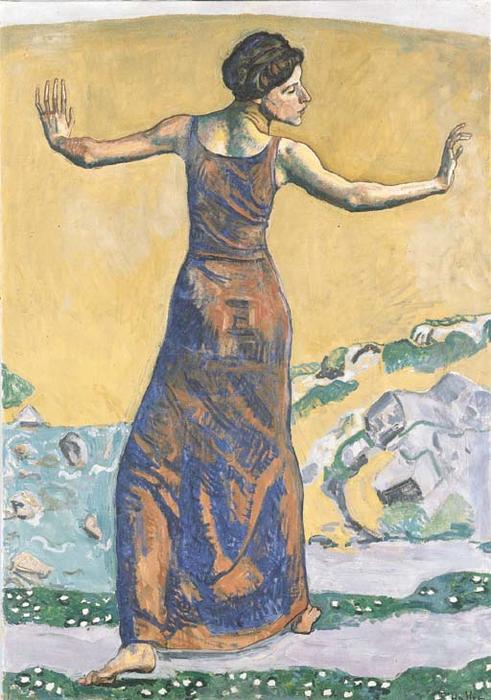
Happy Woman. Ferdinand Hodler. Wikioo.
“A happy heart can walk in triumphant indifference through a sea of external trouble; while internal anguish cannot find happiness in the most favourable surroundings.”
Hannah Whitall Smith
- Others keep us grounded
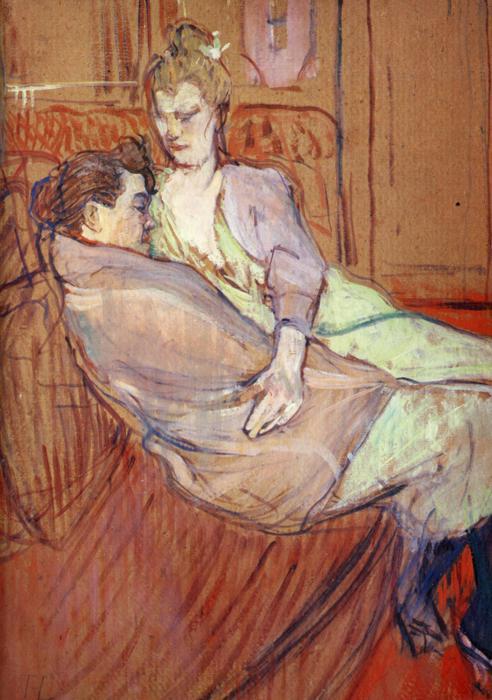
The Two Friends – Henri De Toulouse Lautrec. 1894. Wikioo.
“A friend knows the song in my heart and sings it to me when my memory fails.”
Donna Roberts
Being grounded is about keeping calm in a crisis and also having a good support system, so that there is love and containment during difficult times. There is usually at least one person in all our lives who can make us feel happier, more supported, appreciated, accepted.
This will hopefully be someone who will ‘know the song in our heart,’ when we lose our sense of self; that is, they will understand what makes us feel grounded, on centre, and real. They will be able to remind us of who we are. Such a person will accept us, valuing our authentic selves.
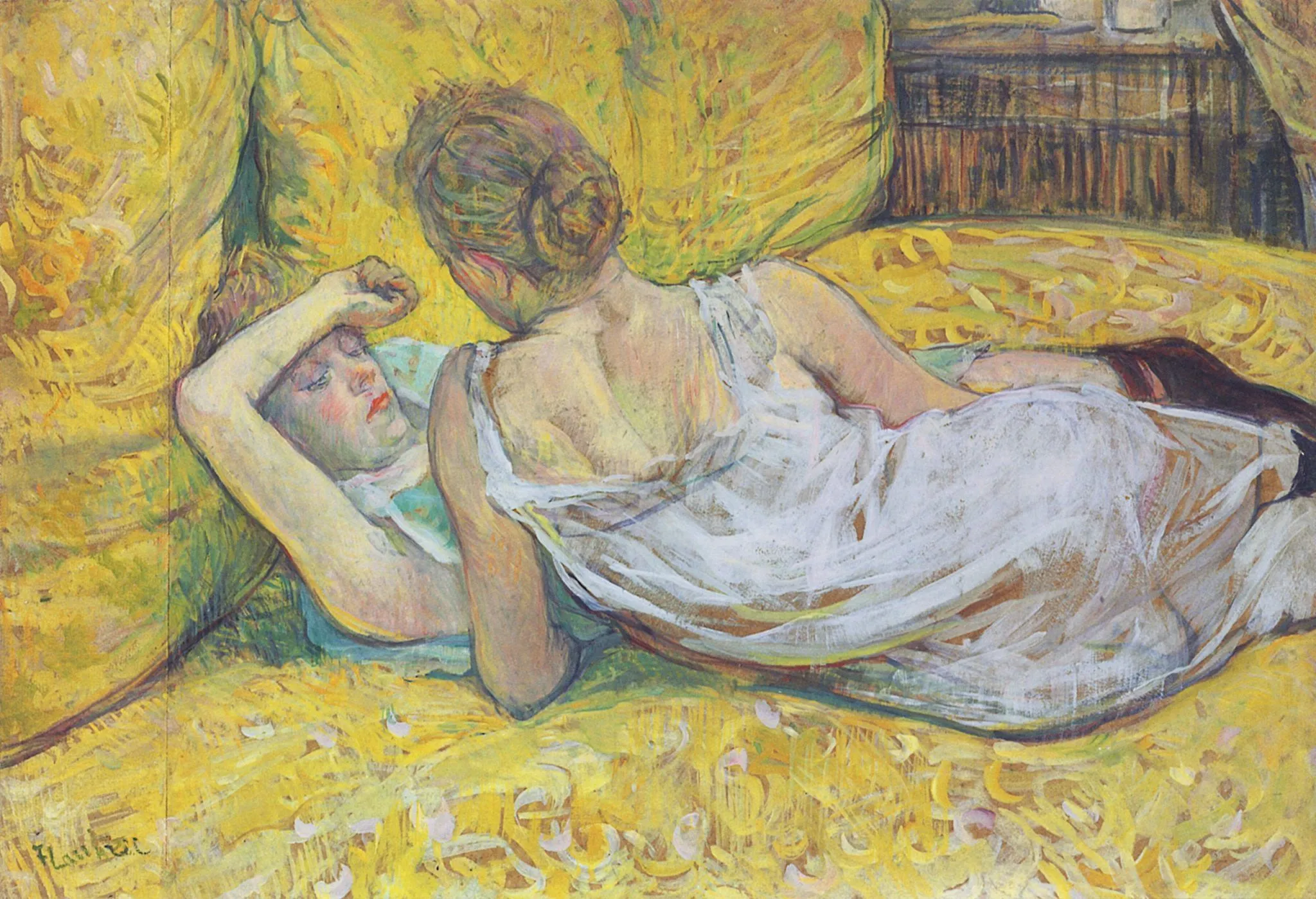 Les Deux Amies. Henri Marie Raymond de Toulouse-Lautrec. 1895. Wikimedia Commons
“I like myself better when I’m with you.”
- Being grounded inside oneself
Can we be grounded inside? This might sound strange, but, if we are true to ourselves, being authentic, then we can feel that we are ‘on firm ground’ inside ourselves, without pretence or falseness. This will involve self knowledge and awareness of who we are.
 Getting to work. Oregon Department of Transportation. 2014. Wikimedia Commons
“I love writing on trains. The joy of being a writer is it’s all in your head; you don’t need materials apart from the laptop. It’s like taking your work home with you, so you can feel grounded in your own insane writerly realities wherever you are.”
Sadie Jones

The artist in the Louvre – Pascal-Adolphe-Jean Dagnan-Bouveret. c 1891. Wikioo.
“Creative people like to daydream and imagine the possibilities and wonders of the world. They can immerse themselves in imagination and fantasy, yet remain grounded in reality. They are often described as dreamers, but that doesn’t mean that they live with their heads in the clouds.”
Kendra Cherry.
Remaining both ‘grounded in reality’ and being creative, form an important combination of emotional states. When we are working creatively whilst sitting on a train, in an art gallery, a cafe or a library, lost in our imagination, it is important that we still have our ‘feet on the ground.’
We are simultaneously a part of two worlds: the imaginative inner space, and the busy space of everyday life.
Being grounded does not mean that all problems are removed, but that we have the strength and resilience to tolerate them. We all live with uncertainty, and we need strength and groundedness to cope with this.
- ‘Grounded in kindness.’
“Giving and receiving kindness are easy ways to feel good and to help others feel good too. People, organizations, and societies thrive when they are grounded in a culture of kindness.”
Vivek Murthy
Being ‘grounded in kindness’ will go a long way to ensure that our lives are worthwhile, that we are living our best life, not expecting gratitude, but noticing the results of our efforts.
“No act of kindness, no matter how small, is ever wasted.”
Aesop
“As far as we can discern, the sole purpose of human existence is to kindle a light in the darkness of mere being.”
Carl Jung
Jung’s quotation points to life’s meaning; helping others and bringing light to the darkness can give meaning and purpose to our lives. When we have that sense of being secure inside us, we can offer this strength to others, making an impact on them and inspiring them.
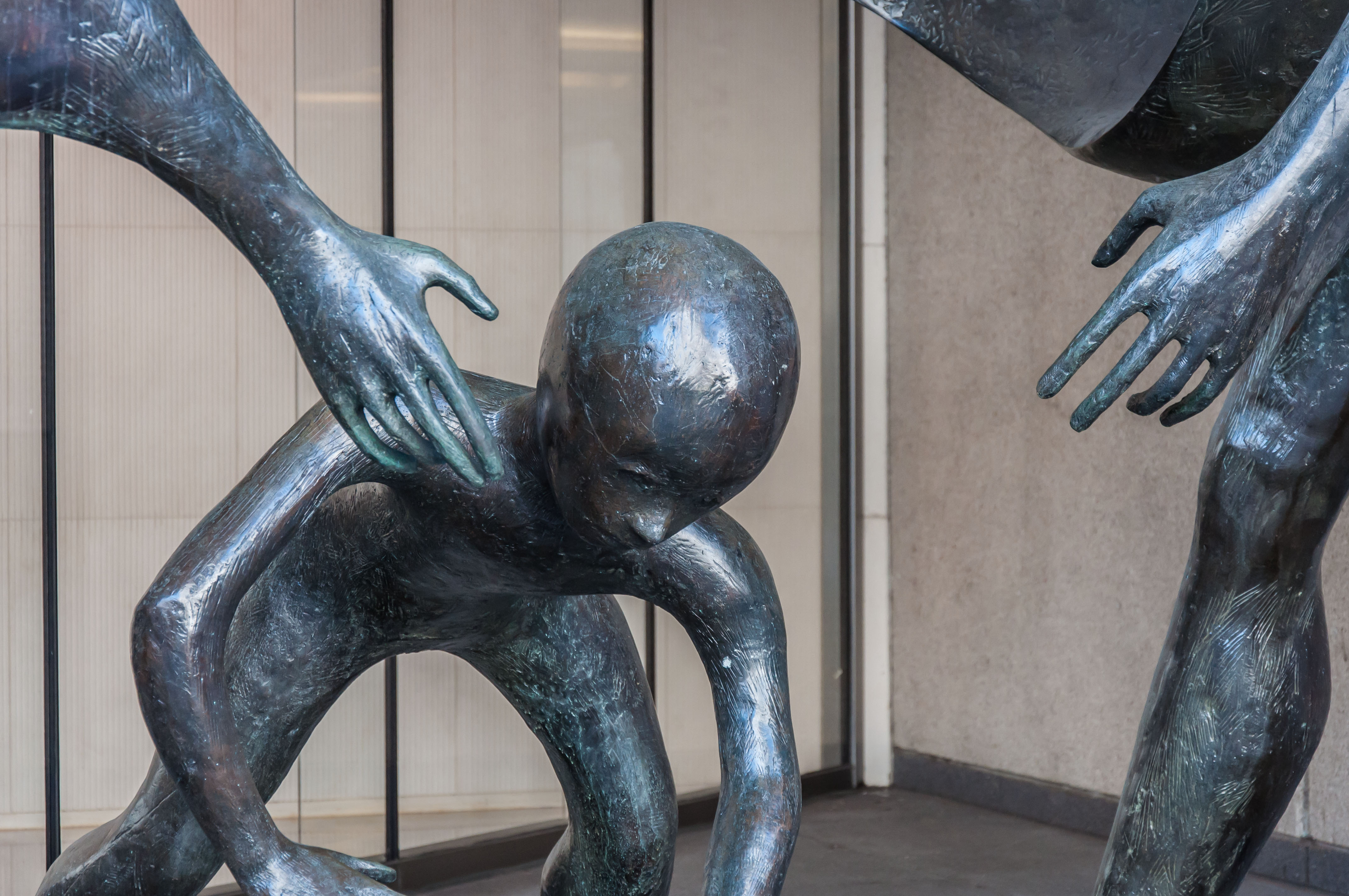
(c) Brad Hagan Water Tower, Chicago. Bradhoc. Flickr.
“There is no exercise better for the heart than reaching down and lifting people up.”
John Holmes
We cannot lift people up if we are not grounded ourselves… both of us will fall over! However, if we have gained some balance and emotional equilibrium , then we will be able to grasp opportunities to be gracious, accommodating and generous.
“Grace has been defined as the outward expression of the inward harmony of the soul.”
William Hazlitt
Caring for other people, and reaching beyond ourselves, will make our life feel worthwhile; it can be fulfilling and energising. It can actually make us feel more grounded if we help others and more real and effective in our daily actions and relationships.
Keeping ourselves as grounded as possible will mean that we can most often survive the worst of life’s difficulties… and perhaps lead the way for others.
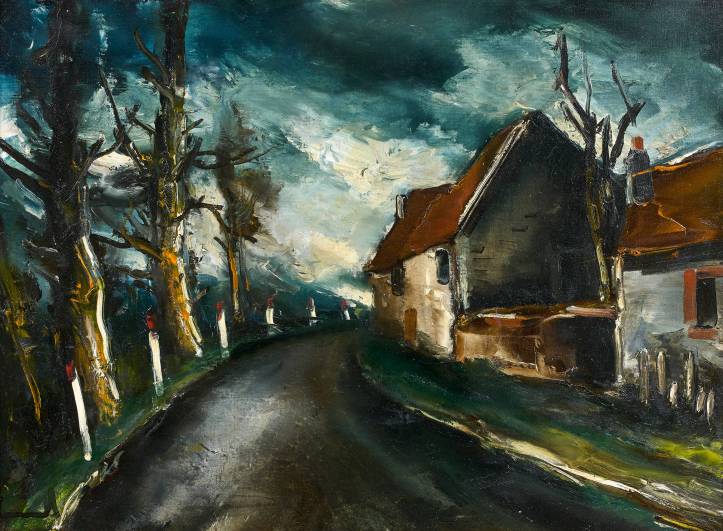 Maurice de Vlaminck – The Road to Longny. Gandalf’s Gallery. Flickr.
“Get yourself grounded and you can navigate even the stormiest roads in peace.”
Steve Goodier
© Linda Berman
This blog is totally non profit-making. As a retired psychotherapist with over 30 years experience, I write both for my own self-expression and to help others.
If you have liked this post, I would much appreciate you showing support to me by spreading the word about my blog and becoming a follower of waysofthinking.co.uk
Thank you,
Linda x
 waysofthinking.co.uk