
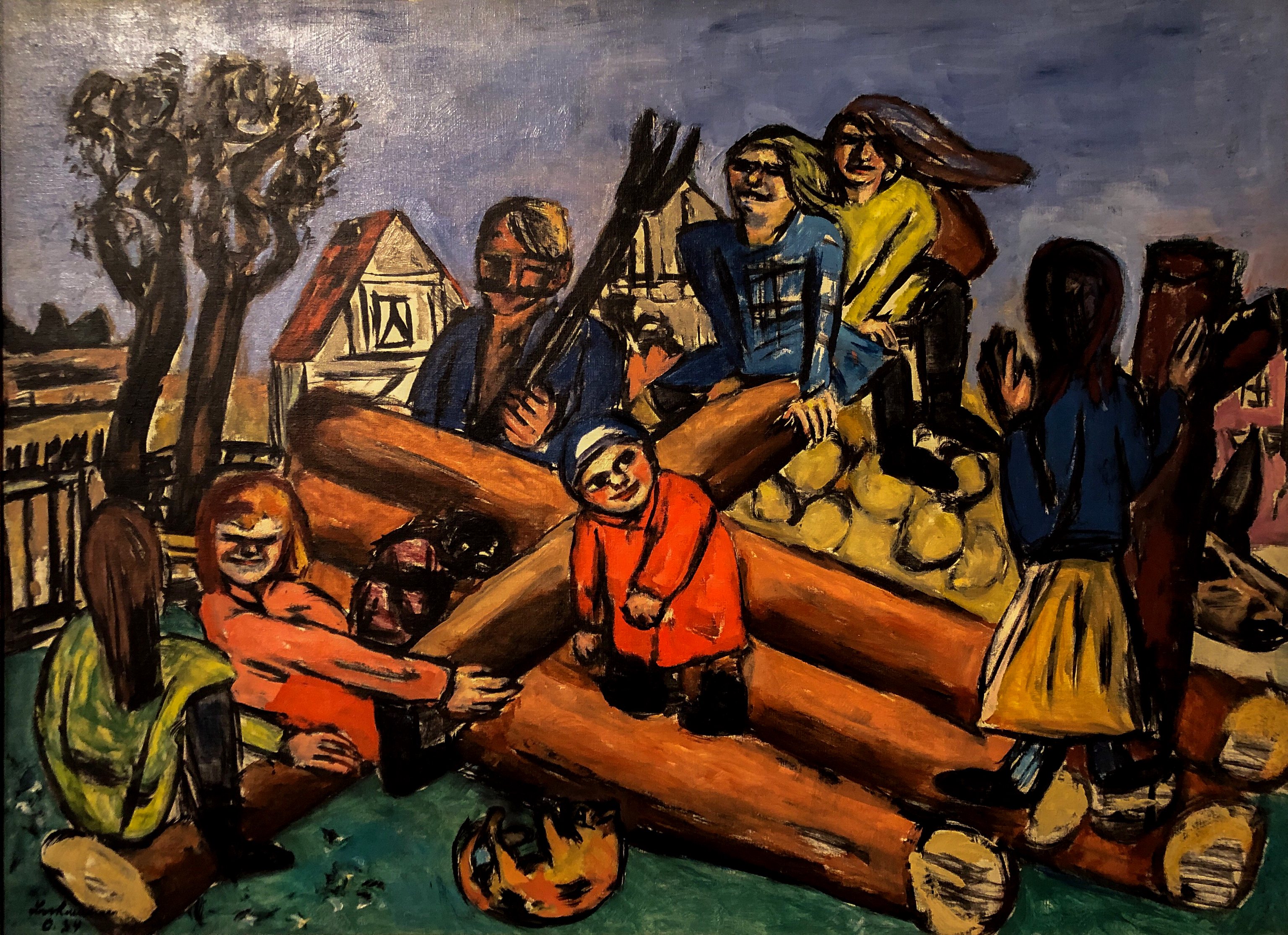
 Children Playing. 1934. Max Beckmann. Wikimedia Commons
“Legacy is not leaving something behind for other people. It’s leaving something behind in other people.”
Peter Strople
At first glance, readers might think that this post is about finance, because the word ‘legacy’ generally is assumed to refer to money, and/or property.
Money does, of course, symbolise many different aspects in life, and, especially if left equally to one’s offspring, along with some of the other good qualities mentioned in this post, it can certainly show affection and admiration. It is, quite literally, a valuable way of demonstrating our love, care and appreciation of those we leave behind.
Legacies, however, can have good and bad sides; used in negative ways, they can represent power, manipulation, favouritism and divisiveness, leaving behind a trail of discontent, resentment and feuding.

William Home Lizars Reading the Will (1811). Wikimedia Commons
“Say not you know another entirely until you have divided an inheritance with him.”
Johann Kaspar Lavater
This post, it must be emphasised, is not about money or finance, family feuds or divisive parenting. There are legacies other than material goods that we can leave behind when we depart this mortal coil, as the first quotation so sensitively states.
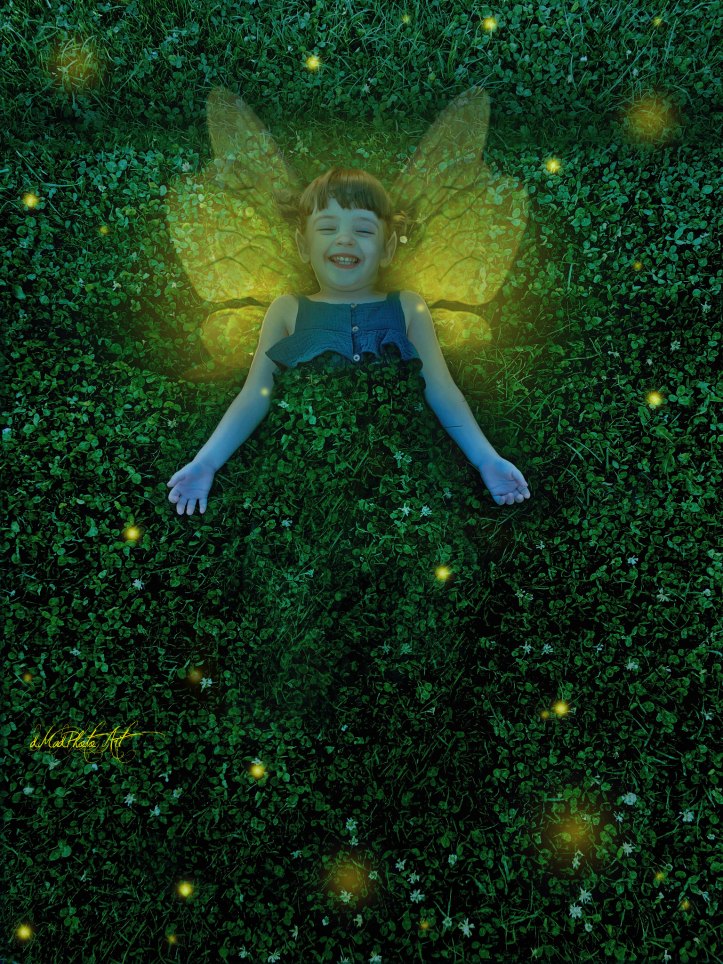 Marcos de Madariaga. Sueños luminosos. Flickr.
“There are two things children should get from their parents: roots and wings.”
Johann Wolfgang von Goethe
‘Roots and wings’ are core gifts to give to our children. Roots can symbolise many things, especially security and a sense of belonging. Having ‘wings’ will enable children to be free, to go where they choose, be who they are, feel independent, and fly off into the world equipped with confidence and feelings of value and worth. What better legacy could there be for our children’s future?
 Crescendo. Thomas Quine, 2006. Wikimedia Commons
“Your ultimate life experience and legacy is being built moment by moment, day by day. Your story is being crafted by your every action, all leading somewhere, all leading to what one hopes will be a magnificent crescendo.”
Brendon Burchard
This quotation highlights a truth that is often forgotten in the hustle and bustle of everyday life. We construct and shape the legacy we leave throughout our life, until we reach the ‘magnificent crescendo,’ the results of our labours.
Whether our legacy is left to family, friends, organisations, or the universe, from the moment we become adults, we are free to choose what kind of inheritance we will leave for others after we die.
This process really does begin long before we might even think about our own mortality in any real depth. By the time we die, we will already have left some of this legacy; our ways of being and ways of thinking on this earth will have left their impressions, for good or bad.
 Aaron Maier-Carreter – Not in front of the Kids [2020] Gandalf’s Gallery, Flickr.
“Children are not born for the benefit of their parents, neither are they the property of their family. Children belong to the future.”
Anthon St. Maarten
Protecting our children from our own, and others,’ ‘shadow side’ is a crucial part of ensuring that our legacy will be a healthy one. Of course, none of us is perfect (and desiring perfection would not be a good legacy anyway.) Yet it is the responsibility of us all to try throughout our lives to improve ourselves for others.
 Hands at the Cuevas de las Manos upon Río Pinturas, near the town of Perito Moreno in Santa Cruz Province, Argentina.The art in the cave is dated between 7,300 BC and 700 AD
“It doesn’t matter what you do…so long as you change something from the way it was before you touched it into something that’s like you after you take your hands away.”
Ray Bradbury
This is a meaningful quotation, in that it highlights the massive variety of ways in which we can leave behind traces of ourselves as a kind of legacy. How do you want to be remembered?
“If I leave this world with only kindness as my legacy, it will be enough.”
L.R. Knost
Making a difference in our lives will likely continue after our death. Our contribution to the world will live on. Perhaps without fully realising it, we will inevitably leave traces of ourselves in general possessions, memories, recipes or photographs.
These, and more, will represent aspects of ourselves and our lives that we ‘touched’ and, in doing so, created a change, leaving behind us a vestige of ourselves, no matter how small.
 Thomas Hawk. Found Photograph. Flickr
“A photograph is not only an image (as a painting is an image), an interpretation of the real; it is also a trace, something directly stencilled off the real, like a footprint or a death mask.”
Susan Sontag
Photographs can become extra important after someone has died; then, those personal traces they have left behind for us become especially meaningful. It is as if a part of them is still with us.
We leave traces of ourselves in our writings, music and art, through marks and indentations on our favourite chair, through our hair in a brush, perfume on our clothes….
 Virginia Woolf’s Bed at Monk’s House. John Cummings, 2013. Wikimedia Commons.
“I am convinced that a good building must be capable of absorbing the traces of human life and taking on a specific richness… I think of the patina of age on materials, of innumerable small scratches on surfaces, of varnish that has grown dull and brittle, and of edges polished by use.”
Peter Zumthor
We leave behind our love in cards and gifts, tangible signs that we have had a life; there may be forgotten coins dropped down the back of the sofa, our voice recorded on a mobile phone, fingerprints on a window and coffee stains on a book, handwriting, bookmarks and dried flowers, pressed between pages for eternity, a favourite pen, our clock still ticking on the mantelpiece, lovers’ carvings on tree-trunks…
 The Initials – Winslow Homer. 1864. Wikioo
We inevitably leave such ‘trace-evidence’ behind us, whether we are departing a place to go somewhere else, or, even more poignantly, when we die. The traces we leave can serve as a kind of memory, a legacy or real evidence that we have been there, that we have existed.
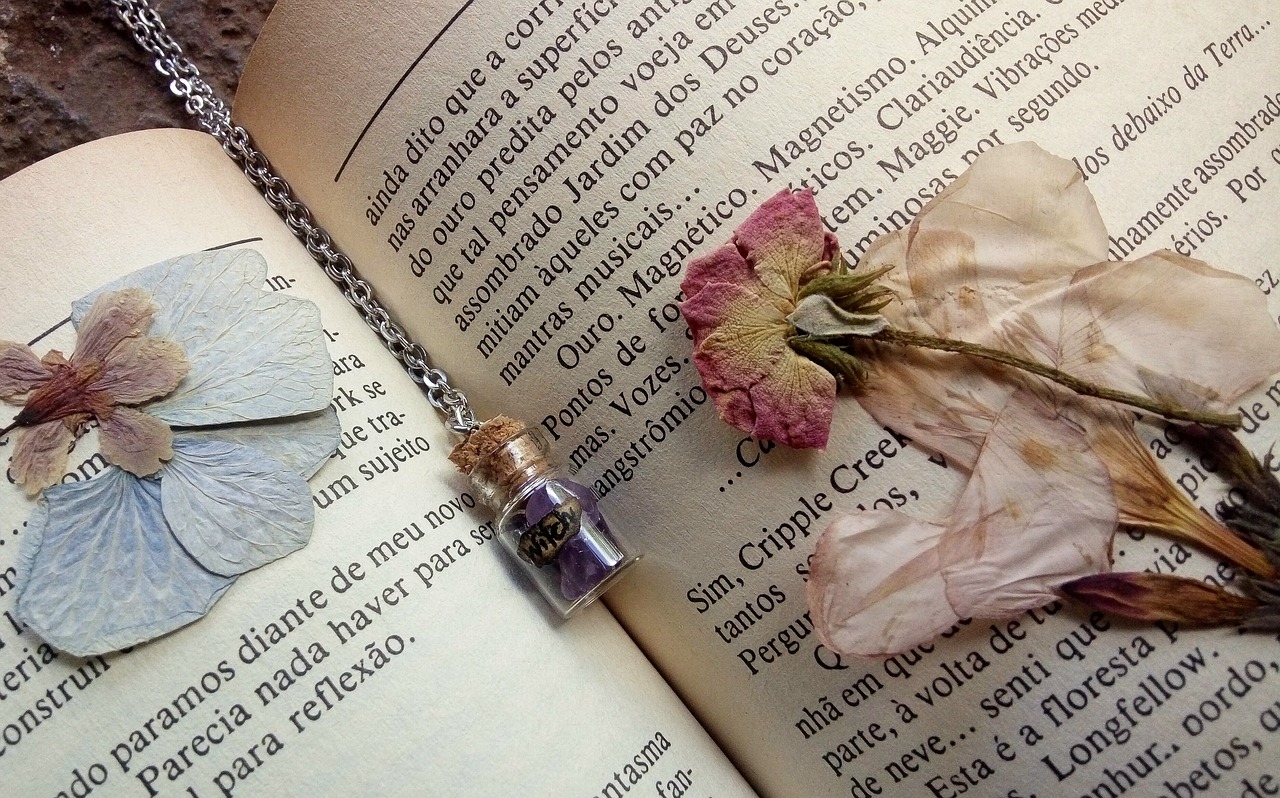
Such traces can be distressing reminders, or they can bring comfort, or both. It is as if, through them, something of the lost person remains with us.
And finally… one of the most valuable legacies we can leave are…our stories…
 A Story of the Sea – John George Brown. 1883. Wikioo
“Your story is the greatest legacy that you will leave to your friends. It’s the longest-lasting legacy you will leave to your heirs.”
Steve Saint
From the earliest cave paintings, to communications online, human beings have needed to tell their stories and to leave them in all kinds of ways for future generations.
Doing this helps people connect to others, to preserve history and to pass something on into the future through their narratives.
“In the end, we’ll all become stories.”
Margaret Atwood
 Julius Paulsen – A family Around a Table (1919) Wikimedia Commons
“Everybody is a story. When I was a child, people sat around kitchen tables and told their stories. We don’t do that so much anymore. Sitting around the table telling stories is not just a way of passing time. It is the way the wisdom gets passed along. The stuff that helps us to live a life worth remembering.”
Rachel Remen
Telling stories helps us to know who we are, and to let others know what we have been, heard and experienced. Ensuring that our own stories are worth leaving to others can be a lifelong task; we all need to see to it that what we are leaving is deserving of being passed on to future generations.
 Louis Charles Moeller – Spinning Yarns. Gandalf’s Gallery. Flickr.
“We’re all made of stories. When they finally put us underground, the stories are what will go on. Not forever, perhaps, but for a time. It’s a kind of immortality, I suppose, bounded by limits, it’s true, but then so’s everything.”
Charles de Lint
Older people often relate their stories to the young in order to demonstrate that tough life issues can be managed and endured.
Such inter-generational stories, like the passing down of tips and hints, traditions, songs and dance, create a bridge between the old and the young, a continuation, a perpetuation of cultural and familial customs.
We all need to feel a sense of belonging to history and culture, and through the oral tradition of telling stories, we can gain a feeling of rootedness. We can thus be helped to forge our own identity, as stories can link us to our past and the people whose genes we continue to pass on into the future. They will persist, they will change, but in some way the stories will filter through the generations.
Perhaps we can aim to hand down and preserve through our stories examples of courage, love, strength and resilience, to inspire and support, a lasting message from the past and an enduring legacy for the future.
 My heart in your hands. 2007. Wikimedia Commons. Louise Docker
“Carve your name on hearts, not tombstones. A legacy is etched into the minds of others and the stories they share about you.”
Shannon Alder
© Linda Berman
 waysofthinking.co.uk