
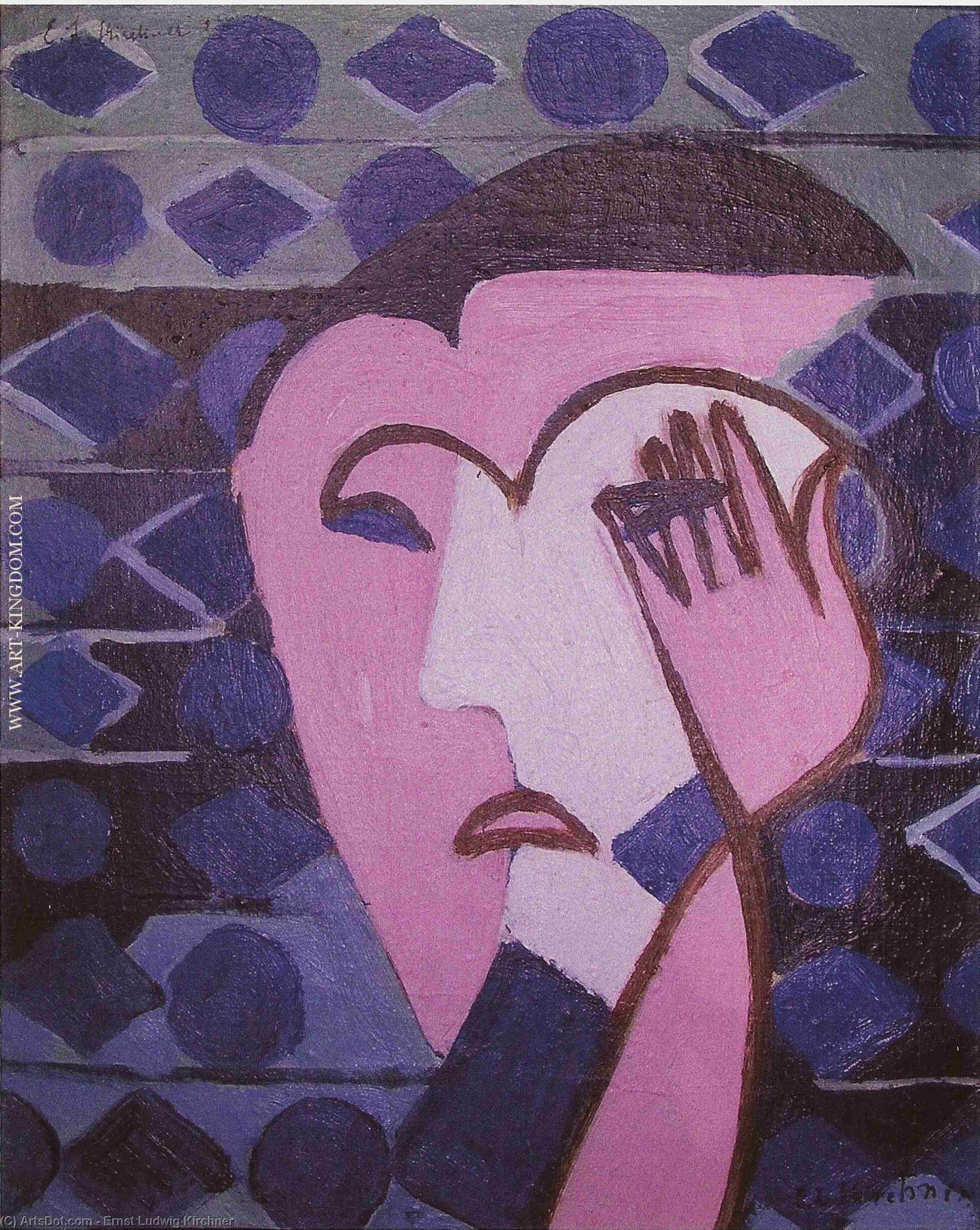
 Sad Female Head – Ernst Ludwig Kirchner. 1929. Wikioo
Life can be hard for us all; there is no doubt about that. But do you tend, maybe unconsciously, to make things more difficult for yourself, and, perhaps, for others?
What are some of the ways in which people create difficulties that could be avoided? There are many; in this post, I have selected ones that might promote a little thought and reflection…
- Prodding beasts
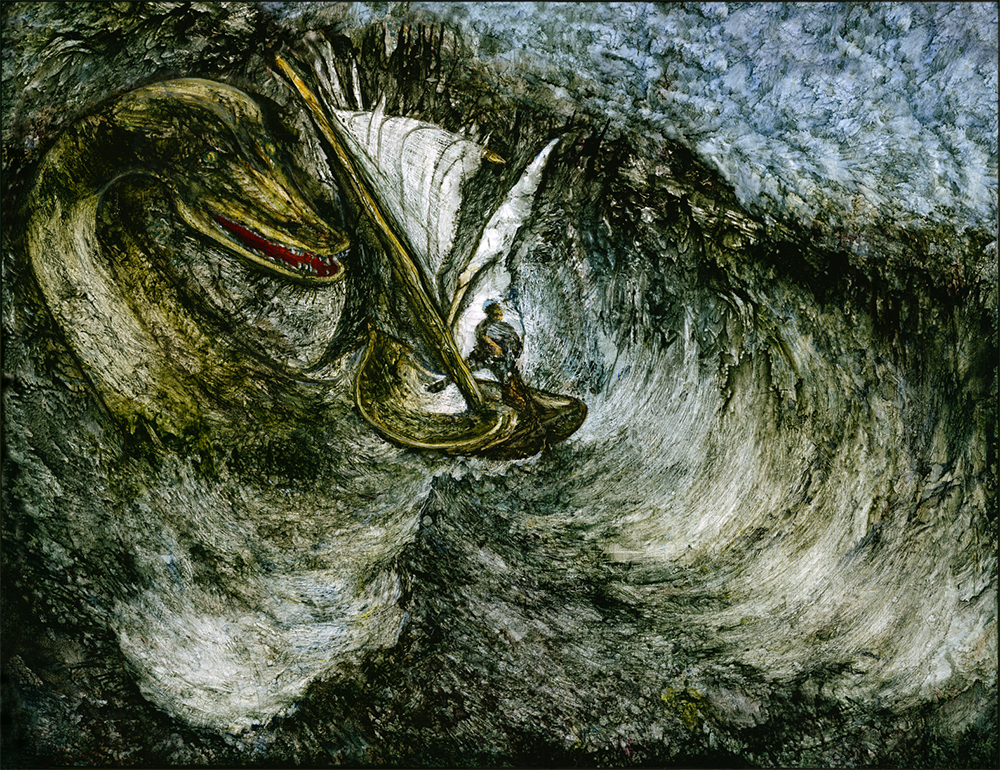 Loch-Ness-Monster. Hugo Heikenwaelder 1999. Wikimedia Commons
There are, it is said, angels all around us; unfortunately, there are also ‘beasts,’ people who want to harm us. Are you inclined to prod them?
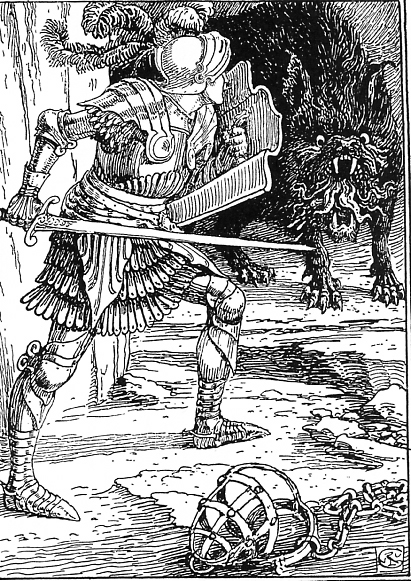
Blatant Beast. Walter Crane. c. 1897. Wikimedia Commons
By ‘prodding beasts,’ I mean putting yourself in harm’s way by irritating people who can be beastly and monstrous at the drop of a hat. This might rouse them into evil action.
Do you raise issues that you know will cause trouble and upset? Do you unconsciously become the scapegoat, whilst others keep out of the ‘beast’s’ way?
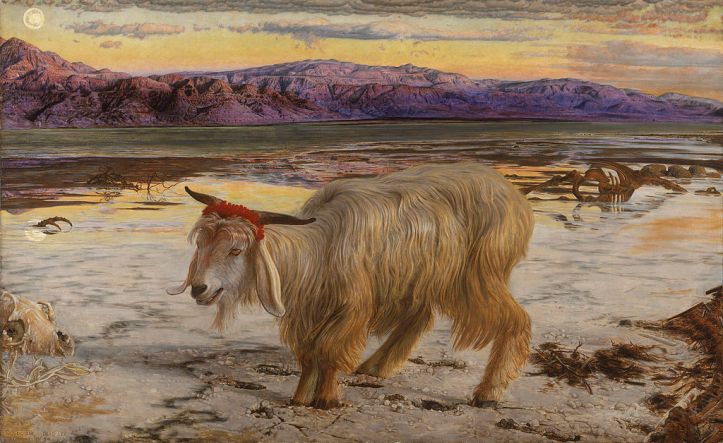 The Scapegoat. 1906. William Holman Hunt. Wikimedia Commons.
“If you are different from the rest of the flock, they bite you.”
Vincent O’Sullivan
The scapegoat is often seen as a problem in a family group, the black sheep, to mix metaphors. We often project the disliked aspects of ourselves onto ‘the other.’ This enables us to temporarily rid ourselves of aspects of which we are ashamed or afraid.
People who frequently feel they become scapegoats have usually been treated like this in their original family. They may have been labelled from a young age, perhaps as ‘the naughty one,’ so that, unconsciously, the others in the family can feel ‘virtuous’ in comparison. In this way, they escape looking at, or changing, their own behaviour, by pointing the finger at another.
As the scapegoated child grows up, they may find themselves in similar roles, feeling that people are projecting their ‘bad’ aspects onto them, rendering them isolated and like an outsider.
Somehow, they are unconsciously repeating behaviour patterns that began in childhood, and, without realising it, are encouraging others’ negative projections. This is a painful position to be in, bringing much anguish to them as the victim of unfair criticism and blame.
How can a person stop making their own life even harder by becoming constantly scapegoated?
The scapegoat, understandably, can have an exaggerated sense of rightness and justice and become carried away by this. Often this is a result of not thinking about the possible consequences of their behaviour, and getting carried away by their own anger and/or grandiosity.
The saying ‘let sleeping dogs lie,’ is relevant here; rather than risk the dog’s wildness, and its sharp teeth, it may be safer to leave it sleeping, for it may not take too kindly to being ‘prodded.’

Whilst, of course, it is sometimes necessary to take calculated risks, unconsciously putting the self in unnecessary danger is far from being a considered or wise course of action.
Whilst we may indeed be speaking the truth, sometimes it is not prudent to do this, especially if, in doing so, we become more likely to be scapegoated. This may involve being punished for telling the truth and then blamed and seen as the person who is at fault, bad or mad.
Sometimes it is safer to hold back, to stop and think long and hard before uttering a word. Speaking out can be experienced as threatening by some people, depending on the way such thoughts are expressed and the motivation behind them.
That is certainly not to say that speaking out is always a bad thing; far from it. A person who experiences or witnesses abuse, for example, will need to think carefully about finding a way of ‘whistle-blowing,’ either in a family situation or any other. This is different from repeatedly putting oneself in a scapegoated situation through speaking without thinking, or becoming the martyr.
- Acting out unresolved rebellious feelings
Sometimes people are scapegoated for being rebellious and challenging the status quo. They rally against others whom they see as trying to control them and often demonstrate a kind of righteous anger towards the universe. They feel, to an extreme degree, that they have the truth and they need to fight for it.
Some may become adults who passionately support a worthy cause in a constructive and positive way, whilst others may perhaps become violent or excessive in their fight for ‘justice.’ Often they are unaware that the roots of such behaviour lie in a childhood where they felt powerless to change anything.
Whilst fighting for change in society can be a very important issue, when this turns into repeated violence or self-harm, we may question whether people are not altogether reacting to today’s events, but are also rebelling against their own past experience.
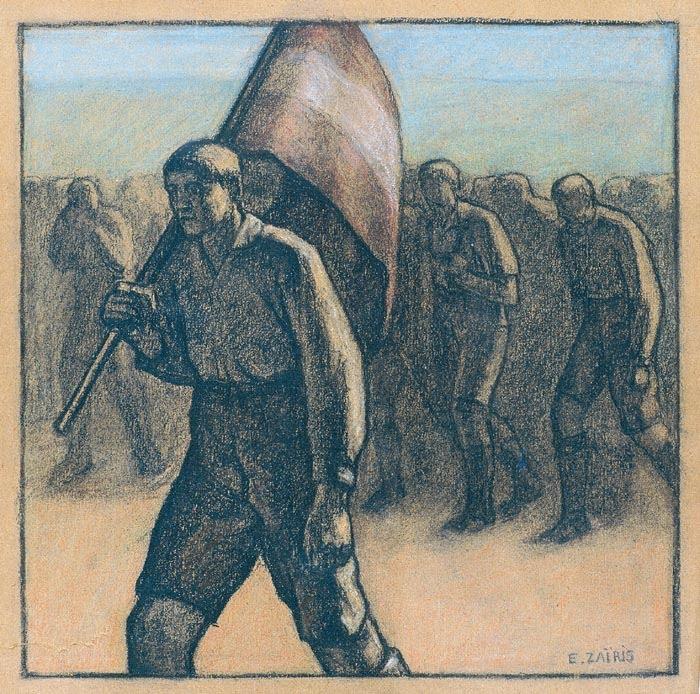
The Demonstration – Emmanuel Zairis. (1876-1948)Wikioo
- Self-blame, regrets, anxiety, guilt and worry…
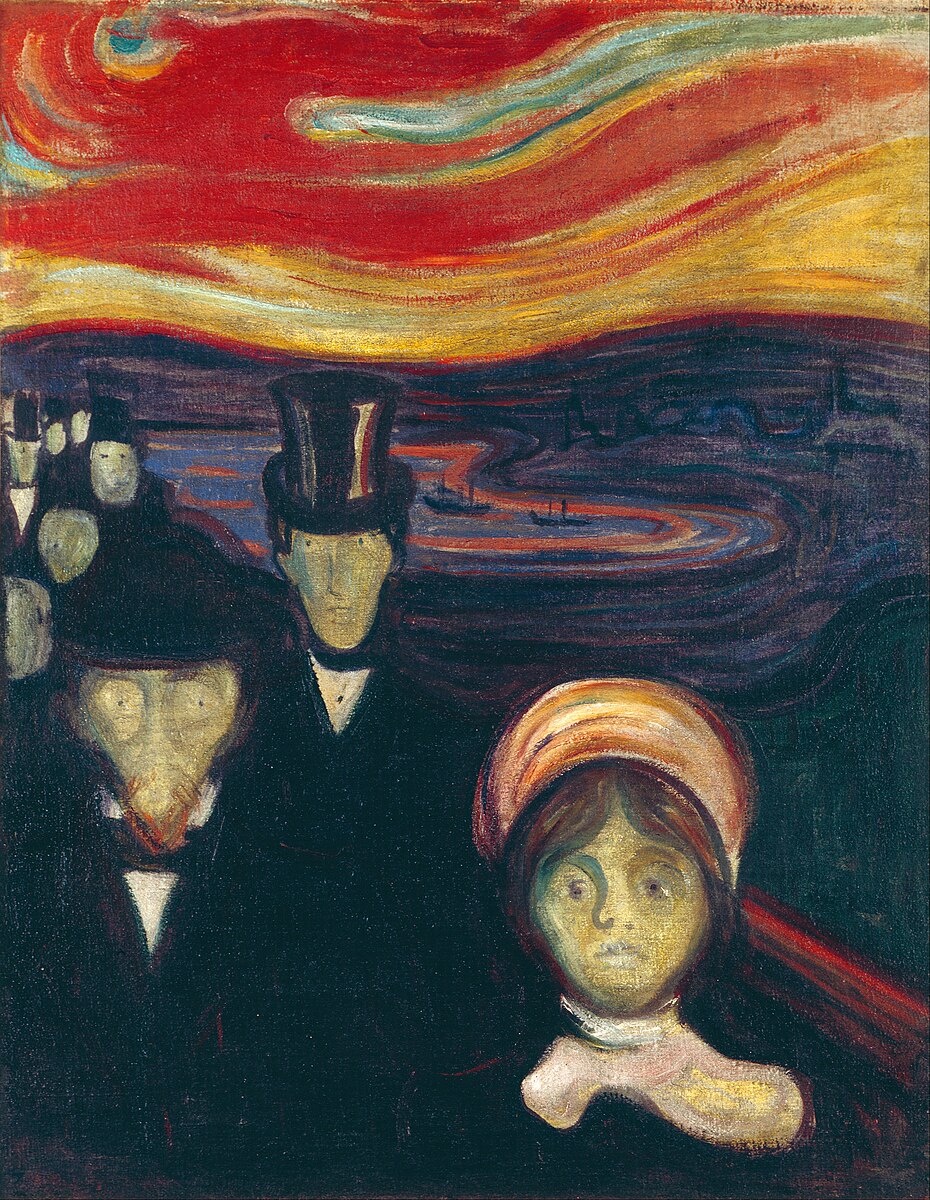 Edvard Munch – Anxiety. 1894. Wikimedia Commons.
“The real difficulty is to overcome how you think about yourself.”
Maya Angelou
All these feelings and behaviours towards the self make life harder for us. They are frequently encouraged by a harsh inner voice that is toxic, self-blaming and critical, often inherited from a parental figure from the past.
If we have not faced this critical internal speaker, perhaps in psychotherapy, then it will constantly replay inside us, telling us how bad and inadequate we are, creating more guilt and worry, making our life much harder than it needs to be.
This is a kind of self-torment, plaguing ourselves with anguish, catastrophising, and ‘what-if?’ ruminations. We make our lives much more difficult if we allow ourselves to think in toxic ways; it is crucial to gain awareness of this, in order that we can understand its roots and prevent ourselves from becoming stuck in jumping to the most negative conclusions.
- An enormous paradox.
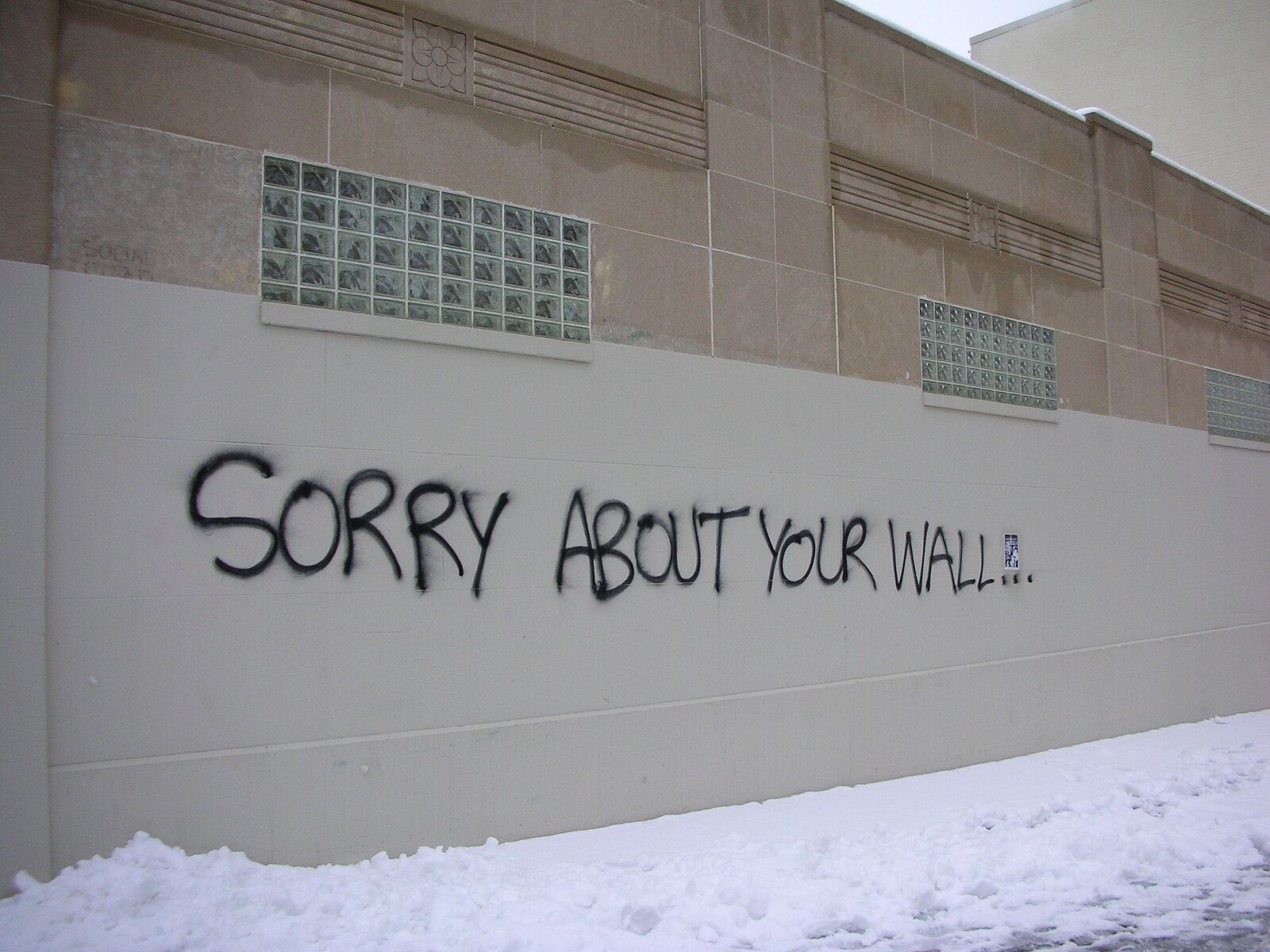 Paradox. Graffiti art. 2007. By Uncleduke. Wikimedia Commons.
“If you want to make life easy, make it hard.”
Goethe
Now, at this late stage in my post, I will appear to totally contradict myself, as is my wont! I have been underlining the fact that we may all, without realising it, make life more difficult for ourselves. Now, however, I may appear to be saying the opposite, neatly encapsulated in the Goethe quotation, above.
 Work Table – Lynton Harold Lamb. (1907-77) Wikioo.
“Nothing in the world is worth having or worth doing unless it means effort, pain, difficulty… I have never in my life envied a human being who led an easy life. I have envied a great many people who led difficult lives and led them well.”
Theodore Roosevelt
It is, indeed, true that we learn from the difficult times. An ‘easy’ life may actually create difficulties for us, in that we will not learn how to manage the inevitable painful experiences that do, at some time in life, befall us all.
Anything really good, big or small, requires hard work and problems to be solved. There is no easy way round this, no magic wand. It is a fantasy that answers and solutions will just fall into our lap, although many of us might wish that they would!
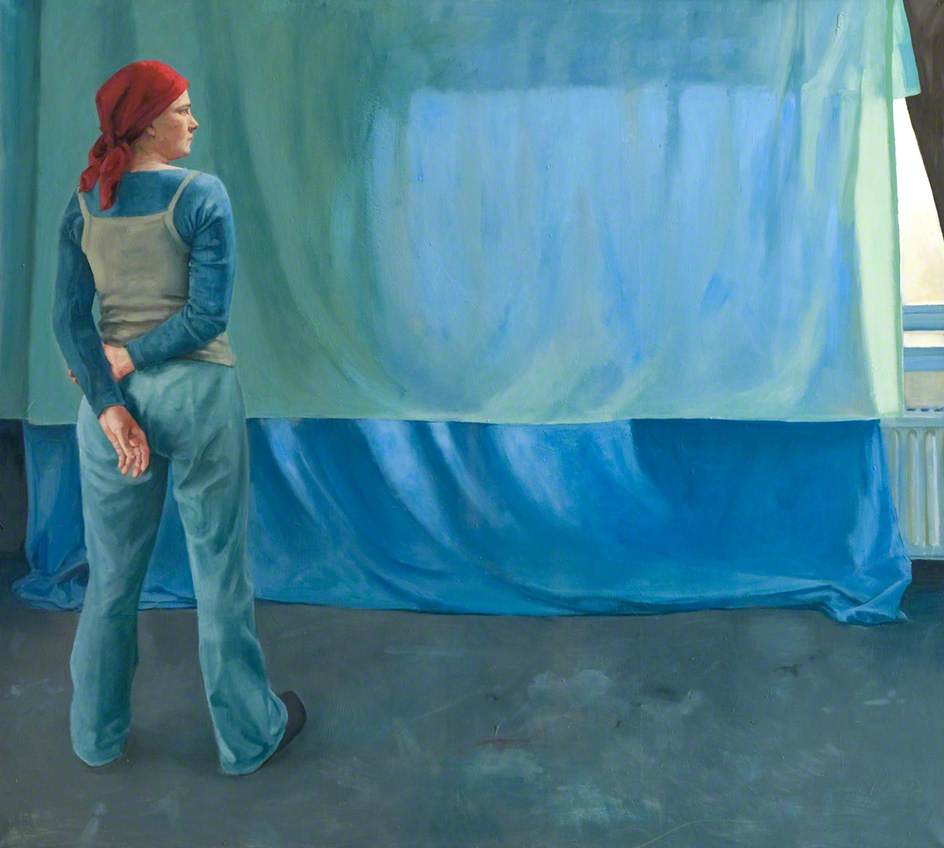 Watching – Jennifer Anderson. 1997. Wikioo
“An easy life is rarely meaningful and a meaningful life rarely easy.”
Oliver North
“Everyone is handed adversity in life. No one’s journey is easy. It’s how they handle it that makes people unique.”
Kevin Conroy
As with many paradoxes, both ways of thinking can be simultaneously true. We all need to look at the manner in which we might be making our lives difficult for ourselves in negative and unnecessary ways. We also need to understand that always opting for the ‘simple life’ can be a way of dodging the realities of our existence.
This is the paradox. Being open to this fact, and not searching for absolute, one-sided ‘truths’ is crucial if we are to live a constructive and free life.
“Ordinary readers, forgive my paradoxes: one must make them when one reflects; and whatever you may say, I prefer being a man with paradoxes than a man with prejudices.”
Jean-Jacques Rousseau
It is not an easy task to recognise exactly how we make life unnecessarily difficult for ourselves, adding to our pain, exacerbating our worries. Being able to do this, whilst accepting the fact that, as I said at the beginning of this post, life is hard for everyone, will ensure that we are not piling on the pressure and contributing to our own suffering.
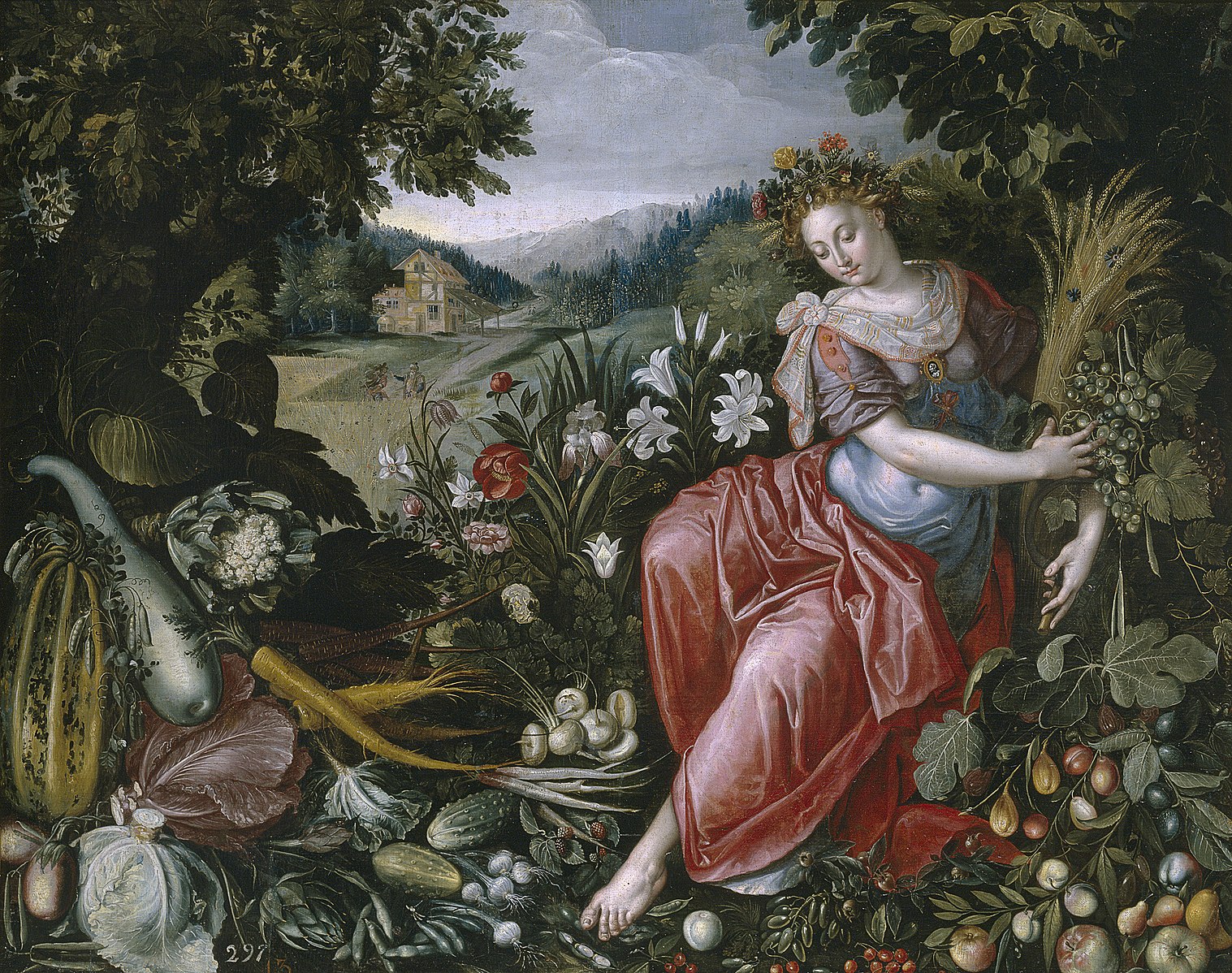 Maerten de Vos – The Earth. 16th century. Wikimedia Commons.
” If you create no more pain for yourself, then you create no more pain for others. You also no longer contaminate the beautiful Earth, your inner space, and the collective human psyche with the negativity of problem-making.”
Eckhart Tolle,The Power of Now
© Linda Berman
 waysofthinking.co.uk