
- What is the point of rules?
There are rules everywhere. Some are vital and very necessary, others less so. In this post, I explore different kinds of rules and examine how, sometimes, breaking rules can enable creativity and innovation.
- Societal rules and warnings
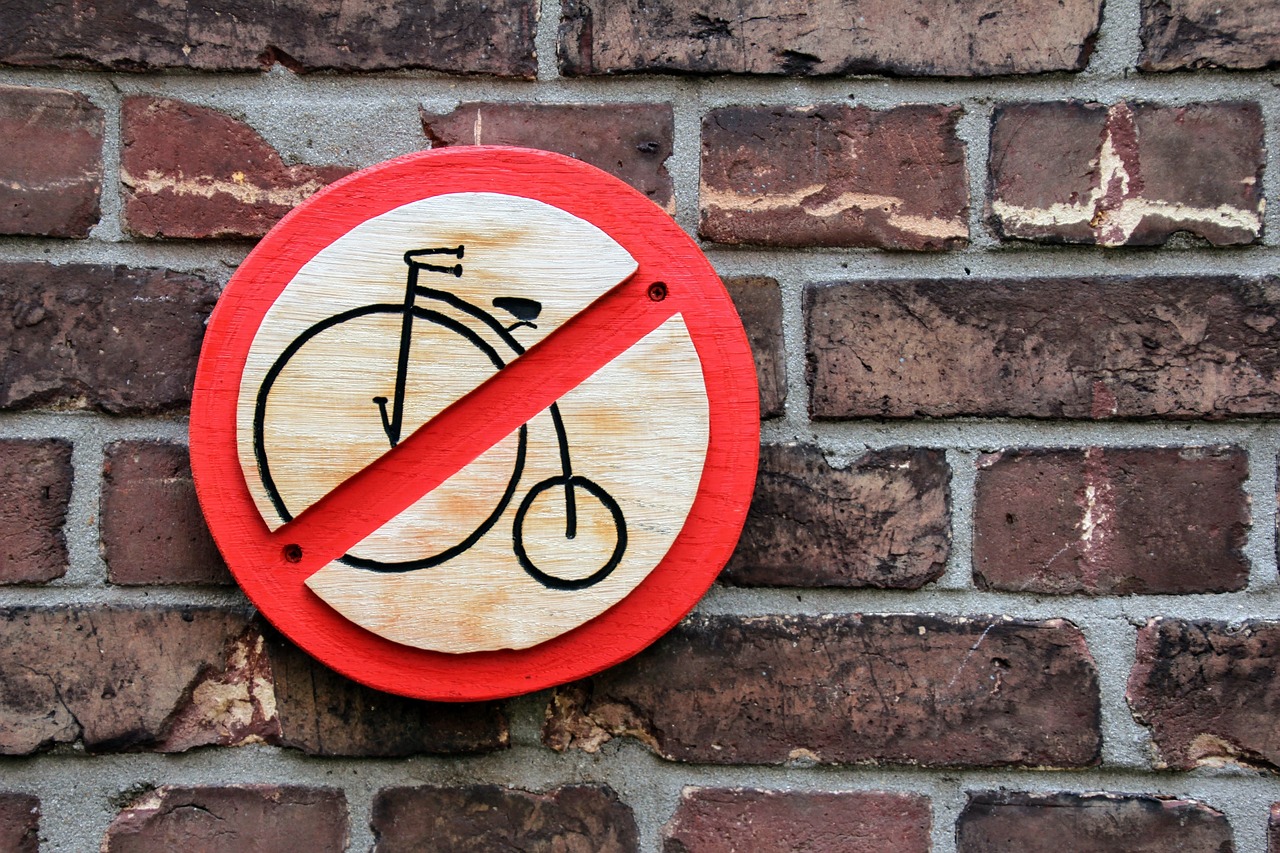
Not all rules will be kept; some, like the above, are likely to be laughed at or totally ignored.
We generally do, however, obey rules that are there for our own safety, and we know that we ignore them at our peril.

Some people break rules because they have a sense of entitlement… rules do not apply to them. Others are rebellious, angry, or frustrated, or they may break rules to show off to others. Some seek ‘excitement,’ in an attempt to escape the mundanity of their lives.
Those who break rules wantonly often do not think about what they are doing. They act impulsively, spraying graffiti, throwing bricks through windows, or stealing items from shops. It is as if, momentarily, such behaviour lends a feeling of power.
- Laws
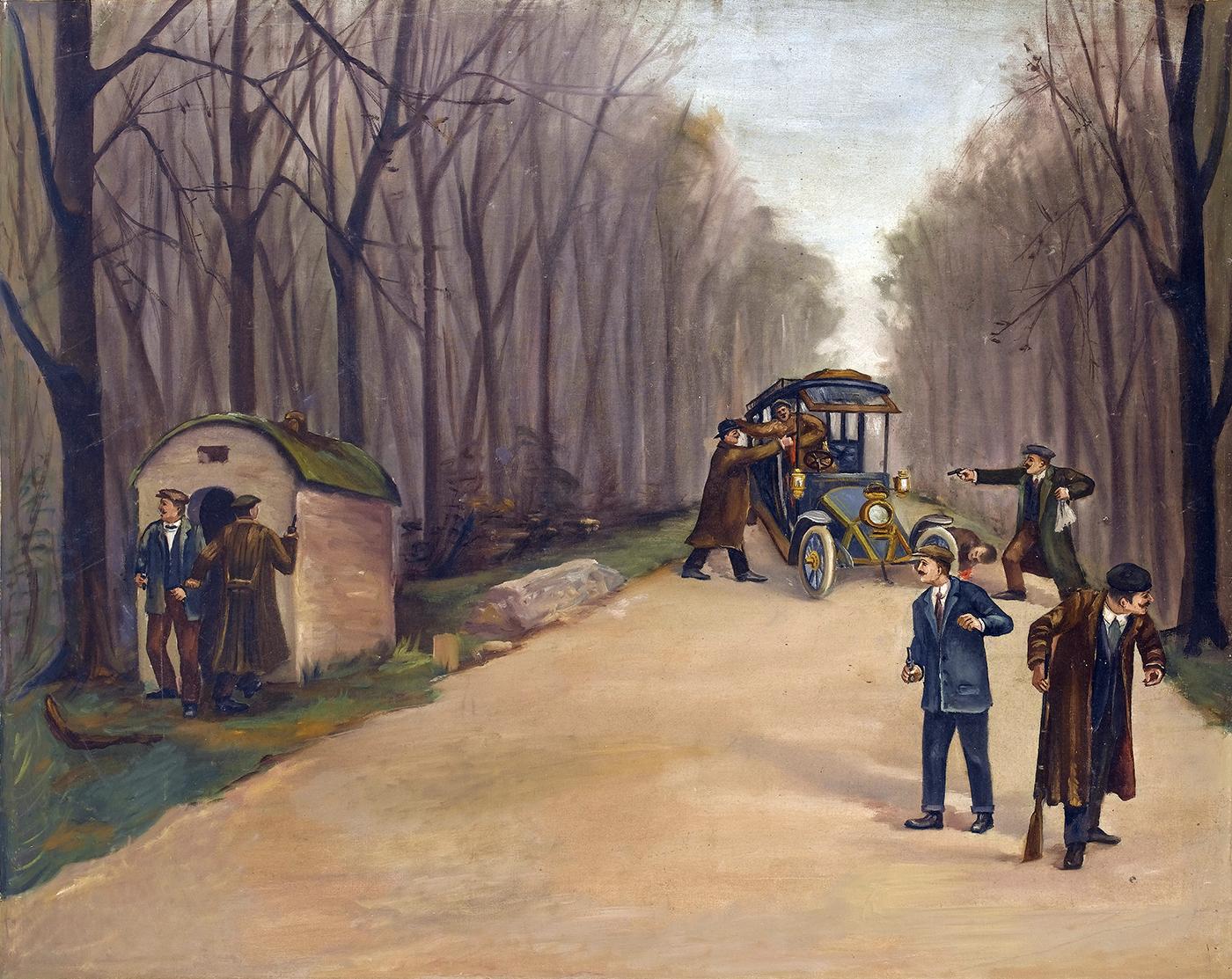 A 1912 illustration of the French illegalist Bonnot gang at work. Artist unknown. Wikimedia Commons
“The Bonnot Gang…was a French criminal anarchist group that operated in France and Belgium during the late Belle Époque from 1911 to 1912. Composed of individuals who identified with the emerging illegalist milieu, the gang used new technology, such as cars and repeating rifles not then available to the police.” (Wikipedia)
In general, laws exist in order to maintain a safe and civilised society. Transgressing these laws is certainly not advisable, it can be dangerous, and sometimes plain stupid.
The painting above, despite its dodgy perspective, effectively tells the story of a gang of car thieves violently breaking the law. Making choices to go against laws in life is risky and unwise, likely to lead to fines or prison. Each of us has a responsibility to keep within the law, both morally and legally, for the sake of ourselves and society.
- House rules…and breaking them
 Break the rules. 2007. Author Edward Simpson. Wikimedia Commons.
At home, at work, or at school, there are ‘house rules,’ that is, rules set by the organisation or institution. They are not always laws, although they may be, and transgressing some of them may result in the police being called. Abuse within a hospital will not be tolerated, and shoplifting will frequently result in criminal charges.
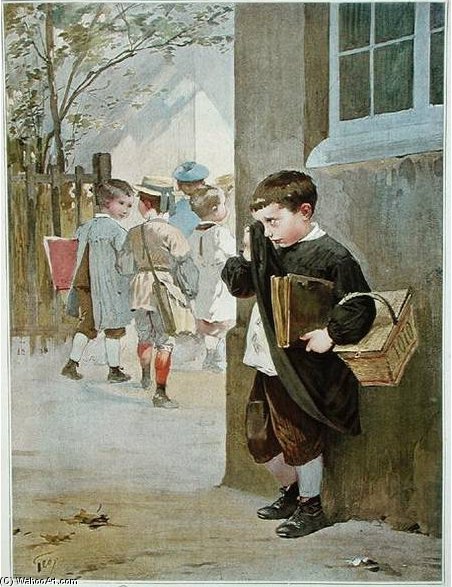
In Detention – Henri Jules Jean Geoffroy Dit Geo. 1889. Wikimedia Commons
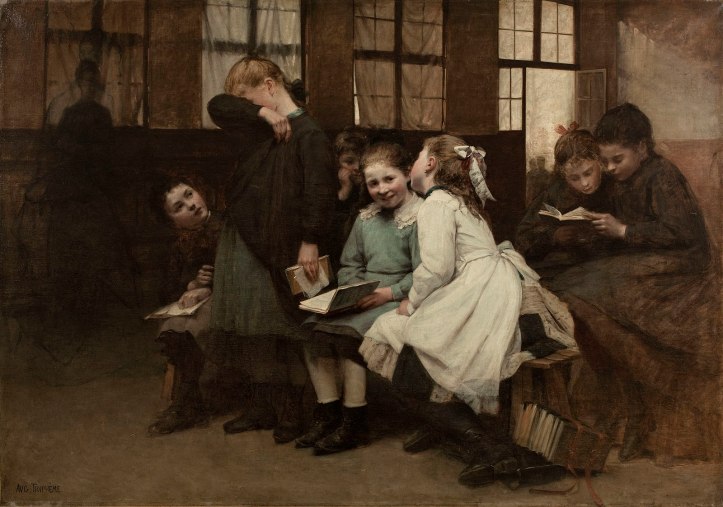 Auguste-Joseph Truphême – En retenue (In Detention)c.1888. Wikimedia Commons
“If you obey all the rules you miss all the fun.”
Katharine Hepburn
In schools, there are rules established for the wellbeing of all children. How many of us, though, can remember breaking these rules, by, for example, talking in class or running down the school corridor?
Many years ago, when I was a timid, rule-bound child at primary school, I hated with nauseous revulsion the small, free, compulsory, warm bottles of milk provided each day at 11.00. The bottles were placed by the radiator in winter to warm them when they arrived frozen from the cold weather.
I found many and different ways to avoid drinking the milk. My dislike of it overrode my fear of the teachers. Sometimes I poured it down the toilet, and at others, I decanted it into the cups of those who had coffee and wanted it cooler. I never got caught!
Sometimes, being very rule-bound can be limiting and constraining. Some rules that people tend to regard as minor, such as gesturing to other drivers when angry, parking with one wheel on the kerb, ringing on a doorbell and then running away, sharing prescribed medication, and many others, are broken with abandon on a daily basis.
Other rules, like those in nature, are also frequently broken. People do walk on grass, throw litter, feed animals, drink alcohol, camp in forbidden places, leave gates open, smoke, take drugs, swim where it is not permitted, and allow dogs off the leash when not allowed.

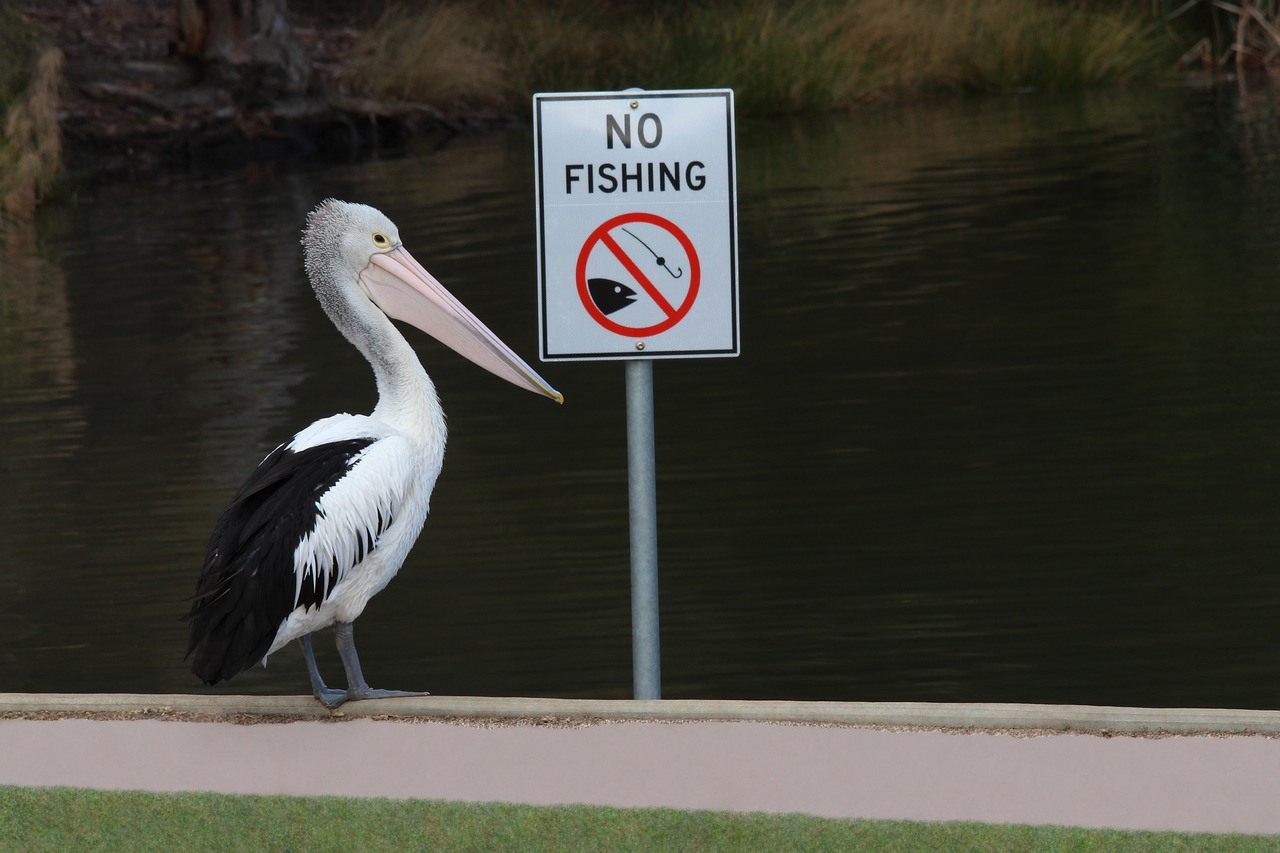
How rule-bound are you? Perhaps you pride yourself on thinking that you do not break rules, but think again. Do you ever go through the wrong entrance in a car-park, talk in a library, take extra paper towels in a public loo, enter a swimming pool without showering, go too far when stroking a horse at Buckingham palace right beneath a warning notice?
It is, without doubt, foolish to take such risks for the sake of a ‘good’ photograph. We really do need to take heed of the official warnings about possible consequences.
However, there are times when we do know best about the rules that we will obey, and those we will ignore. If we are well-informed and aware when considering breaking a rule, and we understand why the rule has been put in place, then we are in a better position to decide whether or not to take heed of it.
- Making our own rules
Having the freedom to establish one’s own rules in life can be a liberating feeling. Some rules can be stultifying and rigid, made by people who themselves are rule-bound and who tend to obstruct others’ fun, inventiveness and creativity.
These are the ‘jobsworths’ of this world, ridiculously concerned about petty rules and often narrow and spiteful in their approach. Whilst many people may obey such rules for fear of losing their jobs, others may tend to endorse perhaps self-made, trivial rules without respecting fellow-feeling, reasonableness, or common sense.
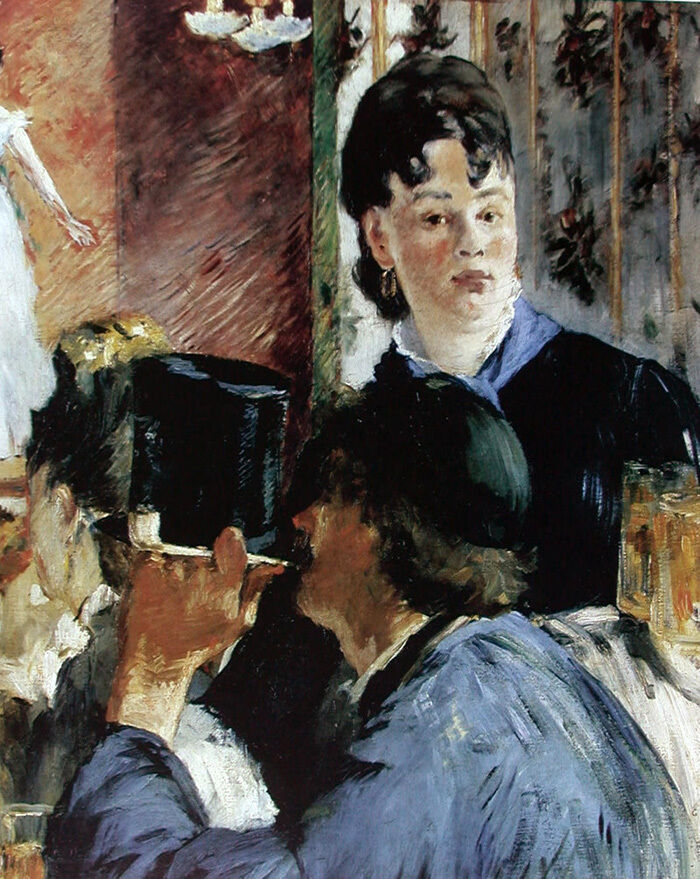
The Waitress – Edouard Manet.1879. Wikioo
“Rules are made for people who aren’t willing to make up their own.”
Chuck Yeager
Others may break trivial or unfair rules whilst the boss’s back is turned, aware of the stupidity of the rule. For example, in a local pub’s buffet restaurant, the boss has ruled that there can be no selection of vegetables offered, just large portions of one vegetable at a time.
The servers often break this rule behind the boss’s back, giving the customer smaller portions of several vegetables, offered with a knowing smile. They often choose the customers they like, know and trust when they do this. The customers (myself included!) collude eagerly with this rule-breaking, feeling like a special, valued, partner in crime.

Edvard Munch – Still Life with Cabbage and other Vegetables, 1926–30. Wikimedia Commons.
“Some rules are so nonsensical, they’re meant to be broken.”
Frank Sonnenberg
From childhood, we need to be encouraged to learn to sing our own song, to become our own person. That will mean that we have a better chance of growing up knowing who we are and which rules to take notice of.
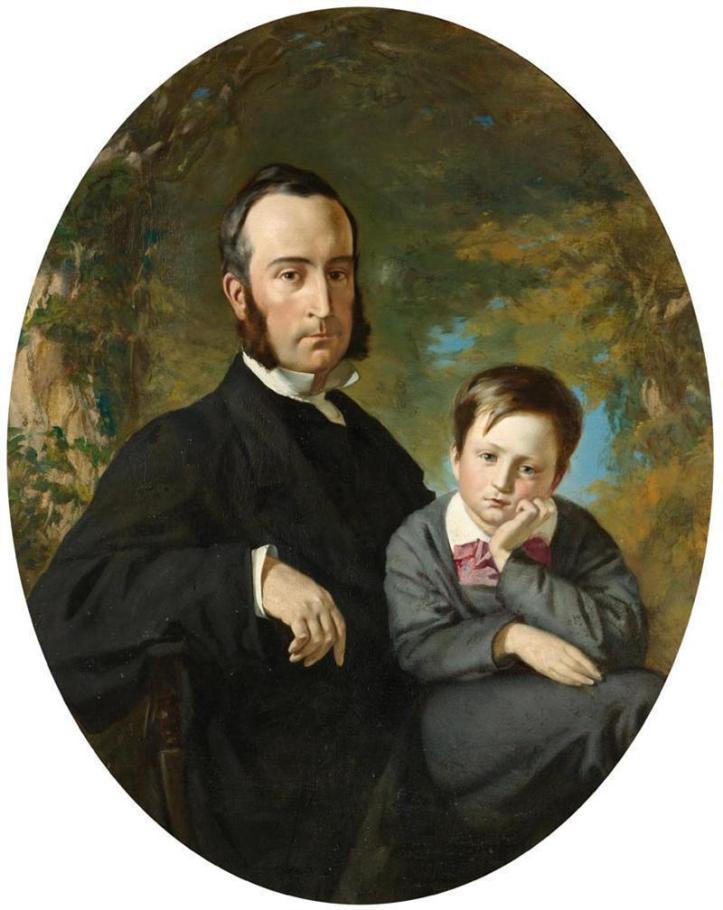
Frank Buchser – Father and son. 1861.Wikimedia Commons
If we have been raised to strictly please others at all times, we will likely become adults who do not know our own selves, always trying to satisfy others’ wishes at the expense of our own. We will likely be very rule-bound.
Being able to establish our own rules depends on us knowing ourselves and being clear about what we we think and believe.
“People who truly understand what is meant by self-reliance know they must live their lives by ethics rather than rules.”
Wayne Dyer
- Breaking or not making rules, creativity and innovation
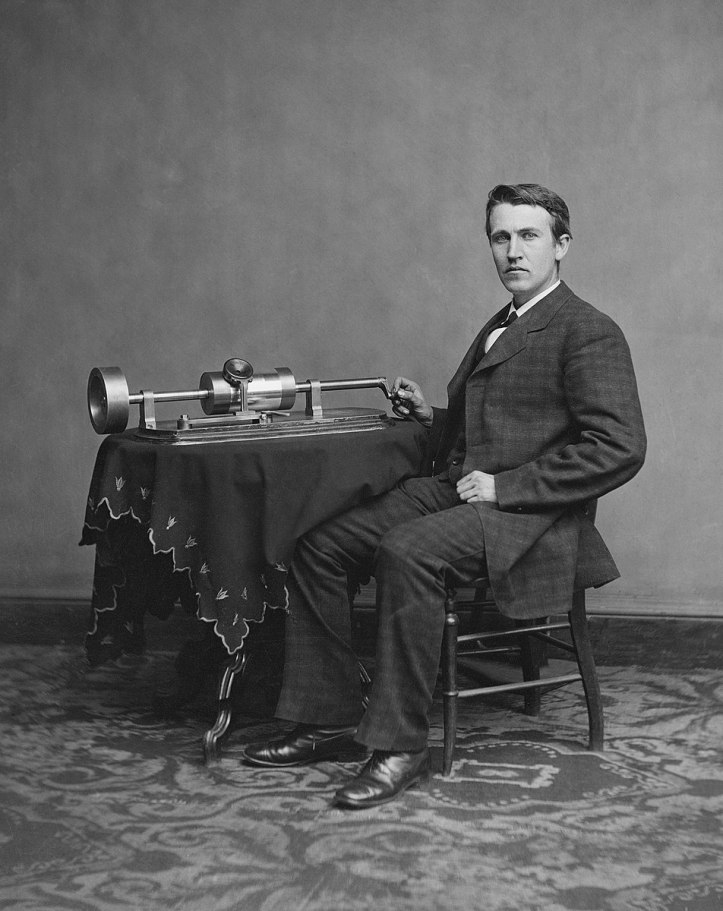 Edison and Phonograph. Levin C. Handy. c 1877. Wikimedia Commons
“Hell, there are no rules here – we’re trying to accomplish something.”
Thomas A. Edison
Rules can be unnecessarily restrictive and can actually prevent us moving forward into new discoveries, suppressing original thought and innovation. Being able to break free of such limitations is a liberating experience, for which many people might need therapeutic help.
“Integrity has no need of rules.”
Albert Camus
What did Camus mean by this statement? My interpretation is that he is saying that if we possess real integrity, we will not need external laws and regulations, we will know how to be in the world from knowledge and awareness inside ourselves.
Camus is referring to the fact that we all need to take responsibility on a personal level for how we act in the world, rather than having to obey external standards and rules.
“Loving kindness is greater than laws; and the charities of life are more than all ceremonies.”
The Talmud.
In terms of our everyday selves, it is important that we are able to risk free-thinking, without worrying about the disapproval of others, if we genuinely believe that we know what is right for us.
It involves times when we can lift the cultural constraints on our patterns of thought and allow ourselves to be authentic and to have some uninhibited, rule-breaking, thought-freedom. This is really living our lives and it certainly allows for more creative and innovative ideas.
“Nothing is at last sacred but the integrity of your own mind.”
Ralph Waldo Emerson
This quotation highlights the supreme importance of our inner integrity as a ‘sacred’ and guiding principle. There is a sense that this quality needs to be revered within ourselves above all others.
- ‘Rules’ in therapy
“There are no norms. All people are exceptions to a rule that doesn’t exist.”
Fernando Pessoa
Without doubt, there need to be boundaries in psychotherapy. These delineate the ‘rules’ that therapists set and maintain to protect and care for themselves and, most importantly, for the client. It is crucial for all therapists to have clear professional boundaries, in order to work ethically and responsibly.
Different schools of psychotherapy have different thoughts about boundaries. For example, most psychoanalytical therapists would consider that hugging a client is unprofessional, whereas some others might not.
Whatever the therapist’s rules, it must be remembered that all boundaries need to be there for the therapeutic benefit of the client and in the client’s best interests. The client, too, will have their own personal boundaries and these need to be, as far as is possible, communicated and understood by the therapist.
Boundaries in therapy include issues such as fees, setting, appointment times, therapeutic relationship and confidentiality.
However, it is also important that the therapist is flexible, and that any boundaries are elastic and malleable. Prescribed, manualised methods may have their uses, but what is most important is that the therapy is an individual experience, creatively designed for that client and around their needs.
Applying theory carte-blanche when working with people is mechanical and insensitive and it does not address their personal needs.
“I believe that a different therapy must be constructed for each patient because each has a unique story.”
Irvin D. Yalom
An experienced therapist, creative and sensitive, will know how and when they can break the rules, where necessary for the client and the process of therapy. Obviously, much thought and consideration, discussion and supervision must be called upon when considering breaking the therapeutic boundaries.
An illustration of breaking boundaries in psychotherapy that was helpful to the client may be found in Dr Robert Hobson’s description of his sessions with ‘Sam,’ a 14 year old boy who presented as angry and resentful.
This sullenness remained, until one day, things changed. His therapist had just heard a cricket match on the radio and began to ‘pour out’ his thoughts about cricket to Sam.
The therapist describes this in his book, Forms of Feeling:The Heart of Psychotherapy as ‘an irresponsible piece of behaviour.’ However, Sam enthusiastically joined in the discussion, smiling and exchanging views.
After that, he began engaging in a meaningful and productive psychotherapy experience.
Dr Hobson’s ‘boundary breaking,’ his going against the grain, was the innovative catalyst for this change:
“In a moving cricket conversation, our immediate experience was shared and shaped in verbal and non-verbal symbols of a language which emerged between us. It was not merely a matter of talking about events. It was a dialogue, a meeting, a talking-with in mutual trust-a personal conversation. A simultaneous giving and receiving. A finding and being found.”

“I believe in rules. Sure I do. If there weren’t any rules, how could you break them?”
Leo Durocher

Les Demoiselles d’Avignon. Picasso. Photo: Thomas Hawk. Flickr.
“Learn the rules like a pro, so you can break them like an artist.”
Pablo Picasso.
© Linda Berman
 waysofthinking.co.uk