
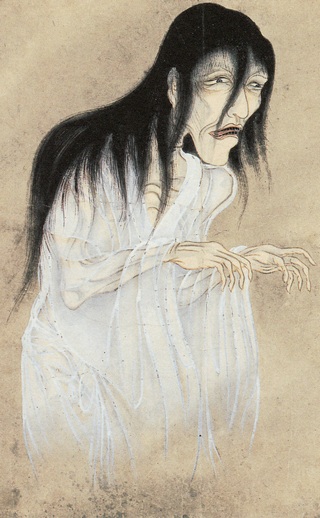
Suushi Yurei.(Japanese Ghost) from the Hyakkai-Zukan. 1737. Wikimedia Commons.
Do you believe in ghosts? Traditional approaches to ghosts that are seen as external to us can involve the exorcising of demons and troublesome ‘spirits,’ often by religious means. This is regarded as a way of casting them out, presumably hoping to return them to whence they came. Whether or not we believe in the paranormal and the traditional concept of ghosts, there certainly are ways in which figures from our past can feel as if they haunt us in the present. However, the ‘ghosts’ to which I am referring are not outside of ourselves; this post examines a different way of conceptualising the spirits of yesterday.“I believe that you’ve created a metaphorical universe in which you can express your darkest fears. In one aspect, yes, I believe in ghosts, but we create them. We haunt ourselves, and sometimes we do such a good job, we lose track of reality.”
Laurie Halse Anderson, Wintergirls
Ghost. Kevin Dooley. 2015. Flickr.
These ghosts are the spectral images from our own past experiences, secreted within our unconscious mind. Without our awareness, they become integrated into our psyche, the ghosts of the past coalescing and metamorphosing into aspects of ourselves. Ghost-hunting, therefore, psychologically-speaking, differs from the way in which we would popularly define the term, for this kind of ghost-hunting does not involve going into old buildings, dark forests, tunnels, or creepy cellars.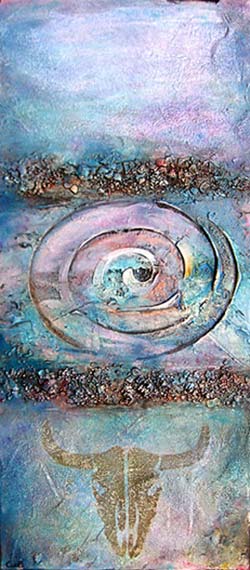
Carla Van den Berg. Inner Journey. 2008 Wikimedia Commons
The method of ghost-hunting to which I am referring involves an inner journey. This is a personal voyage into the unconscious, a seeking of the ghosts of the past that can pressurise us into repeating old, sinister patterns of thinking, feeling and behaving. In a fascinating, seminal paper ‘Ghosts in the Nursery,‘ (1975) Fraiberg et al describe in some detail the process of ‘unfriendly and unbidden spirits’ intruding early into the relationship between parent and child. This video helps to explain the process clearly: Edgar Ende – The Encounter [1933] Flickr
 Kimberly Dow – Speak of the Devil [2021]
“I’m not afraid of werewolves or vampires or haunted hotels, I’m afraid of what real human beings to do other real human beings.”
Walter Jon Williams
- The process of laying the ghosts
 hnt6581. fighting ghosts. 2011. Flickr.
However, the enormous pay-off, to ourselves, our children and our children’s children, is that, through ‘struggling’ in this way, we will be working to prevent the past being revivified in the present. In order to do this, it is important that we are helped to remember and re-face the ghosts of the past and the effects they had on us:“No one who, like me, conjures up the most evil of those half-tamed demons that inhabit the human breast, and seeks to wrestle with them, can expect to come through the struggle unscathed.”
Freud. From Dora: An Analysis of a Case of Hysteria, 1905
“Our hypothesis is that access to childhood pain becomes a powerful deterrent against repetition in parenting, while repression and isolation of painful affect provide the psychological requirements for identification with the betrayers and the aggressors.”
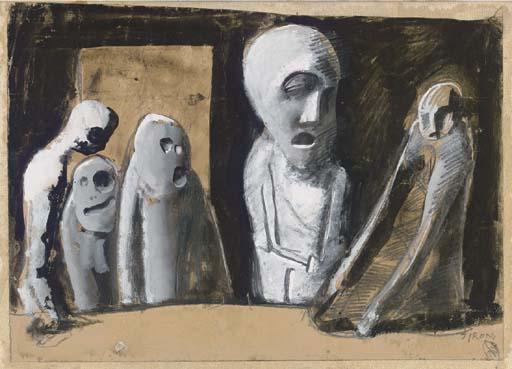
Ghost – Mario Sironi. Wikimedia Commons.
“Our demons lose their power when we pull them out of the depths where they hide and look them in the face in broad daylight.”
Isabel Allende
With a supportive, sensitive, appropriately challenging and empathic therapist, it is possible, in time, as Allende says, to exhume these ghosts from the further reaches of our unconscious and confront them ‘in broad daylight’, reducing their influence on our lives.
Such spectres can be eliminated by our knowledge, understanding and consideration of how they wield their power over us. The ghosts will run for cover once they are challenged by our awareness of them. Defeating these other-wordly entities from our past will herald the beginning of our recovery- from being haunted and tormented – to a new kind of inner freedom.
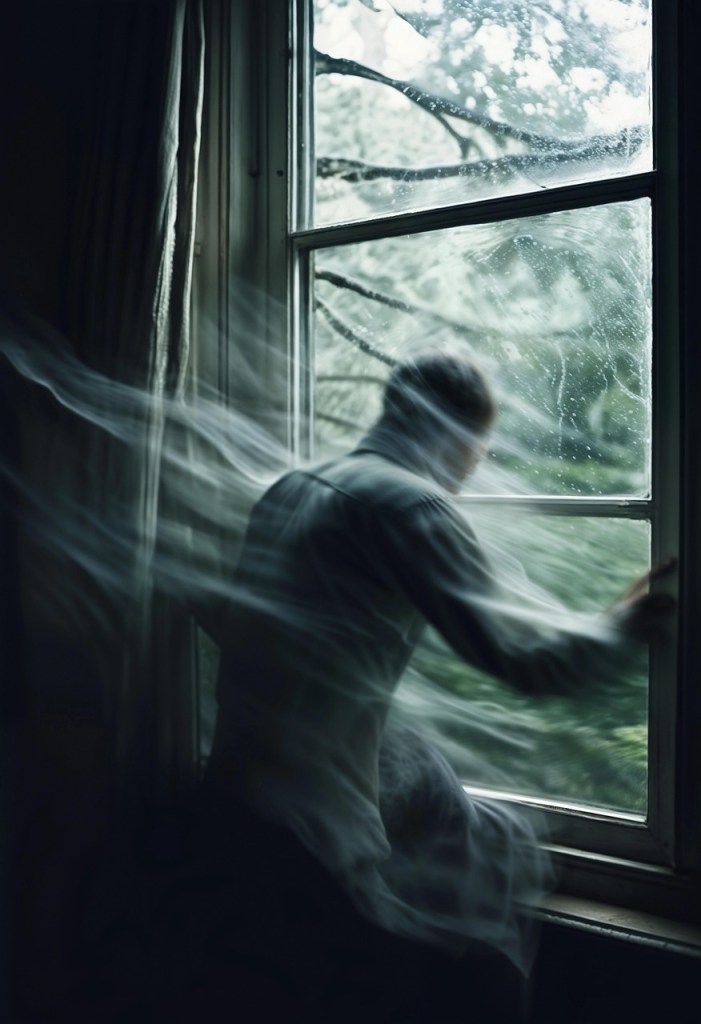
Ghost Running. Pixabay.
Thus, before we can ever rid ourselves of these ‘ghosts,’ we have to recognise and identify them within our unconscious selves. We do not, therefore, journey outwards, but inwards, into ourselves. This internal voyage might be facilitated by such experiences as psychotherapy, counselling, religious practice, meditation, mindfulness, or yoga.“Atrocities, however, refuse to be buried. Equally as powerful as the desire to deny atrocities is the conviction that denial does not work. Folk wisdom is filled with ghosts who refuse to rest in their graves until their stories are told. Murder will out. Remembering and telling the truth about terrible events are prerequisites both for the restoration of the social order and for the healing of individual victims.”
Judith Lewis Herman, Trauma and Recovery
Trying to find peace from the ghosts of the past outside of ourselves will not be effective. Many people do this, thinking that a luxurious bubble bath, a massage, lit scented candles, a quiet garden, sitting on top of a mountain, or completing a set of tasks and exercises, will be their permanent solution. Whilst all these might be palliative externally, those who seek such ‘solutions’ do not realise that the answer is concealed somewhere deep within themselves.“The only journey is the journey within.”
Rainer Maria Rilke
“Peace comes from within. Do not seek it without.”
Siddhārtha Gautama
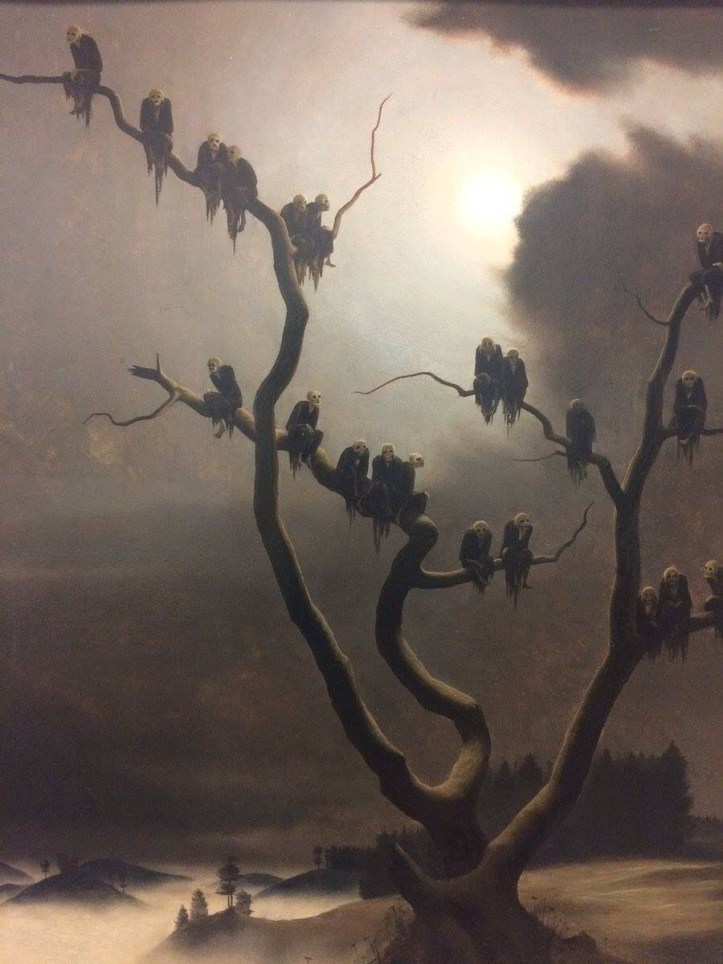 Ghosts on a Tree, 1933. Franz Sedlacek. Wikimedia Commons
Within our minds, we all have an internal landscape, a vast and complex inner world of our creation, both conscious and unconscious, a blend of many aspects, including memories, dreams, beliefs, imaginings, experiences, fears, thoughts and feelings. There exist, inside us all, dark places, uncharted, unexplored areas, shadows, dense thickets of unconscious material. ‘Traversing’ such a scary landscape takes courage and patience, for there, deep within us, we will come face to face with our lurking monsters, our demons, the ghosts of the past, people and experiences who hindered or damaged our lives. How can we banish them and stop them from continuing to dominate us the present? Can we alter the patterns of a lifetime, perhaps of many lifetimes? Can we end the harmful legacy of generations of our ancestors who have been passing down ways of thinking and behaving that can be destructive, even evil?“Life is not so much defined by the external situation as it is by the internal one.”
Jacob Needle-man
“Freedom is what you do with what’s been done to you.”
Jean-Paul Sartre
John Morgan. Ghosts. 2011. Flickr.
“You cannot defeat darkness by running from it, nor can you conquer your inner demons by hiding them from the world. In order to defeat the darkness, you must bring it into the light.”
Seth Adam Smith.
 Photograph of an oil painting by Andrew Stevovich, Woman with Autumn Leaves, 1994
We do have the choice, of course, of trying to ignore our ghosts. We can decide to ‘forget’ about disturbing events or scary people from our past. However, the likelihood is that, if we do this, then the pain and rage they created in us will emerge in another form.“Resentment and bitterness and old grudges were dead things, which rotted the hands that grasped them.”
Winston Graham, Jeremy Poldark
As the quotation says, often the bitterness remains, but its source is lost in our memory, leaving us generally resentful and angry with the world. Whilst there may have originally been very valid reasons for feeling angry at a real injustice, unfairness or grievance, allowing this anger to fester and putrefy and carrying it forward inside oneself, can only be damaging to health, happiness and wellbeing. Freud described this rather disturbing process as ‘the return of the repressed.’“Bitterness: anger that forgot where it came from.”
Alain de Botton
“Unexpressed emotions will never die. They are buried alive and will come forth later in uglier ways.”
Sigmund Freud
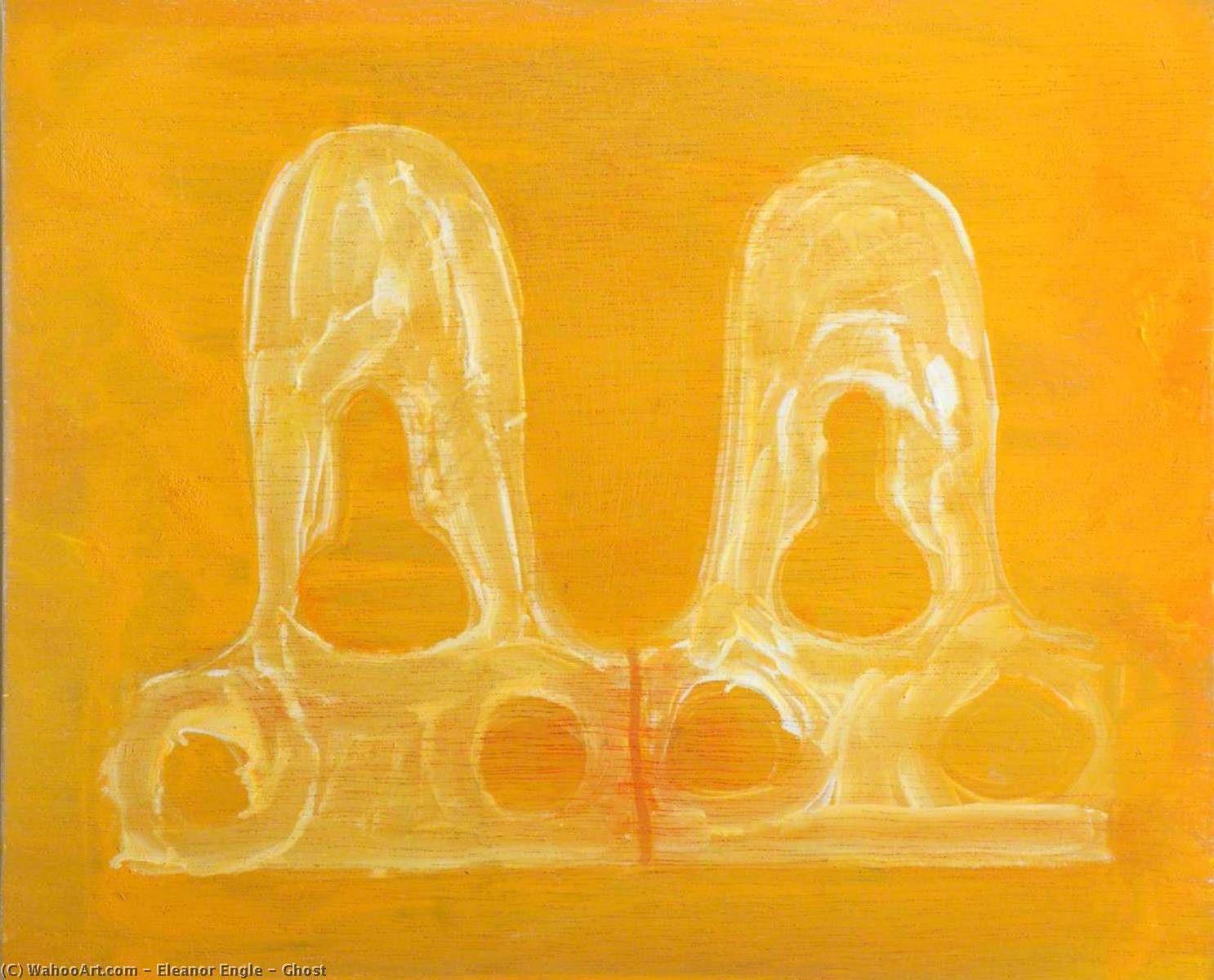 Ghost – Eleanor Engle. 2008. Wikioo.
If we really want to move on and change how we feel, it is crucial to face our past experiences, and to become aware of what we have taken inside ourselves as a result. In psychotherapy, we will work at uncovering the obsolete, internal ‘ghosts’ that are interfering with how we act in the present. We can tell the stories, and at last express the unexpressed emotions associated with these past images. We can also discover how, where and when they originated, exploring how they affected us then. We need then to try to ensure that we do not continually repeat past destructive behaviours, nor hand them down, noxious and unprocessed, to future generations.“If you lack the humility to go back and tie up the loose ends in your past, then be prepared to forever be haunted by her ghosts, all of whom will come into your present and your future— staining everything and everyone with their leftover emotional and mental garbage.
C.JoyBell C.
 Fiore. Freedom. “Volar o no volar.” Flickr.
© Linda Berman“We are ghosts or we are ancestors in our children’s lives. We either lay our mistakes, our burdens upon them, and we haunt them, or we assist them in laying those old burdens down, and we free them from the chain of our own flawed behavior. And as ancestors, we walk alongside of them, and we assist them in finding their own way, and some transcendence.”
Bruce Springsteen
 waysofthinking.co.uk
