
- What is a comfort zone?

Laurits Andersen Ring. The Artist’s Wife and Children (1904) Wikimedia Commons.
“Whatever is your norm, whatever your life is right now, whatever you’re not even thinking about changing — that’s your comfort zone… some people call it a rut. It’s not a rut; it’s life. It’s the things that are regular, that are predictable, that cause no mental or emotional strain and stress.”
Elizabeth Kuster
We all have- and need- our comfort zones. Life can be very stressful at times, as we all know too well, and having these ‘zones’ is important for our wellbeing and our mental health. Can you identify yours?
 Władysław Podkowiński (1892) wikidata:Q2065760. ‘Sad w Chrzęsnem.’ Wikimedia Commons
“The ache for home lives in all of us, the safe place where we can go as we are and not be questioned.”
Maya Angelou
Comfort zones will be different for different people. They are not always about home; sometimes a walk in the hills, a journey to a favourite place, or a rejuvenating new training course can function to provide a comfort zone. Whatever you choose, it will mean an experience that feels secure and safe, affirming and easefully familiar.
- Hygge: extending the comfort zone

A Hygge Moment. 2021. Photo by Bob Jenkin. Wikimedia Commons.
(Photograph of The Little Book of Hygge by Meik Wiking. 2016. Penguin Books Ltd)
The Danish and Norwegian word ‘hygge’ (/ˈhʊɡ.ə/), pronounced hoo-gah, is a quality of physical and emotional comfort and peaceful, contented, cosy companionship; it is about lighting candles and snuggling up with others, with the smell of baking filling the air.
“The art of hygge is therefore also the art of expanding your comfort zone to include other people.”
Meik Wiking, The Little Book of Hygge

David J. Cosy Candlelight. 2012. Flickr.
- Reaching beyond… into some discomfort?

Imprisoned Spring – Arthur Hacker. 1911. Wikioo.
“You have to take risks. We will only understand the miracle of life fully when we allow the unexpected to happen.”
Paulo Coelho
Relaxing, secure or snug they may be, but sometimes our comfort zones can begin to feel restrictive, stagnating, stunting of our personal growth and our development as fully-rounded human beings. Why is this?
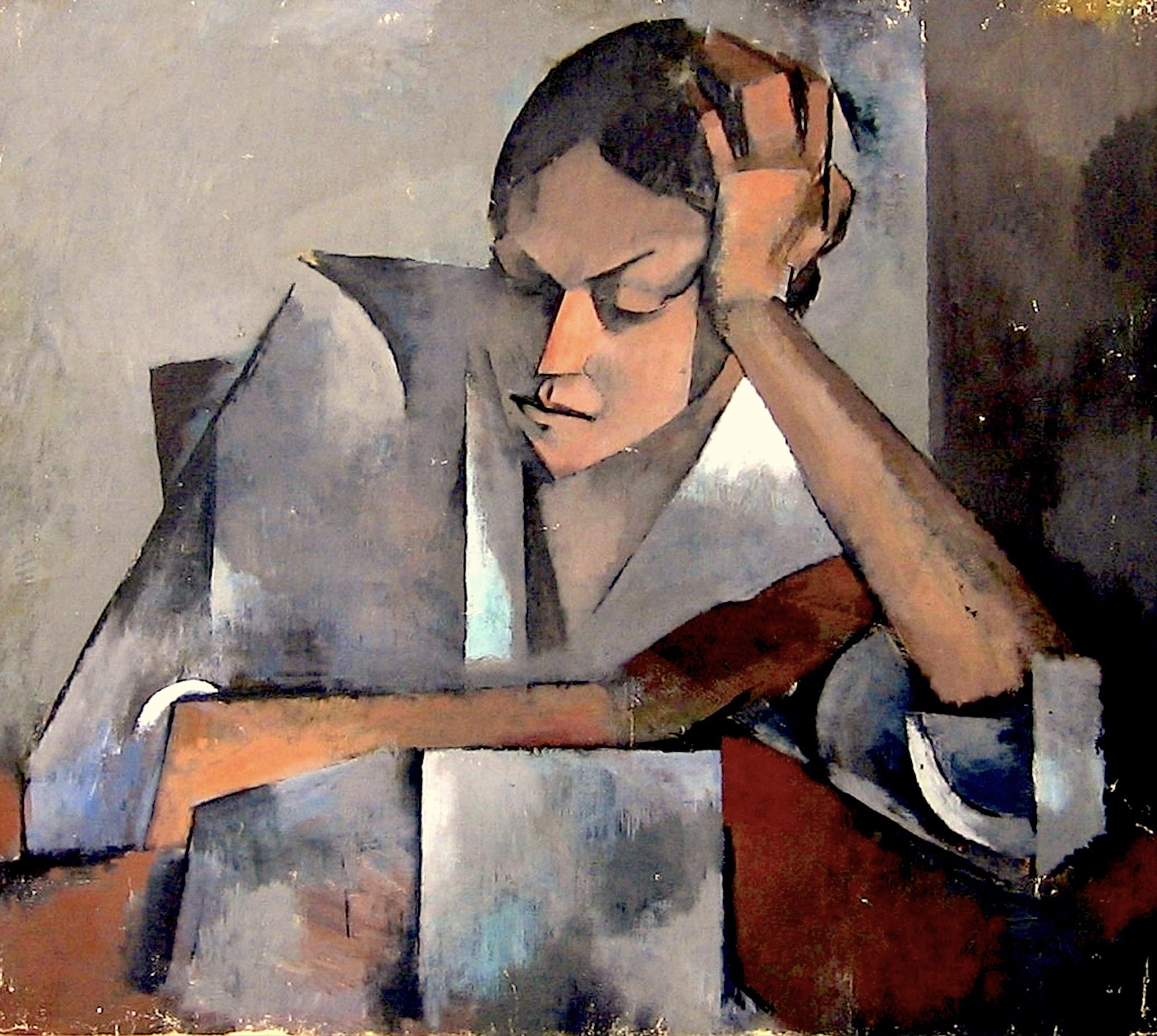 Olga Sacharoff – Woman Leaning on Table [1915] Gandalf’s Gallery. Flickr.
“The most creative people have learned to tolerate the slight discomfort of indecision for much longer and so, just because they put in more pondering time, their solutions are more creative.”
John Cleese
Well, sometimes we actually need some measure of discomfort. This might, at first, appear to be an odd statement…why on earth would we be in actual need of discomfort?
If we were always feeling safe and comfortable, there would be no need to move on and out of our comfort zones. There would be no need to enter into the wider world, a world of risk, fulfilment, challenge, uncertainty, innovation, adventure, productivity and creativity.
There would be no following the trail down which our curiosity and our passion might lead, no chance of embracing the unknown.
This would become an empty and purposeless existence, with nothing happening… no direction, no learning, no growth.
 Julie Delance-Feurgard (1859–1892) The piano lesson. Wikimedia Commons
“Move out of your comfort zone. You can only grow if you are willing to feel awkward and uncomfortable when you try something new.”
Brian Tracy
Attempting to reach beyond our usual comfort zone, in terms of knowledge and experience, can help us enormously with our education and with the development of clear vision and understanding.
Reaching beyond the stage we are personally at now, in life and in work, is a good, healthy idea; its value lies in the acceptance of where we are individually, without the stress of feeling we have to keep pace with others, or that we are not ‘good enough.’
Such a mental strain can be overwhelming and dispiriting, if we do not attend to it. It can encourage us to be static and to live without stimulus or excitement, creeping back into the ‘safety’ of our comfort zone.
If we can focus on where we are now, and contemplate how we can reach beyond that, then we will ensure that we are progressing forward and growing as people. This concept may also be applied to personal therapy, in that we are trying in therapy to reach beyond what we consciously know about ourselves, into the previously uncharted waters of our unconscious mind. This is not cosy…
“One can choose to go back toward safety or forward toward growth. Growth must be chosen again and again; fear must be overcome again and again.”
Abraham Maslow
Perhaps we could say that our conscious mind can represent our comfort zone, in that we are largely aware of it. However, the unconscious represents uncharted waters in our psyche; it may therefore feel like we are wandering out of our comfort zone into a distinctly uncomfortable, and unfamiliar, region of our minds.
 Saurabh Vyas. Sailing into Uncharted Waters!!! Flickr
” Life is like a journey into uncharted waters for us all. If you become preoccupied with avoiding potential pain, you will miss the glory of the sunsets on the ocean of your life. ”
Teal Swan

Max Liebermann. The Preserve Makers (1879), oil on mahogany wood. Wikimedia Commons
“It is only through labour and painful effort, by grim energy and resolute courage, that we move on to better things.”
Theodore Roosevelt
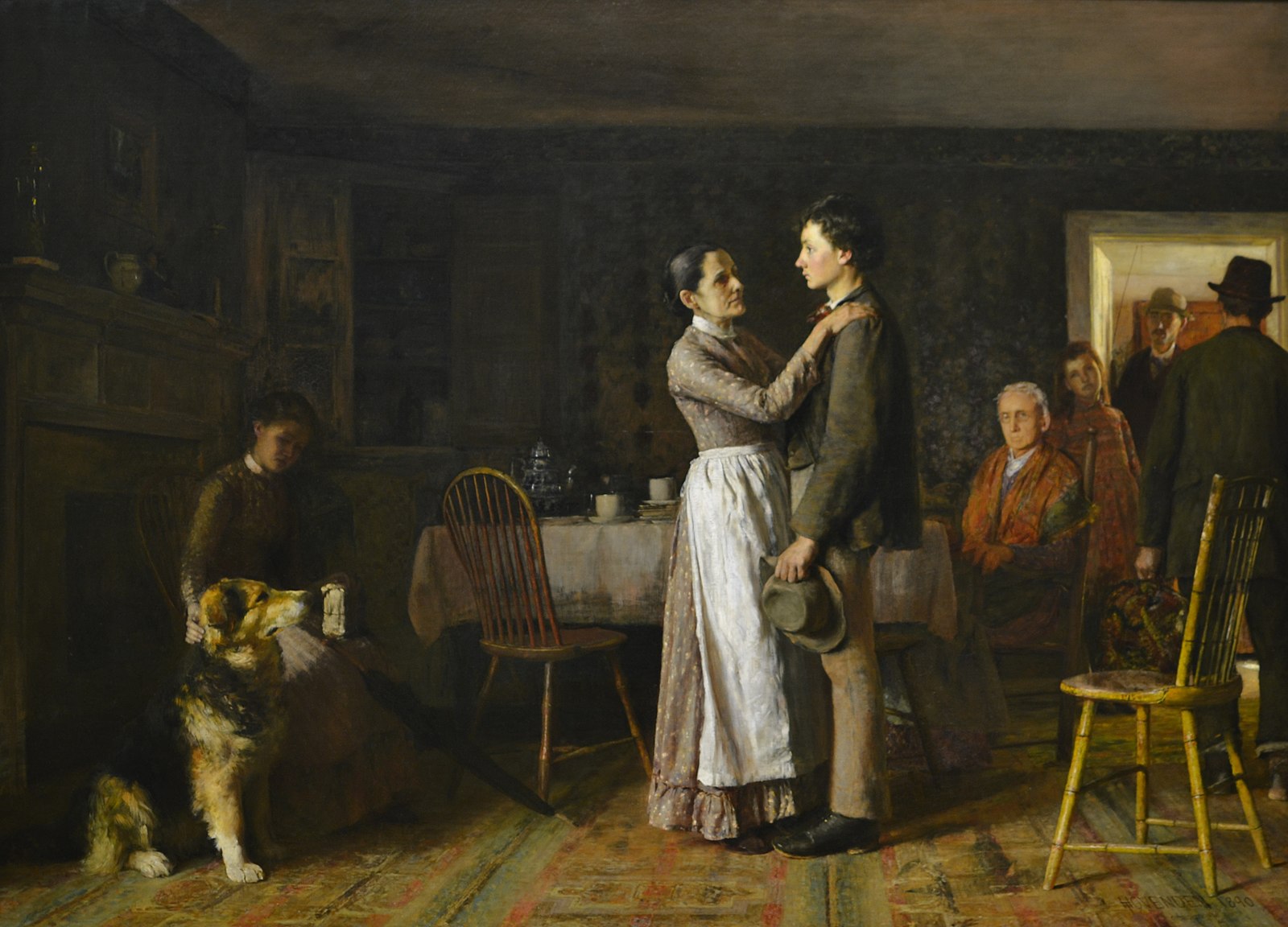 Breaking Home Ties, by Thomas Hovenden.1890. Wikimedia commons
“Change begins at the end of your comfort zone.”
Roy T. Bennett
Reaching beyond the reassuring, yet stultifying, trap of our comfort zone is crucial to our development and progress in life. Without doing this, we would be avoiding facing the discomfort of uncertainty, wanting everything to remain the same…predictable, safe, unchanging and, quite frankly, rather boring.
 “Reaching for the moon.” Edward Mason Eggleston. 1933. Wikimedia Commons.
“Reaching beyond where you are is really important.”
Martin Seligman
Reaching for the moon is maybe going a little too far beyond our comfort zone, but, as the saying tells us…
“Shoot for the moon. Even if you miss, you’ll land among the stars.”
Les Brown
- Courage
 Sunset on the Sea – 1872. John Frederick Kensett. Wikioo
“You cannot swim for new horizons until you have courage to lose sight of the shore.”
It takes courage to move out of our safe place, our comfort zone, battling to overcome self-doubt, discouragement and criticism from others, to confront old fears of change, frequent urges to sit by the fire, eating a chocolate bar and reading a good book…
As the above quotation reminds us, if we are to engage in adventure and discovery, then we must ‘lose sight of the shore;’ that is, let go of the familiar, the safe, the easy.
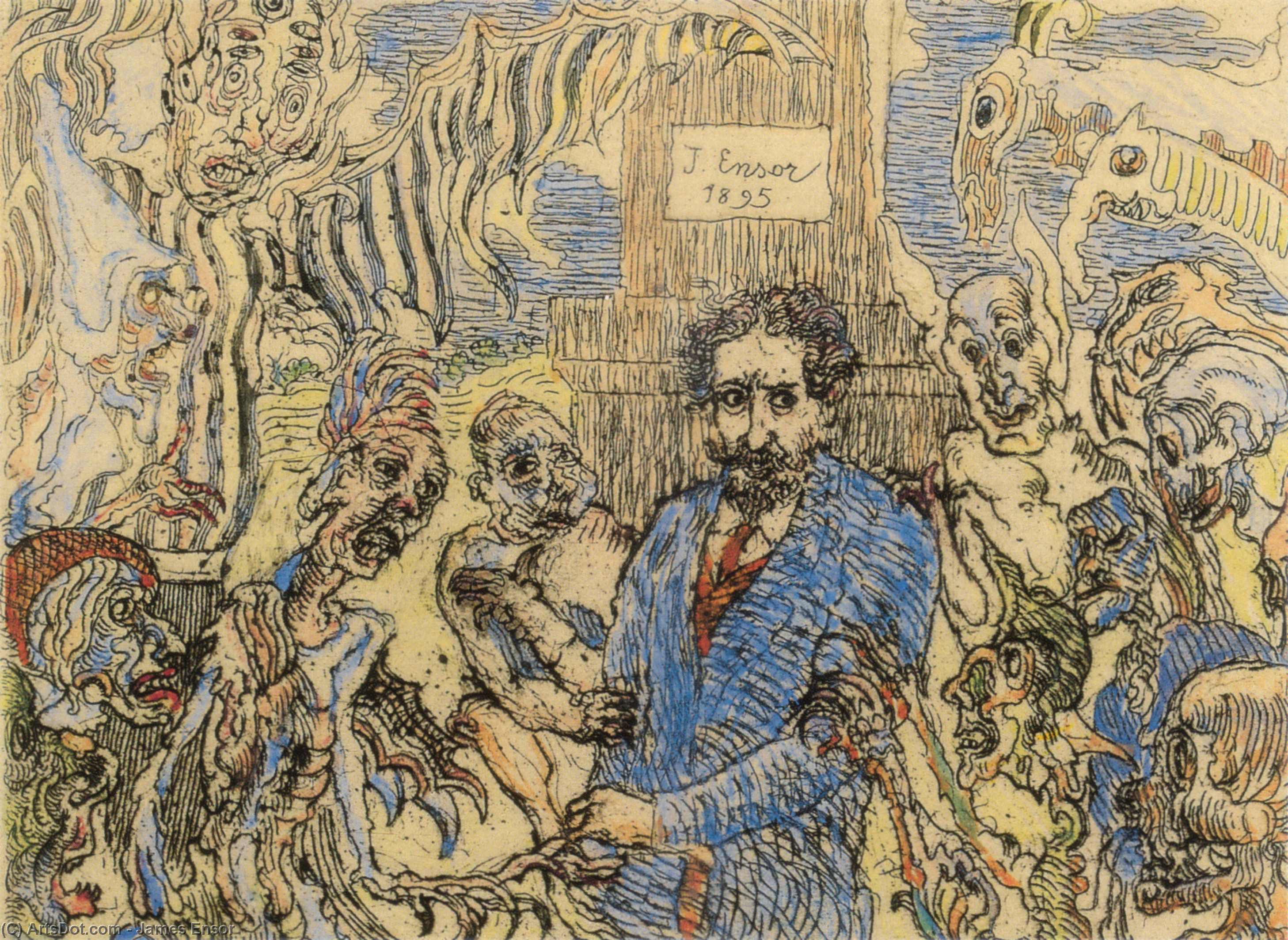 Demons Teasing Me – James Ensor. 1895. Wikioo
“Being mentally tough is having to battle those demons and push yourself out of your comfort zone and force yourself to be the person that your mind is telling you you aren’t.”
Michael Chiesa
We will need courage in order to leave our comfort zone, expanding our consciousness, stretching boundaries, experimenting, adventuring, imagining, having new and different experiences, discovering fresh opportunities and new perspectives. Only through courage will we discover our inherent resilience and personal strength.
We can always go back for some time out when needed!
 Camille Pissarro – A Corner in the Garden, Éragny [1897] Gandalf’s Gallery. Flickr
 Lucian Freud – Reading [1997] Gandalf’s Gallery. Flickr.
- Gaining balance
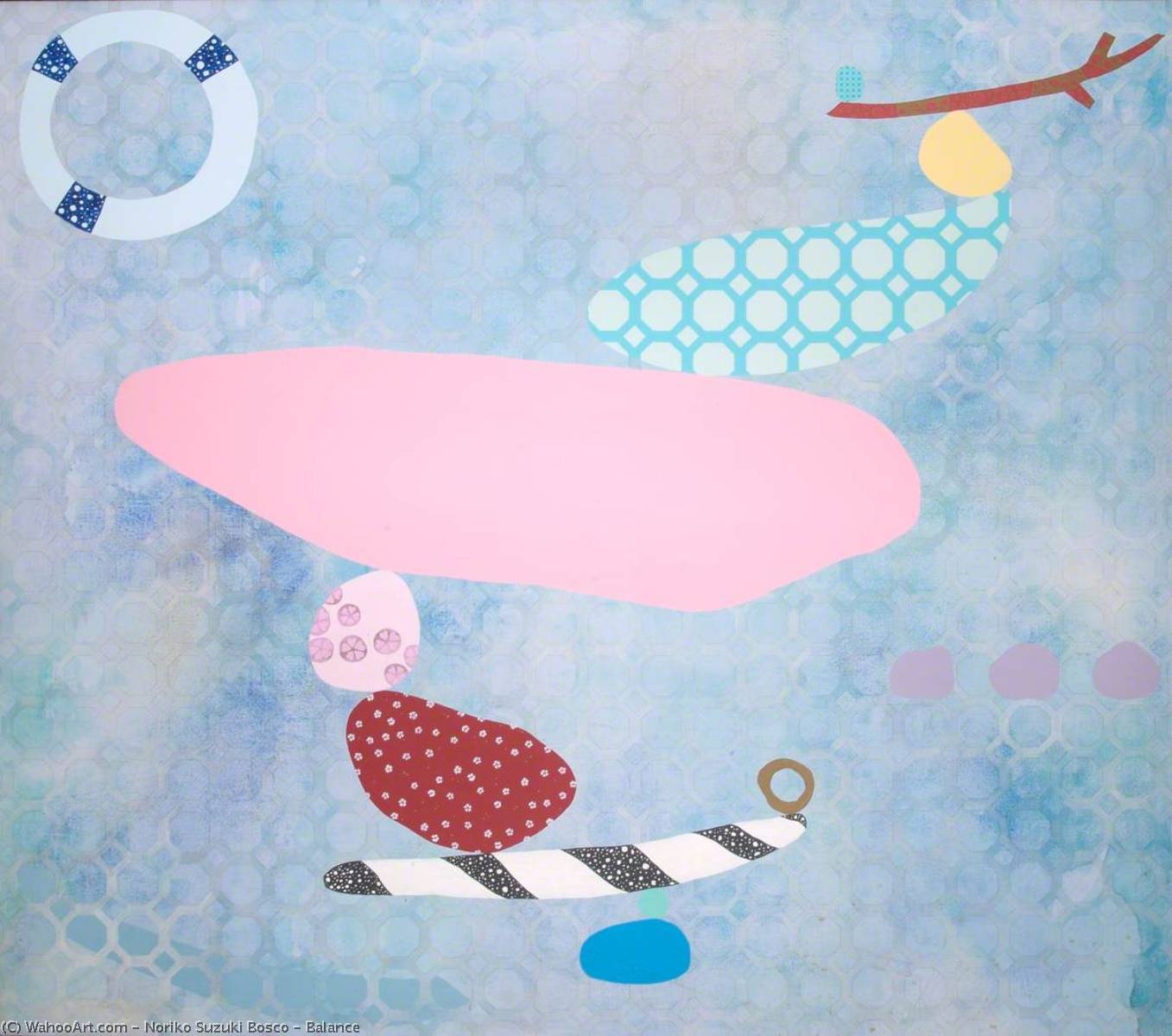
Balance – Noriko Suzuki Bosco. 1998. Wikioo
Finding the middle way between comfort and stimulation can be difficult to achieve; the reality is that we want both in our lives. We need to feel secure and safe… but not stagnant and immobile.
Equally, we need to feel stimulated and excited by stepping outside our safety zone and taking risks… but not so much that we put ourselves in danger or extreme discomfort. We need to be aware of both our limitations and capabilities.
- Art and discomfort

The Disappointed Souls, 1892. Ferdinand Hodler. Flickr.
“The purpose of art actually is, in many cases, to make you feel quite uncomfortable. Or at least to go to that place that’s already of discomfort inside of you and tap into that.”
Michael Moore
There is a good deal of art that does not challenge or disturb us, and this, of course, has its place. But many people regard art that has meaning in our world and our lives as the most real and true art.
Its reach is often far, and it may jolt us out of our comfort zone into a stark and graphic, often gut-wrenching, awareness of some past or present reality.
Such art has the function of pointing a powerful finger at injustice or pain, with a hope of promoting change; we cannot comfortably remain cocooned in a sanitised version of real life in the face of such vivid depictions of raw and needy humanity.
Unless we go and see what lies outside our comfort zone, we will not get the chance to do good in this world, for self or other.
 Wilhelm Gause – Feeding the Poor. 1911. Wikimedia Commons
“Comfort zones are most often expanded through discomfort.”
Peter McWilliams
© Linda Berman
 waysofthinking.co.uk