
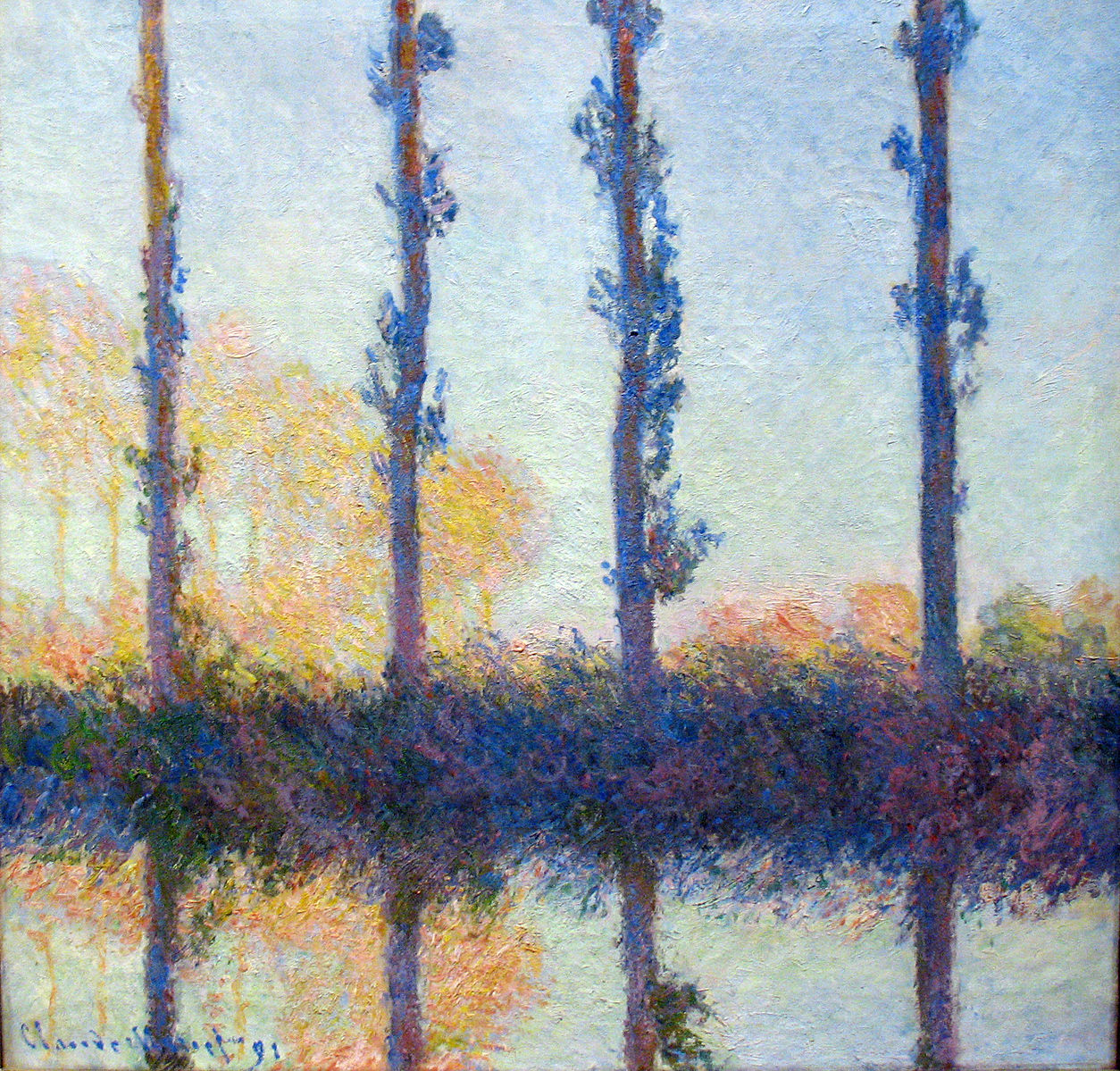
Monet. The four trees. 11891.Wikimedia Commons
“Trees are the Earth’s endless effort to speak to the listening heaven.”
Rabindranath Tagore
What do I mean by ‘reaching beyond?’ How could it help us change?
“Reaching beyond where you are is really important.”
Martin Seligman
There are many quotations that encourage us to be resilient and to have the courage to keep on trying. Seligman’s phrase ‘reaching beyond’ is an excellent one to remember. Why is doing this ‘really important?’
Attempting to reach beyond what is already known can help us enormously with our learning and with the development of clear vision and understanding. Similarly, trying to reach beyond the stage we are personally at now, in life and in work, is a good, healthy concept; its value lies in the acceptance of where we are individually, without the stress of feeling we have to keep pace with others, or that we are not ‘good enough.’
Such a mental strain can be overwhelming and dispiriting, if we do not attend to it. If we can focus on where we are now, and contemplate how we can reach beyond that, then we will ensure that we are progressing forward and growing as people. This, in itself, could trigger life-changes and personal growth.
- ‘Something beyond’ the self

“Reaching for the moon”, Edward Mason Eggleston.1933. Wikimedia Commons
“The third point of reference is freedom of perception; it is intent; it is spirit; the somersault of thought into the miraculous; the act of reaching beyond our boundaries and touching the inconceivable.”
Carlos Castaneda
‘Touching the inconceivable’ may be something we have done in our lives that felt like a peak experience, a wonderful, mind-blowing, life-changing moment that we will always remember. This will only have happened if we have dared to push the boundaries and to reach further than usual.
It does not have to be a grand occasion, although it may be. Perhaps we have ‘touched the inconceivable’ in a moment of inspiration, having an innovative idea or discovering a new way of thinking or being.

Alexej von Jawlensky – Mystischer Kopf, Meditation.1918. Wikimedia Commons
“True strength lies in submission which permits one to dedicate his life, through devotion, to something beyond himself.”
Henry Miller
Can you identify what is the ‘something beyond’ yourself that is highly important to you? Are you aware of the direction you need to go in order to reach beyond where you are now? The choice of directions is vast and endless. There may be, for example, a need to develop one’s skills in the field we have chosen, or to engage deeply in personal growth through therapy.
In whatever area you may select, can you contemplate moving outside you established limits and extending your reach, even just a little? And then…who knows where this may lead?
‘Being able to “go beyond the information” given to “figure things out” is one of the few untarnishable joys of life.’
Jerome Bruner
- Holding on with hope and faith in the process of reaching beyond

The Garden’s Steps, Gergeroy – Henri Eugène Augustin Le Sidaner. 1931. Wikioo.
“Most great people have attained their greatest success just one step beyond their greatest failure.”
Napoleon Hill
Reaching beyond may also involve patience and waiting, for it can take time for us to travel beyond our limits. Being resilient is crucial if we are to be successful in whatever we do.

Tide – Fyodor Alexandrovich Vasilyev.(1850-1873) Wikimedia Commons
“When you get into a tight place and everything goes against you, till it seems as though you could not hold on a minute longer, never give up then, for that is just the place and time that the tide will turn.”
Harriet Beecher Stowe
- Maslow’s hierarchy of needs
Within all of us is the need to improve, to be better, for ourself and others. The psychologist Abraham Maslow regarded human needs as parts of a hierarchy and he was clear that we do have an innate need to improve ourselves in many different ways.
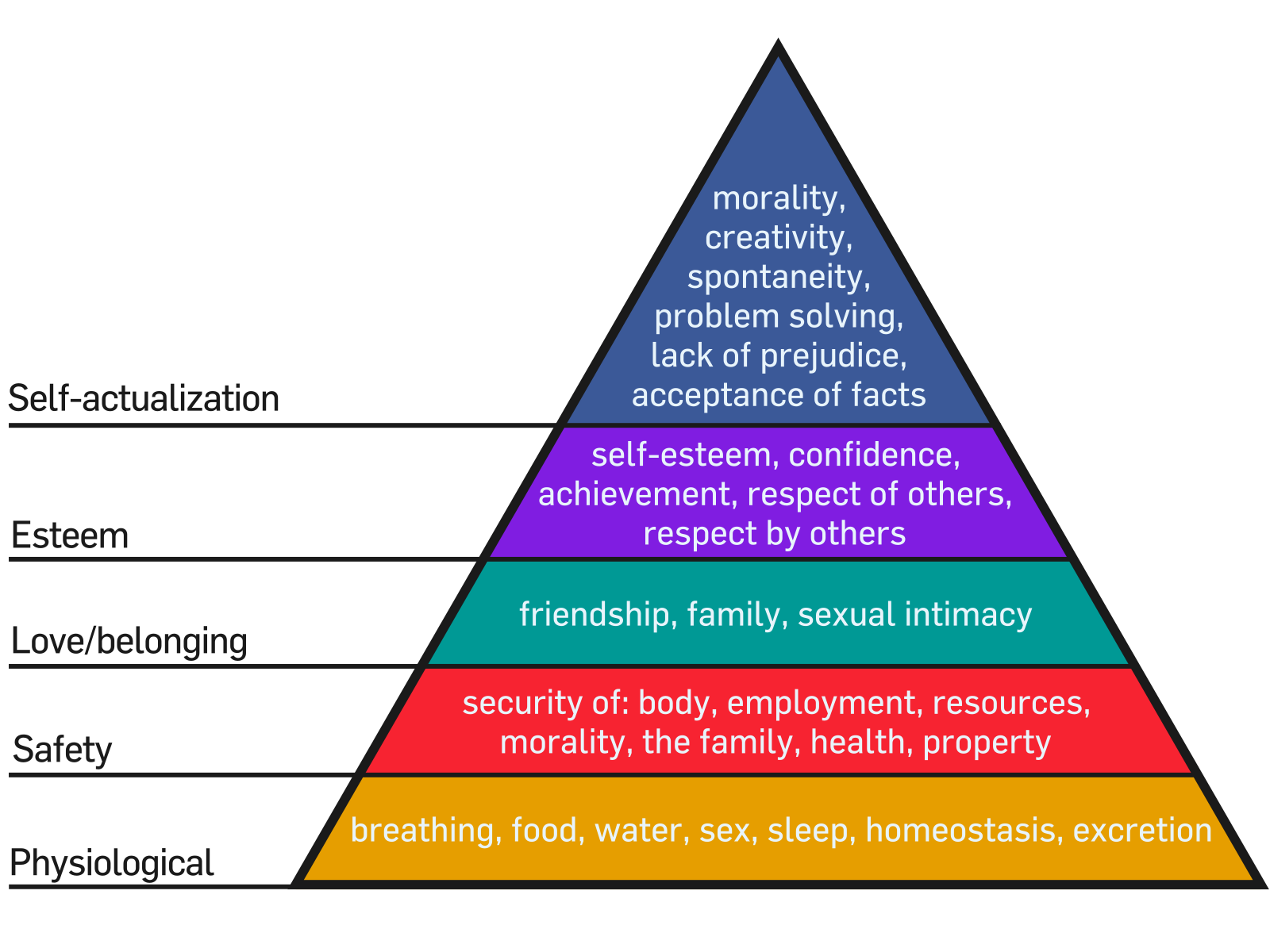 Maslow’s hierarchy of needs. 2009. Author User:Factoryjoe. Wikimedia Commons.
Our basic, physiological, bodily needs must be attended to primarily, followed by other needs: safety, belonging and love, esteem and self-actualization, as illustrated.
The highest level can only be attained once the other needs are satisfied. Being self-actualised, that is, self-aware, accepting, creative, in touch with reality, is not easy; Maslow calculated that only a very small number of people achieved this.
However, we all can ‘reach beyond’ in our own ways, seeking to improve ourselves and the world around us.
As we strive, and take the risk to ‘reach beyond’ where we are currently, we will discover new truths and gain wisdom and awareness. This process requires strength and resilience.

In The Blossoming Bower – Marie Egner. c. 1896. Wikioo.
“It takes courage to push yourself to places you have never been before… to test your limits… to break through barriers. And the day came when the risk it took to stay tight inside the bud was more painful than the risk it took to blossom.”
Anais Nin
This concept may also be applied to personal therapy, in that we are trying there to reach beyond what we consciously know about ourselves, into the previously uncharted waters of our unconscious mind.

Grenzen des Verstandes, ( Limits of Reason.) Paul Klee. 1927. Wikimedia Commons
“Once we accept our limits, we go beyond them.”
Albert Einstein
What did the acclaimed scientist Einstein mean by these wise words? He is reminding us of the importance of acknowledging and accepting our limitations; if we try to go beyond them with an attitude of grandiosity and a lack of awareness, we will likely come to a sticky end. This is highly relevant to the therapist, too.
Many people come to therapy expecting some kind of limitless magic; they might think that the therapist knows it all and will hand them ‘solutions’ on a plate. The therapist then has to be careful not to fall into the trap of feeling over-powerful and being able to work wonders, in reaction to these projections…
“The establishment of an authentic relationship with patients, by its very nature, demands that we forego the power of the triumvirate of magic, mystery, and authority.”
Irvin D. Yalom, The Gift of Therapy
Acceptance of our limitations is important if we are to live healthy and fulfilling lives; over-estimating our capabilities will likely result in an Icarus-like fall.
“Consciousness is the awareness that emerges out of the dialectical tension between possibilities and limitations.”
Rollo May, The Courage to Create
The quotation above refers to the fact that life is about balancing opposites, managing the inconsistencies and changes that constantly make our lives interesting and colourful…. and, at times, difficult. The ‘dialectical tension between possibilities and limitations’ is a phrase that perfectly sums up the dilemma in all our lives.
Recognising and accepting our limitations means that we will not overload ourselves with work, or allow others to do that to us. Gaining an acceptance of the fact that we cannot do it all, that we cannot succeed in everything, that we are unable to be magicians, angels, prophets or founts of all knowledge, is crucial.
Having realistic expectations, of ourselves and others, assessing risks, and not aiming too high, will mean that we will be able to function better in life. We will then also be able to focus on the possibilities, the opportunities and chances that are open to us.
We are, all of us, a blend of strengths and weaknesses; if we aim for perfection, or try to eradicate everything in us that feels ‘limited,’ then we are on a hiding to nothing. Unless we consider and balance the apparently contradictory, different ways of thinking about ourselves and the world, we will never see the whole picture in life.
“Do what you can to help people but have the wisdom to accept your limits.”
Bryant McGill
- The downsides of ‘reaching beyond.’
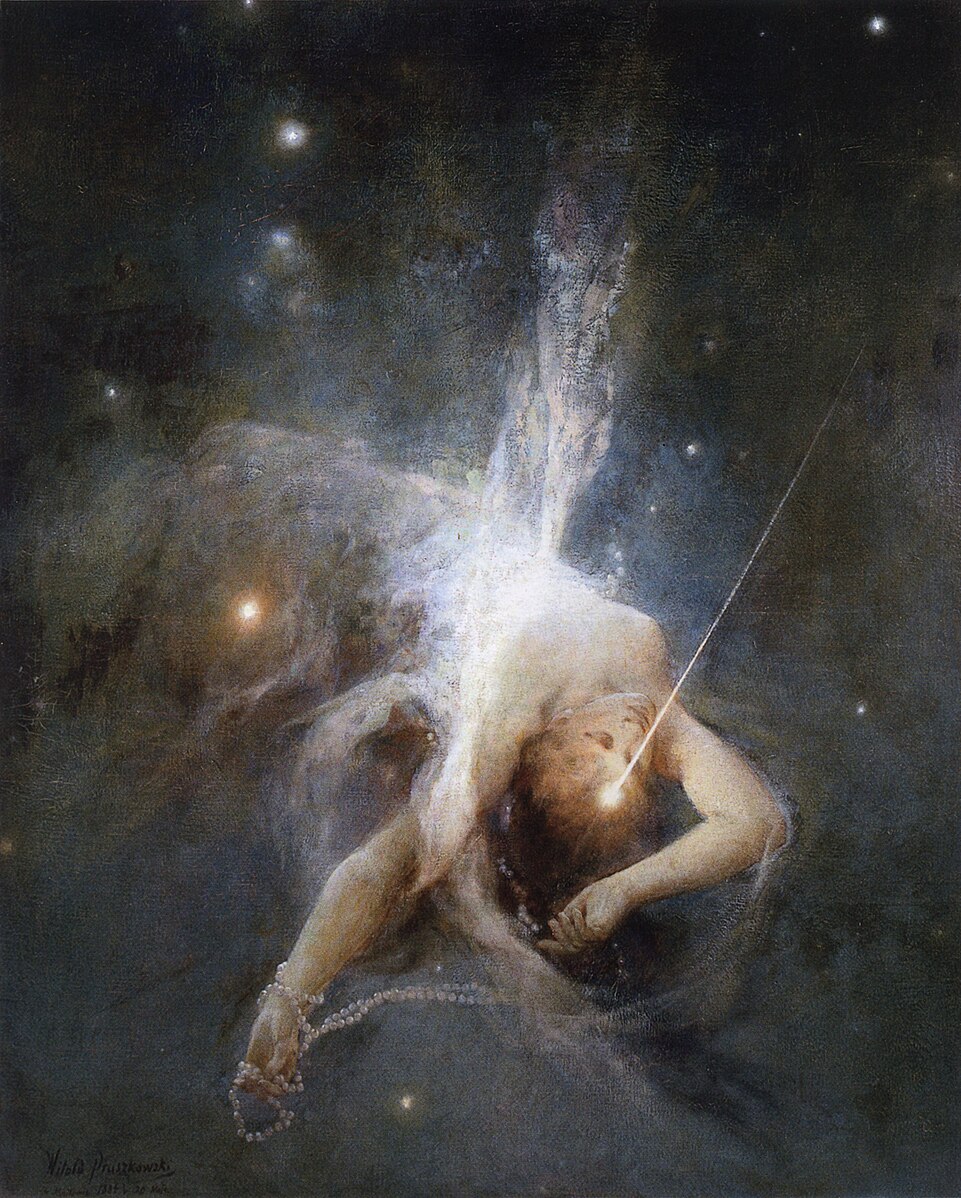
Witold Pruszkowski. Falling Star. 1884. Wikimedia Commons
“To go beyond is as wrong as to fall short.”
Confucius
As with most ways of being in this world, there are two sides to the concept of ‘reaching beyond.’ Sometimes people ‘reach beyond’ in a way that can be destructive; they overstep the mark, break others’ boundaries and intrude on them, ignore rules, exceeding limits and generally behaving in a way that is unacceptable.
Some people break rules because they have a sense of entitlement… rules do not apply to them. Others are rebellious, angry, or frustrated, or they may break rules to show off to others. Some seek ‘excitement,’ in an attempt to escape the mundanity of their lives. This kind of behaviour represents a destructive ‘reaching beyond’ and needs to be curtailed.
- Discovering our internal, ‘invincible summer.’
Music I – Gustave Klimt. 1895. Wikioo.
“I know of no more encouraging fact than the unquestionable ability of man to elevate his life by conscious endeavour.”
Henry David Thoreau.
‘Conscious endeavour,’ in order to reach higher is, as we have seen, potentially life-changing. Beneath consciousness is a whole other world, the rich landscape of our unconscious, fashioned from life experiences, dreams, wishes, beliefs, fears, urges and desires. Within this world there are many aspects that drive our conscious behaviour.
“Like the sea itself, the unconscious yields an endless and self-replenishing abundance of creatures, a wealth beyond our fathoming.”
Carl Jung
There is a mysterious world within us all, that we need to attempt to understand and gain awareness of. There are many clues to what resides there, which we can discover through dreams, slips of the tongue, artwork, therapy.
Who knows what possibilities are there until we dare to ‘reach beyond’ our consciousness and embark on a psychological path of discovery?
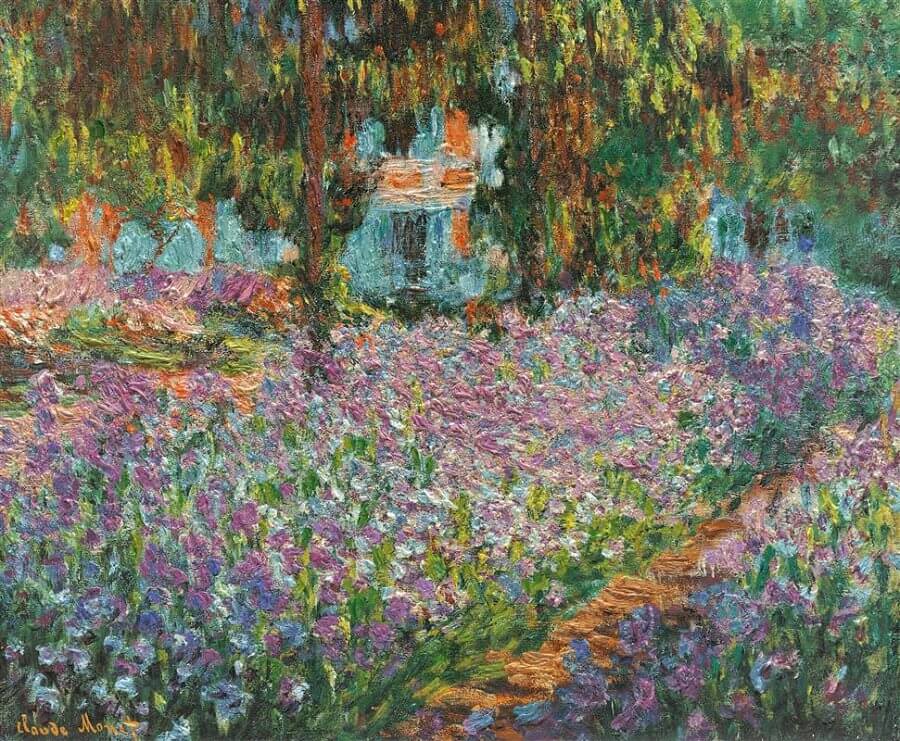
The Artist’s Garden at Giverny, 1900 by Claude Monet. Wikimedia Commons
“In the depth of winter, I finally learned that within me there lay an invincible summer.”
Albert Camus
© Linda Berman.
 waysofthinking.co.uk
very deep and knowledgeable.
LikeLiked by 1 person
Thank you so much 🤗
LikeLike