
Quote 1
 Rembrandt’s mother, reading. 1631-34. Wikimedia Commons.
“Some day you will be old enough to start reading fairy tales again.”
C.S. Lewis
Fairytales are not just for children. Adults, too can learn from these timeless stories, for they contain empowering and life-enhancing messages that will help us today.
For example, many fairytales have as their theme the importance of resilience, courage and strength in the face of enormous life challenges.
There are to be discovered in fairytales fundamental life-lessons and problem-solving techniques that can educate us all, at whatever age. Whilst many people leave fairytales behind them as they mature, at later stages in life they may feel nostalgic for these stories and view them in a different way.
The quotations below provide some vivid examples of how fairytales can magically continue throughout life to be enlightening and empowering…
Quote 2
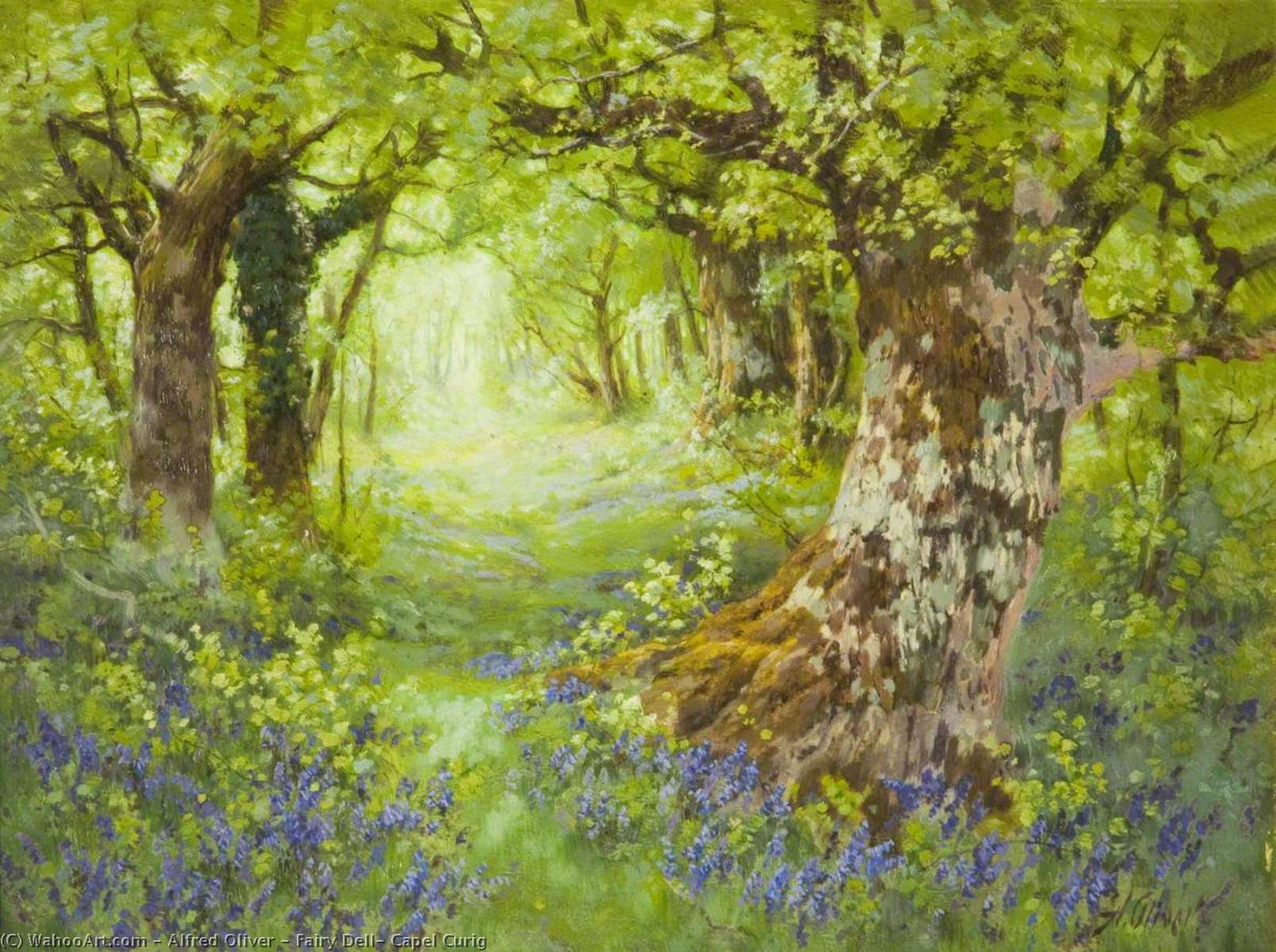 Fairy Dell, Capel Curig. 1920. Alfred Oliver. Wikioo
“Life itself is the most wonderful fairy tale.”
Hans Christian Andersen
This quotation reminds us of the wonders of life, the miracles that surround us on a daily basis. Life itself has frequently been described as a story, and, although there are many difficulties, problems and challenges in everyone’s life, there are also marvellous and fantastical experiences and adventures, there is love and there is joy… and gratitude.
Even as death nears, there is gratitude. Oliver Sacks, the late neurologist, made the following statement as his life neared its end:

Oliver Sacks
British neurologist and writer (1933–2015)Wikimedia Commons.
“I cannot pretend I am without fear. But my predominant feeling is one of gratitude. I have loved and been loved; I have been given much and I have given something in return; I have read and travelled and thought and written. I have had an intercourse with the world, the special intercourse of writers and readers.
Above all, I have been a sentient being, a thinking animal, on this beautiful planet, and that in itself has been an enormous privilege and adventure.”
Oliver Sacks
Quote 3

Lilla Cabot Perry – A Fairy Tale.1912. Wikimedia Commons
“If you want your children to be intelligent, read them fairy tales. If you want them to be more intelligent, read them more fairy tales.”
Albert Einstein
Reading fairy tales to children can be enormously helpful in stimulating their imagination and helping them to learn important life lessons and the meaning of morality, justice and fairness. In addition, children will come face to face with difference and diversity through fairytales, ‘travelling’ to different lands, finding new cultures and ‘meeting’ all kinds of people.
This can help to develop their ways of thinking and their approaches to life. They can ‘journey’ into different, fantasy worlds and imagine new and exciting possibilities, stimulated by the stories and illustrations. They will learn to be curious, asking questions, developing their minds, their imagination and their intelligence.

Cinderella and the Fairy Godmother – Ambrose Dudley. Wikimedia Commons
“When I examine myself and my methods of thought, I come to the conclusion that the gift of fantasy has meant more to me than any talent for abstract, positive thinking.”
Albert Einstein
The Cinderella story illustrates several themes that can help to develop a child’s intelligence, kindness, foresight and knowledge of the world. It reveals how kindness can be really important, and how central to life are resilience and persevering with difficult situations, even if these sometimes feel oppressive and hopeless.
There is also the theme of loyal friendship in the relationship between Cinderella and Buttons, and further, examples of transformation and self-improvement. There are constant dreams of a better life, which eventually comes to Cinderella as a result of her good-nature and a little magic!
Cinderella is a gentle, gracious, hard-working, thoughtful and kind person, and ultimately she reaps the rewards of this goodness. She does have self-confidence, even in the face of mockery and derision from her family. The stepmother and stepsisters are the opposite of kindness; they are wicked, mean and selfish and do not prosper in the story. Good wins out over evil, having battled through many difficulties.
Quote 4
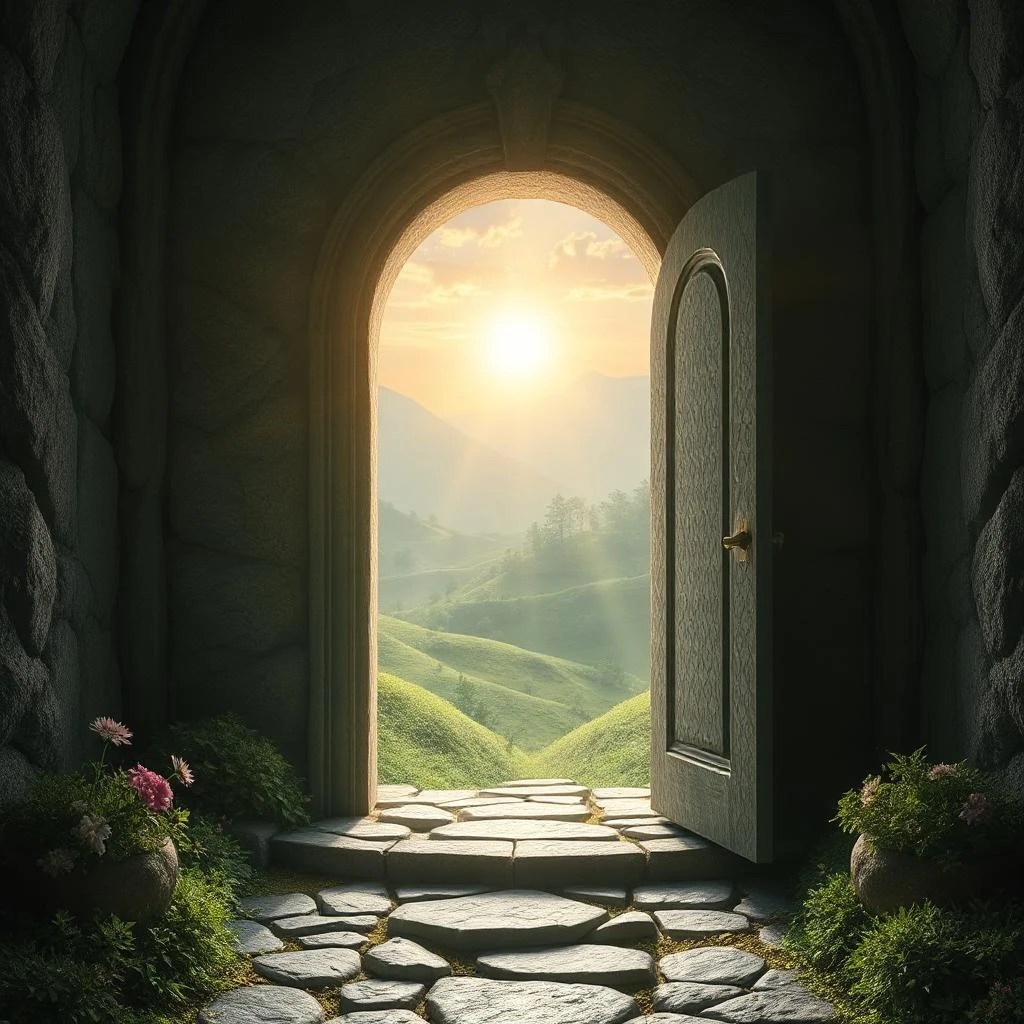
“Obsessed by a fairy tale, we spend our lives searching for a magic door and a lost kingdom of peace.”
Eugene O’Neill
There are times when fairy tales can be used as a kind of defence against facing reality; by this I mean there are people who live immersed in fantasy, as a way of avoiding reality.
Life, in actuality is not a fairy tale. Goodness does not always get rewarded and some bad deeds go unpunished. Poor people do not become transported to a royal life through magic. Huge beanstalks on which you can climb up to giants and riches do not exist. People do not always get their ‘happily ever after.’
This totally contradicts the message of quotation 2. So am I talking in riddles?
Well, no, I am talking of paradoxes. These are statements where both sides are true, yet they contradict each other. Such is life. It is… and it is not… a fairy tale.

A Knight and Cupid Before a Castle Door – Eleanor Fortescue Brickdale. Wikioo
As Eugene O’Neill tells us, above, we can become ‘obsessed’ by an image or a message from a fairytale. They can be captivating and this may lead to unrealistic expectations, especially in relationships.
Many a couple has expected very unrealistic ‘ideal’ behaviours from each other, especially if life has been tough in the past. Having witnessed mostly abuse and unhappiness in relationships, then fantasies often develop of the ‘perfect’ partner, if only they can be found. Knights in shining armour, however, are thin on the ground these days.
Of course, no-one can live up to this fairytale standard of romance and eternal joy, so there is constant disappointment in every relationship, when people seek the unattainable.
Quote 5

Dragon-Linda BlackWin24 Jansson. 2011. Wikioo
“I do not think man was meant to enjoy such easily attained, unmixed happiness. I have often fancied that true happiness is like the palaces in fairy tales from our childhood, where fiery dragons defend the entrance, and monsters of all shapes and kinds must be overcome ere victory is ours.”
Alexandre Dumas, père (1802–1870), Le Comte de Monte-Cristo, 1845 (Edmond Dantès)
Wolves, giants, monsters, dragons… these are the symbols of the many fearful people and challenges that we have to deal with in the course of our life. Dumas’ statement, above, quite realistically tells us that life was never intended to be easy.
It is very true that we learn from the difficult times. An ‘easy’ life may actually create difficulties for us, in that we will not learn how to manage the inevitable painful experiences that do, at some time in life, befall us all.
Anything really good, big or small, requires hard work and problems to be solved. There is no easy way round this, no magic wand. It is a fantasy that answers and solutions will just fall into our lap, although many of us might wish that they would…
“People are confused and unsure, they seek answers to guide them to joy, tranquillity, self-knowledge, salvation―but they also demand that it be easy to learn, that it require little or no effort, that results be quickly obtained.”
Erich Fromm
Unless we put considerable effort into every day, appreciating each moment of our lives, we may end up with regrets as we come to realise that everything is impermanent. In trying to have an ‘easy’ life, we may be actually avoiding thoughts of pain and death and making things more difficult in the process.
Fairytales give us a framework to help us deal with the difficulties that life throws at us, and emerge stronger and more resilient.
For example, in the fairytale ‘Beauty and the Beast,’ a handsome prince was cursed by an evil fairy because of his selfishness. He became an ugly-looking beast. In order to break this wicked spell, he had to find true love. After some very hard trials and tribulations, he found Beauty and fell in love.
Eventually, despite his physical appearance, Beauty saw his true good nature and loved him too. They married and the spell was broken, so that they could live ‘happily ever after.’
The fairytale’s message is that love, empathy and resilience, as well as strength of character, courage and emotional steadfastness, can conquer many problems. It also teaches us all to look beyond the surface, beyond appearances, to find the good qualities and love that lie beneath…surely a valuable, empowering and timeless lesson at any age.

Beauty and the Beast, book, Walter Crane, engraved and printed by Edmund Evans. c.1901. Wikimedia Commons.
“It is always the tough times that forge your character.”
Manoj Arora, ‘Dream On.’
© Linda Berman
 waysofthinking.co.uk
Thank you for this … about fairy tales. I loved fairy tales as a child…not the Disney kind…but the real ones. Most of my junior and senior high students had never heard the original Hans Christian Andersen version. When I read it aloud in class, they were shocked. That took us to a great discussion about Bruno Bettelheim’s ideas about why we need the real versions, what it does to our psyche, and how we need to dwell a bit deeper into the tales. Thanks for bringing up this important topic. –Janet
LikeLike
Many thanks for your interesting comment, Janet. Fairy tales are fascinating aren’t they? As you say Bettelheim and others’ writings about them bring some incredible new ways of thinking about them. Great that you were able to introduce children to the ‘real’ versions. 🧚♀️🧚🧚♂️
LikeLiked by 1 person