
- Being irresponsible…just a little
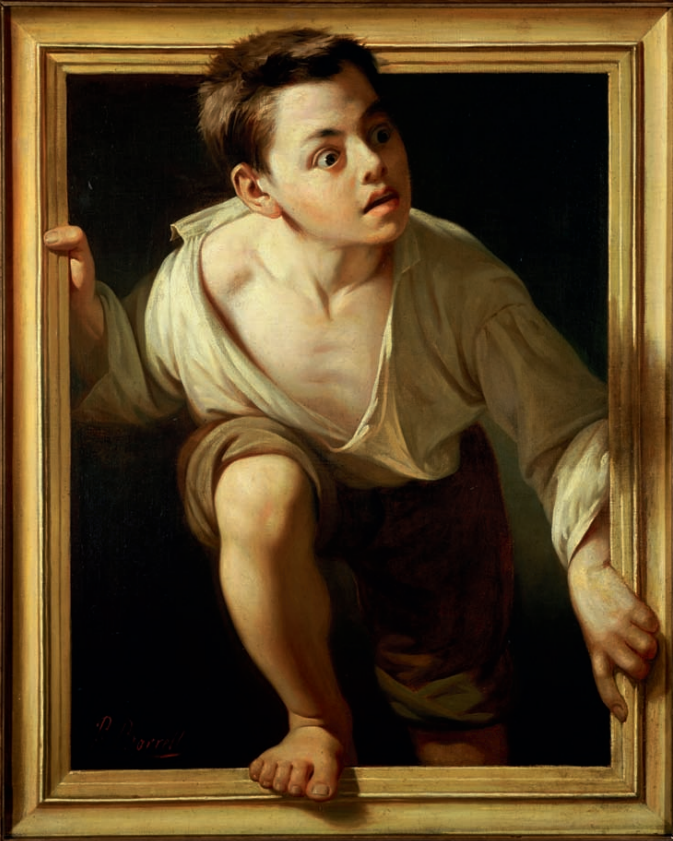
Escaping Criticism by Pere Borrel del Caso. 1875. Wikimedia Commons
We are often reminded about the importance of being responsible in this life. Of course, this is a highly necessary quality, and one I have mentioned frequently over past years in my posts, in terms of its relevance to us all. Without behaving responsibly, considering others and assessing and managing risk, we would remain unaware of any pitfalls and real dangers in life and we would, inevitably, find ourselves in hot water and heavy dilemmas.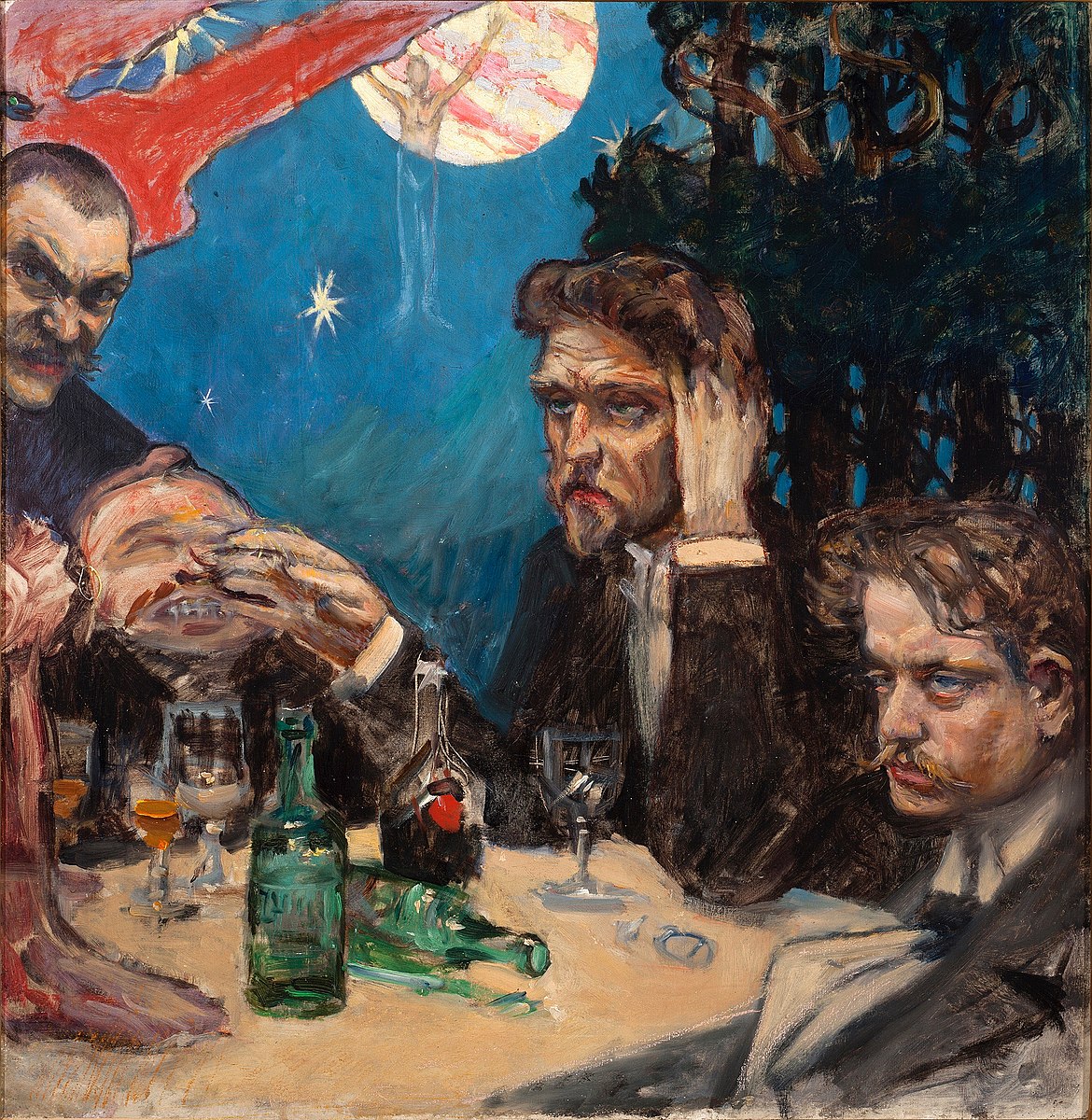
Akseli Gallen-Kallela – Problem (Symposium) 1894. Wikimedia Commons
But what of introducing just a little irresponsibility into our lives?…Yes, you’re reading this correctly. It is not a misprint, typo, or even a temporary mental glitch/senior moment on my part. Irresponsibility is generally understood as relating to failure, lack, defect. However, with a little stretching of the imagination, with some flexibility, humour, lightness of touch, a keen awareness of the absurdity of life, and some different ways of seeing, some alternative viewpoints or ways of thinking can be applied. Irresponsibility in this sense could be life-enhancing, adding playfulness and energy to our daily existence.“I think there should be laughs in everything. Sometimes, it’s a slammed door, a pie in the face or just a recognition of our frailties.”
Alan Rickman
What I am talking about is the freedom gained when we allow ourselves to taste a little irresponsibility, a little pushing of the generally accepted boundaries and conventions in many different contexts in our lives. If we can learn to feel free enough to break some traditions or rules, not wantonly or illegally, but within the bounds of experimentation and creativity, then we may discover some exciting new ways of being.
Could a little irresponsibility ever be regarded as useful in life? Might occasionally jumping out of the ‘frame,’ as in the first image of this post, occasionally give us some blessed respite from the inevitable trials of everyday life?
Sometimes we might really feel the need to let go, to be a little wild, capricious, quirky, offbeat and outré, deviating playfully from the norm. I am keen from the start of this post to emphasise the potential in this way of thinking for improving life, and anxious to make clear that I am not advocating wilful and harmful irresponsibility.- ‘Irresponsibility’ in therapy
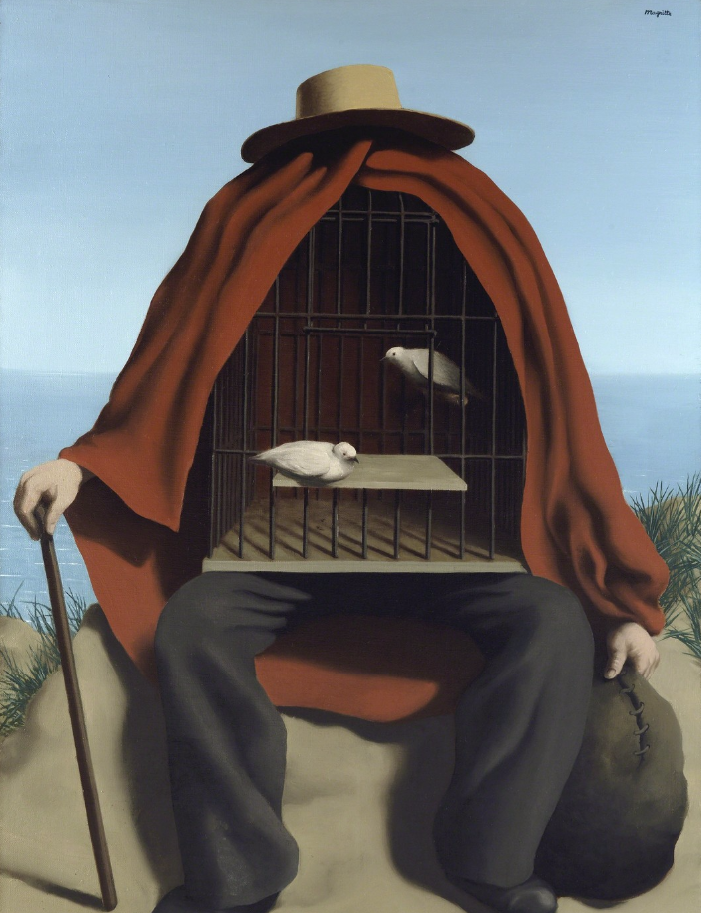
René Magritte – The Therapist [1937] Wikimedia Commons
Can we even contemplate the idea of ‘irresponsibility’ in relation to therapy? This is certainly not about being inappropriate, and it is most closely related to the concept of ‘playing’ within the firm, but elastic, professional boundaries of psychotherapy. Thinking about irresponsibility in therapy will require some reframing of the concept. Of course, the therapist needs to abide by professional ethics at all times; the ideas I am talking about lie within these parameters.“Therapists need the courage to be creatively insane.”
Carl Whitaker
‘It is in playing and only in playing that the individual child or adult is able to be creative and to use the whole personality, and it is only in being creative that the individual discovers the self.”
Winnicott
Allowing ourselves sometimes to be messy, to push boundaries, to be wantonly, childishly, playfully, imperfect, is also about being non-judgmental and permission-giving towards ourselves and others. It connects with not having to clean things up immediately in a way that stunts creativity, allowing the mess, the unconventionality, the self-expression to flow without hindrance.
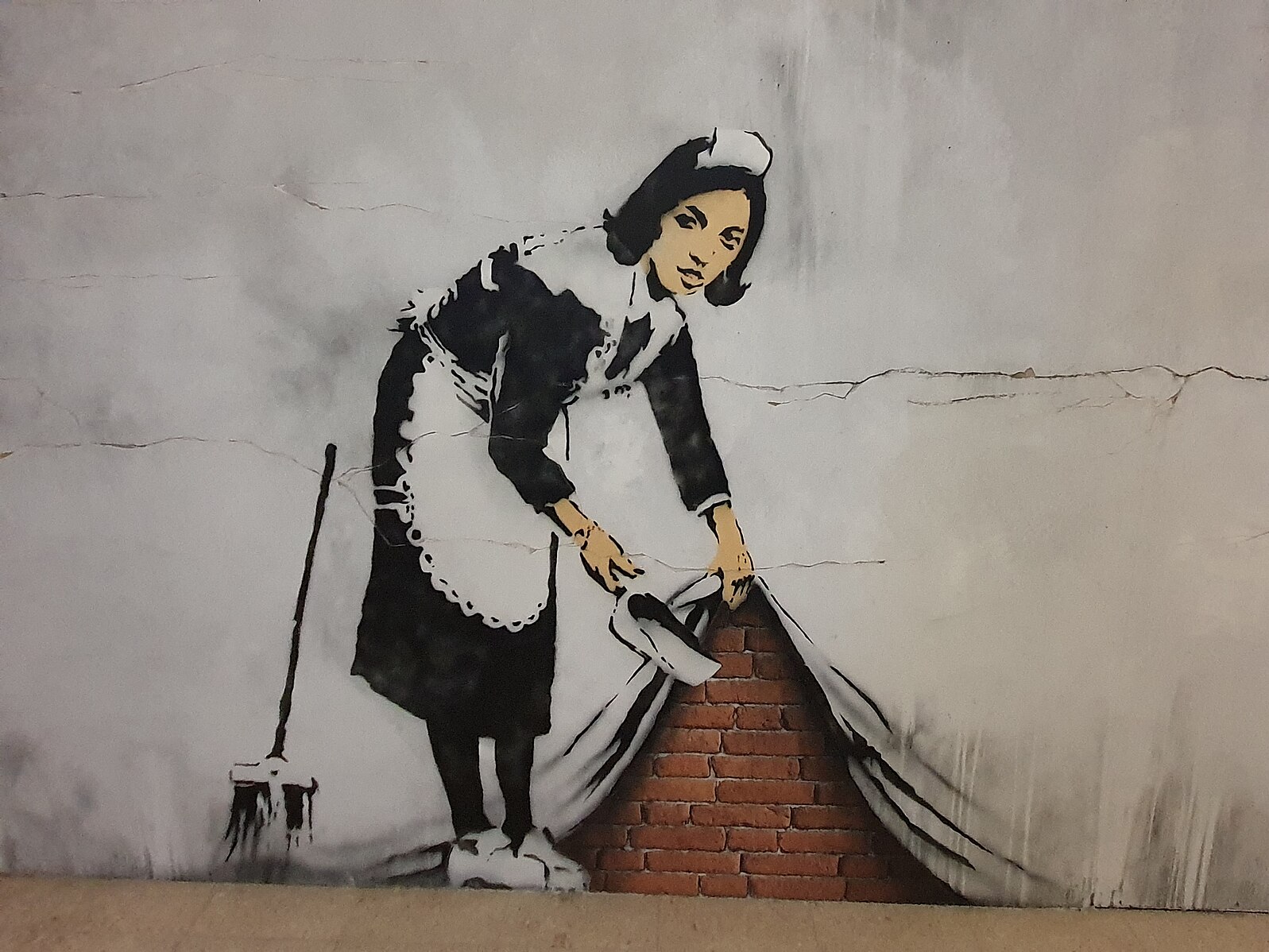
Sweep It Under the Carpet. Banksy 2006 London. Wikimedia Commons
People bring their life and personal ‘messes’ into therapy; they do not bring their difficult, painful issues in neat and tidy boxes, in ways that can be mopped up- or swept under the carpet- by the ‘responsible’ cleaner/ therapist.
What they need is a real person to help them stay with the mess, not a super-tidy, responsibly-programmed AI- type avatar who will robotically ‘arrange’ things for them. Going into the mess with the client and staying with it may seem ‘irresponsible,’ but, paradoxically, it is the only ‘sane’ way forward. It is also certainly not something that AI ‘therapy’ can achieve.
We all tend to come up with ideas that we, or others, discount as ‘mad.’ Sometimes, however, these so-called mad thoughts can lead to real creative projects. History shows us that what may have started out as a ‘crazy’ concept ended up being productive. Creativity involves taking risks, sometimes the risk of appearing ridiculous. Play, at any age, means having fun. It is important for adults to make time for play, and not overlook it in favour of work or responsibilities. It involves a letting go, of some fixed ways of thinking, and not being too rule-bound. Only by modelling this approach to the client in therapy can the therapist help them to become less rigidly stuck in old ways of being. For example, many people regard being non-judgmental and accepting as being irresponsible. However, often their concept of being responsible, could actually involve being judgmental. For example, giving space for our offspring to decide their own path in life, with our gentle support and help if needed, accepting diverse, alternative and different ways of thinking, even if these do not accord with our own, not following the crowd, going against the grain… all these can be regarded as irresponsible and ‘permissive.’ However, developing these more open ways of thinking can mean that we are taking time to consider, to ponder and reflect, which are in themselves creative acts. This is so much better than having a thoughtlessly rigid and superficial mindset, one which immediately takes sides without weighing the real evidence, and which cannot accommodate two opposing truths at the same time.A non-judgmental stance in everyday life is one which is accepting, patient, caring and empathic. It is unbiased and free of prejudices. Such an attitude creates an aura of understanding and safety for the person you are with.“It’s not at all hard to understand a person; it’s only hard to listen without bias.”
Criss Jami
“True empathy is always free of any evaluative or diagnostic quality. This comes across to the recipient with some surprise. “If I am not being judged, perhaps I am not so evil or abnormal as I have thought.”
Carl Rogers
- Absurdities
Allowing ourselves to be positively careless and to embrace this carelessness, to wander into the realm of the absurd, may appear crazy, but it can lead to greater creativity and new discovery.
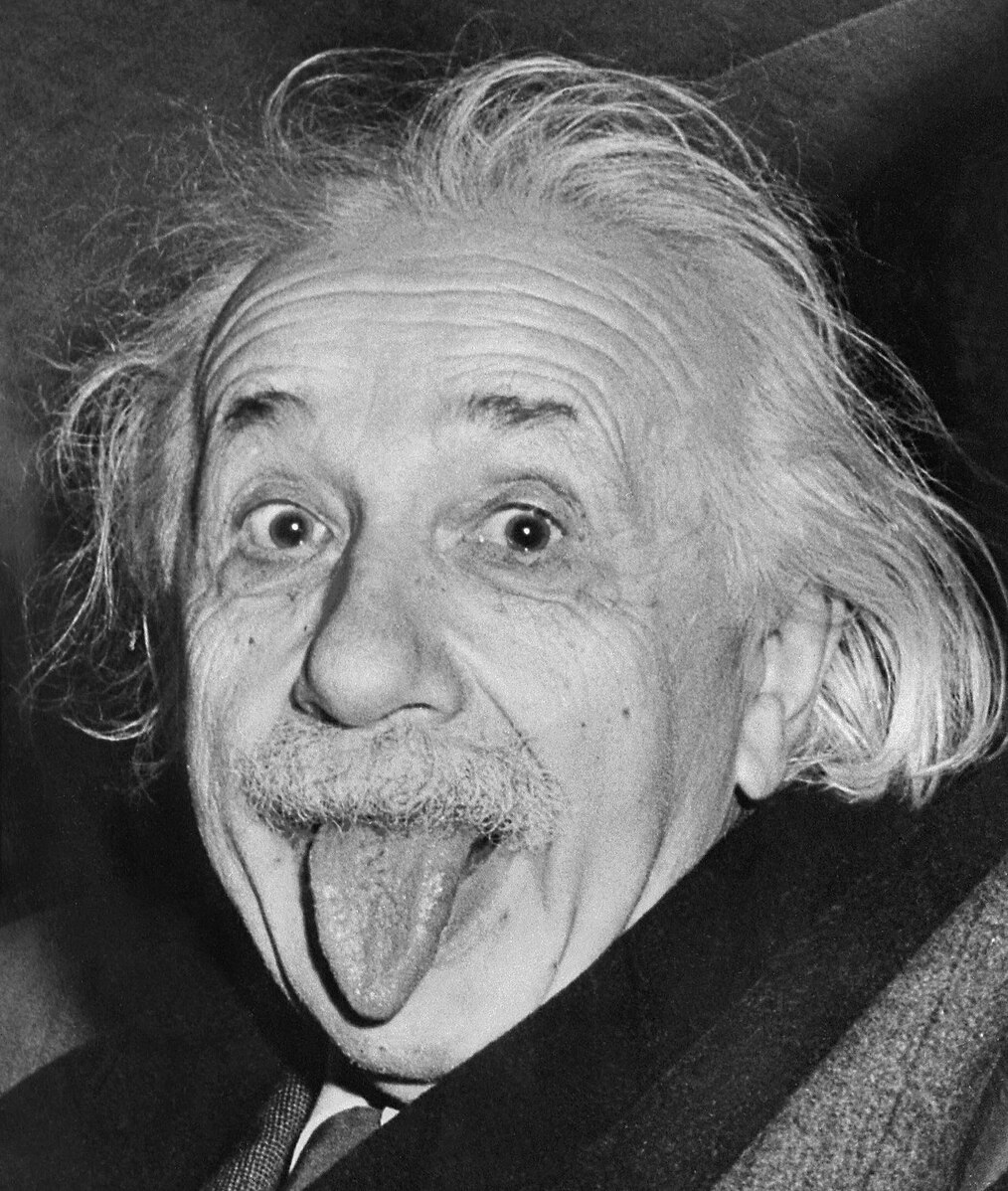
Albert Einstein sticks his tongue out for photographer Arthur Sasse after his 72nd birthday party on March 14, 1951. Wikimedia Commons.
‘One of the most reproduced and parodied pictures of Einstein, according to reports, Einstein liked the photo so much that he requested International News copies of them for personal use as gifts.’
What did Einstein mean in these words above? How can risking being absurd have benefits for us? What this great man meant was that, if we are sensible and sane all the time, and only considering doing what is rational, safe and reasonable, we may be overlooking something important. We may miss the original and the new, the intuitive, spontaneous ways of thinking that can lead to invention and innovation.“Only those who attempt the absurd can achieve the impossible.”
Albert Einstein
“The most absurd and reckless aspirations have sometimes led to extraordinary success.”
Luc de Clapiers
Perhaps we can, on occasion, allow ourselves to free up our imagination, for it can take us out of the present, away from the past, and into an imagined future. It can give us wings, to take us into any time and any place we want.
Our imagination enables us to have the freedom to wander outside the usual boundaries and strictures of life, to break the rules of time and place, to defy gravity, to float, to fly, to soar.“Imagination is more important than knowledge. For knowledge is limited, whereas imagination embraces the entire world, stimulating progress, giving birth to evolution.”
Einstein.
 Rachel Adams. Flickr.
“Still, what I want in my life is to be willing to be dazzled— to cast aside the weight of facts
and maybe even to float a little above this difficult world.”
Mary Oliver
- Theatre and irresponsibility
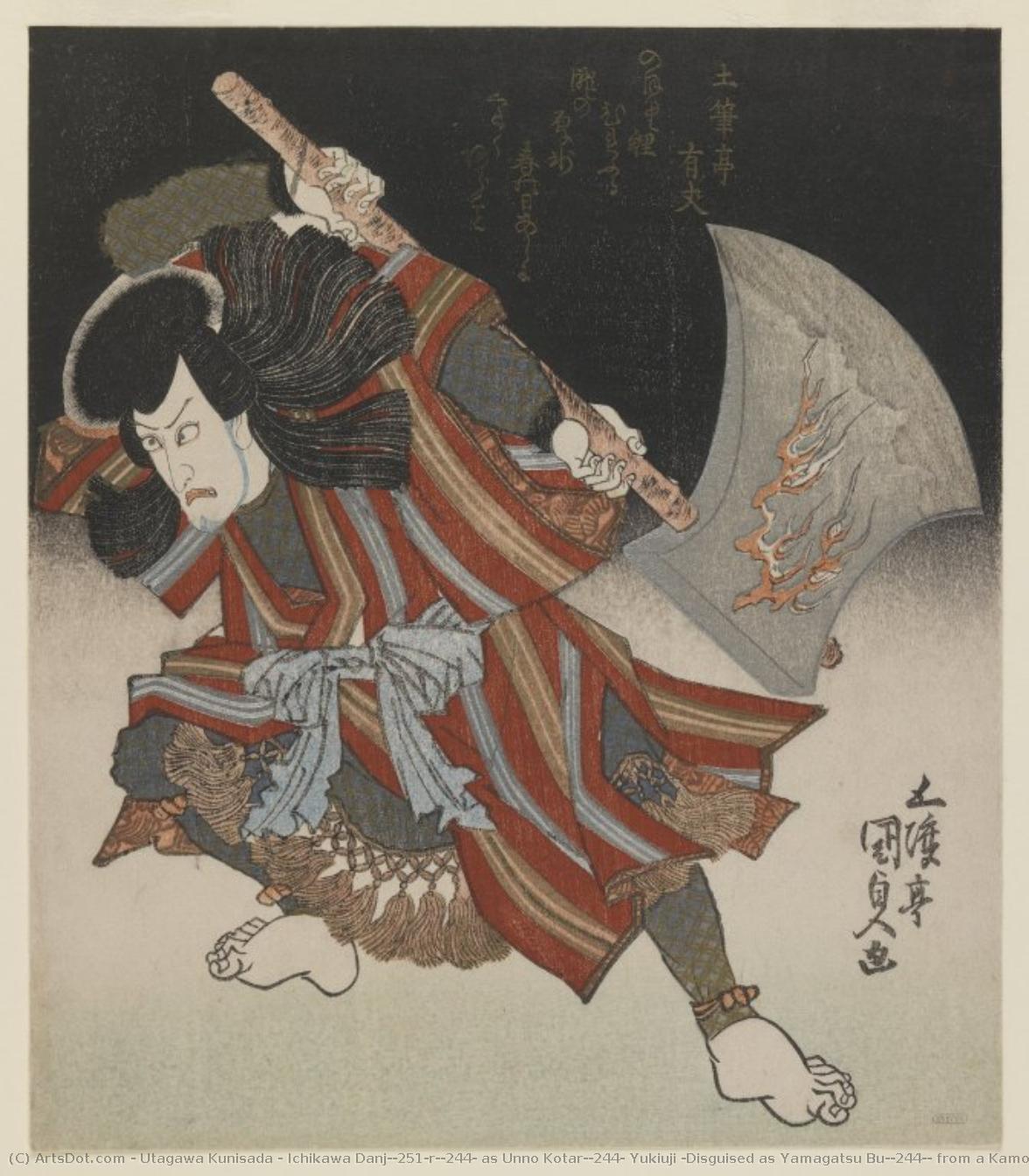
Ichikawa Danjûrô as Unno Kotarô Yukiuji (Disguised as Yamagatsu Buô) from a Kamoise at the Ichmuraza Theatre – (Utagawa Kunisada)1828. Wikimedia Commons
Writing plays can include challenging expectations, creating the unexpected, the shocking, the surprising, in ways that show they have some degree of license to provoke, imply, and act ‘irresponsibly,’ free from the rigidities and accountability that can beset other artistic forms. Kushner is regarding irresponsibility in drama as a strength, something creative and positive, a force that allows the playwright to embrace the confusion often created on stage, to value the contradictions, the chaos, the farcical, the unanswered questions.“There’s a kind of a fundamental irresponsibility in playwriting, and the strength of playwriting comes from that irresponsibility.”
Tony Kushner
- Art and ‘irresponsibility’

Marcel Duchamp, 1917, Fountain, photograph by Alfred Stieglitz. Wikimedia Commons
What do people mean by saying some art is irresponsible? It would seem that this word has different meanings in relation to art. In the quotations above, Joyce sees irresponsibility as an important aspect of art, regarding schools as ignorant of this fact.“Irresponsibility is part of the pleasure of all art; it is the part the schools cannot recognize.”
James Joyce
“Right or wrong, it’s very pleasant to break something from time to time.”
Fyodor Dostoyevsky
How irresponsible was it of Bansky to allow his painting to be displayed and then to destroy it as soon as it sold! What on earth was he thinking? And yet, the moment it was shredded, its value shot up.
 Van Gogh. Starry Night. Wikimedia Commons.
“Do not quench your inspiration and your imagination; do not become the slave of your model.”
Vincent Van Gogh
Such irresponsibility in art, such deviations rom the ‘norm’ has paid enormous dividends through time, and I do not just mean financial ones. These irresponsible artistic adventures have been both inspiring and groundbreaking. Shirley Trevena, a wonderfully innovative watercolourist, has broken many of the ‘rules’ of her chose medium, using the watercolour paint ‘irresponsibly,’ and taking risks that have produced the most wonderful and original pieces of art… 
Consider how the image would differ-and suffer- if the lines behind were perfectly, ruler-straight. How much spontaneity, how much freedom of spirit and dynamism would have been lost. The work would have looked stiffly, mechanically structured, emotionless and devoid of energy.
“I think perfection is ugly. Somewhere in the things humans make, I want to see scars, failure, disorder, distortion.”
Yohji Yamamoto
- Beyond right and wrong- challenging this binary
 Field in Asturias – Joaquin Sorolla Y Bastida. 1903. Wikioo
Between right and wrong, and beyond them, there are also many shades of grey. The world is not clear, not without contradiction and paradox. What is the meaning of responsible, and what is irresponsible? Defintions, clear-cut or otherwise, can actually be confusing and can stand in the way of originality, exploration and understanding. They can close doors. The field of which Rumi speaks is a place of observation and discovery, of openness and freedom from the burden of correctness. It is a place of growth, of evolution, of questioning. It is not a place of certainty.“Out beyond ideas of wrongdoing and rightdoing, there is a field. I’ll meet you there.’
Rumi
 Einstein’s desk, April 1955, after he had died.
“Study hard what interests you the most in the most undisciplined, irreverent and original manner possible.”
Richard P. Feynman
“Be regular and orderly in your life, so that you may be violent and original in your work.”
Gustave Flaubert
Without risks, life would be dull and boring. Taking calculated risks, weighing up the pros and cons, making mistakes and learning from them, all are necessary if we are to ‘seize the day.’ Managing uncertainty, not knowing how things will turn out, are not easy, but if we are able to cope with these, we can find that we become increasingly creative and feel more alive.“You have to take risks. We will only understand the miracle of life fully when we allow the unexpected to happen.”
Paulo Coelho
So do make sure that, on occasion, you climb a little way out of the frame, indulge in a little irresponsibility, seize the day, dare to prioritise fun, get lost in being creative…and remember to throw that custard pie!!!“The real risks for any artist are taken in pushing the work to the limits of what is possible, in the attempt to increase the sum of what it is possible to think. Books become good when they go to this edge and risk falling over it when they endanger the artist by reason of what he has, or has not, artistically dared.”
Salman Rushdie

© Linda Berman“When I write a story, I have no idea what I’m doing. All I know is that I want to share something with my readers. The whole idea of writing is this place where you lose control, where you’re irresponsible – it’s a very liberating place.”
Etgar Keret
 waysofthinking.co.uk