
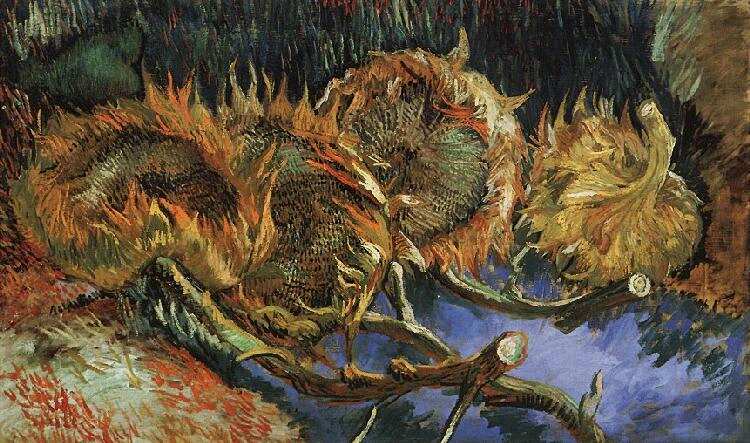
Vincent Van Gogh’s “Four Withered Sunflowers,” 1887. Wikimedia Commons
“If there be anything that can be called genius, it consists chiefly in ability to give that attention to a subject which keeps it steadily in the mind, till we have surveyed it accurately on all sides.”
Robert Quillen
How can we really understand the full meaning of the concept of genius? People have, throughout time, tried to grasp it, but it is an elusive concept and there are many and various theories around its definition and implications.
Is it a result of nature or nurture, of inborn brilliance, imagination and creativity, or the influence of others and the surroundings in which we find ourselves? Can it be something we develop and mature into?
Genius has been variously perceived and defined over time and in different cultures. In the post I will reveal some important aspects of genius, and how contemporary research suggests that its meaning is evolving to be more collaborative, less focussed on the individual and less of a convenient mask for undesirable behaviours.
What follows is an exploration of several different aspects that help create genius in people…
- Genius and magic

“Genius is another word for magic, and the whole point of magic is that it is inexplicable.”
Margot Fonteyn
Some people have viewed genius as magic, as something unfathomable, completely baffling, a kind of mystery potion that comes from a golden bottle. The word ‘genie,’ a magical being, capable of changing people’s lives, is also related to the term ‘genius.’
Genius in this light is seen as something enchanting, spiritual, separate from the ‘ordinary’ human, referring to someone with an amazingly high level of intellectual competency, a rarity, alone in their brilliance, and a world apart from the rest of humanity.
The origin of the word ‘genius,’ is, in fact, from the Latin word genius, meaning ‘divine spirit,’ a protective guide. In time, this meaning evolved and the term came to refer to the idea of extraordinary and exceptional talent.
- Genius and ordinariness
“The invariable mark of wisdom is to see the miraculous in the common.”
Ralph Waldo Emerson
Whilst there can be a magical aspect to true genius, there is certainly a spark of genius in everyone. In too many people, this spark goes unnoticed, disregarded, overlooked, perhaps by the person themselves, as well as others.
Many deep-thinking people now reduce the idea of genius to a more manageable size, emphasising that it is a collection of more ‘ordinary’ qualities, and not so much to do with magic.

Leonid Pasternak – The Passion of Creation. 1850 Wikimedia Commons.
“Genius is one percent inspiration and ninety-nine percent perspiration.”
Thomas A. Edison
- Persistence, perseverance, hard work, tenacity…
So many wise and thoughtful people have underlined the importance of these qualities in relation to success, highlighting the fact that genius alone is not always enough…
“Nothing in this world can take the place of persistence. Talent will not: nothing is more common than unsuccessful men with talent. Genius will not; unrewarded genius is almost a proverb. Education will not: the world is full of educated derelicts. Persistence and determination alone are omnipotent.”
Calvin Coolidge
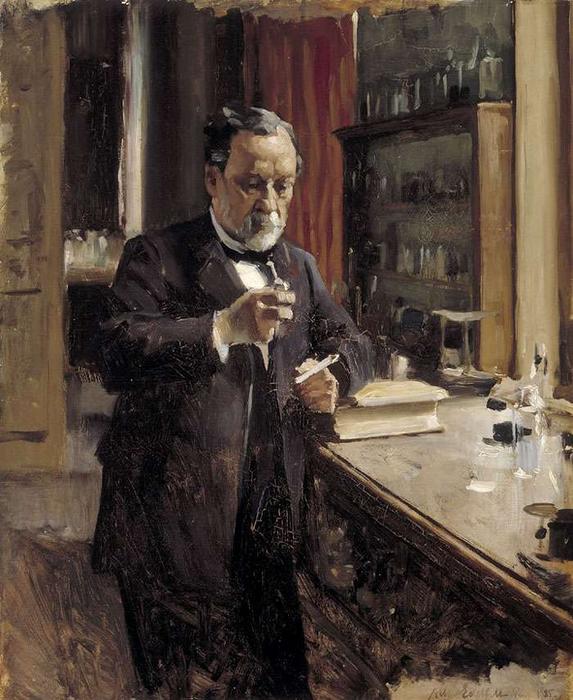
Louis Pasteur Study – Albert Edelfelt. Wikioo
“Let me tell you the secret that has led me to my goal. My strength lies solely in my tenacity.”
Louis Pasteur
“When you get into a tight place and everything goes against you … never give up then, for that is just the place and time that the tide will turn.”
Harriet Beecher Stowe
“Press on. Obstacles are seldom the same size tomorrow as they are today.”
Robert H. Schuller
Those who have succeeded in their efforts, even those regarded as possessing true genius, often say that it is hard work that got them there, in a way that debunks some of the magical thinking and myths about the quality of genius.
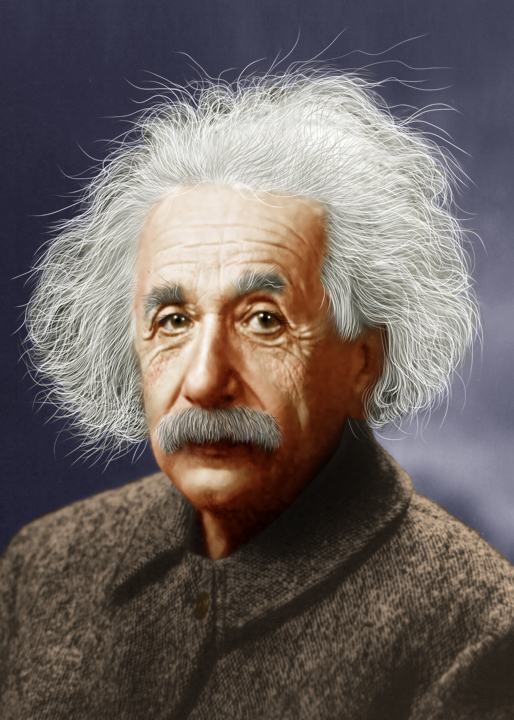
Albert Einstein – Colourised. https://www.flickr.com/photos/donkeyhotey/12637209434
Author DonkeyHotey
“It’s not that I’m so smart, it’s just that I stay with problems longer.”
Albert Einstein
Other important qualities are patience, dedication and passion..
“But believe me, my dear boy, there is nothing stronger than those two: patience and time, they will do it all.”
Tolstoy, War and Peace.
“Life is not easy for any of us. But what of that? We must have perseverance and above all confidence in ourselves. We must believe that we are gifted for something and that this thing must be attained.”
Marie Curie
- Childhood enthusiasm
“Combinatory play seems to be the essential feature in productive thought.”
Albert Einstein
Einstein was very much able, as an adult, to maintain his childhood sense of wonder and his desire to play and experiment. His childhood fantasies and excitement became transformed into something creative, beautiful and lifelong. Being able to hold onto such childhood spiritedness and awe at the marvels of the world is an essential element in developing genius.
 Mystical Head: Closed Eyes. Jawlensky. Wikioo.
“He who can no longer pause to wonder and stand rapt in awe, is as good as dead; his eyes are closed.”
Albert Einstein
“The secret of genius is to carry the spirit of the child into old age, which means never losing your enthusiasm.”
Aldous Huxley
“Genius is the recovery of childhood at will.”
Arthur Rimbaud
- Originality
“Genius is a talent for producing something for which no determinate rule can be given, not a predisposition consisting of a skill for something that can be learned by following some rule or other; hence the foremost property of genius must be originality.”
Kant
Creative originality is central to the development of genius; thinking outside the box and seeing the world with new eyes has produced great works of art, wonderful scientific discoveries and inventions and stunning products of imagination and deep thought.

Relief-disques (1936) by Robert Delaunay. Wikimedia Commons
“Talent hits a target no one else can hit; Genius hits a target no one else can see.”
Arthur Schopenhauer
- Making the complex simple
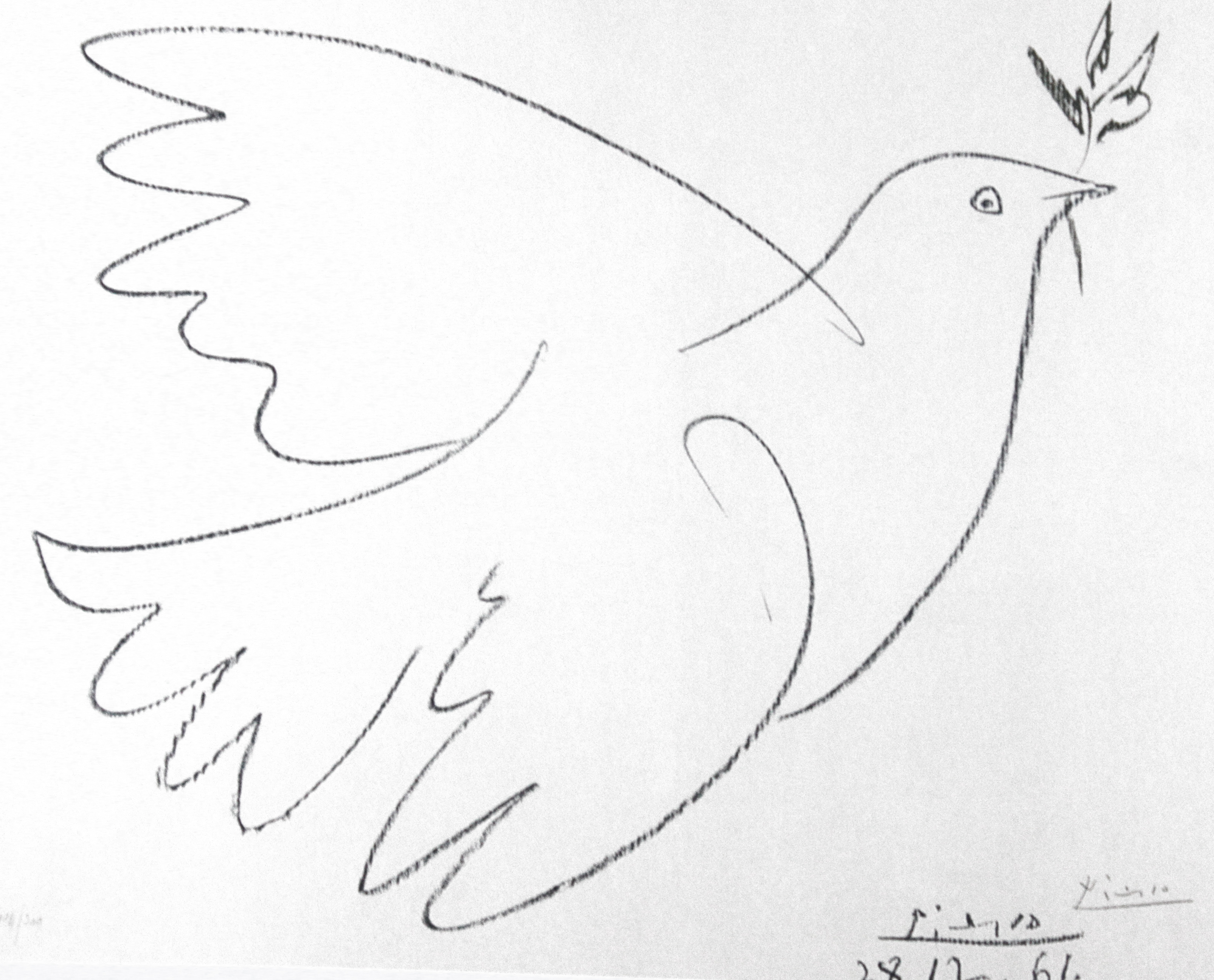 Picasso. Dove of Peace. 1961. Flickr. Lucas Wirl.
“The definition of genius is taking the complex and making it simple”
Einstein
“Simplicity is the most difficult thing to secure in this world; it is the last limit of experience and the last effort of genius.”
George Sand
Achieving a result that appears simple, yet is actually complex and hard to achieve, is one of the indicators of genius at work. In order to simplify, we need space and time; space to think, to develop our skills, to use our intellect and talents, and time, to work on producing something that appears uncomplicated and focussed.

David Hockney – Woldgate Woods II [2006] Gandalf’s Gallery, Flickr.
“Anything simple always interests me.”
David Hockney
Attaning this goal is also related to being able to communicate one’s ideas to the world, to translate material from the inner world of thought and fantasy to the outer world of reality.

Vincent van Gogh – Falling Leaves (Les Alyscamps) [1888]Gandalf’s Gallery. Flickr.
“Genius is the ability to put into effect what is on your mind.”
F. Scott Fitzgerald
- Myths around genius.
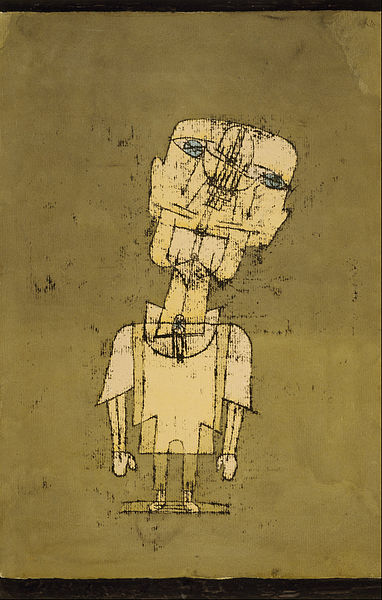
Ghost of a Genius (1922) by Paul Klee. Wikimedia Commons
It is important to explore some of the long-held prejudices and preconceptions about genius that can produce skewed ways of thinking in this area.
A very recent book by Helen Lewis (Penguin Books, June 2025) presents us with some mind-blowing ideas, ones that can bring clarity and real change in the way we view the whole idea of genius.

The author urges us to look at the idea of genius in some innovative and different ways; she challenges popular views on genius.
Two of the main points in her book are as follows:
1. Genius has been defined not by science, but by myth, cultural power and by the human need to glorify certain people. There are myths that focus on attributing genius in racist and sexist ways that need to be addressed and discarded.
2. The notion of the solitary genius is a myth. Instead, and more realistically, the idea of ‘scenius,’ is about collectivity, collaboration and working together. This is a more accurate way of regarding this concept, rather than unrealistically attributing all the accolades to one person.
“The promotion of a specific person as a genius can be a stealthy argument for what that person represents. A nation’s supremacy, perhaps, or the importance of an idea, or – distastefully – for the notion that men are intellectually superior to women, or Europeans are intellectually superior to Africans. Genius is a right-wing concept, because it champions the individual over the collective. The supportive wives get quietly painted out, the research assistants airbrushed away, the government bailout goes unmentioned, the collaborators downgraded, the university’s role diminished.”
Helen Lewis
Along the way, people who have been there to help and give strength are often overlooked and ignored; these could be supportive partners, assistants or institutions.
Here are some more thought-provoking quotations from the book:
“Because a genius is an individual, we don’t pay enough attention to scenius – a word coined by the musician Brian Eno to describe the ‘ecology of talent’ that nurtures innovation. Think of Florence during the 1500s or Silicon Valley after the Second World War: these were sites of scenius, allowing talented individuals to reach their full potential.”
“We feel instinctively that greatness must have a price. (Perhaps we need this idea to explain why we aren’t geniuses.) Sometimes that price is paid by its possessor. More often, the suffering is borne by the people around the genius. So am I sharpening my axe to destroy the concept altogether? No, of course not.”
Helen Lewis
What Lewis is saying is that, frequently, the idea of genius is used to excuse bad behaviour. She cites the example of, amongst others, Picasso, who was abusive and misogynistic. She also encourages us to ‘praise the work, not the myth,’ the myth that genius is about glorifying one person. Of course, she says, genius does exist, but it is more complex than we have hitherto thought.
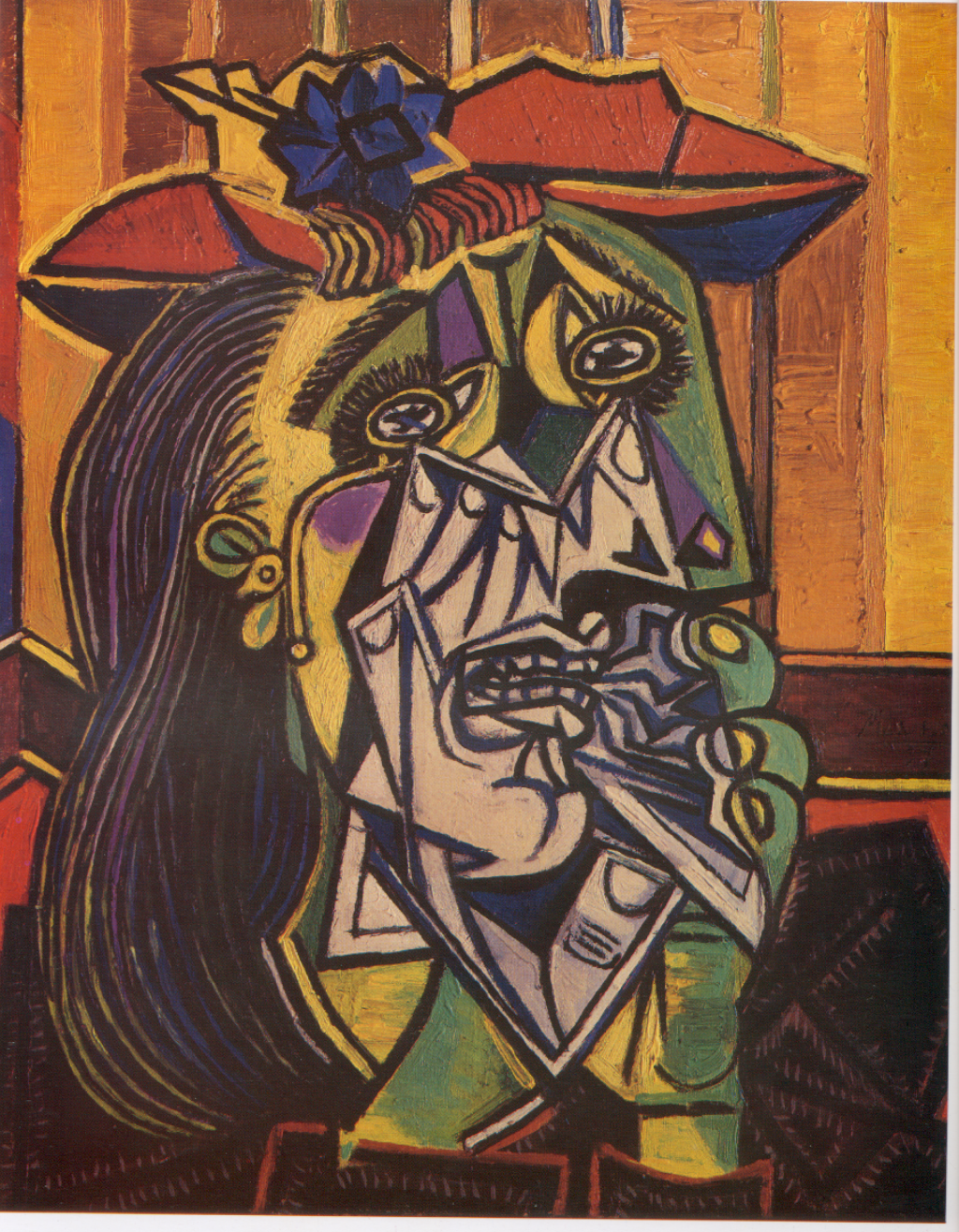
Picasso. Weeping Woman. 1937. Ian Burt. Flickr.
“Picasso’s life and art were made possible by the work of women: his wives and mistresses who cared for him and organised his life, and of course the models and muses who fill his paintings.”
What Lewis is proposing is that evidence of genius in a person should not be used as a reason to excuse immoral or toxic behaviour. No matter how brilliant a person is, it does not give them an excuse to be abusive to others, as many have been.
The author is also underlining the importance of acknowledging and appreciating the help of others who have contributed to our success.
“When we seek for connection, we restore the world to wholeness. Our seemingly separate lives become meaningful as we discover how truly necessary we are to each other.”
Margaret J. Wheatley
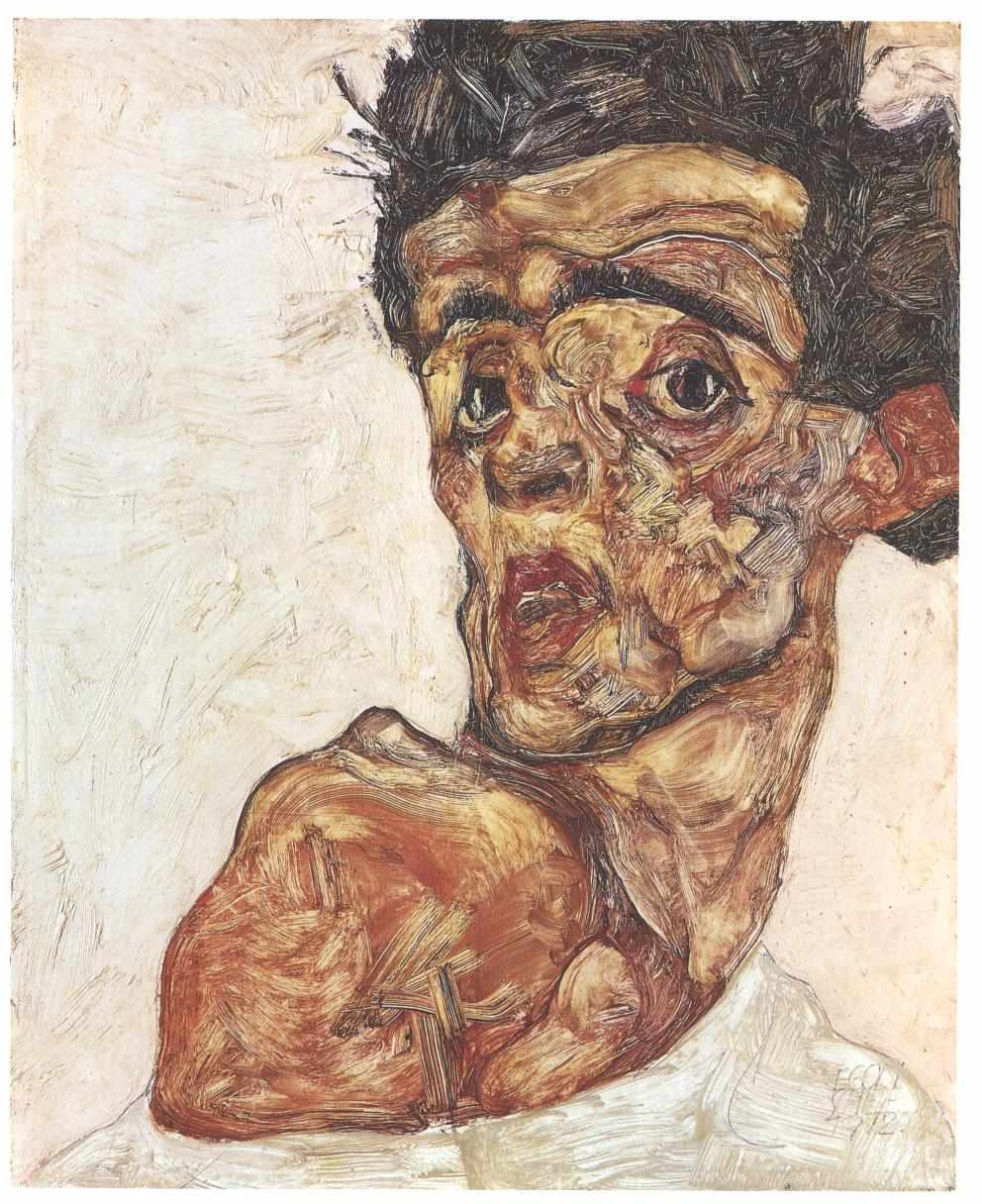
Egon Schiele., 1912.Self-Portrait with Bare Shoulder. Wikimedia Commons
“We can admire the art without excusing the artist.”
Amanda Hess
© Linda Berman
 waysofthinking.co.uk