
- Learning to be wise in relation to ourselves

Bird of self-knowledge. Unidentified painter. C17th. Wikimedia Commons
‘Knowing yourself is the beginning of all wisdom’
Aristotle
It may be tempting to imagine that wisdom lies outside the self, in great, academic tomes, in encyclopediae, on a library’s shelves, there to be found if only we know where to look. Aristotle, however, makes an important statement, reminding us that wisdom starts, not in the world outside us, but within the self.
Understanding ourselves is crucial if we are to grow wiser, for then we will come to know our strengths and our weaknesses, learn from our past mistakes, and be more likely to make decisions and choices based on real self-knowledge.
“What is necessary to change a person is to change his awareness of himself.”
Abraham Maslow
- Awareness of the unconscious part of ourselves
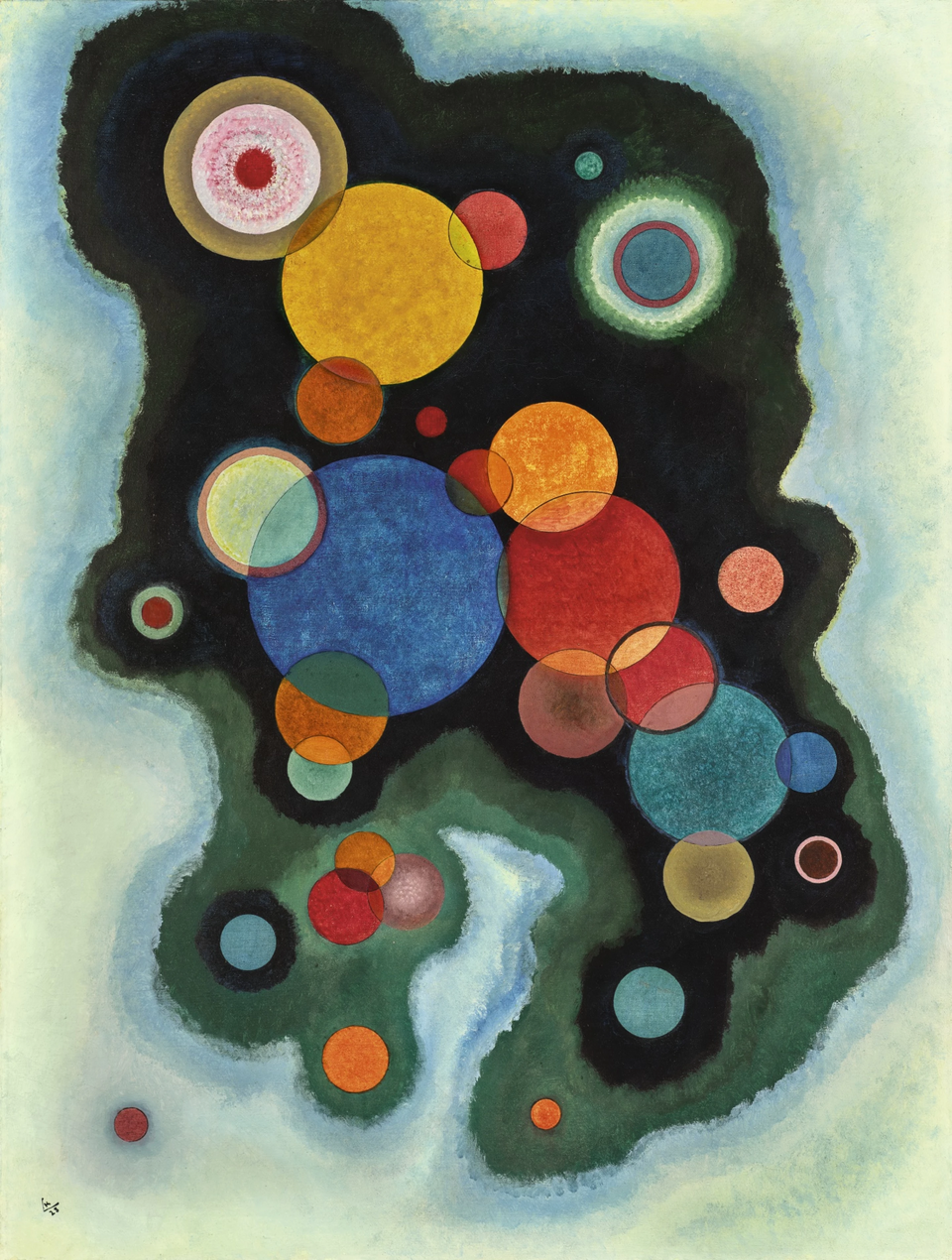 Wassily Kandinsky. Deepened Impulse. Wikimedia Commons
“Until you make the unconscious conscious it will direct your life and you will call it fate.”
Carl Jung
Jung’s words refer to a way of being that lacks any awareness that there is anything other than the conscious mind. There is no sense of the deeper level of consciousness that actually drives much of our behaviour.
If we choose to live unconsciously, we are at the mercy of life, blown in the wind, lost. We will be totally oblivious of other levels beneath consciousness. It is akin to the way of thinking that there are no such things as viruses or bacteria because we cannot see them.
Many people live their lives believing only in conscious, rational thought, reacting ‘logically’ to the world around them. In fact there is a whole ‘other part’ of them, busily active, which they ignore or choose not to know about.
They spend their lives studying, working, playing, relating to others and earning money. These activities are much preferred to thinking about how their minds work. Yet the mind is so central to all of us.
 Riderless Horse Races 1817 Theodore Gericault. Wikimedia Commons
“Rather than living our lives, we are ‘lived’ by unknown and uncontrollable forces.”
Sigmund Freud
Being unconsciously influenced by such forces is akin to having riderless horses galloping through our psyche uncontrollably, and this can lead to problems and difficult issues in our lives.
Freud emphasised the importance of bringing material from the unconscious into consciousness:
“Where id is, there shall ego be.”
The id resides in the unconscious and consists of primitive needs, wishes and fantasies. Freud was saying that if we bring unconscious wishes and urges into consciousness, into awareness, then we will be more able to control and process these primitive feelings and impulses.
The bringing of such unconscious desires and thoughts into the higher ego level, means that they can be explored, processed and moderated, which is what people hope for in psychotherapy.
“Control of consciousness determines the quality of life.”
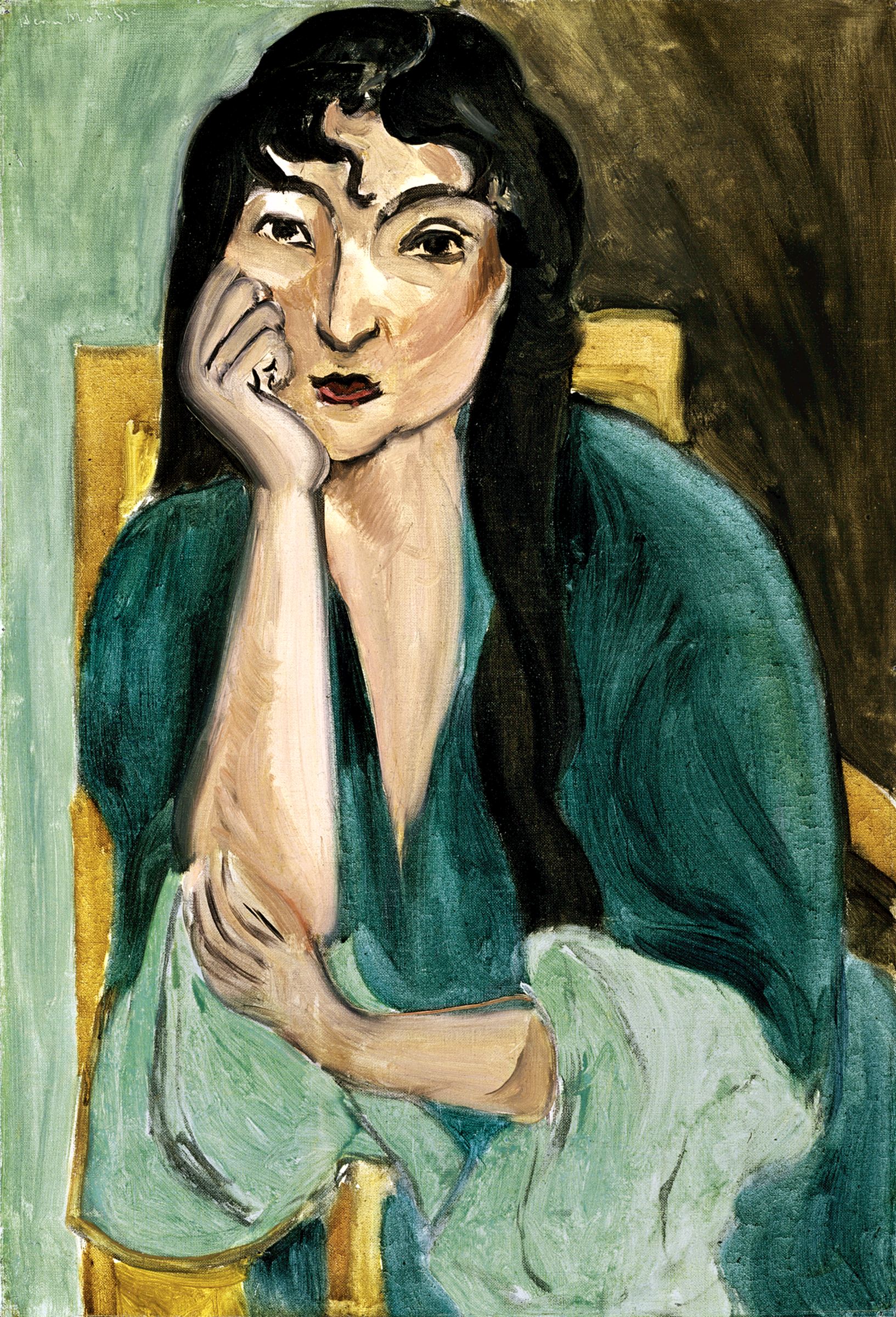 Henri Matisse – Meditation, Portrait of Laurette [1916-17] Gandalf’s Gallery. Flickr
“It takes courage…to endure the sharp pains of self discovery rather than choose to take the dull pain of unconsciousness that would last the rest of our lives.”
Marianne Williamson
- Feeling afraid to know our own darkness
 Lady Macbeth Seizing the Daggers. Henry Fuseli (1741–1825)
“We have been to the moon, we have charted the depths of the ocean and the heart of the atom, but we have a fear of looking inward to ourselves because we sense that is where all the contradictions flow together.”
Some people are very threatened by the very notion of the unconscious. They deride it as ‘gobbledegook,’ or ‘mumbo-jumbo.’ The (unconscious) threat is that they might have to face aspects of the self that they do not like, the dark side, their ‘shadow’ side, and the ‘contradictions’ within themselves.
That is why awareness of whole parts of ourselves can feel intimidating. The degree to which this happens varies according to each person’s openness to the inner workings of their psyche.
For those who decide embark on psychotherapy in order to gain more self-awareness, this may involve facing internal, repressed ‘monsters,’ gaining insight and understanding, becoming more of a whole, individuated person, having the freedom to be oneself, and the bringing about of real and lasting change…
- Facing the inner darkness
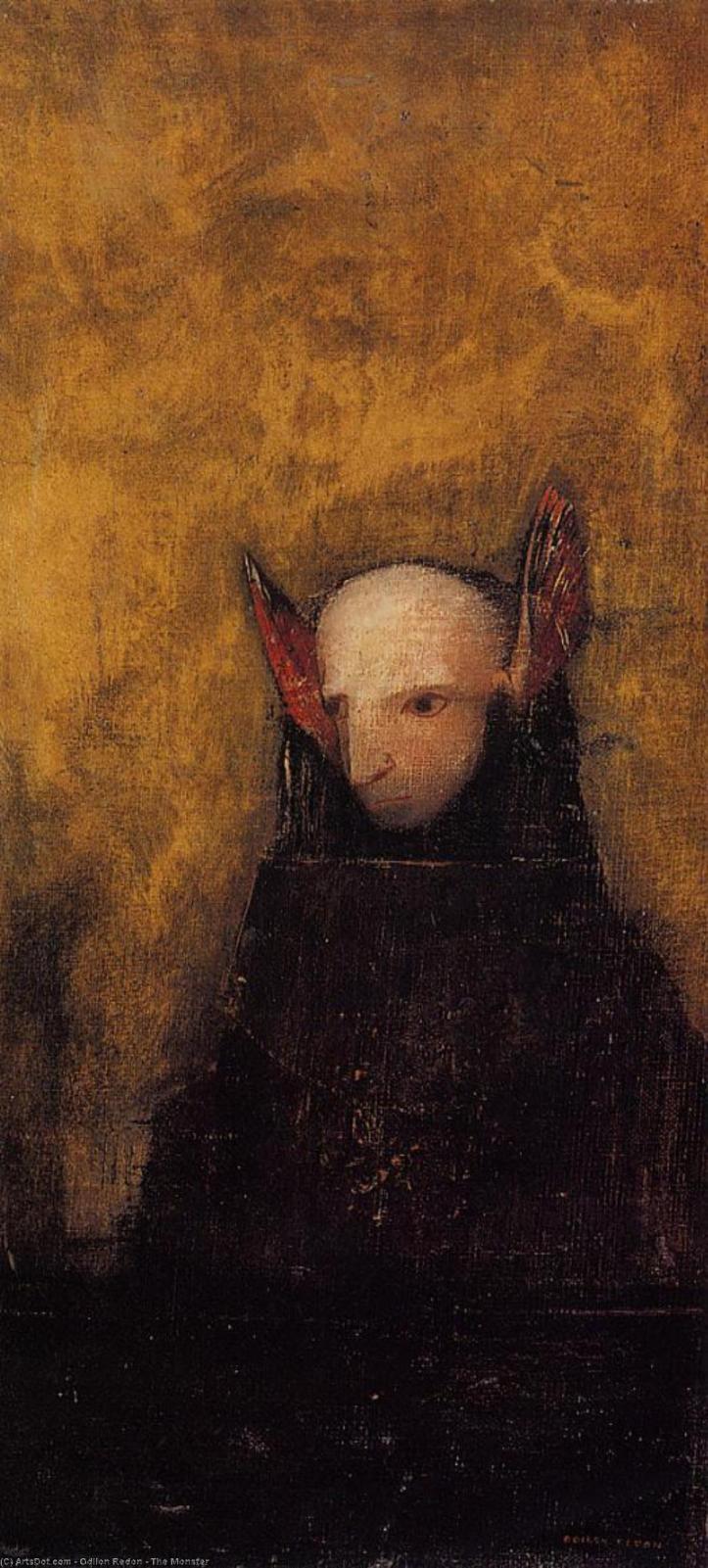
The Monster. Odilon Redon. (1840-1916) Wikioo.
“We all hold a monster inside. The only difference is what form it takes when freed.”
Mary Lindsey.
Becoming a better, more fully-rounded person is not about repressing the ‘bad’ aspects of the self. It is related to being more able to acknowledge the less palatable sides of the personality. In this way, others’ darker sides will also be more acceptable.
Posing as perfect angels is unreal and unsatisfactory and will likely lead to unconsciously acting out repressed dark impulses.
Aggression, murderous feelings, manipulative behaviour, are in all of us, and we need to be aware of these aspects of ourselves, so that they can be examined, processed and controlled, rather than given free rein, potentially causing damage to self and others.
We all have them, those aspects of ourselves that we do not like. However, the ‘monstrous’, raging, nasty parts of all of us will be worse if left unacknowledged and unchecked.
Unless we ‘make friends’ with our demons and gain knowledge of and mastery over them, they can become out of control. How might we do this? How can we achieve awareness of ourselves, of who we really are?
Perhaps we might go into therapy or maybe we will learn in other ways about who we are and what makes us tick. We achieve personal growth through self-reflection, self-questioning and curiosity about our inner world.
Psychotherapy, group therapy, real conversation with others, meditation, research and reading widely can all help in terms of developing clear and constructive ways of thinking and being.
Finding such new ways involves a willingness to take risks, valuing different viewpoints and not working on this in isolation. An open attitude, a lack of defensiveness and a desire to listen to the views of others will all help towards change and personal growth.
- Memento mori
 Contemplation. Jozef Israëls. 1896. Wikimedia Commons
“Self-awareness is a supreme gift, a treasure as precious as life. This is what makes us human. But it comes with a costly price: the wound of mortality. Our existence is forever shadowed by the knowledge that we will grow, blossom, and, inevitably, diminish and die.”
Yalom
Many people run from self-awareness, and Yalom’s words clearly explain one of the possible reasons for this. Becoming aware of ourselves inevitably will also involve facing a greater truth, that of our own limits, and especially the limited time we all have on earth.
 Golden Sunset – George Inness. 1893. Wikioo
“Life is tragic simply because the earth turns and the sun inexorably rises and sets, and one day, for each of us, the sun will go down for the last, last time.”
James Baldwin
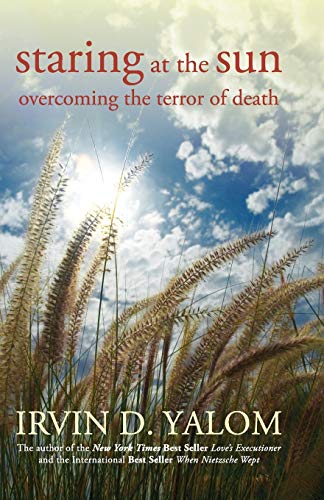
Irvin Yalom’s book, Staring at the Sun: Overcoming the Terror of Death, is helpful in addressing these fears. He inspires us to feel more accepting and peaceful about our own mortality. We are encouraged to appreciate our lives now, to feel grateful for what we do have, once we have faced the inevitability of death.
 Olive Trees [1889] – Vincent Van Gogh. Wikioo.
“Pass, then, through this little space of time in harmony with nature and end thy journey in contentment, just as an olive falls off when it is ripe, blessing nature who produced it, and thanking the tree on which it grew.”
Irvin D. Yalom
- Self awareness and relationships
 Kees van Dongen – Head of a Woman [1922]Gandalf’s Gallery, Flickr.
“To say “I love you” one must know first how to say the “I”.”
Ayn Rand, The Fountainhead
These words succinctly express the importance of self-knowledge in terms of relationships. Unless we know ourselves, and are reasonably clear who we are, then we are likely not to be in touch with unresolved issues within our psyche.
This quotation is powerfully underlining the fact that, unless we possess a firm sense of self, an awareness of who we are, then we will not be able to have fulfilling relationships with others. Why is this?…
- The importance of understanding projection

Friends – Lajos Vajda. 1937. Wikioo
“It is a fault to wish to be understood before we have made ourselves clear to ourselves.”
Simone Weil
Projection is a mechanism of defence; it prevents us from having to face parts of ourselves we do not like. By unconsciously ‘projecting’, that is, attributing, an emotion to another person, we can ‘disown’ this feeling, and even become ‘irritated,’ critical or angry towards the other person for displaying it.
With little self-awareness, such projections can create real problems in relationships; quite often, emotions like rage, anger, grief, hatred will be projected onto the other person.
This projecting of uncomfortable and difficult feelings into a partner may work for a while, but in time, the relationship can become out of balance, and deeply polarised. Then there will be problems, accusations, strife. Sometimes, the couple may separate; at others, they may decide to work on their shared issues in couple therapy.
If the couple work long and hard enough, then it can be possible to ‘take back’ some of the projections, and to recognise and re-own some of the feelings that they have projected into the other. This will make them feel more whole, more able to be two separate people within a constructive, loving relationship, rather than being trapped in a state of merged and troubled enmeshment.

Reading Couple (Edmond Renoir and Marguerite Legrand) – Pierre-Auguste Renoir. 1877. Wikioo
See you next Tuesday, for part 2 of this post!
© Linda Berman
 waysofthinking.co.uk