
- Feelings Of Being Forgotten In Life.
 Forgotten Man by Maynard Dixon. 1934. Wikimedia Commons.
“And none will hear the postman’s knock
Without a quickening of the heart.
For who can bear to feel himself forgotten?”W.H. Auden
Feeling forgotten by others whilst we live amongst them is extremely painful. The homeless, the refugee in a strange land, the isolated, the unwell, the lonely person who waits for a phone call or a knock on the door, many of them may suffer from a sense of being forgotten by the world. Some people can feel too lost and depressed to be helped, others may beg for assistance from anyone who will listen.
“Never let anyone who cannot bear your pain make you feel you are unbearable. Not everyone is capable of walking with you, but that does not mean you are not worthy of belonging.”
Morgan Harper Nichols
In addition, there are some very sad people who have always behaved to others in a bitter and angry way, creating dislike and rejection. They can be hard to reach, when perhaps deep inside they long for help, but cannot express their feelings.
“Each person with his or her history of being accepted or rejected, with his or her past history of inner pain and difficulties in relationships, is different. But in each one there is a yearning for communion and belonging, but at the same time a fear of it. Love is what we most want, yet it is what we fear the most.”
Jean Vanier
All of us need to belong, to a community, a group, a family, another person, not in an ‘ownership’ sense, but in a way that makes us feel loved and nurtured; this is a part of our shared humanity.
We have a basic need to feel part of something bigger than ourselves, where we can learn from and identify with others, have them reflect and affirm who we are, engage with us, give us a feeling of being loved and accepted.
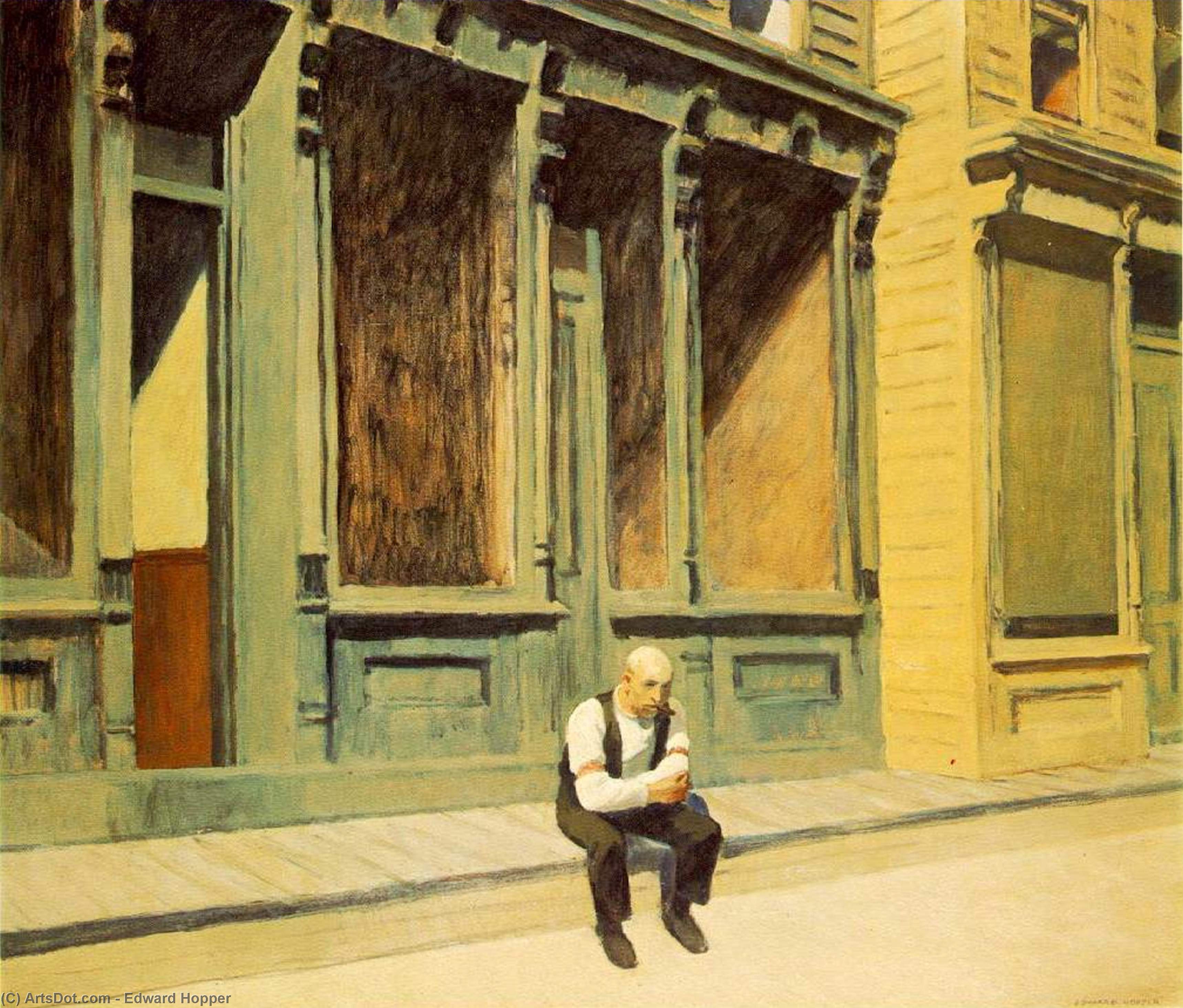 Sunday – Edward Hopper. 1926. Wikioo.
“No man is an island entire of itself; every man
is a piece of the continent, a part of the main.”
John Donne.
A sense of being forgotten can be excruciatingly painful; because our need to be seen and reflected by others is hard-wired into our psyche, being overlooked for whatever reason can feel like an awful punishment.
We are social beings, and the pain of being unnoticed can be acute. It takes a good deal of strength and resilience to manage such experiences.
“A deep sense of love and belonging is an irreducible need of all people. We are biologically, cognitively, physically, and spiritually wired to love, to be loved, and to belong. When those needs are not met, we don’t function as we were meant to. We break. We fall apart. We numb. We ache. We hurt others. We get sick.”
Brené Brown
Our need for closeness with and support from others originates in infancy; the baby cannot survive without the parent. The psychoanalyst John Bowlby’s attachment theory underlines the crucial importance of the parental bond with the infant.
He describes attachment as –
“a lasting psychological connectedness between human beings.”
This need for social connection is part of our genetic make-up. It is necessary for our survival, extending from infancy and continuing throughout our lives. We are social animals, needing community and generally finding isolation and disconnection difficult.
 Edward Hopper – Cape Cod Morning [1950]. Wake
“I long, as does every human being, to be at home wherever I find myself.”
Maya Angelou
Research has shown that being connected to others and feeling a sense of belonging and recognition is important in terms of psychological and physical health and quality of life.
Yet sometimes, we might feel the opposite need, craving solitude. This is a normal and common feeling as well, when in relative moderation.
However, those who have been hurt or traumatised, especially in childhood, may cut themselves off from others as a defence against what has felt like a hostile environment in the world outside.
 Edward Hopper – Intermission [1963] Wikioo.
Then, their isolation and loneliness can feel safer than being in the wider community. Perhaps this is the ‘least worst’ option in a painful and damaged life.
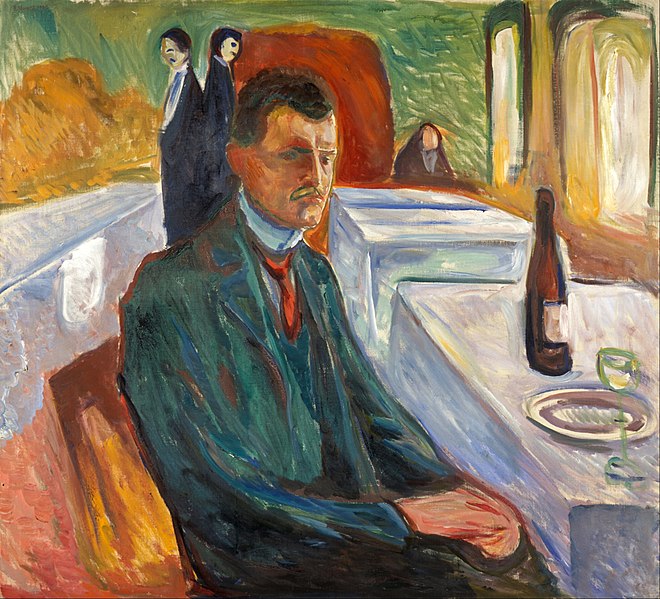 Edvard Munch – Self-Portrait with a Bottle of Wine. 1906. Wikimedia Commons.
- Forgetting Ourselves.
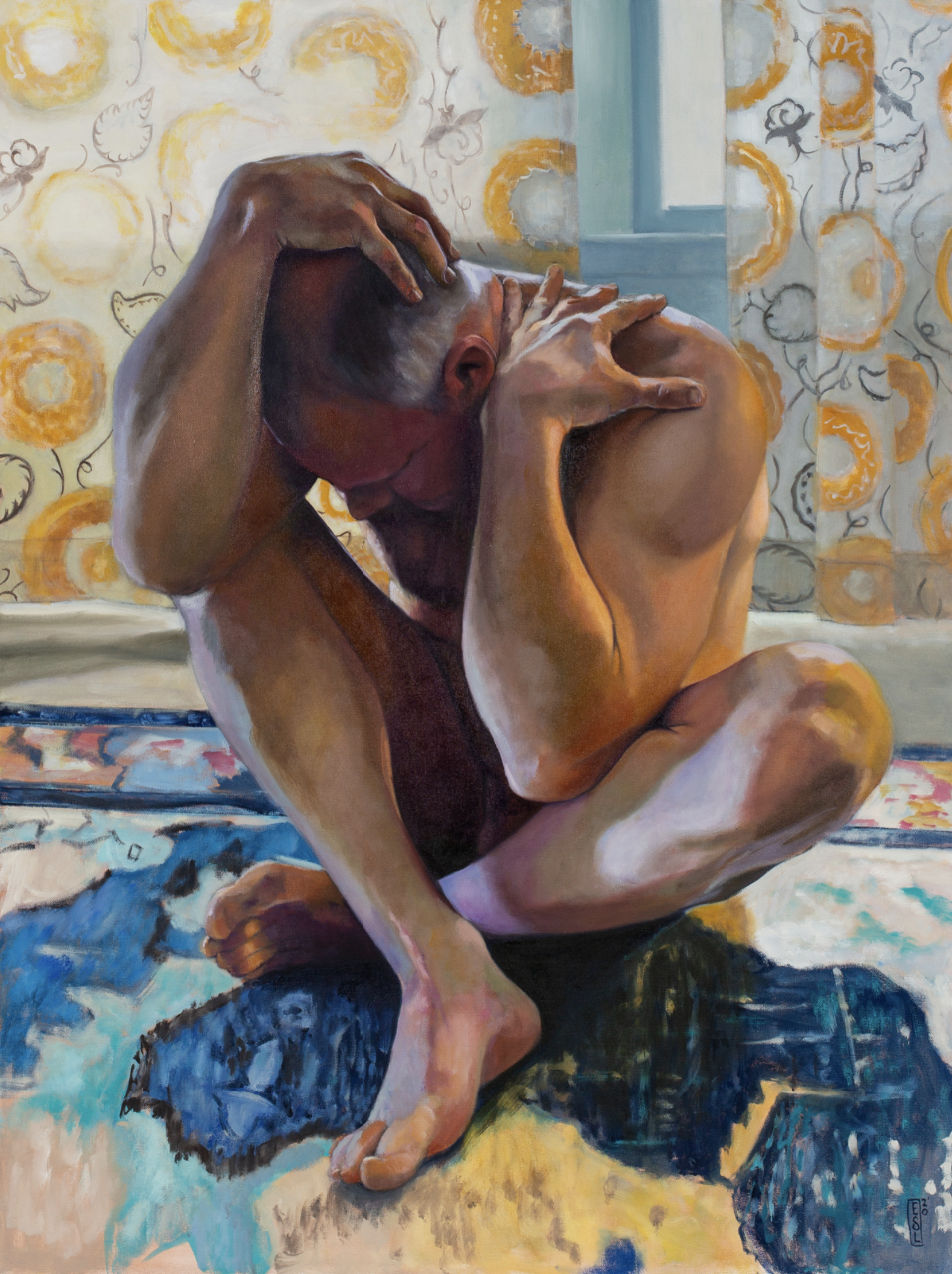 Ellen Starr Lyon – The Vulnerability of Man II [2020]Gandalf’s Galley. Flickr.
- How can we ‘forget ourselves?‘
We can do so by overlooking our own needs, by not nurturing ourselves, by ignoring our feelings and our inner voice. This is often termed ‘letting ourselves go,’ losing ourselves, and not being in touch with who we are, or aware of the child needs inside us that remain forgotten and unmet.
Perhaps this is a repeat pattern from a childhood where we did not feel cared for or contained.
- What does containment mean?
The concept of containment refers to an experience of feeling held and protected, both in a physical and emotional sense. Such supportive holding is described by the psychoanalyst Winnicott, in relation to the centrality of the infant’s experience with the parent.
“The psychological and physical holding an infant needs throughout his development continues to be important, and the holding environment never loses its importance for everyone.”
We all want, right into adulthood, something of the quality of containment that we needed in infancy.
 Mother and Child – Mary Stevenson Cassatt. 1889. Wikioo.
As we mature, we tend to find a multiplicity of ways of gaining support and containment through others, and through different aspects in our environment. When this has not happened, or when our support system has broken down, then we need to focus on parenting ourselves.
Helping Ourselves To Feel Less Forgotten….
- Developing an internal parent for our inner child.
 Eddi van W. inner child. Flickr.2010.
“We readily feel for the suffering child, but cannot see the child in the adult, who, soul fragmented and isolated, whistles for survival on the streets where we shop or work.”
Dr Gabor Maté.
When we are stressed or under pressure, we might feel unable to cope, regressing to childhood feelings of being lost and uncontained. It is then that we need to practise becoming our own parent and learn to contain ourselves.
- What does this mean?
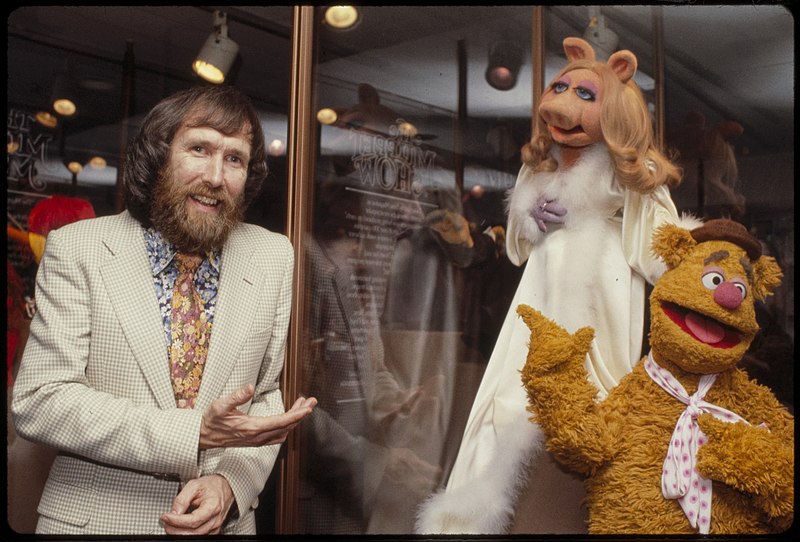 Jim Henson, Creator, The Muppets. 1979. Gotfryd, Bernard, photographer. Wikimedia Commons.
“The most sophisticated people I know – inside they are all children.”
Jim Henson
There is a child inside us all, even though we are adults. Most of us have the ability to help and comfort others in times of difficulty. Can we use some of this adult knowledge to support the child fears inside us? Instead of being hard on ourselves, ignoring our child-like feelings, repeating old patterns of seeing ourselves as bad or stupid, can we ‘speak’ kindly to ourselves and our needy ‘inner child?’
This is what parenting oneself means; it is a kind of re-parenting, a sort of emotional reparation for what we feel we lacked.
“Be the person you needed when you were younger.”
Dandapani
The child that we once were still remains inside us all. She, he or they are still there, in memories, reactions, experiences. Perhaps this child partly resides in our unconscious mind:
“So, like a forgotten fire, a childhood can always flare up again within
us.”Gaston Bachelard
Eckhart Tolle said that “The past has no power over the present moment.” However, the past will ‘flare up again’ if you, the adult, cannot prevent this from happening. If you lose your adult self, or do not have a strong enough set of coping mechanisms, the child that you were will be left alone.
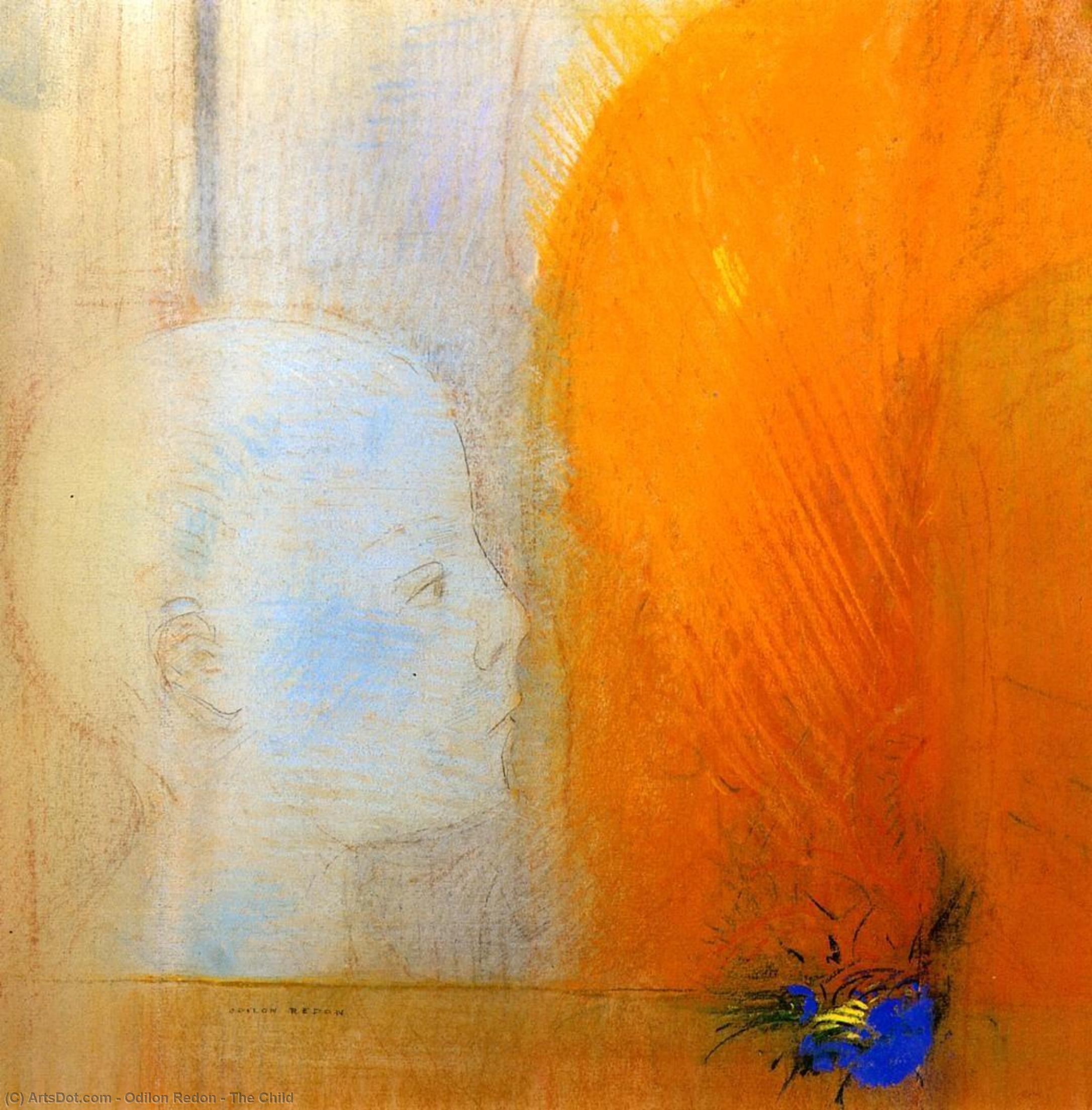 The Child – Odilon Redon. 1894. Wikioo.
“We often tend to ignore how much of a child is still in all of us.”
Elisabeth Kübler-Ross.
Sometimes, people have been so badly traumatised in childhood that they need others to help them nurture their damaged selves. This is an absolutely understandable need for someone who has been hurt or abused in the past.
 Andy (Andrea Fumagalli) Remembering [2015] Gandalf’s Gallery, Flickr
- Having Psychotherapy
If it is possible for us, psychotherapy can help us to ‘remember’ ourselves and who we are. It may also enable an understanding of why we are feeling forgotten and what we can do to help ourselves. This can provide emotional holding; the therapist is there for the patient, containing difficult feelings, when remembering might be difficult.
“What is needed is a form of holding, such as a mother gives to her distressed child. There are various ways in which one adult can offer to another this holding (or containment).
And it can be crucial for a patient to be thus held in order to recover, or to discover maybe for the first time, a capacity for managing life and life’s difficulties without continued avoidance or suppression. “
Patrick Casement.
- Fear Of Being Forgotten When We Die.
 Forgotten – Estelle Thompson. 1992. Wikioo.
“Some day soon, perhaps in forty years, there will be no one alive who has ever known me. That’s when I will be truly dead – when I exist in no one’s memory. I thought a lot about how someone very old is the last living individual to have known some person or cluster of people. When that person dies, the whole cluster dies, too, vanishes from the living memory. I wonder who that person will be for me. Whose death will make me truly dead?”
Whatever we do or do not believe about an afterlife, it is, for many, an unsettling prospect to think about death itself, or to contemplate nothingness and non-existence in this world. The finality can feel a daunting prospect, bringing up fears of being wiped out, forgotten. A dread of uncertainty and the unknown can be all-consuming at times.
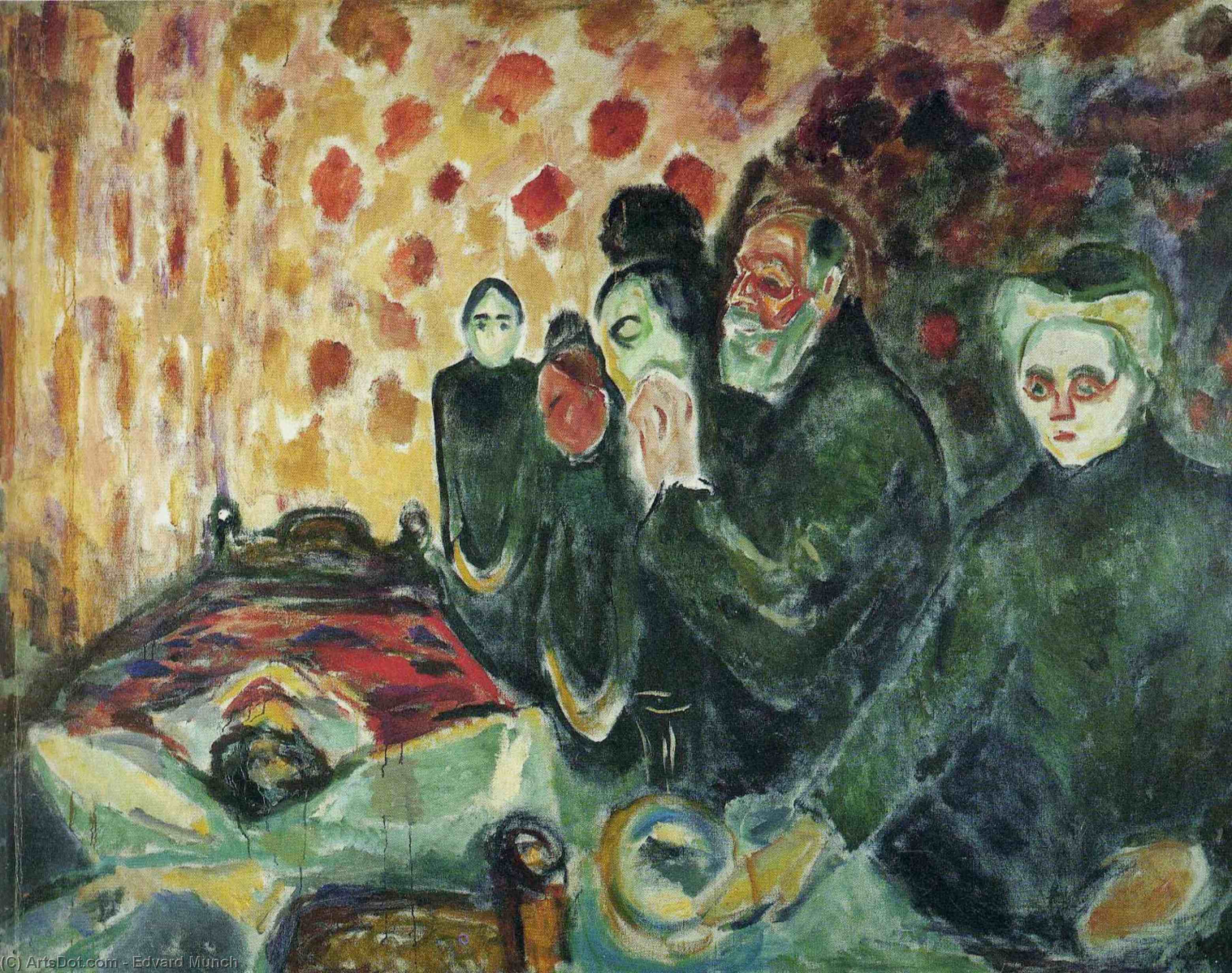 Near the bed of death (fever) – Edvard Munch. 1915.Wikioo.
“Life is tragic simply because the earth turns and the sun inexorably rises and sets, and one day, for each of us, the sun will go down for the last, last time.”
James Baldwin
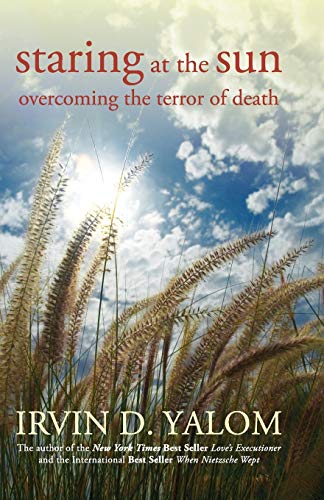
Irvin Yalom’s book, Staring at the Sun: Overcoming the Terror of Death is helpful in addressing these fears. He inspires us to feel more accepting and peaceful about our own mortality. We are encouraged to appreciate our lives now, to feel grateful for what we do have, once we have faced the inevitability of death.
However, some people would prefer to be forgotten. There may be several reasons for this; perhaps being forgotten seems more peaceful after a difficult life, or maybe it is about wanting to have some control after death. However, we could say the same about wanting to be remembered, that this could also be about control, not ‘allowing’ others to forget us.
 jamelah e. forgetting. Flickr.
“The best thing the universe ever gave us is that we’ll all be forgotten.”
Krystal Sutherland
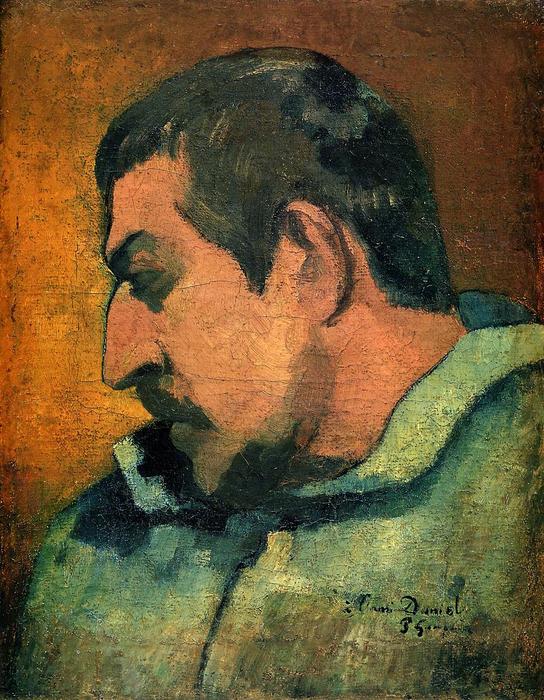
Self Portrait – Paul Gauguin. 1885. Wikioo.
“I want only silence, silence and again silence. Let me die quiet and forgotten, or if I must live, let me live more quiet, and forgotten still…”
Paul Gauguin
- Forgotten Places….
There can be a kind of splendour in long forgotten places, too. As the dual powers of nature and time begin their inevitable encroachment on ageing stones and buildings, they entwine such fading structures with a mass of green tendrils.
They are imposing on these grey markers of the past and the dead their new life and growth, and, almost mystically, something natural and beautiful is created out of the old.
This can be a dramatic transformation, as crumbling stone and plant appear to dissolve into each other, becoming fused into a new whole. We witness new forms gradually emerging. Such a transformation is perhaps symbolic of how we ourselves eventually become part of the earth itself, and are absorbed into it.
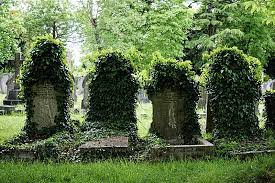
City of London Cemetery overgrown gravestone with ivy. Acabashi. Wikimedia Commons.
- How Do We Manage Our Feelings and Fears?
 Thinking about Death – Frida Kahlo. 1943. Wikioo.
Once we have considered and worked through some of our thoughts and feelings about death, perhaps the focus needs to be on enjoying our life now, and not worrying about whether others will think of us- or not- after we die.
“It is not death that a man should fear, but he should fear never beginning to live.”
Marcus Aurelius
‘To the question, “Why am I old?” the usual answer is, “Because I am becoming dead.” But the facts show that I reveal more character as I age, not more death.’
James Hillman
- Leaving Your Mark: Some Kind Of Continuation
We can achieve continuation after we die through the imprint of our personality on others, through children, our career, writing, art, and in many other ways. Yalom talks of ‘rippling,’ which means that we continue to ‘live,’ through the effects we have on others. Our ideas, thoughts, words of wisdom or comfort will spread through the generations, even in a very diluted form.
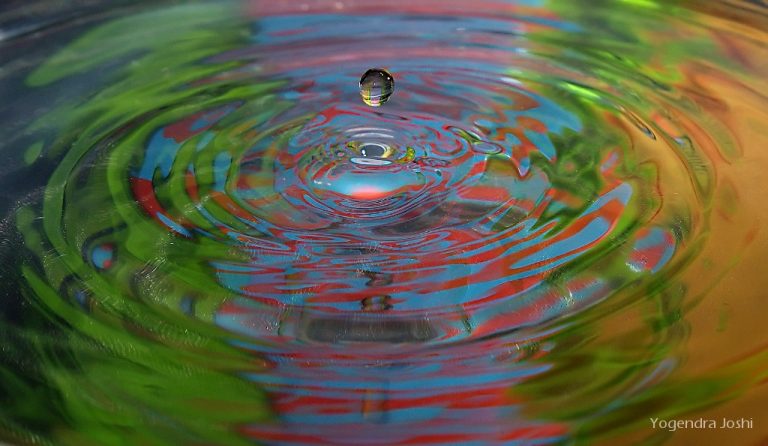 “Drop.” by Yogendra174. Creative Commons.
“I think we ripple on into others, just like a stone puts its ripples into a brook. That, for me, too, is a source of comfort. It kind of, in a sense, negates the sense of total oblivion. Some piece of ourselves, not necessarily our consciousness, but some piece of ourselves gets passed on and on and on.”
Irvin D. Yalom
- Mementos and Photographs.
Having some concrete mementos, memory-filled places and, of course, photographs, can mean that in some way we are not forgotten. Whilst memories can be painful, making us yearn and long for the deceased person, they can also offer us some kind of comfort.
They are evidence that the lost person has lived, has existed, and has left us something to be remembered by. Such reminders of a person who was important to us can also be a stimulus to talking about the lost person, to sharing our recollections, feelings and thoughts about them, and to keeping them alive in our minds.
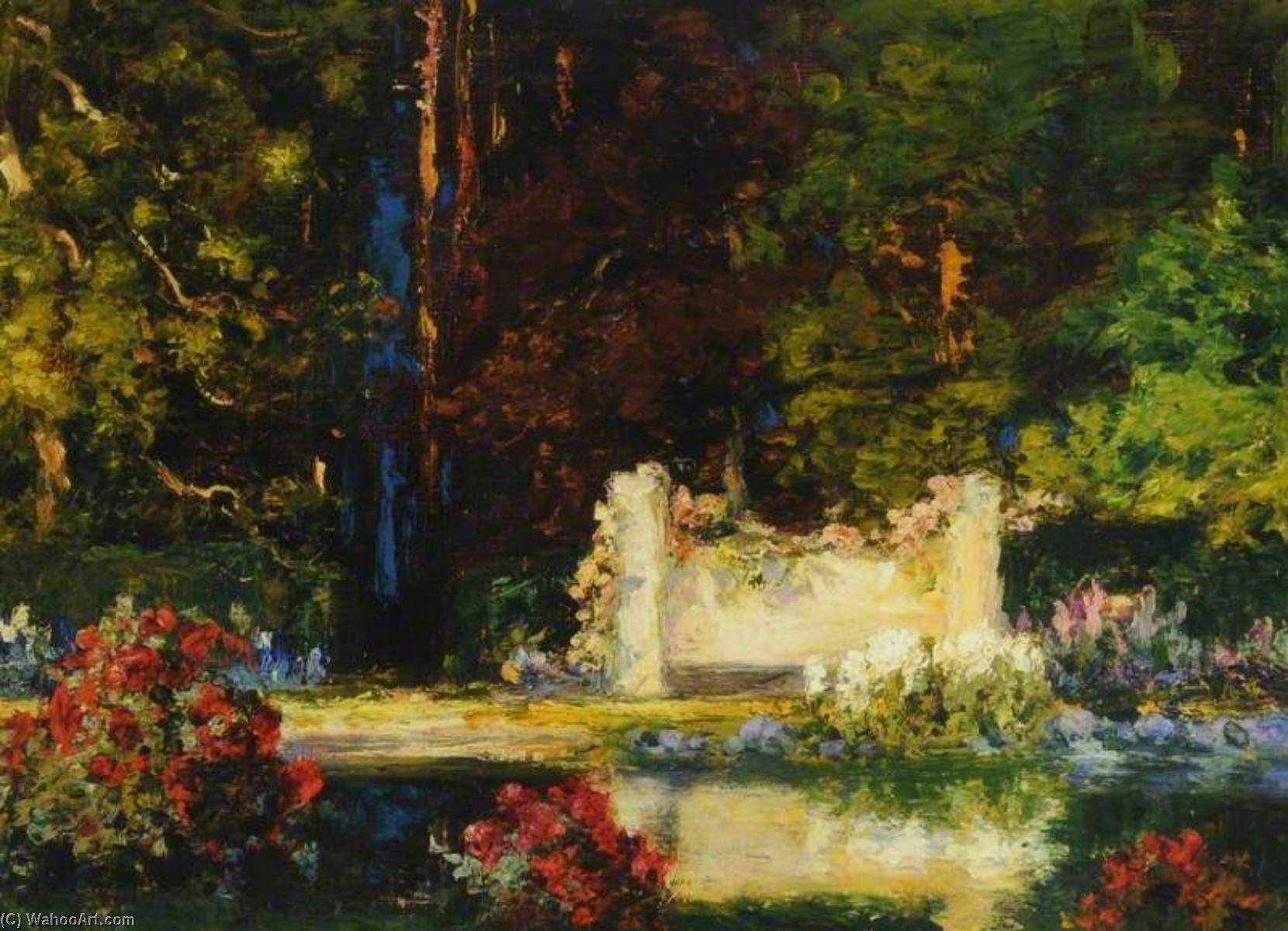 The Garden of Memory – Thomas Edwin Mostyn. Wikioo.
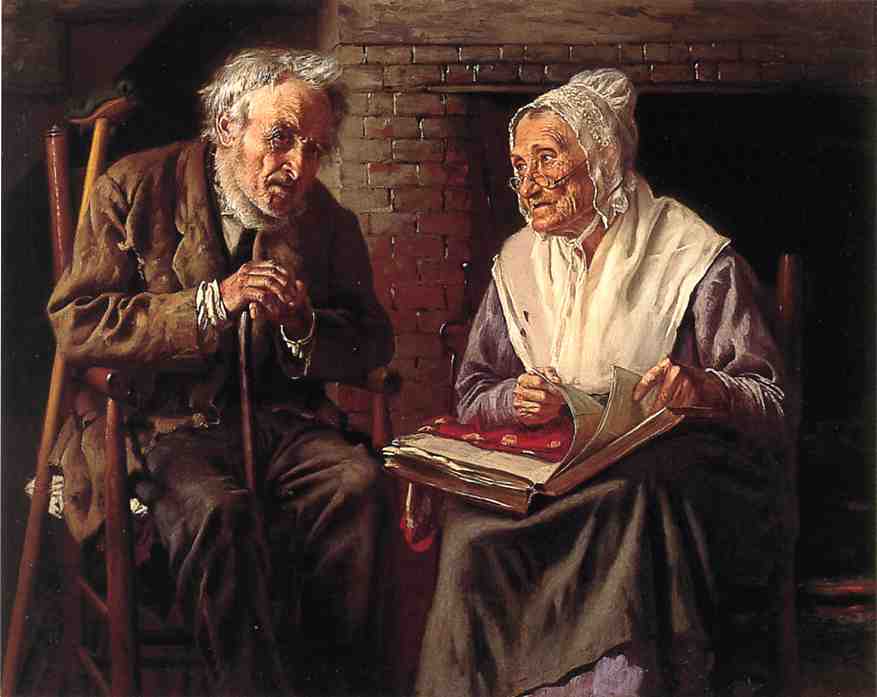 Old Memories – John George Brown.1883. Wikioo.
Photographs, particularly, can bring those to life whom we have lost, revivifying them, reminding us exactly how they looked. Even those long dead can be ‘brought back’ through a photograph,
The objects around us may function as a kind of memorial to a lost person, a lost place. Jewellery and trinkets, articles of clothing, letters and all kinds of possessions can be a way of memorialising and keeping some of the past alive in the present.
They represent in a solid and material way something that is no longer in our lives, a kind of transitional object to ease us through our pain.
 Charles Spencelayh – His Old Wedding Hat [1943]. Gandalf’s Gallery. Flickr.
“So long as we are being remembered, we remain alive.”
Carlos Ruiz Zafón

Katey, Mamie and Charles Dickens. 1865.Wikimedia Commons.
Photography is a way of feeling, of touching, of loving. What you have caught on film is captured forever… it remembers little things, long after you have forgotten everything.
Aaron Siskind
© Linda Berman
 waysofthinking.co.uk
I like the way you give both attachment and existential perspectives on these fundamental anxieties – much to think about!
LikeLiked by 1 person
Thanks Francis! I do like to offer different viewpoints. I’m glad you like the post and I appreciate your feedback.
LikeLike