
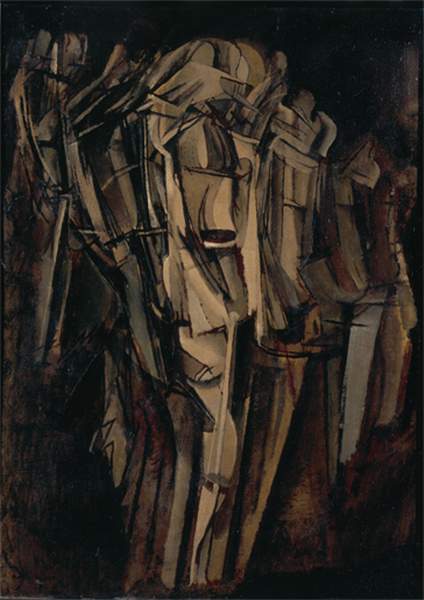
Sad Young Man in a Train – Marcel Duchamp. 1911. Wikioo.
“Like you’re trying to be a man when you’re just a scared kid, trying to keep under control when you really want to scream, cry, or maybe hit someone. Ever feel like you’re breathing underwater and you have to stop because you’re gulping in too much fluid…?”
Alex Flinn
- Men And Emotions: Messages Through History
It is difficult to find artwork showing men crying. Mostly, it is women who are depicted shedding tears on canvas.
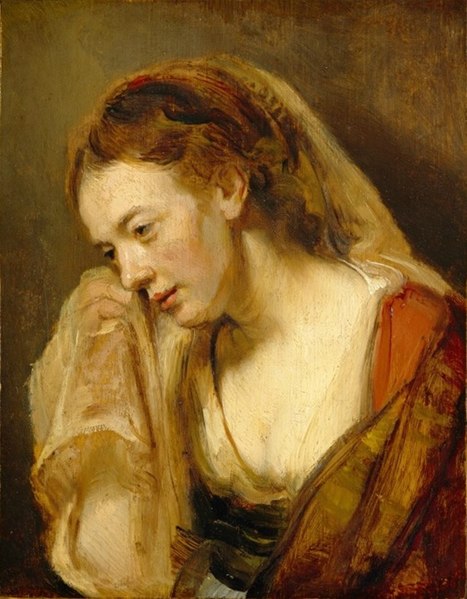
Rembrandt A Weeping Woman. 1644. Wikimedia Commons.
“I have been crying,” she replied, simply, “and it has done me good. It helps a woman you know, just as swearing helps a man.”
Horace Annesley Vachell, The Romance of Judge Ketchum
In fairly recent history, men have been brought up, and socialised, to be ‘fearless,’ ‘brave,’ and not to show feelings, being told in no uncertain terms that “real men -and big boys -don’t cry.”
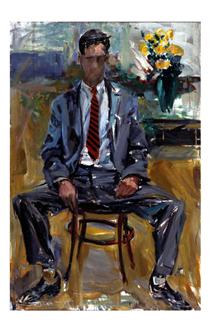
Elaine de Kooning. Fairfield Porter #1.1954 Wikiart.
“Learning to wear a mask (that word already embedded in the term “masculinity”) is the first lesson in patriarchal masculinity that a boy learns. He learns that his core feelings cannot be expressed if they do not conform to the acceptable behaviors sexism defines as male. Asked to give up the true self in order to realize the patriarchal ideal, boys learn self-betrayal early and are rewarded for these acts of soul murder.”
Bell Hooks.
It appears that being angry has been deemed as a more ‘appropriate’ emotion for men, and many still cover their sorrow and pain with anger. Society has let men down, typecasting them as macho, muscly he-men, cardboard cut-outs of their real selves.
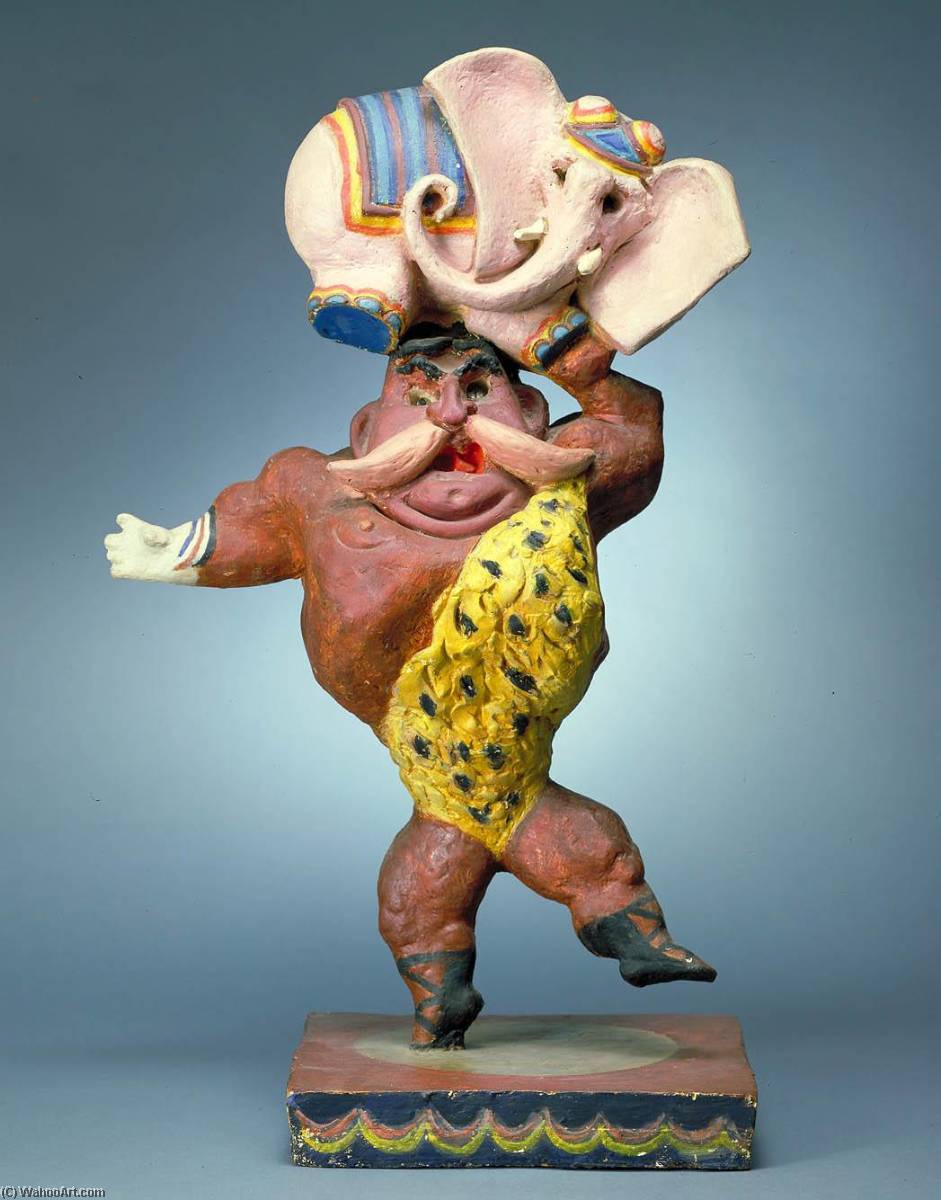 The Very Strong Man – Eugenie Gershoy. 1940. Wikioo.
They are often portrayed as one-dimensional, rather than interesting, real, fallible and whole human beings who experience sadness, tears, depression and feelings of vulnerability. Socially, men have traditionally tended to meet in pubs, at football matches and sports grounds, places where the conversation has not generally focussed on feelings.
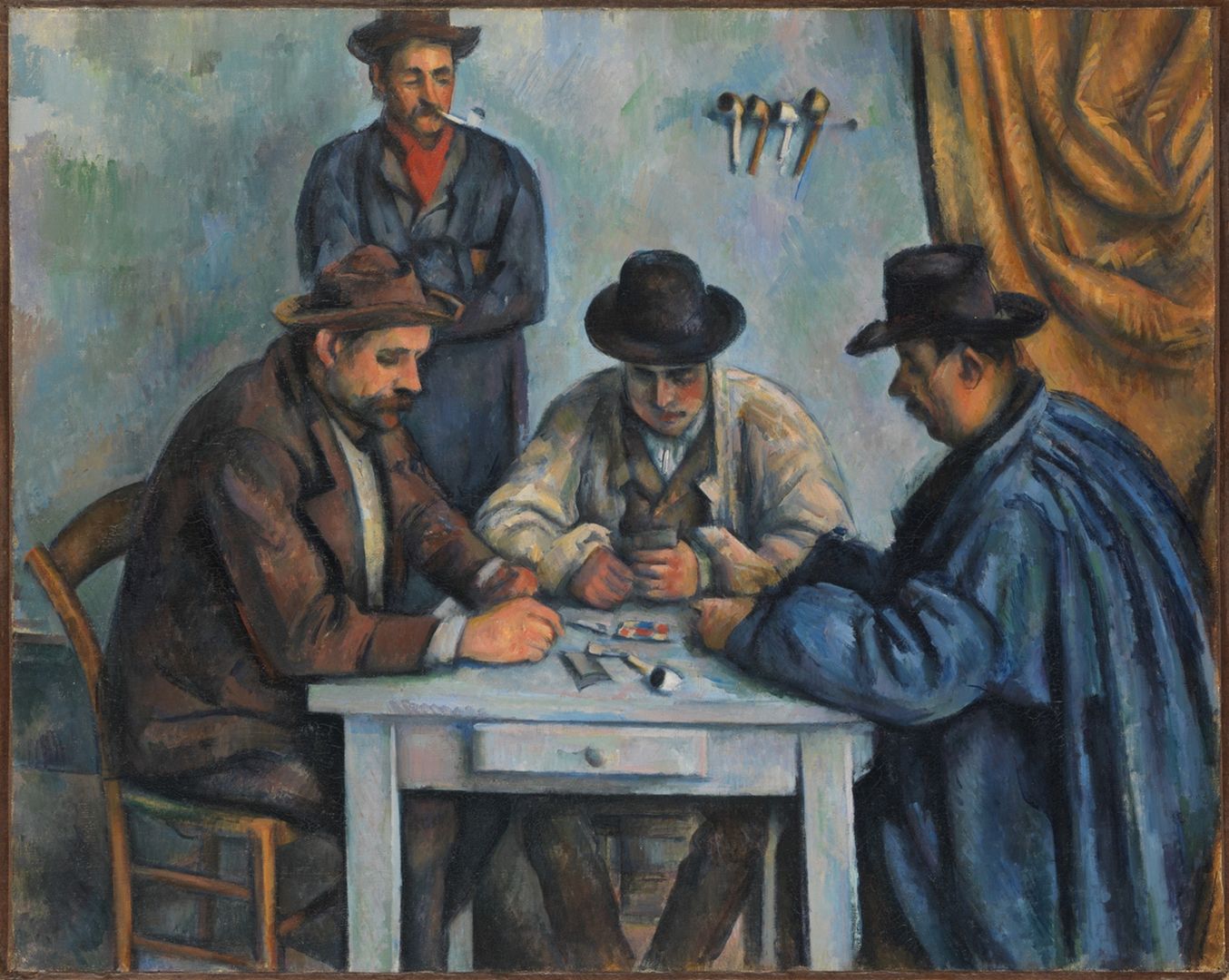 Paul Cézanne. The Card Players, 1890–92. Wikimedia Commons.
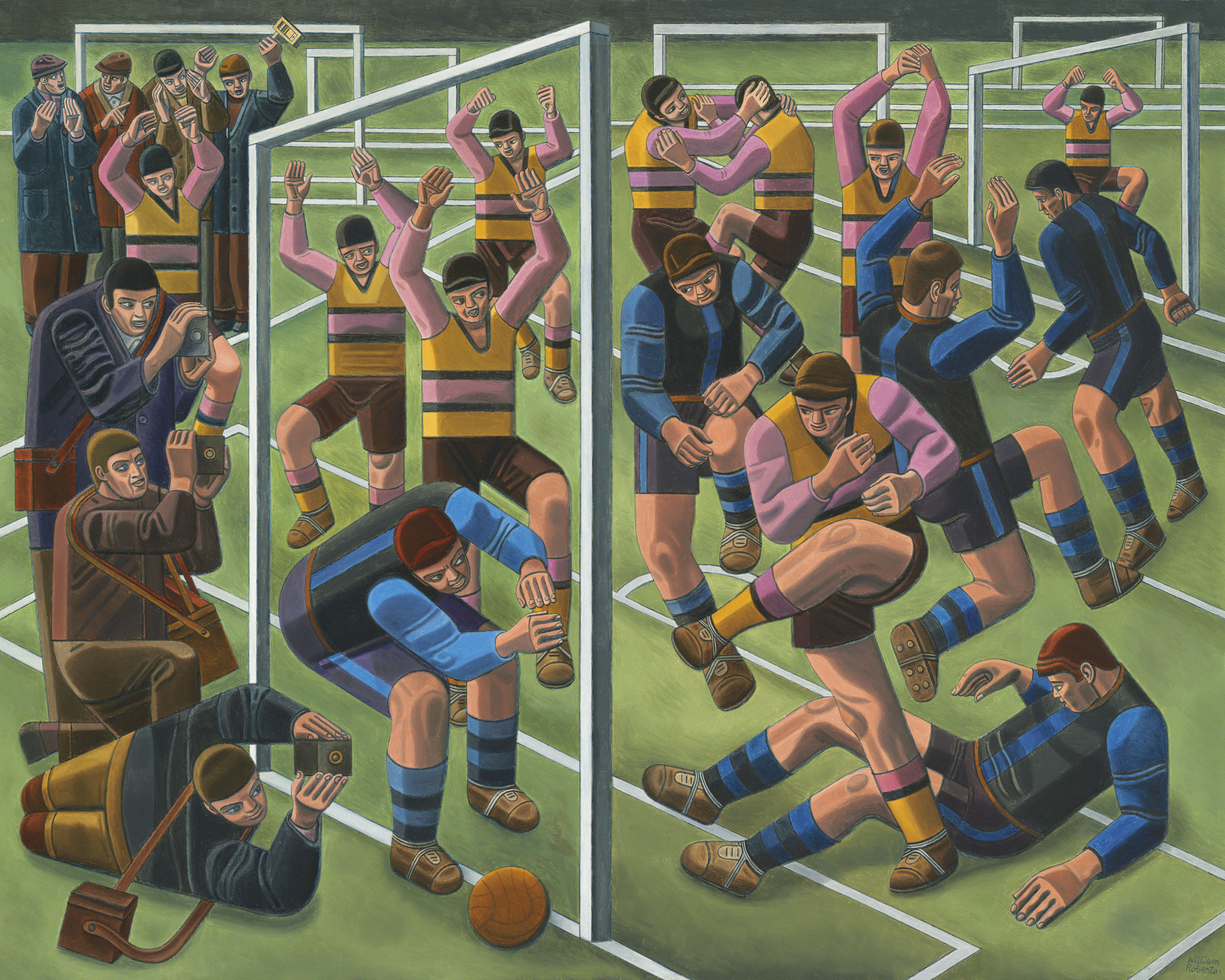 William Roberts – Goal [c.1968]Gandalf’s Gallery. Flickr
Why should men be constrained by antiquated stereotypes of masculinity? What does it even mean to ‘Be a Real Man’ anymore? Shouldn’t we all be celebrating a wide range of definitions of manhood?
Andy Dunn
‘Real men?’ What on earth does that phrase mean? It certainly refers to people who do not show their feelings. Society has fixed its own restrictive meaning on this phrase over the years.
From a young age, many boys have been socialised to be tough, ‘manly’ and strong and, if they do shed tears, aggressively told to ‘stop crying.’ Such dictates teach them to hide tears, to be ashamed of them, to be falsely ‘strong.’ In fact, it is not strong to withhold tears, whatever one’s age or gender identity.
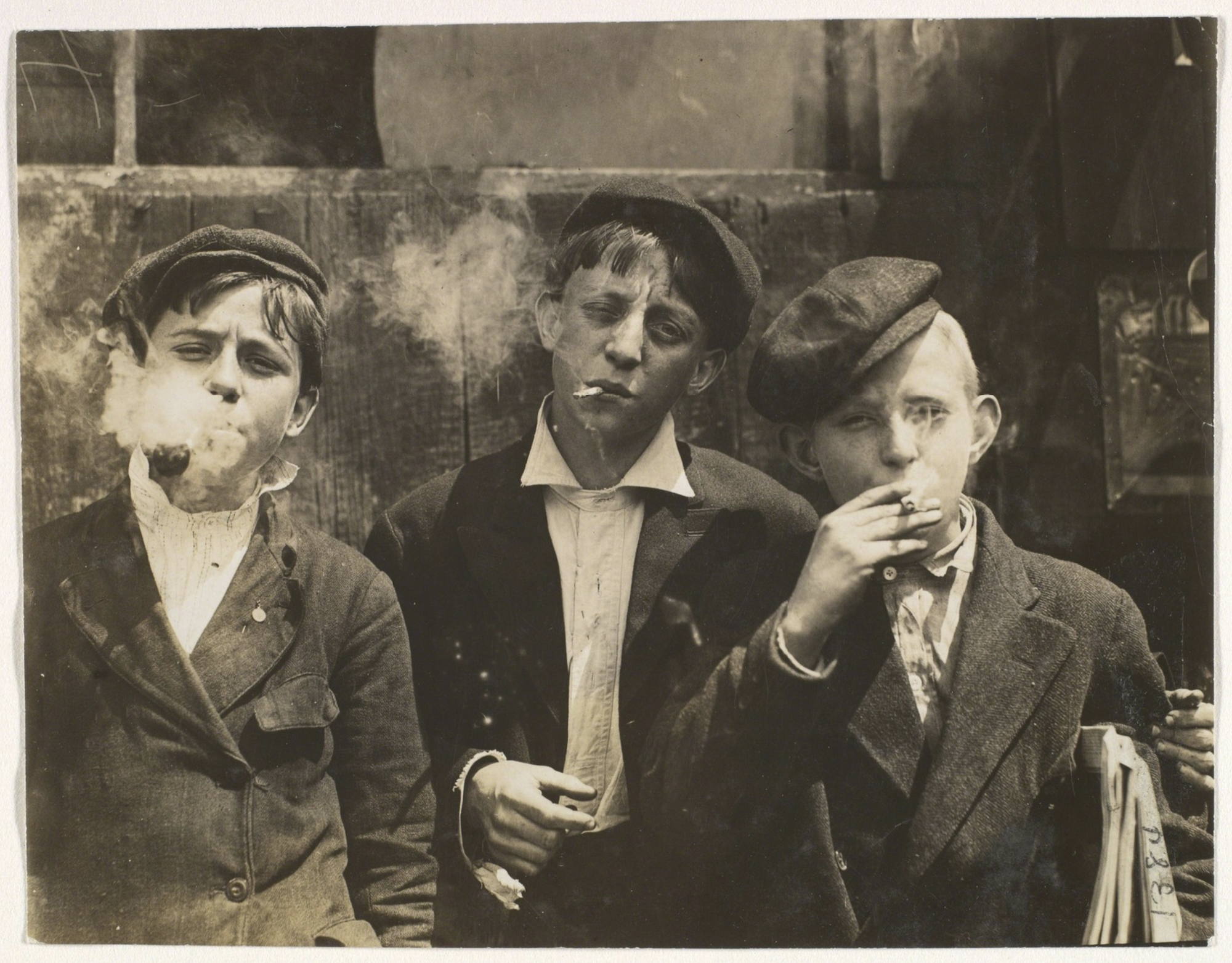 Lewis Hine – Newsies at Skeeter’s Branch, Saint Louis [1910]Gandalf’s Gallery. Flickr.
Real men, we have been told for years, don’t eat quiche. And they certainly don’t cry. Or do they?
Actually they do eat quiche and they do cry. (Maybe not at the same time. But possibly.) Yet from childhood, many men have developed a socialised response of hiding their tears, swallowing their pain.
- If Women Needed To Awaken Their Wild Side, What Side Of Themselves Did Men Need To Awaken?
Women are learning to run with wolves, to be free, to partake in whatever sport, lifestyle or profession they want. Freedom for women involves knowing themselves, and exercising their right to be who they want, regardless of societal or patriarchal demands.
While women are busy running with wolves, what do men need to do to develop themselves on a psychological level?
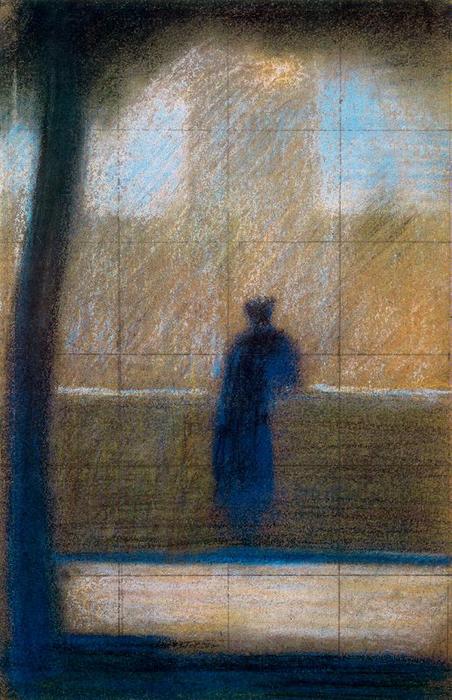
Man at a Parapet – Georges Pierre Seurat. Wikioo.
“A huge amount of what feminists are fighting for would have major positive impact for men as well as women. Take the male suicide rate, for example. In part, the problem arises from the idea that men are tough and manly, that ‘boys don’t cry’ and it’s embarrassing for them to talk about their feelings. So men are less likely to reach out for help and support with mental health issues. But that gender stereotype, which exists alongside the converse notion that women are over-emotional, ‘hysterical’, or ‘hormonal’, is one feminists are fighting hard to debunk.”
Laura Bates
Is this still an ongoing struggle for many men?
As a psychotherapist, I found that some men in the early stages of therapy feared that they would be judged or mocked for their tears. Frequently, in a caring and non-judgemental atmosphere, these men could reveal that, beneath the macho image, there was an ocean of tears that had been restrained for years.
Sometimes, men might express their emotions in outbursts of rage, whereas women are given more permission socially to cry when they feel upset.
Allowing tears to flow is much healthier for both body and mind than repressing them. Withholding such expressions of emotions can result in the development of somatic symptoms. Some physiological effects of crying involve the release of endorphins and oxytocin, which makes people feel better.
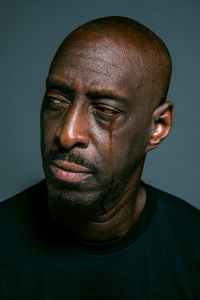
The energy from controlled tears has to go somewhere, and if it is stopped it will emerge in another, less healthy way:
“The sorrow which has no vent in tears may make other organs weep.”
Henry Maudsley
“Tearless grief bleeds inwardly.”
Christian Nevell Bovee
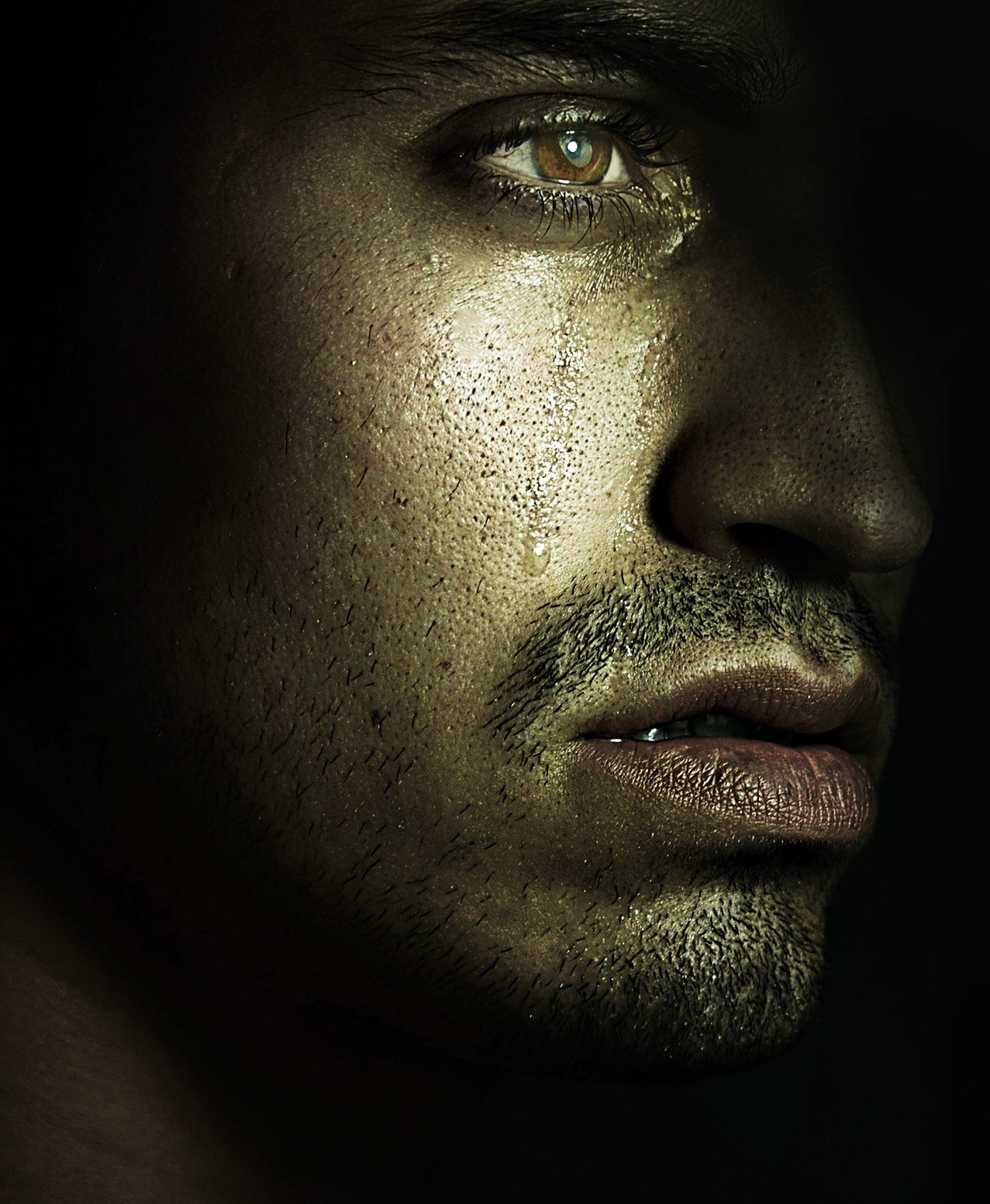
“Tears are the noble language of eyes, and when true love of words is destitute. The eye by tears speak, while the tongue is mute.”
Tears are a way of expressing and communicating something very important. Crying in an empathic setting is especially healing.
Cadence Bell, in a Guardian article, says that as a transgender woman, she realised that she had forgotten how to cry. She says that HRT enabled her to release her emotions; I am guessing there was also a feeling that it was more acceptable to cry and express feelings as a woman. She adds:
“Sometimes it can be overwhelming, especially after decades of feeling afraid to express yourself as the wrong gender.”
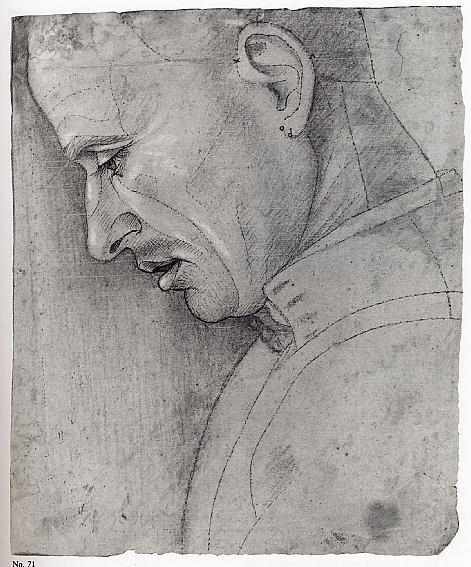
Head of a Man in Profile – Luca Signorelli. 1490’s. Wikioo.
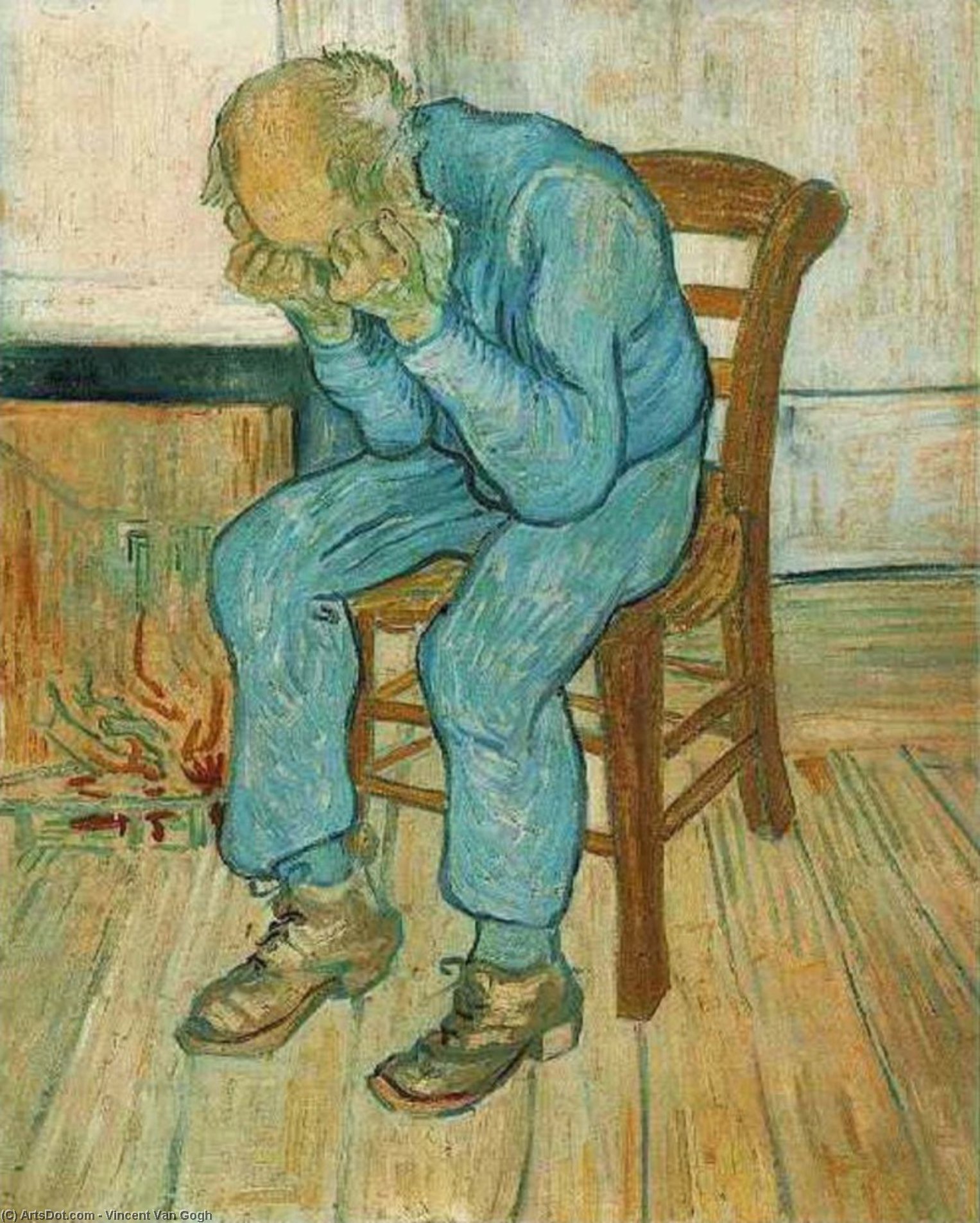 Old Man in Sorrow On the Threshold of Eternity –Vincent Van Gogh. Wikioo.
“Too many men I know experience shame because society places pressure on them to withhold emotion: emotion and sensitivity is weak. I have found the opposite is true: emotion and sensitivity is what makes us strong.”
Natalie Brenne
- Has There Been A Generational Change?
In many cultures today, this attitude to men still remains. However, there does seem to have been a shift in our society, in that younger men do appear to feel some permission to shed tears more openly.
“And tears came before he could stop them, boiling hot then instantly freezing on his face, and what was the point in wiping them off? Or pretending? He let them fall.”
J.K. Rowling, ‘Harry Potter and the Half-Blood Prince.’
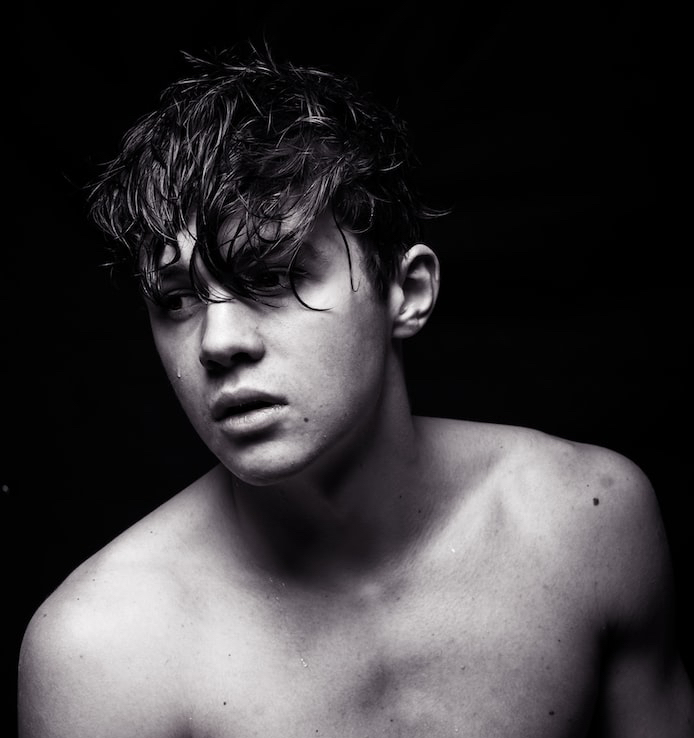
Having been taught not to express their feelings and be ‘tough,’ men tend to have, as a result, increased amounts of depression and suicide. Although outmoded attitudes towards men’s tears still tend to prevail, there is some change apparent.
Nowadays, there is more awareness of issues around mental health; slowly, society appears to be beginning to accept that men have all kinds of feelings and vulnerabilities, just like all genders do.
There is now more recognition that, if men are mocked or vilified for their tears, there could be a detrimental effect on their mental health. They are human beings, real people who, for their sanity’s sake, need to express the whole gamut of emotions.
However, it is interesting to note that, in the distant past, men were more able to cry; there was ‘permission’ to weep publicly.
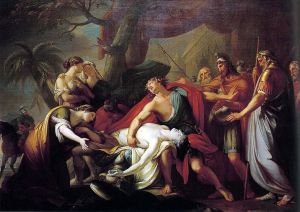
Achilles Weeping & Lamenting the Death of Patroclus. Gavin Hamilton. 1760-63.Wikimedia Commons.
In an excellent essay, entitled Man, Weeping, in Aeon, Sandra Newman ends with the words:
“It’s time to open the floodgates. Time for men to give up emulating the stone-faced heroes of action movies and be more like the emotive heroes of Homer, like the weeping kings, saints and statesmen of thousands of years of human history. When misfortune strikes, let us all – men and women – join together and cry until our sleeves are drenched. As the Old Testament has it: ‘They that sow in tears shall reap in joy.’”
© Linda Berman.
 waysofthinking.co.uk
Reblogged this on penwithlit and commented:
I think in some translations of classical literature there is sometimes a distinction between men who “weep” and the seemingly more childish verb “cry”. The shedding of tears can probably express a range of different emotions- from rage to deep sorrow and to gladness.
LikeLiked by 1 person
Thanks so much for the reblog and for your interesting distinction.
Linda.
LikeLike
I agree with penwithlit’s call for making distinctions about crying. A “cry baby” is a long distance in cause and sensibility from “Jesus wept”. Tears are water. Water is chameleon in its nature, in one instance a cold, clear mountain stream that sustains a village, and in another, mustering the murderous power of a tsunami. At least in the West, I think we’ve opened up some tolerance for the man in tears, but again with proper distinctions. Say, between the tears of effervescent joy of those Brazilian soccer players winning the World Cup, to the despair and resignation tears shed by that famous clinical psychologist, Jordan Peterson in some of his public appearances, live and online.
Both types are water. Like penwithlit’s caution, we ought muster resistance contra stereotypes which stumble on shakey grounds.
Another engaging topic, Linda, with your usual deft touch in harvesting great art and great words of wisdom.
Grateful.
LikeLiked by 1 person
Such an important distinction between different kinds of tears. Thanks, Bob, for your comments.
LikeLike