
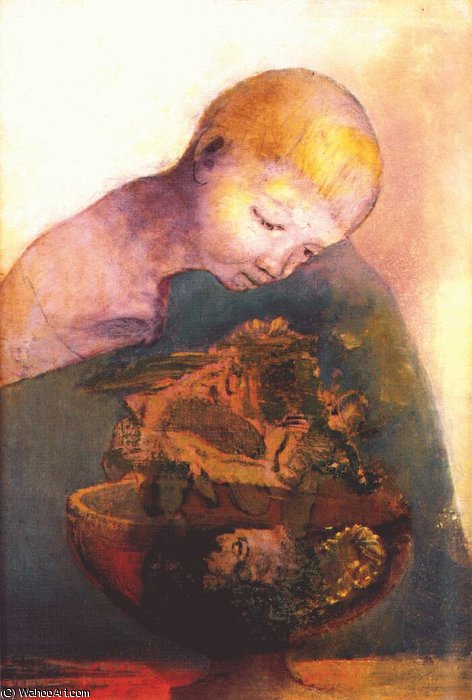
The Chalice of Becoming – Odilon Redon. Wikioo.
“Nothing is permanent. Everything is subject to change. Being is always becoming.”
Buddha
- Being And Becoming
What do ‘being’ and ‘becoming’ actually mean ? There are many different philosophical opinions on this, from great thinkers like Nietszche, Plato, Kierkegaard and Deleuze.
Many would say that being is becoming. This sounds like a paradox and, indeed, it is. The paradoxical quality of this statement rests in the fact that, even if we are still, inactive, not visibly moving forward, life is always about change and we cannot, actually, stay still. There can, of course, also be changes beginning inside us, perhaps initially undetectable from the outside.
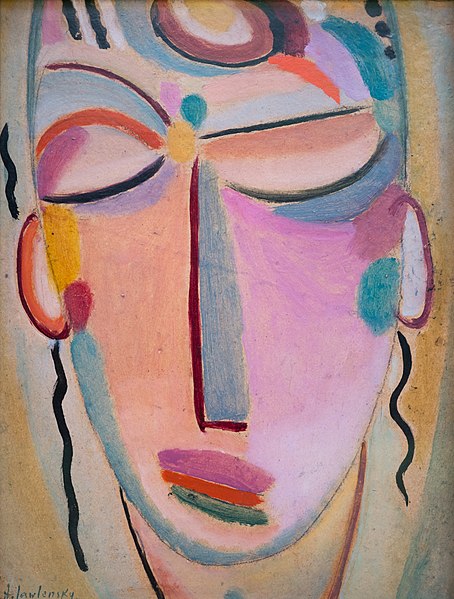
Alexej von Jawlensky. Meditation, 1918. Wikimedia Commons.
“Becoming is not a contradiction of being but the epiphany of being.”
Ananda Coomaraswamy
Others may feel that, compared with becoming, being is somewhat static. It suggests that we are in one place, and not moving forward.
“Becoming is better than being.”
Carol S. Dweck
This quotation may contain a truth, yet being in this sense is sometimes a good and necessary state, in that we learn to be still and live in the moment. In order to live a full life, however, we need to have a balance of both being and becoming.
- ‘Becoming’ In The Rogerian Sense.
Focussing on self understanding and self-actualisation is a part of the process of becoming. It is related to the concept of transformation. This can be exciting and full of promise, and also scary, because we are venturing into uncharted waters within the self.
“Transformations require that we let go of familiar ways of doing things, without yet knowing what we will do next.”
Sheldon B. Kopp
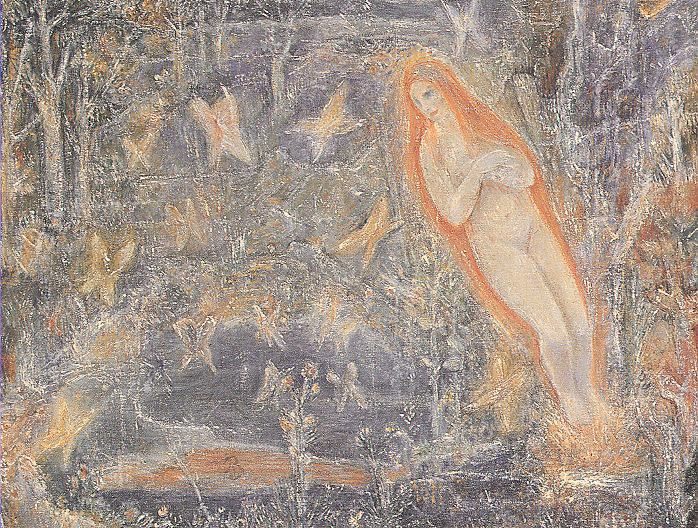 Metamorphosis – Albert Bloch. 1948. Wikioo.
“The basic for any approach to self-transformation is an ever-increasing awareness of reality and the shedding of illusions.”
Erich Fromm, The Art of Being
In different ways, the varying approaches to psychotherapy mostly appear to be centred around being able to be, as far as possible, one’s authentic self. Defining the self is difficult and, again, there are many philosophical and psychological opinions on this issue.
“Meeting the “self” activates the transformation of human consciousness.”
Caroline Myss
Carl Rogers, in his book ‘On Becoming A Person,’ extended the meaning of the word ‘becoming’ to include the therapeutic experience of self-development, of discovering the self, of ‘congruence,’ of being true to one’s authentic self. He sees this as a flowing, developing and unfolding journey…
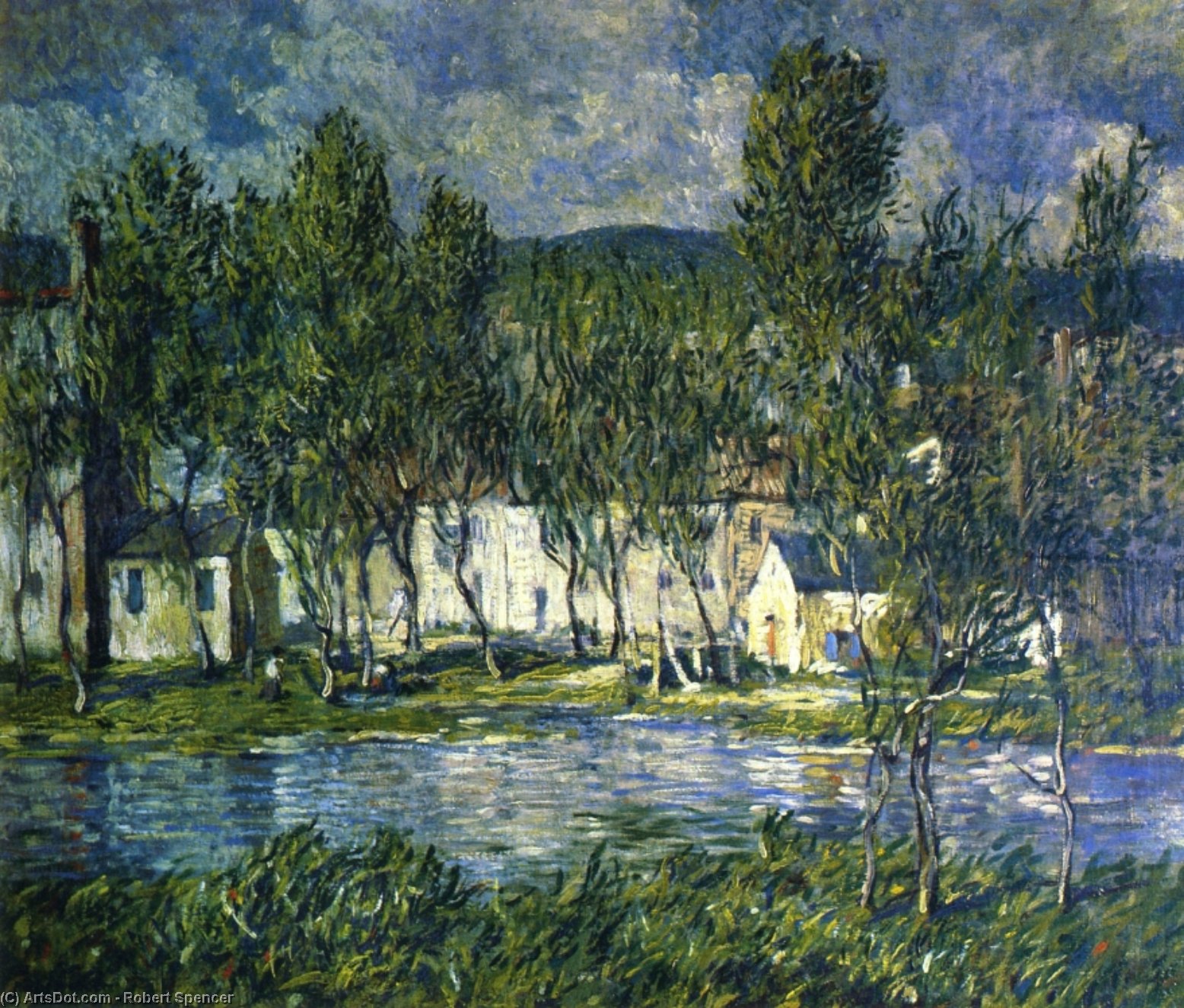 Flowing Water – Robert Spencer, 1924. Wikioo.
“…a person is a fluid process, not a fixed and static entity; a flowing river of change, not a block of solid material; a continually changing constellation of potentialities, not a fixed quantity of traits.”
Carl R. Rogers, ‘On Becoming a Person: A Therapist’s View of Psychotherapy.’
- Being
Being is about being alive in the world, about existing. Osho said “Be – don’t try to become,“ as if being is enough, and forcing oneself to ‘become’ is not possible. It will happen naturally. We need to ‘be’ before we can ‘become.’
“Before I can tell my life what I want to do with it, I must listen to my life telling me who I am.”
Parker J. Palmer. ‘Let Your Life Speak: Listening For The Voice Of Vocation.’
In order to truly make satisfying choices in life, we do need to know who we are as individuals, free of parental or societal demands. ‘Being’ requires awareness of and listening to our inner world, finding out who we are and what we want. The process continues throughout our lives, as we change and grow.
- Feeling Stuck: The Opposite Of Being And Becoming.
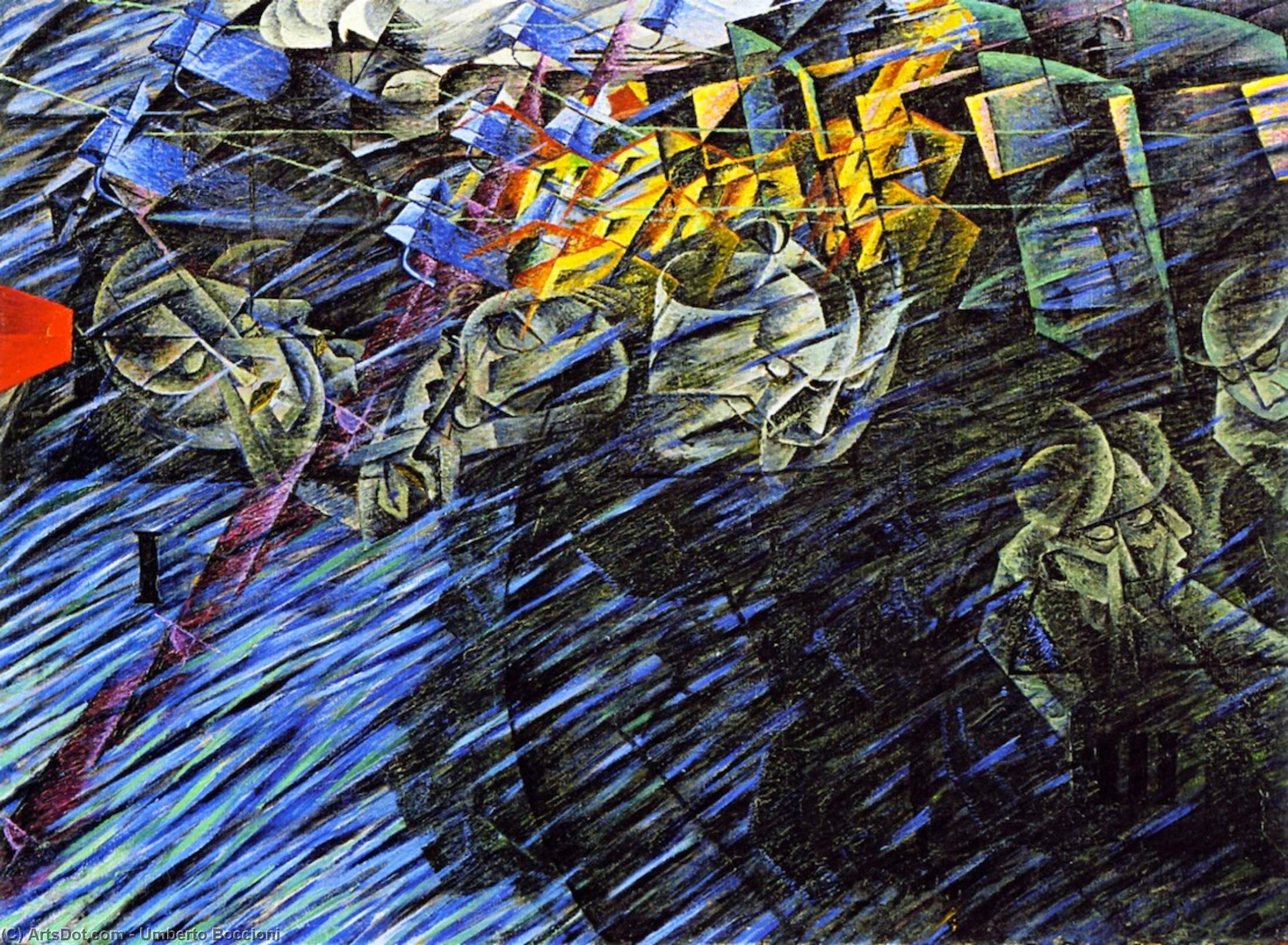 States of Mind II – Those Who Stay – 1912. Umberto Boccioni. Wikioo.
“Life is a process of becoming, a combination of states we have to go through. Where people fail is that they wish to elect a state and remain in it. This is a kind of death.”
Anais Nin.
True ‘being’ is not about existing in a stuck state, trapped by fear or depression. Whilst we may gain some learning from the experience of feeling unable to move on, generally this is a painful and heavy state, and we may need psychological help to understand what is holding us back.
This can be, for example, related to traumatic past experiences that have not been worked through, and it may mean that we are living a somewhat static half-life.
Many people repeat past patterns of behaviour that are destructive to themselves and others. Old habits die hard and we often struggle to shed them. Change – becoming oneself- is never easy for any of us.
Being able to think only in black and white means that we see everything in ‘all or nothing’ ways; there are no in-between areas or shades of grey. Nothing changes. Nothing must change. Everything is fixed.
Such thinking renders us woefully unprepared for the uncertainty and unpredictability of life, and for the changes that will inevitably occur. It means that there is little chance of becoming anything other than who we are now.
“Don’t cling to your self-concept purely because your will demands it. Demand that your environment aligns as much as possible and change what you must about yourself when the outer world can’t be changed. Mental health is about mental fluidity, mental illness stems in rigidity.”
Oli Anderson
- Change And Fluidity
“Life is a series of natural and spontaneous changes. Don’t resist them – that only creates sorrow. Let reality be reality. Let things flow naturally forward in whatever way they like.”
Lao Tzu
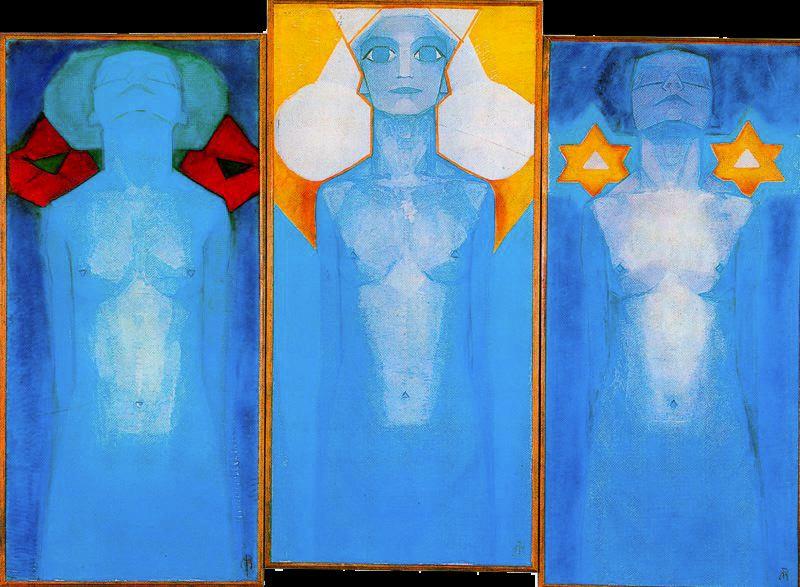 Evolution – Piet Mondrian. 1911. Wikioo.
“For me, becoming isn’t about arriving somewhere or achieving a certain aim. I see it instead as forward motion, a means of evolving, a way to reach continuously toward a better self. The journey doesn’t end.”
Michelle Obama
We need to have the motivation, the desire and the ability to face change in ourselves and in our lives. The process of change can be long and gradual, sometimes hardly discernible.
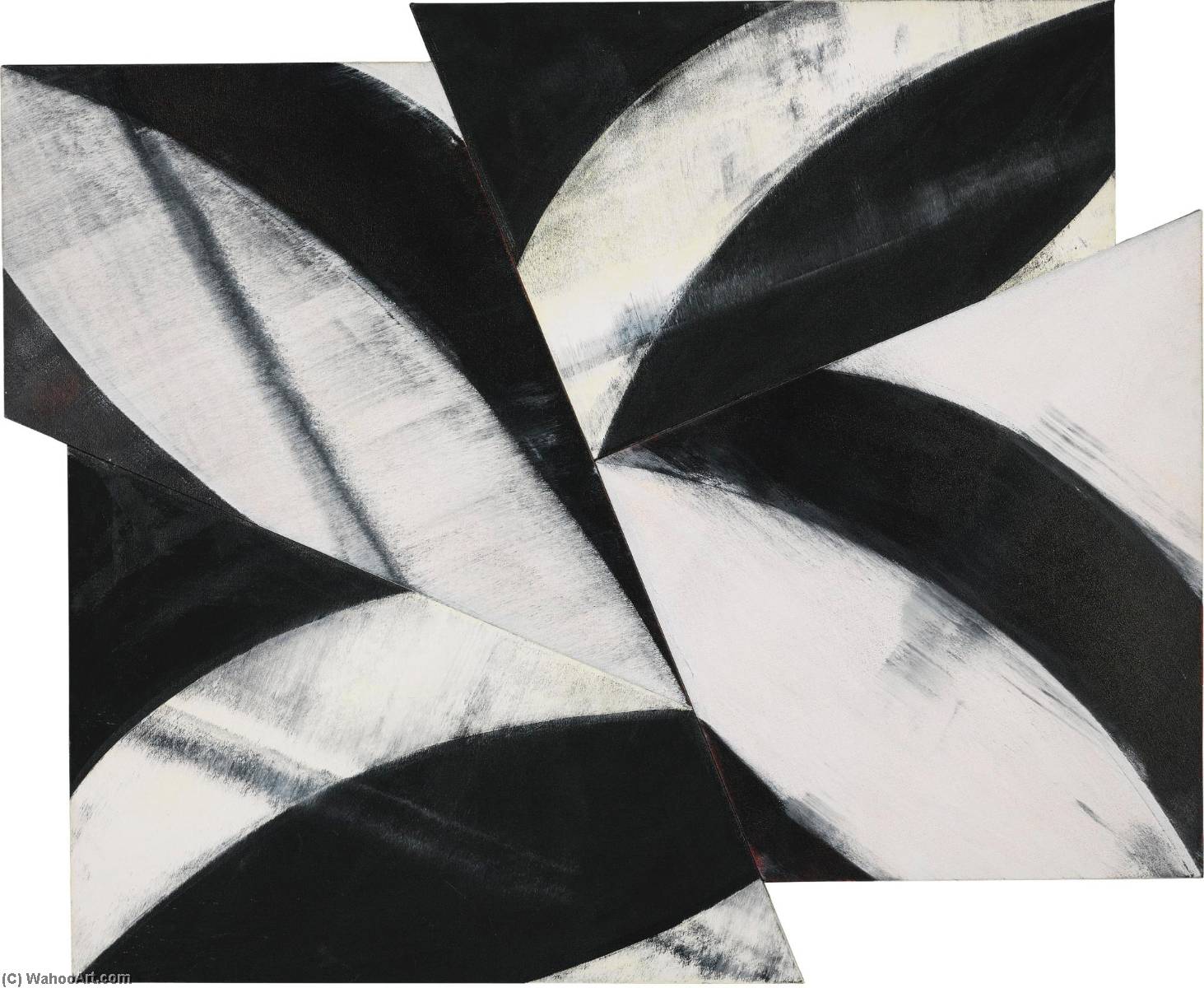 Change Up – Charles Arnoldi. Wikioo.
Having an open, flexible mindset is crucial if we are to bring about real change, to become different, both in ourselves and in the world around us. Being ‘responsive to change’ is beneficial in our lives and ways of thinking that are closed, rigid or extreme are unhealthy for us.
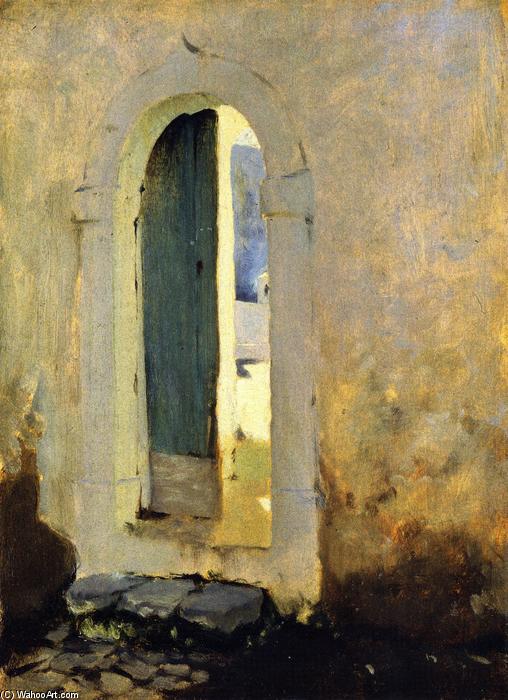
Open Doorway, Morocco – 1880. John Singer Sargent. Wikioo.
“When I am thus able to be in process, it is clear that there can be no closed system of beliefs, no unchanging set of principles which I hold. Life is guided by a changing understanding of and interpretation of my experience. It is always in process of becoming.”
Carl R. Rogers, On Becoming a Person: A Therapist’s View of Psychotherapy
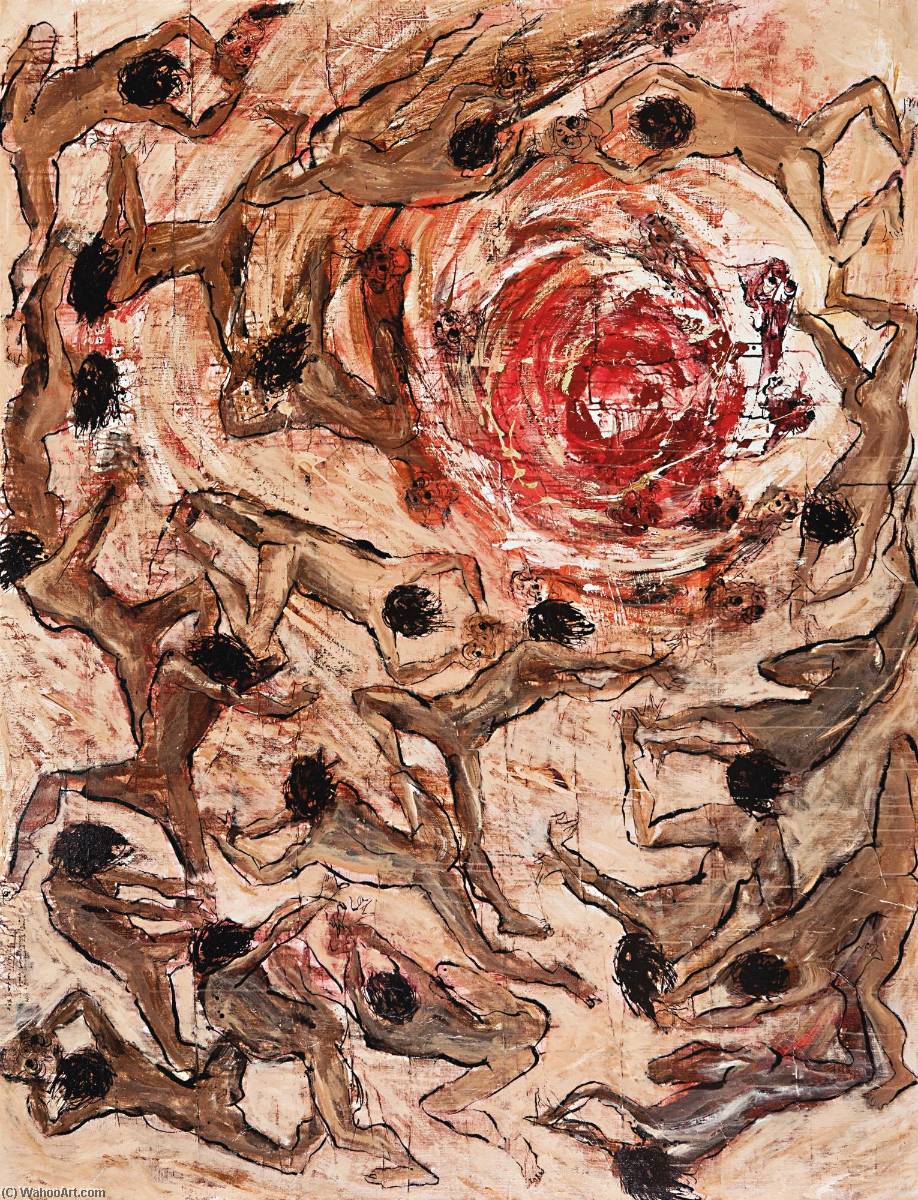 Fluid Red Heart (2010) – Putu Sutawijaya. Wikioo.
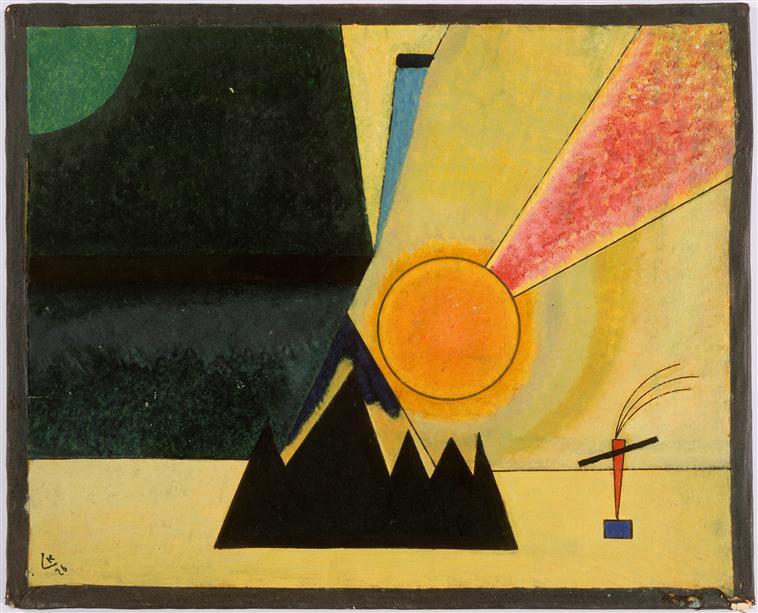 Development – Wassily Kandinsky 1926. Wikioo.
If we are to change and develop, to become better as our lives move forward, then we need to be aware that the fluidity of our ways of thinking needs to be maintained, so that we are open to the constant process of becoming.

Castles of the Mind – Thomas Chambers. 1845. Wikioo.
“The mind is everything. What you think you become.”
Buddha
- Becoming Other, Becoming Animal, Becoming Better…

Startled Baby Owl. ©Linda Berman.
‘Art then is fundamentally a product of and for culture and one that points to foundational concerns regarding what it means to be human. Yet the artists working with animals… point to and cast bridges across the divides to the non-human worlds of animals. What a wonderful disorientation takes place in this gesture of reaching across spaces and times.’
‘Reaching across spaces and times’ to another person, or, indeed, to any sentient being, is about empathy and a desire to be better to others, to understand them more and, perhaps, to experience something of what their inner and outer world is like.
‘I do not ask the wounded person how he feels, I myself become
the wounded person.’Walt Whitman. ‘Leaves of Grass.’
Becoming a better person involves developing the self to be able to contemplate commonality, rather than having rigid ways of thinking that focus on creating outsiders and building fictional divisions.
We need to make boundaries between self and another more elastic, translate across vernaculars, offer greeting, help, welcome, invitation. We need to practise creating spaces to meet, rather than devising methods of exclusion.
Without a particular kind of thinking, we will be unable to think in terms of the other, to think ourselves into the other’s skin. This might be called empathy, but it might involve more than that, something of a transcendent quality that is related to the idea of becoming-other. (Deleuze).
This mutually beneficial process involves an awareness that the boundaries between self and other can be regarded as permeable, that we can find new ways of entering into another’s world and inviting them into ours, of becoming the other person, in a sense.
This is also relevant in terms of understanding the world of animals. Becoming-animal is not about imitation or imagination. It is real, an interconnectedness, involving reciprocal respect. It precludes reductionist attitudes. It is a process of deep mutual finding, intensely feeling into the other’s being, requiring creative, joined-up thinking. It can also be achieved through music or painting.
How can we ‘think other’ and what might this mean?
Thinking other begins with changing attitudes, shifting towards dissolving boundaries between people or animals, rather than erecting them.
Then one might be able to experience how feels to de-territorialize, to think ourselves into the other’s being, to somehow become other, believing that this will create harmony, rather than discord. In working towards this, we will become bigger people, who can really think and feel themselves into another being’s skin.
- What Does Becoming Better Really Mean?
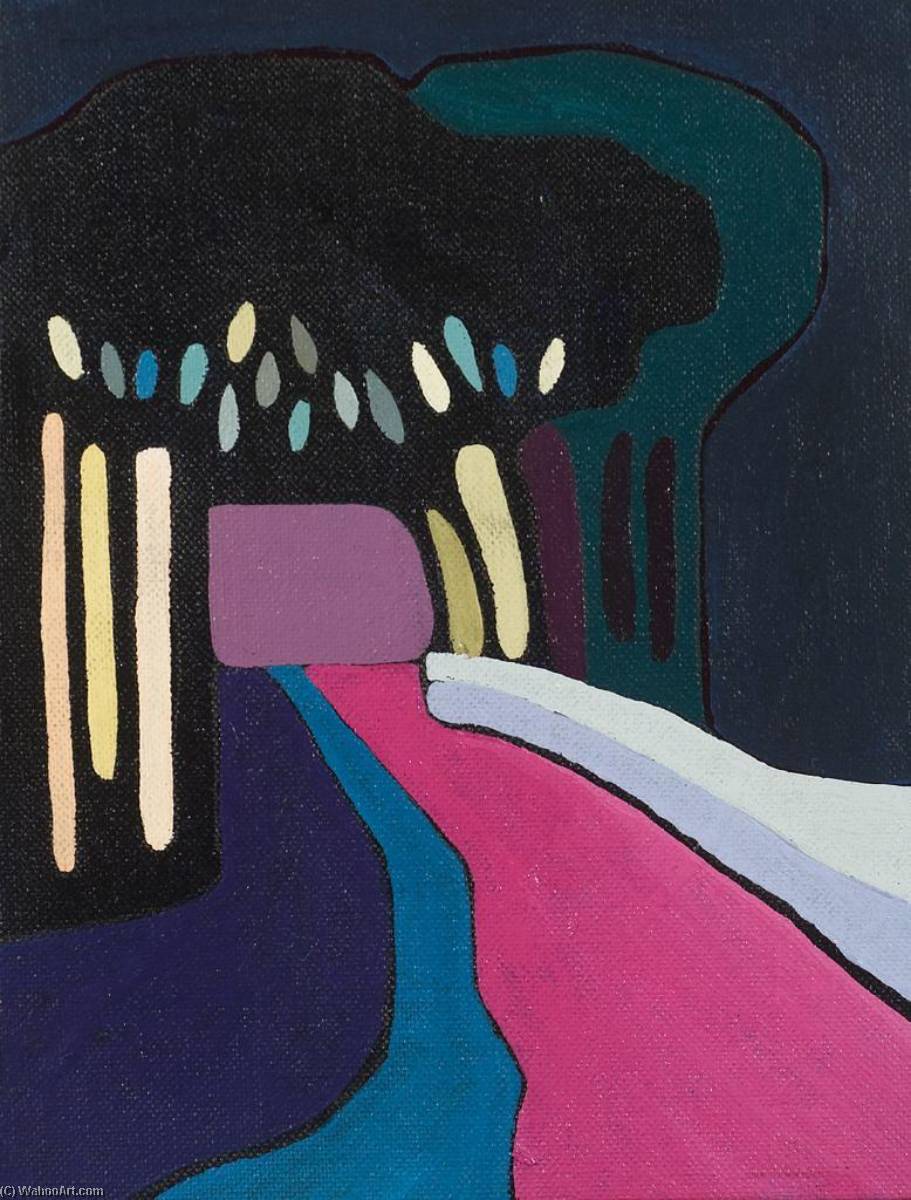 The Night Road that Leads to Darkness – Bernie Casey. 1970. Wikioo.
Becoming better is not only about developing one’s ‘good’ aspects. It is about exploring our dark side, too, otherwise the less ‘acceptable’ aspects of our personality will be repressed and will leak out in subtle, and often destructive, ways.
Aggression, murderous feelings, manipulative behaviour, are in all of us and we need to be aware of these aspects of ourselves, so that they can be acknowledged and controlled, rather than acted out.

“But you are human, and just like the rest of us you have the potential to be both a devil and an angel. There’s no such thing as an evil race, just a human race.”
Stuart Hill
In a psychoanalytic sense, a ‘good’ person is not one who represses the ‘bad’ aspects of the self, but someone who is more fully-rounded, more whole, more able to acknowledge the less palatable sides of themselves. Then, they are more likely to be able to accept others’ ‘dark’ sides, rather than posing as a perfect angel and unconsciously acting out their own repressed dark impulses.
“When you see a good person, think of becoming like her/him.
When you see someone not so good, reflect on your own weak points.”Confucius
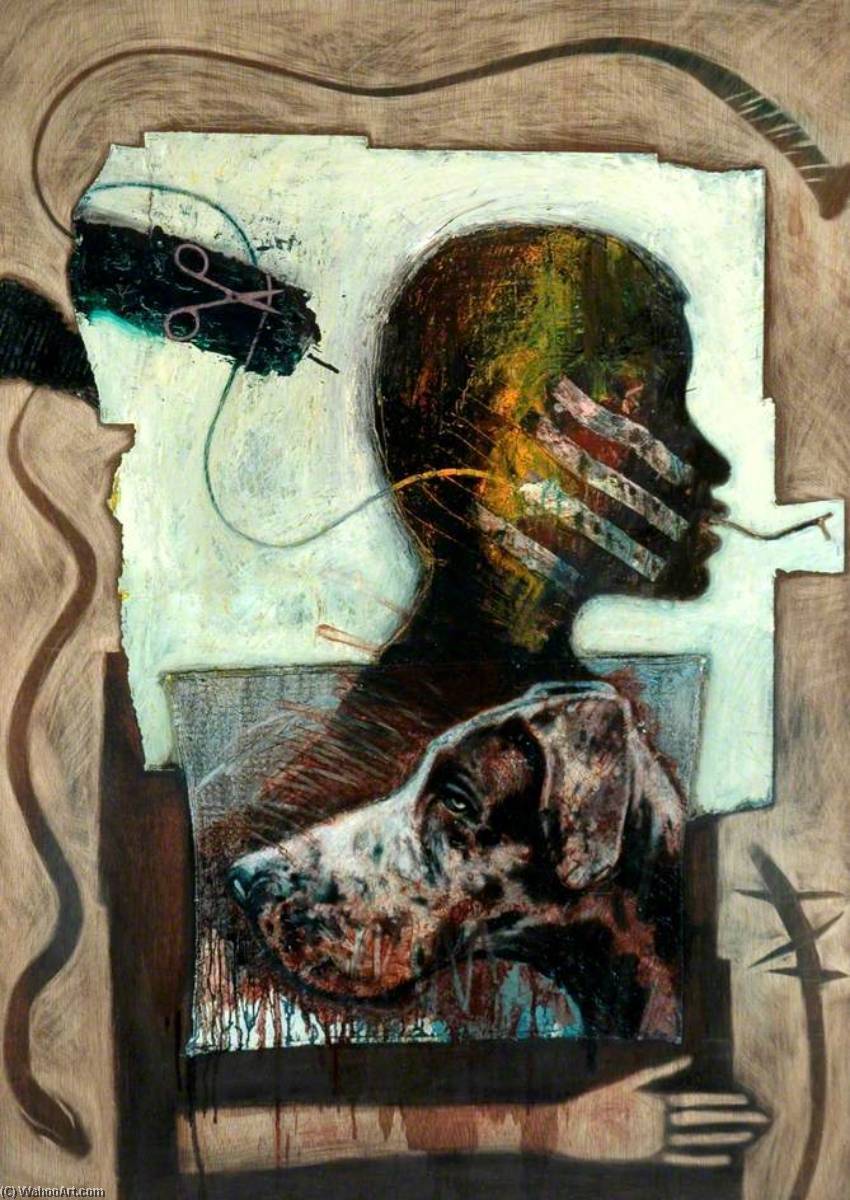 Trying to Tell the Truth – Tom Wood. (b. 1955) Wikioo.
“When we strive to become better than we are, everything around us becomes better, too.”
Paulo Coelho
I would be really encouraged if you could support my writing by BECOMING a subscriber to waysofthinking.co.uk. There is no charge for this. You will receive details of the next post, straight to your email inbox. There are now nearly 800 followers of the blog and I would like to spread the word even further! Can you help me make it to 1000 followers?
Linda.❤️
© Linda Berman.
 waysofthinking.co.uk
Your posts are always a fresh way to consider life. Inspiring and encouraging.
LikeLiked by 1 person
Thanks so much Beth. I’m delighted you are inspired by my posts. 🙏🌹
LikeLike
You outdid yourself this week, Linda, with this latest edition of Ways of Thinking! On “becoming”, I think I’m becoming addicted to reading your weekly revelations, visual, meditative, spiritual, intellectual.
Transformations require that we let go of familiar ways of doing things, without yet knowing what we will do next.” Sheldon B. Kopp
I’d add the word “courage” to the above citations. “Let[ting] go of familiar ways” demands nothing less when we’re not “yet knowing what we’ll do next”.
The one downside I see of short quotations dispensing wisdom, is that, ironically, such as these lack the very flow, rhythm, changes they advocate. They are like static inscriptions in stone tablets–fixed, unmoving, and seemingly permanent. And all quotations advocating one perspective on anything, really, are but one side of a coin, which when flipped, we see the apposite, seeing countervailing wisdom.
Thus, what’s missing in the one-sided wisdom of dynamism, flow, seeking, waves of becoming, are notions of unmoving conviction, loyalty, steadfastness, timelessness, focus, stillness. Thus, although the world spins and orbits are we are all here on this rollicking ride, there is case for stillness at the centre of the whirling. Let me cite T.S. Eliot:
At the still point of the turning world. Neither flesh nor fleshless;
Neither from nor towards; at the still point, there the dance is,
But neither arrest nor movement. And do not call it fixity,
Where past and future are gathered. Neither movement from nor towards,
Neither ascent nor decline. Except for the point, the still point,
There would be no dance, and there is only the dance.
Thanks again for this week’s stimulating episode! I got my weekly fix.
LikeLiked by 1 person
Bob thank you for that great comments, as always. I’m happy that you find my posts addictive.
I take your point about short quotations perhaps being static. However, they can provide a starting point for all kinds of discussion and there are plenty to be found which contradict each other. I don’t like fixity either, but I love pertinent quotes and have found that they have helped me personally at times. I think we can discover quotes that are right for us at different points in our lives. As we move on, so we will discover meaningful and timely quotes which reflect that journey through life. 😊
LikeLike