
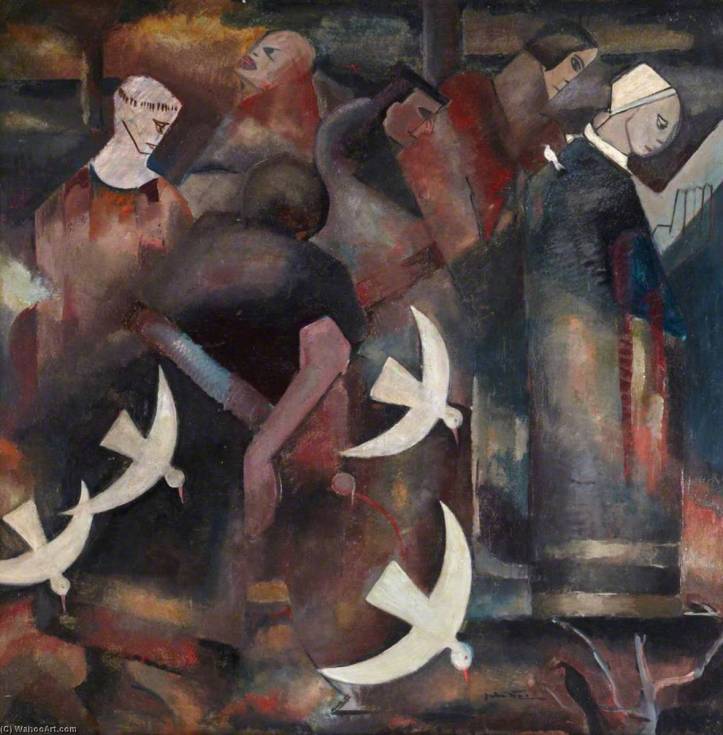
 Sanctuary – William Johnstone. 1923-7. Wikioo.
Clearing
“Do not try to save
the whole world
or do anything grandiose.
Instead, create
a clearing
in the dense forest
of your life
and wait there
patiently,
until the song
that is yours alone to sing
falls into your open cupped hands
and you recognize and greet it.
Only then will you know
how to give yourself
to this world so worthy of rescue.”Martha Postlethwaite
This sensitive and wonderful poem has relevance to most of our lives, I am sure. How many of us feel overwhelmed right now by the sadness and suffering that surrounds us, whether this is to do with illness, poverty, loneliness, loss, war, or any of the plethora of human problems.
In this post I will look at each part of the poem and its meaning and insights, which we can all learn from. I will intersperse quotations from the poem with my own thoughts and also with some quotations from others, to elucidate and enhance the poem’s ideas.
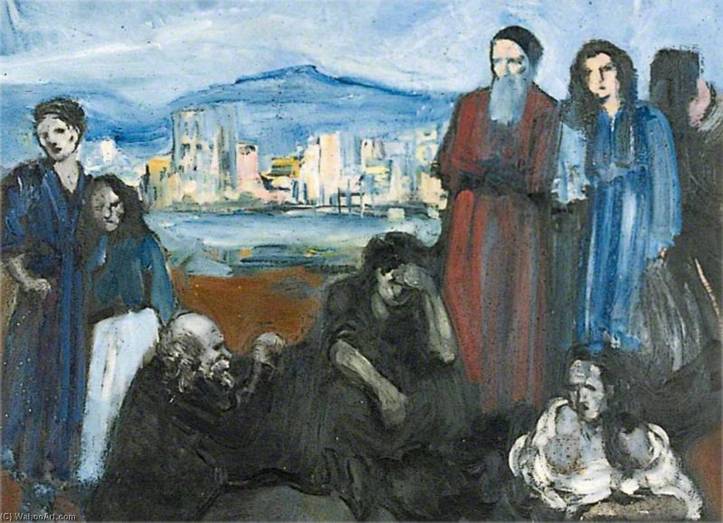 Homeless – Hugh Oswald Blaker.(1873-1936) Wikioo.
Sometimes we want to save the world, to do something, anything, to help… and we do help… but on occasions, it can all feel too much, too big, too overwhelming. Then we cannot help others and must look after ourselves for a while, gaining strength, rather than rushing into action in a grandiose way, attempting to take on far too much.
The poet recognises the impossibility of this, and is saying that we cannot save the world, all at once.
“Do not try to save
the whole world
or do anything grandiose.”(Clearing)
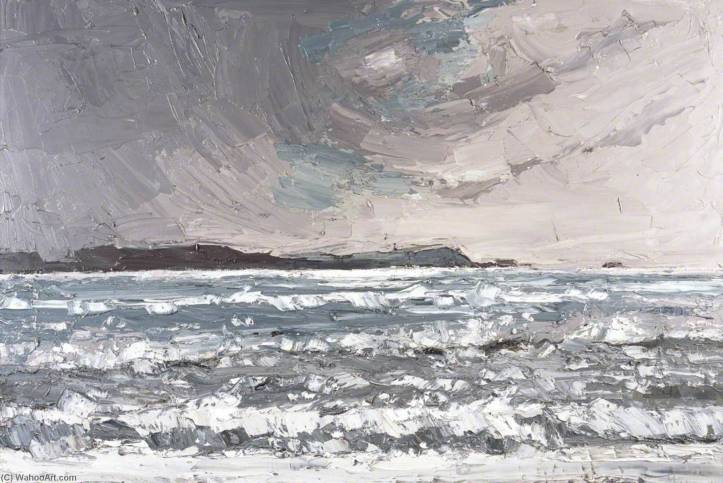 Storm from the Beach – John Kyffin Williams. 2006. Wikioo.
“You can’t calm the storm…so stop trying. What you can do is calm yourself. The storm will pass.”
Timber Hawkeye
Taking on too much means that we are likely to get lost in the deluge, for we are but human beings and we do not have infinite powers.
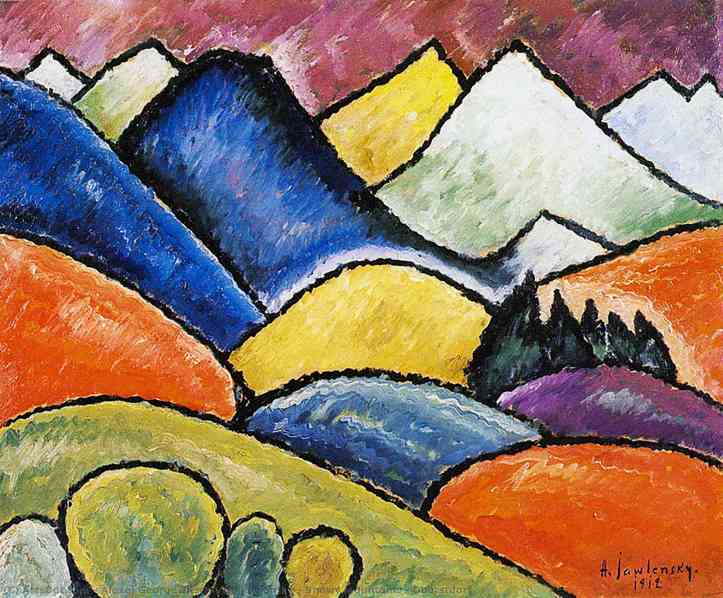 Snowy Mountains – Oberstdorf – Alexej Georgewitsch Von Jawlensky. 1912. Wikioo.
“The man who moves a mountain begins by carrying away small stones.”
Confucius.
We can, however, ultimately be able to achieve great tasks by becoming aware of our human limitations, giving ourselves space and an opportunity to pause, and then taking one step at a time.
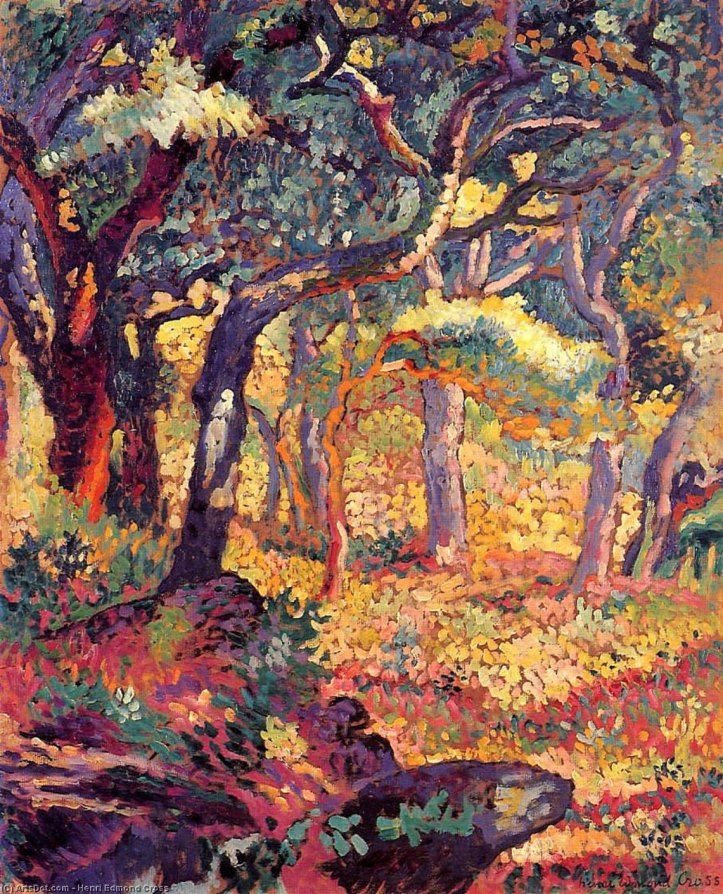 Study for ‘The Clearing” – Henri Edmond Cross. 1906. Wikioo.
“Instead, create
a clearing
in the dense forest
of your life.”(Clearing)
In order to really know our capabilities, and to realise what we can and cannot do, Martha Postlethwaite suggests that we make for ourselves a clearing, a place of refuge and peace ‘in the dense forest of your life.’
This is a powerful metaphor; how many of us identify with this description of a busy, jam-packed life, where sometimes we might feel we cannot move because of the multiple tasks we have to do, crowding in on us like dense trees.
This symbolic ‘clearing’ could be a real, physical space, or a space inside our mind. However we might create our ‘clearing,’ it needs to allow us a temporary suspension of the pressures of everyday life. Whether the clearing is inside or outside of ourselves, we will need a quiet place in which to be, whilst we gather ourselves.
Perhaps this could be a peaceful room, a few days’ break in a quiet place, or a secluded spot in a garden or the countryside. It is interesting that the poet has chosen her place in the woods, for being in nature has long been experienced as restful and rejuvenating.
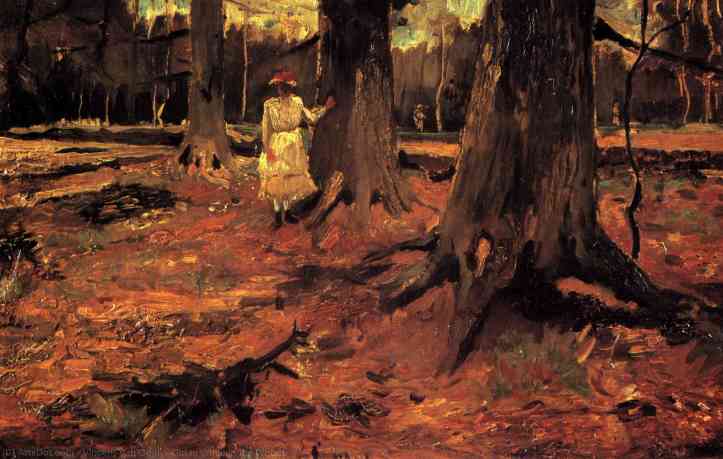 Girl in White in the Woods – Vincent Van Gogh.1882. Wikioo.
“…and wait there
patiently…”(Clearing)
The poet urges us to wait within this special, tranquil place, having patience. We may not actually know what we are waiting for, initially, but this state of not-knowing is important. Instead of rushing into action before we are ready, allowing ourselves to wait is crucial.
Not knowing is also important in psychotherapy. It can help the patient to wait until something emerges, rather than rushing on to find answers.
The psychoanalyst D.W. Winnicott asserted that
‘…acceptance of not-knowing produces tremendous relief.’
What does this mean? Why does not knowing bring such comfort for the patient?
In the world outside the therapy room, there is pressure to perform, to achieve, to be socially adept, to hurry up, to provide instant answers. Often, if we do not know the answer, some of us may pretend to know, or spout something clichéd, just to appear knowledgeable. This is akin to the ‘grandiose’ saving of the world in the poem ‘Clearing.’
In therapy there is an opportunity to escape such societal demands to perform. There is a chance to stay with feelings, to pause, to wait and not have to rush into superficial activity or easy formulaic responses. There is a ‘clearing,’ in many senses of the word.
We can ‘clear’ away the need to perform, to pretend; we can sweep away some defences, myths, uncertainties and long held fixities. Perhaps we can also ‘clear away’ the power of the past to negatively influence our present lives. We can clear away the pressure to know, to have instant answers, and to hurry up.
In this kind of ‘clearing,’ there is the chance to open the mind, allowing confusion and doubts to simply be, free of social and conceptual constraints. Such receptivity and flexibility enable insight, empathy and awareness, without the necessity to find answers and solutions.
Sometimes it is important to create this internal relocation in order to think clearly and to develop empathic vision:
“It’s the man who steps away from the world whose sleeve is wet with tears for it.”
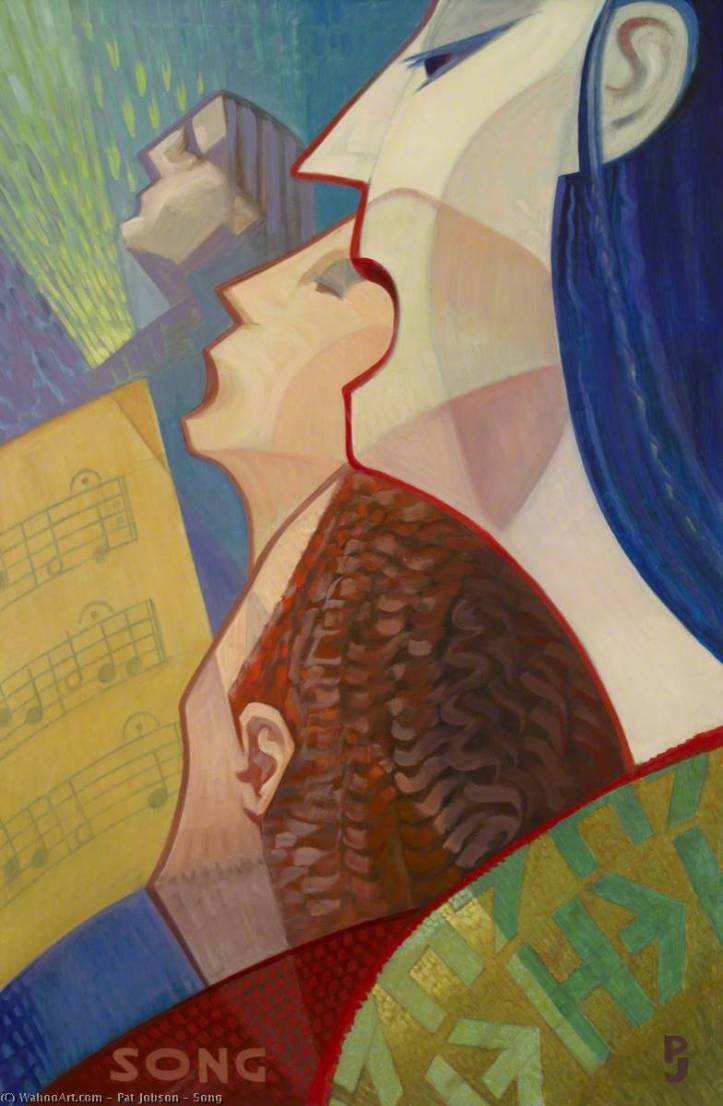 Song – Pat Jobson.1988. Wikioo.
“…until the song
that is yours alone to sing
falls into your open cupped hands
and you recognize and greet it.”(Clearing)
What does the poet mean when she refers to ‘the song that is yours alone to sing?’ This personal song is one that will be instantly known to us and we will welcome it. These lines remind me of a quotation by Donna Roberts:
“A friend knows the song in my heart and sings it to me when my memory fails.”
‘Our’ song is surely representative of the essence of a person, our very self, our credo. Singing this song is about being authentic, being our real selves, rather than constantly feeling we have to ‘dance to another’s tune.’
The song that is ‘yours alone to sing’ is unique, as it expresses your individuality, your beliefs, your very soul. Having waited, the song will appear, it will “fall into your open cupped hands…”
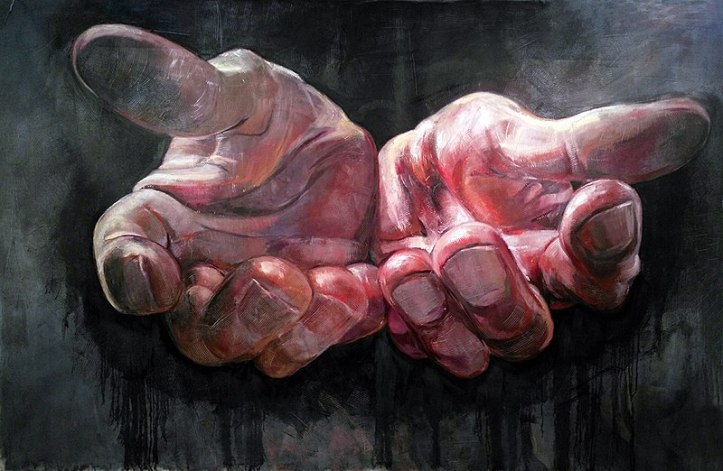 Zhenya Gershman. Lift. 2017. Wikimedia Commons.
From a psychoanalytical point of view, the ‘song’ will be truths from our unconscious, telling us the way, containing messages from deep within ourself, insights and realisations that have had to be repressed when we were in the midst of the busy-ness of life. The clearing allows us to listen to the natural wisdom inside ourselves.
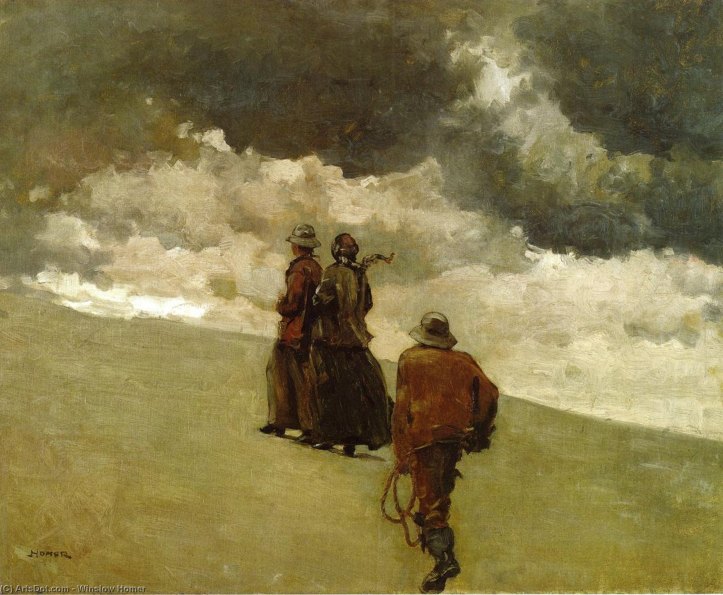 To the Rescue – Winslow Homer.1886. Wikioo.
“Only then will you know
how to give yourself
to this world so worthy of rescue.”(Clearing)
Pacing ourselves, not rushing in, but listening and waiting, we will then, and only then, be enabled to “give (ourselves) to this world so worthy of rescue.” Whether this refers to a physical or emotional ‘rescue,’ we will, after gaining some psychic space in the clearing, be more fit to help others in great need of us, unhampered by our own issues.
Then we will be freer to engage with fresh possibilities, discover new truths. In pausing in a ‘clearing’ to discover what might arise from such a space, we have allowed for an evolving kind of self-expression.
We will have given ourselves the chance to open our mind, allowing confusion and doubts to simply be, free of social and conceptual constraints. Such receptivity and flexibility enable insight, empathy and awareness, and the space to more openly help others.
“When we are in constant pain, we cannot empathize with others, nor can we help them. It is only when we allow ourselves to open up to our own nourishment that we are free to feed the rest of the world. And thus, to attend to one’s own suffering is the most selfless act.”
Vironika Tugaleva
 Alice Popkorn. Transformation. Flickr.
“Personal transformation can and does have global effects. As we go, so goes the world, for the world is us. The revolution that will save the world is ultimately a personal one.”
Marianne Williamson
© Linda Berman.
 waysofthinking.co.uk
What a wonderful poem and, as always, post. Thanks for sharing.
LikeLiked by 1 person
Thanks so much Mark, for your great feedback. It’s really appreciated. So glad you liked the poem and the post. I think the poem is wonderful,too; it’s so full of wisdom.
LikeLike
All your writing is full of wisdom. I also appreciate the work you put into finding all the beautiful paintings. I know from experience how much thinking and searching goes into this.
LikeLiked by 1 person
Aww I’m really touched by that, Mark. It does indeed take much time and work. Thank you.
LikeLike
Change starts with us, revolution or evolution.
LikeLiked by 1 person
It does indeed!
LikeLike