
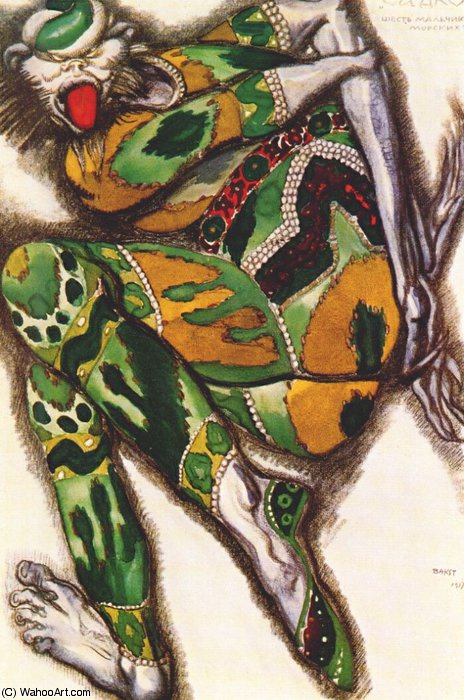
Sadko the Green Monster – 1917. Leon Bakst. Wikioo
- Hidden Parts Of Ourselves
This post is not for the faint-hearted, for it is about the uncanny, the unknown, the weird. By faint-hearted, I am referring to people who are fearful of facing hidden aspects of themselves, those aspects that are often disliked, like rage, murderous feelings, guilt, shame.
I do urge you, however, to pluck up courage…. for facing these ‘monsters’ inside and befriending them is the best way of disarming them. You may need therapeutic help to facilitate such a process.
“Our demons lose their power when we pull them out of the depths where they hide and look them in the face in broad daylight.”
Isabel Allende
Freud called this hidden part of us the unheimlich, that is, the sinister or uncanny, the weird, the alien. The word unheimlich actually means ‘un-homely.’ Home is supposed to be a place that is safe, friendly and familiar… the ‘known,’ but somehow it becomes in this sense a place of fear…
The second, and less common meaning of unheimlich is unknown, unfamiliar and secret. A home contains secret things, impenetrably hidden behind its closed doors; so as well as being a comfortable ‘homely’ place, it is also one that contains deep secrets, concealed from the world. For Freud, this part of ‘the home’ represents aspects of the self that are secreted in the unconscious mind.
- Repression
Repression is a defence mechanism that enables us to keep some disturbing thoughts and feelings in the unconscious mind, away from our awareness. The unconscious is the part of the mind in which repressed primitive wishes, fantasies, memories, and dreams are stored. These are hidden, revealing themselves in our behaviour and showing themselves most obviously in dreams, which are coded messages from the unconscious.
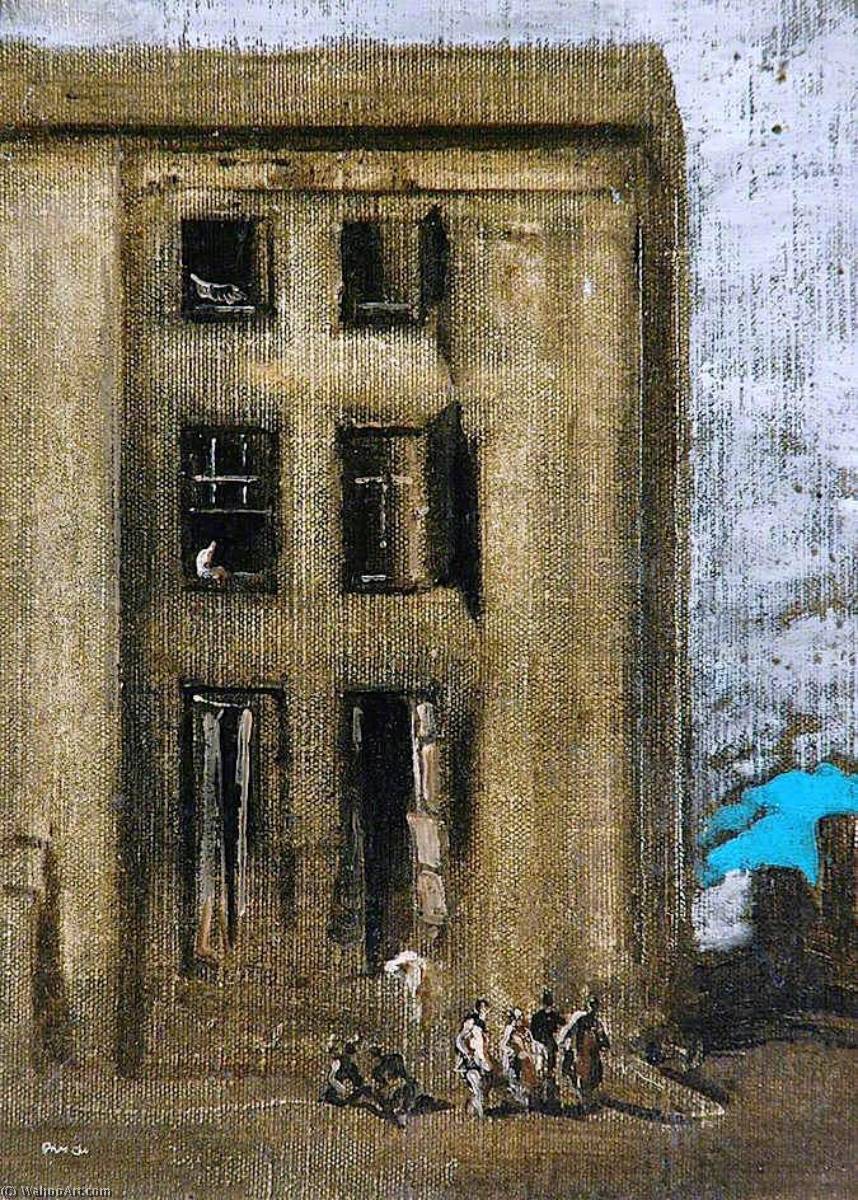 The Haunted House – James Ferrier Pryde. Purchased 1925. (1866-1941) Wikioo
“…this uncanny is in reality nothing new or alien, but something which is familiar and old-established in the mind and which has become alienated from it only through the process of repression.”
Freud
Freud is saying that the uncanny parts of ourselves were once known to us and not secreted away in our unconscious, as they may be now. They become repressed because they are subsequently regarded as unacceptable, painful, disquieting. When this occurs, frightening feelings and thoughts are, beyond our awareness, hidden in the unconscious mind to try to stop them disturbing us in a conscious way.
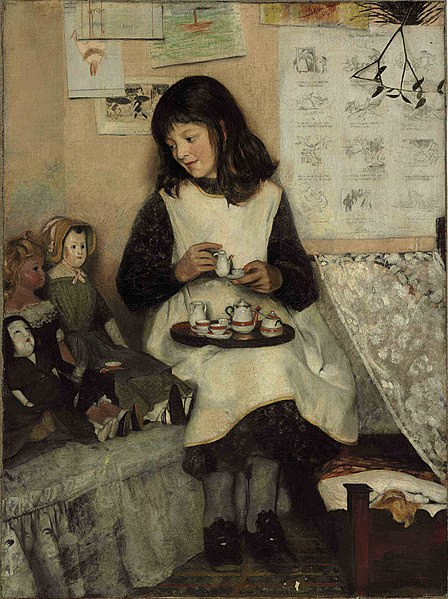
Laura Theresa Alma-Tadema – The Tea Party. Wikimedia Commons.
“Children have no fear of their dolls coming to life, they may even desire it.”
Sigmund Freud, The Uncanny
Children do not start off with the fear of the uncanny, live doll in the way many adults do; they would love their toys to come to life. However, such childhood wishes and fantasies sometimes turn into adult fears. The idea of an inanimate doll coming to life is uncanny for adults, and is a theme exploited by horror-film makers. Something once benign and familiar is metamorphosed into the disturbing and weird, having a disconcerting and strange familiarity.
There is much that represents the unknown in dolls; they look like a child, but they are not exactly a child….this can be disturbing to some people, but not to others.
We may wonder, with some discomfort, who, and what are they? What is behind their facial expression? Could they really come alive at night? Do they have a mind? They are familiar, yet strange, unmoving, staring at us with their unblinking glass eyes.
We often develop a rapport with dolls as children, yet they do not relate or connect with us directly. Something does not feel quite right. They are real but not real, like the feelings we secrete away in our unconscious.
- “The Return Of The Repressed”
(For a fuller explanation of this rather complex theory, follow this link)
“the uncanny [unheimlich] is something which is secretly familiar [heimlich-heimisch], which has undergone repression and then returned from it…”
Freud.
By ‘the return of the repressed,’ Freud meant that, at some point, thoughts and feelings that have been unconsciously concealed, will return to consciousness, perhaps triggered by recent events and experiences.
“Unexpressed emotions will never die. They are buried alive and will come forth later in uglier ways.”
Sigmund Freud
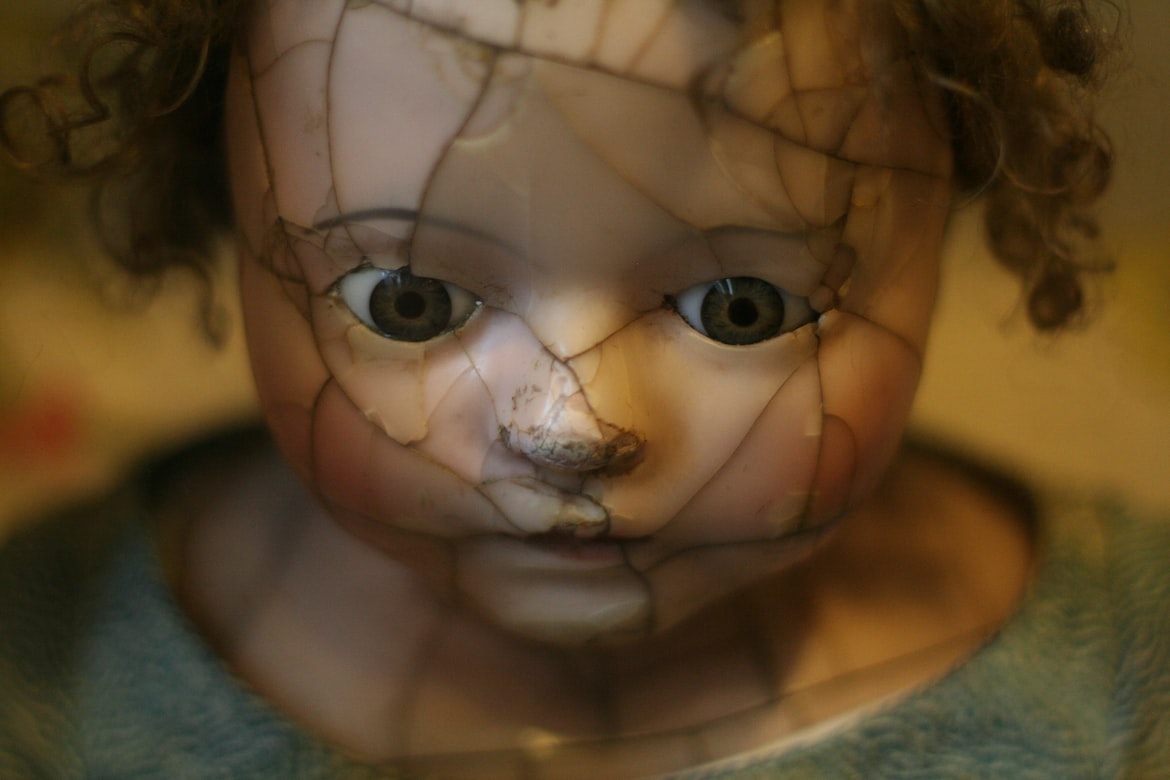
“Examples of situations that can provoke an uncanny feeling include inanimate objects coming alive, thoughts appearing to have an effect in the real world, seeing your double (the doppelgänger effect), representations of death such as ghosts or spirits, and involuntary repetitions. The uncanny arises when childhood beliefs we have grown out of suddenly seem real. Freud called it ‘the return of the repressed’.”
Freud Museum, London.
Children might accept dolls coming alive… what fun it would be to interact with and talk to them!….but as adults, we know this is not possible. However, when it appears to happen, in horror films, this can revivify old, repressed infantile feelings that are fearful and disturbing, somehow alien and terrifying.
It is as if something that ‘ought’ to be forever hidden suddenly comes into life, which is like the fear we have of our less ‘attractive’ aspects being revealed. We thought these were not part of us, but we are shocked when such feelings come back to haunt us. As we have seen, primitive ways of thinking are triggered by such an experience of the uncanny.
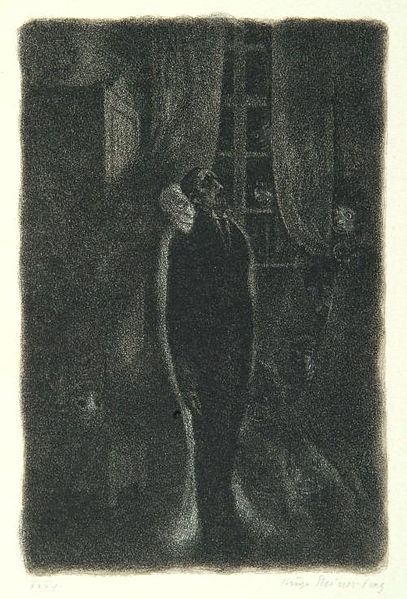
“Fear”, page 17 from the book “Der Golem”, 1916. Wikimedia Commons. Illustrated by Hugo Steiner
“Through this process, we can see that the nature of the uncanny is entirely subjective, based upon our own experiences, but haunts each of us to varying degrees.”
Freud Museum, London.
- The Uncanny in Art
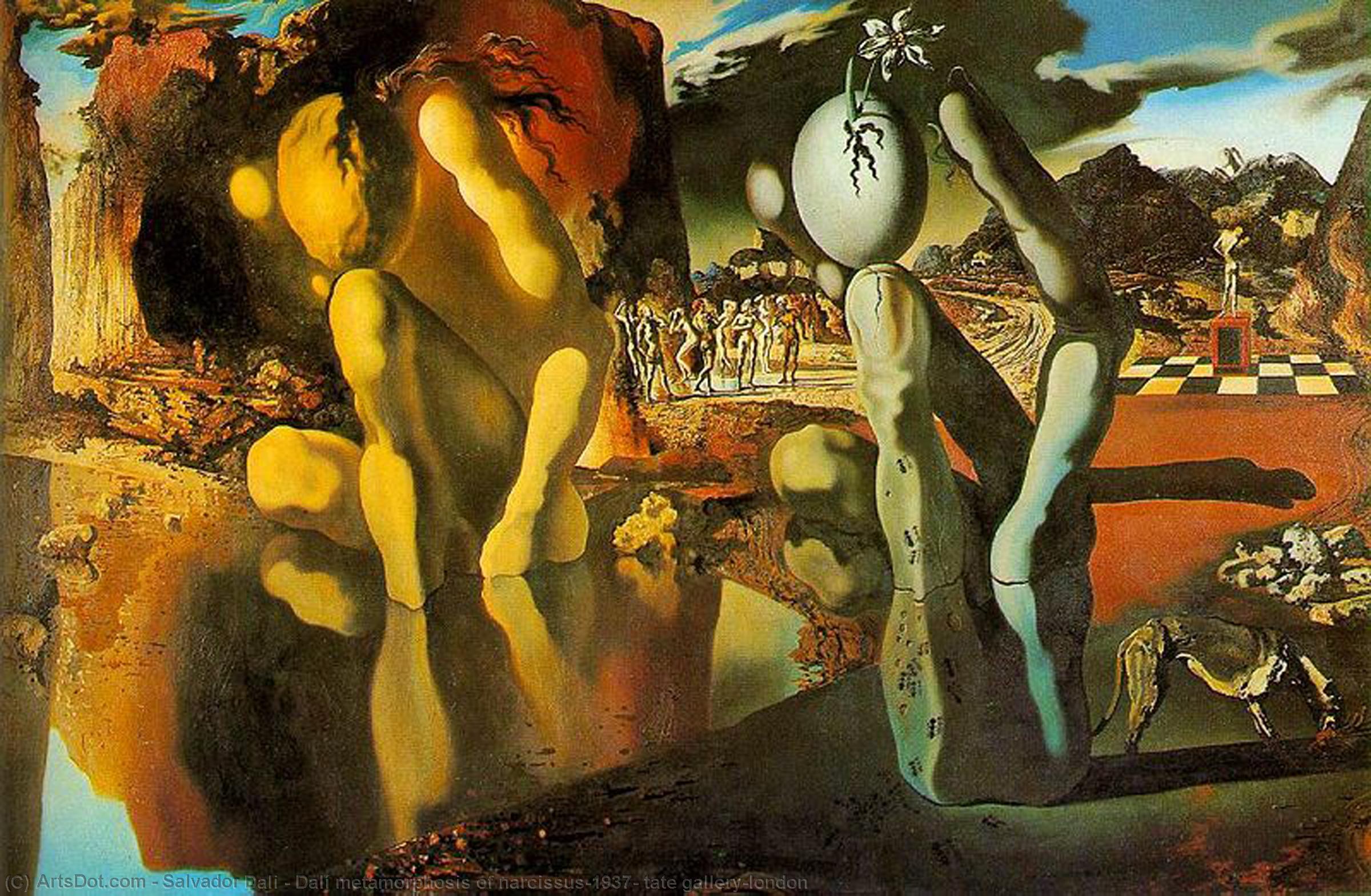 Salvador Dalí. Metamorphosis of Narcissus, 1937. Tate Gallery, London. Wikioo.
“Waxwork dolls, automata, doubles, ghosts, mirrors, the home and its secrets, madness and severed limbs are mentioned throughout The Uncanny, [Freud, 1919] influencing painters and sculptors to explore these themes and blur the boundaries between animate and inanimate, human and non-human, life and death.”
Freud Museum, London.
Freud’s theories of the uncanny have influenced the art and literary world immensely. It is the’ blurring of the boundaries’ that is so attractive and challenging to the art world, especially in Surrealist art.
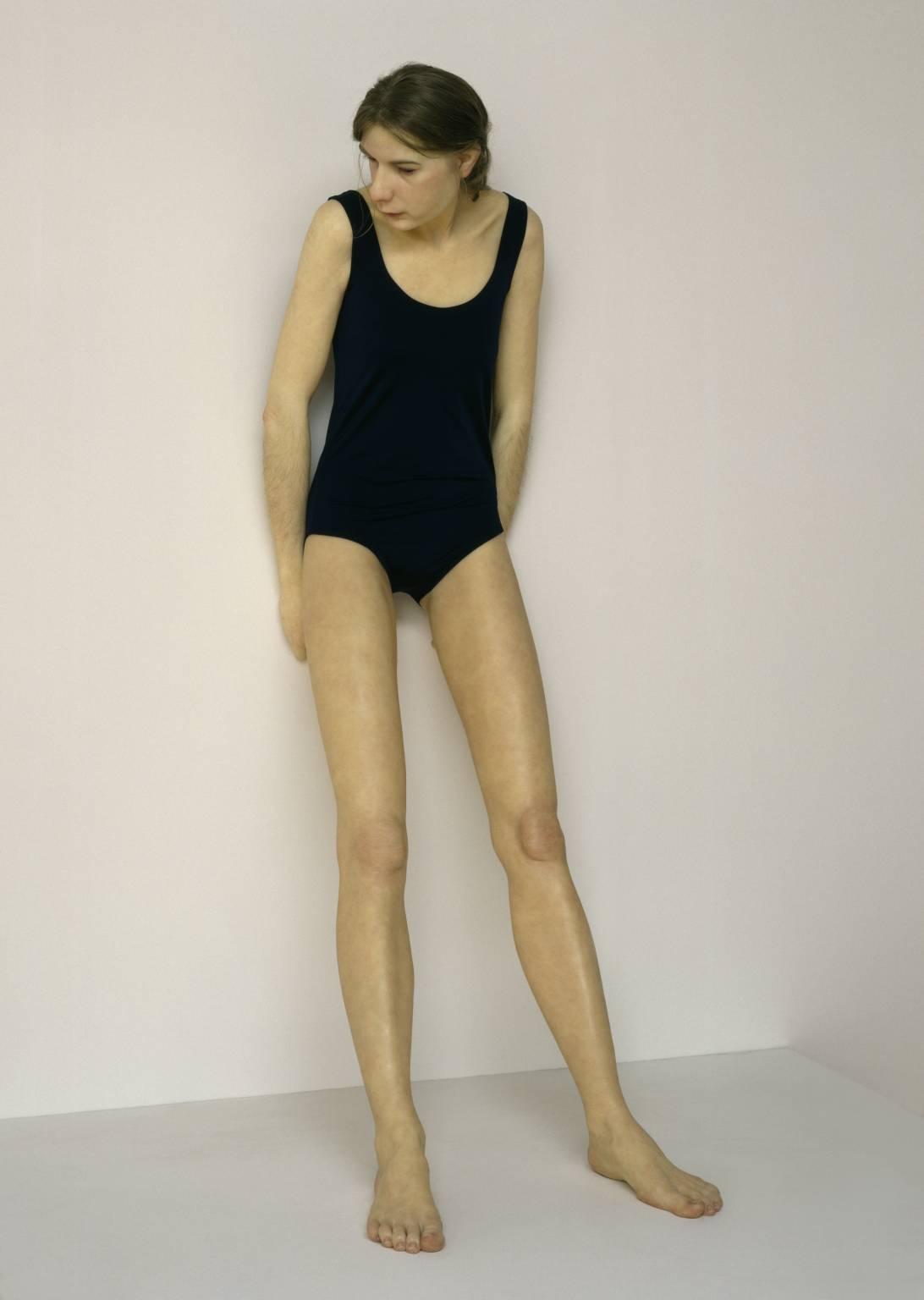 Ghost – Ron Mueck. 1998. Wikioo. (Fibreglass and silicon.)
Ron Mueck’s work is unnervingly real, and, as such, provokes feelings of the uncanny. How can the unreal appear so lifelike? Mueck’s changed scales and his hyper-reality, down to even the tiniest blemish, lend a sense of the uncanny to his work. It is both weird and familiar. As Mark Windsor says:
“We do not feel ‘at home’ in the world.”
(From What is the Uncanny? British Journal of Aesthetics, 59(1), 2019, pp. 51–65.)
Mueck’s people look real, yet we know they are too large or small to be human, and they are made of lifeless substances.
The figure above is over two metres tall; it creates confusion and discomfort in us between reality and unreality, life and death, sentient and inanimate, ordinary and extraordinary, familiar and unfamiliar, attractive and repulsive, known and unknown. This is what creates the uncanny creepyness. There is a sense of uncertainty and the disconcerted feeling of not being quite sure what is real any more. For more on this artist’s work and its relation to the uncanny, follow this link.
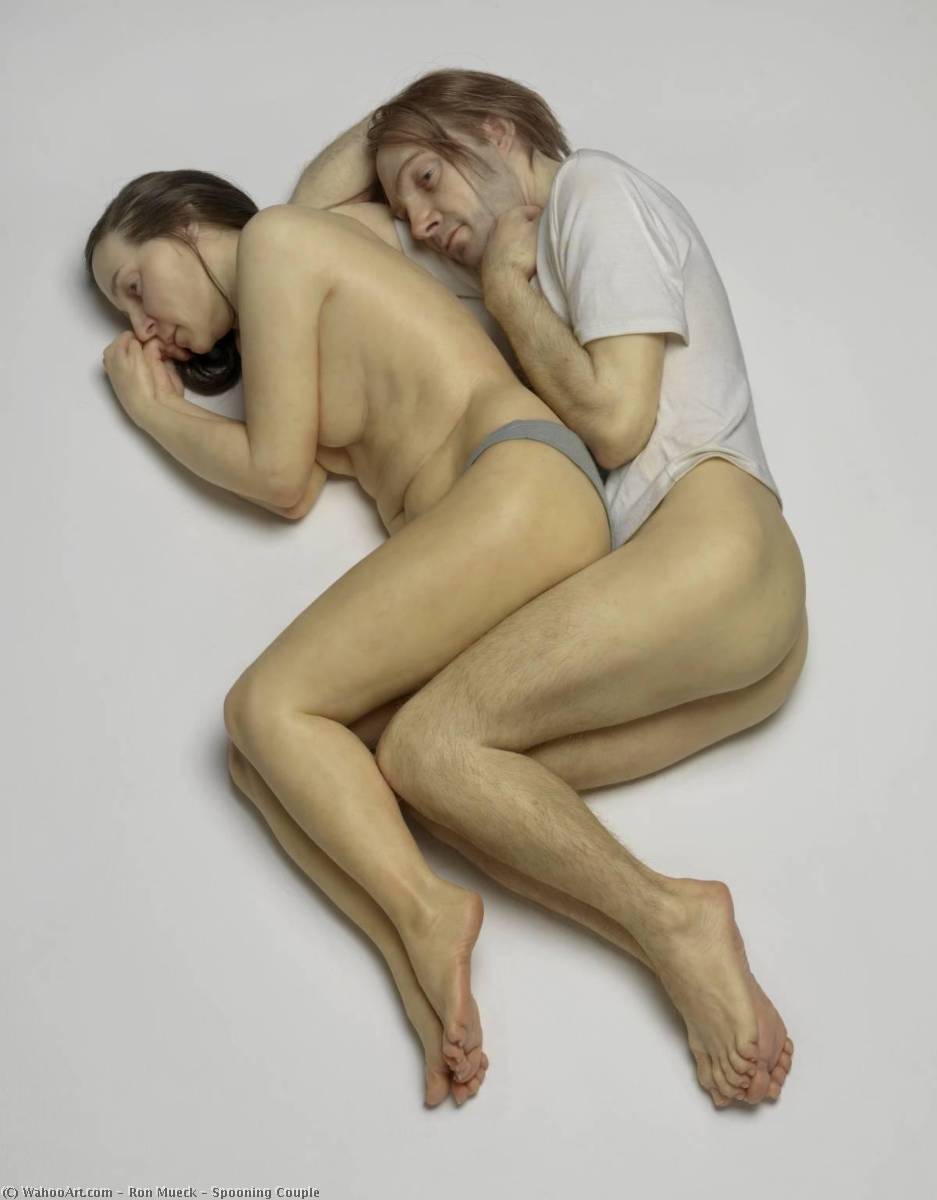 Spooning Couple – Ron Mueck. 2005. Wikioo
“….the “uncanny” is that class of the terrifying which leads back to something long known to us, once very familiar.”
Sigmund Freud, “The Uncanny” 1919.
To be continued next Tuesday……👻🙀
© Linda Berman
 waysofthinking.co.uk
I love this it very resonates! its lovely writing, I have ventured out deep into the uncanny in my art work and been eternally fascinated by peoples responses.
LikeLiked by 1 person
Thank you so much Carole. It must be really interesting to use art to explore the uncanny. It is, indeed, fascinating. Really appreciate your great feedback.
LikeLike
Another aspect of this interesting paper of Freud is how we relate to strangers, foreigners and immigrants. Klein and others have mentioned how we might confer aspects of ourselves- laziness, greed, envy into others. This can form the basis of racism etc. Thanks for posting.
LikeLiked by 1 person
[…] Last week’s post looked at the uncanny, and how it resides within ourselves. Today, I will move on to exploring ways in which we can confront these aspects of our inner world, often termed our ‘monsters,’ or our ‘demons.’ […]
LikeLike
[…] founder of psychoanalysis, Sigmund Freud, said there is something uncanny about dolls, in that they mediate between reality and fantasy — a tension […]
LikeLiked by 1 person
[…] founder of psychoanalysis, Sigmund Freud, said there is something uncanny about dolls, in that they mediate between reality and fantasy — a tension […]
LikeLike