
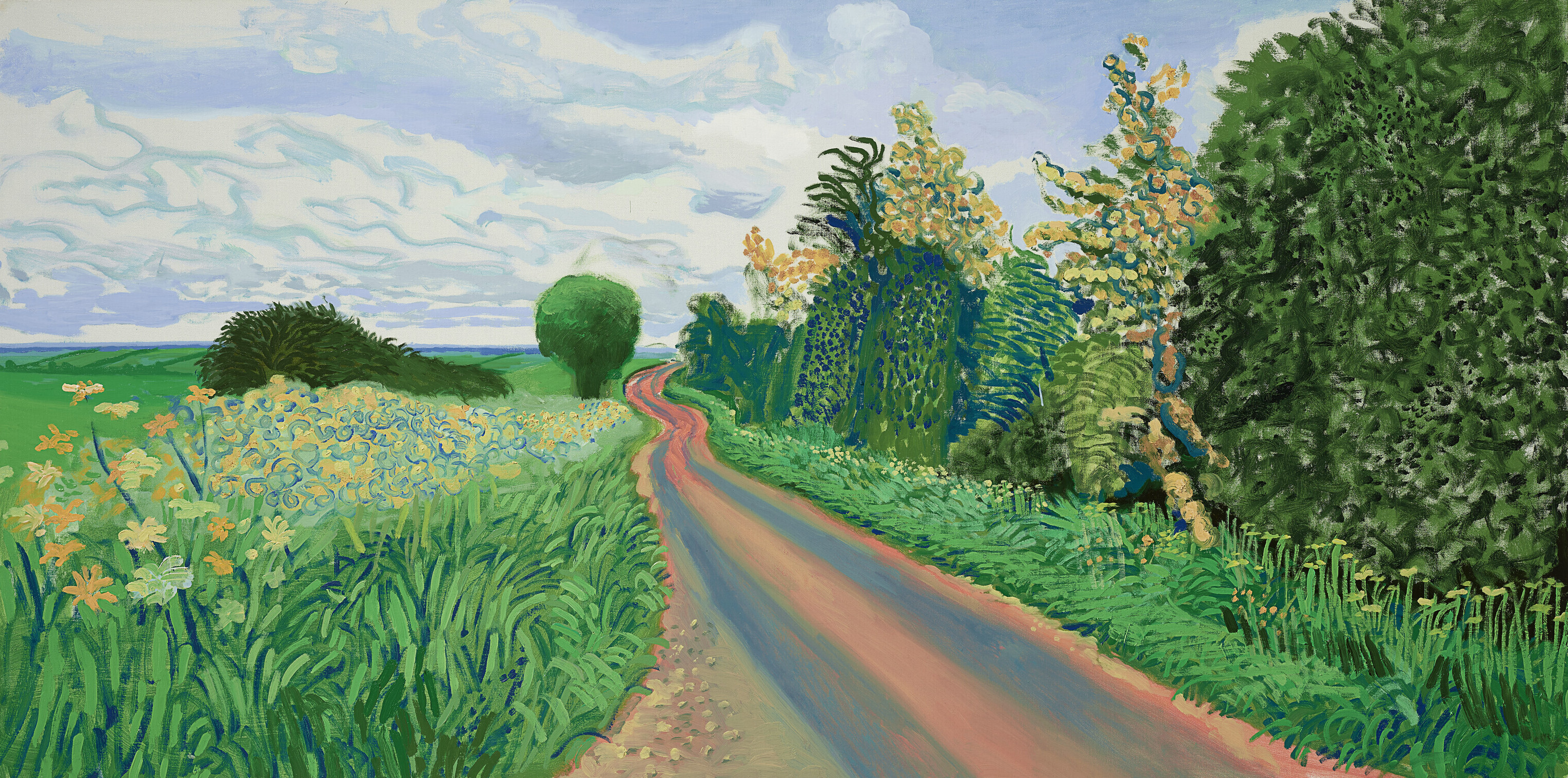
 David Hockney – Early Blossom, Woldgate [2009] Gandalf’s Gallery. Flickr.
“Human beings had two basic orientations: HAVING and BEING
HAVING: seeks to acquire, possess things even people
BEING: focuses on the experience; exchanging, engaging, sharing with other people.“Erich Fromm
The psychoanalyst and philosopher Erich Fromm’s book To Have Or To Be focusses on the difference between these two ways of thinking and being. The writer draws our attention to the fact that, since the Industrial Revolution, our society has tended to choose ‘having,’ rather than ‘being.’
- Having
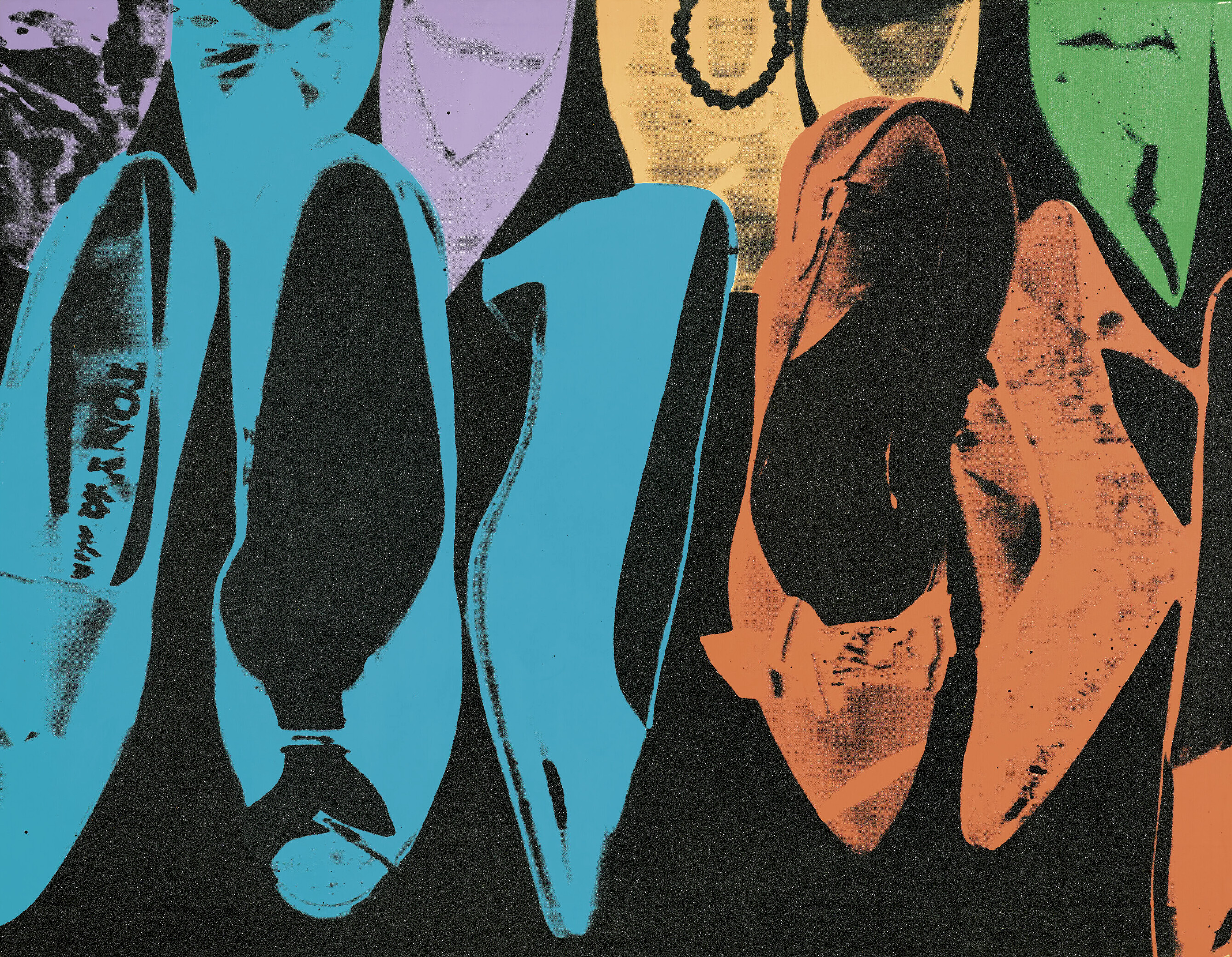 Andy Warhol – Diamond Dust Shoes [1980] Gandalf’s Gallery. Flickr.
This is a materialistic attitude which has not made us happier or more content… just the opposite. Fromm reminds us of this fact, saying that we will inevitably feel unfulfilled and disillusioned with our lives if we continue in this direction.
Such a consumption-orientated way of being does not mean we will automatically find happiness as we keep on and on acquiring material things; in actuality, it can lead to mental health issues and addiction.
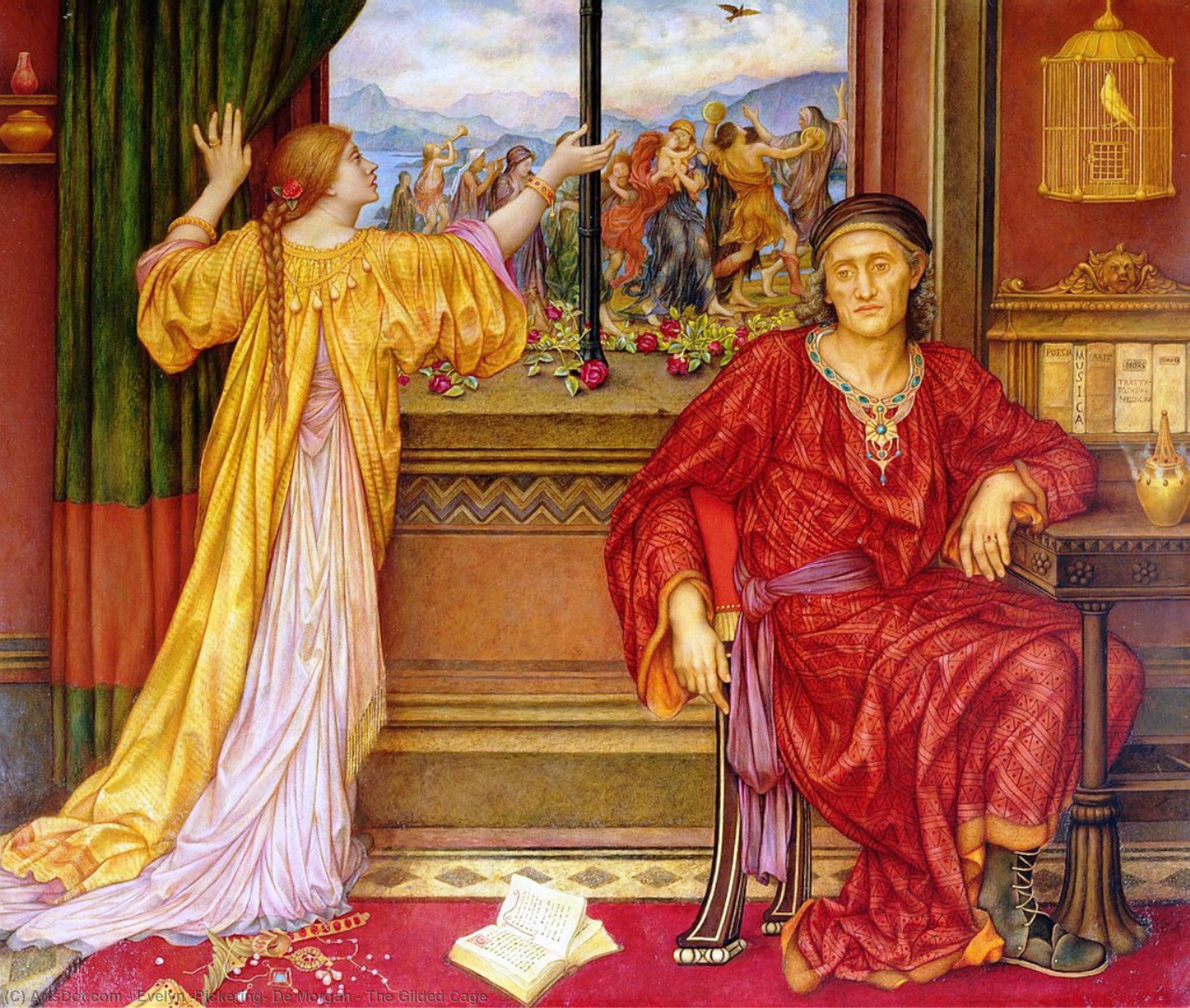
The Gilded Cage – Evelyn (Pickering) De Morgan. 1910. Wikioo
“But you see, that’s the gilded prison of fashion. We’re riding in private jets, and meantime I was so incredibly, painfully sad and lonely.“
Janice Dickinson
Whether it is 1910, as in the painting, or now in 2023, sadness and loneliness can feel powerful even when we are surrounded by gold-or private jets.
What is needed is a working together, says Fromm, who envisages a community focussing on being as crucial to the survival of the planet.
He regards the emphasis on having, not only at an individual level, but also on a larger, societal scale, as detrimental to everyone. We need, he says, to begin to value and emulate nature and lessen our focus on acquisitiveness.
A research study in America by Dr Bruce Alexander graphically illustrates this point. He showed, in his experiments called “Rat Park’ that, when a rat was put in a cage alone, without a community, (rather cruel, in my opinion) with a bottle of water filled with added heroin or cocaine, and one with plain water, the lone rat drank the drug-laced water repeatedly and became addicted.
However, when the rats were placed in ‘rat parks,’ where there was a community of both male and female rats and plenty of playthings, with opportunities to socialise and occupy themselves, they chose to drink the plain water and hardly touched the drugged one.
Our environment considerably affects our mood and psychological state; if we feel fulfilled, and part of a community of others, we are less likely to need to turn to addictive ‘comforts,’ like drugs, gambling, money, or collecting possessions. We are likely to be more able to be.
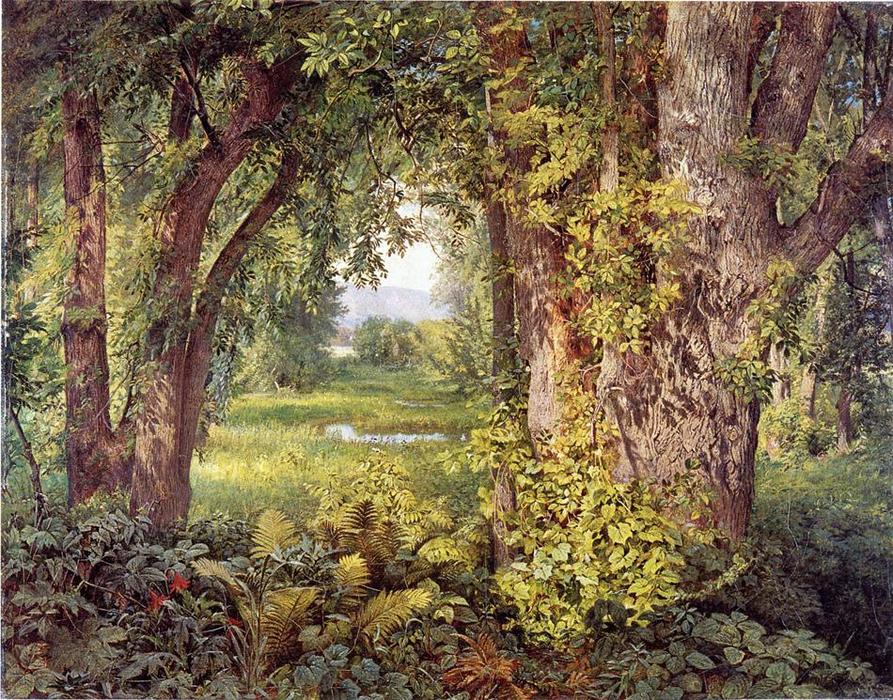 Into the Woods – 1860 .William Trost Richards. Wikioo.
“There is poetry as soon as we realize that we possess nothing.”
John Cage
We cannot take possessions with us when we die. We will be remembered not for what we had, but for what we were like as people.
The sense of ownership that we derive from having possessions and money may be related to the fact that we think this will make us feel better about ourselves within our consumer-orientated culture.
However, self-worth is not derived from objects, but people; our early experiences of feeling valued and important will contribute to our later feelings of contentedness with ourselves… or the opposite.
If I am what I have and if I lose what I have who then am I?
Erich Fromm
What do the possessions symbolise for us? Perhaps, sadly, they represent our only identity. They are ours, familiar objects that may give us a superficial sense of self-esteem, but they are not us. If this is where we gain our feelings of self-worth, then we will never being able to have enough.
Of course having ‘stuff’ is important; we all need, to a greater or lesser extent, the comforts that life brings. They can add to our enjoyment and appreciation of our existence.
However, it is when we depend on such comforts to give us a sense of self, or when they become a replacement for other people, that we might begin to feel unhappy and unfulfilled.
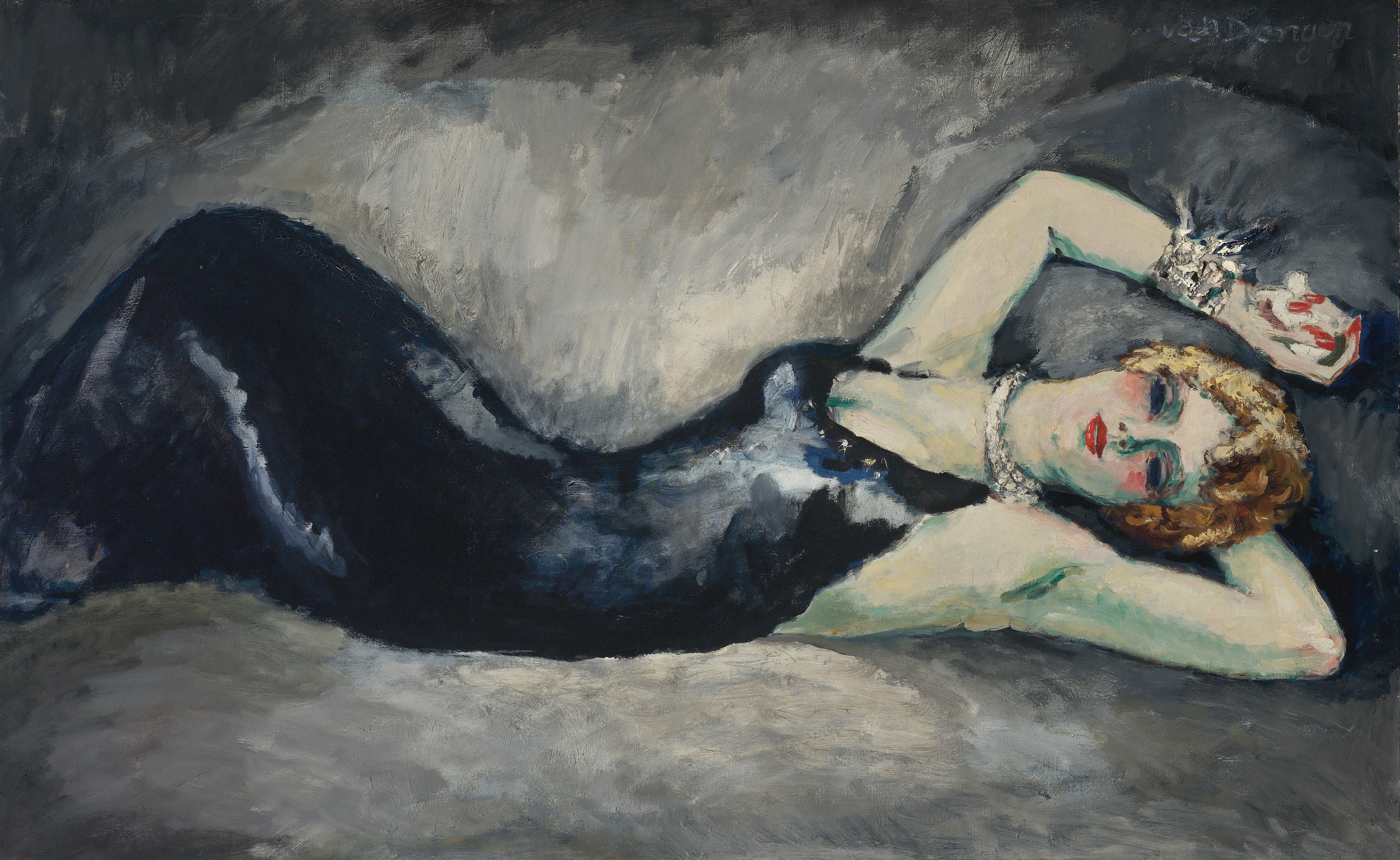 Kees van Dongen – Caille sur canapé [c.1922] Gandalf’s Gallery. Flickr.
- ‘Having’ People As Possessions
There are some people who feel they ‘own’ others – their partner, spouse, children; it is as if the other were an extension of themselves. This is, of course, about needing to control and may also be related to a fear of loss.
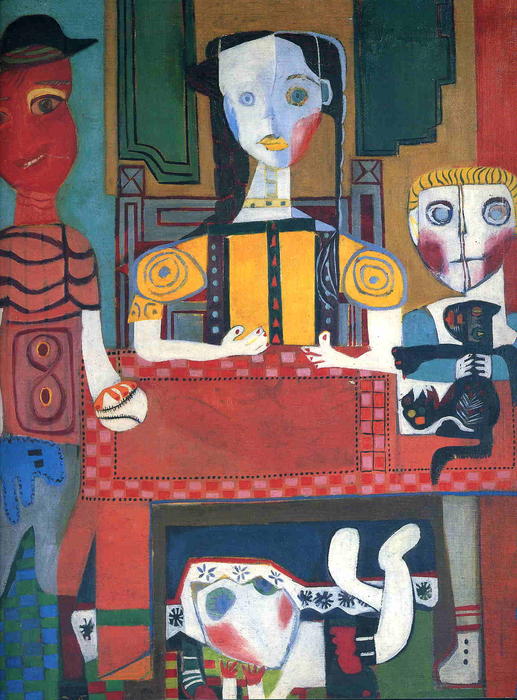
Family and Pink Table – Will Barnet. 1948. Wikioo.
“Your children are not your children. They are the sons and daughters of Life’s longing for itself. They come through you but not from you, and though they are with you, yet they belong not to you. You may give them your love, but not your thoughts. For they have their own thoughts. You may house their bodies but not their souls, for their souls dwell in the house of tomorrow, which you cannot visit, not even in your dreams.”
Khalil Gibran
This well-know quotation perfectly expresses how we may need to cling to the illusion that we own others, such as our children, but, in actuality, we do not. We are but a vehicle for them to enter this world, to be nurtured by us as they grow into autonomous and independent adults.
“Ultimately, the only power to which man should aspire is that which he exercises over himself.”
Elie Wiesel
“You are mine” or “You belong To Me ” is something people might say in a light-hearted way, but when the idea of ownership of another human being feels as though it is becoming a reality, then there is created a dangerous and potentially painful situation. Dominating another person can never bring happiness, for people can never be a part of anyone’s possessions.
- ‘Having’ as a Denial of Impermanence
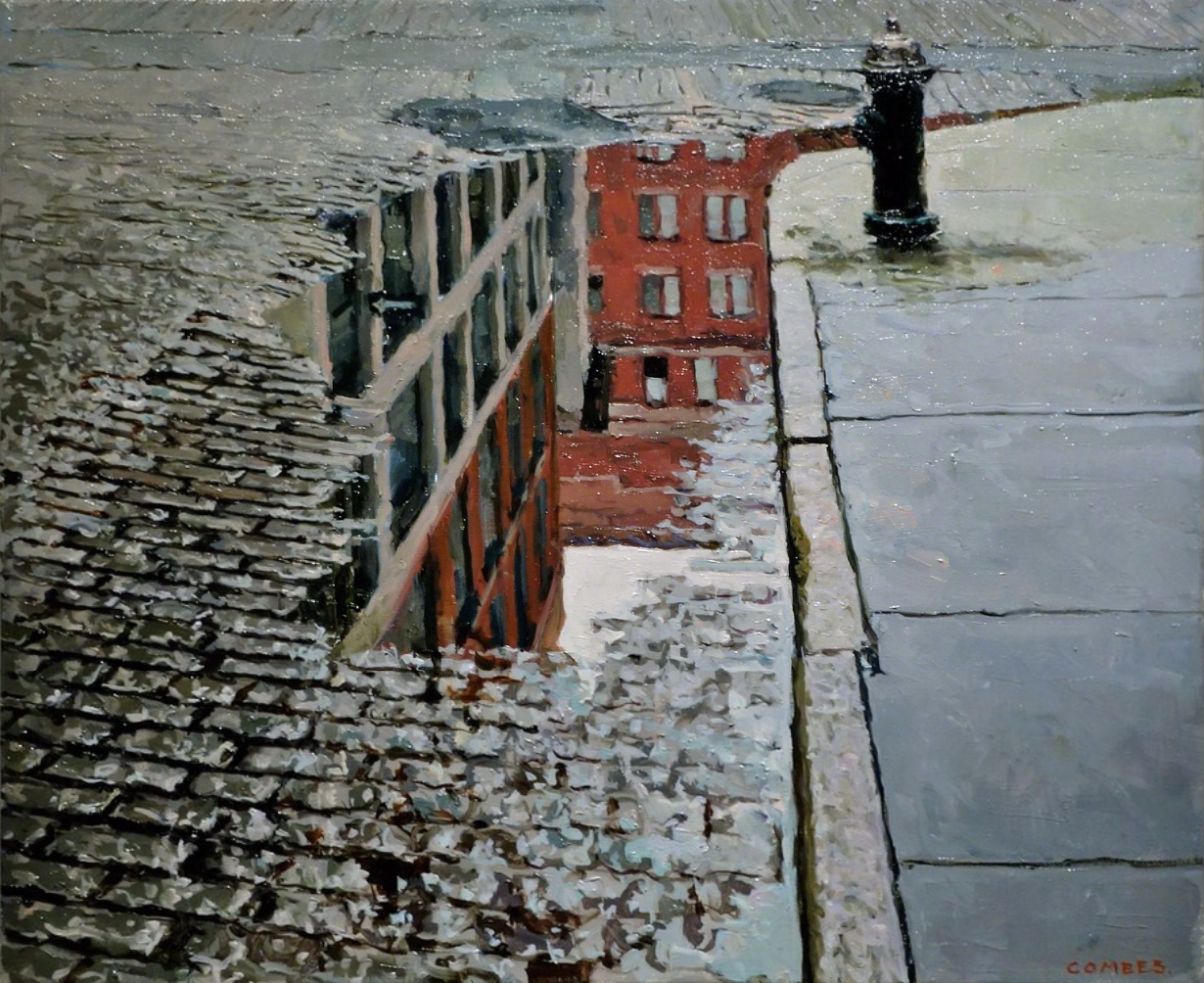 Richard Combes – After Rainfall [2014]. Gandalf’s Gallery. Flickr.
“Nothing in the world is permanent, and we’re foolish when we ask anything to last, but surely we’re still more foolish not to take delight in it while we have it.”
W. Somerset Maugham
Life is highly unpredictable, and learning to accept this incontrovertible fact is difficult. As a result, we may develop control-related tactics to try and ward off such uncertainty, like attempting to have more and more ‘things.’
In a rather crazy way, there may be a sense that these objects can protect us against our own mortality. This is ‘easier’ than facing the existential angst in terms of our inevitable death.
“Despite the staunchest, most venerable defenses, we can never completely subdue death anxiety: it is always there, lurking in some hidden ravine of the mind.”
Irvin D. Yalom
Of course, having more and more will not make the slightest difference to the ever-changing nature and unpredictability of life. The only aspects of our lives we can really control, and then only to some extent, are ourselves and the feelings and thoughts inside us.
Appreciating and getting pleasure out of what we have is part of the joy of life; that is why it is really important to value every moment that we do have….now.
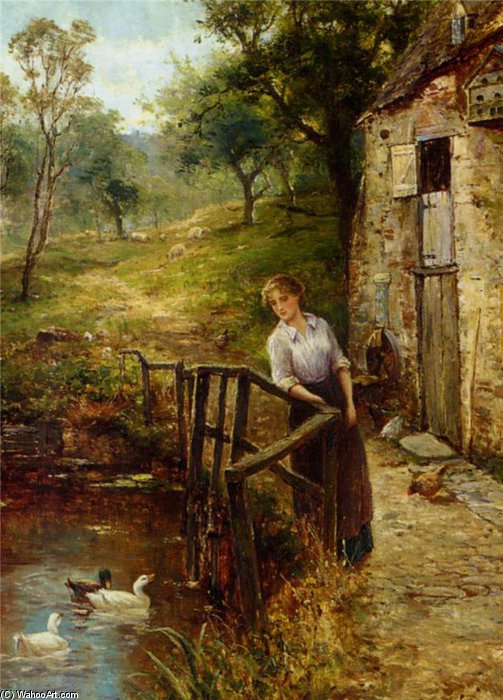
Enjoying The Afternoon – Ernest Charles Walbourn. Wikioo.
“Live when you live! Death loses its terror if one dies when one has consummated one’s life! If one does not live in the right time, then one can never die at the right time.”
Irvin D. Yalom, When Nietzsche Wept
- Clinging On And Letting Go
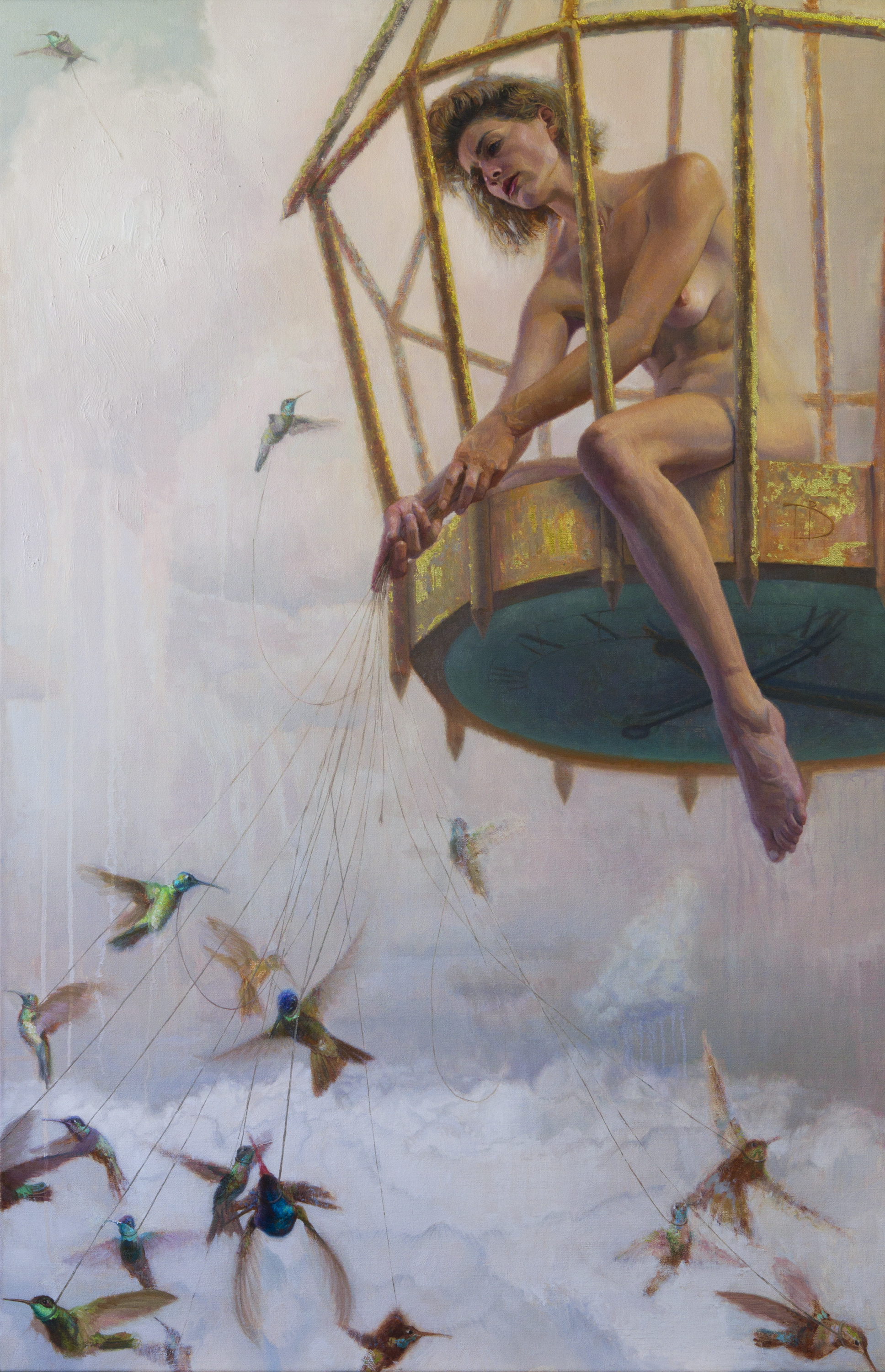
Daniel Bilmes – ‘Held.’ Gandalf’s Gallery. Flickr.
“Life is balance of holding on and letting go.”
Rumi
Everything changes. We become empowered if we face and accept this incontrovertible fact.
We have to let go, for all is impermanent……if we do not, we may, indeed, become overly attached to amassing objects that might, very temporarily, make us feel better. ‘Having’ and relating to objects is like having a relationship with a robot; we do not get back any genuine response.
Sometimes, we might feel a need to have psychotherapy in order to deal with a difficulty in being with ourselves and with others, and our need to ‘have’ more and more.
Perhaps then we can learn to really be and, as Fromm says, have the experience of “exchanging, engaging, sharing with other people.”
Psychotherapy is partly about letting go. Within the boundaries of the therapy room, the allotted time, and with the assured empathy and confidentiality of the therapist, we may feel safe to let go of painful memories, of certainties, of hopes, doubts, and fears.
We may also learn to engage and share parts of ourselves with the therapist, in the hope that we can generalise from that therapeutic experience.
Clinging on is the opposite to letting go. It suggests a kind of desperate need, an unwillingness to face change. It is not’ being,’ not peaceful with oneself.
At others times in life, clinging on to someone or something may be a denial of the necessity to let go; for letting go can involve loss, uncertainty and stepping into the unknown.
“Letting go means to come to the realization that some people are a part of your history, but not a part of your destiny.”
Steve Maraboli
“Courage is the power to let go of the familiar.”
Raymond Lindquist
- ‘Having’ In Order To Avoid The Darkness Inside
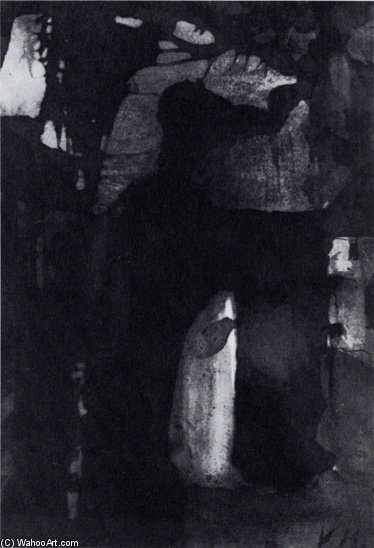
The Mouth Of Darkness – (Victor Marie Hugo)
“People will do anything, no matter how absurd, in order to avoid facing their own souls. One does not become enlightened by imagining figures of light, but by making the darkness conscious.”
Carl Jung
Sometimes, in order to avoid their inner ‘darkness,’ people channel painful feelings into addictions or into living life at breakneck speed. They may overspend, buying things they do not really need, in an attempt to eradicate a sense of a gaping hole inside.
In reality, only by going into the darkness can they get through it. Attempts to lighten this from the outside will fail, for it is an inner darkness, perhaps only reachable through sometimes painful therapeutic work.
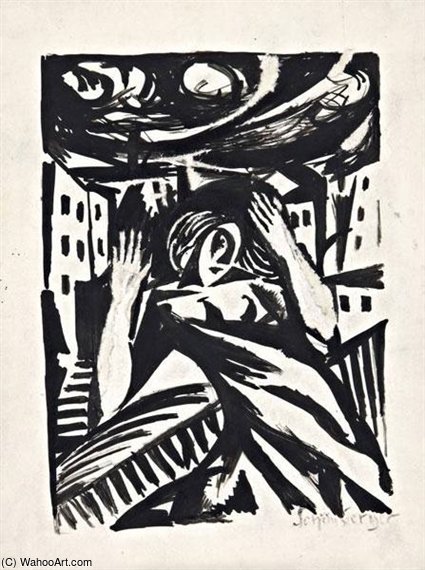
Rush Out Of Everydays – Armand Schonberger. Wikioo.
“Caught is a frenzied spiral of new addiction, people are chasing money, power, success and a wilder, faster pace of life. Just like any addiction, people are out of control in their behaviours, feeling and thinking, yet they believe they are normal.”
Dr Stephanie Brown.
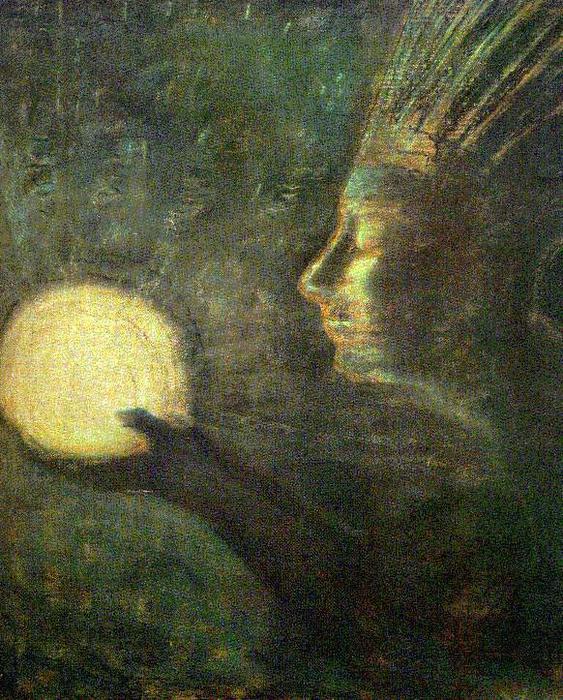
Friendship – Mikalojus Konstantinas Ciurlionis. 1907. Wikioo
“You give but little when you give of your possessions. It is when you give of yourself that you truly give.”
Khalil Gibran
- Being…. And Becoming
“Nothing is permanent. Everything is subject to change. Being is always becoming.”
Buddha
What do ‘being’ and ‘becoming’ actually mean ? There are many different philosophical opinions on this, from great thinkers like Nietszche, Plato, Kierkegaard and Deleuze.
Many would say that being is becoming. This sounds like a paradox and, indeed, it is. The paradoxical quality of this statement rests in the fact that, even if we are still, inactive, not visibly moving forward, life is always about change and we cannot, actually, stay still.
There can, of course, also be changes beginning inside us, perhaps initially undetectable from the outside.
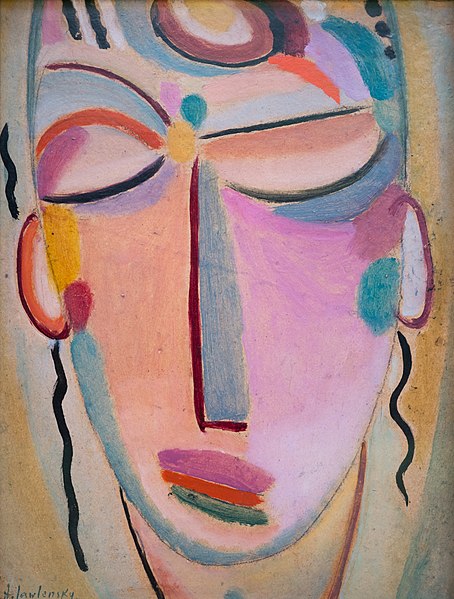
Alexej von Jawlensky. Meditation, 1918. Wikimedia Commons.
“Becoming is not a contradiction of being but the epiphany of being.”
Ananda Coomaraswamy
Being is surely related to authenticity; it is about loving and interacting with others. Sometimes this involves a kind of transformation, an awakening, from self-centredness to awareness of others…. and from having to being.
I end this post with a series of images and quotations that highlight the importance of being, rather than having.
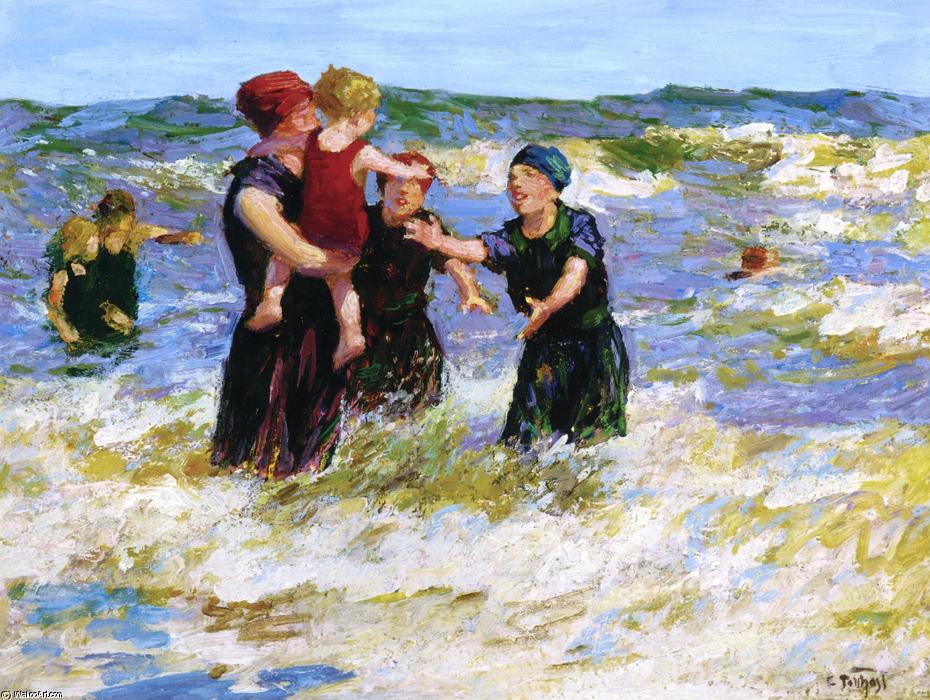
Making Friends – Edward Henry Potthast. Wikioo.
“The full humanization of man requires the breakthrough from the possession-centered to the activity-centered orientation, from selfishness and egotism to solidarity and altruism.”
Erich Fromm, The Art of Being
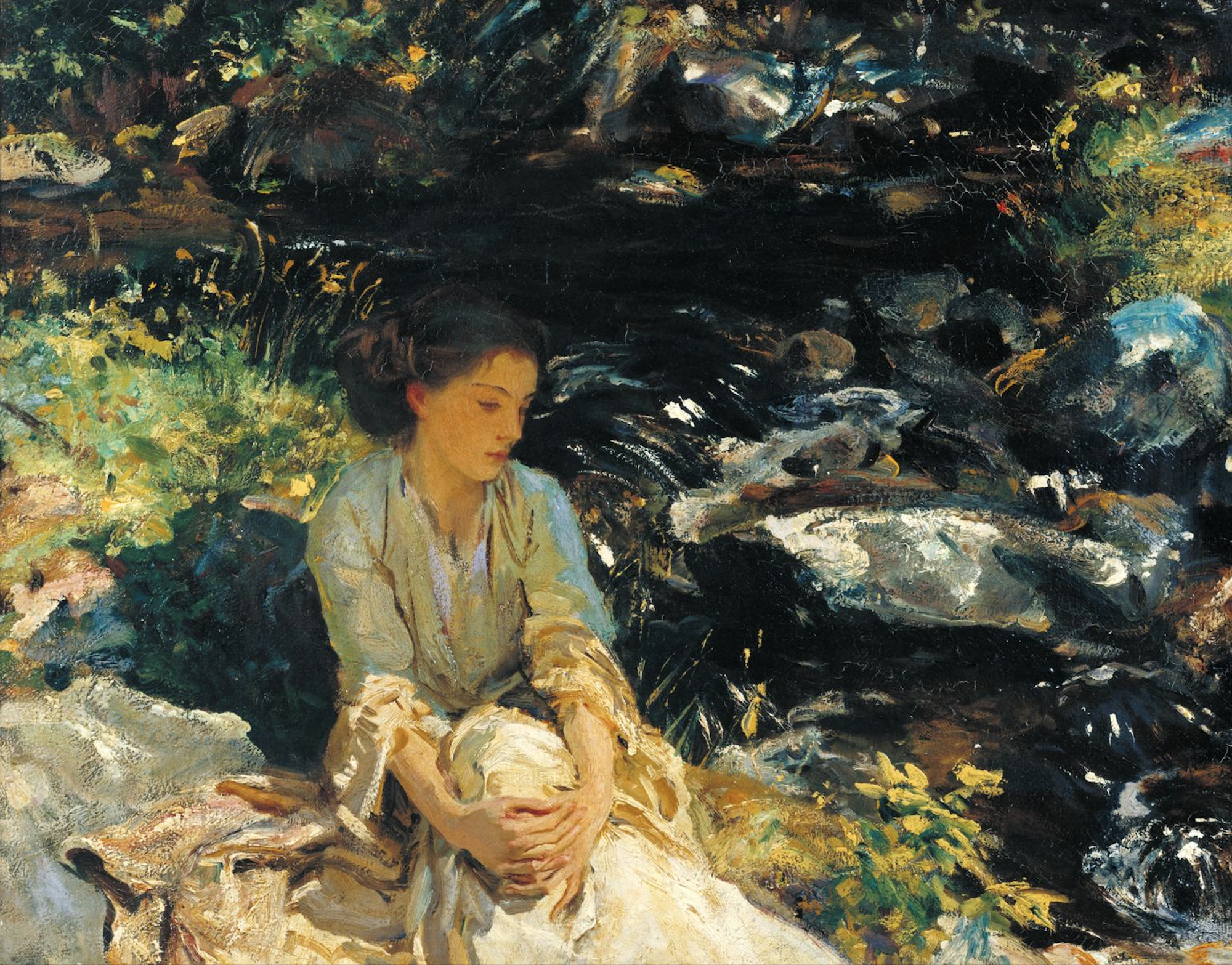
The Black Brook c.1908 John Singer Sargent. Wikioo
“Life is not a having and a getting, but a being and a becoming.”
Myrna Loy
Wild Roses and Grape Vine, Study from Nature – John La Farge. Wikioo
“We can save ourselves, but only if we let go of the myth of dominance and mastery and learn to work with nature.”
Naomi Klein
Heart. Peter Max. Wikioo.
“If they ask you how rich you are, tell them to look inside your heart.”
Matshona Dhliwayo
© Linda Berman

This blog is totally non profit-making. As a retired psychotherapist with 30 years experience, I write both for my own self-expression and to help others.
If you this post resonated with you, I would much appreciate you showing support by becoming a follower of waysofthinking.co.uk
 waysofthinking.co.uk
For me, your marvellous collection of this week’s art vividly telegraphs the “Being” side of your Having/Being theme. You know how to pick ’em! Sometimes I feel resigned whenever seeing news or reading about Southeby type art auctions, and the desperately rich competing and clutching to “have” the painting for themselves alone, to imprison it in a private parlour, a lonely salon. An analog of the bird in guilded cage. I really look forward to your Sunday sermons and gallery tours. A great pick-me-up as the weekend takes its last breaths. Much gratitude for all the sweat labour you pour these posts.
LikeLike
Bob you’re so welcome! I’m delighted you enjoy my posts. I enjoy writing them and it’s so good to have such encouragement. I know exactly what you mean about secreting art away and ‘imprisoning’ it, away from others. That is a very good example of having and not being, and it certainly represents not being there for others. I’m grateful for your support and feedback.
LikeLike
Hi Bob
Glad that I’m choosing relevant topics for you. Thank you for your comments and I do appreciate your thoughts.Best wishes!
LikeLike