
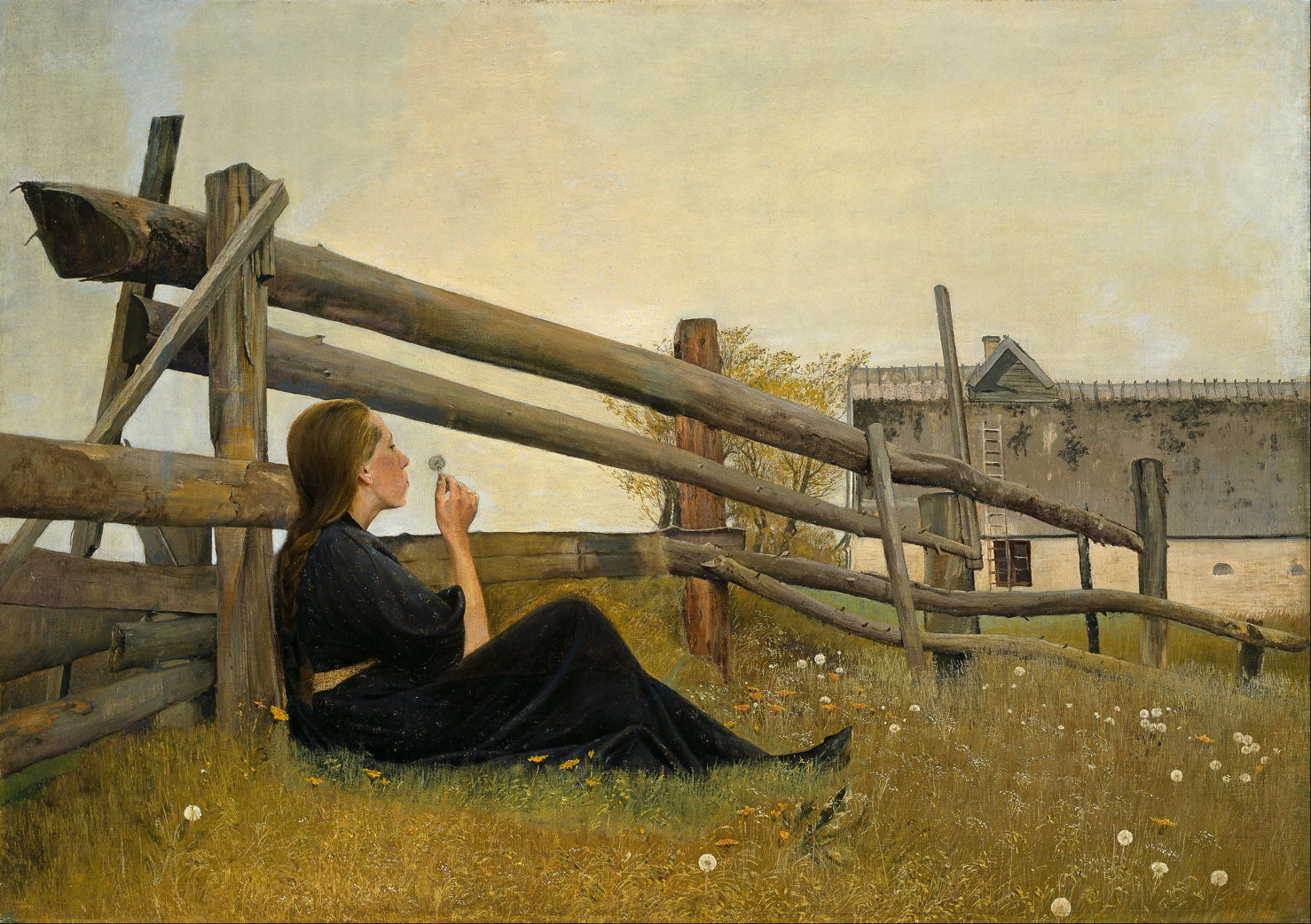
 Laurits Andersen Ring. In the Month of June (1899) Norway. Wikimedia Commons.
“Never put off till tomorrow what you can do the day after tomorrow.”
Mark Twain
Do you tend to ‘procrastinate?’ The word originates from Latin, and, translated, means ‘deferred till the morning.’ (Oxford Languages.) Sometimes, however, tasks get deferred longer than the next morning; they linger at the bottom of our to-do list for ages, irritating us, bringing up a niggling feeling of guilt every time we see them.

Usually these are the tasks we least like to do, and sometimes they do not ever get done, leading to various consequences, or nothing at all, depending on their importance.
There are some amongst us, however, who do not allow this to happen. They do everything now, or as soon as they think of it, to prevent them feeling uncomfortable and unsettled.
Are you an instant-doer or a procrastinator? Or somewhere between the two?
- ‘Bird by Bird’
When we are faced with tasks that feel undoable, it may be tempting to persuade ourselves that they can wait, they do not matter that much anyway, or we are far too tired, stressed or busy to attend to them right now. Tomorrow we will feel more up to it! We’ll be more in the mood!
Let’s go and make another coffee. Is there any cake left?…..
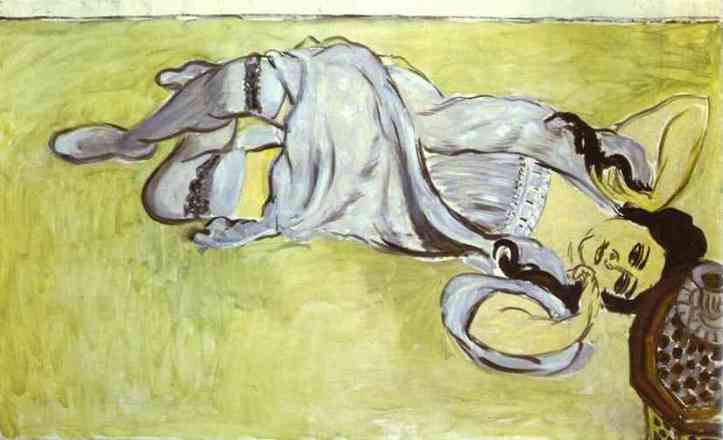 Laurette with a Coffee Cup – Henri Matisse. Wikioo
“Coffee is a way of stealing time that should by rights belong to your older self.”
Terry Pratchett
What are your avoidance tactics? Do you busily tidy things up, make that phone call, watch TV, listen to the radio, read a newspaper, go into a reverie, do Wordle, surf the internet, eat, drink, walk or stare out of the window? All these are distractions, stopping us from facing the task we want to avoid.
“I’m a big believer in putting things off. In fact, I even put off procrastinating.”
Ella Varner
Children tend to procrastinate about doing their homework; sometimes this might be because it feels too hard, too much, they fear getting it wrong, or being criticised, and they so want to play with their new toy.
How can we help them, and ourselves, in such situations?
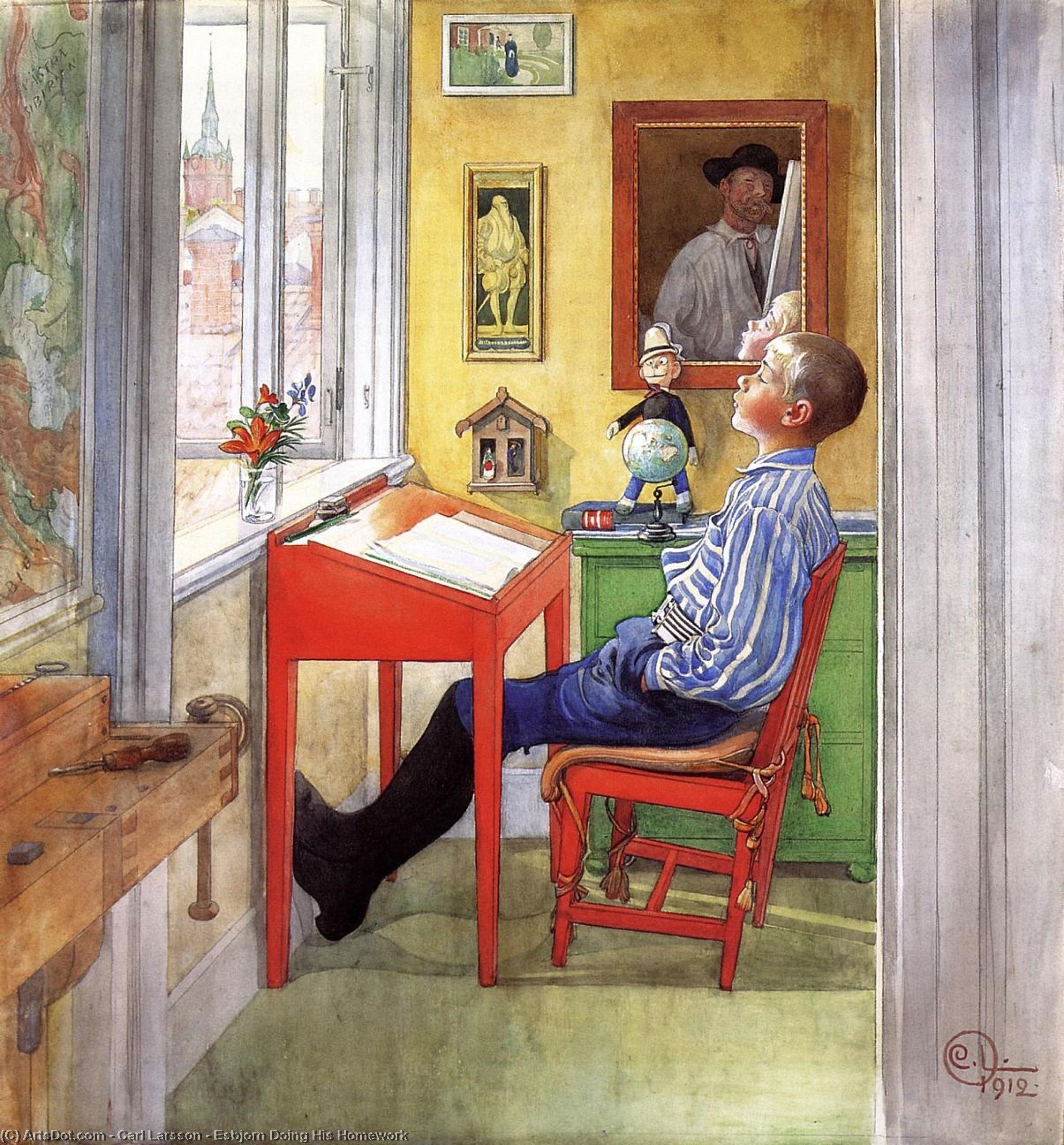 Esbjorn Doing His Homework. 1912. – Carl Larsson. Wikioo.
‘Thirty years ago my older brother, who was ten years old at the time, was trying to get a report written on birds that he’d had three months to write, which was due the next day. We were out at our family cabin in Bolinas, and he was at the kitchen table close to tears, surrounded by binder paper and pencils and unopened books about birds, immobilized by the hugeness of the task ahead. Then my father sat down beside him put his arm around my brother’s shoulder, and said, “Bird by bird, buddy. Just take it bird by bird.”‘
Anne Lamott, Bird by Bird
These words are full of wisdom; teaching a child to ‘take it bird by bird’ from quite a young age will enable them to face large amounts of work in adulthood. This also helps the child to be patient in later life, and not to feel overwhelmed or ‘immobilised.’ One step at a time is the message.

This Bird Looks in all Four Directions – Maria Primachenko. Wikioo
If we keep on sabotaging our chances of doing well by procrastinating, this may be because of a fear of being successful, an intensely pressurising feeling. We may become stuck in a cycle of failure and missed chances.
This is not about being idle or negligent, even though it might appear so on the outside. Fear of success is connected to a lack of self confidence, the absence of a conviction that we can maintain that success, and a dread that we will fail to cope with the changes it brings to our lives.
- Dread
 For Fear – Ronald Brooks Kitaj. 1967. Wikioo.
“The dread of doing a task uses up more time and energy than doing the task itself.”
Rita Emmett, describing what she calls “Emmett’s law”, in “The Procrastinator’s Handbook: Mastering the Art of Doing It Now” (2000)
Have you experienced dreading doing something and then, when you do it, it turns out not to be as bad as you feared? Sometimes, it is thinking about the task that can prevent us from doing it. Perhaps we feel anxious, and this causes us to make a mountain out of a molehill.
“The difference between a mountain and a molehill is perspective.”
Al Neuharth.
There are times when we procrastinate because we feel overwhelmed by all the tasks to be done. Again, we need to try to tackle one small task at a time, ‘bird by bird.’
“Think of many things; do one.”
Portuguese proverb
- Time: existential issues

“Procrastination is the thief of time”
Edward Young
If we keep putting things off, it could be that we have not faced the fact that we only have a relatively short time on this earth. Delaying means that we are stealing that time from ourselves.
These are existential issues and it is important to face them in order to motivate ourselves to become more active and purposeful. Thus, procrastination may represent a denial of our own mortality. Why do it now when we have loads of tomorrows?
“It’s only when we truly know and understand that we have a limited time on earth — and that we have no way of knowing when our time is up – that we will begin to live each day to the fullest, as if it was the only one we had.”
Elisabeth Kübler-Ross
It is an illusion to think that we have all the time in the world, that we will live forever. When we procrastinate, we are avoiding facing the fact that we will one day die, and we cannot know exactly when our death will happen.
Constantly putting things off is self-defeating and ultimately it can make us feel depressed, ashamed and anxious. Perhaps therapy can help us with this, for it is a pity to waste our precious lives and opportunities through denial and false beliefs.
“The trouble is that you think you have time.”
Jack Kornfield in “Buddha’s Little Instruction Book” (1994)

Too late! Too late! Ye cannot enter now –Frank Dicksee. Wikioo
“You may delay, but time will not.”
Attributed to Benjamin Franklin

Today, tomorrow and yesterday – Jorge José Castillo Casalderrey 2010. Wikioo
“Tomorrow, and tomorrow, and tomorrow”
William Shakespeare (Macbeth)Tomorrow, and tomorrow, and tomorrow,
Creeps in this petty pace from day to day,
To the last syllable of recorded time;
And all our yesterdays have lighted fools
The way to dusty death. Out, out, brief candle!
Life’s but a walking shadow, a poor player,
That struts and frets his hour upon the stage,
And then is heard no more. It is a tale
Told by an idiot, full of sound and fury,
Signifying nothing.
Everything in this world is impermanent. If we genuinely embrace the concept of impermanence, we will be more likely to use the time we do have beneficially, for ourselves and others.
Why should we think about the impermanence of life at all? Is it not easier to avoid dwelling on the fact that we all must die? Won’t we spoil a perfectly good day with such thoughts?
In reality, struggling against the truth of impermanence will bring pain and torment, for we will be battling the inevitable, the unchangeable. Living every moment fully is impossible if we constantly deny our own mortality.
The greatest thinkers and sages of the world have long known the truth of this and many have tried to tell us that change is inevitable.
For some, it is hard to believe that one day we will cease to exist and that the world will still go on turning without us. We may be in denial, living the high life, a wild life, a fast-paced existence, procrastinating with abandon.
However, a niggling awareness of the inevitability of our demise will always be there, somewhere…..

“Death is the sound of distant thunder at a picnic.”
W. H. Auden
- Hesitation and indecision
“Nothing is so exhausting as indecision, and nothing so futile.”
Attributed to Bertrand Russell
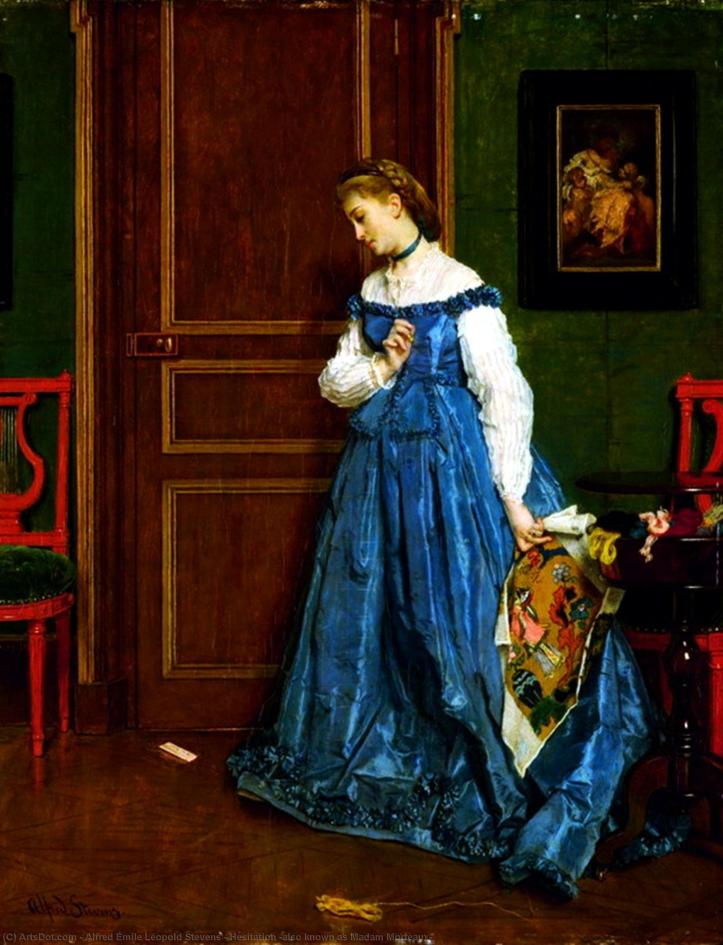 Hesitation. Alfred Émile Léopold Stevens. c.1867. Wikioo
“Hesitation is often like procrastination. One may have vague doubts and feel a need to mull things over; meanwhile, other issues intrude on thought, and no decision is taken. Ask people why they procrastinate, and you probably won’t get a crisp answer.”
Robert J. Shiller
Repeated incidents of indecision and the resulting hesitation may mean we are afraid of failure, or perhaps we are perfectionists and cannot risk things not being exactly right. ‘He who hesitates is lost’ is linked to the theme of the above quotation; such delay may mean great opportunities are missed or tragedy ensues.
“What is not started today is never finished tomorrow.”
Johann Wolfgang von Goethe
“I have spent my days stringing and unstringing my instrument, while the song I came to sing remains unsung.”
Attributed to Rabindranath Tagore
Could it be that there are fears of failure, of being inadequate, or being judged, so that we hesitate, procrastinate and waste precious time? Sometimes, making a start NOW is difficult; perhaps we are waiting for the ‘right’ time, but there are no perfect conditions or times in which to begin things.
Serious procrastination will, inevitably, lead to life problems, for we will end up with a huge backlog of tasks that may be unmanageable. This could affect our health and wellbeing.
 Spring in the Trenches, Ridge Wood, 1917 – Paul Nash. Wikioo
“On the plains of hesitation lie the blackened bones of countless millions who at the dawn of victory lay down to rest, and in resting, died.”
Adlai E. Stevenson
And yet….scientific research by Dr Stephen Fleming reveals that, often, the quick-fire decisions that are encouraged in our current society, do, in fact, mean that we might sometimes increase our chances of getting it wrong.
In an article in Aeon in 2014 entitled ‘Hesitate!’ he states:
‘The agonising feeling of conflict between two options is not necessarily a bad thing: it is the brain’s way of slowing things down….When people do come to speedy conclusions, there is less opportunity to gather and assess the necessary evidence to form a good decision. The ‘neural flip-flopping’ between options is regarded as ‘the brain’s weighing of evidence for and against decision………..We should allow some indecision into our lives.’
This issue is about balance and not going to extremes, that is, neither rushing in without thought, nor waiting so long that chances are missed.
- Procrastination: Could it actually be a ‘gift?’
“Procrastination is a gift in disguise, a symptom of discord between the flow of life and the mind’s ideas about it, an opportunity to slow down and re-orient oneself.”
The paradox of procrastination from a blog entitled ART OF SEEING April 25, 2017 by Elena Maslova-Levin
Procrastination tends to get a bad press, but does it always have to be a bad thing?
In reality, some people work better under last-minute pressure. Others find mind-wandering is creative; in moderation, procrastination can mean that we are prioritising what is most important to us, or allowing time to consider things calmly. Perhaps it also offers a release of creativity, a period of reflection and clarity.
“To encode, consolidate and process information, the brain is desperately in need of unstimulated idle time. Idle time helps you clear your thoughts, sharpen your perceptions and calm your emotions. It also produces “random episodic thoughts” that are highly creative.”
Dr Varghese Punnoose
Depending on our inner attitude to life and the world around us, doing nothing but being peaceful can often give us an opportunity to find solutions to problems and be at our most creative. Not everything must be done now, some things can profitably be left till tomorrow…. or even next week!
Through relaxed mind-wandering and daydreaming, which may indeed be a way of procrastinating, we may discover new thoughts and ideas. Daydreaming can be a kind of planning; it can be one of the ways of thinking things through as preparation for future action. Imagining something is an important first step to its achievement in reality.
When we are uncertain or indecisive about something, it may sometimes be best to allow ourselves to be flexible and to use the space and time to contemplate, reflect and be creative with our choices, instead of rushing into action or putting off thinking about it at all.
Giving oneself time and space, not overloading ourselves, leaving some tasks till tomorrow, can be good for our health and wellbeing. If we do tend to procrastinate, perhaps we can stop and examine what lies behind our behaviour, and whether we feel we are on the right track for ourselves.
Sometimes, procrastination can, indeed, be a gift…
 Parents of the Artist – Otto Dix. wikioo.
“My parents told me I’d never amount to anything because I procrastinated too much. I told them, ‘Just you wait’.”
Judy Tenuta
© Linda Berman
Please don’t procrastinate…. follow my blog NOW!! 😉
 waysofthinking.co.uk
I keep procrastinating to comment on your blogs but they really are well thought out with beautiful paintings.Last blog on procrastinating is witty.
LikeLiked by 2 people
Leslie thank you so much! I’m so glad you overcame your procrastination in time to send this great feedback… it’s much appreciated. 🤗👍
LikeLike
I procrastinate doing work by reading blogs about procrastination!
LikeLiked by 1 person
Thanks and Apologies!!! Hope you can move on, Mihaela! 😂🌹
LikeLike
Your impulse to present a balanced view of procrastination is commendable, Linda. So-called “productivity” has become a pathological self-help industry. Industrialized nations are teaming with people who are overworked, overstressed, overconnected, overbusy, guilt-ridden and censured should a moment of productivity be lost. And so time races by…where did the time go? Yes, of course, there are practical matters to be done on time, but we are not machines. At least for me, I also need those afternoons on the porch swing, when time slows, flows viscous, absent of propulsion toward goals. Nice art this week, too!
LikeLiked by 1 person
Thanks Bob. I do agree about how pressurising working life has become for many people. Your ‘time out’ afternoons sound wonderfully relaxing and so important!
LikeLike