
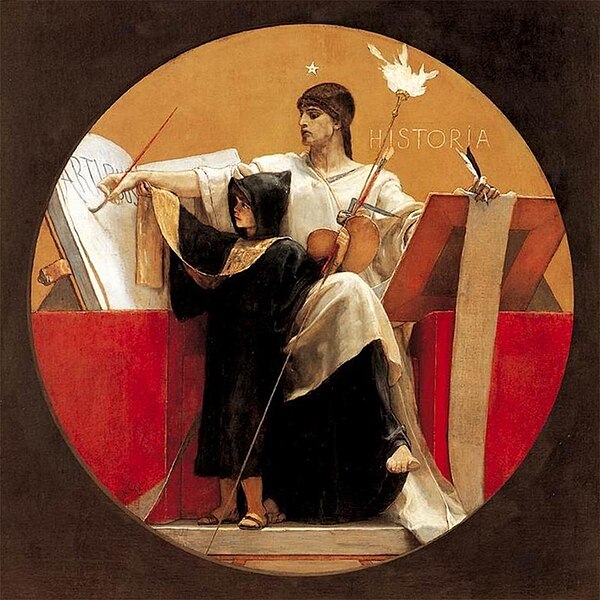
 Nikolaos Gyzis – Historia. 1892. Wikimedia Commons.
‘That men do not learn very much from the lessons of history is the most important of all the lessons that history has to teach’
Aldous Huxley
Why have I described studying and learning from history as a ‘life-changing triumph?’ What difference will it make to our lives?
Learning from history is something that many people do not do; some cannot even recognise that it is crucial to do so for a sense of peace and happiness. The lessons of the past can, indeed, change our lives, if only we would heed them.
 The Genius of History – Sebastiano Conca. Wikioo
‘Study the past and you would define the future.’
Confucius
The above quotation is replete with wisdom, for, in studying and understanding the past, we can learn much about patterns of human behaviour, about cause and effect, consequences and outcomes.
It is important to listen to the messages of the past, the cautionary tales, the learning and the wisdom. These messages are there for us to hear; it is because people are not mindful of such messages that the same patterns of thinking and behaviour are repeated over and over.
‘If you want the present to be different from the past, study the past.’
Baruch Spinoza
 Bill Woodrow. Listening to History, 1995 Bronze. Wikimedia Commons.
“Everything has been said before, but since nobody listens we have to keep going back and beginning all over again.”
Andre Gide
It is to be hoped that, each time we go ‘back to the beginning,’ we will learn a little more, but this is, sadly, not always the case. Individually and globally, human beings tend to keep on repeating the same mistakes, often with catastrophic consequences.
- Repeating patterns, socially & globally
 Wrong – Gene Davis. 1982. Wikioo
“History is an endless repetition of the wrong way of living.”
Lawrence Durrell
What does Durrell mean when he refers to ‘the wrong way of living?’ Whilst issues of right and wrong are subjective and open to diverse opinions, it would be unrealistic to deny that there are some things in life that are definitely wrong, perhaps immoral, cruel, criminal and dangerous to self and other.
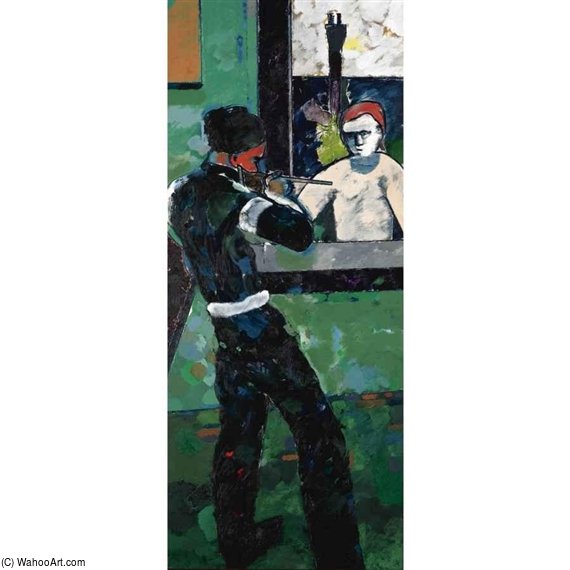
Starting A War – Ronald Brooks Kitaj. 1980-81. Wikioo
History is made by human beings, some of whom are lacking in foresight, hindsight or impulse control; they do not possess the ability or desire to look back and see what they might be repeating.

José Clemente Orozco – The Demagogue. 1946. Wikimedia Commons
‘Wrong’ ways of living are exemplified by brutal tyrants, those warmongering and patriarchal leaders, destructively and wantonly violent.
Throughout history, we can trace those dictators who have told lies and untruths, which have served to deny the reality of blatant cruelty and the lust for power and domination.
We can see how such behaviour perpetuates poverty, terror, the need to flee one’s country, death, disharmony and deprivation.

Declaration of War – Max Beckmann. 1914. Wikioo.
‘History is a race between education and catastrophe.’
H. G. Wells
Which will win… education about historical repeated patterns of human behaviour or catastrophe? Sadly, catastrophe often appears to win the race.
On a much smaller scale, although equally destructive, repeating negative patterns in relationships, if not recognised and addressed, can cause rifts and break-ups.
 War – Patrick William Adam. Wikioo.
“We learn from history that we do not learn from history.”
Georg Hegel

Sickert, Walter Richard; Off to the Pub (The Weekend); 1911.
“Perhaps the biggest tragedy of our lives is that freedom is possible, yet we can pass our years trapped in the same old patterns.”
Tara Brach
- Gaining understanding
Once we recognise and understand such historical patterns, through the messages and clues the past can offer us, we can take steps to avoid them, and hopefully be able to change the outcome.
Concepts such as reparation, remedy, self awareness, tracing patterns and learning from our own and others’ mistakes, are alien to many, and sadly, to some of those with great power.
Detecting the key patterns and sequences of human behaviour that lead to catastrophe in society very much needs to be a part of our study of history.
With a questioning mind, with some critical and analytic thinking and with the crucial perspective that understanding history can give us, it can be possible to work towards creating different, and more peaceful outcomes, both personally and globally.
- Learning from history in therapy

History Repeating Myself, Lizza Littlewort 2015. Wikimedia Commons.
‘Those who don’t know history are doomed to repeat it.’
George Santayana
Psychoanalytic psychotherapy relies heavily on history, for without this knowledge, there can be no links made to past experience. This means that there will also be no understanding of where feelings and behaviour that are experienced today may have originated.
Understanding is crucial in terms of the relationship between past and present. There needs to be a recognition of how past experiences affect the present in terms of our ways of relating to others.
‘Psychoanalysis is a sort of individual history, an embryology of the personality.’
Jean Piaget
Discovering such repeated patterns in therapy is vital to understanding what happened in the past, what is happening in the present, and the relationship between therapist and client.
Patterns of behaviour that may be adversely affecting our lives and relationships are repeated unless they are identified and brought into awareness. These patterns will be recognised and explored in therapy.
Past behaviours and feelings will also inevitably be replicated symbolically in the therapy relationship. Any relationship problems we have outside the therapy, most likely originating in the past, will be replayed in the relationship with our therapist.
The space between therapist and client becomes a kind of ‘theatre’ in which to reactivate and re-enact aspects of one’s past experience, an arena within which to explore sometimes self-defeating ways of being in relationships.
Feelings and behaviours towards the therapist will inevitably reflect aspects of the client’s feelings about early caregivers.
This is called the transference. It enables such issues to be highlighted in the here-and-now of the therapy situation, making them available to be worked through.
‘We repeat what we don’t repair.’
Christine Langley-Obaugh
- Changing those patterns: experiencing chaos

‘Evolve.’ by Ivo Ringe, Etching on handmade paper. 2020. Wikimedia Commons
‘History, despite its wrenching pain, cannot be unlived, however, if faced with courage, need not be lived again.’
Maya Angelou
Angelou’s inclusion in this quote of the word ‘courage’ is significant, for it does indeed take courage to face oneself and one’s past in psychotherapy.
Exploring the ‘wrenching pain’ and chaotic feelings and thoughts triggered by past experiences is very difficult; it is as if we are reliving and going back into them.
In psychotherapy, clients bring their internal chaos, that is, unclear and disordered states of mind, confused ways of thinking and feeling, their depression, anxiety and dysfunctional marital and family systems.
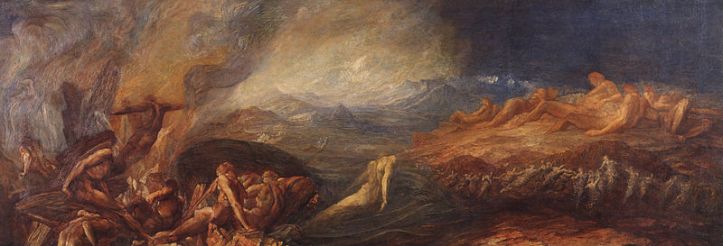 Chaos. From The Workshop Of George Frederic Watts. c 1875. Wikimedia Commons.
“Somewhere along the way we all go a bit mad. So burn, let go and dive into the horror, because maybe it’s the chaos which helps us find where we belong.”
robert m drake
To help us manage such ‘messy’ feelings, as we are going through such experiences in psychotherapy, it is definitely helpful to consider the wise words of Winnicott:
‘The catastrophe you fear will happen has already happened.’
Donald Winnicott
Winnicott is referring to the fact that those who have had difficult and frightening experiences in the past may feel afraid, confused and chaotic in the present, but in reality, these current fears are a memory; they are, in fact, history revivified.
Our histories may, indeed feel like chaos as we look back- a jumble of experiences, feelings, happenings, fears and dreams. Chaos is evident in the muddle of past and present thoughts, feelings, and behaviour patterns.
However, within this internal chaos, there will be structure, meaning, explanations.
‘To study history means submitting to chaos and nevertheless retaining faith in order and meaning.’
Hermann Hesse
There are lessons to be learned, about discovering the patterns and fractals in our own lives.
“Within the chaos of our shame and disappointment and rage there is meaning, and within that meaning is the possibility of rescue.”
Cheryl Strayed
In looking back meaningfully to our past experiences in therapy, we can reflect on fractal patterns of thinking and behaviour, repeated through the generations. These are important to recognise, so that we can work at changing patterns that are not helpful to us.
This is a way of detecting some kind of order within our chaos. Like history, our lives are full of family patterns from generations back, shaping our distinct ways of thinking, seeing and being in the world.
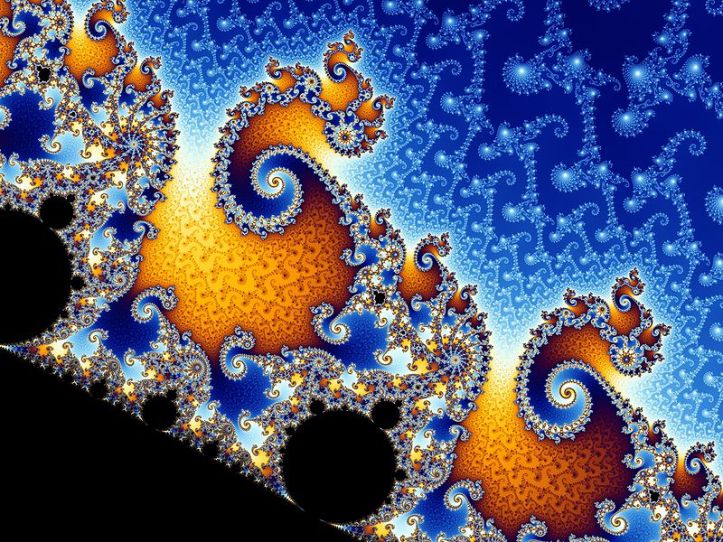 Fractal: Partial view of the Mandelbrot set. Step 4 of a zoom sequence: The central endpoint of the “seahorse tail” is also a Misiurewicz point.
“History is fractal. The closer you look, the more complicated, yet always repeating patterns.”
Ted Nelson
 Shane Taremi. Looking Back to Look Ahead! 2016. Flickr
“My life seemed to be a series of events and accidents. Yet when I look back, I see a pattern.”
Benoit Mandelbrot
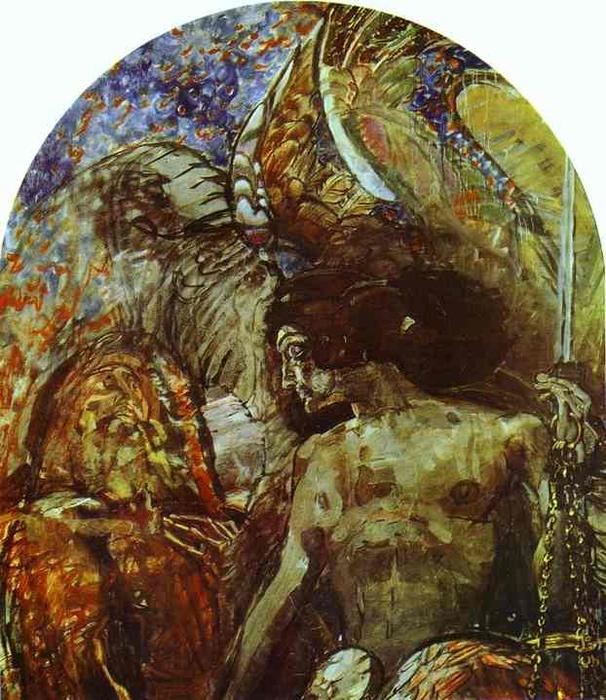
Prophet – Mikhail Vrubel. 1898. Wikioo.
‘The historian is a prophet looking backward.’
Karl Wilhelm Friedrich Schlegel
*****
If you value my posts, I’d be grateful if you would show me your support by following this blog and becoming part of my fast-expanding list of followers. You’ll receive updates about the next blog post to your email inbox each week. Thank you! Linda.
© Linda Berman.
 waysofthinking.co.uk