
Have you always had difficulty saying ‘no’ to other people? Do you feel guilty or uncomfortable if you do not meet others’ needs? Here are three important points to think about in terms of resolving this issue…
- Establishing personal boundaries
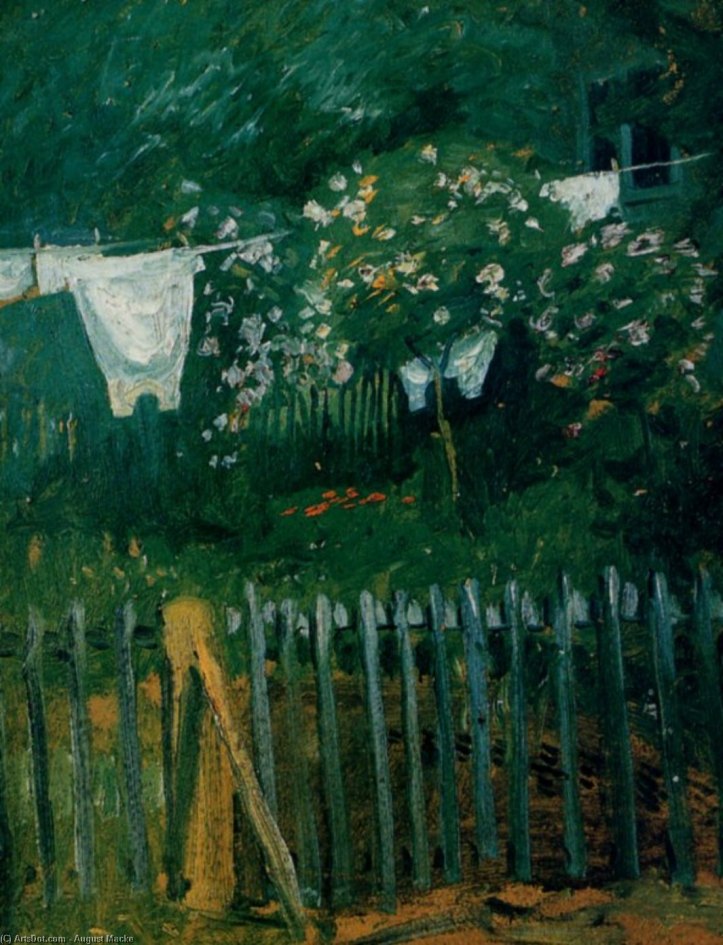 Laundry in the Garden. August Mack. Wikioo
“Healthy boundaries are not walls. They are gates and fences that allow you to enjoy the beauty of your own garden.”
Lydia Hall
Saying ‘no’ is about creating healthy boundaries. As the above quotation implies, these are permeable; they also need to be elastic, to enable us to be flexible within them.
Our personal boundaries represent the rules that each of us makes about how far others can go in terms of relating to us. Boundaries protect us from hurt and intrusion from other people. They give us a way of delineating our own personal and physical space and ensuring our privacy.
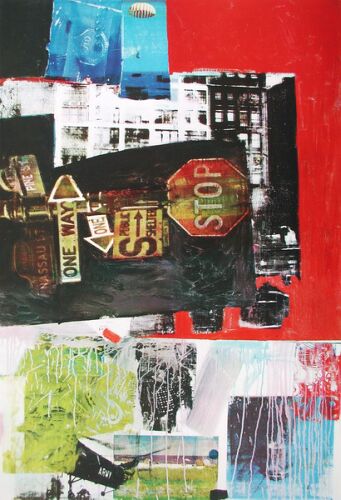
Stop – Robert Rauschenberg. 1963. Wikioo.
Boundaries signify that ‘You may go this far and no further!’ We all have the right to them and they are our own responsibility to set as we choose. They are certainly a way of saying ‘no’ to people or requests that we do not want.
We can use words, body language, signs or actions to make it known that we will not have our personal boundaries violated.
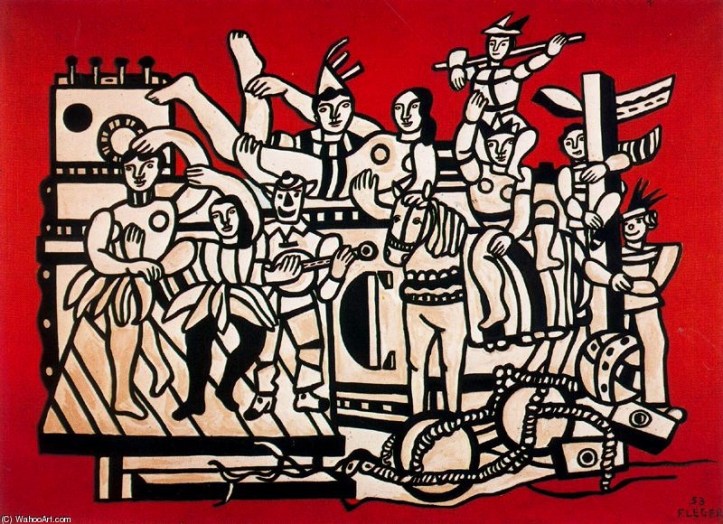 The great stop on a red background – Fernand Leger. Wikioo.
“Those who get angry when you set a boundary are the ones you need to set boundaries for.”
J.S. Wolfe, The Pathology of Innocence
There are, indeed, people who may protest vociferously if we establish firm boundaries for ourselves. As the quotation above accurately states, they are the ones for whom we need to set the clearest and strongest boundaries. It is important to send out the message that our boundaries need to be respected.
For example, if people speak to us badly, in a demeaning or offhand way, or if they make unreasonable demands, we can demonstrate that we will not tolerate such inconsiderate treatment.
Such boundaries define our limits and guidelines, so that those around us will know what we will permit, both physically and mentally, and what we will not.
These personal parameters help to assert our human rights, delineating our own space, physically and emotionally. They are about saying ‘no’ to people who attempt to ignore our limits, as well as to those who make reasonable everyday requests that we do not wish to engage with. There is no need to provide excuse or explanation if we do not want to.
Being ‘nice’ is all very well, but when someones tries to break boundaries, it is important to be firm and assertive. One can still be kind and thoughtful and maintain good boundaries.
Learning what we want and do not want to do and communicating this to others is a crucial part of setting boundaries for ourselves. It is therefore important to be sufficiently aware of one’s own wants and needs and to be able to express them.
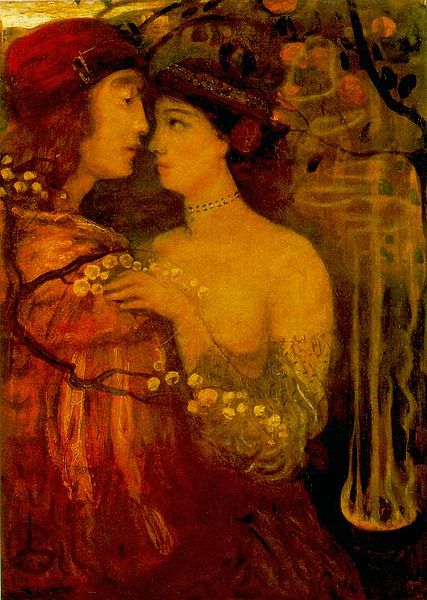
Magic by Lajos Gulácsy (1906–1907) Wikimedia Commons
“When you say ‘Yes’ to others, make sure you are not saying ‘No’ to yourself.”
Paulo Coelho
In all relationships, no matter how close and loving, there need to be personal boundaries. Each partner must learn to respect the other’s separateness, individuality, personal identity, interests, beliefs and preferences. In other words, a healthy relationship acknowledges and upholds otherness and difference.
Without this, one person might be subsumed by another’s opinions, rules and beliefs, merged into an unhealthy unit of control and submission.
2. Putting yourself first
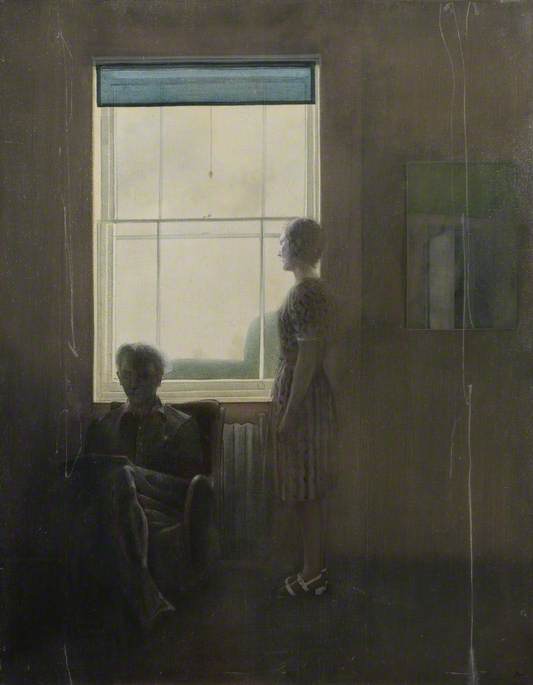
The Relationship – David Tindle.b. 1932. Wikioo
“Love yourself enough to set boundaries. Your time and energy are precious. You get to choose how you use your time. You teach people how to treat you by deciding what you will and won’t accept.”
Anna Taylor
Putting ourselves first does not mean that we are choosing to be selfish and not thinking of others. On the contrary, it is important to understand that, unless we value and know ourselves and establish a firm sense of our own self-worth, we cannot really relate with authenticity to other people.
“Saying no can be the ultimate self-care.”
Claudia Black
Being able to say ‘no’ at the right time for us is very much part of being authentic, true to ourselves. Below are some relevant quotations and images to emphasise and illustrate these points:
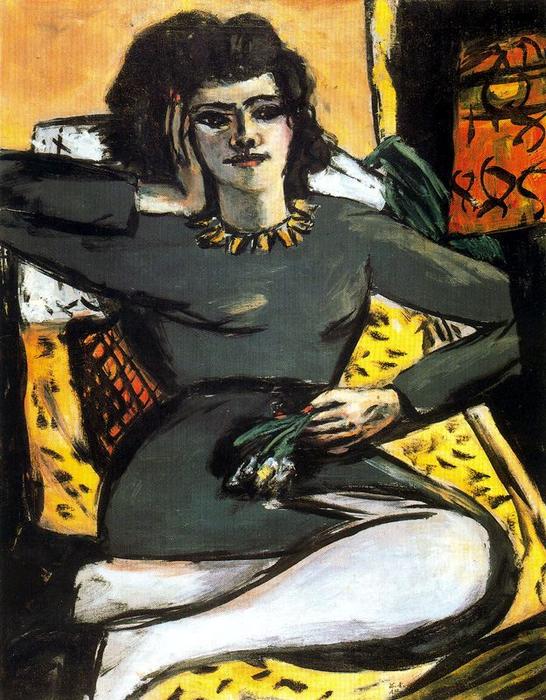
Resting Woman with Carnations – Max Beckmann. Wikioo
“To fully relate to another, one must first relate to oneself.”
Yalom
 Karl Hofer – Bathing Hindu Girl [1913]Wikioo
“If you have the ability to love, love yourself first.”
Charles Bukowski
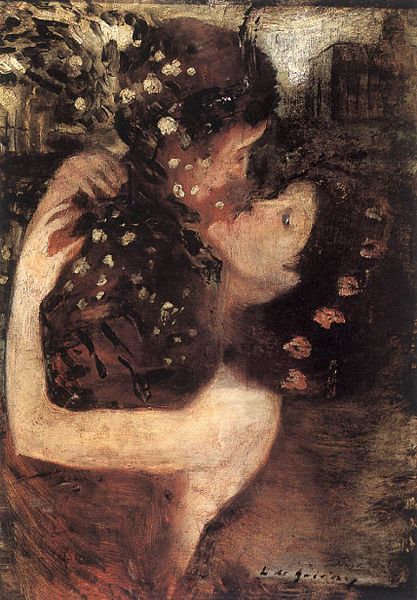
Gulácsy, Lajos – Ecstasy (c 1908)Wikimedia Commons
“We can truly love one another once we love who we are.”
Angela C. Santomero
3. Understanding the need to please everyone
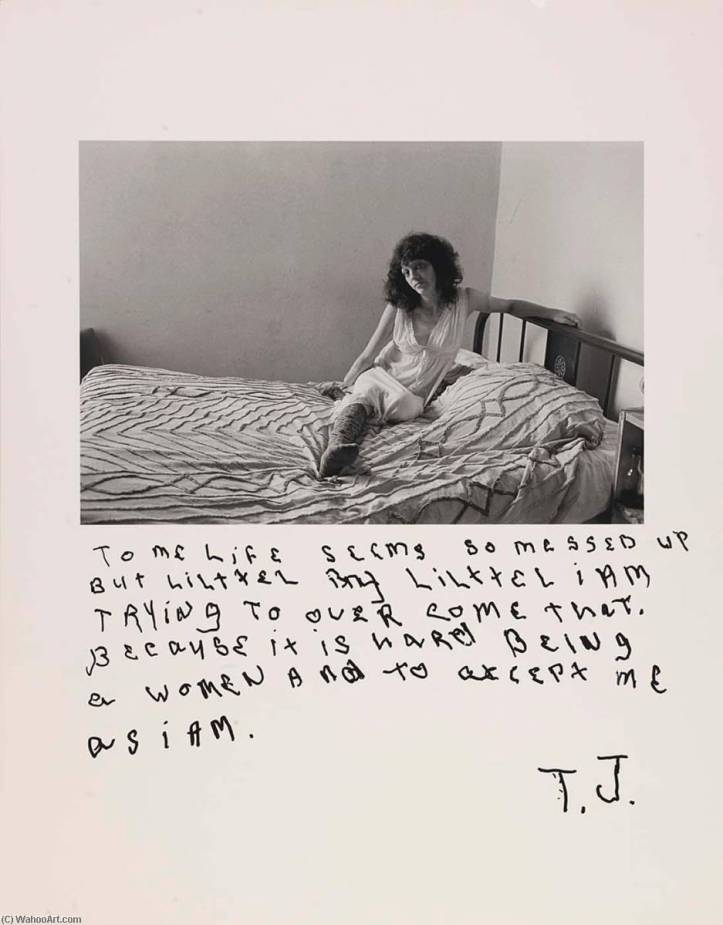 Untitled. Jim Goldberg. 1982. Wikioo
“You can get totally messed up trying to please everyone with what you do, but ultimately, you have to please yourself.”
Pierce Brosnan
Being a people-pleaser and always saying ‘yes’ to others’ demands is hard work and detrimental to health and wellbeing. It is exhausting to have to keep fitting in with other people’s thoughts and ideas and not to have developed or recognised one’s own ways of thinking.
Pleasing others, doing what they want, adapting to their needs, being compliant, continually craving acceptance, are all a denial of oneself, of one’s identity and individuality.
Constantly being accommodating and longing for acceptance by others will become a fruitless and self-destructive quest.

The Fool Who Would Please Every Man, 1903, Byam Shaw. Wikioo.
If we are people-pleasing much of the time, then we are risking becoming driven, overworked and burnt out. We will be missing out on leisure, relaxation, family and friendships as we endeavour to fulfil other people’s requests and obey their wishes.
Where does a difficulty saying ‘no’ originate? The unfortunate old saying ‘Children should be seen and not heard,’ is one that has silenced children’s voices for years. This attitude denies children’s rights, their individuality and their personhood.
The message in this old saying is also that children, who are not wise, should listen to adults who are automatically wise, and learn from them, in silence and with mute obedience… certainly never saying no.
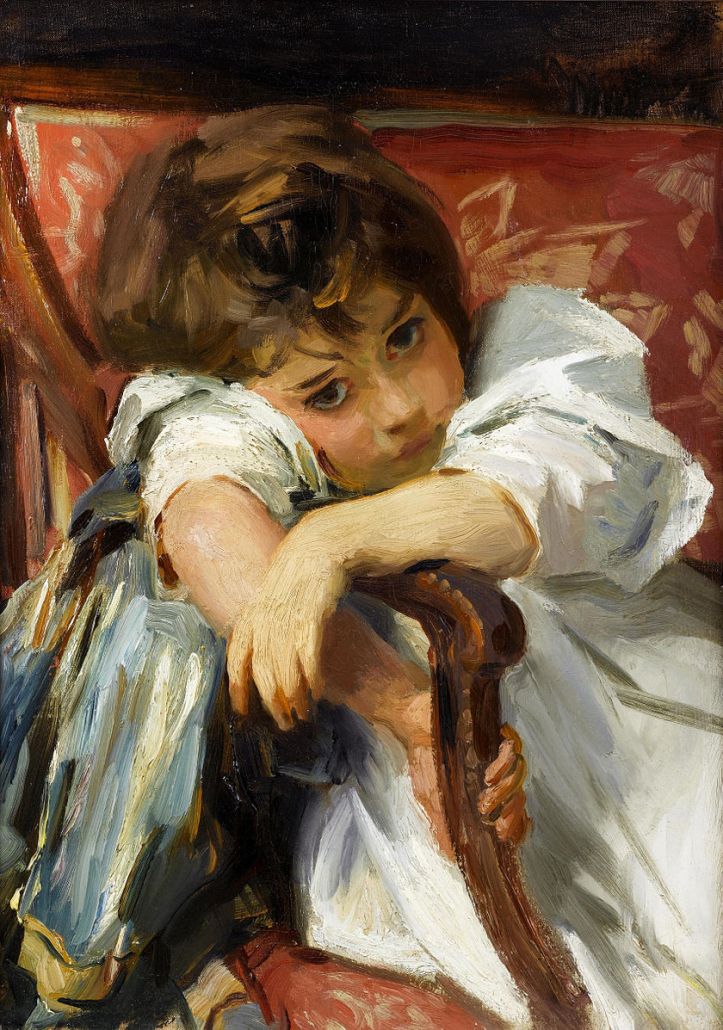 John Singer Sargent (1856-1925) Portrait of a Child. After 1900. Wikimedia Commons
“It is my deepest conviction that the children should be seen and heard as our most treasured assets.”
Nelson Mandela
Mandela’s statement is full of truth; the age-old, repressive attitude that advocates children being silent will result- and has resulted- in an embargo on real feelings, and a stifling of children’s developing curiosity and selfhood.
It will likely produce a tendency to fit in with others, to adapt to their ways, to deny true beliefs, thoughts and feelings. Saying ‘no’ to anyone or anything will not be on their agenda.
Such behaviour patterns are hard to rid ourselves of. Therapy may be needed to help with this, so that we might uncover who we really are beneath the layers of mutely pleasing others.
Many of us try to please others to some extent, but if this is done to excess, it can be depleting of both energy and spirit. It will mean that we cannot be our true selves.
Often, the roots of this lie in our past, with unmet needs to be loved, seen and heard, which can continue into adulthood. Being able to break free of such restrictions is a liberating experience.
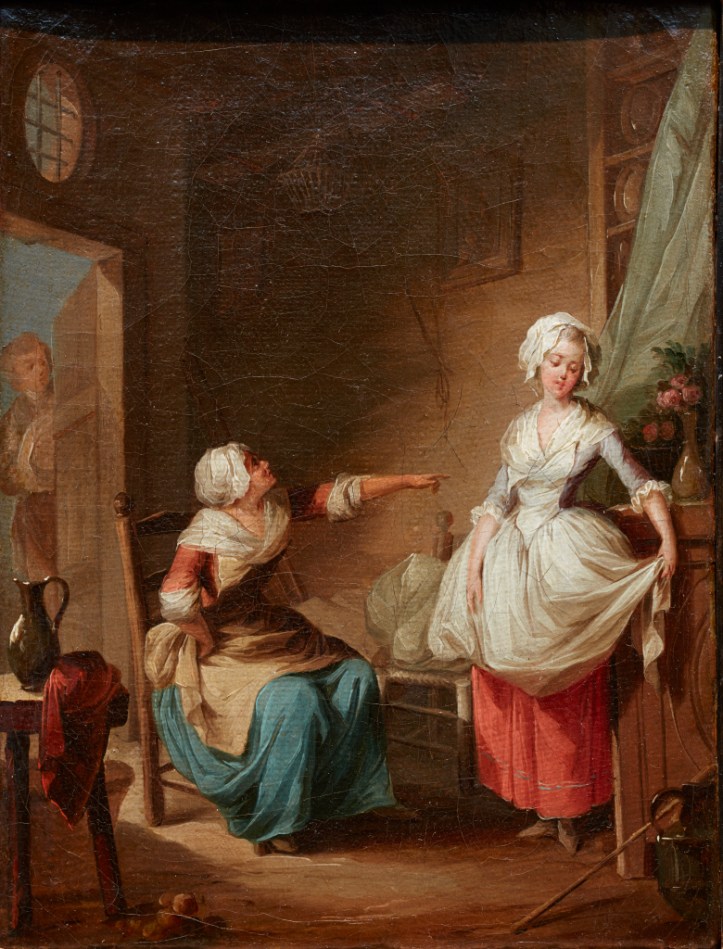 Louis Maries Marc Antoine Bilcoq, The Maternal Reproach. 1785-1800. Wikimedia Commons
“The paradigm of Western culture is that the essence of persons is dangerous; thus, they must be taught, guided and controlled by those with superior authority.”
Carl R. Rogers, A Way of Being
Rogers’ excellent quotation underlines the fact that our culture sees people as innately bad, needing to be controlled and firmly advised by others around them who ‘know better.’ There is no sense of trusting another person as an equal and bringing out their intrinsic self-knowledge; they must always say ‘yes’ obediently to the other’s ‘superior’ advice.
The truth is that no-one knows what is right for anyone else. As parents and therapists we can only be there for others, helping them find who they really are and what they want and need in an atmosphere of safety, love, acceptance, empathy and care.
Many children grow up having to fit in, to mould themselves, and be moulded, into another person’s design. They have to pretend to be someone else, someone other than they really are. They often feel as though they cannot go against the general flow and say ‘no’ to anything.
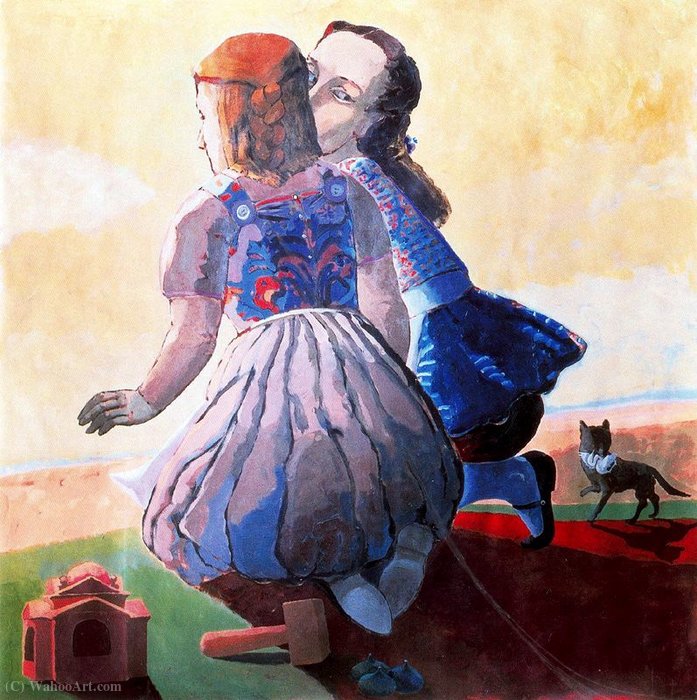
Untitled (612) – Paula Rego. Wikioo
“All too often women believe it is a sign of commitment, an expression of love, to endure unkindness or cruelty, to forgive and forget. In actuality, when we love rightly we know that the healthy, loving response to cruelty and abuse is putting ourselves out of harm’s way.”
Bell Hooks, All About Love: New Visions
This pressure to be meek and accepting can be disabling and dangerous…we need to teach our children that they do have the right to say no,(if circumstances allow; this might not be possible) or, if they can, to run away when they feel uncomfortable with, abused or threatened by, someone.
They also have the right to speak out and to be assured that the only guilty person in any form of abuse is the perpetrator.
Perhaps, to varying extents, many of us have experienced difficulty saying no, especially when we are likely to be criticised or vilified for doing so. Many amongst us were not allowed to express true feelings as children, to show anger, unhappiness, discontent, disagreement.
In some families there is a pressure to constantly comply with others, to adapt to their ways, to deny our own wishes and needs, thoughts and feelings. Thus the children have to develop other, false selves, masks, inauthentic personae, in order to feel acceptable.
One kind of ‘mask’ is based on a deferential willingness to always say ‘yes.’ It may cover the very opposite feelings, such as anger and a desire to break out, to escape such behavioural strictures, to loudly and clearly say NO!!!

“No is a complete sentence.”
Sharon Rainey
Many people spend their lives trying to please others and have long ago lost touch with their real self; such behaviour patterns are hard to rid ourselves of. Therapy may be needed to help with this, so that we might uncover the real person hiding beneath the layers of continuous adaptation.
Do you allow people to tell you what to do? Do you take on board what others say without a questioning attitude?
There are times when it is important to say ‘no’ to other people’s ideas and to the pressure to conform to their views; we need to learn to value ourselves and our opinions, even when we may be a lone voice in the crowd.
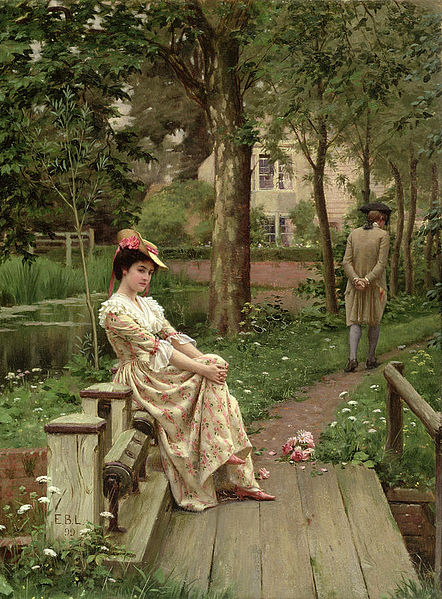
Edmund Blair Leighton, ‘Off,’ 1899. Wikimedia Commons
One way of practising being assertive is to say ‘no’ first in one’s head when asked for something; we can always change this to a ‘yes’ after we have considered it.
Similarly, saying something like ‘let me think about that’ gives us times and stops us from making an automatic response of ‘yes, of course!’ This may have become a knee-jerk reaction if we have not had the experience of saying ‘no.’
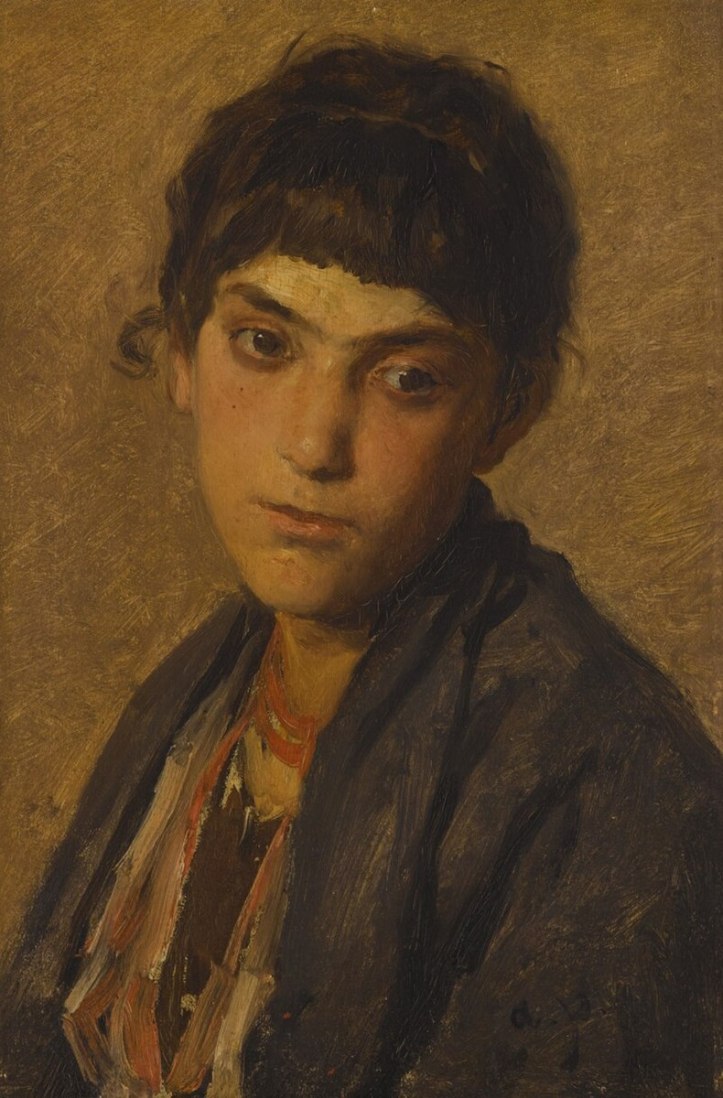 August von Pettenkofen. (1822-89) A Thoughtful Pause. Wikimedia Commons
“Between stimulus and response there is a space. In that space is our power to choose our response. In our response lies our growth and our freedom.”
Viktor E. Frankl
The opportunity for ‘growth and freedom’ does indeed lie in that space that Frankl describes; we can also, if we choose, extend the space and say, as mentioned above, that we need more time to consider.
Doing this gives us a boundary, and a space within it to decide how best to respond in a way that pleases us. The kind of questions we need to ask ourselves in this space are not ‘should I say yes’ but ‘do I want to?’ People who cannot say ‘no’ are often beset by ‘shoulds’ and oughts,’ rather than feeling that have a choice.
Allowing ourselves to be over-influenced and swayed by others’ requests indicates that we need to set these boundaries, to know ourselves and our views, and have the confidence to be authentic enough to say ‘no’ when appropriate for us.
© Linda Berman
I do hope you will not say ‘no’ to my request to follow my blog! x
 waysofthinking.co.uk
What a delightful and thorough description of boundaries.
LikeLiked by 1 person
Beth, thank you so much for your comment. So pleased you liked my post and my writing on boundaries! 🙏🌹
LikeLike