
- New beginnings
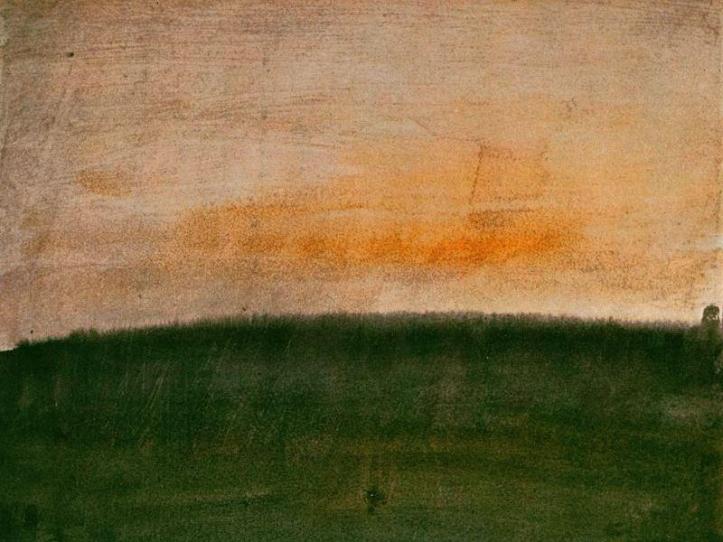 Colour Beginnings the Pink Sky – William Turner. Wikioo.
“Every new beginning comes from some other beginning’s end.”
Seneca
As we begin 2024, it seems a good time to reflect, take stock, reassess our lives and our ways of thinking. Seneca’s words, above, remind us of an important fact, and may help us to feel a little comfort when there are endings or loss.
New beginnings can be both exciting and scary, for they are about uncertainty, unpredictability and the unknown. At the same time, they can be full of promise and potential, real opportunities to start anew.
The Seneca quotation points to the fact that as time passes, we journey on in a kind of spiral, moving from beginnings to endings and then back -or forward- to more beginnings again.
“There are patterns which emerge in one’s life, circling and returning anew, an endless variation of a theme.”
Jacqueline Carey
Each time we encounter new beginnings, we are a little wiser and a little further up the spiral of life.
This repetitive upward movement through time gives us a chance to change, to be creative and to grasp new opportunities so that we can become whoever we want…
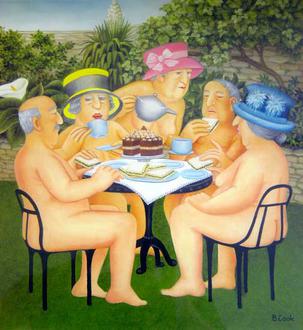
Tea in the Garden by Beryl Cook. Wikipedia.
“You are never too old to reinvent yourself.”
Steve Harvey
- Becoming authentic
 Flora Borsi – Ugly Duckling [2018]
“The ugly duckling is a misunderstood universal myth. It’s not about turning into a blonde Barbie doll or becoming what you dream of being; it’s about self-revelation, becoming who you are.”
Baz Luhrmann
Becoming one’s authentic self can be the work of a lifetime. Carl Rogers, in his book ‘On Becoming A Person,’ extended the meaning of the word ‘becoming’ to include the therapeutic experience of self-development, of discovering the self, of ‘congruence,’ of being true to one’s authentic self.
He sees this as a flowing, developing and unfolding journey…
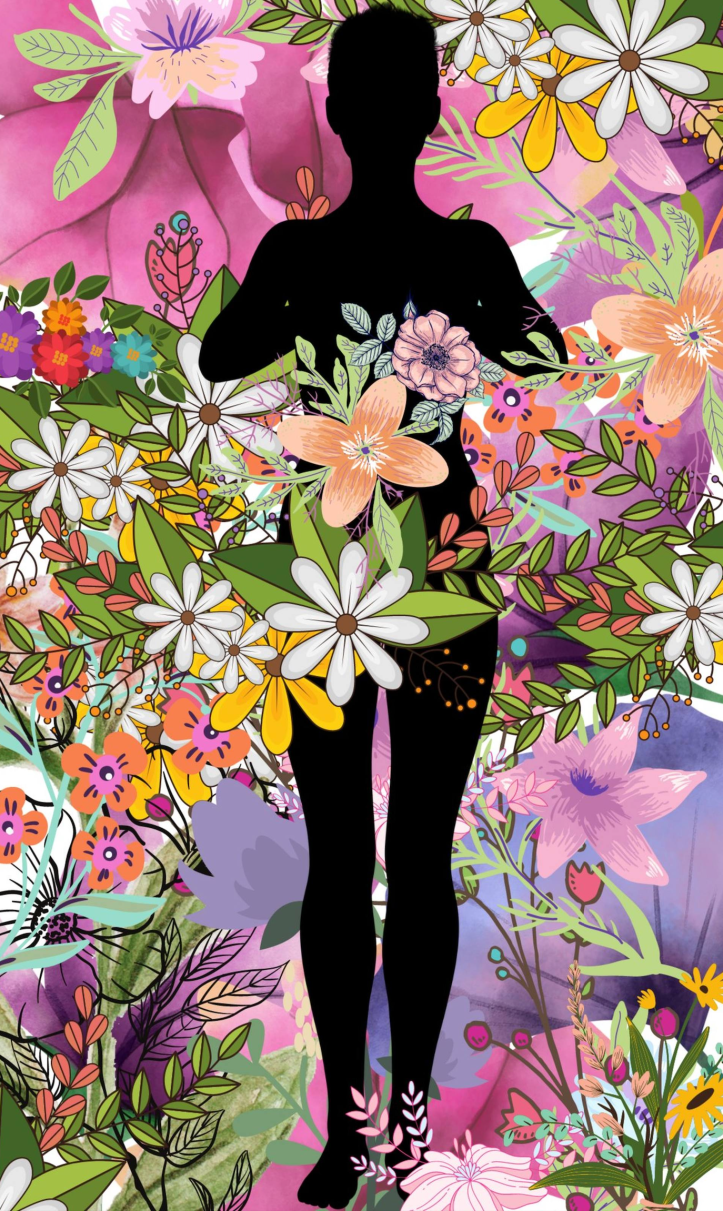 Mona Vayda – Portrait Silhouette Series No. 18 [2021] Gandalf’s Gallery. Flickr
“It is never too late to be what you might have been.”
George Eliot
There are times when people prevent themselves from starting something new, saying that they are too old or it is too late. Perhaps they look back on their lives with regrets and disappointment.
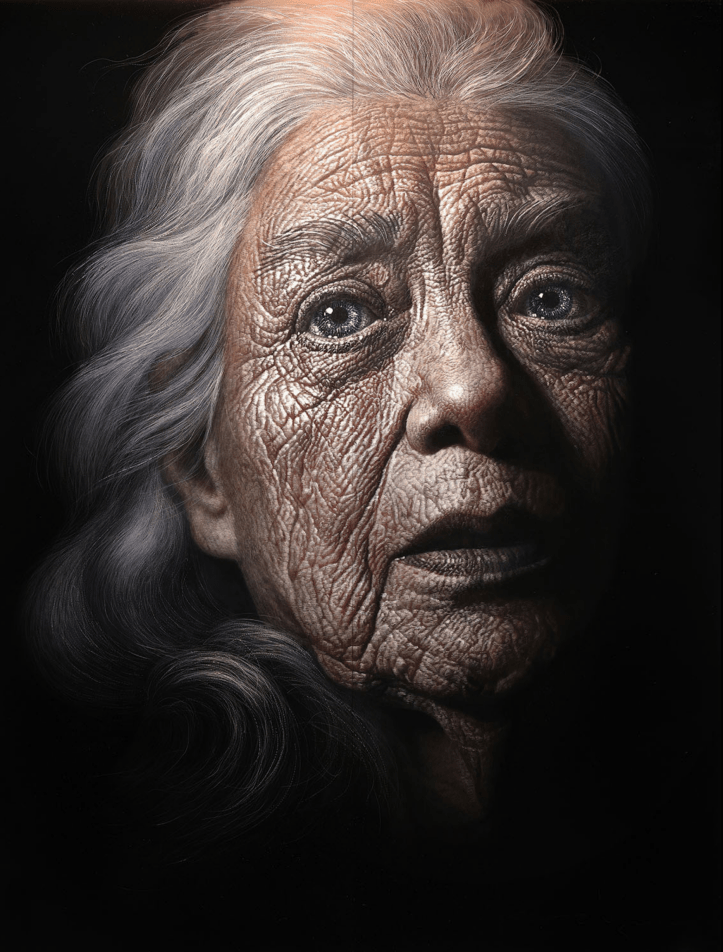 Han Young Wook – Face [2022] Gandalf’s Gallery, Flickr
However, taking the risk to move forward, no matter how old we are, or how late we perceive it is, can mean that we are able to live a fulfilled life, follow our dreams and be whoever we want to be, right till the end.
In later life, we can still move on and change, even if society’s expectations try to discourage the realisation of our dreams, stereotyping the older person as ‘past it.’
- Letting go: choice and change
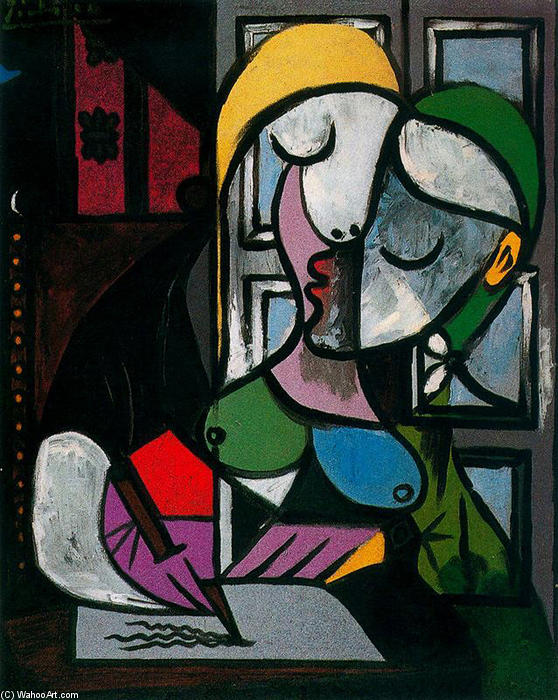
Woman Writing – Pablo Picasso. 1934. Wikioo.
“New year—a new chapter, new verse, or just the same old story? Ultimately we write it. The choice is ours.”
Alex Morritt
Although sometimes it may not seem like it, we do, mostly, have some choice over the course of our lives. We can, indeed, write a new story. We can choose to do – or be – something different this year.
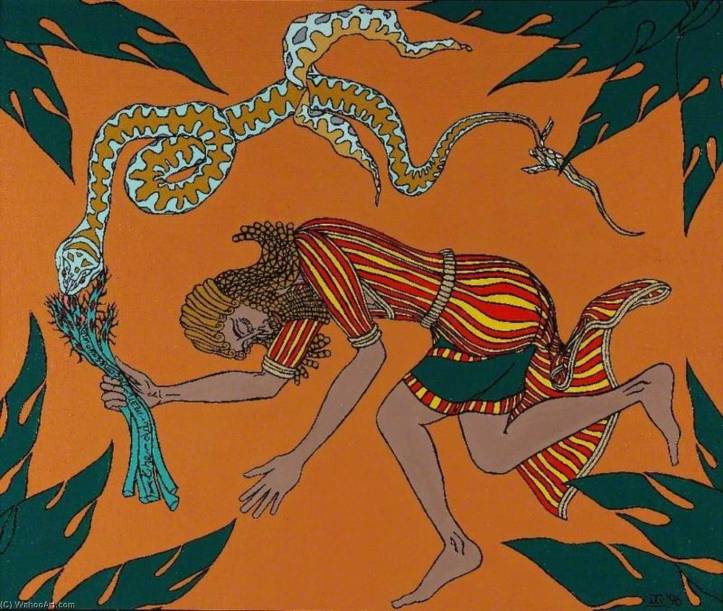 The Snake Sheds Its Skin – Dez Quarréll. 1996. Wikioo.
“We must be willing to get rid of the life we’ve planned, so as to have the life that is waiting for us. The old skin has to be shed before the new one can come.”
Joseph Campbell
Campbell could be referring to working on the self in therapy, for there we may ‘get rid’ of old, unrealistic dreams, out of date plans and stale, set ideas about ourselves and others. These can really affect our current lives in a negative way.
However, we cannot shed this ‘old skin’ until we have explored and recognised its hampering effect on our current lives.
We may need to look back, in order to discover the roots of our own behaviour and begin to understand how it affects us in the present. Having worked these through in therapy, then we will, hopefully, be relieved of the burden of our ‘old skin.’
- Freedom from bias
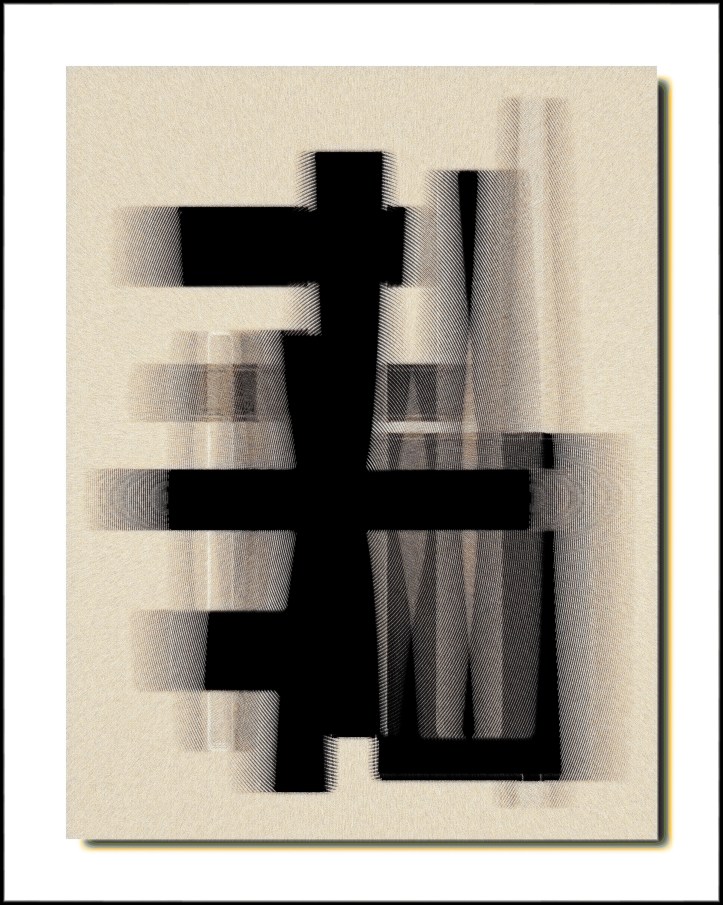 Howard Duncan. Bias. Digital art. 2018. Flickr.
“People who accomplish a great many things are people who have freed themselves from biases. These are the creative people.”
Milton H. Erickson
Erickson is saying that our biases and set ideas stand in the way of us being productive and creative. Why is this?
Black and white thinking is rigid and extreme. It means that we see ourselves and the world in all or nothing terms; there are no in-between areas or shades of grey, only strictly dualistic ways of thinking which will result in us missing a whole range of possible ‘in-between’ choices.
This is an absolutist kind of approach to life, one that will result in a bland, repetitive, limited and bigoted mindset.
Such a partial way of being can prevent us from seeing other options and from being helpfully influenced by the ideas of those around us.
Inevitably, such an approach will lead to an unproductive “I’m always right” attitude and a lack of ability to listen, compromise or cooperate with others.
Ged Carroll. Flickr.
In order to ensure that we are fair and not unduly biased because of our own unresolved personal issues, we need to ask ourselves whether we jump to conclusions, make assumptions, or set ourselves above other people in a self-righteous manner.
We need to wonder if we sometimes evaluate others based on old, biased ways of thinking, or feel critical and see the negatives in a person before anything else.
With a binary approach to life, people, ideas, thoughts and beliefs are generally idealised or devalued; they are either good or bad, there is no in between or uncertainty, no debate, no grey areas, no reservations. There is an inability to allow ambivalence, and a reliance on absolutes and certitudes.
 Kandinsky – Rigid and Curved (Rigide et Courbé), 1935. Wikimedia Commons.
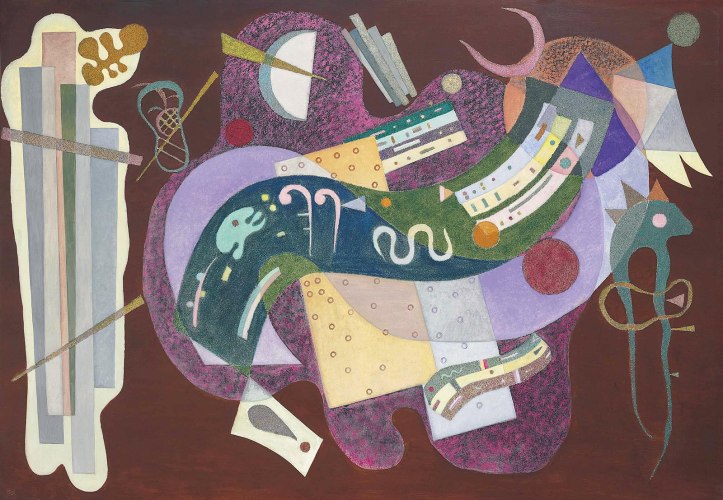
“Inflexibility is the worst human failing. You can learn to check impetuosity, overcome fear with confidence and laziness with discipline. But for rigidity of mind, there is no antidote. It carries the seeds of its own destruction.”
Anton Myrer
If we are shut inside an entrenched, doubt-free mindset, we are constrained by our own restricted, dichotomous worldview. Anything we ‘create’ will inevitably reflect this limited world view.
- Impermanence

“Begin doing what you want to do now. We are not living in eternity. We have only this moment, sparkling like a star in our hand and melting like a snowflake.”
Francis Bacon Sr.
Bacon’s words remind us directly of the concept of impermanence; life is uncertain, unpredictable and unsettling at times. We only have a fleeting grasp on it.
Nothing lasts, not joy or sorrow, so it is important not to delay acting on any opportunities that arise. Impermanence is woven intricately into the very fabric of our lives. If things go badly, this will not last. If things are good, that will not last either. Life is a journey, and we will travel though many different episodes and experiences, which change all the time, as we, ourselves, will change.
Everything is impermanent and unpredictable, except uncertainty… and not knowing what will happen next. Traversing the path of life is, inevitably, going to give us a bumpy ride. Life itself, as we all know too well, can present us with many harsh ups and downs along the way.
There will also be times when we travel through life and find places of peace, people with whom we feel happy, oases of calm and healing. These we must treasure, as the memory of them can nourish us during the hard times.
 A Footpath to Nowhere . 2004 Alistair Crawford. Wikioo
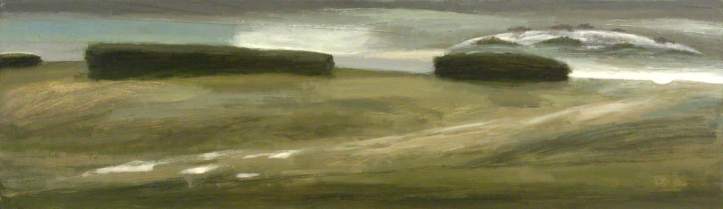
“All of us are creatures of a day; the rememberer and the remembered alike. All is ephemeral—both memory and the object of memory. The time is at hand when you will have forgotten everything; and the time is at hand when all will have forgotten you. Always reflect that soon you will be no one, and nowhere.”
Irvin Yalom
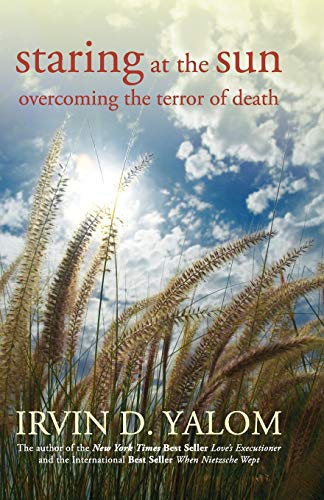
Yalom’s existential approach to therapy is designed to help people be aware of and face the grim fact that we will all die. Whatever we do or do not believe about an afterlife, it is, for many, an unsettling prospect to think about death itself, or to contemplate nothingness and non-existence in this world.
Such finality can feel daunting, intensifying fears of being wiped out, forgotten. A dread of uncertainty and of the unknown can be all-consuming at times.
Irvin Yalom’s book, Staring at the Sun: Overcoming the Terror of Death, is helpful in addressing these concerns. He inspires us to feel more accepting and peaceful about our own mortality. We are encouraged to appreciate our lives now, to feel grateful for what we do have, once we have faced the inevitability of death.
- The unimaginable
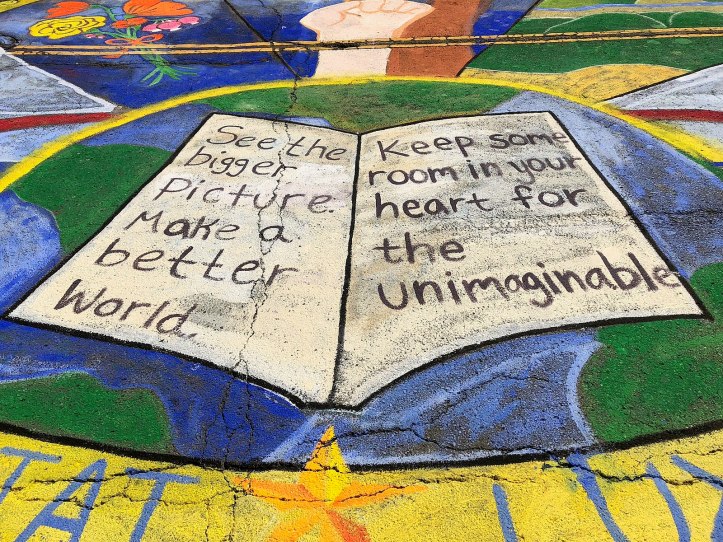 Art and Activism for Climate Action. Sep. 8, 2018. Wikimedia Commons.
“Keep some room in your heart for the unimaginable.”
Mary Oliver
The wonderful poet Mary Oliver counsels us to keep some space inside our minds for the unexpected… ‘the unimaginable.’ What does she mean by this?
My interpretation is that Oliver is saying we need to be prepared for possibilities that we cannot even envisage in our minds. If we are able to be aware that we need to ‘keep some room in our heart’ for these possibilities, then our lives can sometimes open out and become more interesting, perhaps even adventurous.
In order to do this, we may have to risk making decisions that could lead to failure…
Sadly, the unimaginable could be something dreadful, too. It could involve terrible pain, physical or mental, death-bringing viruses, loss, war, destruction.
We have to save room inside ourselves for times of incomprehensible difficulty, and unwanted change in our lives. Who could have imagined the 2020 pandemic, the lockdowns, the losses?
In order to be able to manage such times as the terrible years of Covid-19, or the loss of a loved one, we need, all of us, to develop resilience. Resilience is the capacity to withstand trouble and trauma, misfortune and crisis, and to be able to survive and recover from these with fortitude and courage.
Being resilient is having the toughness to bounce back after difficult experiences, perhaps gaining more wisdom and strength as a result of surviving all the pain and distress.
There is truth in the notion that, as Hemingway has said, we can be ‘strong at the broken places.’ Having others remind us during difficult times that we have already survived all kinds of problems in our lives gives us strength. We have pulled through in the past and we can hopefully do it again.
- Renewal
“Fairy tales are more than true: not because they tell us that dragons exist, but because they tell us that dragons can be beaten.”
Neil Gaiman, Coraline
The phoenix can rise from the ashes, new can be made from the old and the discarded, from found objects, from the remnants of past lives. We can beat dragons.
Despite the distress that we see all around, there is still beauty and joy in the world. Noticing it all around us, we learn to feel gratitude for nature’s bounties, even in the midst of grief and pain.
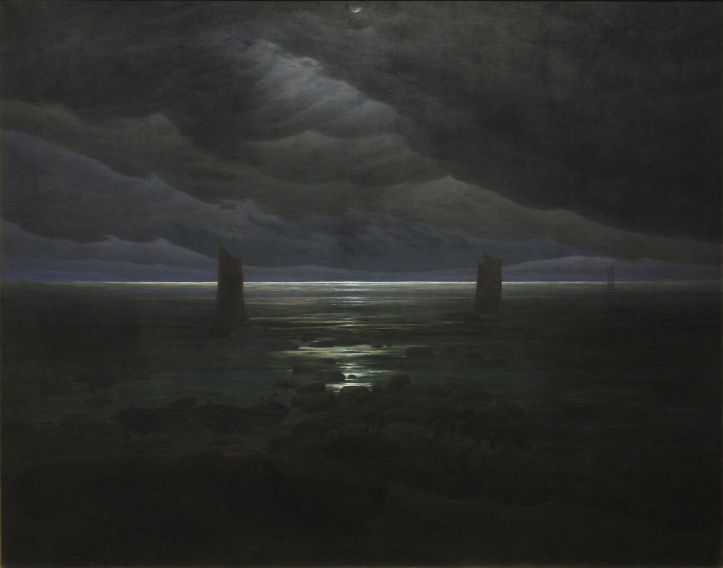 Caspar David Friedrich. Seashore by Moonlight. 1835-6. Wikimedia Commons.
“In a dark time, the eye begins to see.”
Theodore Roethke
Living for the present and feeling appreciation for what we have now is not always easy. However, it is definitely a good way of managing our life: the past is gone, the future is unknown, we only have today and this moment…
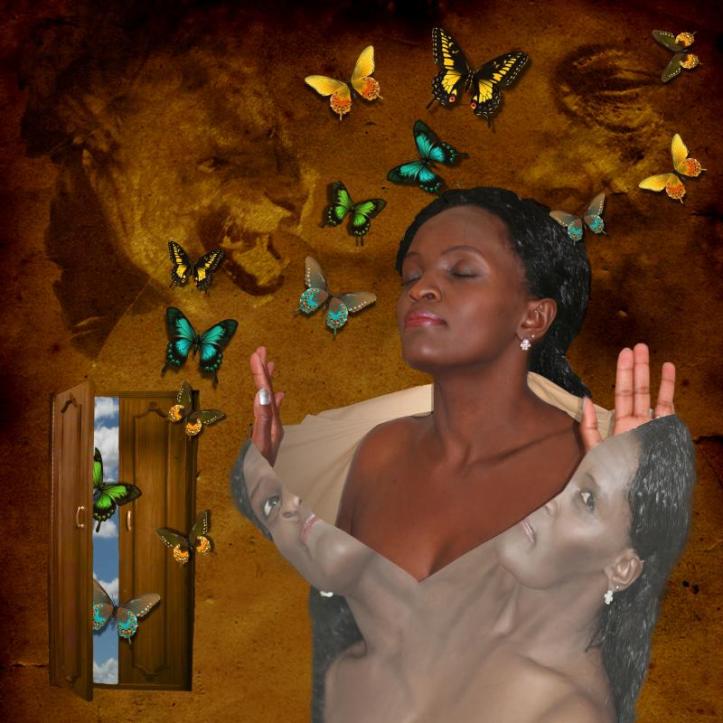 Robbert van der Steeg. Rejuvenation. 2010. Flickr.
“We must always change, renew, rejuvenate ourselves; otherwise we harden.”
Johann Wolfgang von Goethe
©Linda Berman
 waysofthinking.co.uk
… we can be ‘strong at the broken places.’
Reminded me of the Japanese art of Kintsugi, repairing broken pots with gold, silver, or platinum seams, so the breakage, and the repair, which is beautiful in itself, become part of the history of the pot, an event in its life, encompassing and illuminating change.
LikeLiked by 1 person
Absolutely! I really love the idea- and the resulting creations of kintsugi! Such a beautiful notion. 🤗
LikeLike