
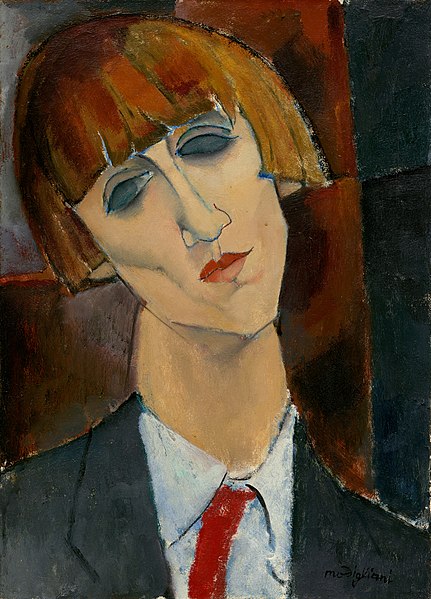
Amedeo Modigliani – Madame Kisling (ca.1917
“Indifference is the essence of inhumanity.”
George Bernard Shaw
Indifference, quite deservedly, gets a bad press. As Shaw points out, it reveals a lack of humanity, a cold absence of care and concern, an apathetic disregard for the suffering of other people.
Humanity, in contrast, is about love and compassion, caring and benevolence. Being able to empathise with those who are suffering and struggling, and showing benevolence and compassion, is crucial.
The indifferent person however, is detached, lacks affect, curiosity and interest, shows no feeling, appearing complacent and aloof. The action of ‘shoulder-shrugging’ visually expresses an attitude of indifference.
- Indifference to the suffering of others

One of the most horrifying examples of utterly extreme indifference to others’ suffering is that of the Nazi killer, Eichmann, during the second world war.
Hannah Arendt, a journalist who witnessed his trial after the war, used the term ‘the banality of evil’ to describe Eichmann’s way of mechanically obeying orders without guilt or a sense of responsibility. He could not think for himself.
In actuality, there are no words to describe this mindset adequately. Indifference is too weak a word…it is a fact that Eichmann was without thought.
“Principally, however, what Eichmann displayed was a subversion of the idea of duty, of how human beings relate to others, of what it is to be human. His behaviour represented a total failure of empathy.”
(‘Failed Empathy.’ Laub and Auerhahn)
Failed empathy is explained as the refusal of another to help in desperate need. Thus the ‘idea of man’ as a fellow traveller through life, the sense of an ‘other’ who will be alongside us, is destroyed. In its place is an emptiness, an aloneness, created by the trauma and the extreme indifference and sadism of the other, instead of empathy and love.
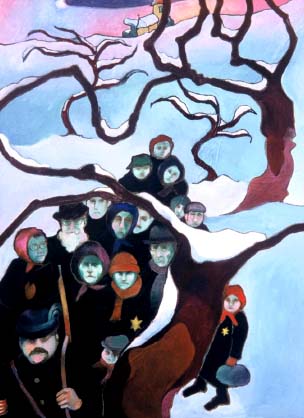
Ovidiuswiki. Holocaust, Budapest, Hungary. Wikimedia Commons.
“The Holocaust illustrates the consequences of prejudice, racism and stereotyping on a society. It forces us to examine the responsibilities of citizenship and confront the powerful ramifications of indifference and inaction.”
Tim Holden
- Indifference in relationships
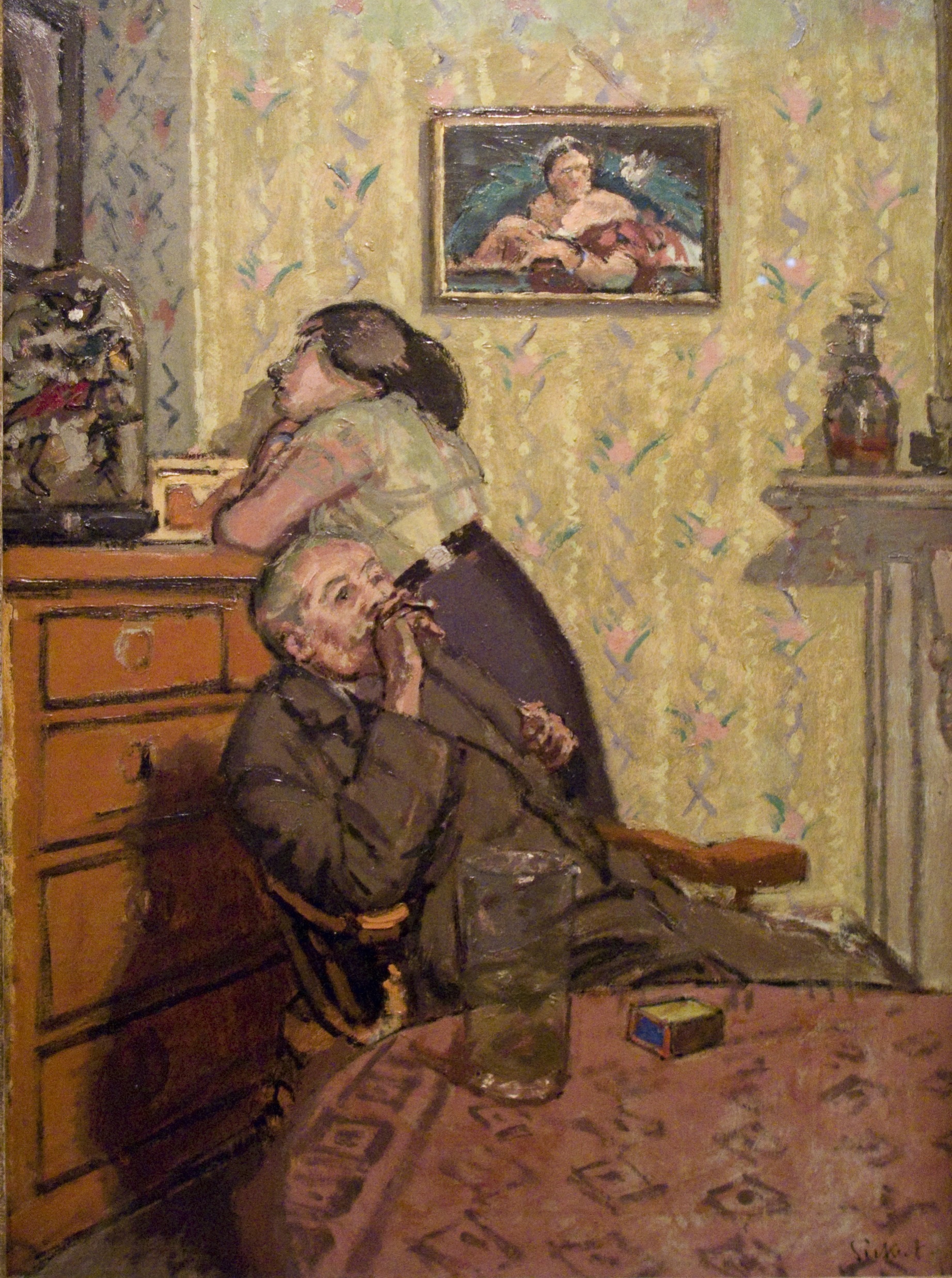 Sickert. Ennui. 1914. Wikimedia Commons
“The opposite of love is not hate, it’s indifference.”
Elie Wiesel
In relationships, indifference can be hard to bear for one or both of the couple. It is, as the quotation implies, worse than hate… at least hate embodies passion and feeling, whereas indifference is not-feeling, not-caring, just an unconcerned, bored disdain for the other.
No effort is made in the relationship; there is a kind of emotional shutdown, an apathetic disregard for anyone’s feelings. The indifferent partner may stare at their mobile phone for hours, oblivious of the effect of this on the other person.
There is no discussion, no real conversation, no intimacy, no arguments, no desire to communicate thoughts or feelings. There is only stasis, inactivity, apathy; it is a distinctively unsatisfactory and uncomfortable coexistence.
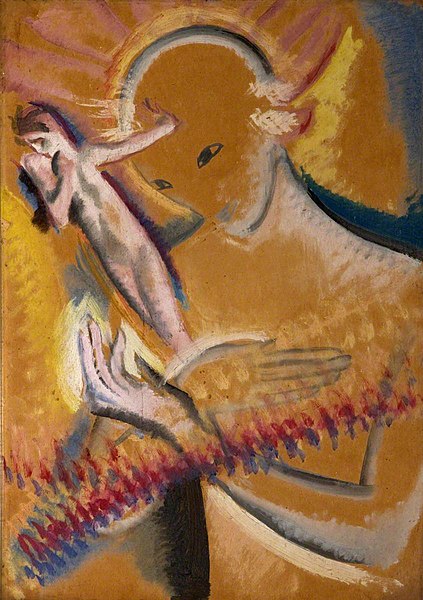
Charles Sims. Man’s Last Pretence of Consummation in Indifference.c.1927. Wikioo.
Is there a way through this kind of indifference? Well, yes, there could be, but only if there is the motivation to work things through.
Couple therapy can help people face what is happening, both personally and interactionally, and to decide if they want to continue with the relationship; it can also help them split in a more constructive way if this is what they decide.
 Forest – Arkhip Ivanovich Kuinji. 1887. Wikioo
“The only way out is through.”
Robert Frost
If there is a wish to try to work on the relationship, then there will be a need to understand the disengagement, detachment and lack of interest in the other, to go into it, to look beneath the indifference to the real feelings underneath.
Are one or both of the couple depressed, apathetic and indifferent to life generally? Has it always been like this? If not, when and why did things change?
In relation to projection, we may wonder whether one partner is projecting their own indifference onto the other, who is carrying a double dose for the couple.
Helping partners to slowly understand this and take back their projections can be a crucial part of couple therapy. For a fuller explanation of this process, please see my past blog post by pressing this link.
We may also wonder whether indifference has characterised childhood experiences for one or both of the couple and where the roots of all this lie in the past.
In addition, in time, the therapist may be able to uncover what it is that the indifference is defending against. What conflicts and pain are being avoided?
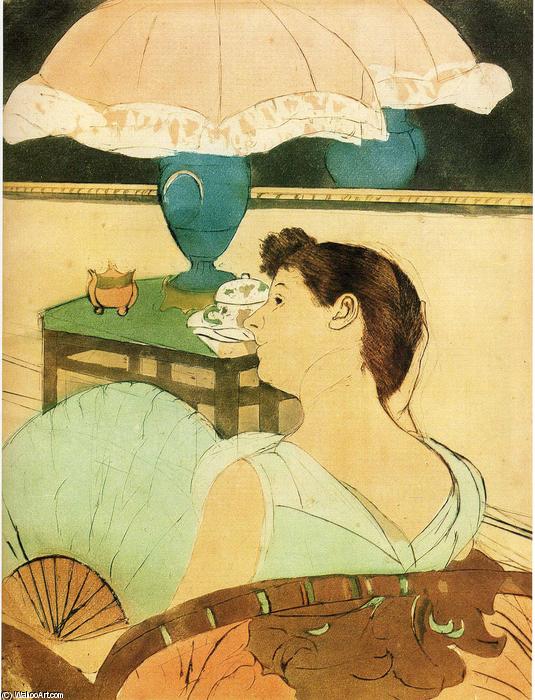
The Lamp – Mary Stevenson Cassatt. 1890-1. Wikioo.
“Love cannot endure indifference. It needs to be wanted. Like a lamp, it needs to be fed out of the oil of another’s heart, or its flame burns low.”
Henry Ward Beecher
If we can have some insight into what lies behind the indifferent behaviour, in a compassionate way, this sometimes makes it easier to relate to another with more empathy.
“True love is born from understanding.”
The Buddha
- Discovering the child in the other
 Alyssa Monks – Aiden Study [2015] Gandalf’s Gallery. Flickr.
“The most sophisticated people I know – inside they are all children. ”
Having worked in psychotherapy with many couples over the years, I have discovered that, if each can see the child self of the other, they often tend to soften and become more compassionate towards their partner.
What exactly does this mean?
The child that we once were remains inside us all. They are still there, in memories, reactions, experiences. Perhaps this child partly resides in the, unconscious mind:
“So, like a forgotten fire, a childhood can always flare up again within
us.”Gaston Bachelard
Understanding that the other person has also struggled with their own issues might mean that mistrust lessens and they may see another, more tender side of their partner, beyond the indifference.
They may glimpse the other’s childhood vulnerability and feel more empathic towards them, instead of judging and condemning their ‘adult’ front.
“But that afternoon he asked himself, with his infinite capacity for illusion, if such pitiless indifference might not be a subterfuge for hiding the torments of love.”
Gabriel García Márquez, Love in the Time of Cholera
Learnt adult behaviour, sometimes manifesting in the form of indifference, often masks vulnerable, defenceless feelings.
If these can be expressed in the safe containment of the therapy room, then the couple will have begun to move some way down the road of health and healing.
 Jamie Davies. Armour. 2010. Flickr.
“The armour of indifference in which he protected his marriage was frail… the newspaper rustling with each heave of his chest, tears running down into his ears.”
Annie Proulx, The Shipping News
- Working on the self
 Agony – Mental Health. 2022. Dr Anjali Sehrawat. Wikimedia Commons
“My humanity is a constant self-overcoming.”
Friedrich Nietzsche
Deciding to work at becoming a better person, to be caring instead of distant, is important if we wish to overcome our indifference. The deadness we may feel inside, beneath the surface indifference, cannot be a happy feeling for anyone.
“The individual is capable of both great compassion and great indifference. He has it within his means to nourish the former and outgrow the latter.”
Norman Cousins
To be able to be aware of oneself is a unique gift that will help to ensure that we remain clear about who we are in the world. Self-knowledge will mean that we become more open-minded, and this will inevitably lessen our indifference and increase our humanity.
Self-examination helps us to be our real, authentic selves. In this way, we can learn to be more available to the needs of others and we can become increasingly more present as a person.
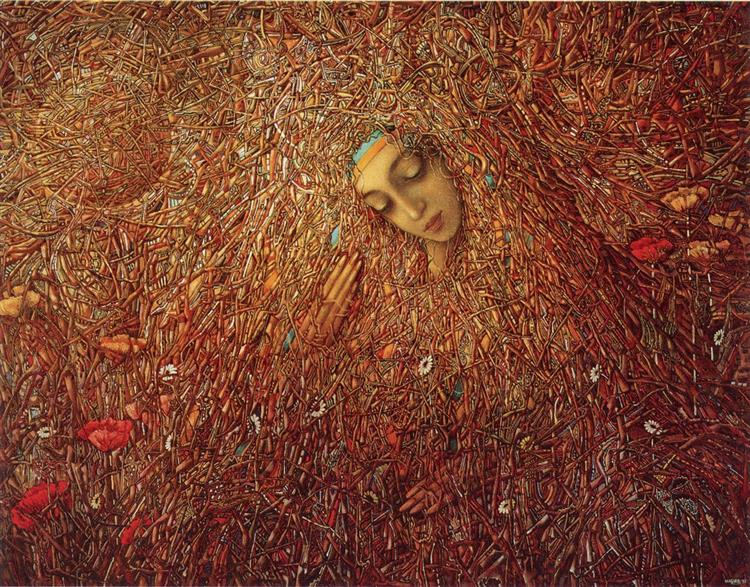 Awakening. Ivan Marchuk. 1992. Wikiart.org
“If you want to awaken all of humanity, awaken all of yourself.”
Lao Tzu
Life is not easy for anyone. We all struggle. Even those who appear to be ‘fine’ or ‘tough’ have difficult periods in their lives.
Those who might send out messages of indifference may, in fact, be the ones who need our compassion the most, as they obviously cannot reveal or share their pain, maybe even to themselves.
- Some possible roots of indifference
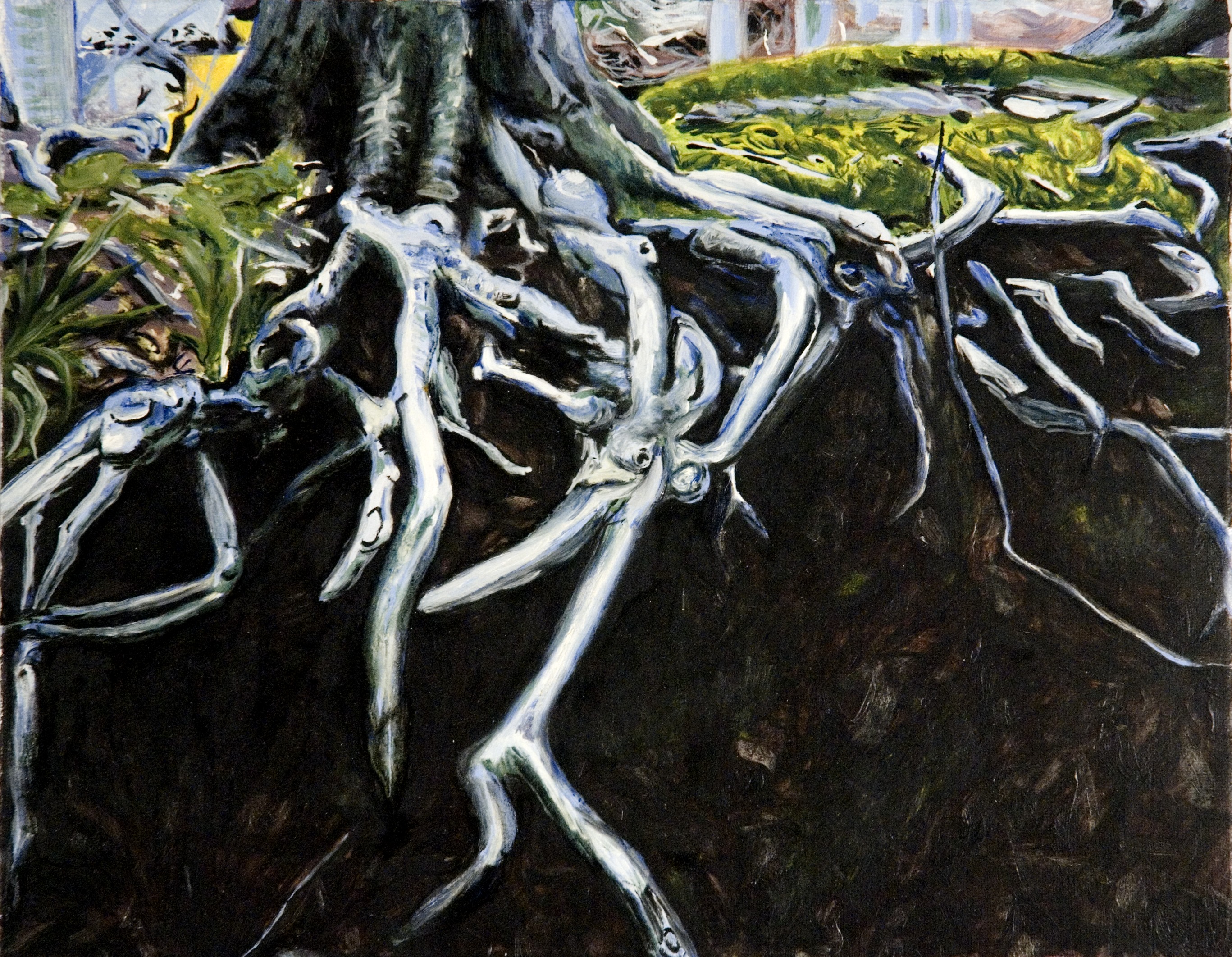 anders pearson. roots1. Oil on canvas board. 2005. Flickr.
“When solving problems, dig at the roots instead of just hacking at the leaves.”
Anthony J. D’Angelo
Apathy, indifference, hopelessness, lethargy, passivity- these are also some of the symptoms of depression.
What might be the roots of such feelings?
There could be many causes, but sometimes people who have strict and repressive, rule-bound upbringings, who are not able to develop into their authentic selves, who have to please others and live by their rules, grow up feeling resentful and angry inside.
They develop a ‘false self,’ a cover for the real persona that they have not been allowed, or subsequently allowed themselves, to reveal.
“Once conform, once do what other people do because they do it, and a lethargy steals over all the finer nerves and faculties of the soul. She becomes all outer show and inward emptiness; dull, callous, and indifferent.”
Virginia Woolf
On the other hand…
- Indifference as a defence
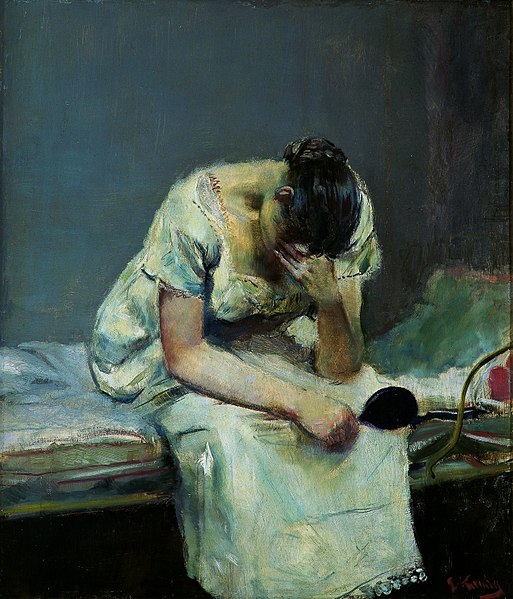
Christian Krohg, Madeleine (1883)
“I get deeply tired because everything touches me. I am never indifferent. Indifference or passivity are impossible to me.”
Anaïs Nin , Journals Volume II
If we allowed ourself to experience the full force of our feelings when we watch the news, or see people suffering, then we would, most likely, feel overwhelmed. This can mean that we often create a defence, a kind of indifference that is not borne of inhumanity. Fear of showing one’s feelings in public may create the same kind of defensive indifference.
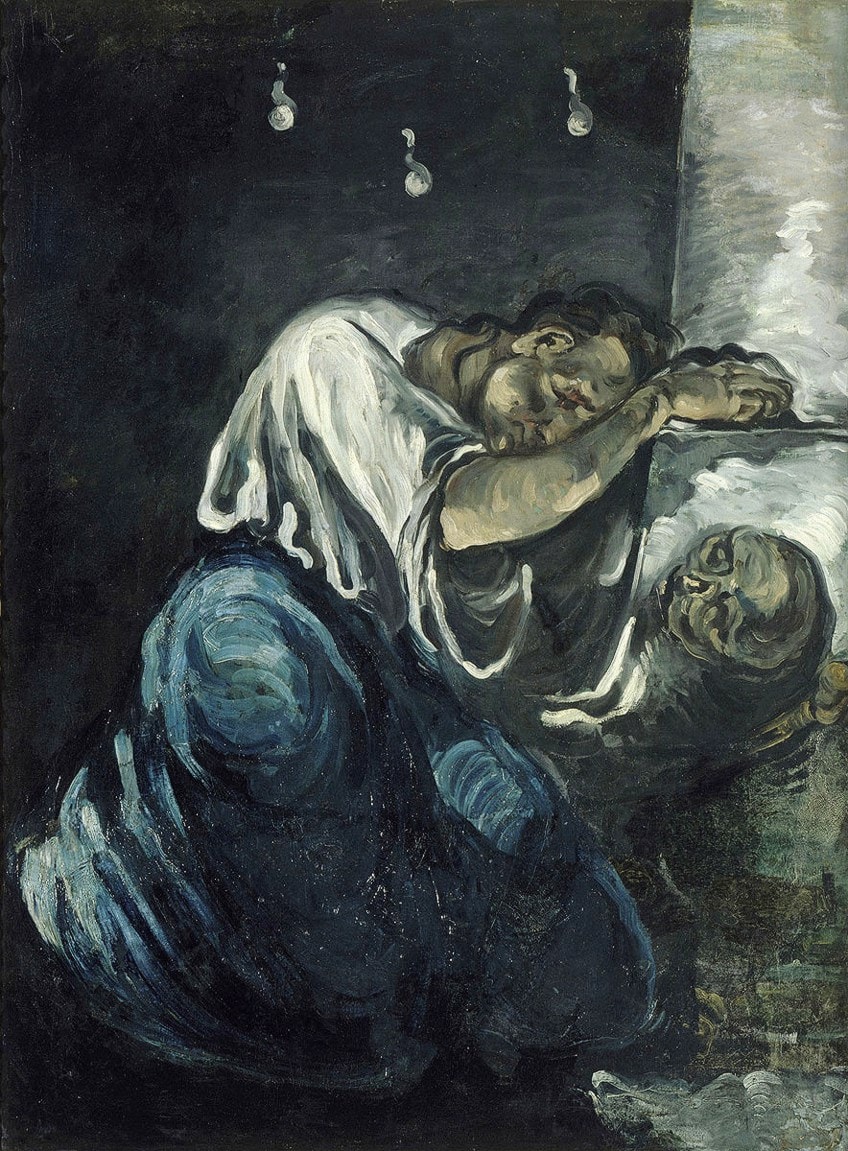 La Douleur (Sorrow) (1868-1869) by Paul Cézanne. Wikimedia Commons
Such indifference can be a way of managing potentially overflowing feelings of sadness, sorrow, despair, empathy and compassion.
If we permitted these emotions to surface, to come too strongly into consciousness, especially when we are powerless to effect change, then we would become exhausted and burnt out.
- Indifference, sometimes, can be important…
“To have that sense of one’s intrinsic worth which constitutes self-respect is potentially to have everything: the ability to discriminate, to love and to remain indifferent. To lack it is to be locked within oneself, paradoxically incapable of either love or indifference.”
Joan Didion, Slouching Towards Bethlehem: Essays(FSG Classics)
Indifference, as described by Didion, can, on occasion, be something we need to feel. This is so that, when we know our own minds, we can decide who or what is right for us in life…. and to know what is not. In my recent post on self-respect, I said:
“Without self-respect, we are lost, unable to have relationships, to love others or to value ourselves. We will not be able to make important decisions and will be ‘incapable of love or indifference.’ Knowing what to be ‘indifferent’ to is as important, Didion implies, as knowing what to love. It is about having the self-respect to recognise who we are and what we do and do not need in life.”
Indifference does not always have to be cruel; it can be a way of increasing our resilience in life. For example, it may function as a kind of protection at times when we might be at risk of being overwhelmed if we allowed our feelings to emerge.
“Do not give in too much to feelings. A overly sensitive heart is an unhappy possession on this shaky earth.”
Johann Wolfgang von Goethe
Indifference in a relationship could provide us with a way of not being too sensitive when the other person behaves in an irritating manner; if we are offended by everything, then it could be detrimental to both ourselves and our relationship.
Sometimes we might need to overlook small things, be selective, developing a kind of benign indifference to our partner, for the sake of peace and our own sanity.
In what other ways can feeling indifferent be an advantage and conducive to mental health? If we cared equally about everyone and everything in life, we would surely feel burnt out; our empathy would drain away. We would experience compassion fatigue.
An ability to feel some degree of indifference could mean that we will be able to maintain the personal resources to focus on helping, and being emotionally available, in a few chosen areas.
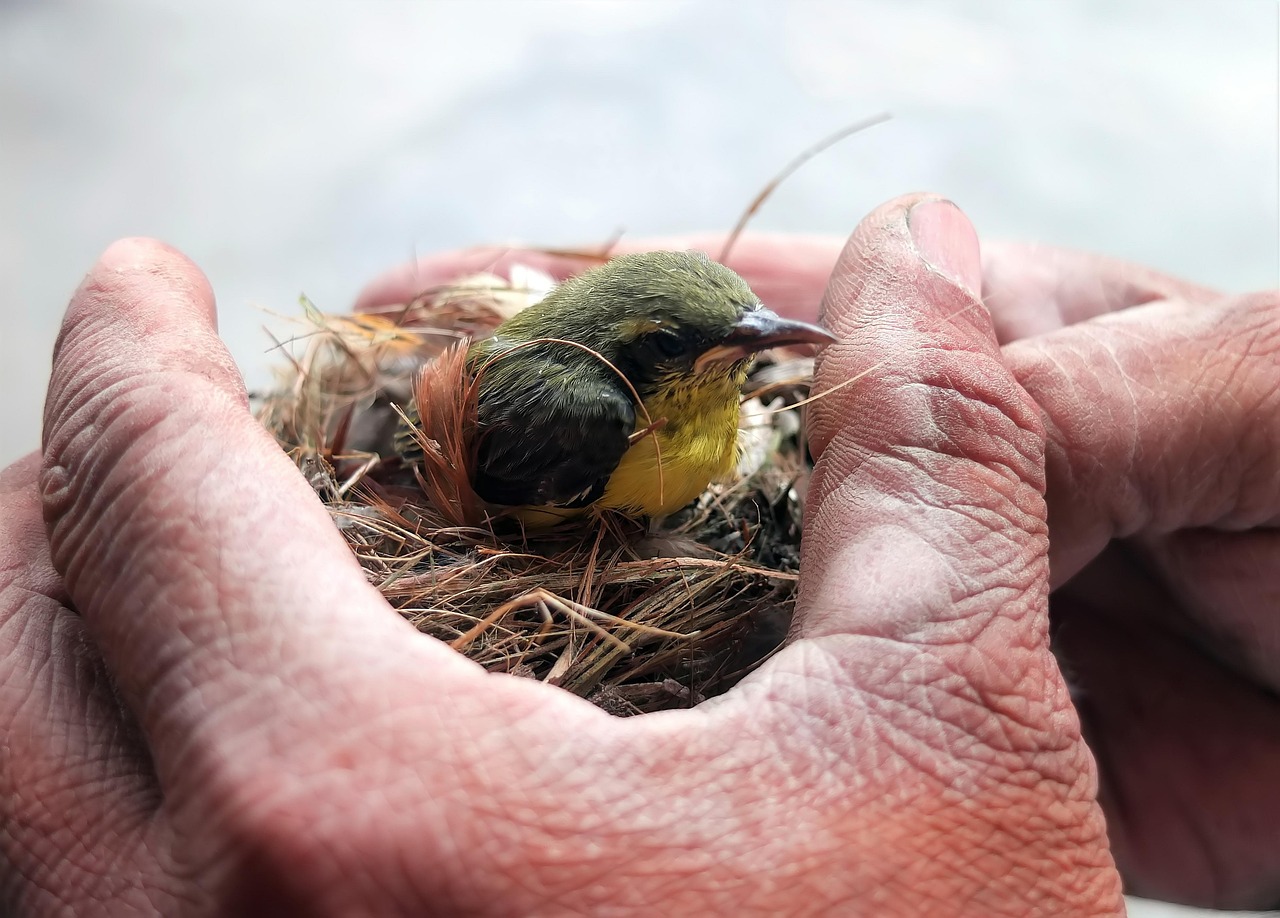
We would then gain more balance, practically and emotionally, so that we could increase our effectiveness, showing love, care and empathy to the many sentient beings we encounter.
© Linda Berman
 waysofthinking.co.uk
I am glad at the end that it says that some indifference means that we can maintain our own personal resources rather than the implication of callousness that is implied earlier in the post.
LikeLiked by 1 person
Thanks – yes, indifference has 2 sides. Thanks also for following my blog. 🤗
LikeLike