
- Education can empower us
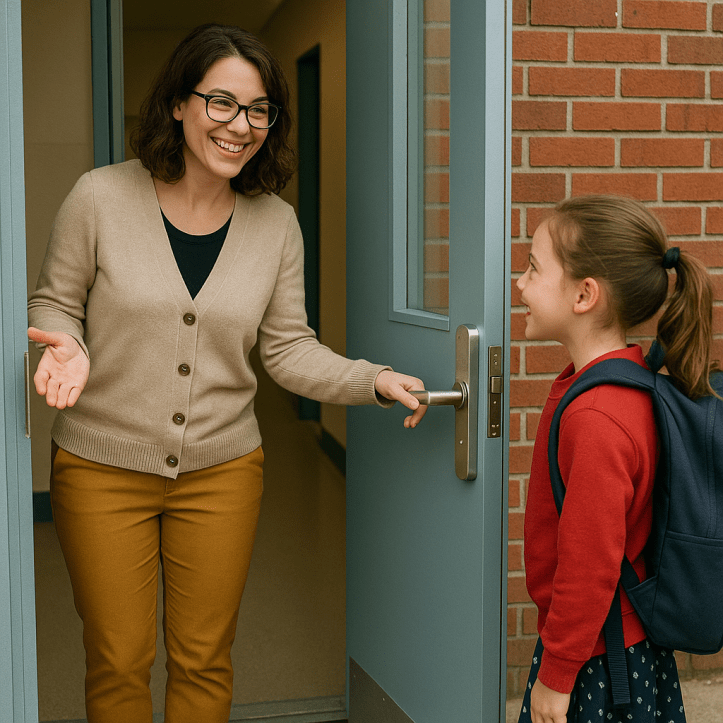
“Teachers open the door, but you must enter by yourself.”
Chinese Proverb
What is the principal role of the teacher? Theirs is a complex profession and, of course, their main role is to educate us, to impart knowledge. How can they ensure, however, that a good learning environment is created, and that their pupils are encouraged to achieve their potential?
A good teacher will enable pupils to discover and reveal their own innate knowledge, abilities and ways of thinking. The teaching process needs to be more of a drawing out than a pouring in.
In this way, education will inspire courage, self-awareness and understanding. With the right teacher as a guide, inspiration, involvement and creative thinking will occur naturally. Helping a child in an empathic and respectful way to develop a love of learning will stand them in good stead forever.

A Firedancer twirling flaming poi, 2003. Sam Fentress. Wikimedia Commons
“Education is not the filling of a pail but the lighting of a fire.”
W.B. Yeats
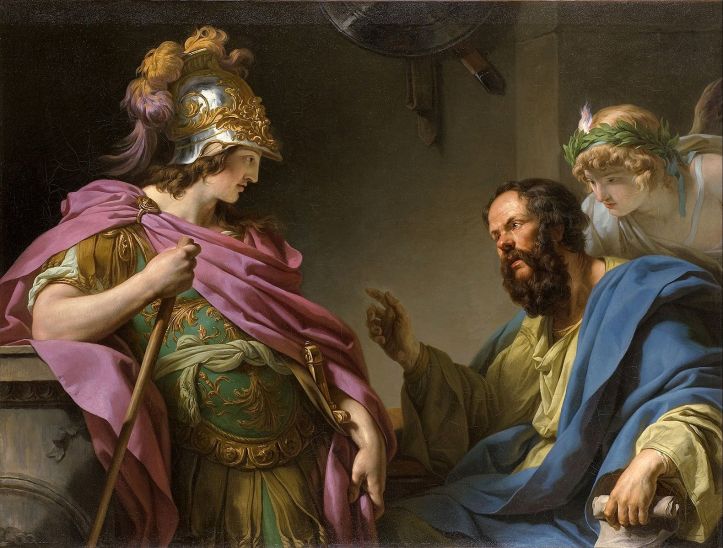
Alcibades being taught by Socrates, François-André Vincent. 1776. Wikimedia Commons.
“I cannot teach anybody anything; I can only make them think.”
Socrates
Socratic teaching involves asking questions rather than providing answers. Ongoing discussion and dialogue is encouraged, in order to help students be more analytic and participate in the learning process themselves, rather than being passive recipients of knowledge from another.
Opening the door to education is, indeed, part of the responsibilities and tasks of the teacher, pointing the child in the direction of acquiring new knowledge. They are the crucially important facilitators of this journey, during which the pupil must be willing to co-operate by following the teacher’s supportive guidance.
Having the patience, on the teacher’s part, to allow this process, will be very empowering for the child, who will learn from this to be motivated and enthusiastic in their own right, without having to be ‘made’ to do their work. This will enable them to develop their own potential and sense of authority.
“Knowledge is power.”
(attributed to Francis Bacon)
Throughout our lives, it can be a wonderful experience to learn from others who inspire and stimulate us to develop our own ideas and follow our passions.
“I need, sometimes, individuals to spark an idea so that I can take off running.”
Meek Mill
This gaining of inspiration from other people can begin when we are very young; the enthusiasm for life and all it holds for us is catching!
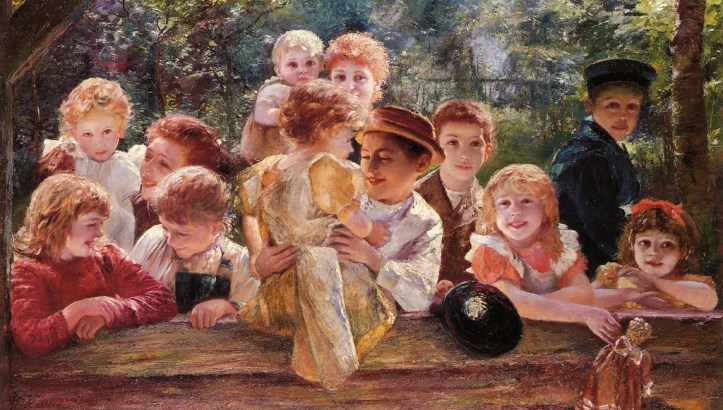
Paul Barthel – Glückliche Kinder (Happy Child) Wikimedia Commons. c1900
“The job of a teacher is to excite in the young a boundless sense of curiosity about life, so that the growing child shall come to apprehend it with an excitement tempered by awe and wonder.”
John Garrett
2. Education can help us feel freer
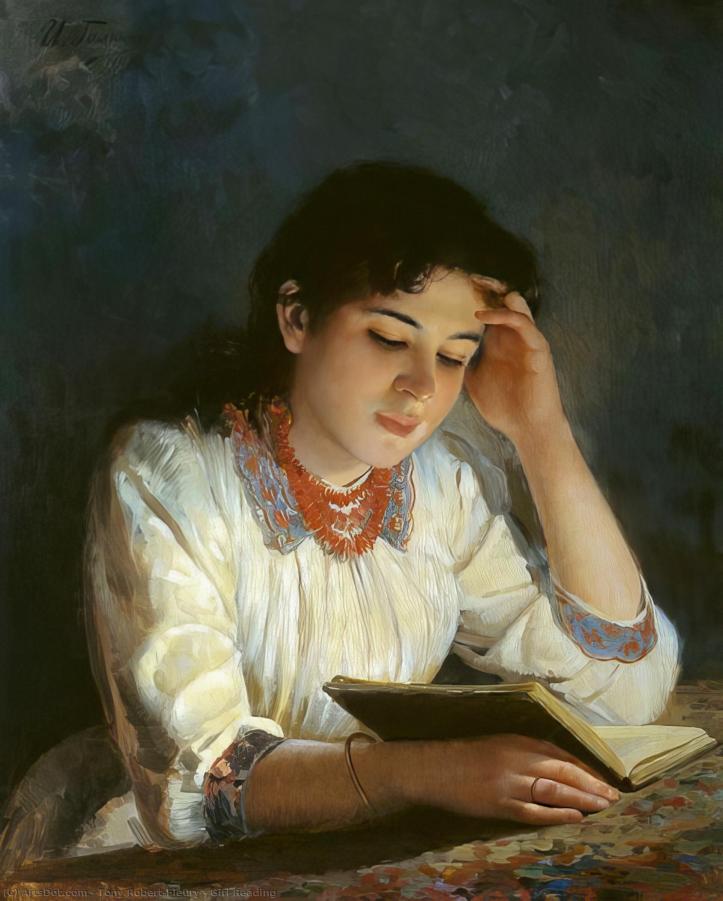
Girl Reading – Tony Robert-Fleury. 1880. Wikimedia Commons
“Education can become a self-fulfilling activity, liberating in and of itself.”
Abraham Maslow
The process of learning can become an end in itself, satisfying and enjoyable. During our early years, developing a love of books can lay the ground for a lifetime of learning and an appreciation of the value of attaining knowledge in and for itself.
This is, indeed, a kind of liberation, for we will develop a sense of freedom and a lifelong love of education in many different areas. It may, at times, be difficult to let go of some fixed, outdated or erroneous ways of thinking; however, the independence, security and sense of emancipation that this will bring us cannot be underestimated.
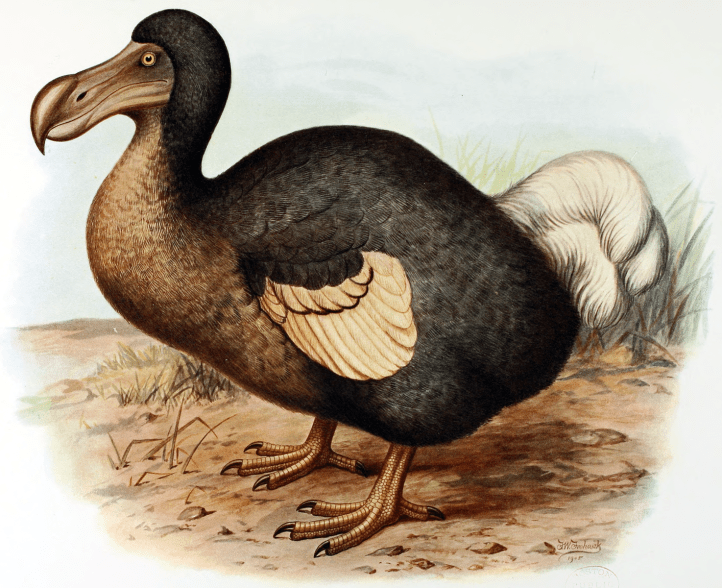
Frohawk Dodo. Plate 24 from Rothschild’s Extinct birds (1907). Wikimedia Commons.
“A child without education is like a bird without wings.”
Tibetan Proverb
3. We will develop confidence and personal growth through the learning process

Carl Larsson: NMB 2098.Esbjörn at the Study Corner. 1912. Wikimedia Commons.
“Educate yourself about things. Study hard what interests you the most. Don’t worry about what others think of you, that’s none of your business. Train your mind to think, doubt, and question. That’s how you grow.”
Richard P. Feynman
Learning to ‘think, doubt and question’ are certainly crucial qualities to attain as we mature into adulthood. By devoting ourselves to study we can gain the confidence and self-assurance to follow our interests and passions, knowing that doing this will benefit us through life. The above quotation counsels us to take no notice whatsoever of what others may or not think about us, as we study hard.
Such intense devotion will allow us to dig deeper, instead of skimming the surface of things, or merely surfing the internet in a kind of trance.
In the current technology-centred climate, much of our social discourse is constructed around the value of the quick-fix solution and formulaic, over-confident, upbeat, unquestioning, ‘positive’ thinking. This has produced a trend towards superficiality, where deep thinking or intense study is regarded as less appealing. Doubts and insightful inquiry are not on the daily agenda.
Real psychological, educational and spiritual growth can only happen with a more profound, comprehensive, in-depth approach towards the gaining of real knowledge.
4. Education can provide a wider view which expands as we grow
 Reflections – Harold Harvey. Wikimedia Commons.1916.
“The purpose of education is to turn mirrors into windows.”
Sydney J. Harris
Without education, the world is somehow smaller, narrower, less nuanced, less quirky. We will see only mirrors, not windows, looking only at our own reflection, which will deprive us of a more expansive view of life.
Real learning about ourselves will always involve other people, it cannot be done through an inanimate mirror’s impersonal reflection.
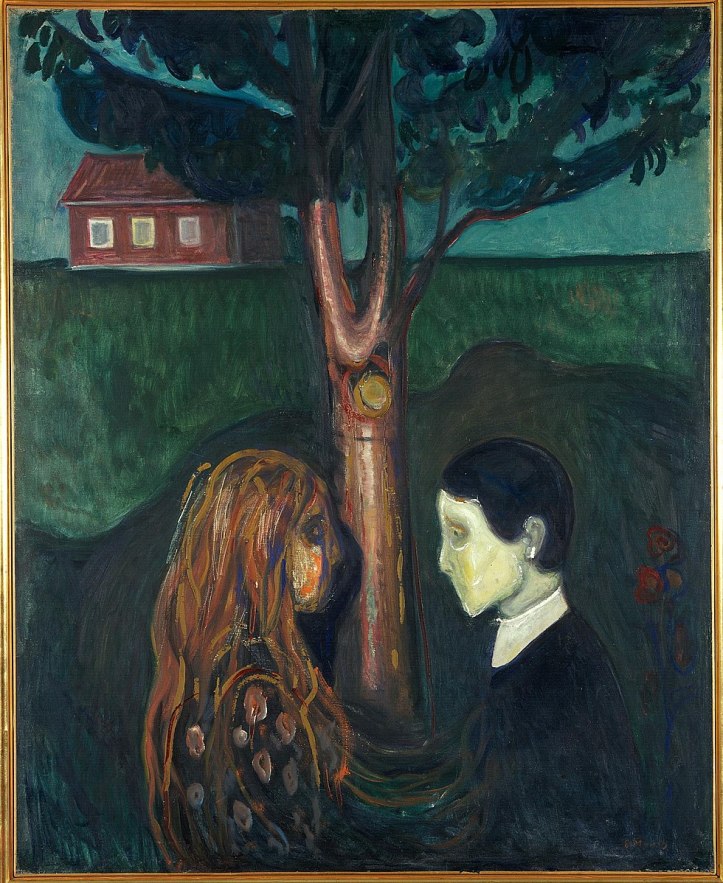 Edvard Munch – Eye in Eye. 1899-1900. Wikimedia Commons
“To look at something that can gaze back at you, or that has a reserve and depth, can heal your eyes and deepen your sense of vision.”
John O’Donohue.
What we need is to see a reflection of how we affect a collection of other people, as we receive subtle messages through their gaze, their responses to us and their direct, or indirect, feedback about how we are coming over.
Such learning through others will, inevitably, enable personal growth and will extend our perspectives and ways of seeing ourself in the world.
Really focussing on what surrounds us will mean that we will notice, and learn, more about the world and about ourselves within it. Such concentration on the details of life will produce new understanding, in many different contexts.
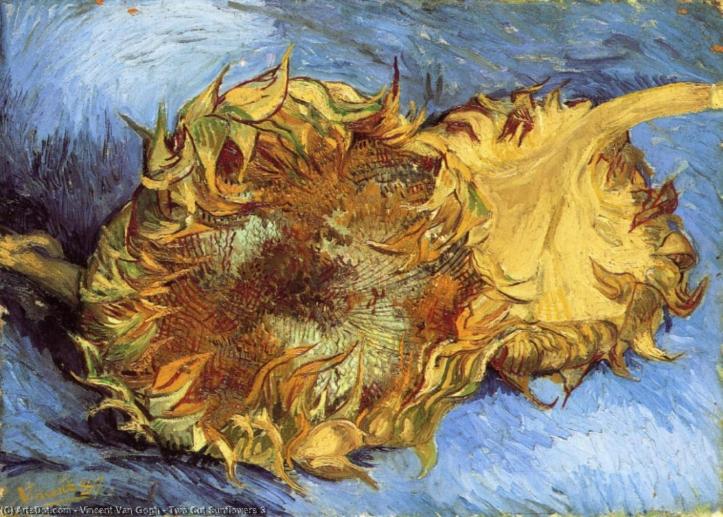
Two Cut Sunflowers 3 – Vincent Van Gogh. Wikioo.
How much of life have I missed, he wondered, simply by failing to look? Or by looking and not seeing?
Irvin D. Yalom
5. Education will always be with us

The Chef, Pere Paul – Claude Monet. Wikioo.
“I’ve been a cook all my life, but I am still learning to be a good chef. I’m always learning new techniques and improving beyond my own knowledge because there is always something new to learn and new horizons to discover.”
Jose Andres
The world has so much to offer us in terms of knowledge and it is, indeed, a lifetime’s task to assimilate as much as we can along the way.
“There is no end to education. It is not that you read a book, pass an examination, and finish with education. The whole of life, from the moment you are born to the moment you die, is a process of learning.”
Jiddu Krishnamurti
Maintaining an enthusiastic approach to lifelong learning will reap many rewards, both for ourselves and our children.
Modelling this energetic attitude, and showing interest in what is around us, is the surest way to inspire others.
If we keep a spirit of enquiry throughout our lives, it will mean that we are constantly learning, whether formally, from books, travel, or from being amongst others in our world.

“Education is one thing no one can take away from you.”
Elin Nordegren
Throughout life, our attitude to learning is paramount; it is important that we continue learning and absorbing new things from the world, at all ages and stages of life.
“One’s work may be finished someday, but one’s education never.”Alexandre Dumas
 Krupa Raghunathan. Wondering. 2009. Flickr.
“Children must be taught how to think, not what to think.”
Margaret Mead
This famous quotation precisely expresses the central importance of creating space for children to develop their own ways of thinking. This does not mean that they do not need parental input; it reminds us that we need only teach children ways in which to develop and be creative and experimental in their thinking.
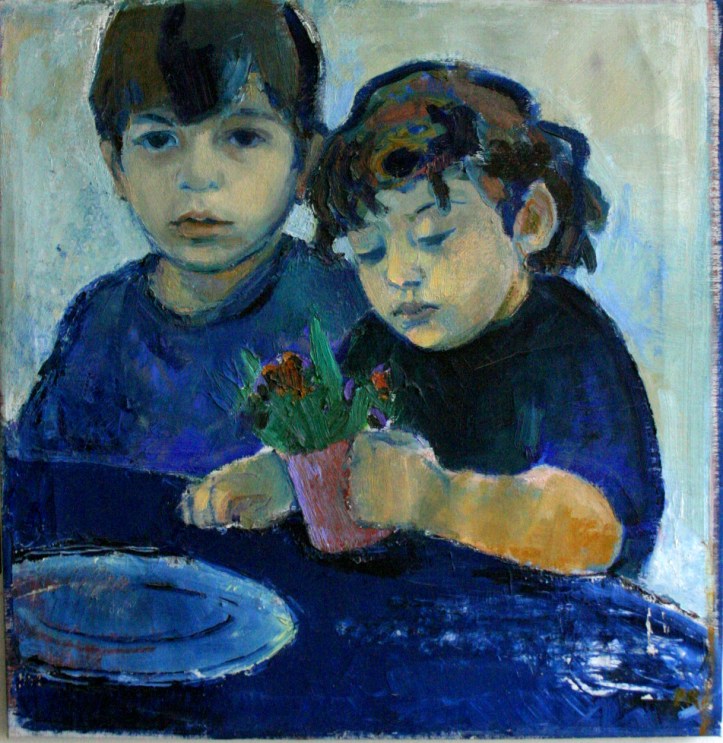
Portrait of Artist’s children, Pia Ranslet. 1995. Wikimedia Commons
“The principal goal of education in the schools should be creating men and women who are capable of doing new things, not simply repeating what other generations have done.”
Jean Piaget
The wonderful aspect of having knowledge is that it will always be with you, a constant companion throughout the good and the bad times in your life.
Education teaches you to think, rationalise and analyse, and the skills inherent in the initial process of learning will be transferable to other areas during the entire course of your life.
Learning truly is the gift that keeps on giving……
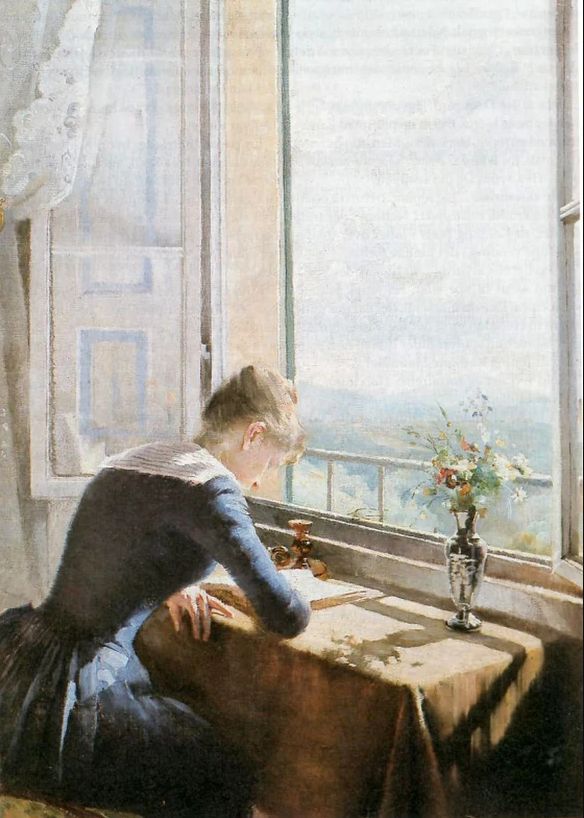
Woman Reading, Asta Nørregaard. Norwegian (1889)Wikimedia Commons
“Education is not preparation for life; education is life itself.”
John Dewey
© Linda Berman
 waysofthinking.co.uk
Thank you for this ideal in education. My first seven years of being a teacher was extremely challenging. I had no one for a mentor. But I knew I could become an excellent teacher. My first few years were extremely different; environments and administrators taught me a lot about what not to do. What I found was that my responsibility was to find the potential in each child/student, and help them find their way. I retired after 35 years and feel extremely successful. I am still passionate about standards in education. Before I retired, I decided to write a mentoring book for those teachers who needed guidance. Not a boring textbook, but true scenarios that show how to manage the classroom, manage students, manage parents, and be a team member with everyone involved. CONNECT FOR CLASSROOM SUCCESS: A MENTORING GUIDE FOR TEACHER K-12 is an international award-winner with READERS FAVORITE. I’m proud of that and hope it helps anyone who is interested in education.
LikeLike
Thanks Janet. It sounds like you had a wonderful and successful teaching career, with many challenges and much learning.
LikeLiked by 1 person