
- Professor David Crystal on the changing, growing nature of language
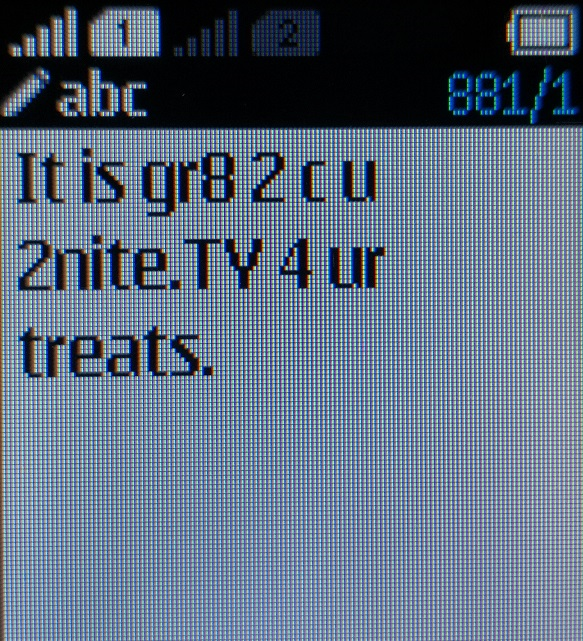
SMS composition on feature phone.2019. Author: Miss Puzzle. Wikimedia Commons
Professor David Crystal’s views on language change are highly informative and refreshing. They may at first appear to some readers shocking and appallingly radical… but take a few moments to taste, savour and digest them.
You may come to appreciate their erudition, their thoughtfulness and their wisdom; you may also be inspired by their open, creative ways of thinking and especially their willingness to go against the grain of popular thought.
“This is a lesson everyone who studies language eventually learns. You cannot stop language change. You may not like it ; you may regret the arrival of new forms and the passing of old ones but there is not the slightest thing you can do about it. Language change is as natural as breathing. It is one of the linguistic facts of life.”
David Crystal
In today’s post, I shall be exploring some of Crystal’s ideas on language change, particularly in relation to changes that are happening through the internet and texting. For those who wish to read round this fascinating subject, I can also recommend the book cited below, by Gretchen McCulloch, as well as anything by Crystal.
- Judgement and language change
“If you don’t like something, change it. If you can’t change it, change your attitude.”
Maya Angelou.
As seen in Part 1 of this post, many people desire to control language, as they also desire to control their lives and the lives of others.
The behaviour of those who try to control everything and everyone around themselves is sometimes borne out of a kind of anxiety. They can succumb to the conviction that, unless they are in charge and keep everything the same, something bad will happen.
It is important to face the fact that we cannot control anything except parts of ourselves; this realisation can be a painful shock. Life throws many difficult experiences at us, personally and universally, no matter how much we try to exert power over the world. We do not own others, and we cannot control how they act or speak.
“Text messaging is just the most recent focus of people’s anxiety; what people are really worried about is a new generation gaining control of what they see as their language.”
David Crystal
Why is it such a big mistake to be a ‘control freak’ and to try to control everyone and everything, including language change?
Life is highly unpredictable, and learning to accept this incontrovertible fact is difficult. As a result, we may develop control-related tactics to try and ward off such uncertainty, like attempting to make the world, and other people, comply with our wishes to keep things unchanging and therefore, apparently, ‘safe.’
Of course, this will not keep us safe, not will it make the slightest difference to the ever-changing nature and unpredictability of life and language. The only aspects of our lives we can really control, and then only to some extent, are ourselves and the feelings and thoughts inside us.
“There are some things I can’t control, & that’s just the way it is.”
Susane Colasanti
“Texting language is no different from other innovative forms of written expression that have emerged in the past. It is a type of language whose communicative strengths and weaknesses need to be appreciated.”
David Crystal
Another area of linguistic expression that people have tried to control or have disapproved of is that of accents. Many are critical and intolerant of different accents; however, even the BBC is now well into accepting that different accents add colour and character to language.
It was not always the case; however, most would agree today that it would be very boring if everyone spoke with an old-fashioned, BBC accent. The whole issue of accents and dialects caused Lord Reith a lot of discomfort in this fascinating BBC archived interview…
1967: John REITH explains the ‘BBC ACCENT’ | Lord Reith Looks Back | BBC Archive
- Change happens , like it or not…
“As one student said, “Lower your standards and relax as it is.”
Pema Chödrön
Sometimes, high standards can be stultifying. Whilst I am not implying that we should abandon all our standards, I am saying that, if we rigidly need to maintain the highest degree of what we regard as ‘excellence,’ or ‘rightness,’ then we will create stasis in our own lives and in the lives of those around us.
Therapists are in the ‘business’ of change; we are well aware that it can mean that people feel threatened, overwhelmed, frightened at its prospect. Change can also bring with it a powerful sense of being liberated, freed from the shackles of the past. We help people change in order to adapt to difficult, altered circumstances and to manage the often contradictory feelings these precipitate.
In the case of language change, whole groups of people participate in this powerful phenomenon, adjusting their ways of speaking to keep up with new developments. Older words just will not do to express new ideas. For example, in the therapy world, we have had to find new words to express contemporary theories about trauma; thus we have ‘trauma-informed,’ ‘gaslighting,’ ‘boundaries,’ ‘self-care,’ ‘attachment,’ and many other new words and phrases.
Although many might judge some of these words as jargonistic, or as ‘therapy-speak,’ the fact is that they are with us and are becoming a part of the language of therapists, although many users of these terms are viewed as misinterpreting and misunderstanding them. This may sometimes be the case, but it does appear that misuse and misunderstanding are an intrinsic part of new developments and new learning. Expertise tends to come through revision and refinement.
- Language, texting and the internet
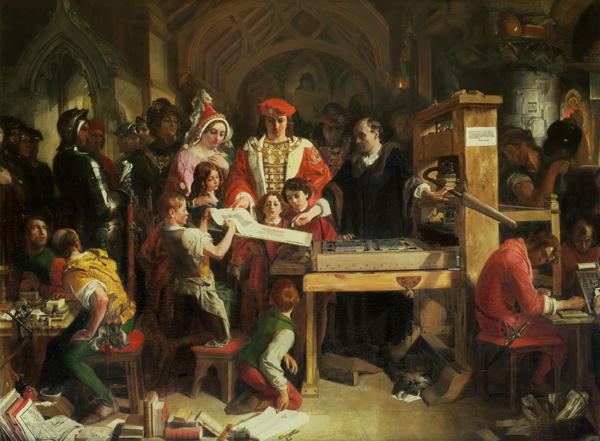
Caxton Showing the First Specimen of His Printing to King Edward IV at the Almonry, Westminster. 1851. Wikimedia Commons.
“Ever since the arrival of printing – thought to be the invention of the devil because it would put false opinions into people’s minds – people have been arguing that new technology would have disastrous consequences for language.”
David Crystal
“The pen is a virgin, but the printing press is a whore.”
Filippo de Strata ( a religious scribe in the late fifteenth century)
New inventions can be highly threatening and, whilst the printing press heralded the dawn of a new era in relation to language, there was a massive fear in religious circles when it came into being. People worried that it would make monks lazy and render scribes and illuminators unemployed; it also symbolised a devaluing of knowledge for some of those in opposition to it.
They feared the loss of beautiful margin art that adorned books when they were produced by hand. Of course, this did happen, scribes lost their jobs and books would no longer be the beautiful objects they once were…
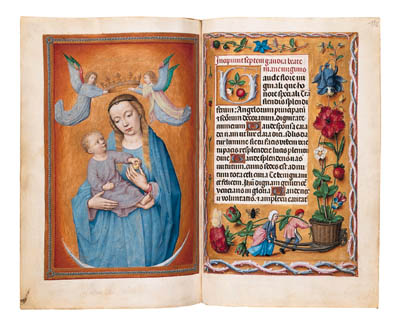
However, with loss, there is also some kind of benefit. What we have gained through the advent of printing is immeasurable, not least the fact that now there are books freely available to educate all and new ideas and thoughts can be spread far and wide.
In a similar manner in our contemporary world, some people see the internet and texting as an enormous threat to language; Crystal argues that they are not.
“Texting has added a new dimension to language use, but its long-term impact is negligible. It is not a disaster.”
David Crystal
In actual fact… it may help to improve language use!..
“Research shows that those kids who text frequently are more likely to be the most literate and the best spellers, because you have to know how to manipulate language.”
David Crystal
“No changes for the better; nor for the worse; just changes.”
David Crystal
I find the above quotation inspiring, not only in the context of language, but in relation to life in general. It reminds us not to judge, but to accept change as part of life, in ourselves, in others, and in the world around us.
It may take time to adjust to change and we may grieve the losses involved. We need to allow ourselves to feel sadness when things are lost or replaced in life.
However, condemning the young for their differences, slating the new words and phrases they produce, is not conducive to moving forward and developing new ways of thinking. As I emphasised in Part 1 of this post, we cannot ‘protect ‘ language and nor should we, for it definitely does not need our protection from change.
Naturally, there are losses, as the internet develops and influences our everyday speech and our writing style. Language is becoming less formal and words can lose subtlety and nuance as they become replaced by abbreviations and emojis; there is also a sense that deep, analytic reading is declining in favour of a surface-skimming style.
Yet it is not all doom and gloom; whilst there are inevitable losses, there are also a huge amount of gains in relation to the internet and texting, such as increased efficiency creativity, amazingly wide global connectedness, and faster, easier communication.
Let us explore this internet language further…
- Symbols
🎨👍♥️🔔🎄🥰🌹😂😢😃🤩🥳🤪🧐🤮😵💫🥱🤢😈🙀👏👍✊🏽👌👀💋👄🫦🙄🤗😓🫢🥴🫣
Look at the selection of emojis, above, and see how many different emotions they express! Emojis and gifs have re-introduced visual symbols into writing in a way that now can express our gestures, emotions and feelings.
These visual cues are quite different from the beautiful margin drawings of yesteryear, but they do express a good deal in a short, impactful and concise way. In our current society, emojis play an important part in communication, for they ‘say’ things that words alone cannot do.
There term ’emoji’ comes from Japanese, and means ‘picture character.’ Human beings have long used pictures to express themselves, right from the ancient days of cave paintings and hieroglyphics.

San Rock Art – Cederberg. Author: Valroe at English Wikipedia. Wikimedia Commons
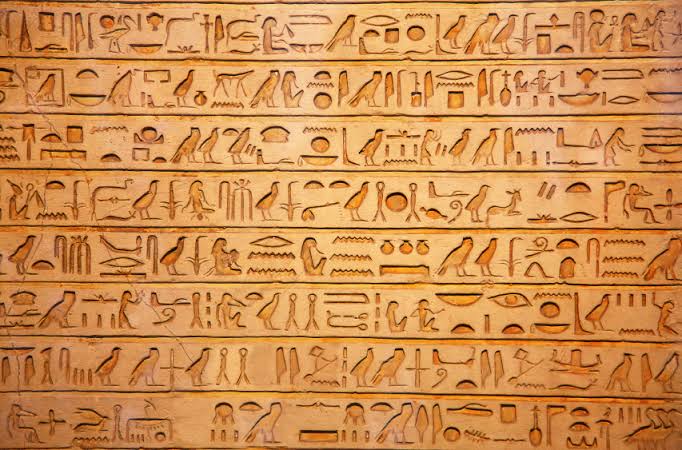
Egyptian hieroglyphics.Author: Hosni bin Park. Wikimedia Commons
Online text alone can be toneless and bland, and emojis can add nuance and interest. They are also universal, understandable in any language, although culture may affect their interpretation.
- Some more changes in language through social media and texting…
The following is a genuine example of texts between friends:
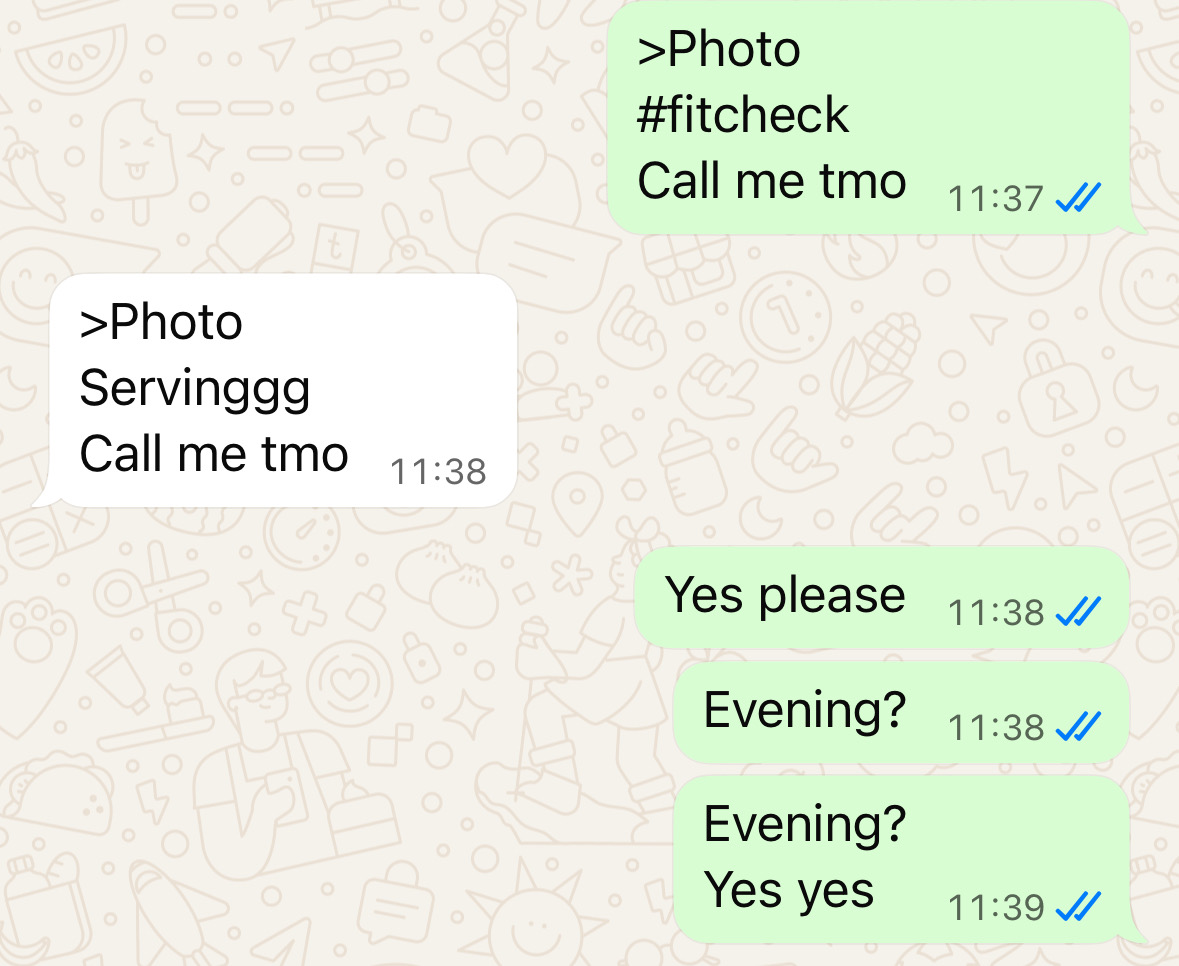
“Language changes and moves in a different direction evolving all the time. Where a lot of people see deterioration, I see expressive development.”
David Crystal
Can we translate the above messages?
Glossary:
#fitcheck = look at my outfit
Tmo = tomorrow
Servinggg = you look really good
Examples of other words and phrases that have emerged from Gen Z, ones that have been included in the Oxford English Dictionary’s August 2025 update are:
delulu: a shortened version of ‘delusional’
tradwife: traditional homemaker
lewk: a striking fashion statement
“Language has no independent existence apart from the people who use it. It is not an end in itself; it is a means to an end of understanding who you are and what society is like.”
David Crystal
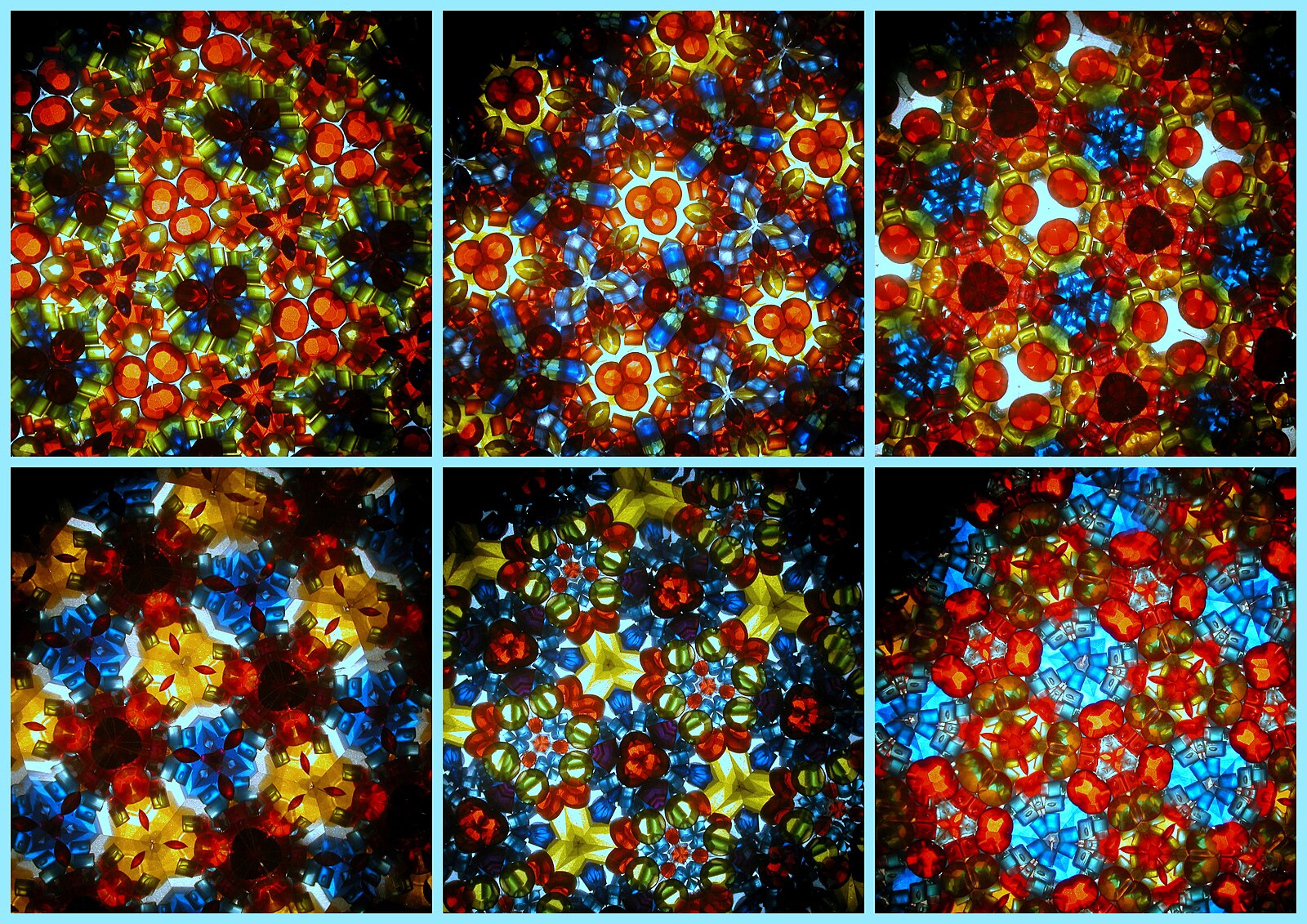
Kaleidoscope. Rolf Dietrich Brecher. 2018. Wikimedia Commons
“At any one time language is a kaleidoscope of styles, genres and dialects.”
David Crystal
What more has texting added to our language? Spelling has become inventive and sometimes quite playful (‘gr8,’ ‘l8r,’ ‘u’) and new abbreviations have emerged, such as ‘idk'(I don’t know) IMHO (in my humble, or honest, opinion.)
It is fascinating to note that the use of such abbreviations is far from new; our internet spelling and shortenings are also reflected in medieval abbreviations by scribes, as they attempted to save space, as parchment was expensive. They introduced the symbol ‘&’ for ‘and,’ as well as ‘Þe,’ for the world ‘the,’ using the thorn symbol for shortness and efficiency.
In the 19th and 20th centuries, people sent telegrams when they need to quickly communicate something important, and they were charged per word. As a result, they had to be sparse with their use of language and often use abbreviations such as ‘tomrw’, ‘ASAP’, PDQ (pretty damn quick) or ‘urgt.’ It is often called ‘telegraphese,’ a clipped kind of writing that was designed to efficiently communicate its message, whilst saving money. How similar is this to today’s texting language!
“Tweeting is like sending out cool telegrams to your friends once a week.”
Tom Hanks
“Language itself changes slowly, but the Internet has speeded up the process of those changes so you notice them more quickly.”
David Crystal
- Change can be exciting…
“Every usage, no matter how bizarre or nonstandard, fascinates me, as it tells me something about the way language is evolving.”
David Crystal
Change, especially language change, can be stimulating, fascinating… and very exciting! It reflects human life in all its ‘infinite variety,’ its creativity and imagination, its development and amazing ability to adapt and innovate.
Think of the new word and phrase contributions to language of the great and the good… Einstein’s ‘thought experiments,’ Winnicott’s ‘alone-together,’ Freud’s ‘projection,’ and, finally, and most importantly for this post, Tim Berners-Lee’s ‘World Wide Web…’

© Linda Berman.
 waysofthinking.co.uk

Interesting take on texting, but they have become short bytes as a means of communication without human contact . Loneliness is now part of life for many people feeling they should not talk but text.
Leslie
LikeLike
I know what you mean, Leslie, and I do agree that there’s a negative side to texting which avoids real contact. Thank you for pointing this out!
LikeLike