
In this post, I explore some beautiful verses from Rumi, the renowned 13th-century poet. I also include some thoughts from other writers that extend and support those of Rumi.
Verse 1
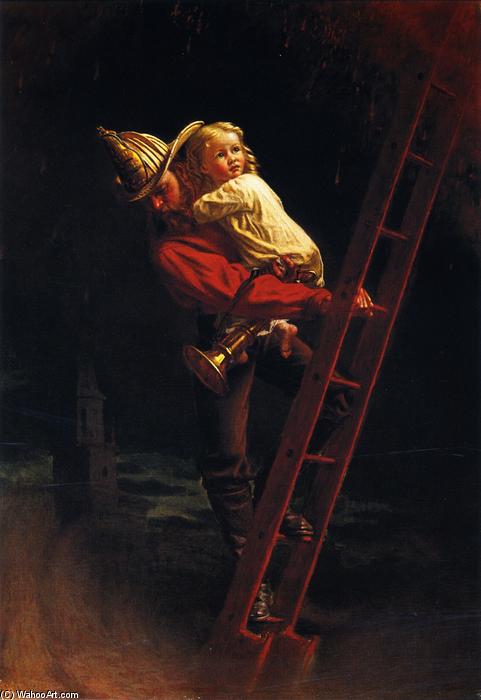
“Be a lamp, or a lifeboat, or a ladder. Help someone’s soul heal.”
Rumi
Rumi urges us in this quotation to think about helping others. He believed that this also helps us, that helping ‘someone’s soul heal’ is also about healing ourselves.
He uses graphic images- a lamp, a lifeboat, and a ladder to remind us to be there for other people. He suggests first that we be like a light in the darkness for our fellow human beings. This is akin to the words of Jung, who felt that the main goal of our existence in the world was to bring light to those around us.
Jung’s quotation, below, also points to life’s meaning; helping others and kindling a light in the darkness can give meaning and purpose to our lives. When we have that spark of life-energy inside us, we can emit light to help others to see, making an impact on them and inspiring them. We really can ‘spread the light.’
Caring for other people, and reaching beyond ourselves, will make our life feel worthwhile and it can be fulfilling and energising.
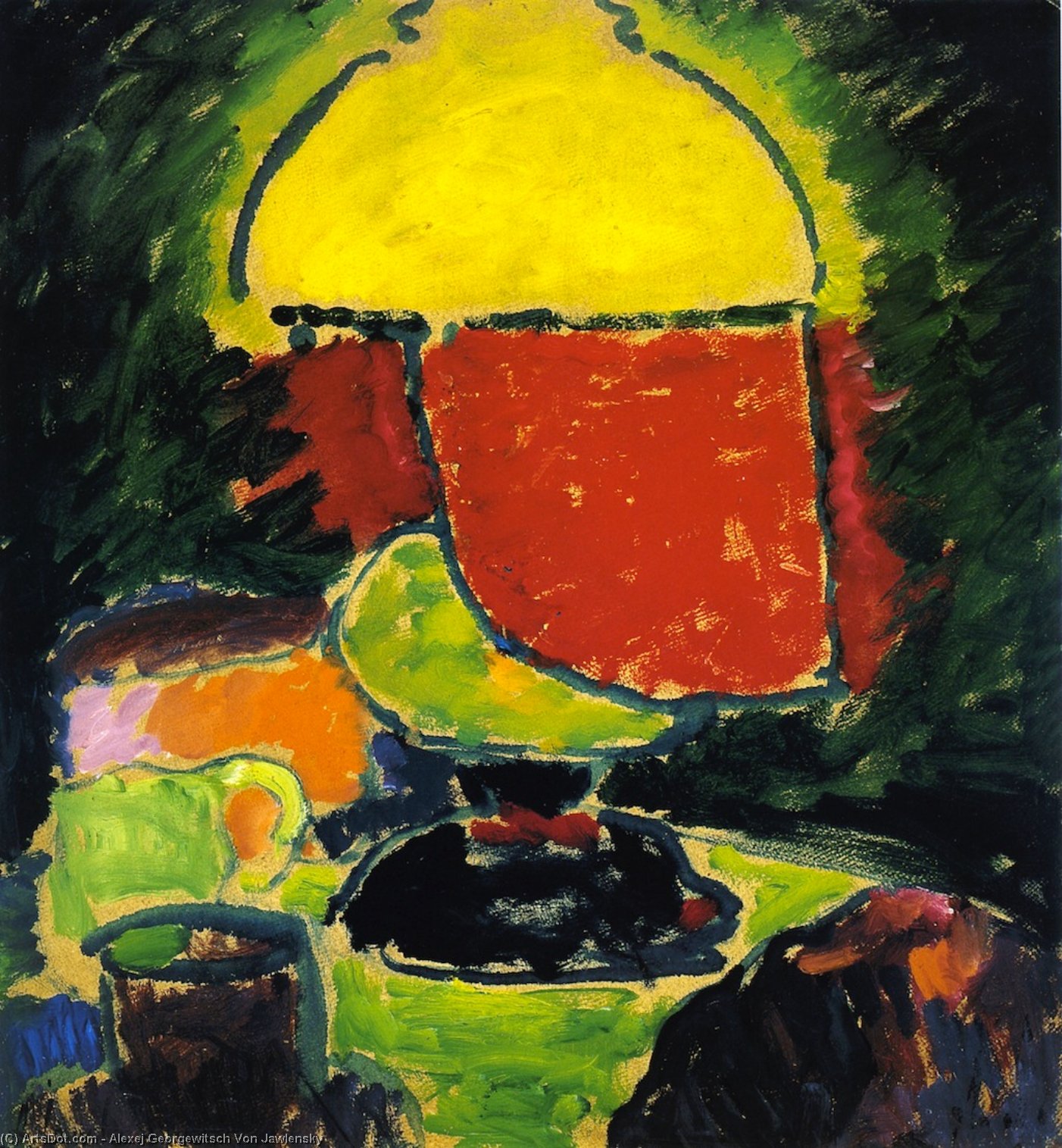 Alexej von Jawlensky. The Lamp. 1908. Wikimedia Commons
“As far as we can discern, the sole purpose of human existence is to kindle a light in the darkness of mere being.”
Carl Jung
We could also be like a lifeboat, suggest Rumi, rescuing those in desperate need who are at risk of losing their lives.
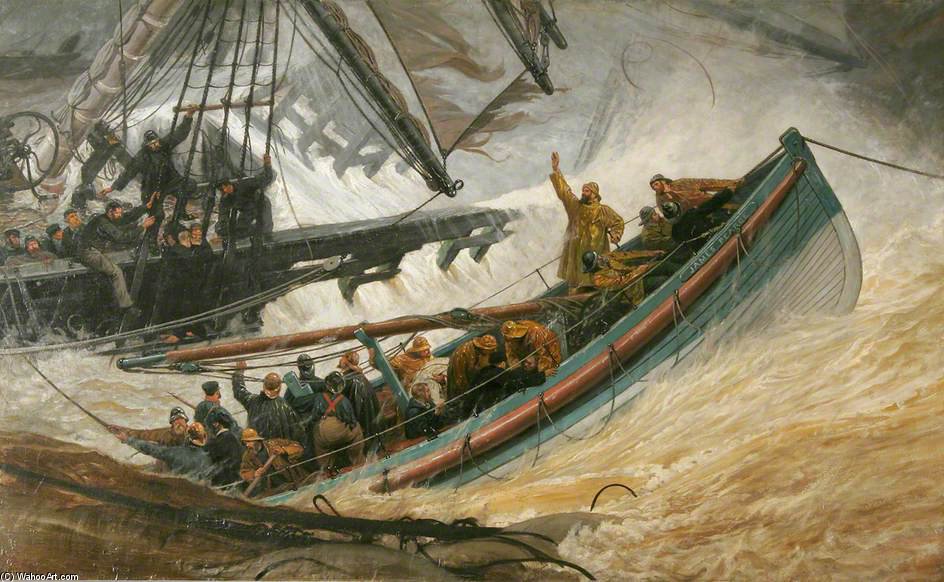 Lifeboat ‘James Pearce’ Rescuing Crew From A Shipwreck – Joseph Nash The Younger. 1865-78. Wikioo
Rumi further says that we could be a ladder, enabling others to reach those who are stranded, or to climb down to someone in their deep, dark well of despair. Sometimes, it may not be possible to pull someone out of such a deep, depressive place, and we may need to reach down to them and be with them in the dark, deep pit for a while. This is often a part of the role of a therapist.
Those who help others, in whatever way, are desperately needed in this world…
“When I was a boy and I would see scary things in the news, my mother would say to me, look for the helpers. You will always find people who are helping.”
Fred Rogers
This quotation offers faith and hope in humanity. During the most dreadful events, there are almost always those who help others, or try to help them.
Verse 2
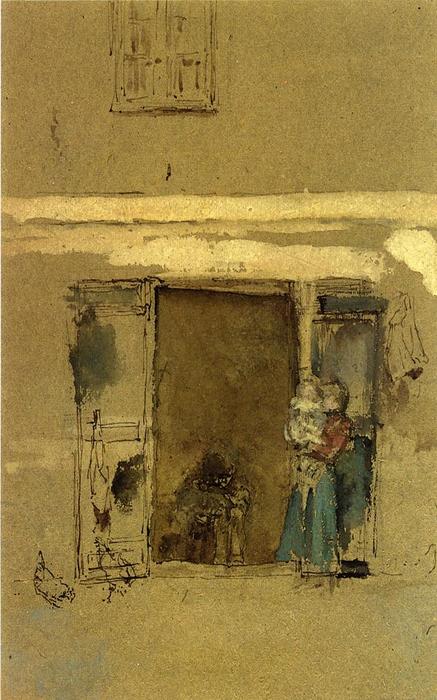
The Open Door – James Abbott Mcneill Whistler. c.1901. Wikioo
“Why do you stay in prison when the door is so wide open?”
Rumi
Sometimes, without our conscious awareness of the fact, we are our own jailer. We may be a prisoner of our thoughts, even though it may not feel as though we are. Perhaps we see ourselves as a victim of others. We may, indeed, not notice, as Rumi tells us, that the door of the prison of our own making is, in fact, wide open.
What does he mean by this?
Ways of thinking that we have absorbed or inherited long ago may have become so much a part of us that we do not realise how destructive they are. Confined within a labyrinth of thoughts and feelings, we can experience being stifled and lost, lonely, trapped within our own skin. We may also be blind to our personal ‘caged thinking,’ and even attribute this to others, denying it in ourselves.
For example, being rigid and inflexible will mean that we are unable to adapt to change. It implies that we see the world in extreme ways, in all or nothing terms; there are no in-between areas or shades of grey. This will lead to an absolutist approach to life, one that will result in a limited, black and white, static and bigoted mindset. Such a life is full of polarisations, of ‘either/or’ attitudes, of binaries, rights and wrongs, and it lacks room for doubt or shades of grey.
Our existence will lack colour and joy. This uncompromising thinking style renders us woefully unprepared for the uncertainty and unpredictability of life. The formulaic nature of such ways of thinking leads to an immovability, a manner of asserting one’s views that brooks no contradiction, no possibilities, no ambivalence, no discussion, no choice. We will, quite literally, be trapped in the prison of our mind, unable to shift.
However, Rumi emphasises that we do have a choice; we can leave the prison of our mind if we decide to do so. This may not be easy, but we can learn to see ourselves, and our world, differently, and break out of the inner prison.
“Everything hinges on how you look at things.”
Henry Miller.
Psychological freedom emanates from a realisation that we have created the mind-cage with our own thoughts. This means that we do have some control, although we may need psychotherapy in order to bring to consciousness the issues that are blocking our ‘escape.’
Which way to go? Which path to take towards freedom of mind and growthful self-knowledge?
Each person has to find their own path, their own way to freedom. No-one can make an escape for them, but others can help in indicating direction. Each person needs time and some kind of help, to change and grow.
Perhaps they will find a psychotherapist, psychologist, counsellor, guru, trusted friend or a group. Maybe they could try meditation, mindfulness, Buddhism, or other religions and philosophies.
“I started to be free when I realised the cage was made of thoughts.”
Unknown
Verse 3
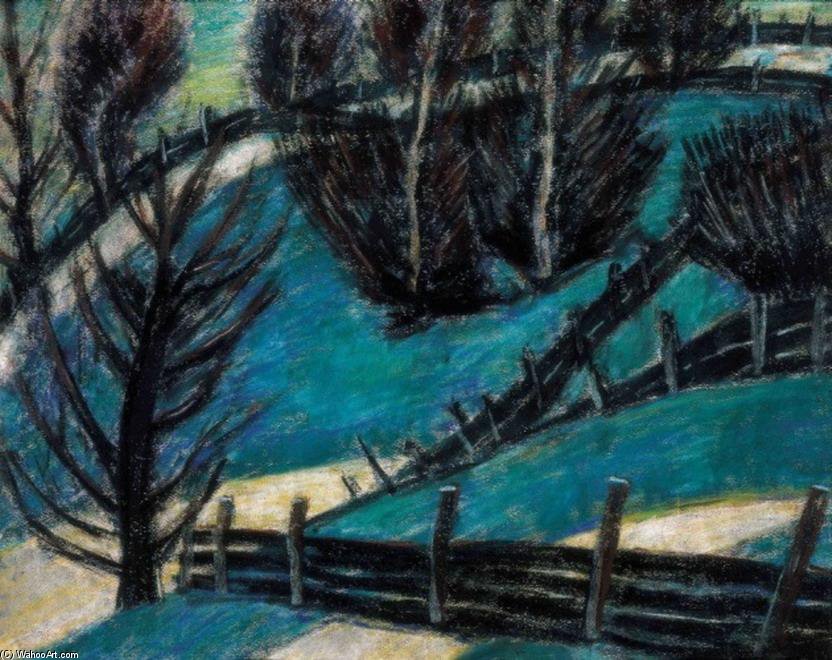 Fences – Istvan Nagy. 1927. Wikioo
“Your task is not to seek for love, but merely to seek and find all the barriers within yourself that you have built against it.”
Rumi
These words are crucial in relation to being able to achieve self-knowledge, often in the area of understanding how we may unconsciously be preventing ourselves from achieving the very thing we wish for most…and that is love. How do we do this, and why on earth would we scupper our own chances to have what we need?
Sometimes, searching for love can be a fruitless act, given that we may have erected internal barriers against finding it. Life can be tough, past experiences may have caused us pain, and, as a result, we naturally develop defences, building concrete walls against feeling hurt and wounded by life and by other people.
The problem is, that these defences can become deeply ingrained, a part of our psyche, so that it is not easy to shed them, even when the danger has passed.
“Don’t build a wall around your own suffering, it may devour you from the inside.”
Frida Kahlo
However, building this wall in the face of great pain is entirely understandable, if you think about it.
Like a poor rescue dog that has been brutally treated, we may still hold onto our fears and, instead of welcoming our rescuers, we may try to ‘bite’ them. We cannot risk re-expeiencing the pain stored in our memories of how we have been used and abused.
“Tell me what you fear and I will tell you what has happened to you”
Winnicott
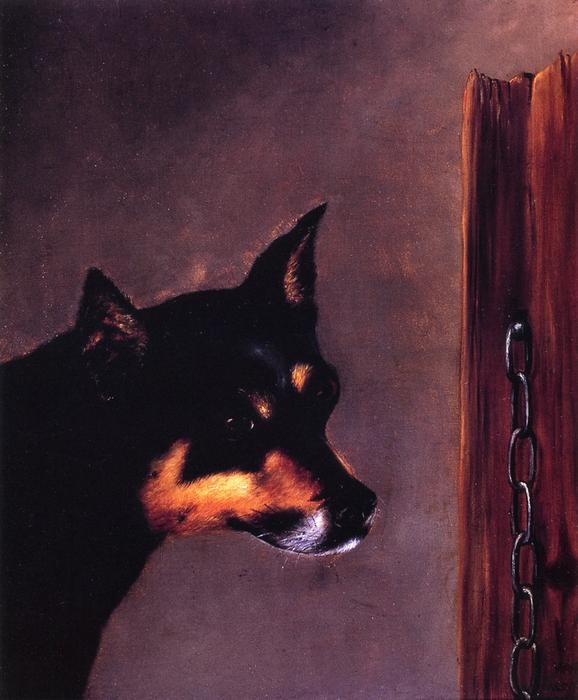
Dog Head with Post and Chain – William Aiken Walker. 1859. Wikioo
If such memories of the past are constantly troubling, and are allowed to remain unresolved, then they can become a kind of prison, preventing us from feeling any kind of happiness in the present. We may spend our lives feeling afraid, grieving and wishing that things had been different.
“Sometimes I simply remind patients that sooner or later they will have to relinquish the goal of having a better past”
Yalom. The Gift of Therapy
Verse 4
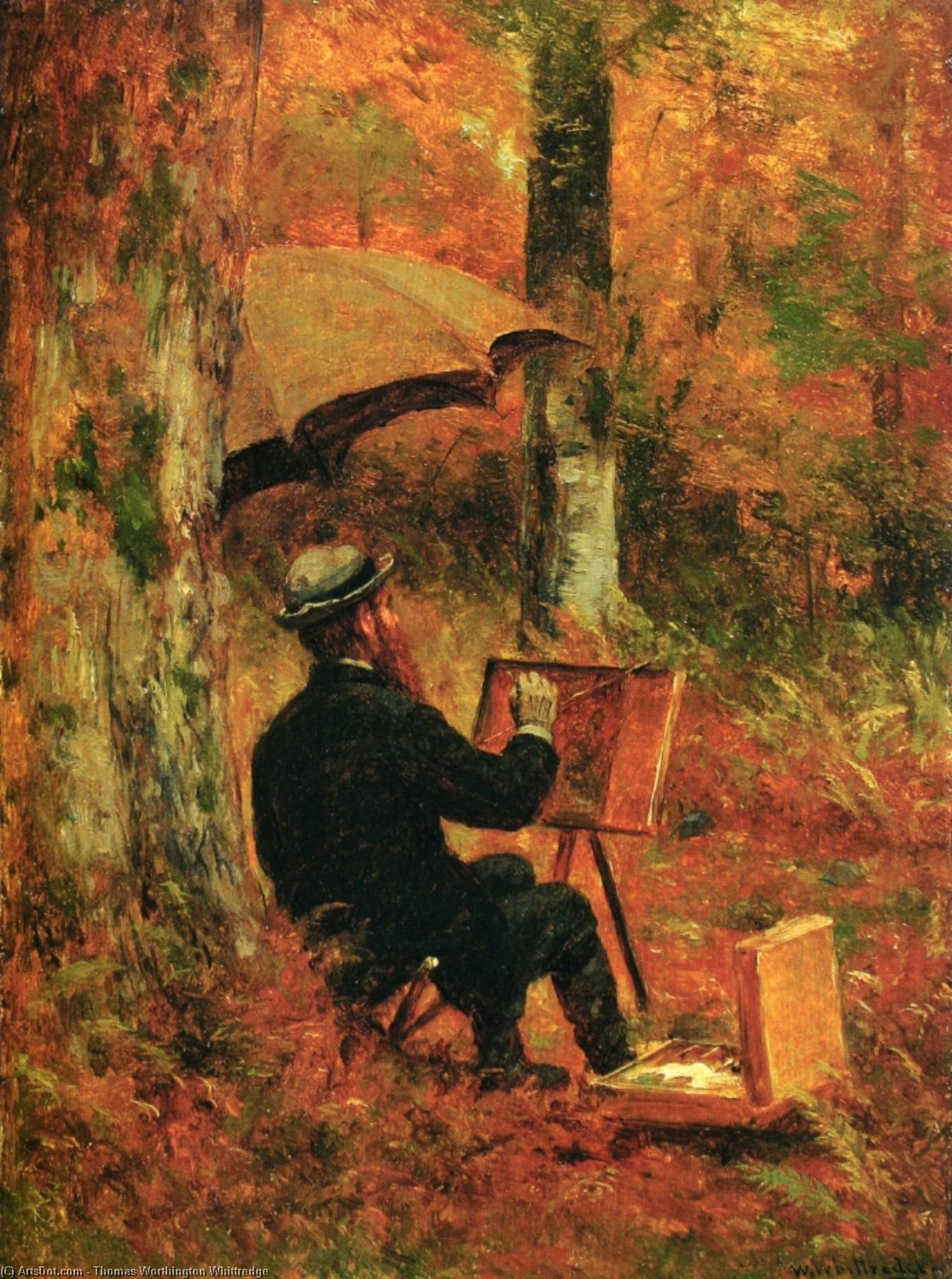
An Artist At His Easel – Thomas Worthington Whittredge.c. 1891. Wikioo
‘Let yourself be silently drawn by the stronger pull of what you really love.’
Rumi
What lights up your spirit? What excites you? What do you love?
Whether it is poetry, literature, theatre, sport, science, writing, music, art, or whatever else, it is important to let yourself be open to what fascinates and illuminates you. Wherever your passion lies, there is your direction and your purpose!
Rumi urges us not to resist the deep attraction we might feel to whatever we love and feel drawn to. This is about trusting our instinct, our inner voices, allowing our real selves to emerge and to help us choose what is right for us as individuals.
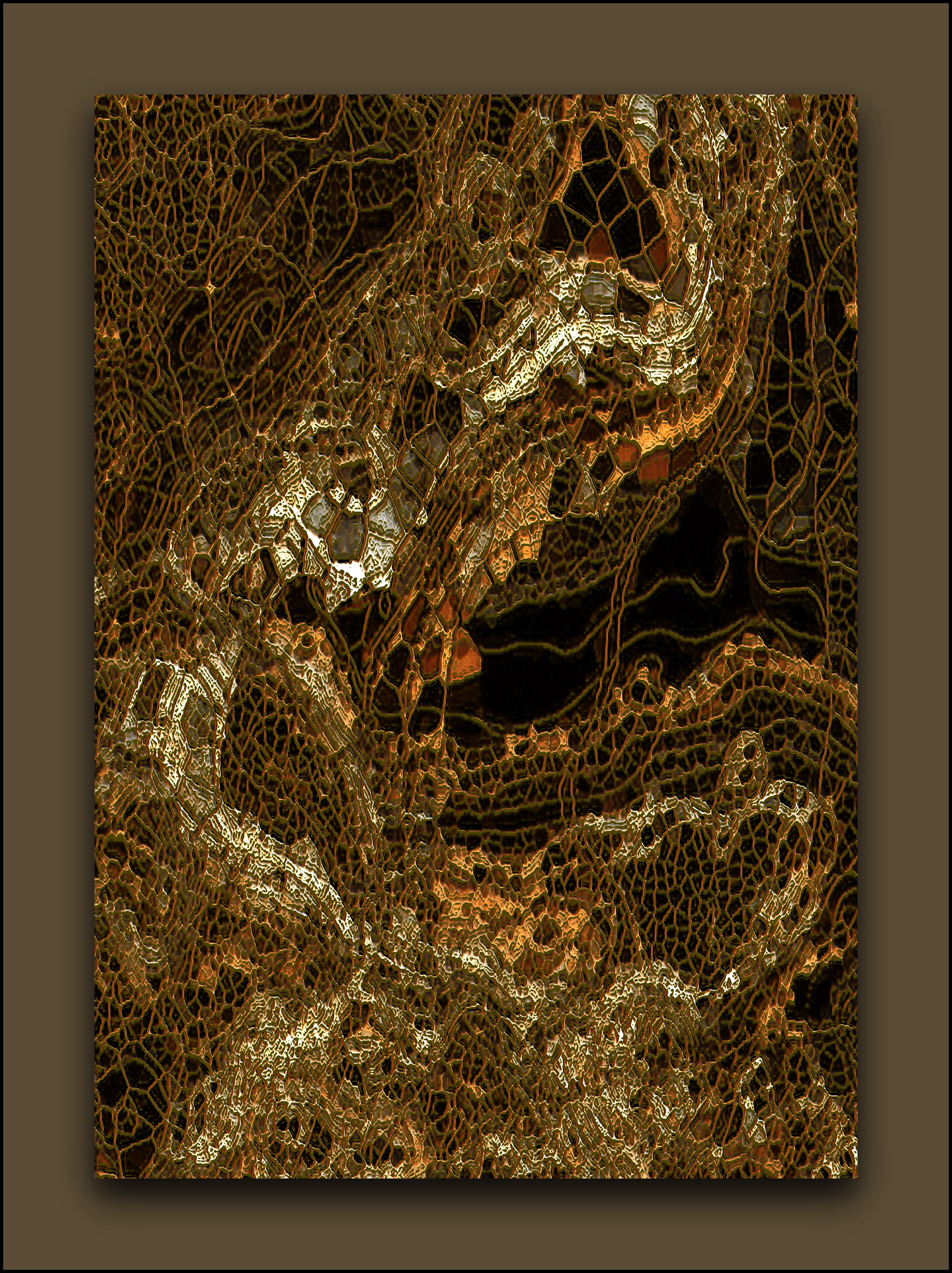 Howard J Duncan. Intuition. 2021. Flickr
This wise inner voice, this intuitive part of us all, can be drowned out by authoritarian, moralistic, or over-parental messages, or perhaps by internalised societal or cultural influences.
Intuition is a part of us that functions to teach and guide us, sending up its wisdom from our unconscious, from the very core of our psyche.
“I believe in intuitions and inspirations…I sometimes FEEL that I am right. I do not KNOW that I am.”
Albert Einstein
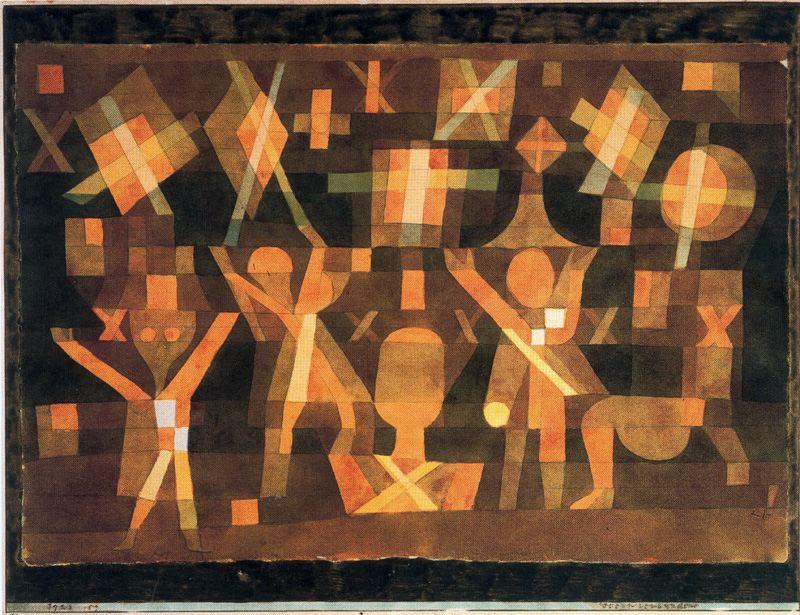 Connected to the Stars – Paul Klee. 1923. Wikioo.
“We come spinning out of nothingness, scattering stars like dust.”
Rumi
How to interpret these magical words? There may be many ways, but for me, Rumi is speaking of our beginnings, of our being an integral part of the start of the whole Universe, and of how everything, including ourselves, emerged out of a kind of fertile void.
He is referring also to the magic of creativity, the explosion of consciousness and matter that trumpeted the arrival of our human selves as we burst into existence, leaving a mass of dazzling stardust in our wake. We were whirled into life, dynamic, powerful and robust.
This is a hopeful message, for it reminds us that stillness, and apparent ‘nothingness’ can, in fact, contain the promise of productivity…
“Learning how to be still, to really be still and let life happen—that stillness becomes a radiance.”
Morgan Freeman
**********
This blog is totally non profit-making. As a retired psychotherapist with over 30 years experience, I write both for my own self-expression and to help others.
If you have liked this post, I would much appreciate you showing support to me by becoming a follower of waysofthinking.co.uk
Thank you.
© Linda Berman
 waysofthinking.co.uk
As always Linda it is a delight to visit such a timely and thought provoking post to revisit and reflect. Many thanks & hope all is well with you 🙂
LikeLike
Great to receive your feedback, as ever, Margaret. Thank you. I’m well and I trust you are too! 🌹
LikeLiked by 1 person
Thank you! I always find something from your blog that lifts me up!
LikeLike
Many thanks Janet- your feedback is really encouraging to me. 🙏🤗
LikeLike