
Quote 1
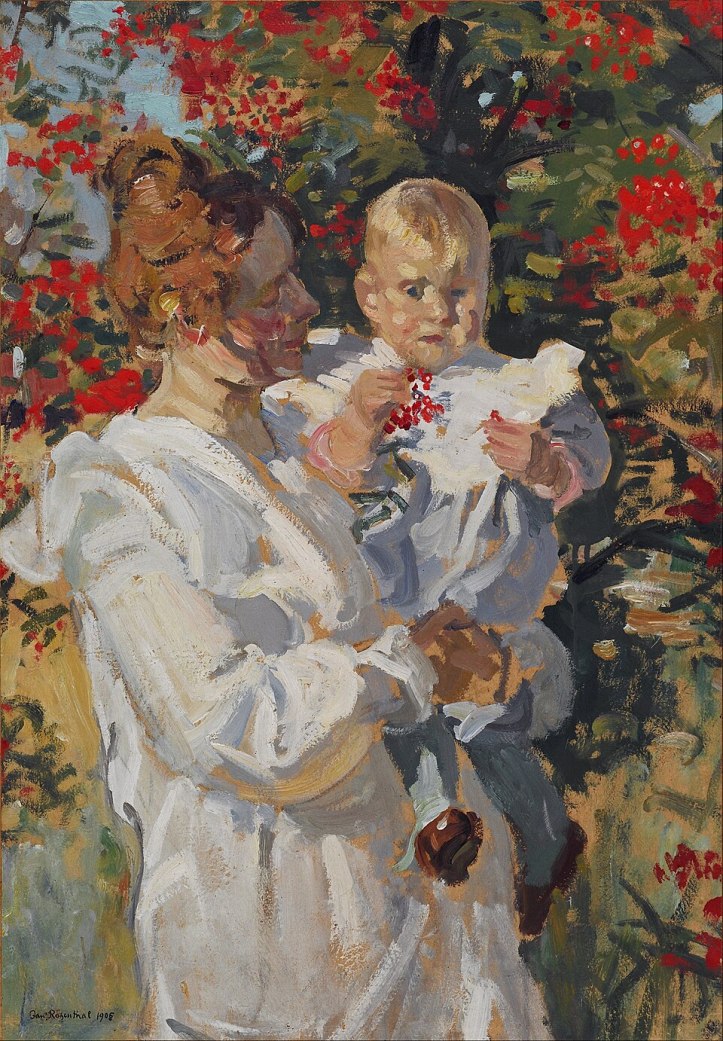 Janis Rozentāls – Under the Rowan Tree. 1905. Wikimedia Commons
“It doesn’t make sense to ask whether human beings are a product of nature or nurture. Obviously, the answer is both.”
Jesse J. Prinz
What is the difference between nature and nature? Personality is made up of both of these constituents. Our nature refers to the innate characteristics with which we come into this world, our genetic traits, our predispositions, our biological make-up. We are born with certain features and we are also influenced by our experiences and the events that occur around us; our personalities are formed by a combination of these factors.
Many people question which of these is the most important, and some favour one side or another; others, like Gabor Maté, see this as a ‘moment by moment interaction,’ rather than an issue that calls for sides to be taken. Surely the answer is that both affect us and it is impossible to measure the amount of influence each has.
“In the real world there is no nature vs. nurture argument, only an infinitely complex and moment-by-moment interaction between genetic and environmental effects.”
Gabor Mate
In this post, however, whilst acknowledging that nature and nurture are equally important, I will choose to focus on the concept of nurture, which will be explored in relation to its two meanings.
The original meaning of the word, derived from the Latin nutrire, to ‘suckle’ or ‘nourish,’ (Merriam-Webster), referred to the way in which we are treated, brought up and cared for. The more modern, figurative meaning, developed in England in the eighteenth century, is ‘to promote,’ ‘to foster,’ or ‘to cultivate.’ It has come to refer to how our environment impacts upon us collectively, and to the general social influences and experiences we have.
Quote 2
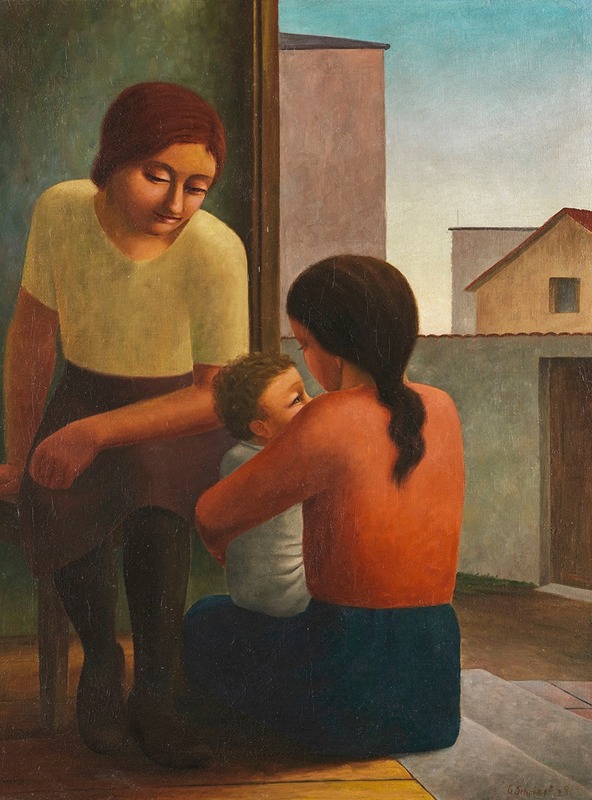
Two Women With Child (1928). Georg Schrimpf. artvee.com
“Those who are nurtured best survive best. It turns out that our emotional resilience and our ability to learn are inextricably interwoven.”
Louis Cozolino
This important quotation completely encapsulates the supreme importance of nurture in relation to being mentally and physically healthy and gaining personal strength throughout our lives. It also emphasises the fact that being emotionally resilient is crucial to our learning ability.
We need nurturing parental figures in order to absorb learning from them from our earliest days.
‘The Bee sucks the sweets from wild thyme & marjoram; now it is honey & neither marjoram nor thyme.’
Ralph Waldo Emerson
The metaphor of the bee producing honey expresses much in relation to how human beings take in the nurture and learning they need from others. What we have gained from other people becomes our own through a psychological process called internalisation. It involves a kind of transformation of others’ ways of being, taken into the very fabric of ourselves.
From our earliest beginnings, we have introjected, assimilated into our personalities, aspects of those around us. From this process we come to produce for ourselves authentic thoughts; these originate from the stimulation and nurture of others as we are enabled to learn from their incentives and encouragement.
The psychoanalytic theory of object relations is most helpful to keep in mind here, in that it suggests that each of our early experiences of those people who look after and nurture us is paramount in terms of future development.
The term ‘object’ is a little misleading, as it actually refers to a person. For example, a parent is usually a ‘primary object.’ The perceptions we have of these early relationships and their internal representations will colour and shape our future lives and relationships.
Ways of thinking about ourselves develop from early experience with these primary caregivers. The responsiveness of the other person to the child, the way in which the child’s image is mirrored and reflected in the parent’s eyes, crucially influence the development of the child’s self image.
A significant other who is not empathic, who cannot attune to the child’s needs and provide the necessary degree of nurture, will not be able to help that child develop a sense of self that is cohesive and sustaining. The way the parent (mother or father) thinks about their child will form and affect the manner in which the child thinks about themselves:
‘The mother gazes at the baby in her arms, and the baby gazes at his mother’s face and finds himself therein… provided that the mother is really looking at the unique, small, helpless being and not projecting her own expectations, fears, and plans for the child. In that case, the child would find not himself in his mother’s face, but rather the mother’s own projections. This child would remain without a mirror, and for the rest of his life would be seeking this mirror in vain.’
D.W. Winnicott
This connectedness with others is significant throughout our lives. As adults, we continue to be influenced by the thoughts and feelings of those around us. Indeed it is important that we are affected by other people, in terms of our own self-development.
The psychoanalyst Heinz Kohut developed the model of self-psychology, seeing significant others in early life as self-objects, who could provide empathic sustainment for the development of the self. Although the need to depend on others for one’s sense of self does decrease during adulthood, in his work The Restoration Of The Self, Kohut emphasised that fact that adults do continue to use others as self-objects throughout their lives.
As adults, we can continue our psychological development, then, through interactions with others who inspire us. Hopefully having internalised some good-enough self objects during childhood, we can continue to make new connections which stimulate, nurture and motivate us.
We can develop our thinking and continue to gain self-esteem from others in adulthood, such as our spouse, partner, therapist, work colleagues, friends, educators. What we need, throughout the life cycle, is other people who can respond to us with understanding and care:
‘Man can no more survive psychologically in a psychological milieu that does not respond empathetically to him, than he can survive physically in an atmosphere that contains no oxygen.’
Heinz Kohut.
Quote 3
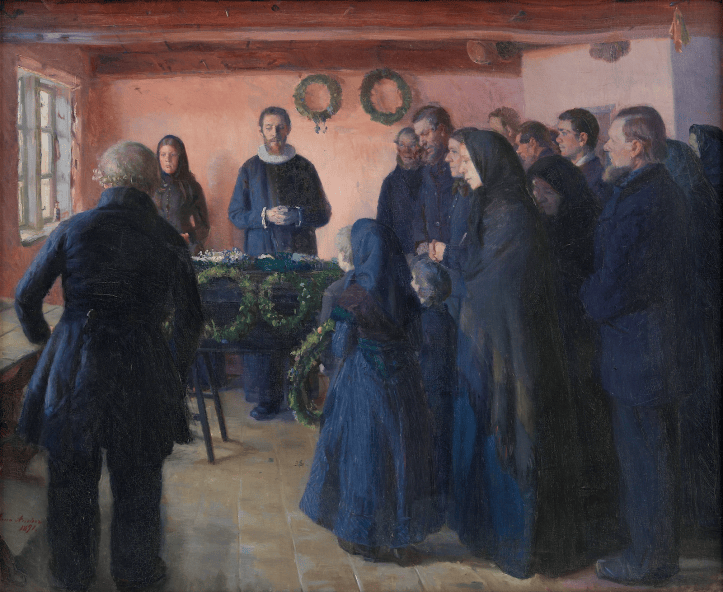 A Funeral. Anna Ancher, 1891
“Death ends a life, not a relationship. All the love you created is still there. All the memories are still there. You live on- in the hearts of everyone you have touched and nurtured while you were here.”
Morrie Schwartz
This quotation assures us that the nurturing that we showed others during our lives will continue, even after our death. It accords with the sentiments in the words-
“Love is really the only thing we can possess, keep with us, and take with us.”
Elisabeth Kubler-Ross
While the person themselves may no longer be with us, what can remain is the nurturing that existed during the person’s time on earth, their love. Those left behind may still have fond memories, and can continue the relationship with their loved one inside themselves.
The idea that ‘death ends a life not a relationship,’ is a comforting one, reminding us that it is still possible to keep the dead person alive in our internal world. We can still know that they lived, that they were once able to give us nurture and care.
“It’s hard when you miss people. But you know if you miss them, that means you’re lucky. It means you had someone special in your life, someone worth missing.”
Nikki Schiefelbein
Quote 4
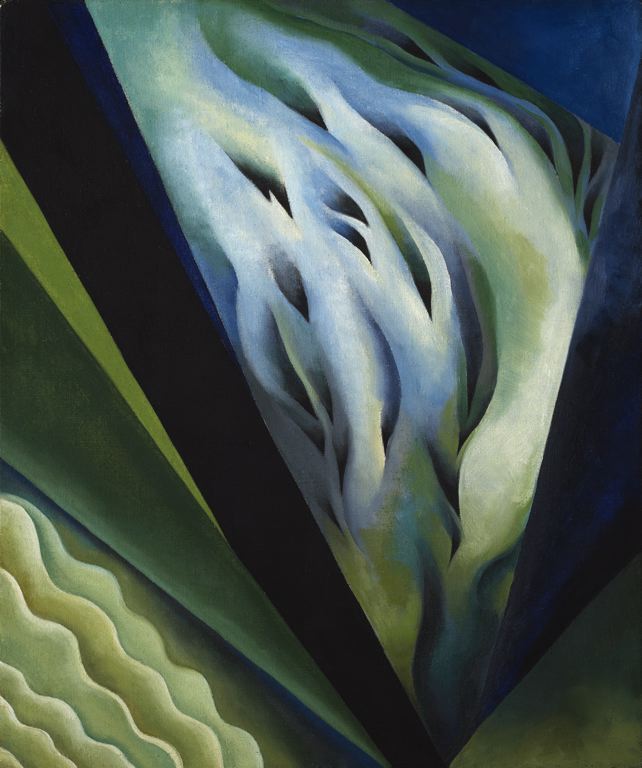
Blue and Green Music by Georgia O’Keeffe, 1921. Wikimedia Commons
“While human nature largely determines how we hear the notes, it is nurture that lets us hear the music.”
Jonah Lehrer
This quotation vividly exemplifies something of the difference between nature and nurture, revealing what each can give us. Whilst our biological gifts allow us to hear sounds, our learning from the world around us, as well as our personal life experience, give us the ability to understand, interpret and really hear what such sounds might mean or make us feel.
We can detect rhythm, pitch and tone, we can hear melody and harmony, but, in order to really appreciate all this, we need to be able to perceive and discern what music truly means for us. Emotionally, culturally, personally, and on many other levels, we experience and absorb musical sounds and make them meaningful for ourselves in many different ways.

The Pianist Alexandre Rey Colaço (1854-1928) at the Piano. Wikimedia Commons
Quote 5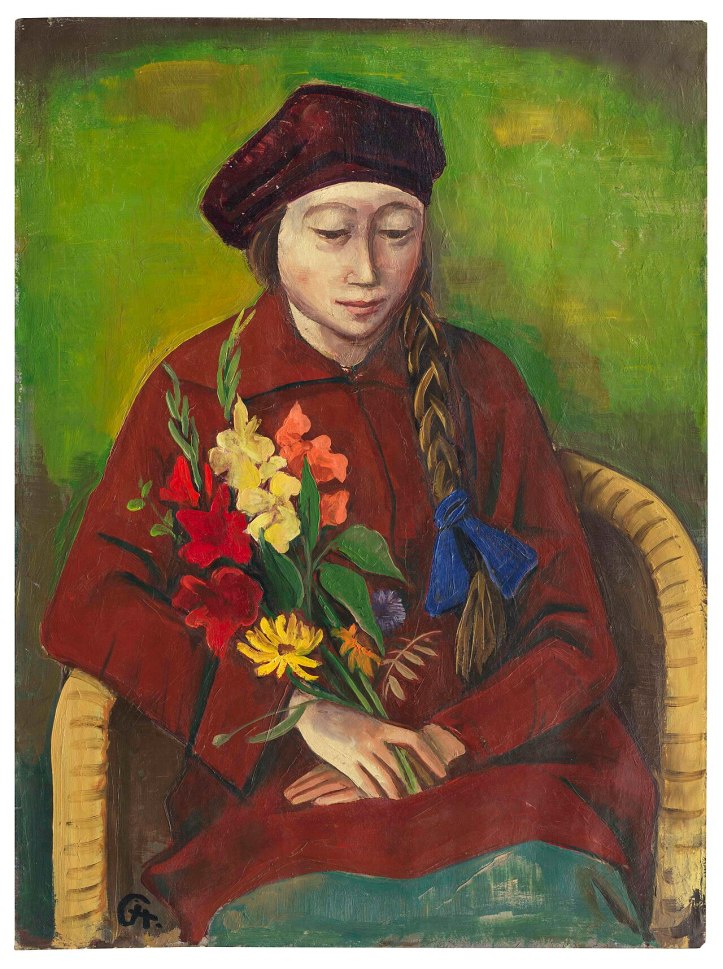 Karl Hofer – Girl with Braid [c.1925] Wikimedia Commons
“Self-care is not selfish or self-indulgent. We cannot nurture others from a dry well. We need to take care of our own needs first, then we can give from our surplus, our abundance.”
Jennifer Louden
I will end this post with a focus on the supreme importance of nurturing the self. The words above remind us that, if we have no resources ourselves, then we cannot expect to be able to give to others. Nurturing ourselves may sometimes involve going for help to others; a prime example of this is the therapist’s need to have therapy themselves, before they can truly there for their clients.
“Compassion is not complete if it does not include oneself.”
Allan Lokos
In order to be able to relate to our clients in an open and healthy way, we need, as therapists, to have worked through, as far as is possible, our own relationship issues and problems and to feel as comfortable with ourselves as possible.
Through having therapy, we will become self-aware and will recognise the areas in which we might have difficulties inside ourselves and when we relate to others.
When we are in therapy, it is likely that any relationship problems we have outside the therapy, most likely originating in the past, will be replicated in the relationship with our therapist. This enables such issues to be highlighted in the here and now of the therapy situation and makes them available to be worked through.
Unless we have explored our own unconscious world in therapy, we cannot- and should not- assist others on a journey into their inner world. Only if we have developed awareness of our own inner landscape will we be able to gain the empathy, and the flexibility of thinking and feeling that is necessary to be able to help nurture another on their own psychological journey.
 Frederick C Frieseke – Hollyhocks [c.1913] Gandalf’s Gallery. Flickr.
“Nurture your nature.”
Jim Cathcart
©️Linda Berman
Hi Linda, long time & thank you for sharing such a timely & great post. Hope all is well ♥️
Hi Margaret
Great to hear from you and to receive such lovely feedback on my post on nurture. I’m fine thanks and I do hope you are too. x
My pleasure Linda and glad all is well. Things have been quite challenging more recently with the physical and emotional health relationship but I feel I am ‘getting there’s thanks ❤️
I’m pleased you’re getting better Margaret.
Thanks Linda. Somehow it takes quite a while for me to see how far I have come and now try to focus on the matters outstanding.
Take care.
You too Margaret.
😊
Maybe I will e mail you some time 🙂