
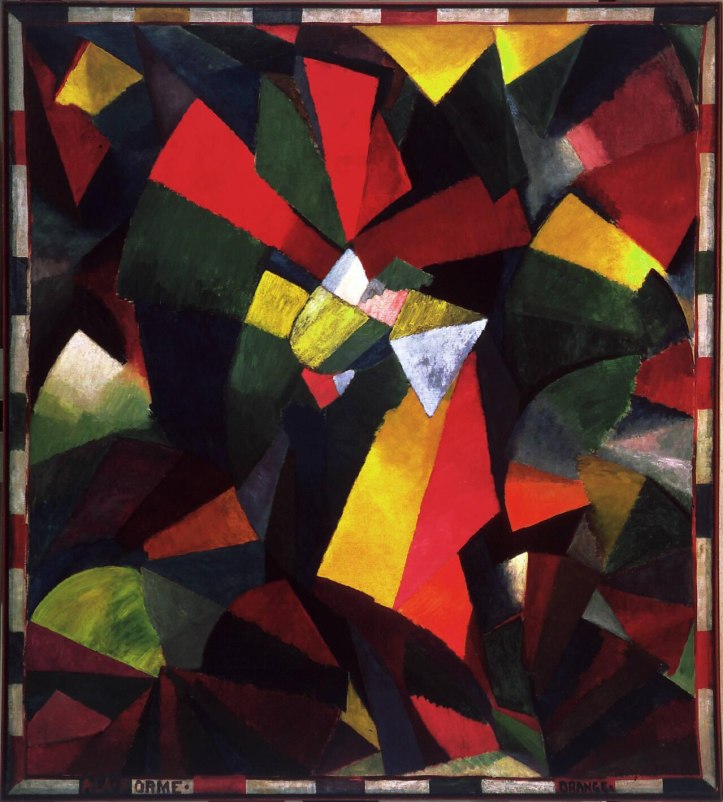
 Morgan Russell, 1913-14, Synchromy in Orange, To Form. Wikimedia Commons
“Synchronicity…means a ‘meaningful coincidence’ of outer and inner events that are not themselves causally connected. The emphasis lies on the word ‘meaningful’.”
Marie-Louise von Franz
Do you find that some ‘coincidental’ events in your life appear to be more than just coincidence? Do you ever feel that such occurrences are extra meaningful, that they are not mere chance, and that they have a deeper, perhaps spiritual significance to you? If so, then read on…
Quote 1
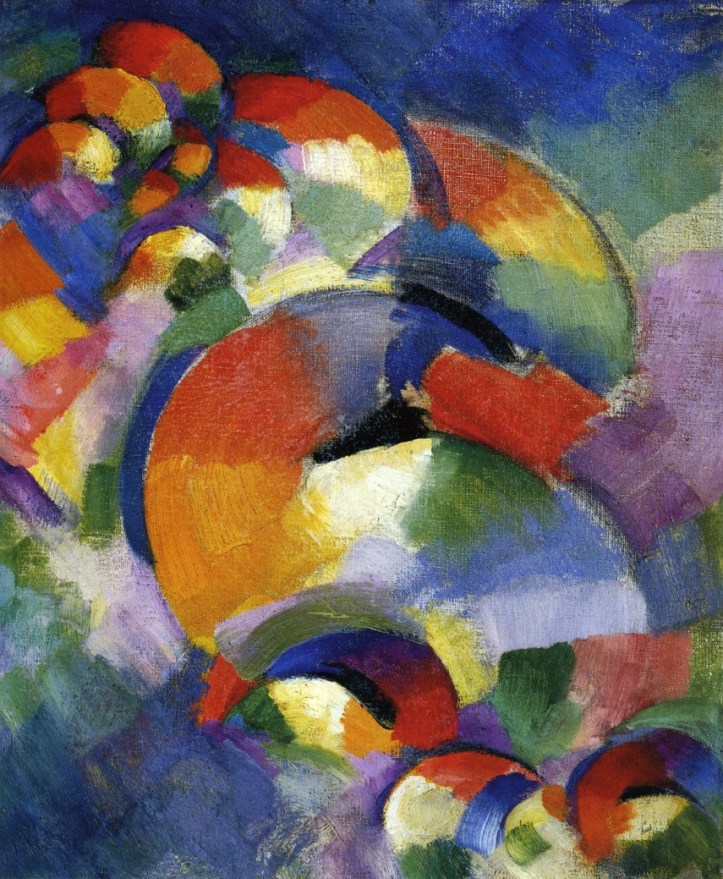 Cosmic Synchromy (1913-14) Morgan Russell. Wikimedia Commons
“The problem of synchronicity has puzzled me for a long time, ever since the middle twenties, when I was investigating the phenomena of the collective unconscious and kept on coming across connections which I simply could not explain as chance groupings or “runs.” What I found were “coincidences” which were connected so meaningfully that their “chance” concurrence would represent a degree of improbability that would have to be expressed by an astronomical figure.”
Carl Jung
The psychiatrist and psychoanalyst Carl Jung wrote much about the concept of synchronicity; he felt this was linked to a deep connection between human beings, through the collective unconscious and the whole of the universe. The collective unconscious is the part of the unconscious mind that is not created through personal events in our lives, but is made up of a shared, inherited set of concepts common to all humans. These universal, inborn, themes, ideas and ways of thinking were seen by Jung as explaining why people tend to have similar myth and dream symbols throughout the world.
Jung perceived many examples of meaningful coincidences in the lives of many patients, and in his own life, that felt to him to be related to much more than chance happenings. He realised that the odds of such events occurring with such frequency and precision were enormous, ‘astronomical,’ and this indicated that what caused them was more than chance. Somehow, he felt, other, unknown forces were at play, ones that had deep psychological and spiritual significance.
“Synchronicity: A meaningful coincidence of two or more events where something other than the probability of chance is involved.”
Carl Jung
Jung cites a powerful example of synchronicity in his story of being with a patient who was describing a dream she had had the previous night, about someone giving her a gift of a piece of jewellery in the form of a gold scarab beetle.
Just then, Jung heard a tapping on the window; he opened it, and saw that it was a rose-chafer beetle, the closest local species to the Egyptian golden beetle. He showed it to the patient and said ‘here is your scarab.’ From then on, the therapy developed in very important ways, as the event had challenged the patient’s over-intense rationalism, which had impeded the process of therapy so far.
 Adult Scarab Beetle – Chrysina Limbata. Author: Notafly, 2009.Wikimedia Commons
“Every time I have become aware of a synchronicity experience, I have had an accompanying feeling that some grace came along with it.”
Jean Shinoda Bolen in ‘Coincidence or Destiny’ by Phil Cousineau
Quote 2
 Le Poeme de l’Ame-16-Louis Janmot. 1854. Wikimedia Commons
“There are no mistakes, no coincidences; all events are blessings given to us to learn from.”
Elisabeth Kubler-Ross
Her words mirror Jung’s ideas about synchronicity, in that both strongly reject the notion that life is made up of chance. Jung referred to synchronous events as having an “acausal connecting principle,” which meant that the cause and effect principle did not apply; the events were joined together by a deeply meaningful and spiritual link. Like Jung, Kubler-Ross perceived that some events, such as a terminal diagnosis or other crisis, happened at a time when the patient needed to learn some invaluable life lesson, such as unconditional love or forgiveness.
“Tragedies, joys, triumphs, failures, frustrations, crises — I assume that behind every development, small and large, is something else, something meaningful, a hidden gift, that if received with grace and used with reverence, invites me a step higher on my journey.”
Carol Lynn Pearson in ‘Consider the Butterfly’
Many people will have their own theories and ways of thinking about such synchronicity…some will be based on spirituality, others may be religious, psychological, scientific, or, perhaps, connected to magic.
“I do believe in an everyday sort of magic – the inexplicable connectedness we sometimes experience with places, people, works of art and the like; the eerie appropriateness of moments of synchronicity; the whispered voice, the hidden presence, when we think we’re alone.”
Charles de Lint
Quote 3
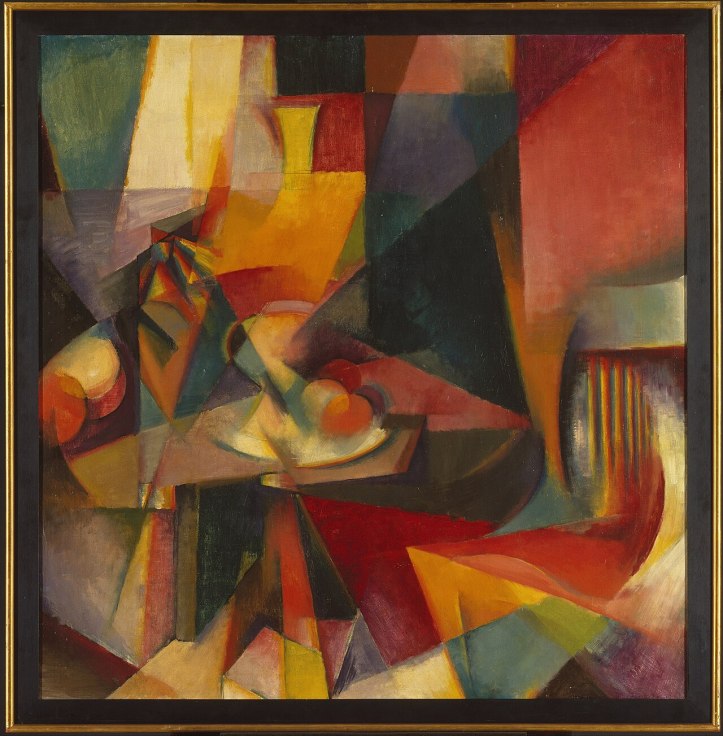 Stanton Macdonald-Wright – Synchromy No. 3. 1917. Wikimedia Commons
“Every day is a surprise. There are confirmations of an interconnectivity and synchronicity which inspire, titillate and confirm the inherent comedy of the universe.”
Billy Zane
This quotation affirms the regular ‘confirmations’ of synchronicity in life, but it adds another dimension- that of the ‘comedy of the universe.’ This is a different way of looking at synchronicity, as part of the absurdity of the world.
This phrase puts me in mind of the words of Einstein, and his thoughts on absurdity. He felt that the absurd aspects of the universe were essential in order for us to make new discoveries:
“Only those who attempt the absurd can achieve the impossible.”
What did Einstein mean by this statement? He was urging us to think differently, in this instance in relation to ‘achieving the impossible.’ Taking the risk of looking foolish is important if we desire to be innovative and experimental. Many may mock our efforts to be different, but unless we ‘attempt the absurd,’ and move away from what is known and established, we will merely repeat what has already been done. This approach also may apply to the way we regard meaningful coincidences.
To be an independent thinker, one needs to learn to ignore the naysayers and the critics and to sometimes embrace the counterintuitive, as Einstein did with his relativity theory.
“No intelligent idea can gain general acceptance unless some stupidity is mixed in with it.”
Fernando Pessoa
“Everything is funny; the greatest earnestness is funny; even tragedy is funny. And I think what I try and do in my [writing] is to get this recognizable reality of the absurdity of what we do and how we behave and how we speak.”
Harold Pinter
These quotations remind us further of the comedy of life, despite its ups and downs, and tell us to value and appreciate the way life can surprise us. Regarding coincidences and synchronicities as having an absurd, humorous side, presents us with different ways of thinking. For life can defy logic, and can provide us with strange oddities and quirks of fate that, from some perspectives, might be seen as absurd. Many people may see grand designs behind these coincidences; others will see them as random, absurd, chancy occurrences, emanating from a precarious world of chaos.
Personally, I lean towards seeing the view of synchronicity as revealing something meaningful and profound, reminding us that we are all, in some mysterious way, connected to each other, and are deeply woven into the intricate fabric of the universe.
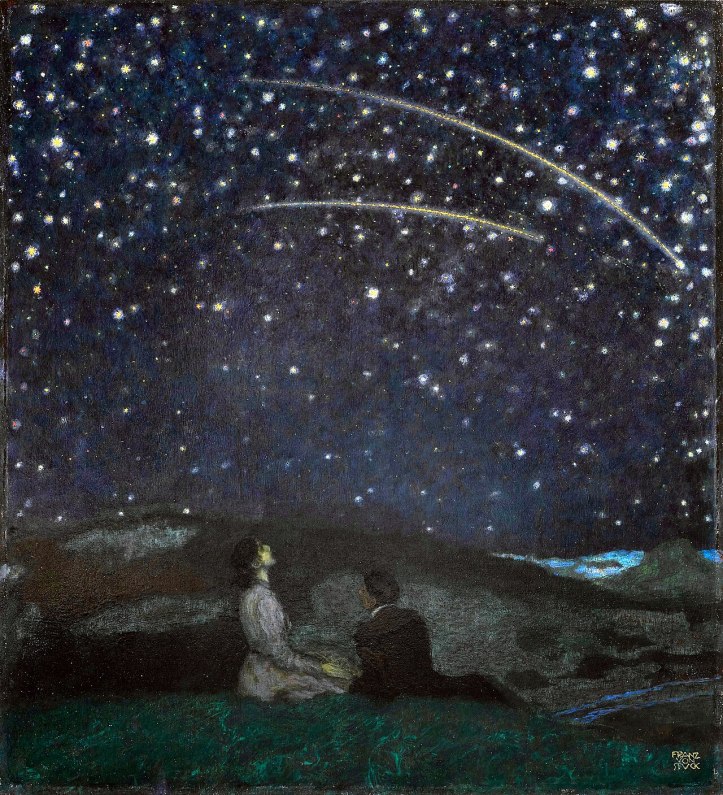 Falling Stars. Wikimedia Commons. 1912. Franz von Stuck
“I am open to the guidance of synchronicity, and do not let expectations hinder my path.”
Dalai Lama
© Linda Berman
Judy has had dreams which the next day came inexplicably true , your article is intriguing.
Thanks for your feedback Leslie. It’s much appreciated, and I think Judy’s experience with dreams is fascinating- and meaningful.
A great resource on collective unconscious and synchronicity well explained
Thank you Arun! I’m glad you found this post to be a good resource.